UPSC Current Affairs

9 topicsGS-1: 3GS-2: 1GS-3: 5
0/9 done
GS-2Polity

1.High Court Judicial Transfers (Judicial Transfers)

The Hindu

What & Where

Judicial transfer – shift of a High Court judge to another High Court under Article 222(1)

Triggered for administration, public interest; covers all 25 High Courts across India

Decision-hub New Delhi: Supreme Court Collegium recommends, President issues Gazette notification

Quick Facts for MCQs

Constitutional & Policy

  • Consultation mandated, consent of transferred judge not constitutionally required
  • No parliamentary statute governs transfers; procedure evolved through SC rulings
  • Transfer power aims to foster national perspective, curb local bias

Judicial Precedents

  • First Judges: executive primacy, CJI opinion non-binding
  • Second Judges: collegium primacy, transfers only for public interest with wider consultation
  • Third Judges: collegium expanded, views of knowledgeable SC judges compulsory

Institutional Roles

  • Judiciary proposes and vets; executive formally approves without discretion
  • Law Ministry scrutinises, cannot alter collegium recommendation
  • President acts on aid and advice of Council of Ministers, not personal judgment

Key Data Points

FeatureData-Point
Constitutional hookArticle 222(1)
Transfer initiatorChief Justice of India
Collegium size (CJ transfer)CJI + 4 senior-most SC judges
Mandatory consulteesChief Justices of both HCs, SC judges acquainted with record
Executive pathLaw Minister → Prime Minister → President
Final instrumentDepartment of Justice Gazette notification
Landmark casesFirst Judges 1981, Second Judges 1993, Third Judges 1998

Related UPSC Prelims PYQs

CAPF_GAI, GS1 1996PYQ 1

When the Chief Justice of a High Court acts in an administrative capacity, he is subject to

CAPF_GAI, GS1 2022PYQ 2

Which one of the following is correct in respect of the appointment of District Judges?
GS-3Economy

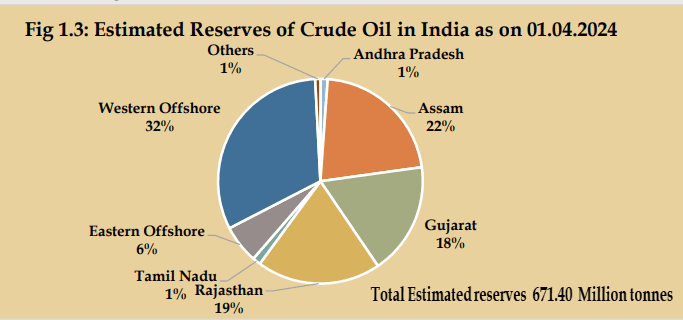
2.Energy Statistics India 2025 Highlights (Energy Metrics)

PIB
Illustration for Energy Statistics India 2025 Highlights (Energy Metrics)

What & Where

Report; Energy Statistics India 2025 compiled by NSO, covers FY 2023-24 energy landscape

Geography; pan-India data with state highlights—Rajasthan, Gujarat, Maharashtra top in wind-solar installs

Purpose; track progress towards Viksit Bharat 2047, Net-Zero 2070 and SDG-7 targets

Quick Facts for MCQs

Production & Supply

  • Dominance; non-coking coal forms 93.3 % of coal mined
  • Industry; final energy demand rose 13.2 % in decade
  • TPES; coal, oil, gas in that order of contribution

Renewable Push

  • Expansion; non-hydro RE generation up 210 % in 10 yrs
  • Leaders; Rajasthan, Gujarat, Maharashtra front-run wind-solar installs
  • CAGR; RE electricity output growing 6.76 % annually since 2014-15

Efficiency Metrics

  • Losses; grid T&D reduced from 23 % to 17 % since 2014-15
  • Decoupling; energy per GDP down consistently to 0.2180 MJ/INR
  • Consumption; 25 % jump in per-capita energy within a decade

Import Dependence

  • Crude; 89 % requirement met through imports, vulnerability in forex
  • Gas; 46.6 % import ratio despite domestic basins
  • Coal; still 25.86 % imported, mainly high-grade varieties

Key Data Points

FeatureData-Point
Primary energy supply FY 249,03,158 KToE
YoY growth in supply7.8 %
Coal share in domestic supply79 %
Coal share in TPES60.21 %
Renewable potential mapped21,09,655 MW
Installed RE capacity (2024)1,98,213 MW
RE capacity CAGR 2015-2410.36 %
Electricity from RE (2023-24)3,70,320 GWh
Per-capita energy use18,410 MJ/person
Per-capita electricity use1,106 kWh
Energy intensity0.2180 MJ/INR GDP
T&D losses17 %
Crude oil import dependence89 %
Natural gas import dependence46.6 %
Coal import dependence25.86 %

Related UPSC Prelims PYQs

GEO_GS, GS1 2026PYQ 1

India's installed solar capacity in 2025 is close to

GEO_GS, GS1 2023PYQ 2

निम्नलिखित कथनों पर विचार कीजिए :

GS-1History

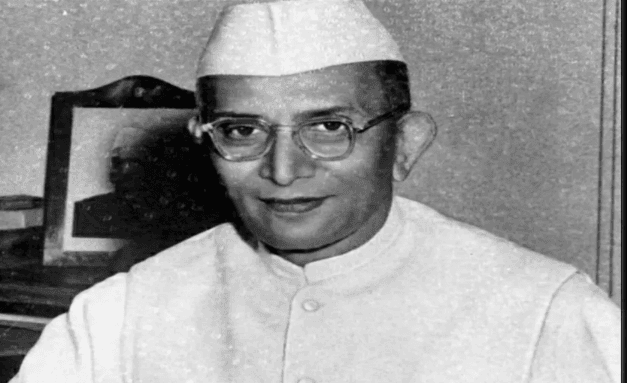
3.Tribhuvandas Patel Cooperative Legacy (Cooperative Movement)

Indian Express
Illustration for Tribhuvandas Patel Cooperative Legacy (Cooperative Movement)

What & Where

Tribhuvan Sahkari University: Lok Sabha-cleared Bill to create cooperative-centric state university.

Namesake: Tribhuvandas Patel, architect of Amul & India’s village dairy cooperative model.

Locale: Anand town, Charotar region, central Gujarat.

Quick Facts for MCQs

Legal & Policy

  • Legislation establishes first university dedicated to cooperative studies in Gujarat.
  • Governance expected under state university norms with special focus on dairy, agri-coops.
  • Parliamentary passage positions Anand as national cooperative education hub.

Cooperative Model

  • Inclusivity ensured by equal vote irrespective of caste, landholding or gender.
  • Village milk societies federate into district union (Amul), then marketing federation (GCMMF).
  • Model replicated nationwide via NDDB’s Operation Flood.

Freedom & Social Work

  • Gandhian ideology guided campaigns against untouchability and for village self-reliance.
  • Tribhuvandas Foundation delivers maternal-child health across Anand’s dairy villages.
  • Commitment to rural upliftment persisted post-Independence through cooperative expansion.

Awards & Legacy

  • Magsaysay citation highlighted “community leadership through cooperative enterprise”.
  • Padma Bhushan recognised transformative social service in dairy sector.
  • University naming institutionalises his legacy for future cooperative professionals.

Key Data Points

FeatureData-Point
Birth of Tribhuvandas Patel22 Oct 1903, Anand (then Kheda), Gujarat
Freedom-era actionsCivil Disobedience, Salt Satyagraha; jailed Nasik 1930, Visapur
Cooperative foundedKaira Milk Union (Amul), 14 Dec 1946
Core cooperative ruleOne man, one vote
Key aide recruitedDr Verghese Kurien, spark of White Revolution
Later institutionsNDDB, IRMA, GCMMF
Social trustTribhuvandas Foundation for rural health
AwardsRamon Magsaysay 1963; Padma Bhushan 1964
New university siteAnand, Gujarat
Bill stagePassed by Lok Sabha
GS-1History

4.Sarhul Tribal Spring Festival (Tribal Festival)

Indian Express

What & Where

Sarhul = springtime Adivasi New-Year festival, literal “worship of Sal tree”, honours Sun–Earth life cycle.

Core geography: Jharkhand’s Chhotanagpur; also Chhattisgarh, Odisha, Bihar; diaspora in Assam, Andaman, Nepal, Bangladesh, Bhutan.

Celebrated chiefly by Oraon, Munda, Santal, Khadia, Ho tribes at village sacred groves called Sarna Sthals.

Quick Facts for MCQs

Cultural Significance

  • Identity marker; reinforces Adivasi spiritual bond with Sal-dominated forests.
  • Promotes ritual purity and communal harmony via shared feasts, dances, music.

Ritual Elements

  • Priest Pahan leads flower offering, prayers, forecasts annual rainfall.
  • Community abstains from salt, meat till final day festivities.

Geographic Spread

  • Migrant Adivasi groups replicate Sarhul in tea gardens of Assam and islands of Andaman.
  • Cross-border observance visible in Nepalese Terai and Bangladesh tribal belts.

Agri Linkage

  • Festival timing signals start of kharif land preparation after ceremonial clearance.
  • Sal flower bloom serves as traditional phenological indicator for sowing window.

Key Data Points

FeatureData-Point
Festival duration3 days
Sacred site nameSarna Sthal (sacred grove)
Chief deitySarna Maa (village goddess)
Key offeringFresh Sal flowers
Signature drinkHandia rice-beer on final day
Agricultural rulePloughing starts only after rituals conclude
Main dancesJadur, Gena, Por Jadur
SymbolismCosmic union of Sun and Earth

Related UPSC Prelims PYQs

GS1 2014PYQ 1

Every year, a month-long ecologically important campaign/festival is held during which certain communities/tribes plant saplings of fruit-bearing trees. Which of the following are such communities/tribes?

GS-1Mapping

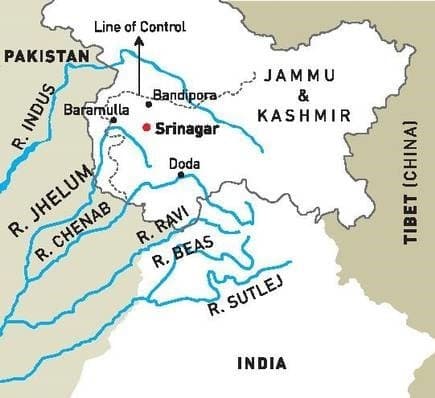
5.Jhelum River Profile (Indus Tributary)

Down to Earth
Illustration for Jhelum River Profile (Indus Tributary)

What & Where

Jhelum River: westernmost Himalayan river; headstream of Indus system.

Originates Verinag spring, Pir Panjal foothills, Anantnag district, J&K; runs 725 km before joining Chenab in Pakistan.

Traverses Wular Lake, Pir Panjal gorges, enters plains at Mangla, aiding irrigation-hydropower.

Quick Facts for MCQs

Environmental Impact

  • Untreated sewage from Anantnag, Bijbehara, Mattan released into streams feeding Jhelum.
  • Government acknowledgement in J&K Assembly highlights river pollution load rise.
  • Risk: eutrophication, potable water threats for downstream Kashmir & Pakistan.

Infrastructure & Canals

  • Mangla Dam enables hydropower plus diversion into Upper & Lower Jhelum Canals.
  • Canals irrigate Punjab plains, vital for Rabi cropping.
  • Deep Pir Panjal gorges restrict additional large dam sites upstream.

Legal & Policy

  • Assembly discussion may prompt stricter effluent norms, sewage-treatment plant funding.
  • Compliance aligns with Indus Waters Treaty environmental obligations.

Key Data Points

FeatureData-Point
Source springVerinag, Anantnag
Total length~725 km (450 miles)
Indian UT crossedJammu & Kashmir
Major left-bank tributaryKishanganga (Neelum)
Other tributariesKunhar, Sandran, Bringi, Arapath
Lake regulatorWular Lake, Srinagar
Key damMangla Dam, Pakistan-administered
Upper Jhelum CanalMangla Dam → Chenab at Khanki
Lower Jhelum CanalRasul → Irrigation
Final convergenceChenab → Indus in Pakistan

Related UPSC Prelims PYQs

CDS_GK, NDA_GAT 2024PYQ 1

Consider the following facts of the rivers of the Indus system :

CDS_GK, NDA_GAT 2025PYQ 2

Salal Power Project is situated on which one among the following rivers?

GS-3Environment

6.World Wide Fund for Nature Overview (Conservation NGO)

New Indian Express

What & Where

Partnership: Uttarakhand Forest Dept + WWF deploying trap-cameras on interior forest roads

Purpose: real-time wildlife alerts to motorists, curb roadkill in Himalayan forests

Hub: WWF global HQ – Gland, Switzerland; Uttarakhand pilot in Terai & hill forest divisions

Quick Facts for MCQs

Tech & Schemes

  • Trap-camera system: motion sensors beam live feed to roadside displays or mobile alerts for drivers
  • Earth Hour: annual voluntary lights-off event, India participant since 2007
  • Debt-for-Nature Swap: WWF brokers sovereign debt relief for conservation funding

Conservation Domains

  • Wildlife: anti-poaching, species recovery plans
  • Forests: REDD +, community forestry support
  • Oceans–Freshwater–Food–Climate: six-pillar integrated strategy

Funding & Governance

  • Revenue sources: membership dues, philanthropy, project grants
  • Oversight: International Board, national offices with MoUs to host governments

Key Data Points

FeatureData-Point
WWF full nameWorld Wide Fund for Nature
TypeInternational environmental NGO
Year founded1961
Key foundersSir Peter Scott, Max Nicholson
Global HQGland, Switzerland
Primary objectiveHalt environmental degradation; foster human-nature harmony
Active countries100 +
Ongoing projects≈ 3,000
Flagship publicationLiving Planet Report
Index maintainedLiving Planet Index
Mass campaignEarth Hour
Finance mixIndividuals 65 %, Govts 17 %, Corporates 8 %
Tech toolsAI, sensors, trap-cameras for wildlife monitoring
Uttarakhand initiativeReal-time alerts on forest roads
Target issueVehicle–wildlife collisions

Related UPSC Prelims PYQs

CDS_GK 2024PYQ 1

Which organisation publishes worldwide list of endangered species?

GS-3Environment

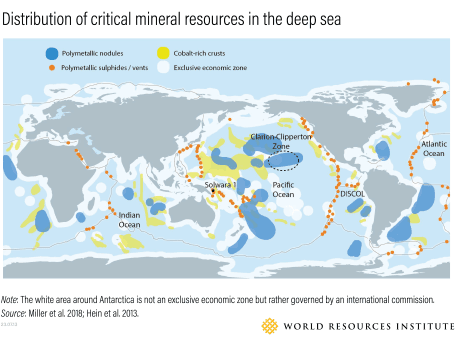
7.Ecological Impact of Deep-Sea Mining (Seabed Mining)

Indian Express
Illustration for Ecological Impact of Deep-Sea Mining (Seabed Mining)

What & Where

Definition: Extraction of polymetallic nodules, sulphides and crusts from seabed depths > 200 m via robotic collectors.

Processes: AI-guided harvesters, vacuum riser pipes, surface-vessel processing; waste slurry commonly discharged back into water column.

Geography: Highest concentrations in Clarion-Clipperton Zone (Pacific); also around hydrothermal vents and global seamount chains.

Quick Facts for MCQs

Environmental Impact

  • Disturbance: 8 m-wide 1979 mined patch still barren after four decades.
  • Biodiversity: Slow-growing, nodule-dependent fauna risk local extinction upon habitat removal.
  • Plumes: Sediment-metal clouds threaten filter feeders, fisheries food chains, carbon sequestration.

Legal & Policy

  • ISA: Draft exploitation code under negotiation; several states demand precautionary moratorium.
  • UNCLOS: Mandates equitable benefit sharing for high-seas mineral wealth.
  • Deadline: If norms absent by 2025, firms may apply under provisional arrangements.

Economic Angle

  • Critical supply: Nodules could meet surging EV, solar, wind mineral demand.
  • Security: Offshore sources reduce reliance on Congo cobalt, Chinese rare-earths.
  • Cost: High technology investment with uncertain regulatory timelines.

Technological Status

  • Equipment: Prototype AI harvesters, vacuum pumps, dynamic-positioned vessels in trials.
  • Scale: Present operations restricted to small test tracks, no industrial throughput yet.
  • Waste: Return-flow water containing metals released mid-water; impacts still poorly quantified.

Key Data Points

FeatureData-Point
Depth threshold>200 m
Richest zoneClarion-Clipperton (Pacific)
Key mineralsCobalt, nickel, lithium, rare earths
Commercial statusOnly pilot tests; no full-scale mining
ISA rule deadline2025
1979 test site recoveryNil after 44 years
Cobalt demand rise by 2040400–600 %
UNCLOS principleCommon heritage of mankind

Related UPSC Prelims PYQs

GS1 2021PYQ 1

Consider the following statements:

GS-3S&T

8.Abel Prize 2025 Recipient (Mathematics Award)

Indian Express

What & Where

Prize equivalent to Nobel for mathematics, honours outstanding pure and applied research

Established 2002 by Norwegian Parliament to commemorate mathematician Niels Henrik Abel

Venue Oslo (Norway); run by Norwegian Academy of Science and Letters

Quick Facts for MCQs

Institutional Setup

  • Parliament legislation created prize and secures annual funding
  • Norwegian Academy selects laureate using IMU, EMS recommendations
  • Annual Oslo ceremony furthers Norwegian science diplomacy

Mathematical Contributions

  • D-modules link differential equations to algebraic geometry, providing powerful analytic framework
  • Crystal bases give graph-based solutions simplifying quantum group representation theory
  • Research bridged algebra, geometry, mathematical physics, unlocking long-standing problems

Global Significance

  • Abel Prize viewed as mathematical Nobel, elevates discipline’s public stature
  • 7.5 mn kroner reward attracts top global talent and media attention
  • Diverse laureate roster highlights mathematics’ transnational nature

Key Data Points

FeatureData-Point
Year instituted2002
Founder bodyNorwegian Parliament
Administering bodyNorwegian Academy of Science & Letters
Advisory bodiesIMU; EMS
Prize money7.5 mn NOK ≈ USD 720 k
2025 laureateMasaki Kashiwara
NationalityJapan
Age (2025)78 years
Key theoriesD-modules; Crystal bases
Ceremony cityOslo, Norway

Related UPSC Prelims PYQs

ESE_GS 2021PYQ 1

Who received the prestigious Abel Prize for the year 2020 ?

GS-3Security

9.INDRA and INIOCHOS-25 Exercises (Naval Air Drills)

TW

What & Where

Exercise INDRA 2024 – bilateral India-Russia naval drill, Bay of Bengal off Chennai, 6 days

Exercise INIOCHOS-25 – 15-nation multinational air combat drill, Andravida Air Base, Elis region, Greece

Goal – sharpen maritime/air interoperability via live weapons, air-defence, replenishment, complex combat scenarios

Quick Facts for MCQs

Security Dimension

  • Strengthens India-Russia strategic maritime partnership and Indo-Mediterranean air cooperation
  • Enhances coalition readiness against regional threats through coordinated force projection
  • Builds trust for future joint humanitarian or contingency operations

Operational Activities

  • Naval: underway replenishment, helicopter cross-deck landings, gunnery and missile firings
  • Air: beyond-visual-range engagements, electronic warfare, composite strike packages
  • Real-time data-linking and mission planning systems tested for interoperability

Geography & Bases

  • Chennai port proximity enables rapid Indian Eastern Fleet deployment
  • Andravida AB offers Mediterranean airspace with varied terrain and sea ranges
  • Exercises leverage deep-water Bay of Bengal and Aegean Sea for multi-domain scenarios

Key Data Points

FeatureData-Point
INDRA editionNaval, India-Russia
INDRA host waterBay of Bengal
INDRA coastlineChennai, Tamil Nadu
INDRA duration6 days
INIOCHOS-25 typeMultinational air exercise
INIOCHOS host baseAndravida, Greece
INIOCHOS participants15 countries (incl. India)
Common aimInteroperability & joint planning
Naval drillsTactical ops, live weapons, air defence
Air drillsComplex multiaircraft combat scenarios

Related UPSC Prelims PYQs

GEO_GS, NDA_GAT 2025PYQ 1

Naseem-Al-Bahr, held in October 2024, was a joint maritime exercise between the navies of India and

GEO_GS, NDA_GAT 2021PYQ 2

The maiden Indian Navy – European Union Naval Force (IN-EUNAVFOR) Exercise (2021) was conducted in

Ready to practice?

Test your knowledge with our UPSC test series.

Start Free Trial