UPSC Current Affairs

14 topicsGS-1: 3GS-2: 4GS-3: 7
0/14 done
GS-2Editorial

1.Central Bureau Investigation Reforms (CBI Reforms)

Hindustan Times

What & Where

CBI: premier 1963 investigative agency under DSPE Act 1946, administratively with DoPT

Operation: nationwide but state consent needed for local probes; eight states withdrew general consent

Reform-push: 145th Parliamentary Standing Committee report on Personnel, Public Grievances, Law & Justice, Mar 2025

Quick Facts for MCQs

Recruitment & Cadre

  • Independent-exam: CBI-specific test via UPSC/SSC proposed; permanent cadre with structured promotions
  • Lateral-entry: Cybercrime, forensics, financial fraud, legal experts to be inducted directly
  • In-house-teams: Specialist cells planned; deputation retained only for top posts

Legal & Policy

  • Separate-law: Committee seeks statute granting CBI suo-motu powers in national security, integrity matters
  • Consent-clause: DSPE Act Sec 6 demands state nod; withdrawals constrict corruption, organised-crime probes
  • Court-orders: Supreme Court, High Courts or Lokpal directions override need for state consent

Oversight & Governance

  • Report-source: Recommendations contained in 145th DRSC on Personnel, PG, Law & Justice
  • Supervision-split: CVC oversees corruption cases; DoPT monitors other investigations
  • Director-selection: High-level panel decides; tenure fixed at 2 yrs, extendable up to 5

Key Data Points

FeatureData-Point
Formation year1963
Foundational ActDelhi Special Police Establishment Act 1946
Administrative ministryPersonnel, PG & Pensions (DoPT)
Interpol roleNational nodal agency
Supervisory body for corruptionCentral Vigilance Commission
Director selection panelPM + Leader of Opposition + CJI/SC judge
Normal director tenure2 yrs; extendable to 5
Latest DRSC report145th (Mar 2025)
States sans general consent8

Related UPSC Prelims PYQs

GS1, NDA_GAT 2025PYQ 1

BHARATPOL portal has been developed by

GS1, NDA_GAT 2025PYQ 2

With reference to the Government of India, consider the following information:
GS-2Polity

2.Judges Asset Declaration Norms Debate (Judicial Accountability)

Indian Express

What & Where

Asset declaration: disclosure of movable & immovable holdings by judges, ministers, legislators, bureaucrats in India

Key instruments: 1997 Restatement, 2009 SC resolution, 2019 RTI judgment, pending statutory bills

Geography: Applies to Supreme Court, 25 High Courts, All-India Services and elected representatives across India

Quick Facts for MCQs

Legal & Policy

  • Restatement1997 voluntary; lacks statutory backing
  • JS&A Bill aimed penalties for false disclosure, code of conduct for judges
  • Parliament yet to move fresh legislation despite committee push

Transparency & Accountability

  • RTI2019 broadened citizen access to judicial asset data
  • SC website ceased updates 2018, reducing real-time transparency
  • Parliamentary panel flagged public trust erosion without mandatory regime

Comparative Public Officials

  • Bureaucrats file yearly statements; non-compliance invites conduct rule action
  • Election nominees’ affidavits published by EC, enabling voter scrutiny
  • Ministers’ and IAS assets often online, setting precedent for judiciary

Key Data Points

FeatureData-Point
1997 Restatement clauseJudges file assets with Chief Justice, not public
2009 SC resolutionVoluntary online disclosure; stopped updating 2018
2019 SC RTI verdictJudges’ assets not “personal”; RTI applicable
2010 JS&A Bill statusLapsed with 15th Lok Sabha, never re-introduced
2023 Parl. panel adviceEnact law for mandatory SC/HC asset disclosure
AIS Conduct Rules 1968Rule 16(1) seeks annual asset return to cadre body
Political nominees rule2002 SC order mandates asset affidavit at nomination
MPs/MLAs filing pointSpeaker (LS) or Chairman (RS) custodians; public access
Union ministers disclosureSubmitted to PMO; list on PMO website
IAS/IPS dataUploaded by concerned departments/state portals

Related UPSC Prelims PYQs

GS1 2007PYQ 1

Consider the following statements:

GS-2Polity

3.DPDP Act Section 44 RTI Exemption (RTI Exemption)

Indian Express

What & Where

Section 44(3) in India’s Digital Personal Data Protection Act 2023 replaces RTI Act 2005 Section 8(1)(j) text.

New phrase exempts any “information which relates to personal information”, dropping earlier qualifiers.

Operative nationwide, influencing all public authorities handling RTI queries.

Quick Facts for MCQs

Legal & Policy

  • Amendment enacted through DPDP Act Section 44(3) rather than standalone RTI amendment bill.
  • Overrides prior Supreme Court/High Court readings that balanced privacy with transparency.
  • Eliminates statutory duty to weigh disclosure if info concerns public activity or larger public interest.

Transparency Concerns

  • Risk: blanket denial of data on officials’ assets, disciplinary findings, expenditure details.
  • Civil-society groups warn dilution undermines accountability mechanisms central to democratic governance.
  • Absence of public-interest override narrows Information Commissions’ discretion.

Governance Oversight

  • Citizens may now receive refusals even when identical data tabled before Parliament.
  • Potential backlog increase as more rejections head to appellate authorities.

Key Data Points

FeatureData-Point
Parent statuteDigital Personal Data Protection Act, 2023
Affected lawRight to Information Act, 2005
Amended clauseSection 8(1)(j) RTI Act
New exemption wording“information which relates to personal information”
Key safeguards removedPublic-interest test; Parliament-access parity
Likely administrative resultWider refusal of RTI requests
Territorial extentWhole of India

Related UPSC Prelims PYQs

CAPF_GAI, GS1 2023PYQ 1

सूचना का अधिकार अधिनियम, 2005 के बारे में निम्नलिखित में से कौन-सा/कौन-से कथन सही है/हैं ?

CAPF_GAI, GS1 2018PYQ 2

Right to Privacy is protected as an intrinsic part of Right to Life and Personal Liberty. Which of the following in the Constitution of India correctly and appropriately imply the above statement?

GS-3Editorial

4.Reassessing India's Food Subsidy Program (Food Subsidy)

BL

What & Where

Household Consumption Expenditure Survey 2023-24: nationwide NSSO exercise updating income-spend patterns and poverty baselines.

National Food Security Act 2013: legal right to subsidised cereals for Antyodaya & Priority Households across India.

Poverty lines by Tendulkar (2009) & Rangarajan (2014) committees set rupee-per-day thresholds for rural/urban India.

Quick Facts for MCQs

Poverty Metrics

  • Rural poverty fell FY12 25.7 % → FY24 4.86 %.
  • Urban poverty dropped 13.7 % → 4.09 % same span.
  • Extreme poverty 21.9 % (2011-12) → 8.7 % (2024).

Subsidy Burden

  • NFSA outlay ≈ Rs 2 lakh cr annually.
  • Only ~10 % citizens poor, yet 67 % get subsidised grain.
  • Foregone funds could spur jobs, infrastructure, industry.

Reform Suggestions

  • Keep full quota for AAY; move PHH to phased DBT.
  • Aadhaar-linked, multi-database filters to auto-prune ineligible names.
  • Add nutrient-rich foods and local-market purchase option to curb hidden hunger.

Key Data Points

FeatureData-Point
Rural MPCE 2023-24Rs 4,122
Urban MPCE 2023-24Rs 6,996
Rural MPCE rise vs 2011-1245 %
Urban MPCE rise vs 2011-1238 %
SBI-estimated poverty ratio 20244 – 4.5 %
World Bank extreme poor 202412.9 cr (8.7 %)
NFSA current coverage81 cr people
AAY beneficiaries9 cr
PHH beneficiaries72 cr
Annual NFSA cost~Rs 2 lakh cr
Shanta Kumar suggested coverage40 % population
Rural poverty FY24 (Tendulkar)4.86 %
Urban poverty FY24 (Tendulkar)4.09 %
Multidimensional poverty FY2311.28 %

Related UPSC Prelims PYQs

CDS_GK 2020PYQ 1

Which one of the following statements with regard to the National Food Security Act is not correct?

CDS_GK 2024PYQ 2

Which of the following statements with regard to the Report of Tendulkar Committee (2009) on poverty estimates is/are correct?

GS-3Environment

6.Kasampatty Sacred Grove Biodiversity Heritage Site (Biodiversity Heritage)

The Hindu
Illustration for Kasampatty Sacred Grove Biodiversity Heritage Site (Biodiversity Heritage)

What & Where

Biodiversity Heritage Site (BHS): ecologically fragile area rich in biodiversity, endemism, cultural value; notified under Section 37, Biological Diversity Act 2002.

Declaration flow: local BMC/Panchayat proposal → State Biodiversity Board study → State Gazette notification → local management plan.

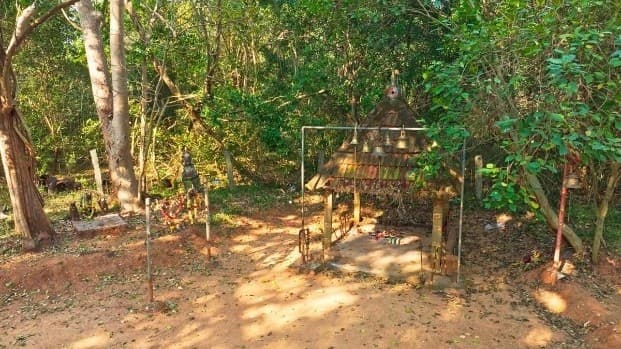
Kasampatty Sacred Grove, Dindigul district, Tamil Nadu; second BHS of state after Arittapatti (2022).

Quick Facts for MCQs

Legal & Policy

  • Section 37 empowers state to notify BHS via Gazette after public consultation.
  • State Biodiversity Board monitors management, local bodies implement conservation plan.
  • Panchayat resolution forms primary legal trigger for site proposal.

Ecological Significance

  • Grove maintains microclimate stability and wildlife corridor between village land and Alagarmalai Reserve Forest.
  • Native flora support pollinators vital for surrounding commercial mango orchards.
  • Soil organic content enhanced, aiding regional agricultural sustainability.

Cultural Angle

  • Sacred-grove tradition anchors community stewardship; rituals at Veera Kovil temple deter resource extraction.
  • Community protection precedes formal notification, underscoring customary conservation efficacy.
  • Cultural tag strengthens legal safeguards without displacing local religious practices.

Key Data Points

FeatureData-Point
Latest BHSKasampatty Sacred Grove (Veera Kovil Grove)
District & StateDindigul, Tamil Nadu
Grove area4.97 ha
First TN BHSArittapatti village, Madurai (2022)
Governing clauseSection 37, Biological Diversity Act 2002
Key deity worshippedVeeranan
Administrative proposerReddiyapatty Panchayat Council
Supporting bodiesTamil Nadu Biodiversity Board, District Collector
Core ecological rolePollination bridge for mango plantations; soil fertility boost
BHS eligibility criteriaRich diversity, high endemism, cultural or sacred value, threatened species habitat
GS-3Environment

7.Second National Gene Bank Initiative (Crop Germplasm Conservation)

DD News
Illustration for Second National Gene Bank Initiative (Crop Germplasm Conservation)

What & Where

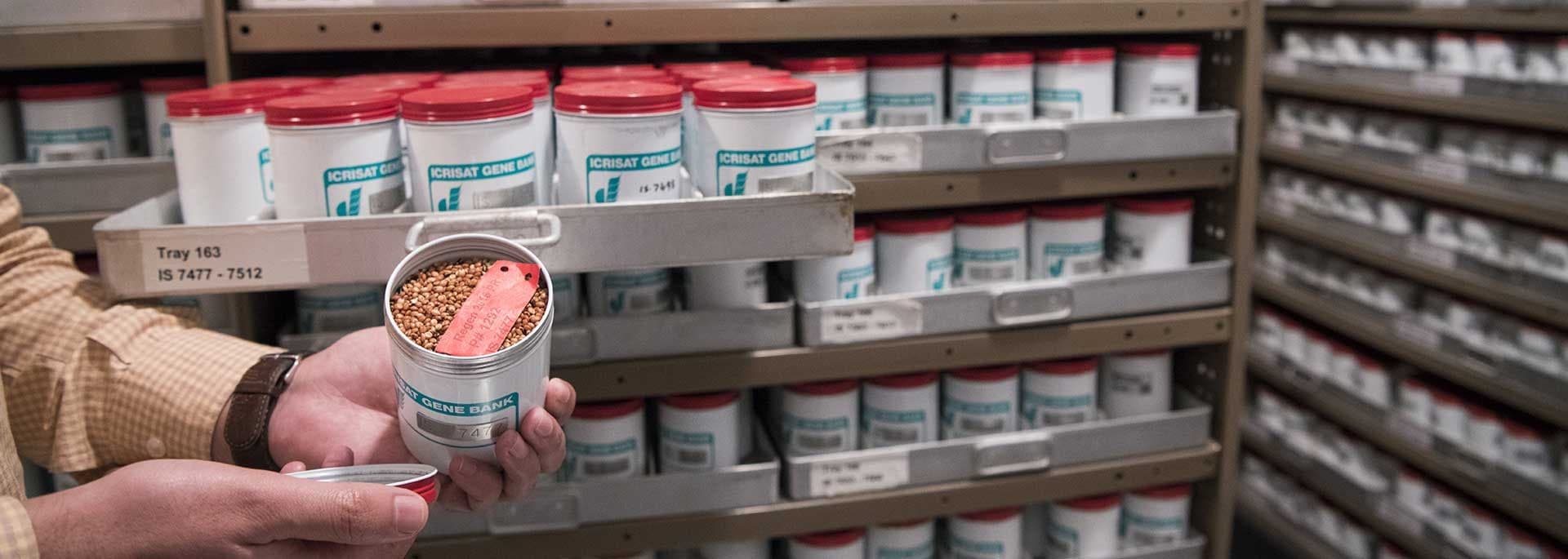
National Gene Bank: ex-situ storehouse of seeds/tissues/pollen preserving crop genetic diversity from extinction.

Present NGB: operational since 1996 at ICAR-NBPGR, New Delhi; network of 12 regional stations.

Second NGB: announced in Union Budget 2025-26; location pending; aims to double conserved germplasm to 10 lakh lines.

Quick Facts for MCQs

Tech & Schemes

  • Cryogenic, sub-zero and DNA-backed systems enable multi-decadal viability of germplasm.
  • Digital databases track accession health; facilitate breeder access nationally & globally.
  • Follows “Investing in Innovations” budget theme to modernise agri-biodiversity tools.

Food & Climate Security

  • Preserved germplasm underpins breeding for drought, salinity, pest and nutrition traits.
  • Acts as genetic insurance for future food, feed and bio-fuel needs amid climate shocks.
  • Supports biofortification goals enhancing national nutritional security.

International Angle

  • Collections exchanged under SAARC, BRICS, and other multilateral PGR treaties.
  • Aligns with global crop diversity initiatives; complements Svalbard Global Seed Vault redundancy.
  • Strengthens India’s soft power in germplasm sharing and climate-resilient agriculture diplomacy.

Key Data Points

FeatureData-Point
Parent ministryAgriculture & Farmers’ Welfare
Managing bodyICAR – NBPGR
Year first NGB set up1996
Stored accessions (1st NGB)4.71 lakh from 2,157 species
Major groups storedCereals 1.7 lakh; Millets 60,600+; Legumes 69,200+
Global standing2nd-largest gene bank worldwide
Regional stations count12
Budget 2025–26 promiseNew NGB with 10 lakh line capacity
Core storage techCryogenic tanks, long-term seed chambers, DNA fingerprinting
Redundancy roleSafety-duplicate vault against natural/man-made threats
GS-3Environment

8.Light Fishing Ban and Ecological Impact (Marine Fishing Methods)

Down to Earth
Illustration for Light Fishing Ban and Ecological Impact (Marine Fishing Methods)

What & Where

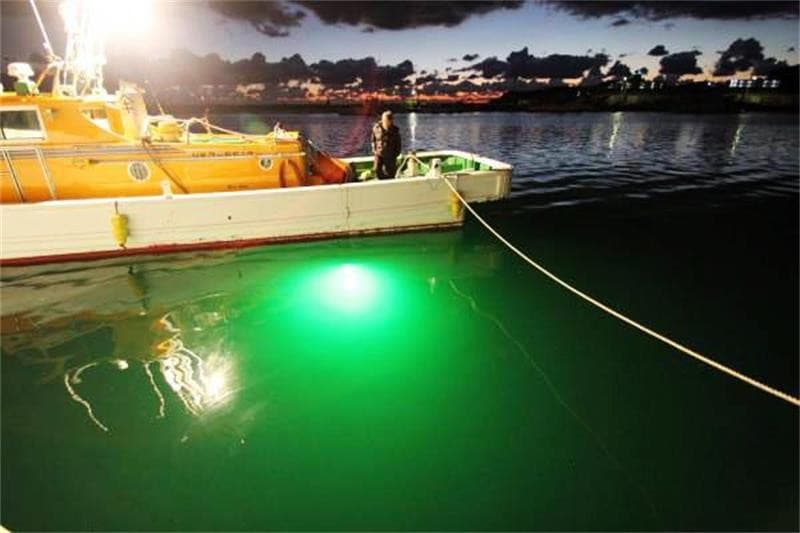
Light fishing: night-time use of high-intensity LED/halogen lamps to lure shoals for mechanised trawl nets.

Practised along India’s entire coastline, especially December–February lean season.

Prohibited since 2017 inside India’s Exclusive Economic Zone (EEZ) and all coastal state waters.

Quick Facts for MCQs

Legal & Policy

  • MoA&FW 2017 notification bans light fishing, bull-trailing & pair-trawling nationwide.
  • Enforcement weak; practice continues unchecked in several coastal states.
  • Violation risks export sanctions from EU, Japan on sustainability grounds.

Environmental Impact

  • Juvenile removal lowers future stock recruitment, threatens long-term catch stability.
  • Artificial illumination disrupts spawning cues; alters predator–prey dynamics.
  • Non-target attraction escalates biodiversity loss and food-web imbalance.

Economic Angle

  • Short-term catch spike incentivises fishers during lean months, but depletes future income.
  • Overfishing may jeopardise ₹40,000-crore seafood export sector compliance.
  • Rising operational costs (fuel, lights, generators) reduce profit margins for small trawlers.

Key Data Points

FeatureData-Point
Central ban year2017
JurisdictionEntire EEZ & coastal state waters
Major craftMechanised trawlers
Key targetsSquid, sardine, juvenile fish
Peak seasonDecember-February
Typical light sourceLED / halogen, generator-powered
Ecological concernHigh bycatch, juvenile depletion
GS-3S&T

9.AI Literacy for Inclusive Innovation (AI Education)

Indian Express

What & Where

Definition: AI literacy—competence to understand, collaborate with and critique AI across sectors

Key processes: Human-AI partnership, bias detection, creative problem-solving; stresses concepts over coding

Core geography: India aiming to leap from IT services hub to global AI innovator

Quick Facts for MCQs

Economic Angle

  • GDP boost worth ~$1 trillion projected by 2035 through AI adoption
  • Jobs shifting; AI literacy now core employability requirement across non-tech sectors
  • Global race; early AI education investment drives innovation leadership positions

Education Gaps

  • Pedagogy centred on rote learning limits critical thinking needed for AI concepts
  • Acute shortage of machine-learning trained faculty in engineering institutes and schools
  • Digital divide stark; only 38 % rural schools have computer labs versus 72 % urban

Policy & Initiatives

  • NEP 2020 and draft National AI Strategy push responsible, inclusive AI education
  • Curriculum moves: CBSE optional subject, Karnataka pilot across 1,000 schools
  • Public-private tie-ups (Microsoft labs, Google workshops, NASSCOM portal) scale training and infrastructure

Key Data Points

FeatureData-Point
Potential GDP boost~$1 trillion by 2035
Rural schools with computer labs38 %
Urban schools with computer labs72 %
Schools teaching AI< 5 %
Govt AI spend share0.1 % of education budget
Karnataka school AI pilot1,000 schools
CBSE AI subjectGrades 8-10
Workforce upskilling portalNASSCOM FutureSkills Prime

Related UPSC Prelims PYQs

ESE_GS, GS1 2026PYQ 1

What is the theme of Global Media and Information Literacy (MIL) Week 2025?

ESE_GS, GS1 2025PYQ 2

ग्रैण्ड पैलै (Grand Palais) पेरिस में नवम्बर 2025 में आयोजित होने वाले AI शिखर सम्मेलन के सन्दर्भ में, निम्नलिखित कथनों पर विचार कीजिए :

GS-2Mapping

10.Operation Brahma Earthquake Relief Mission (Humanitarian Relief)

Down to Earth
Illustration for Operation Brahma Earthquake Relief Mission (Humanitarian Relief)

What & Where

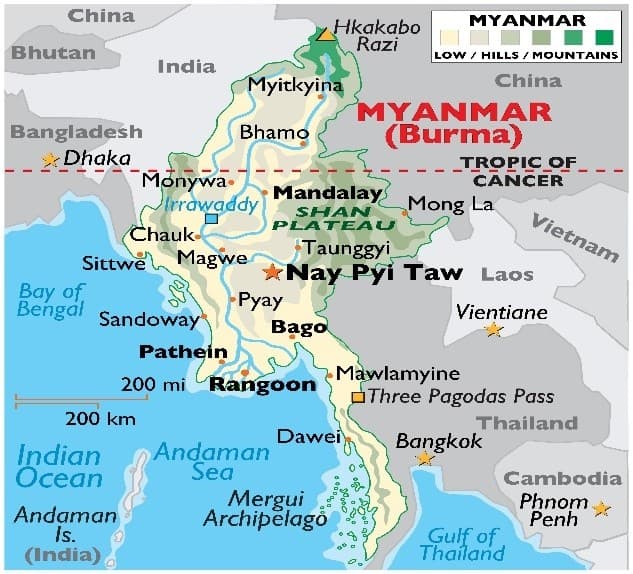
Event: 7.7-magnitude earthquake struck Mandalay region, Myanmar.

Setting: Collision zone of Indian–Eurasian plates, sliced by north-south Sagaing Fault.

Response: India activated Operation Brahma for rapid humanitarian aid.

Quick Facts for MCQs

Geophysical Setting

  • Collision: Indian plate moving northward against Eurasian plate creates high seismicity.
  • Fault: Sagaing Fault accommodates lateral motion, running north-south through central Myanmar.
  • Mechanism: Strike-slip movement triggers shallow, damaging earthquakes.

Physical Geography

  • Relief: Northern Mountains with Hkakabo; Western Ranges shield coastal plain; Shan Plateau in east.
  • Drainage: Irrawaddy, Chindwin, Sittang, Salween carve distinct physiographic zones.
  • Coast: Southern littoral along Andaman Sea and Bay of Bengal aids maritime access.

Relief Operation

  • Initiative: Operation Brahma flown by Indian Air Force within hours of quake.
  • Cargo: First sortie carried 15 tonnes relief, SAR teams, medical personnel.
  • Platform: Tactical airlifter C-130J chosen for short-runway capability into Myanmar airfields.

Key Data Points

FeatureData-Point
Earthquake magnitude7.7 Mw
Epicentre areaMandalay, central Myanmar
Capital cityNay Pyi Taw (2006)
Highest peakMt Hkakabo Razi 5,881 m
Main navigable riverIrrawaddy
Active faultSagaing Fault
Tectonic platesIndian & Eurasian
Relief missionOperation Brahma
First aid consignment15 tonnes
IAF aircraft usedC-130J Super Hercules
Bordering seasAndaman Sea; Bay of Bengal
Western rangesPatkai, Naga, Chin, Rakhine

Related UPSC Prelims PYQs

GS1, NDA_GAT 1995PYQ 1

83. Arakan Yoma is the extension of the Himalayas located in

GS1, NDA_GAT 2021PYQ 2

Recently a state of emergency has been declared in which one of the following countries?

GS-3Security

11.Indigenous FPV Kamikaze Anti-Tank Drone (FPV Kamikaze Drone)

New Indian Express
Illustration for Indigenous FPV Kamikaze Anti-Tank Drone (FPV Kamikaze Drone)

What & Where

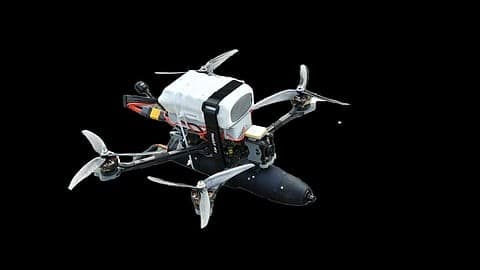
Low-cost First-Person View (FPV) kamikaze drone carrying impact-based anti-tank munition for single-use precision strikes.

Conceived by Indian Army’s Fleur-De-Lis Brigade with DRDO-TBRL, Chandigarh; assembled at Rising Star Drone Battle School.

Targets armoured platforms in tactical, urban and high-risk terrains across Indian battlefields.

Quick Facts for MCQs

Technical Features

  • Optimised weight balance & manoeuvrability for narrow urban corridors.
  • Dual-safety circuitry prevents accidental blast during crash or handling.
  • Live telemetry enables precise approach and detonation timing.

Operational Use-Cases

  • Anti-tank missions neutralise armour without exposing ATGM teams.
  • Urban penetration through windows/alleys expands engagement envelope.
  • Remote strikes in mountainous or mined zones cut soldier casualties.

Indigenisation & Cost

  • Fully designed, fabricated in-house; reduces import dependence.
  • Sub-₹2 lakh price undercuts imported loitering munitions manifold.
  • Scalable production plan aligns with modern drone-centric warfighting.

Key Data Points

FeatureData-Point
Development agenciesFleur-De-Lis Brigade + DRDO TBRL
Control modeFPV goggles with live video feed
Strike roleSingle-use kamikaze, impact detonation
Primary targetTanks / armoured vehicles
Payload armingDual-safety, radio-command activation
Estimated cost≈ ₹1.4 lakh per unit
Units inducted5 (initial lot)
Further procurement95 more sanctioned
Planned output100+ units by Mar 2025
Assembly centreRising Star Drone Battle School
Feedback systemReal-time payload status on FPV display
GS-3SecurityQuick Bite

12.Exercise Prachand Prahaar Integrated Warfare (Tri-Service Exercise)

The Hindu

What & Where

Exercise Prachand Prahaar = tri-service integrated multi-domain warfare drill by Indian Army.

Key processes: joint surveillance, networked command-control, precision firepower using land-air-space assets.

Geography: Eastern Command, high-altitude Arunachal Pradesh along India-China LAC.

Quick Facts for MCQs

Security Dimension

  • Deterrence; rehearses rapid, coordinated response to potential PLA incursions in eastern sector.
  • Includes electronic warfare elements to ensure resilience of communications and targeting.

Tech & Platforms

  • Surveillance assets: long-range aircraft, MALE UAVs, ISR satellites for real-time target feeds.
  • Firepower tools: fighters, multi-barrel rocket launchers, 155 mm artillery, loitering kamikaze drones for deep strikes.

Operational Objectives

  • Achieve seamless sensor-shooter link across Army, Navy, Air Force for faster kill chain.
  • Test logistics, mobility and precision engagement in high-altitude, jungle-mountain terrain under joint HQ control.

Key Data Points

FeatureData-Point
Conducting commandIndian Army Eastern Command
CharacterTri-service, multi-domain
State/UTArunachal Pradesh
Border focusIndia–China LAC
Previous linked drillExercise Poorvi Prahar (Nov 2024)
Simulated milieuElectronically contested battlefield
Core assetsLong-range reconnaissance aircraft, UAVs, armed helicopters, space-based sensors
Strike mixFighter aircraft, rocket systems, artillery, kamikaze drones
Primary aimEnhance operational readiness & integration
Validation pointsSurveillance, command, control, precision engagement

Related UPSC Prelims PYQs

CDS_GK, NDA_GAT 2023PYQ 1

The 16th edition of Indo-Nepal annual joint training exercise in jungle warfare and counter-terrorism operations was held in December 2022 at Nepal Army Battle School, Saljhandi. What is the name of this exercise?

CDS_GK, NDA_GAT 2024PYQ 2

Which one among the following Joint Military Exercises was NOT conducted between India and USA?

GS-1Editorial

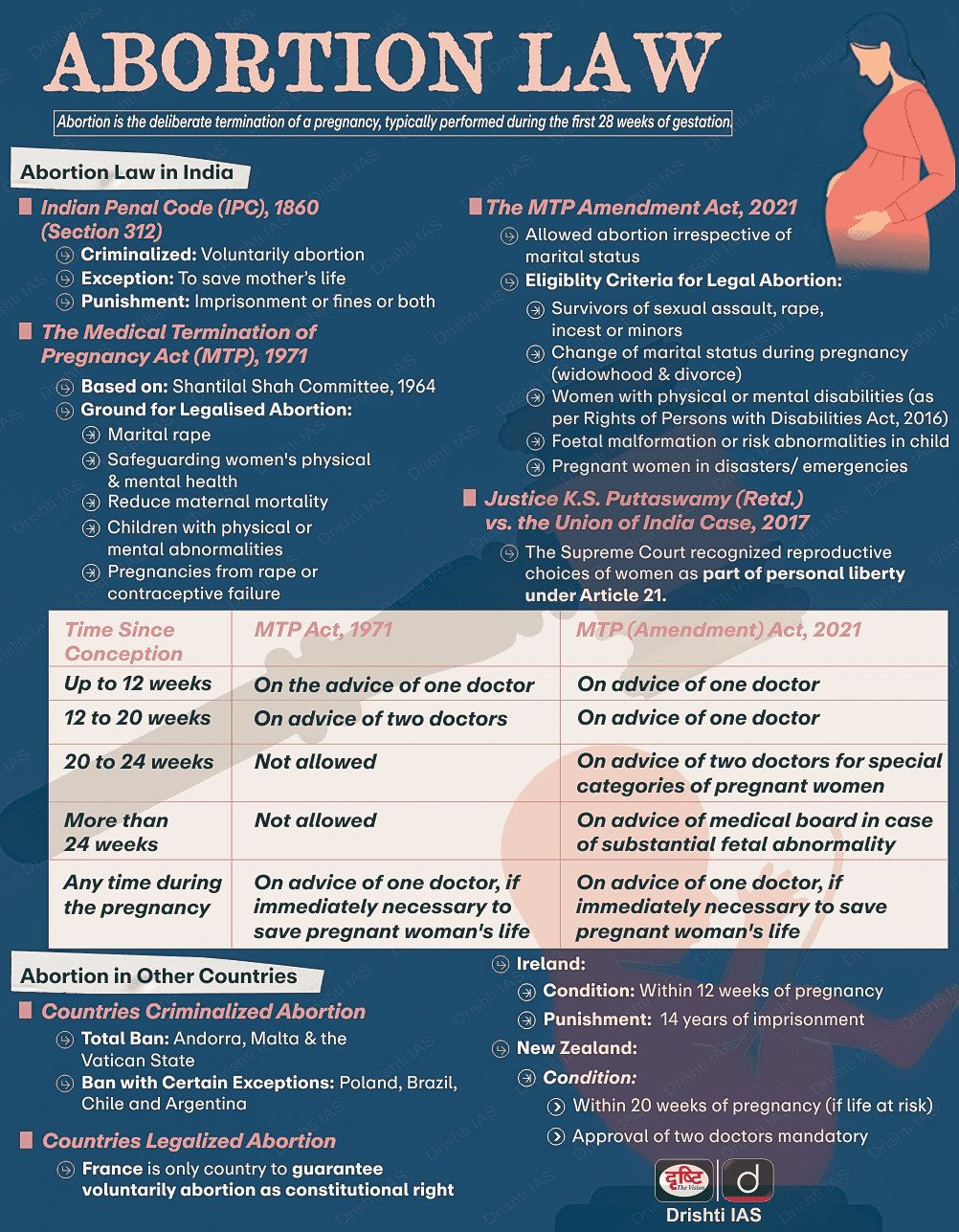
13.Barriers to Abortion Access in India (Abortion Law)

The Hindu
Illustration for Barriers to Abortion Access in India (Abortion Law)

What & Where

Medical Termination of Pregnancy Act 1971 (amended 2021) regulates induced abortions across India under specified conditions

Gestational limits: ≤20 weeks — 1 RMP; 20–24 weeks — 2 RMPs; >24 weeks — State Medical Board clearance

Outside these exceptions abortion remains criminal under Bharatiya Nyaya Sanhita (ex-IPC)

Quick Facts for MCQs

Legal & Policy

  • Amendment2021 extends limit to 24 weeks for specific categories with dual RMP nod
  • BNS retains criminality for abortions outside MTP exceptions
  • SC 2022 ruling equates married and unmarried women’s abortion rights 20–24 weeks

Access Barriers

  • ConfidentialityRisk from mandatory pregnancy registration may push women toward unsafe procedures
  • MedicalBoards lack standard protocols causing approval delays in late terms
  • SpecialistShortage in rural areas plus NICU deficit limits safe service availability

Suggested Reforms

  • RightsBased approach framing abortion as essential healthcare within gestational limits
  • ProviderExpansion by training general physicians and mid-level cadre for early MTP
  • PrivacyStrengthening by strictly enforcing Section 5A confidentiality norms

Key Data Points

FeatureData-Point
IPC sections criminalising abortion pre-1971312 & 313
Reform committee & yearShantilal Shah Committee 1966
Latest MTP amendment2021
Supreme Court privacy caseJustice K S Puttaswamy 2017
SC parity ruling (married ≈ unmarried)2022
Assumed foetal viability threshold24 weeks
Rural gynaecologist shortfall70 % (RHS 2019-20)
Confidentiality clauseSection 5A, MTP Act
State with mandatory pregnancy registrationHaryana
GS-1Editorial

14.India's SDG Progress and Challenges (SDG Index)

Business Standard
Illustration for India's SDG Progress and Challenges (SDG Index)

What & Where

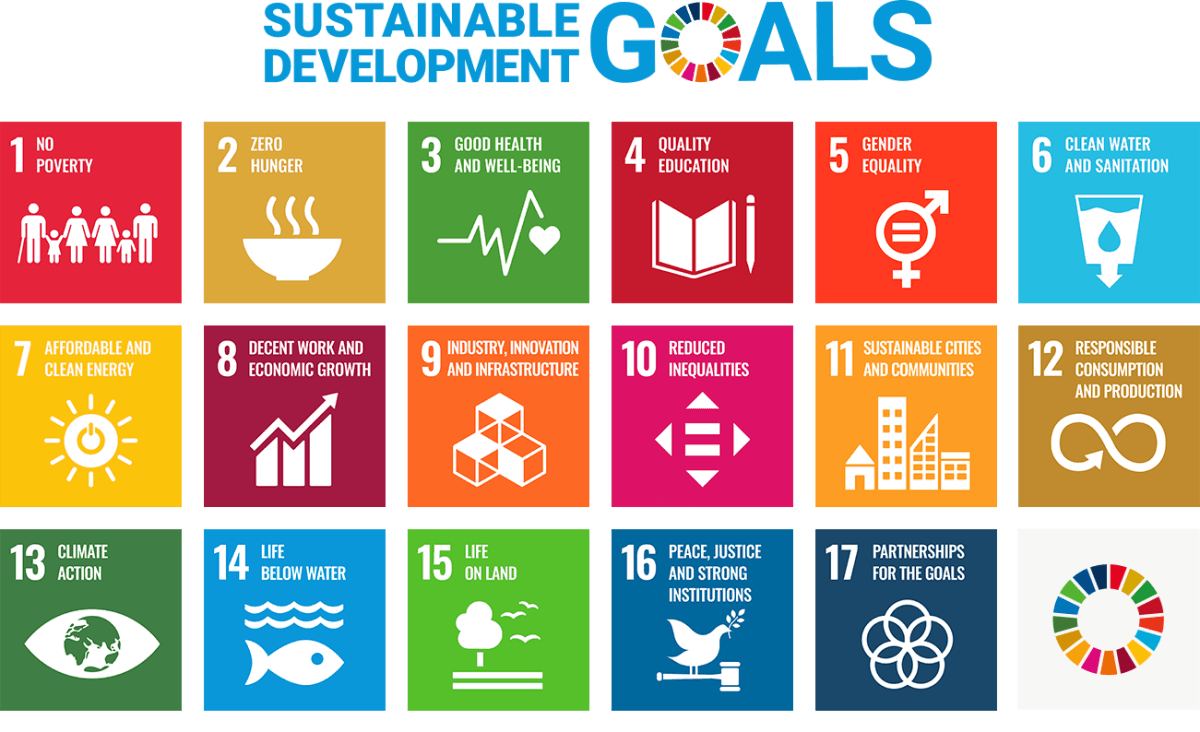
Sustainable Development Goals: 17 universal 2015-2030 targets spanning poverty, inequality, climate, environment, governance.

India: Global SDG-2024 rank 109/166; NITI Aayog index monitors state-wise performance.

Domestic leaders: Kerala & Uttarakhand score ≥80 in 8 goals; nine states regress on Goals 1, 5, 10, 16.

Quick Facts for MCQs

Performance Metrics

  • ScoreRise: India +14 points since 2018; top states maintain achiever status.
  • Goal3: MMR cut by 33 %; shows health system gains.
  • Goal7: Renewable capacity up 28.6 GW within 12 months.

Budget & Finance

  • StateBudgets: Haryana, Odisha, Meghalaya publish SDG-tagged expenditure books.
  • FundingGap: 0.7 % GNI aid pledge still unmet; private capital critical.
  • Instruments: SDG bonds, impact investing, ESG disclosure mobilise new flows.

Implementation Challenges

  • ConflictImpact: Russia-Ukraine war disrupts 30 % wheat exports, hitting food security.
  • Trade-offs: Fossil-fuel dependence vs climate targets strains poor economies.
  • PandemicSetback: Covid-19 reversed poverty reduction across regions.

Way Forward

  • PeaceBuilding: UN negotiation & Finance for Peace vital for post-war recovery.
  • TargetedFocus: India must accelerate Gender Equality & Inequality goals.
  • TechMonitoring: AI, blockchain enable real-time SDG tracking and accountability.

Key Data Points

FeatureData-Point
Global SDG rank (India, 2024)109 / 166
National SDG score57 (2018) → 71 (2023-24)
Avg state score rise+5 units (2019-22)
States ≥80 score in 8 goalsKerala, Uttarakhand
Maternal Mortality Ratio130 → 97 /100,000 live births
Higher-education GER23.7 % → 28.4 %
Rural safe-water access95 % (2020-21)
Renewable capacity209.44 GW (Dec 2024)
SDG finance needUSD 4 trn/yr (developing nations)

Related UPSC Prelims PYQs

CDS_GK, GEO_GS 2023PYQ 1

SDG India Index, developed by NITI Aayog, includes 17 SDGs for each State. Which one of the following is not included in that index?

CDS_GK, GEO_GS 2023PYQ 2

According to the NITI Aayog SDG India Index, 2020–21, which one among the following States is a Front Runner in its performance on SDG-14?

Ready to practice?

Test your knowledge with our UPSC test series.

Start Free Trial