UPSC Current Affairs

13 topicsGS-1: 3GS-2: 2GS-3: 8
0/13 done
GS-2Editorial

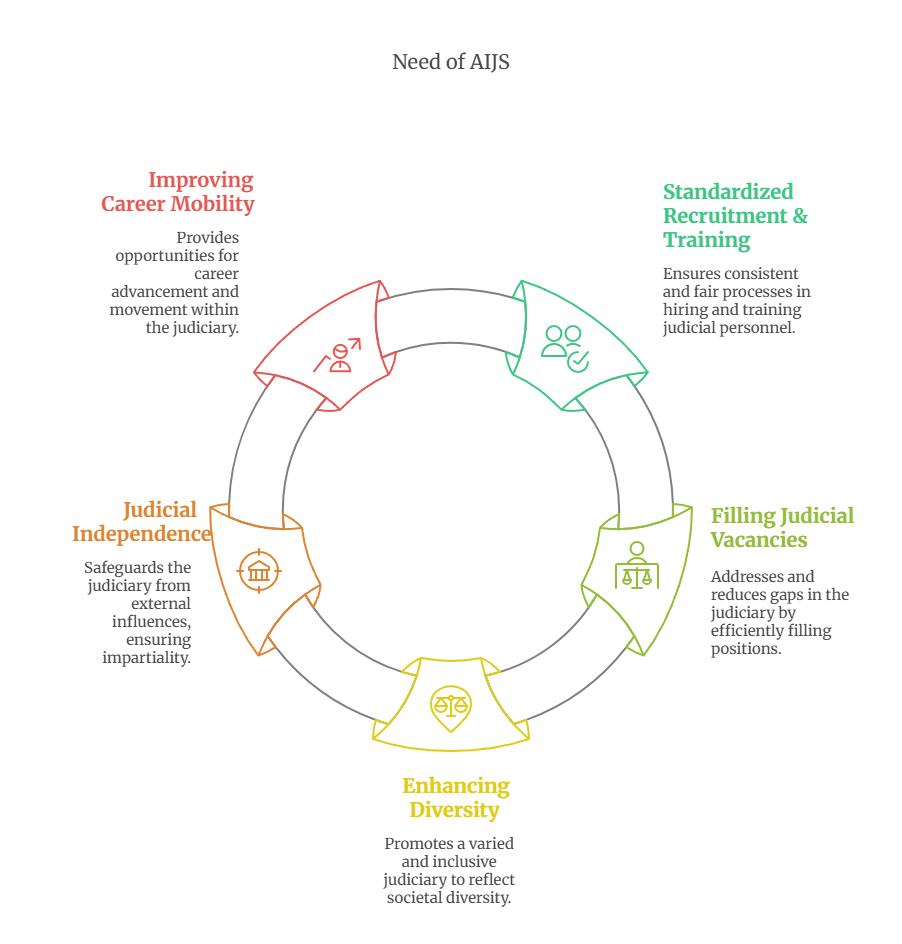
1.India Judicial Appointment Reforms Debate (Judiciary)

Indian Express
Illustration for India Judicial Appointment Reforms Debate (Judiciary)

What & Where

Collegium System: judge-led mechanism for SC/HC appointments & transfers, operational pan-India since 1993 judgments.

NJAC: 99th Constitutional Amendment 2014 proposed six-member commission for nationwide higher-judiciary appointments.

AIJS: Article 312 enables single competitive service to recruit district-level judges across all states.

Quick Facts for MCQs

Constitutional Provisions

  • Article 312(3) limits AIJS to district judge & above posts as defined in Article 236.
  • Governor consults respective High Court for district judge postings under Article 233.
  • Supreme Court cites judicial primacy as part of basic structure in NJAC verdict.

Systemic Issues

  • Opaqueness: no official minutes, closed-door collegium meetings.
  • Diversity gap: only 2 women judges in SC, overall higher-judiciary under-represented communities.
  • Uncle-Judge syndrome: absence of objective criteria fuels perceived nepotism.

NJAC Design

  • Composition: CJI, two senior SC judges, Law Minister, two civil-society eminents.
  • Balanced roles: executive presence plus judicial majority, reinforced by dual-member veto.
  • Passed near-unanimously in Parliament; ratified by 16 states before being voided.

AIJS Details

  • Aim: uniform recruitment, merit filtration, faster filling of subordinate-court vacancies.
  • Exam proposed through UPSC-like centrally conducted process, postings allocated to states.
  • Law Commission reports 1958, 1978, 2006 reiterated need for service.

International Examples

  • United States: Senate Judiciary Committee holds confirmation hearings; executive nominates, legislature confirms.
  • United Kingdom: Judicial Appointments Commission includes lay members alongside judges, ensuring transparency.

Key Data Points

FeatureData-Point
Art. for SC judge appointmentArticle 124(2)
Art. for HC judge appointmentArticle 217
Women in High Courts (Aug 2024)14 %
Avg. appointment delay post-2015285 days
NJAC struck down2015, 4:1 bench
NJAC veto thresholdAny 2 of 6 members
Eminent persons quota1 seat for SC/ST/OBC/minority/women
AIJS constitutional baseArticle 312, RS 2/3 majority
District judge current articleArticle 233
Collegium secretariatNone (ad-hoc registry support)

Related UPSC Prelims PYQs

CAPF_GAI, GS1 2012PYQ 1

What is the provision to safeguard the autonomy of the Supreme Court of India?

CAPF_GAI, GS1 2022PYQ 2

Which one of the following is correct in respect of the appointment of District Judges?
GS-3Economy

2.India’s Technical Textiles Growth Outlook (Technical Textiles)

PIB
Illustration for India’s Technical Textiles Growth Outlook (Technical Textiles)

What & Where

Definition: Technical textiles = functional fabrics engineered for automotive, medical, agro, geo, defence and industrial uses

Key types/processes: geotextiles, agro-textiles, medical textiles; advanced fibres, smart coatings, bonding technologies

Core geography: India 6th-largest textile exporter; clusters in Tamil Nadu, Gujarat, Maharashtra driving tech-textile push

Quick Facts for MCQs

Policy & Schemes

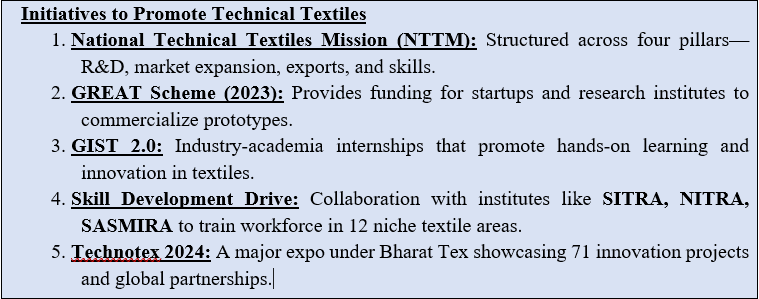
  • NTTM four-year mission promotes R&D, market development, skill building, export promotion
  • Export Promotion Council planned exclusively for technical textiles products
  • Tamil Nadu hiking spinning modernisation subsidy 2 % → 6 % to lure investors

Economic Angle

  • Technical textiles positioned to unlock high-value export segments like automotive, healthcare, defence
  • Sector envisages multiplier effect: innovation → domestic manufacturing → large-scale employment
  • Startup pipeline exemplified by Mahina bonded period underwear under Make in India ethos

Challenges

  • Awareness deficit among MSME end-users restricts domestic adoption
  • Skill gap persists in advanced fibre engineering and application design
  • Import dependence on specialty fibres, machinery inflates production costs and limits competitiveness

Road Ahead

  • Incentivise capital investment via tax breaks, higher subsidies, PLI-style benefits
  • Leverage FTAs to cut tariff barriers and widen market access for Indian tech-textile exports
  • Mandate technical textiles in public infrastructure, health procurement; complement with nationwide awareness campaigns

Key Data Points

FeatureData-Point
Global textile export rank6th
Share in global trade3.9 %
GDP contribution (overall textiles)~2 %
Market size target 2030USD 350 bn
Jobs expected by 20303.5 crore
NTTM outlay 2020-26₹1,480 crore
NTTM funds utilised so far₹393.39 crore
R&D projects sanctioned168 (₹509 crore)
Professionals to be trained50,000 +
GREAT grant cap₹50 lakh

Related UPSC Prelims PYQs

ESE_GS 2020PYQ 1

Technical textiles are

GS-3Economy

3.Revised Priority Sector Lending Guidelines (Priority Lending)

Indian Express

What & Where

Instrument; RBI Priority Sector Lending norms guide bank credit to specified vulnerable sectors in India

Coverage; Applies to scheduled commercial, select foreign, RRBs, co-operative and small finance banks

Update; Sept 2020 revision adds new categories and district-level incentives for inclusive credit flow

Quick Facts for MCQs

Legal & Policy

  • Revision; Master Direction September 2020 inserts fresh categories and higher credit ceilings
  • Targets; Sub-targets for small farmers and weaker sections slated for phased increase
  • Weightage; Low-credit districts rewarded, high-credit districts face lower PSL scoring

Farming Measures

  • Definitions; Marginal ≤1 ha, Small 1–2 ha expressly recognised
  • FPOs; Marketing-assured cultivation loans permitted up to ₹2 crore
  • Solar pumps; Grid-connected pump solarisation loans newly PSL-eligible

Infra & Green Credit

  • Renewable; Project loan cap doubled to ₹30 crore, household cap ₹10 lakh
  • BioGas; Funding for Compressed BioGas plants added to PSL list
  • Health; Ayushman Bharat facilities in Tier II–VI centres eligible up to ₹10 crore

Key Data Points

FeatureData-Point
Guideline revision year2020
SCB PSL target40 % ANBC
RRB/Co-op/SFB target75 % ANBC
Start-up finance cap₹50 crore
FPO loan ceiling₹2 crore
Renewable project cap₹30 crore
Household renewable cap₹10 lakh
Health infra cap₹10 crore
Marginal farmer size≤1 ha
Small farmer size1–2 ha

Related UPSC Prelims PYQs

GS1 2013PYQ 1

Priority Sector Lending by banks in India constitutes the lending to

GS1 1999PYQ 2

The main sources of credit to the farmers include

GS-3EconomyQuick Bite

4.SEBI Raises FPI Disclosure Threshold (FPI Regulation)

Business Standard

What & Where

SEBI-India: lifts FPI granular-disclosure trigger to ₹50,000 crore equity exposure (earlier ₹25,000 crore).

Applicability: single FPI’s cumulative Indian equity holdings breaching the new limit.

Framework: change under SEBI (Foreign Portfolio Investors) Regulations 2019 governing India’s capital market.

Quick Facts for MCQs

Legal & Policy

  • Statute: SEBI Act 1992 authorises framing of FPI disclosure norms.
  • Threshold: FPIs >₹50k cr must reveal beneficial ownership and fund structure details.
  • Relief: Mid-small FPIs below limit spared granular reporting burden.

Economic Angle

  • Volumes: Cash equity turnover almost doubled post-FY 23, prompting higher limit.
  • Inflows: Lower compliance cost expected to attract additional foreign capital.
  • Ease-of-doing: Measure aligns with wider capital-market liberalisation drive.

Institutional Details

  • Origin: SEBI set up 1988; HQ Mumbai; under Ministry of Finance oversight.
  • Mandate: Regulates exchanges, intermediaries; safeguards investors; ensures market transparency.
  • FPI role: Foreign investors diversify via Indian stocks, bonds, MFs, ETFs for returns.

Key Data Points

FeatureData-Point
New disclosure threshold₹50,000 crore
Previous threshold₹25,000 crore
RegulatorSecurities and Exchange Board of India
Statutory status year1992
Establishment year1988
Governing lawSEBI Act 1992
FPI rule-setSEBI (FPI) Regulations 2019
Equity turnover growth~2× since FY 2022-23
Main objectiveEase compliance; boost capital inflows

Related UPSC Prelims PYQs

GS1 2020PYQ 1

With reference to Foreign Direct Investment in India, which one of the following is considered its major characteristic?

GS1 2011PYQ 2

Both Foreign Direct Investment (FDI) and Foreign Institutional Investor (FII) are related to investment in a country. Which one of the following statements best represents an important difference between the two?

GS-1Scheme

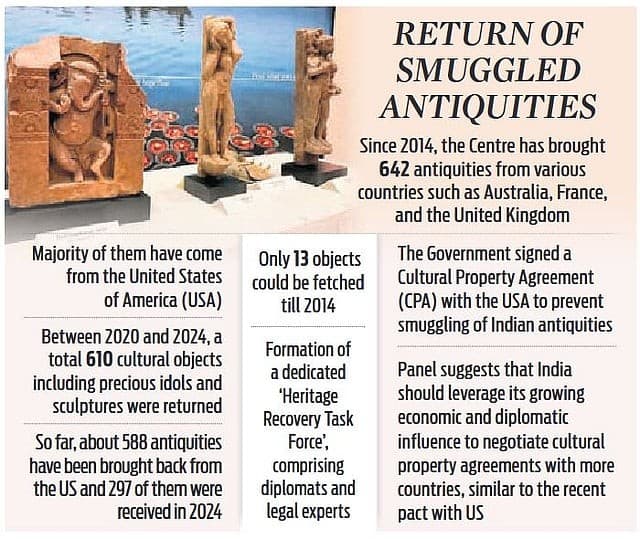
5.Heritage Repatriation Fund for Stolen Antiquities (Artifact Repatriation)

New Indian Express
Illustration for Heritage Repatriation Fund for Stolen Antiquities (Artifact Repatriation)

What & Where

Definition: Heritage Repatriation Fund—proposed corpus to finance retrieval of stolen Indian antiquities from abroad

Scope: Supports legal action, negotiation, purchase, transport, conservation via Public-Private Partnership contributions

Jurisdiction: Under Ministry of Culture; recommendation by Parliamentary Standing Committee on Transport, Tourism & Culture

Quick Facts for MCQs

Funding Mechanism

  • PPP: Voluntary inflows from corporates, wealthy individuals, global Indian diaspora
  • TaxBenefits: CSR alignment and philanthropic deductions anticipated to spur contributions
  • Flexibility: Fund can bankroll litigation, negotiation, or outright overseas purchase

Technological Tools

  • Imaging: 3D scanning and spectral analysis to match fragments and authenticate provenance
  • DNA: Material DNA testing for organic artifacts to counter forgeries
  • AI: Global database mapping theft alerts, auction listings, museum catalogues

Legal & Diplomatic

  • CPAs: Push for additional Cultural Property Agreements beyond existing India-USA pact
  • TaskForce: Diplomats, legal experts, art historians track and claim objects worldwide
  • Litigation: Fund covers court fees, mediation, repatriation paperwork in foreign jurisdictions

Logistics & Conservation

  • Transport: Secure, climate-controlled shipping of returned objects to India
  • Conservation: Restoration funded before display in national or state museums
  • CustodyChain: Documented handover process ensures transparent future ownership records

Key Data Points

FeatureData-Point
ProposerParliamentary Standing Committee on Transport, Tourism & Culture
Admin MinistryMinistry of Culture, Government of India
Core ObjectiveReclaim stolen / illegally exported Indian cultural objects
Funding ModelPPP; donations from corporates, HNIs, diaspora
Dedicated TeamMultidisciplinary Heritage Recovery Task Force
Key TechnologiesAI databases, advanced imaging, DNA testing
GS-1History

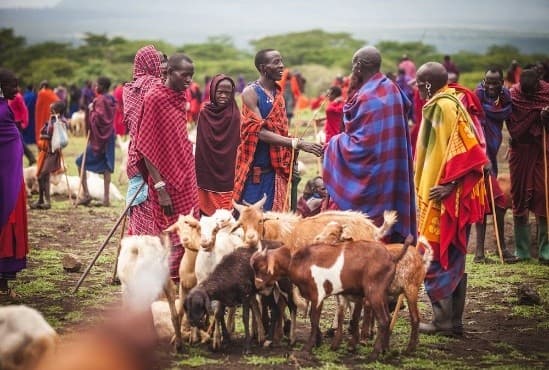
6.Maasai Tribe and Land Rights (Indigenous Tribe)

Down to Earth
Illustration for Maasai Tribe and Land Rights (Indigenous Tribe)

What & Where

Maasai Tribe – semi-nomadic pastoralists of East Africa’s Great Rift Valley savannas.

Core presence in northern Tanzania & southern Kenya; practice year-round transhumance.

Currently opposing carbon-credit land deals fearing dispossession, cultural loss.

Quick Facts for MCQs

Social Structure

  • Patrilineal lineage dictates inheritance, marriage alliances.
  • Age-set system synchronises rites, political duties across generations.
  • Elders wield judicial, ritual authority within manyatta (camp).

Livelihood Practices

  • Pastoralism central; livestock both economic asset and cultural currency.
  • Blood-letting ceremonies supply iron-rich nutrition during droughts.
  • Kraal design minimises predator attacks, facilitates herd security.

Cultural Identity

  • Distinct red shúkà cloth, elaborate beadwork mark clan, marital status.
  • Adumu (jump dance) showcases warrior agility during Eunoto ceremonies.
  • Oral folklore transmits history, grazing routes, moral codes.

Social Concerns

  • Carbon-credit projects viewed as external control over communal rangelands.
  • Fear of eviction echoes past conservation-driven displacements (Ngorongoro, Loliondo).
  • Indigenous activists demand FPIC, legal recognition of customary tenure.

Key Data Points

FeatureData-Point
LanguageMaa, Eastern Sudanic branch, Nilo-Saharan family
Main CountriesTanzania, Kenya
HabitatSemi-arid savannas along Great Rift Valley
Social LineagePatrilineal clans split into two moieties
GovernanceAge-set cycle: junior warrior → senior elder (~15 yr intervals)
Warrior GroupMorans, males 14–30 yrs, receive bush training
Key LivestockCattle, sheep, goats – sources of meat, milk, blood
Settlement TypeKraals: circular mud-dung houses, thorn fences
Subsistence FeatureRitual blood consumption from live cattle
Movement PatternSeasonal search for pasture & water (transhumance)
GS-1History

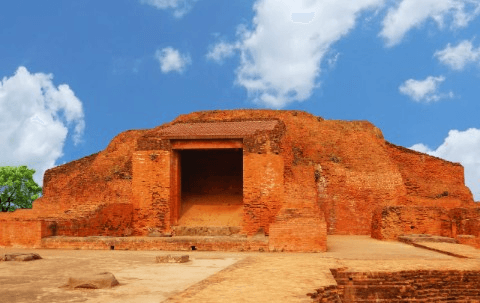
7.Revival Plan for Vikramshila University (Vikramshila Mahavihara)

Indian Express
Illustration for Revival Plan for Vikramshila University (Vikramshila Mahavihara)

What & Where

Vikramshila Mahavihara — Buddhist residential university, established late 8th–early 9th CE by Pala king Dharmapala.

Geography — Antichak village, Bhagalpur district, Bihar; contemporaneous with Nalanda under common Pala patronage.

Uniqueness — Only medieval Indian seat famed for Tantric/Vajrayana studies; ASI-protected, 455 acre Central University site sanctioned 2025.

Quick Facts for MCQs

Revival & Tourism

  • ASI excavations, pathways, illumination to boost visitor flow.
  • Bihar govt transferred 455 acres to Centre for new university campus.
  • Model parallels 2014 international revival of Nalanda.

Academic Distinctions

  • Specialised Tantric curriculum absent at Nalanda, Odantapuri, Somapura.
  • Produced Vajrayana manuals later translated in Tibet, Mongolia.
  • Monastic charter mandated text copying for library dissemination.

Pala Dynasty

  • Rule 8th–12th CE over Bengal-Bihar; capitals at Pataliputra, Monghyr.
  • Mahayana Buddhist patronage shaped bronze–stone art, palm-leaf miniatures.
  • Engaged in Kanauj tripartite struggle with Gurjara-Pratiharas, Rashtrakutas.

Key Data Points

FeatureData-Point
FounderDharmapala (Pala dynasty)
EstablishmentLate 8th–early 9th CE
Core LocationAntichak, Bhagalpur, Bihar
Academic NicheTantric & occult sciences
Other SubjectsTheology, philosophy, grammar, logic, metaphysics
Eminent ScholarAtisa Dipankara, spread Buddhism to Tibet
Relation to NalandaSupervised Nalanda’s affairs during Dharmapala
Decline Cause13th C Bakhtiyar Khalji raid + Buddhist waning
Surviving StructuresMain stupa, monastic cells, manuscript library
Current Revival StepLand allotted for Vikramshila Central University (2025)
GS-3Environment

8.Kasungu National Park Conservation Challenges (National Park)

Down to Earth

What & Where

Kasungu National Park — second-largest protected area of Malawi; created 1970 for Miombo woodland–savanna conservation.

Sits in Central Region, 175 km north of Lilongwe, abuts Zambia; rivers Dwangwa, Lingadzi, Lifupa drain park.

Current flashpoint: 2022 relocation of 263 elephants from Liwonde N.P. triggering cross-border human–elephant conflicts.

Quick Facts for MCQs

Human–Wildlife Conflict

  • Elephant crop-raids caused deaths, major livelihood losses, sparking lawsuit by border communities.
  • Translocated herds traverse porous Malawi–Zambia boundary, intensifying incidents in both countries.

Legal & Policy

  • Communities filed case against International Fund for Animal Welfare over negligence in relocation impacts.
  • Highlights accountability gaps in transboundary wildlife management under existing park protocols.

Conservation Measures

  • 2022 relocation aimed at elephant range expansion, genetic diversity, reducing pressure in Liwonde N.P.
  • Kasungu tagged Lion Conservation Unit to bolster predator recovery alongside herbivore population growth.

International NGO

  • IFAW works in 40+ nations; portfolio spans wildlife rescue, habitat restoration, legal advocacy, public outreach.

Key Data Points

FeatureData-Point
CountryMalawi
Bordering nationZambia
Area2,316 sq km
Year gazetted1970
Nearest townKasungu
Dominant tribe nearbyChewa
Vegetation typeMiombo woodland
Key riversDwangwa, Lingadzi, Lifupa
Designated Lion Conservation UnitSince 2005
Elephant translocated263 (year 2022)
Fatalities post-move≥ 12 humans
Affected villagers> 11,000
Park authorityDept. of National Parks & Wildlife (DNPW)
Partner NGOsAfrican Parks, IFAW
IFAW founding year1969
IFAW HQUnited States
GS-3Environment

9.Indian Coastal Erosion and Overfishing Crisis (Coastal Erosion)

Down to Earth
Illustration for Indian Coastal Erosion and Overfishing Crisis (Coastal Erosion)

What & Where

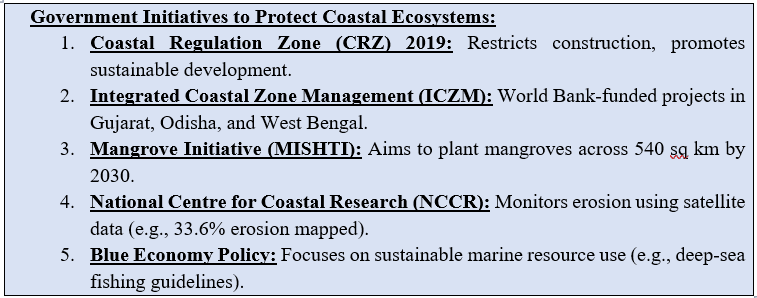
Indian coastline 7,500 km across 9 coastal States & 4 UTs; 33.6 % currently eroding (GoI).

Illegal light fishing = mechanised boats with high-lumen LEDs aggregating fish in near-shore waters despite bans.

Coastal erosion driven by sea-level rise 3.2 mm/yr, sand mining, ports; hotspots Dakshina Kannada, Puducherry.

Quick Facts for MCQs

Environmental Impact

  • Erosion: Dakshina Kannada lost 48.4 % shoreline in 30 years; Puducherry gains via breakwaters.
  • Biodiversity: Sundarbans mangroves, Gulf of Mannar reefs buffer waves, sequester significant carbon.
  • Pollution: Versova beach cleanup highlights plastic-waste threat to marine fauna.

Economic Angle

  • Fisheries: Light fishing depletes juveniles, undercuts 16 million artisanal livelihoods.
  • Trade: Mumbai & Chennai ports process ~70 % of national maritime cargo.
  • Tourism: Goa, Puri beaches anchor US $11 billion coastal tourism economy.

Legal & Policy

  • Ban: LED fishing prohibited, yet violations acute in Maharashtra, Andhra Pradesh.
  • CRZ breaches: Adani Kerala port case shows lax enforcement.
  • Monitoring: NCCR satellite maps guide erosion-hotspot management.

Tech & Schemes

  • Surveillance: Kerala AI-drone patrols curbed light-fishing infractions.
  • Engineering: Artificial reefs, sand nourishment cut Puducherry erosion by 30 %.
  • Adaptation: Odisha builds cyclone-resistant houses, relocates high-risk villages.

Key Data Points

FeatureData-Point
Coastline length7,500 km
Coastal States/UTs9 states + 4 UTs
Eroding coastline share33.6 %
Sea-level rise rate3.2 mm per year
People within 50 km250 million
Sectoral GDP share4 % of India’s GDP
Fish production from coasts70 % national catch
Fishers dependent16 million
Mangrove carbon storage4× terrestrial forests
Coastal tourism revenueUS $11 billion annually

Related UPSC Prelims PYQs

CDS_GK, GS1 2022PYQ 1

Which of the following statements about the coasts of India is/are correct?

CDS_GK, GS1 2008PYQ 2

In India, how many States share the coastline?

GS-3S&T

10.Silvaguard Autonomous Wildfire Detection Drone (Wildfire Drone Tech)

BW
Illustration for Silvaguard Autonomous Wildfire Detection Drone (Wildfire Drone Tech)

What & Where

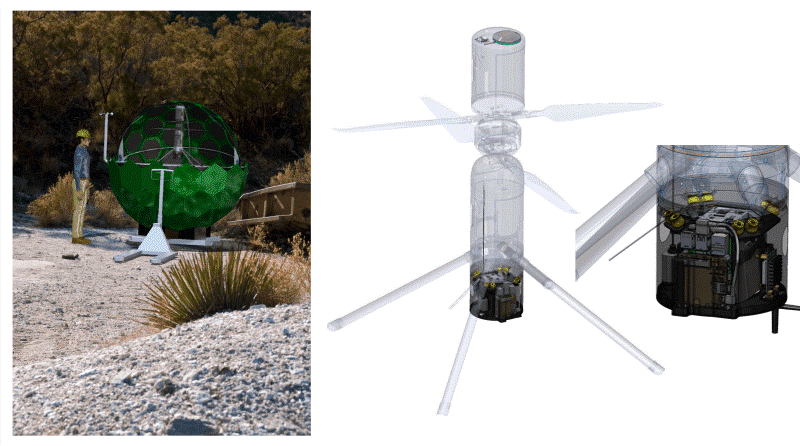
Silvaguard – prototype autonomous drone system for early wildfire detection and suppression

Works via Silvanet IoT sensor grid + solar-powered hangars launching AI-guided drones

Developed by Dryad Networks, Berlin; intended for worldwide forest deployment

Quick Facts for MCQs

Technology & Features

  • AI-enabled flight path planning ensures autonomous navigation and hotspot pinpointing
  • Sonic wave extinguisher under development to smother flames without water or chemicals
  • Modular drone hangars allow rapid scaling across vast forest networks

Environmental Impact

  • Early intervention curbs megafire formation, limiting atmospheric carbon release
  • Renewable power reliance reduces operational emissions compared to manned aerial sorties
  • Sound-based suppression avoids water wastage in drought-prone regions

Operational Mechanics

  • Sensor mesh detects gas signatures before visible flames, buying critical response minutes
  • Drones dispatch within seconds, fly pre-programmed grid, relay high-res thermal imagery
  • System designed for 24 × 7 autonomy, minimal human supervision

Key Data Points

FeatureData-Point
DeveloperDryad Networks, Germany
Core functionLocate and extinguish nascent wildfires
Integrated networkSilvanet IoT forest sensors
Launch triggerAutomatic on sensor fire alert
Hangar powerRoof-mounted solar panels
Key sensorsThermal camera, infrared, obstacle avoidance
Imaging outputReal-time video & GPS fire coordinates
Planned suppression techSonic wave frequencies
Primary goalCut fire damage and CO₂ emissions
Prototype statusUnveiled 2024 (Berlin)
GS-3S&T

11.Gaia Space Observatory Galactic Mapping Mission (Space Observatory)

Times of India
Illustration for Gaia Space Observatory Galactic Mapping Mission (Space Observatory)

What & Where

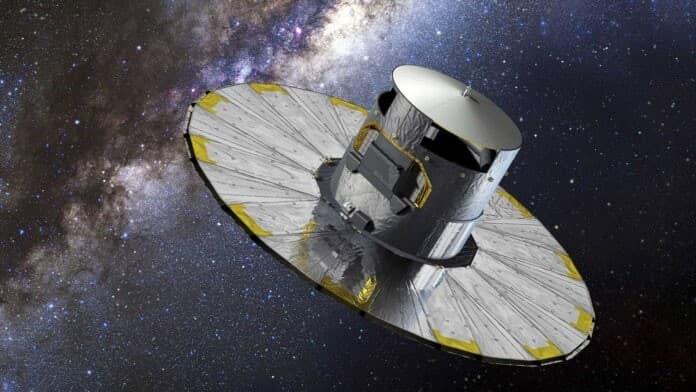
Gaia = space-based ESA astrometry observatory mapping Milky Way in 3-D with micro-arcsecond precision

Launched December 2013; full science operations from 24 July 2014; officially retired by ESA in 2024

Target region: entire Milky Way; catalogued positions, motions, physical traits of > 2 billion stellar objects

Quick Facts for MCQs

Tech & Instruments

  • Dual telescopes + 1-gigapixel camera enable micro-arcsecond positional accuracy
  • Continuous sky scanning every 6 h created time-series data for variability studies
  • Relativistic corrections embedded in onboard processing to counter spacecraft motion

Key Discoveries

  • 3-D galactic map shows warped, wobbling stellar disc, clarified spiral arms & central bar morphology
  • Stellar-stream evidence confirms ancient galactic mergers shaping Milky Way evolution, including Sun’s neighbourhood
  • First census of “dark” black holes lacking accretion signatures, found through stellar motion anomalies

Planetary-Defence Angle

  • Precise orbits for ~1.5 lakh asteroids refine impact-risk models & mission planning
  • Data improves Near-Earth Object size, albedo, composition statistics for threat assessment

Legacy & Future Science

  • Public data archive fuels exoplanet, cosmology, solar-system research for decades
  • Forthcoming releases to integrate final 66-month dataset despite spacecraft retirement

Key Data Points

FeatureData-Point
AgencyEuropean Space Agency (ESA)
Launch vehicle/siteSoyuz-STB, Kourou (French Guiana)
OrbitSun–Earth Lagrange point L2 (1.5 million km)
Mission typeAstrometry & photometry
Stars catalogued> 2 billion
Asteroids catalogued~1.5 lakh (150,000)
Major data releases2016, 2018, 2022; more pending post-retirement
Disc coverage achieved~2 % of Milky Way mapped so far
Novel black-hole class“Dark” BHs detected solely via gravitational pull
Retirement statusMission operations ended 2024; legacy data analysis continues

Related UPSC Prelims PYQs

ESE_GS 2024PYQ 1

AstroSat space telescope has crossed a major milestone by detecting 600th Gamma-Ray Burst launched by which one of the following countries?

GS-3Security

12.Nag Anti-Tank Missile System Procurement (Anti-Tank Missile)

IT
Illustration for Nag Anti-Tank Missile System Procurement (Anti-Tank Missile)

What & Where

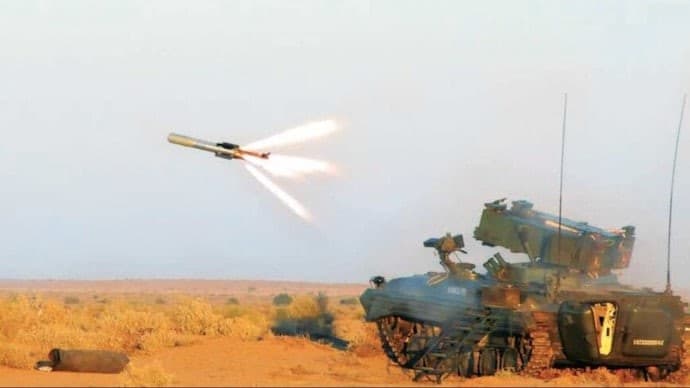
NAMIS: third-generation, fire-and-forget anti-tank guided missile system for Indian Army armoured units

Tracked version mounted on NAMICA carrier; missile variant currently Mark-2

Developed by DRDO; procurement ₹2,500 cr via Armoured Vehicle Nigam Ltd under Buy (Indian-IDDM)

Quick Facts for MCQs

Tech & Schemes

  • Capability: high-precision lock-on-before-launch ensures top-attack on armoured targets
  • Integration: launcher carries 6 ready-to-fire missiles, all-weather day-night sighting
  • Indigenisation: full design and production within Indian industry ecosystem

Economic Angle

  • Spending: contract injects ₹2,500 cr into domestic defence manufacturing supply chain
  • Employment: MSME participation expected to create direct and indirect skilled jobs
  • Multiplier: boosts component, electronics, propulsion sub-sectors under Make-II initiatives

Security Dimension

  • Deterrence: modern ATGM enhances armoured corps lethality against heavily protected tanks
  • Mobility: tracked NAMICA permits shoot-and-scoot across varied terrains along borders
  • Self-reliance: reduces dependence on imported ATGMs, strengthening strategic autonomy

Key Data Points

FeatureData-Point
Deal value₹2,500 crore
GenerationThird-generation ATGM
GuidanceFire-and-forget, imaging seeker
Warhead penetrationDefeats Explosive Reactive Armour (ERA)
Launch platformNAMICA tracked carrier
DeveloperDRDO
Procurement agencyArmoured Vehicle Nigam Limited
Policy categoryIndigenously Designed, Developed, Manufactured (IDDM)
Mission alignmentAatmanirbhar Bharat
Associated purchase5,000 light vehicles

Related UPSC Prelims PYQs

CDS_GK, ESE_GS 2021PYQ 1

भारत द्वारा विकसित ‘पिनाका’ क्या है?

CDS_GK, ESE_GS 2024PYQ 2

Ministry of Defence signed contract with which one of the following organizations for Upgraded Super Rapid Gun Mount (SRGM) and other equipment for around 3000 crores?

GS-2Scheme

13.BioSaarthi Biotech Startup Mentorship Scheme (Biotech Mentorship)

PIB

What & Where

BioSaarthi = structured global mentorship programme for nurturing Indian biotechnology start-ups.

Key processes: 6-month cohort, one-to-one mentor–mentee sessions, overseas expert pool.

Geography: Pan-India roll-out by BIRAC, Department of Biotechnology, Ministry of Science & Technology.

Quick Facts for MCQs

Tech & Schemes

  • Six-month cohort delivers scheduled capacity-building sessions and dedicated mentoring hours.
  • Mentoring covers R&D optimisation, regulatory navigation, scaling strategy, and funding access.
  • Complements existing BIRAC incubation grants, creating pipeline from idea to market.

Economic Angle

  • Aims to boost bioeconomy contribution to GDP by accelerating commercialisation of biotech innovations.
  • Addresses entrepreneurial pain-points, improving start-up survival and employment generation.
  • Promotes global competitiveness, positioning India as biotech hub.

International Linkages

  • Leverages Indian diaspora scientists/entrepreneurs volunteering expertise.
  • Creates cross-border knowledge flow, benchmarking Indian start-ups against global best practices.

Key Data Points

FeatureData-Point
Launch occasion13th Foundation Day of BIRAC
Parent ministryMinistry of Science & Technology
Implementing agencyBIRAC under DBT
Core objectiveStrengthen biotech ecosystem via mentorship
Target groupEarly-stage Indian biotech start-ups
Cohort length6 months
Mentor poolOverseas experts incl. Indian diaspora
ApproachStartup-centric personalised guidance
Ecosystem linkageComplements BioE3 (Biotech for Economy, Employment, Environment)
Collaboration focusIndustry-academia-government connect

Ready to practice?

Test your knowledge with our UPSC test series.

Start Free Trial