UPSC Current Affairs

17 topicsGS-1: 3GS-2: 4GS-3: 10
0/17 done
GS-2Polity

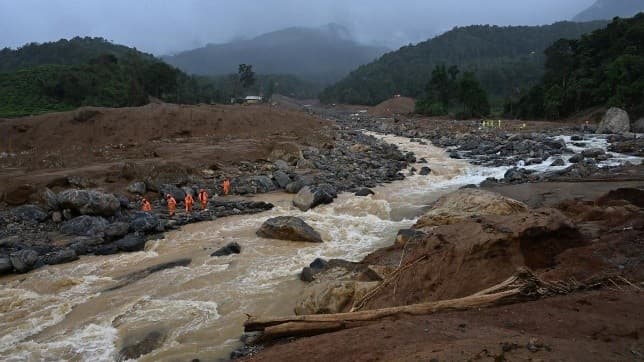
1.Disaster Management Amendment Bill 2024 (Disaster Governance)

PRS
Illustration for Disaster Management Amendment Bill 2024 (Disaster Governance)

What & Where

Disaster Management (Amendment) Bill 2024 revises 2005 Act to modernise preparedness, relief, audit cycles.

Establishes Urban Disaster Management Authorities in every state capital & municipal-corporation city across India.

Empowers NDMA & SDMA to craft plans, conduct climate-risk assessments, maintain national & state disaster databases.

Quick Facts for MCQs

Legal & Policy

  • Amendment inserts mandatory national, state, urban disaster management plans replacing executive committee discretion.
  • Clause formalises periodic climate-linked risk assessments into statutory duties.
  • Defines minimum relief standards to ensure uniform victim assistance.

Institutional Changes

  • Creation of Urban Disaster Management Authority adds third-tier besides NDMA, SDMA.
  • States authorised to notify SDRF with clear roles, service terms.
  • NDMA can requisition experts; Centre approves, reducing hiring lag.

Fiscal Oversight

  • High-Level Committee receives statutory backing for disaster fund allocation review.
  • NCMC gains legal status for national crisis coordination.
  • Central monitoring of NDRF, SDRF expenditures tightened via database reporting.

Criticisms & Federal Issues

  • Opposition flags excessive central influence over state plans and fund utilisation.
  • Bill still excludes heatwaves, slow-onset climate events from notified disaster list.
  • States like Bihar demand region-specific relief budgets amid centralised frameworks.

Key Data Points

FeatureData-Point
Parent Act year2005
Passage year of Amendment2024
New statutory bodiesNCMC, High-Level Committee
Urban Authority headMunicipal Commissioner
Urban Authority vice-chairDistrict Collector
SDRF mandateDedicated state response force
NDMA new powerDirect staffing & expert hire (Centre nod)
Post-disaster auditNow compulsory

Related UPSC Prelims PYQs

CDS_GK 2025PYQ 1

राष्ट्रीय आपदा प्रबंधन संस्थान (NIDM) के संदर्भ में निम्नलिखित में से कौन-सा/कौन-से कथन सही है/हैं?

CDS_GK 2021PYQ 2

National Disaster Management Authority is headed by
GS-2Polity

2.MP Salary Revision Mechanism Concerns (Parliamentary Salaries)

Indian Express

What & Where

MPs’ pay/pension revised every 5 yrs via Cost Inflation Index under Finance Act 2018, amending 1954 Act.

Cost Inflation Index: CBDT-notified, base 2001=100; FY 2024-25 value 363 (3.63× price rise).

India Employment Report 2024: ILO-Institute for Human Development study on wages, jobs across India.

Quick Facts for MCQs

Legal & Policy

  • Finance Act 2018 inserts automatic indexation; no separate Parliamentary vote needed.
  • Minimum Wages Act 1948 still calorie-norm focused; lacks housing, health, education elements.
  • Proposed independent emoluments commission backed by 2nd ARC & 14th FC.

Economic Angle

  • Real wages fell (regular −1.2 %, casual −0.9 %) between 2022-23 despite GDP growth.
  • Self-employed earnings rose to ₹7,060 but women’s earnings slipped across categories.
  • Retired MP now earns ≥2× average citizen; sitting MP ≈9×.

Social Concerns

  • Pay gulf risks eroding public trust, fuelling perceptions of self-serving governance.
  • Wage disparity undermines SDG-10 “Reduced Inequalities” and inclusive-growth narrative.
  • Low minimum wage among Asia-Pacific weakestens social protection for informal labour.

Reform Suggestions

  • Index national minimum wage to inflation through statutory National Wage Indexation Mechanism.
  • Shift towards “fair wage” covering health, housing, mobility per Article 43 & ILO Decent-Work Agenda.
  • Use e-Shram, EPFO real-time data for digital compliance monitoring, especially informal sector.

Key Data Points

FeatureData-Point
Hike effective date1 Apr 2023 (retrospective)
MP basic salary₹1.24 lakh / month
Daily allowance₹2,500
MP pension₹31,000 / month
Hike percentage24 %
CII FY 24-25363
Avg real wage regular 2023₹10,790 / month
Avg casual wage 2023₹4,671 / month
NFL Minimum Wage₹176 / day (unchanged since 2017)
Per-capita income 2022-23₹1.72 lakh
Food inflation 20249.04 %
Household savings FY245.3 % of GDP

Related UPSC Prelims PYQs

CAPF_GAI 2025PYQ 1

The Code on Wages was notified by the Government of India in the year

GS-3EconomyQuick Bite

5.CBDT Expands Safe Harbour Rules 2025 (Transfer Pricing)

Indian Express

What & Where

Safe harbour provisions: CBDT-set margins where tax authority accepts declared transfer price under Income-tax Rules 1962

Expansion: Threshold raised to ₹300 crore; lithium-ion EV batteries added as core auto components

Applicability: Related-party transactions in India for Assessment Years 2025-26 & 2026-27

Quick Facts for MCQs

Legal & Policy

  • Amendment Date: March 2025 CBDT notification broadens Rule 10TD scope
  • Compliance Mechanism: Sections 92C & 92CA allow Arm’s Length Price filing within declared margins
  • Certainty Benefit: Accepted prices bypass audit and adjustment proceedings

Economic Angle

  • Dispute Reduction: Higher ceiling shields more high-value intra-group deals lowering litigation cost
  • Investment Boost: Predictable pricing attracts MNE capital to Indian clean-mobility supply chain
  • Compliance Savings: Safe harbour removes need for detailed benchmarking studies

Sectoral Impact

  • EV Batteries: Li-ion packs now ranked with engines as core components for transfer-pricing comfort
  • Domestic Manufacturing: Measure complements PLI Auto and FAME schemes encouraging localisation
  • Large OEMs: Group transactions up to ₹300 crore gain automatic acceptance enhancing intra-firm sourcing efficiency

Key Data Points

FeatureData-Point
Governing agencyCentral Board of Direct Taxes
Act section92CB Income-tax Act 1961
Amended rule setIncome-Tax Rules 1962 Safe Harbour (Rule 10TD)
New monetary threshold₹300 crore transaction value
Earlier threshold₹200 crore
Freshly eligible itemLithium-ion batteries for EV/hybrid vehicles
Covered assessment years2025-26 and 2026-27
Policy objectiveEnhance tax certainty, cut transfer-pricing disputes
GS-3EconomyQuick Bite

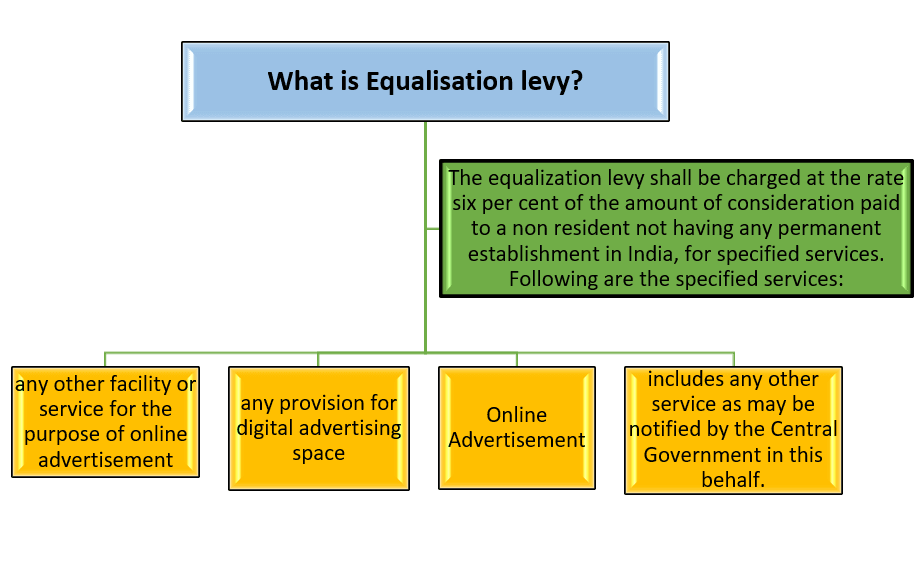
6.Equalisation Levy Abolition Proposal Explained (Digital Services Tax)

The Hindu
Illustration for Equalisation Levy Abolition Proposal Explained (Digital Services Tax)

What & Where

Equalisation Levy: direct tax on foreign digital service providers earning from Indian users

Geography: applicable across India where payment recipient lacks permanent establishment

Scope: online ads (6 %), later e-commerce/digital services (2 %), now slated for complete repeal

Quick Facts for MCQs

Legal & Policy

  • Proposal requires amending Finance Act sections; aims to simplify digital-tax regime
  • Section 10(50) keeps income exempt when already taxed to avoid double taxation

Economic Angle

  • Abolition lowers ad costs for Google, Meta, X; potential rise in digital ad spending
  • Reduces compliance burden for Indian payers remitting to non-resident platforms

International Alignment

  • Move signals shift toward multilateral Pillar One solution under OECD Inclusive Framework

Key Data Points

FeatureData-Point
Year introduced2016
Governing lawFinance Act, 2016 (Sec 165-173)
Initial rate & base6 % on online advertisement payments
2020 expansion2 % on e-commerce supply/digital services
Monetary threshold> ₹1 lakh per provider per FY
Deduction mechanismWithheld by Indian service recipient
Key exemptionNon-resident having permanent establishment in India
E-commerce levy statusAbolished August 2024
Current proposalFull levy abolition announced March 2025
Global alignmentMirrors OECD-G20 BEPS Action 1 on digital taxation

Related UPSC Prelims PYQs

GS1 2018PYQ 1

अवासी इकाइयों द्वारा दी जा रही ऑनलाइन विज्ञापन सेवाओं पर भारत द्वारा 6% ‘समतुल्य कर’ (Equalisation Levy) लगाए जाने के निर्णय के सन्दर्भ में निम्नलिखित कथनों पर विचार कीजिए:

GS1 2004PYQ 2

Which of the following is not a recommendation of the task force on direct taxes under the chairmanship of Dr. Vijay L. Kelkar in the year 2002?

GS-1History

7.Third Battle of Panipat 1761 (Maratha-Afghan Conflict)

Hindustan Times
Illustration for Third Battle of Panipat 1761 (Maratha-Afghan Conflict)

What & Where

Definition Large 18th-century pitched battle between Maratha Empire and Ahmad Shah Abdali’s Afghan-Rohilla-Awadh coalition

Date & place 14 Jan 1761; plain near Panipat, Haryana ~95 km north of Delhi

Scale Among the biggest subcontinental battles of the century; tens of thousands on each side

Quick Facts for MCQs

Causes

  • Expansion Maratha northward sweep under Peshwa Baji Rao & Nana Saheb alarmed Abdali
  • Punjab 1758 occupation brought direct clash with Durrani empire
  • Coalition Abdali united with Rohillas and Awadh on politico-religious grounds

Key Events

  • Capture Marathas took Delhi Aug 1760; victory at Kunjpura yet supplies cut by Yamuna crossing
  • Siege Starvation inside camp forced decision to fight on 13 Jan 1761
  • Battle Day-long engagement 14 Jan; Afghan cavalry encirclement shattered Maratha lines

Outcome & Aftermath

  • Halt Maratha advance in North India till 1771
  • Massacre Large-scale execution of prisoners intensified battle’s notoriety
  • Comeback Peshwa Madhavrao later re-established Maratha sway through structured campaigns

Commemoration & Politics

  • Memorials Maharashtra government proposing structures at Agra and Panipat
  • Rhetoric State CM labels Panipat a symbol of Maratha bravery in Assembly
  • Purpose Reinforce regional pride and historical memory among citizens

Key Data Points

FeatureData-Point
Maratha commandersSadashivrao Bhau, heir Vishwasrao
Afghan commanderAhmad Shah Abdali (Durrani)
Key allies (Afghan side)Rohillas under Najib ud-Daula; Shuja-ud-Daula of Awadh
Immediate trigger1758 Maratha capture of Punjab from Abdali
Marathas capture DelhiAugust 1760
Skirmish victoryKunjpura on Yamuna bank
Supply chokeAbdali crossed Yamuna, cut lines; Marathas besieged
Battle date14 January 1761 (decisive engagement)
ResultClear Afghan victory
Post-battle massacre~40,000 captured Maratha troops killed
Effect on MarathasNorthern influence collapsed for ≈10 years
Revival campaign1771 under Peshwa Madhavrao
Current initiativeMaharashtra to build memorials at Agra & Panipat

Related UPSC Prelims PYQs

GS1 2010PYQ 1

What was the immediate reason for Ahmad Shah Abdali to invade India and fight the Third Battle of Panipat ?

GS1 2004PYQ 2

Consider the following statements:

GS-1Geography

8.Monsoon Cloud Band Strength Study (Monsoon Dynamics)

The Hindu

What & Where

Boreal Summer Intraseasonal Oscillation (BSISO): 30–60-day convective wave moving from equatorial Indian Ocean to W. Pacific, steering monsoon phases.

Monsoon cloud band: large convective belt; only strong bands propagate north, initiating Indian wet spells.

Indian monsoon system: Southwest (Jun-Sep) & Northeast (Oct-Dec) rains driven by ITCZ shift, Tibetan heating, ocean-atmosphere feedback.

Quick Facts for MCQs

Climate Science

  • IISc study revises models; cloud-band strength, not just timing, dictates wet-spell duration/intensity.
  • BSISO phases alternate active/break cycles, critical for sub-seasonal rainfall prediction.
  • Findings refine seasonal & intra-seasonal forecast skill for IMD and global models.

Ocean–Atmosphere Coupling

  • Equatorial Indian Ocean heat flux + wind stress decide moisture build-up before band migration.
  • Somali Jet strengthening augments Southwest monsoon winds toward Western Ghats.
  • Sub-tropical westerly jet’s southward shift aids Northeast monsoon onset.

Climate Change

  • Warmer atmosphere raises background moisture, amplifying future wet-spell intensity.
  • Enhanced extremes heighten flood risks across Indo-Gangetic plain and west coast.
  • Accurate BSISO prediction gains urgency for coastal management under rising sea-surface temperatures.

Key Data Points

FeatureData-Point
Strong cloud band outcomeNorthward march + wet spell over subcontinent
Weak band outcomeStalls near equator; no Indian rainfall burst
Air–sea coupling roleBuilds moisture & winds; stronger coupling → heavier rain
Rainfall rise (future wet spell)42 % – 63 % over India & adjoining seas
ENSO modulationLa Niña strengthens, El Niño weakens BSISO propagation
Positive Indian Ocean DipoleBoosts Southwest monsoon strength
Southwest monsoon nicknameAdvancing monsoon
Northeast monsoon core areaTamil Nadu & coastal Andhra Pradesh
Arabic root of “monsoon”Mausim (season)

Related UPSC Prelims PYQs

GS1 1996PYQ 1

High temperature and low pressure over the Indian sub-continent during the summer season, draws air from the Indian Ocean leading to the in-blowing of the

GS1 2002PYQ 2

For short-term climate prediction, which one of the following events, detected in the last decade, is associated with occasional weak monsoon rains in the Indian sub-continent?

GS-1Mapping

9.Senkaku Islands Territorial Dispute (Disputed Islands)

DD News
Illustration for Senkaku Islands Territorial Dispute (Disputed Islands)

What & Where

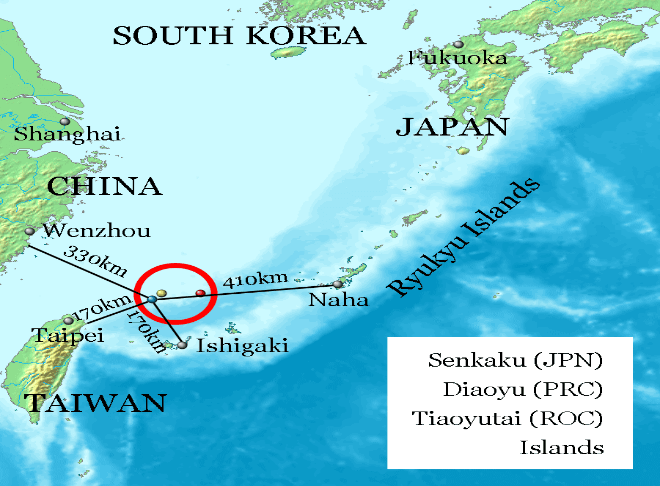
Location East China Sea, northeast of Taiwan, within Nansei Shoto chain

Composition Eight uninhabited volcanic islets, cumulative area ~7 sq km

Status Administered by Japan (Okinawa Prefecture) since 1972, contested by China and Taiwan

Quick Facts for MCQs

Historical Timeline

  • 1951 Treaty placed Nansei Shoto, incl. Senkaku, under US trusteeship
  • 1971 Okinawa Reversion Agreement returned islands to Japan control
  • 1970s PRC and Taiwan advanced claims after oil-gas surveys

Stakeholder Positions

  • Japan cites continuous administration and mapping since late 19th century
  • China invokes Ming-Qing era usage, calls Japanese control illegal post-WWII
  • Taiwan mirrors PRC historical claim, seeks joint resource development

Strategic Significance

  • Shipping Lanes connect East Asia with Middle East, Europe, Pacific Americas
  • Surveillance Potential provides intelligence on East China Sea naval traffic
  • US-Japan Security Treaty could trigger American involvement if islands attacked

Recent Incursion

  • Duration Chinese vessels lingered near islands for record 158 consecutive hours
  • Purpose Coast Guard patrols assert sovereignty, challenge Japanese law-enforcement
  • Response Tokyo lodged protests, increased coast-guard, patrol aircraft presence

Key Data Points

FeatureData-Point
Chinese nameDiaoyu Islands
Taiwanese nameDiaoyutai Islands
Treaty reference1951 Treaty of San Francisco
US roleTrusteeship until 1971 reversion to Japan
Main claimantsJapan, China, Taiwan
Resource prospectsFisheries, potential oil-gas reserves
Shipping relevanceNear key East Asian maritime lanes
Recent eventLongest Chinese Coast Guard intrusion (May 2024)

Related UPSC Prelims PYQs

GS1 2022PYQ 1

Which one of the following statements best reflects the issue with Senkaku Islands, sometimes mentioned in the news?

GS-3Environment

10.Rushikonda Beach Blue Flag Restored (Blue Flag Beaches)

The Hindu
Illustration for Rushikonda Beach Blue Flag Restored (Blue Flag Beaches)

What & Where

Blue Flag: voluntary eco-label for beaches meeting 33 environmental, safety, education criteria, overseen by FEE, Denmark

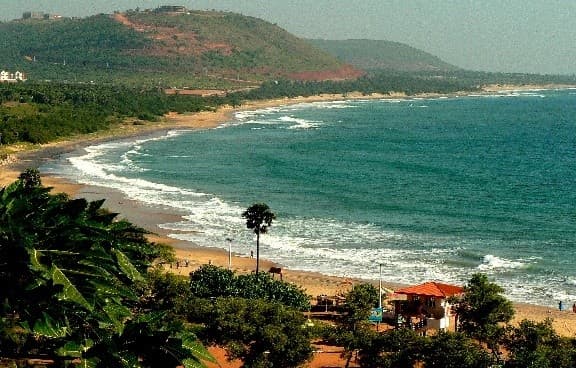
Rushikonda Beach: Visakhapatnam, Andhra Pradesh; State’s sole Blue Flag site, first certified in 2020

India’s National Operator: Centre for Environment Education (CEE) executes audits, surprise visits and reports to FEE

Quick Facts for MCQs

Certification Process

  • Control-visits: Scheduled & surprise audits by National Operator for every Blue Flag beach
  • Verification: Assessment against 33 criteria on water quality, safety, services, environmental education
  • Flag restoration: Post-correction audit approves compliance before re-hoisting

Compliance Categories

  • Minor: Single lapse; 10-day window to fix; flag remains
  • Multiple minor: Two-three lapses; flag withdrawn until corrected
  • Major/emergency: Serious threat or calamity; immediate, season-long suspension

Indian Context

  • CEE-India: Coordinates 12 national Blue Flag beaches, handles data submission and capacity building
  • Rushikonda comeback: Non-compliances resolved promptly; certification restored after fresh audit

Beach Profile

  • Geography: Crescent sandy shore on Bay of Bengal, 8 km from Visakhapatnam city
  • Amenities: Lifeguards, bio-toilets, disabled access, solid-waste management meet Blue Flag norms

Key Data Points

FeatureData-Point
Global administratorFoundation for Environmental Education (FEE), Denmark
Indian National OperatorCentre for Environment Education (CEE)
Assessment criteria count33
Rectification deadline (minor lapse)10 days
Outcome for 2–3 minor lapsesTemporary flag withdrawal
Outcome for major lapseImmediate, season-long withdrawal
Suspension triggersSerious safety issue or climatic emergency
Rushikonda’s first Blue Flag year2020
State tallyOnly Blue Flag beach in Andhra Pradesh

Related UPSC Prelims PYQs

GEO_GS 2023PYQ 1

Thundi Beach and Kadmat Beach, which recently entered the coveted list of Blue Beaches, an eco-label given to the cleanest beaches in the world, are located in

GS-3Environment

11.Darjeeling Frozen Zoo DNA Bank (Ex-situ Conservation)

The Hindu

What & Where

Padmaja Naidu Himalayan Zoological Park, Darjeeling (2,150 m), India’s largest high-altitude zoo.

Hosts country’s first “frozen zoo” preserving Himalayan wildlife DNA at –196 °C.

Joint effort of zoo & CSIR-CCMB, aiming long-term genetic conservation.

Quick Facts for MCQs

Conservation Goals

  • Safeguard endangered Himalayan genetics; enable future assisted reproduction.
  • Reduce extinction risk amid climate change & habitat loss.
  • Support research on disease resistance, adaptability.

Tech & Storage

  • Cryogenic preservation at –196 °C using liquid nitrogen dewars.
  • Bio-bank infrastructure sited within zoo campus for rapid sampling.
  • Protocols follow CCMB standards for long-term viability.

Institutional Framework

  • Zoo operates under MoEFCC; project co-managed with CSIR-CCMB.
  • Funding & oversight integrated into Central Zoo Authority conservation mandate.
  • Collaboration model may guide other Indian high-altitude or coastal zoos.

Species Focus

  • Priority sampling: Red panda, Snow leopard, Himalayan black bear.
  • Expansion planned to Tibetan wolf, clouded leopard, pheasants.
  • Selection driven by IUCN status & captive breeding success rates.

Key Data Points

FeatureData-Point
StateWest Bengal
Year founded14 Aug 1958
Original nameHimalayan Zoological Park
Renamed afterPadmaja Naidu (1975)
Area67.8 acres
Administrative control since 1993WB Forest Dept. under MoEFCC
Altitude~7,050 ft
Key ex-situ speciesRed panda, Snow leopard, Tibetan wolf
Frozen-zoo launch2023
Samples collected (Feb 2024)60
Storage temperature–196 °C (liquid nitrogen)
Partner labCSIR-Centre for Cellular & Molecular Biology
Primary materialTissue from captive & deceased animals
National statusIndia’s first zoo DNA cryobank

Related UPSC Prelims PYQs

GEO_GS 2025PYQ 1

The Padmaja Naidu Zoological Park is situated in which one among the following States?

GS-3Environment

12.FAO Report on Plant Genetic Resources (Crop Diversity)

Down to Earth

What & Where

SoW-PGRFA = FAO triennial* global audit of plant genetic resources for food & agriculture across in-situ and ex-situ systems.

Tracks conservation status, use trends, gaps; guides international action for crop biodiversity & food security.

Third edition issued 24 Mar 2025; flags 60 % world diet from nine crops, rising genetic erosion.

Quick Facts for MCQs

Genetic Erosion Drivers

  • Monoculture & market concentration replace farmers’ varieties, shrinking on-farm diversity.
  • Climate change-induced disasters outpace local germplasm adaptation, accelerating loss.
  • Rapid urbanisation reduces cultivation zones for traditional crops.

Regional Hotspots

  • Southern Africa shows steepest decline in landraces under cultivation.
  • Caribbean islands face high varietal loss due to hurricanes & limited seed systems.
  • India: over half recorded farmers’ varieties already at risk across diverse ecologies.

Conservation Challenges

  • Funding volatility undermines gene-bank maintenance and regeneration cycles.
  • Skilled-personnel shortage in taxonomy, cryo-storage, breeding hampers resource utilisation.
  • Documentation gaps limit accession characterisation, exchange, and breeding uptake.

Recommended Actions

  • Integrate ex-situ, in-situ, community seed banks for holistic conservation.
  • Increase public funds; leverage PPPs for long-term gene-bank security.
  • Promote participatory breeding with farmers & Indigenous groups for climate-resilient varieties.

Key Data Points

FeatureData-Point
PublisherFAO, UN
3rd report release24 Mar 2025
Key diet share60 % food calories from 9 crops
Global FV/LR threatened6 % varieties
Sub-regions >18 % threat9 regions
Highest-risk regionsSouthern Africa, Caribbean, Western Asia
India’s threatened FV/LR>50 % across 5 agro-zones
Ex-situ accessions5.9 million
Safety-duplicated share41 % (incl. Svalbard Vault)
On-farm conservation35 million ha in 51 countries
Previous reports1998, 2010
GS-3EnvironmentQuick Bite

13.UN Report on Accelerating Glacier Loss (Glacier Retreat)

Down to Earth
Illustration for UN Report on Accelerating Glacier Loss (Glacier Retreat)

What & Where

World Day for Glaciers: UN-designated 21 March, kickoff for International Year of Glaciers’ Preservation 2025

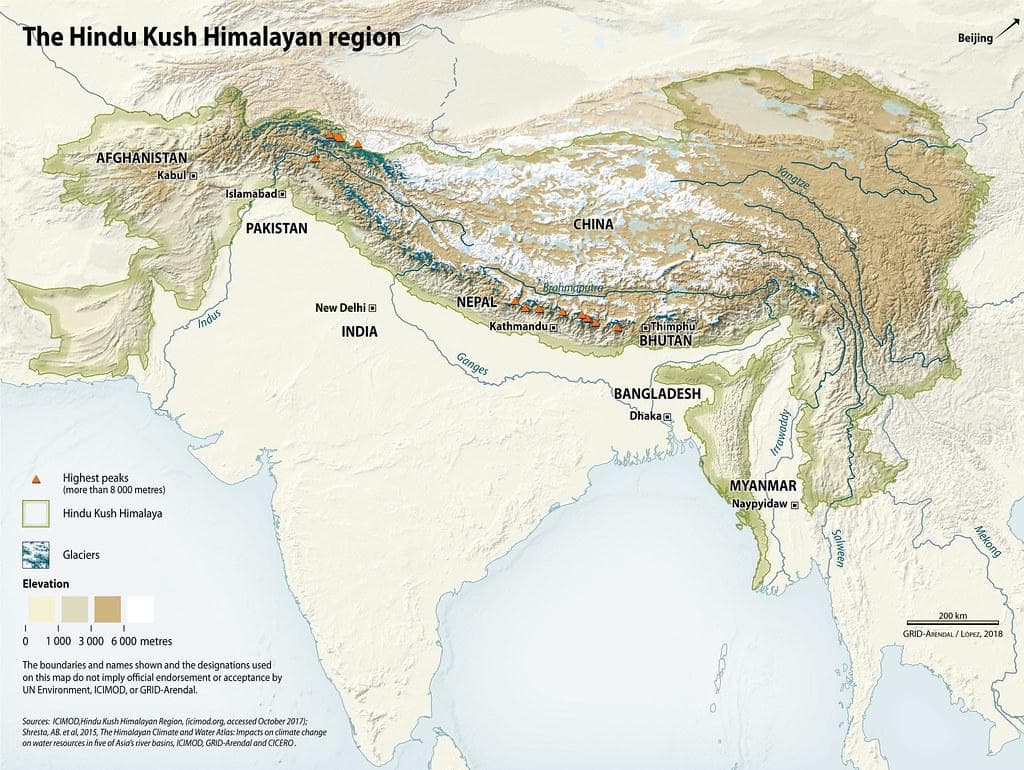
Hindu Kush Himalaya: Water Tower of Asia spanning 8 countries, overlapping Himalaya, Indo-Burma, Southwest China, Central Asia hotspots

UN World Water Development Report 2025: flags accelerated glacier retreat, mass-loss projections and GLOF hazards

Quick Facts for MCQs

Climate Projections

  • HKH glaciers may lose 30–50 % volume by 2100 under 1.5-2 °C scenario
  • Mountain glaciers worldwide projected 26–41 % mass loss by 2100
  • HKH retreat speed increased 65 % during 2011-20 decade

Disaster Risk

  • GLOFs causing flash floods, landslides; over 12,000 deaths recorded since 1800s
  • UN projects GLOF occurrence risk could triple by 2100
  • Alpine communities and downstream infrastructure face escalating water-hazard exposure

Global Initiatives

  • UN declared 2025 International Year of Glaciers’ Preservation to mobilise funding and awareness
  • Decade of Action on Cryospheric Science 2025–2034 targets stronger monitoring and adaptation research
  • Annual World Day for Glaciers fixed on 21 March to spotlight cryosphere health

Key Data Points

FeatureData-Point
HKH retreat acceleration 2011-2065 %
HKH volume loss 2100 (1.5-2 °C)30–50 %
HKH loss if warming >2 °C≈45 % (from 2020)
Global glacier mass loss 210026–41 %
High-altitude people affected1.1 billion
GLOF deaths 1800-2024>12,000
GLOF risk rise by 2100May triple
First World Day for Glaciers21 Mar 2025
International Year on Glaciers2025
Cryosphere Action Decade2025–2034
HKH biodiversity hotspots4
HKH transboundary countries8

Related UPSC Prelims PYQs

CDS_GK 2024PYQ 1

ISRO, in its studies, has revealed that there is a 178% increase in the size of the Gepang Ghat Glacial Lake. In which of the following States/UTs is this lake located?

GS-3S&T

14.DNA Polymorphism Forensic Applications (DNA Fingerprinting)

The Hindu
Illustration for DNA Polymorphism Forensic Applications (DNA Fingerprinting)

What & Where

DNA polymorphism = heritable sequence variation forming the molecular basis of DNA fingerprinting.

Key forms: Single Nucleotide Polymorphisms (SNPs) & Short Tandem Repeats (STRs, 2–6 bp repeat units).

STR profiling used globally in forensic labs; intact DNA extracted even from 65,000-year-old remains.

Quick Facts for MCQs

Technological Basis

  • PCR amplification followed by capillary electrophoresis sizes STR alleles for profile creation
  • Ancient-DNA recovery demonstrates polymorphism stability, enhancing confidence in long-term forensic applicability

Forensic Applications

  • Crime-scene STR matching identifies perpetrators, exonerates innocents, reopens unresolved cases
  • STR databases enable disaster victim identification, lineage tracing, organ donor-recipient compatibility

Ethical & Privacy

  • Genetic repositories pose privacy risks, potential misuse for surveillance or discrimination
  • Strict chain-of-custody and consent protocols mandated to avoid contamination and data abuse

Key Data Points

FeatureData-Point
Core variation typeDNA polymorphism
Main forensic markerSTR loci
STR repeat length2–6 base pairs
Other variant formSNP
Genome zones affectedCoding & non-coding
Amplification toolPCR
Separation toolCapillary electrophoresis
Usable samplesBlood, saliva, semen, skin, teeth, bones
Uniqueness exceptionIdentical twins share profile
Oldest DNA analysed~65,000 years
Key forensic usesID, paternity, victim & cold cases
Major limitationPartial profiles from degraded DNA

Related UPSC Prelims PYQs

GS1 2023PYQ 1

'Microsatellite DNA' is used in the case of which one of the following?

GS-3S&T

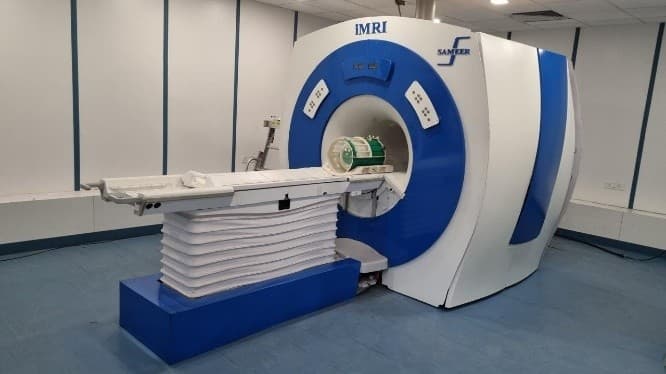
15.Indigenous 1.5 Tesla MRI Scanner (Medical Imaging Tech)

Economic Times
Illustration for Indigenous 1.5 Tesla MRI Scanner (Medical Imaging Tech)

What & Where

Innovation: First fully indigenous 1.5 Tesla MRI scanner for advanced imaging & clinical trials

Geography: Built by SAMEER-MeitY; slated for installation at AIIMS New Delhi by Oct 2025

Mission: Outcome of national SCAN-ERA programme to localise high-end medical devices

Quick Facts for MCQs

Tech & Schemes

  • Indigenisation: MRI complements CT, LINAC, heart valves under PLI-backed domestic manufacturing push
  • Standardisation: Design targets global clinical benchmarks using locally sourced subsystems
  • Cost: Home-grown build expected to lower scan fees versus imported units

Healthcare Impact

  • Access: Domestic production may expand MRI availability in tier-2/3 hospitals
  • Research: AIIMS trials will supply data for regulatory clearance and product refinement
  • Skill: Project hones Indian know-how in superconducting magnets, RF coils, cryogenics

Risks & Safety

  • Implant hazard: Strong field contraindicated with pacemakers, cochlear or ferromagnetic implants
  • Patient comfort: Loud acoustic noise needs ear protection; claustrophobia mitigated by open designs
  • Contrast caution: Gadolinium agents risk nephrogenic systemic fibrosis in renal failure cases

Key Data Points

FeatureData-Point
Magnet strength1.5 Tesla
DeveloperSAMEER
Parent ministryMeitY
National missionSCAN-ERA
Mission launchDec 2014
First clinical siteAIIMS New Delhi
Planned installationOct 2025
Support schemePLI for Medical Devices
Key allied devicesCT scanners, LINACs, heart valves
Imaging principleProton alignment via magnetic field & RF pulses
GS-2Scheme

16.Dare2eraD TB Genome Sequencing Program (TB Genomics)

The Hindu

What & Where

India’s Dare2eraD TB: genome-sequencing programme targeting drug-resistant tuberculosis nationwide.

Uses whole-genome sequencing of clinical Mycobacterium tuberculosis; builds central biorepository & surveillance database.

Core labs: Delhi, Hyderabad, Kalyani, Chennai; data warehoused at Indian Biological Data Centre, Faridabad.

Quick Facts for MCQs

Tech & Schemes

  • Whole-genome sequencing pinpoints resistance mutations, guiding rapid regimen modification.
  • Bioinformatics dashboard merges genomic and epidemiological data for actionable alerts.

Institutional Network

  • InTGS orchestrates multi-lab workflow; standardises sampling, sequencing, data curation.
  • Collaboration with NTEP ensures clinical isolates mirror real-world case burden.

Health Outcomes

  • Early resistance detection curbs progression to multi-drug-resistant TB.
  • Household-transmission mapping helps target screening and preventive therapy in high-risk clusters.

Key Data Points

FeatureData-Point
Launch date24 March 2022 (World TB Day)
Nodal ministryDBT, Ministry of Science & Technology
Key partnersICMR, CSIR, InTGS
Total WGS target32,200 TB strains
Sequenced so far10,000 genomes (≈33 % target)
Drug-resistant share7 % single-drug resistant
Sequencing hubsICGEB-Delhi, CCMB-Hyderabad, NIBMG-Kalyani, NIRT-Chennai
Analysis centreNational Institute of Immunology, Delhi
Data repositoryIndian Biological Data Centre, RCB-Faridabad
Field linkageRePORT India Consortium & National TB Elimination Program
GS-2SchemeQuick Bite

17.Samarth Telecom Startup Incubation Program (Telecom Innovation)

PIB

What & Where

Samarth Incubation Program — C-DoT’s nationwide accelerator for DPIIT-recognised Telecom & IT startups.

Implemented with Software Technology Parks of India (STPI) under MeitY; supports idea-to-commercialisation cycle.

Focus areas: Telecom software, Cyber-security, 5G/6G, AI, IoT, Quantum tech.

Quick Facts for MCQs

Tech & Schemes

  • Coverage: Telecom software, 5G/6G, AI, IoT, Cyber-security, Quantum technologies.
  • Resources: Cutting-edge labs, R&D tools, sustainable business-model guidance.
  • Output target: From prototyping to market-ready, scalable solutions.

Implementation & Funding

  • PPP flavour: C-DoT provides R&D, STPI handles incubation logistics.
  • Financial mix: ₹5 lakh grant + infrastructure worth more via C-DoT facilities.
  • Two-stage pipeline: Six-month incubation, potential transition to collaborative research.

Institutional Roles

  • C-DoT: Autonomous R&D centre under DoT, telecom innovation mandate.
  • STPI: MeitY society specialising in startup incubation & export promotion.
  • DPIIT: Certifies eligible startups, ensuring policy alignment.

Key Data Points

FeatureData-Point
Launching agencyCentre for Development of Telematics (C-DoT)
Implementing partnerSTPI under MeitY
EligibilityDPIIT-recognised startups
Cohort structure36 startups; two 6-month cohorts
Direct grant₹5 lakh per startup
In-kind supportC-DoT office space & lab for 6 months
Additional benefitsHybrid learning, mentorship, investor access
Post-program routeC-DoT Collaborative Research Program
C-DoT set-up year1984
Broader goalIndigenous telecom innovation for Atmanirbhar Bharat

Related UPSC Prelims PYQs

CDS_GK, ESE_GS 2026PYQ 1

The Samriddh Gram Phygital Services Pilot Project was recently launched by which organization?

CDS_GK, ESE_GS 2024PYQ 2

Which one of the following is an ‘end-to-end secure mobile ecosystem’ developed recently by the Indian Army?

Ready to practice?

Test your knowledge with our UPSC test series.

Start Free Trial