Editorial
1.Women Voter Participation Trends (Women Voters)
The Hindu2024 Lok Sabha · Gender Gap · National Election Studies
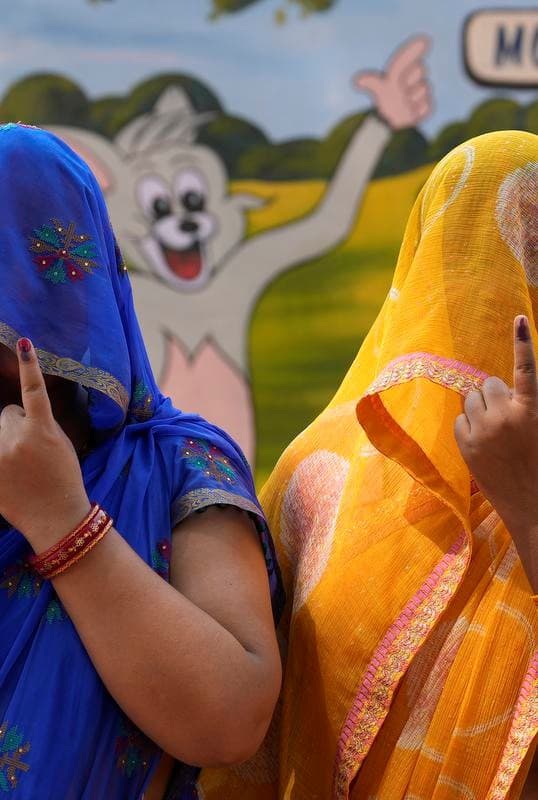
What & Where
Focus: women’s electoral behaviour in 2024 Lok Sabha per CSDS-Lokniti NES.
Key processes: voter registration, turnout, campaign involvement, legislative representation.
Scope: all India; notable cases—Kerala, Puducherry, Madhya Pradesh, Bihar.
Quick Facts for MCQs
Participation Trends
- Turnout parity: 2024 only second instance of women outvoting men nationally.
- Registration rise: 20-point gain in female-male elector ratio since 2019.
- Engagement gap: minimal rally attendance, campaign work despite higher booth turnout.
Barriers
- Patriarchy: mobility limits and unpaid care load restrict public political activity.
- Economy: low paid work and financial dependence weaken bargaining power.
- Representation: 14 % LS presence curtails networks and role-model effects.
Policy Prescriptions
- Education: Kerala-style literacy and civic modules to deepen agency.
- Reservation: operationalise 33 % Women’s Reservation Bill across legislatures.
- Livelihoods: targeted jobs, credit, entrepreneurship to raise economic autonomy before 2029.
Key Data Points
| Feature | Data-Point |
|---|---|
| Female voter turnout 2024 | 65.78 % |
| Male voter turnout 2024 | 65.55 % |
| Turnout gap 2024 | Women +0.23 pp |
| Female electors per 1000 male 2024 | 946 |
| Female electors per 1000 male 2019 | 926 |
| Women’s share of Lok Sabha MPs | 14 % |
| Female labour-force participation | <25 % |
| Women seeking spouse voting advice | 14 % |
| Puducherry female elector proportion | 53.03 % |
| Kerala female elector proportion | 51.56 % |
Related UPSC Prelims PYQs
CDS_GK, GS1 2021PYQ 1
निम्नलिखित कथनों पर विचार कीजिए :
CDS_GK, GS1 2025PYQ 2
Which of the following statements as per the Constitution of India is/are correct?