UPSC Current Affairs

16 topicsGS-1: 2GS-2: 6GS-3: 8
0/16 done
GS-2Polity

1.WFI Suspension Revocation (Sports Federation)

The Tribune

What & Where

Wrestling Federation of India (WFI) — national wrestling body; organises tournaments, selects teams; HQ Delhi

Sports Ministry suspended WFI in Dec 2023 citing sexual-harassment charges & governance violations; office earlier at ex-president’s residence

Compliance met via office shift and code adherence; NSF recognition now restored, enabling normal operations

Quick Facts for MCQs

Governance Issues

  • Sexual-harassment allegations against former president Brij Bhushan Sharan Singh triggered scrutiny
  • Federation operated from ex-president’s residence, breaching autonomy norms
  • Lack of transparency violated National Sports Code provisions

Compliance Measures

  • Office shifted to neutral premises satisfying independence requirement
  • Governance processes realigned with National Sports Code standards
  • Union ministry consequently revoked suspension, restoring funding eligibility

Athlete & Sport Impact

  • Recognition allows conduct of selection trials for Olympics, Asian Games, Worlds
  • Enables resumption of national camps and UWW event participation
  • Restored NSF status facilitates access to government financial assistance

Key Data Points

FeatureData-Point
Parent ministryYouth Affairs & Sports
International bodyUnited World Wrestling (UWW)
HeadquartersNew Delhi
Suspension monthDecember 2023
Key violationNational Sports Code & sexual-harassment allegations
Current statusNSF recognition restored
GS-2Polity

2.Immigration and Foreigners Bill 2025 (Immigration Law)

Economic Times
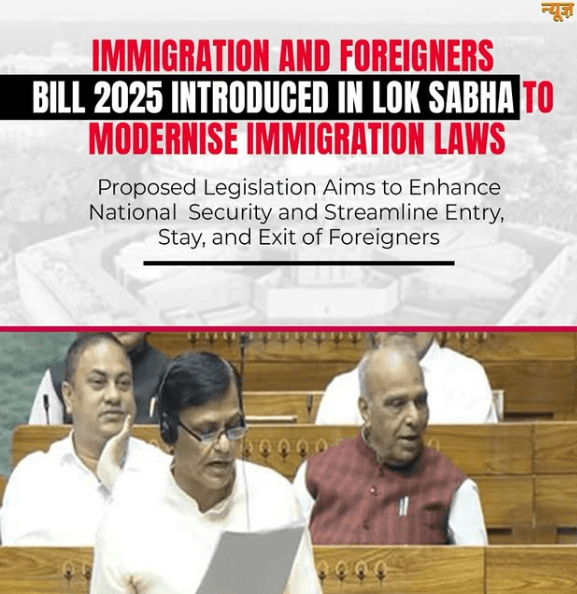
Illustration for Immigration and Foreigners Bill 2025 (Immigration Law)

What & Where

Immigration & Foreigners Bill 2025 in Lok Sabha seeks unified framework for entry stay exit of foreigners

Replaces four Acts ⁠— Passport Entry 1920, Registration of Foreigners 1939, Foreigners Act 1946, Carriers Liability 2000

Nationwide application; administered by Home Affairs via immigration posts, FRROs and central digital database

Quick Facts for MCQs

Legal & Policy

  • Consolidation excises colonial era provisions creating single contemporary immigration statute
  • Bill grants immigration officers discretion over entry detention deportation registration
  • Opposition demands Joint Parliamentary Committee citing constitutional validity and natural justice concerns

Tech & Schemes

  • Digital tracking system provides real time movement data of every foreign national
  • Electronic registration links visas passports and FRRO records under central platform
  • Interagency data sharing enabled within MHA for security analytics and compliance

Social Concerns

  • No appeal viewed as potential breach of Articles 14 and 21 due process
  • Mandatory institutional reporting triggers privacy questions for patients students tourists
  • Refugees continue case by case handling as India remains outside 1951 Convention

Security Dimension

  • Central register expedites overstayer identification and deportation
  • Unified law strengthens border control and carrier liability enforcement
  • Detention provisions give legal backing for holding illegal entrants until removal

Key Data Points

FeatureData-Point
Year of introduction2025
Parliamentary HouseLok Sabha
Nodal ministryMinistry of Home Affairs
Laws replaced4 (1920, 1939, 1946, 2000)
Digital trackingCentralised real-time database
Reporting dutyHospitals, universities, institutions
Appeal mechanismNone; officer’s decision final
Refugee Convention statusIndia not signatory 1951

Related UPSC Prelims PYQs

NDA_GAT 2024PYQ 1

In February 2024, Government of India has decided to scrap the Free Movement Regime (FMR) between India and:

GS-3Editorial

3.India Compliance Framework Overhaul (Regulatory Reforms)

The Hindu

What & Where

Compliance framework; set of licences, inspections and penalties governing business operations across India

Key processes; 23 separate identity numbers (PAN, GSTIN, CIN etc.), frequent regulatory updates, pending Labour Codes

Geography; pan-India impact with global comparison to US Department of Government Efficiency (DOGE)

Quick Facts for MCQs

Corruption Impact

  • Survey; 66 % firms pay bribes despite compliance, inflating operational costs
  • Coercion; inspectors threaten shutdown or jail, exploiting subjective powers
  • Trust-deficit; unpredictable enforcement weakens investor confidence

Regulatory Burden

  • Updates; 9,420 rule changes 2024 create daily ambiguity
  • Fragmentation; 23 IDs demand repetitive filings, renewals
  • Delay; four Labour Codes still unimplemented, sustaining colonial-era paperwork

Reform Measures

  • Jan Vishwas Act 2023; 180 provisions decriminalised across 42 Acts
  • Jan Vishwas 2.0; plans another 100, but vast jail clauses persist
  • Proposals; One-Nation-One-Business ID and DigiLocker to cut paperwork, curb graft

Global Context

  • Competitors; US DOGE streamlining may divert investment from India
  • Manufacturing; pharma, textiles face compliance-induced slowdown
  • Start-ups; regulatory burden spurs relocation to business-friendly jurisdictions

Key Data Points

FeatureData-Point
Businesses admitting bribery (2024)66 %
Bribes coerced for permits/licences54 %
Compliance updates in 20249,420 total; 36 per day
Separate business identifiers today23
Labour laws merged into new Codes29 into 4
Imprisonment clauses still on statutes~20,000
Jan Vishwas Act 2023 decriminalised180 provisions
Jan Vishwas 2.0 proposed+100 provisions
FSSAI label change frequencyOnce a year
Indian GDP vs US GDP$4 tn vs $27 tn

Related UPSC Prelims PYQs

CDS_GK, GS1 2020PYQ 1

As per the World Bank's Ease of Doing Business Ranking, India's rank has improved from 142 in 2014 to 63 in 2019. During this period, in which of the following parameters has India's rank deteriorated?

CDS_GK, GS1 2024PYQ 2

भारत में निगमित सामाजिक उत्तरदायित्व (CSR) नियमों के संदर्भ में, निम्नलिखित कथनों पर विचार कीजिए:

GS-3Economy

4.APEDA Showcase at AAHAR 2025 (Agri Export Promotion)

ANI

What & Where

APEDA = statutory authority for promoting export of agricultural & processed food products

Mandate spans export promotion, quality standards, financial aid, global market linkage

HQ New Delhi; regional offices Mumbai, Kolkata, Bangalore, Hyderabad, Guwahati

Quick Facts for MCQs

Legal & Policy

  • Statutory_body created 1985; chairman appointed by GoI
  • Advisory_Board includes exporters, farmers, experts, officials
  • Authority_functions governed under Commerce Ministry oversight

Economic Angle

  • Export_promotion via market research, branding, buyer-seller meets
  • Financial_assistance through subsidies, incentives, cold-chain support
  • Market_expansion strengthens bilateral agri-trade relations

Tech & Schemes

  • Quality_control enforces packaging, certification for exports
  • Good_Agricultural_Practices & Organic_standards implemented nationwide
  • Trade_fair participation (AAHAR, global expos) showcases processing innovation

Key Data Points

FeatureData-Point
Establishing ActAPEDA Act 1985
Parent ministryCommerce & Industry
Statutory statusYes (Authority)
National showcase eventAAHAR 2025, New Delhi
Exhibitors at AAHAR 202595
States/UTs represented17
Core product focusAgri-exports, plant-based foods, processing innovation
Financial toolsSubsidies, cold-chain aid
Quality regimesGAP, Organic Farming Standards

Related UPSC Prelims PYQs

ESE_GS, GS1 2015PYQ 1

In India, markets in agricultural products are regulated under the

ESE_GS, GS1 2026PYQ 2

Which organization is responsible for implementing the National Beekeeping & Honey Mission (NBHM)?

GS-3Economy

5.District GDP Estimation Need (GDP Estimation)

BL

What & Where

DDP; district-level valuation of goods and services for granular growth mapping in India

Estimation methods; primary sector bottom-up, secondary–tertiary top-down share-out from national GDP

Geography; MoSPI to oversee phased roll-out across all states via high-activity district pilots

Quick Facts for MCQs

Methodological Gaps

  • Apportioning; top-down ignores actual district activity in manufacturing and services
  • Unorganised; unpaid female labour and informal work remain undercounted
  • Employment; SWI 2023 shows weak GDP–jobs linkage, worse sub-nationally

Implementation Challenges

  • Informality; fluid goods, services, finance flows blur district boundaries
  • Capacity; concurrent-list statistics cause fragmented, non-uniform data systems
  • Resources; significant spending needed for infrastructure, training, digital tools

Benefits

  • Fiscal federalism; granular numbers enable need-based transfers and tailored projects
  • Equity; highlights lagging rural districts, guiding inclusive growth efforts
  • Evaluation; captures divergent pandemic impacts, avoids one-size-fits-all misestimates

Policy Prescriptions

  • Pilot; start in economically vibrant districts, scale successful templates nationwide
  • Technology; use AI, satellite imagery, dashboards for near real-time indicators
  • MoSPI; assume stronger mandate for standardised, comparable DDP framework

Key Data Points

FeatureData-Point
Primary sector methodologyBottom-up aggregation
Secondary–tertiary methodologyTop-down proxy allocation
Agriculture share in UP GSVA25 %
UP workforce in agriculture65 %
Data ROI (World Bank)USD 1 gives USD 32 benefit
15th FC recommendationPerformance-based local grants

Related UPSC Prelims PYQs

CAPF_GAI 2024PYQ 1

हाल के वर्षों में, निम्नलिखित में से कौन-सा, भारतीय अर्थव्यवस्था में, अवरोही क्रम में, माँग का स्रोत रहा है?

GS-1History

6.Early Stone and Bone Tools (Prehistoric Tools)

Indian Express

What & Where

Bone tools dated 1.5 mya in Africa push back non-human toolmaking evidence

Earliest stone tools 3.3 mya show technology predates genus Homo

Indian lithic sequence spans Lower Palaeolithic to Neolithic across Bori, Bhimbetka, Mehrgarh and others

Quick Facts for MCQs

Human Evolution

  • Lucy Australopithecus afarensis discovered 1974; 40 % skeleton; bipedal with tool-capable hands
  • 2025 study indicates conceptual toolmaking emerged before Homo lineage
  • Toolmaking no longer considered uniquely human trait per new findings

Indian Lithic Culture

  • Sequence: Lower, Middle, Upper Palaeolithic → Mesolithic → Neolithic (600k – 5500 BCE)
  • Trend of miniaturisation: heavy hand-axes to microliths; polished axes appear Neolithic
  • Mesolithic microlith clusters at Bagor, Adamgarh, south of Krishna River

Key Archaeological Sites

  • Bori, Son and Sohan valleys yield earliest Indian hand-axes
  • Narmada and Belan valleys rich in Middle-Palaeolithic flakes, scrapers
  • Mehrgarh, Burzahom, Gufkral preserve Neolithic rectangular, polished axes

Key Data Points

FeatureData-Point
Earliest stone tools3.3 million years ago
Earliest bone tools1.5 million years ago
Likely makersPre-Homo hominins
Lucy fossil age3.2 mya
Indian Lower Palaeolithic600,000 – 150,000 BCE
Lower-Palaeolithic toolsHand-axes, cleavers, choppers
Middle Palaeolithic span150,000 – 35,000 BCE
Middle-Palaeolithic toolsFlakes, blades, scrapers, points
Upper Palaeolithic span35,000 – 10,000 BCE
Mesolithic hallmarkMicrolith composite tools

Related UPSC Prelims PYQs

CDS_GK 2020PYQ 1

Consider the following statements about Stone Age in India:

GS-1Mapping

7.Greenland Independence Prospects (Arctic Island)

Times of India

What & Where

Greenland: world’s largest island, autonomous Danish territory between Arctic & Atlantic Oceans

Capital Nuuk; population ≈ 57,000; ice sheet blankets ~80 % surface

Key relief Watkins Range with Gunnbjørn Fjeld, plus Scoresby Sound & UNESCO-listed Ilulissat Icefjord

Quick Facts for MCQs

Political Status

  • Autonomy: Own parliament yet under Copenhagen sovereignty, independence backed by all major parties
  • Elections: Latest parliamentary poll framed as choice between full nationhood or continued ties
  • Subsidy: Block grant central to debate on economic viability post-independence

Economic Angle

  • Fisheries: Dominant sector contributing 90 % export earnings, vulnerable to climate and market shifts
  • Minerals: Rare earths, uranium, strategic metals viewed as future revenue sources for self-reliance
  • Tourism: Growth around Arctic cruises, heritage fjords, adventure sports diversifying income base

Security Dimension

  • USInterest: Trump 2019 purchase proposal revived, citing prosperity and security concerns
  • ArcticRace: Location and critical minerals attract heightened geopolitical competition among great powers
  • StrategicValue: Control offers shipping lane access and military monitoring in High North

Key Data Points

FeatureData-Point
Political statusAutonomous territory within Kingdom of Denmark
Capital cityNuuk
Population (approx.)57,000
Danish annual subsidyUS $565 million
Subsidy share of GDP~20 %
Exports from fishing90 %
Ice sheet coverage≈ 80 % of land
Tallest Arctic peakGunnbjørn Fjeld, Watkins Range
Largest fjordScoresby Sound
UNESCO siteIlulissat Icefjord
GS-3Mapping

8.Digital Soil Fertility Mapping (Soil Health)

PIB

What & Where

Soil Fertility Mapping: scientific nutrient assessment using geospatial, remote sensing and AI tools

Implementing agency: SLUSI under Dept of Agriculture, executing Soil Health & Fertility Scheme

Coverage: 351 villages, 34 districts, Maharashtra; scheme available across all States/UTs

Quick Facts for MCQs

Tech & Schemes

  • Geo-coded samples feed GIS layers; AI models predict village-level nutrient gaps
  • Soil Health & Fertility Scheme funds mapping, labs, digital platforms for nationwide rollout
  • QR tagging ensures traceability from field to database

Environmental Impact

  • Precision fertiliser use cuts chemical runoff, groundwater contamination
  • Mapping supports integrated nutrient management, encouraging organics and bio-fertilisers
  • Minimises soil degradation and long-term nutrient depletion

Farmer Benefits

  • Targeted fertiliser lowers input cost, raises yields
  • SHC delivers customised nutrient advice via mobile downloads
  • Higher soil productivity boosts farmer income security

Key Data Points

FeatureData-Point
Implementing agencySoil & Land Use Survey of India
Parent departmentDept. of Agriculture & Farmers’ Welfare
Current rollout351 villages, 34 districts, Maharashtra
National reachAll States & Union Territories
Tested parameterspH, OC, N, P, K, S, Zn, Cu, Fe, Mn, B
Sample taggingGPS geo-coding + unique QR code
Tech toolsRemote sensing, GIS, AI predictive modelling
Farmer interfaceSoil Health Card downloadable via mobile
Field infraVillage-level mini soil-testing labs

Related UPSC Prelims PYQs

GS1 2017PYQ 1

Consider the following statements:

GS-3Editorial

9.Challenges in AI Regulation (AI Governance)

Indian Express

What & Where

Artificial Intelligence: software systems mimicking human cognition for tasks like prediction, pattern-finding, autonomous action.

Regulation: risk-tiered models (EU AI Act), ethics codes (Montreal Declaration 2018), multilateral meets (UN AI for Good 2024, AI Action Summit 2025).

Geography: Innovation race—US-China-UK; developmental use-cases—India, Brazil, South Africa; stringent law—European Union.

Quick Facts for MCQs

Geopolitical Tensions

  • Dominance drive by US-China-UK hampers cooperative governance mechanisms.
  • Emerging economies prioritise AI for local health, jobs, not global supremacy.
  • Result: fragmented international standard-setting, slower harmonisation.

Legal Complexities

  • EU AI Act tough on high-risk uses, vague on bias metrics.
  • United States shows patchy federal-state regulations, causing compliance gaps.
  • Liability for AI failures & inventorship in patents still legally unsettled.

Risks of Poor Regulation

  • Manipulative algorithms may amplify disinformation, sway behaviour.
  • Embedded biases can entrench social discrimination, unfair pricing.
  • Inadequate security leaves AI systems open to cyber-attacks & privacy breaches.

Proposed Measures

  • Create global platform merging UN summit outcomes with risk-based norms.
  • Mandate bias-detection, transparency, accountability tools for high-risk systems.
  • Promote cross-border public-private R&D partnerships to align standards.

Key Data Points

FeatureData-Point
Global AI CAGR (2025-30)29 %
Expected AI share in world GDP14 %
Year of Montreal Declaration on Responsible AI2018
First UN-hosted “AI for Good” Global Summit2024 (planned)
Proposed AI Action Summit2025
Core model of EU AI ActFour-tier risk classification
Major AI powers blocking joint rulesUS, China, UK
Key emerging-economy trio citedIndia, Brazil, South Africa

Related UPSC Prelims PYQs

GEO_GS, GS1 2025PYQ 1

ग्रैण्ड पैलै (Grand Palais) पेरिस में नवम्बर 2025 में आयोजित होने वाले AI शिखर सम्मेलन के सन्दर्भ में, निम्नलिखित कथनों पर विचार कीजिए :

GEO_GS, GS1 2024PYQ 2

Which of the following statements about GPAI (Global Partnership on Artificial Intelligence) is/are correct?

GS-3S&TQuick Bite

10.Eco-friendly Hydrogen Peroxide Synthesis (Green Chemistry)

PIB

What & Where

Hydrazone-linked Covalent Organic Framework (COF) devised to photocatalytically generate hydrogen peroxide under visible light.

Process needs no sacrificial electron donors or extra reagents, offering cleaner, energy-saving synthesis.

Reported via PIB, signalling India-origin green-chemistry advance for decentralized H₂O₂ production.

Quick Facts for MCQs

Tech & Process

  • COF’s hydrazone linkage gives high porosity, aiding charge separation and superior H₂O₂ yield.
  • Visible-light photocatalysis allows solar-driven, on-site production, cutting transport and storage demands.
  • Metal-free system lowers environmental footprint versus anthraquinone auto-oxidation routes.

Applications

  • Dilute solutions clean wounds, surgical instruments, hospital surfaces.
  • Industrial bleaching of pulp, textiles, hair products relies on moderate H₂O₂ concentrations.
  • >90 % grade serves as standalone monopropellant or oxidizer in hybrid rocket engines.

Safety

  • Strong oxidizer; contact with organics/metals may cause spontaneous fires or explosions.
  • Thermal decomposition releases oxygen and heat; containers need venting to prevent pressure build-up.
  • Concentrated forms corrosive to skin, eyes; transport governed by hazardous chemical regulations.

Key Data Points

FeatureData-Point
PhotocatalystHydrazone-linked COF
Energy inputVisible light
Extra reagents neededNone
Product stateColorless liquid, bitter taste
Stability traitHighly unstable; decomposes to H₂O + O₂ exothermically
Key medical useAntiseptic / hospital disinfectant
Bleaching sectorsPaper, textile, cosmetics
Rocket roleHigh-concentration H₂O₂ as monopropellant/oxidizer
Food industry useSterilization agent
Hazard classStrong oxidizer; ignition risk with combustibles
GS-3S&TQuick Bite

11.Hantavirus Disease Overview (Viral Zoonosis)

The Hindu

What & Where

Definition: Zoonotic virus from rodent urine, droppings, saliva; causes HPS and HFRS.

Key types: Hantavirus Pulmonary Syndrome (lungs), Hemorrhagic Fever with Renal Syndrome (kidneys).

Geography: Reported worldwide; outbreaks linked to rodent-infested rural or forested areas.

Quick Facts for MCQs

Transmission & Epidemiology

  • Aerosolization; inhalation of dried rodent waste primary infection route.
  • Human transmission negligible; only isolated reports globally.
  • Occupational exposure highest in farming, construction, outdoor recreation.

Clinical Profile

  • Prodromal phase mimics influenza; misdiagnosis risk high.
  • HPS phase involves rapid pulmonary edema and cardiopulmonary compromise.
  • Management uses supplemental oxygen, intensive care; early hospitalisation critical.

Prevention & Control

  • Rodent-proofing homes, food storage, waste management vital.
  • Protective gloves, masks advised when cleaning infested sites.
  • Avoidance of pet rodents recommended for children, pregnant, immunocompromised.

Key Data Points

FeatureData-Point
Natural reservoirRodents (order Rodentia)
Main transmissionAerosolized rodent excreta; direct contact; rare bites
Human-to-human spreadExtremely rare
Incubation (prodrome)1 – 8 weeks
Early symptomsFever, chills, myalgia, nausea, vomiting, diarrhea
Severe phase signsShortness of breath, pulmonary fluid, possible heart failure
High-risk groupsFarmers, construction workers, hikers, campers, rodent handlers
Vulnerable personsChildren <5 yrs, pregnant women, immunocompromised
Specific antiviralNone; only supportive care
Key preventionSeal entry points; PPE while cleaning rodent areas
GS-2MiscQuick Bite

12.Kyrgyz-Tajik Border Land Swap (Central Asia Border)

The Hindu
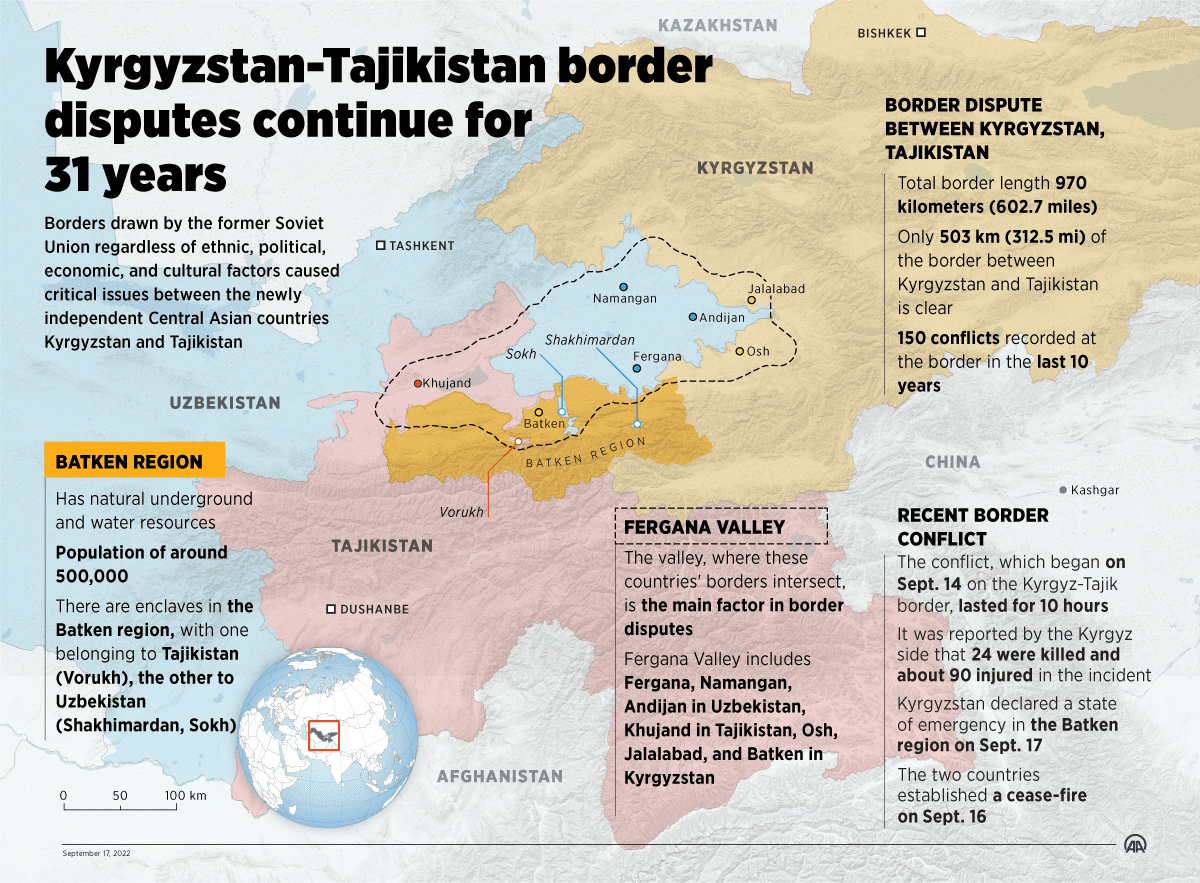
Illustration for Kyrgyz-Tajik Border Land Swap (Central Asia Border)

What & Where

Bilateral land-swap deal ends Kyrgyzstan–Tajikistan border dispute in Fergana Valley, Central Asia.

Corrects mismatched Soviet-era maps, calming Kyrgyz-Tajik-Uzbek ethnic frictions.

Secures uninterrupted access to farmland and shared irrigation water.

Quick Facts for MCQs

Border Conflict Drivers

  • Soviet-era arbitrary demarcation of Fergana Valley fostered overlapping claims.
  • Ethnic Kyrgyz, Tajiks, Uzbeks intermingled, escalating tensions.
  • Recurring clashes pressed leaderships toward final delimitation.

Resource Angle

  • Land swap improves farmers’ reach to arable plots.
  • Streamlined border eases joint management of irrigation channels.
  • Expected uplift in valley’s agricultural output.

Neighbourhood Relevance

  • Stable border strengthens Central Asian connectivity corridors.
  • Dampens security risks along India-centric trade routes via region.
  • Offers template for peaceful post-Soviet boundary settlements.

Key Data Points

FeatureData-Point
Countries involvedKyrgyzstan, Tajikistan
Independence year1991 (from USSR)
Kyrgyzstan capitalBishkek
Tajikistan capitalDushanbe
Shared geographic unitFergana Valley
Kyrgyzstan bordersKazakhstan, China, Tajikistan, Uzbekistan
Tajikistan bordersAfghanistan, China, Kyrgyzstan, Uzbekistan
Conflict resolution stepExchange of disputed land parcels

Related UPSC Prelims PYQs

GEO_GS, GS1 2024PYQ 1

Aral Sea in Central Asia is situated along which of the following two countries?

GEO_GS, GS1 1995PYQ 2

Given below is a map of some countries which were parts of the erstwhile Soviet Union, with water bodies shown by shaded areas:

GS-3SecurityQuick Bite

13.Exercise Dharma Guardian 2025 (India-Japan Exercise)

DD News
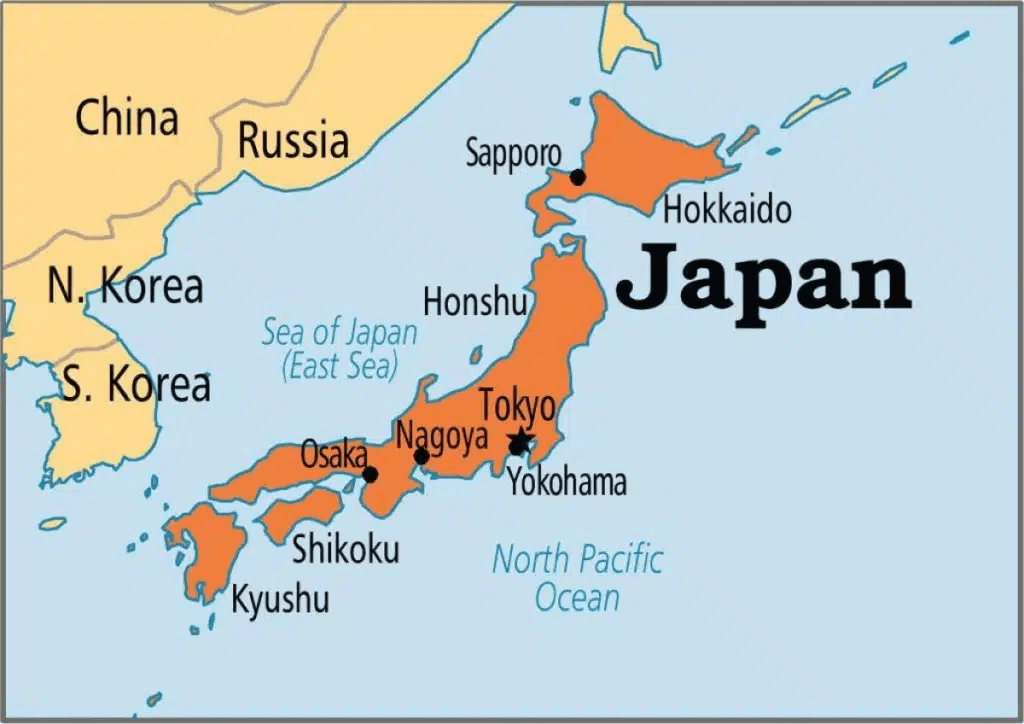
Illustration for Exercise Dharma Guardian 2025 (India-Japan Exercise)

What & Where

Exercise Dharma Guardian – bilateral Army drill between India & Japan, held alternately in both nations

6th edition (Mar 2025) hosted in Japan; terrain focus: urban counter-terrorism

Adds UN Peacekeeping & HADR components to deepen field interoperability

Quick Facts for MCQs

Security Dimension

  • Enhances squad-level tactics, joint planning, live-fire synergy
  • Builds rapid-response matrix for disasters under HADR protocols
  • Prepares contingents for blue-helmet deployment in UN missions

Bilateral Defence Framework

  • Complements India-Japan Acquisitions & Cross-Servicing Agreement (ACSA) and 2+2 dialogue
  • Army leg of a wider tri-service engagement that includes Veer Guardian, SHINYUU Maitri, JIMEX, Malabar
  • Reflects shared Free & Open Indo-Pacific security outlook

Multiservice Drills

  • Veer Guardian – fighter-aircraft exercise (Air Forces)
  • SHINYUU Maitri – transport/air-mobility (Air Forces)
  • JIMEX – bilateral naval combat, anti-submarine focus
  • Malabar – quadrilateral naval exercise with US & Australia

Operational Notes

  • Urban mock-village layouts simulate hostage rescue & room-clearing
  • Communication systems interoperable under common UN standards
  • After-action reviews feed into annual tactics-techniques-procedures (TTP) updates

Key Data Points

FeatureData-Point
Partner nationsIndia & Japan
Edition/year6th / 2025
Service branchArmy
PeriodicityAnnual, alternate venues
Core focusCounter-terrorism in urban areas
Extra modulesUNPKO, HADR
Recent hostJapan
First held2018

Related UPSC Prelims PYQs

CAPF_GAI, CDS_GK 2023PYQ 1

Exercise Ajeya Warrior is a biennial training event between the Indian Army and the army of:

CAPF_GAI, CDS_GK 2023PYQ 2

The 16th edition of Indo-Nepal annual joint training exercise in jungle warfare and counter-terrorism operations was held in December 2022 at Nepal Army Battle School, Saljhandi. What is the name of this exercise?

GS-2Scheme

14.NCDC Grant for Sugar Mills (Cooperative Sugar Mills)

PIB
Illustration for NCDC Grant for Sugar Mills (Cooperative Sugar Mills)

What & Where

Scheme: ₹1,000-crore Grant-in-Aid from Ministry of Cooperation to NCDC for nationwide Cooperative Sugar Mills (CSMs).

Aim: Leverage ₹10,000 crore market funds for ethanol plants, bagasse-based cogeneration and working-capital support.

Tenure: Operational since FY 2022-23; continues through FY 2024-25 via NCDC, New Delhi.

Quick Facts for MCQs

Tech & Schemes

  • Ethanol: Supports National Bio-Energy Policy, strengthens EBP blending goals, utilises molasses output.
  • Cogeneration: Promotes bagasse-based power, improving mill energy self-sufficiency and renewables share.
  • Market-borrowing: NCDC uses grant as equity to issue bonds/raise loans, boosting liquidity for CSMs.

Economic Angle

  • Leverage: 1:10 grant-to-credit ratio amplifies public funds without extra budgetary outlay.
  • Import-substitution: Higher ethanol cuts crude purchases, improving trade balance and rupee stability.
  • Rural income: Stable working capital sustains cane payments, safeguarding farmer livelihoods in sugar belts.

Institutional Setup

  • Statutory-body: NCDC under Parliament Act; HQ New Delhi; audited by C&AG.
  • Oversight: Ministry of Cooperation approves projects, monitors utilisation through NCDC’s Regional Offices.
  • Financial-tools: Concessional loans, interest subvention, and project monitoring by dedicated Sugar Cell.

Energy & Environment

  • Renewable-push: Bagasse power lowers carbon footprint, feeds surplus electricity to grid.
  • Waste-valorisation: Molasses diverted to ethanol curbs effluent discharge, aiding Zero Liquid Discharge goals.
  • Climate-co-benefit: Biofuel adoption aligns with India’s NDC commitment to reduce emissions intensity.

Key Data Points

FeatureData-Point
Grant size₹1,000 crore
Target leverage₹10,000 crore
Implementing agencyNational Cooperative Development Corporation
Nodal ministryMinistry of Cooperation
Legal basisNCDC Act, 1962
NCDC founding year1963
Eligible entitiesCooperative Sugar Mills
Key end-usesEthanol units, cogeneration, working capital

Related UPSC Prelims PYQs

CAPF_GAI, ESE_GS 2025PYQ 1

नवीनी सहकार योजना के बारे में निम्नलिखित कथनों पर विचार कीजिए:

CAPF_GAI, ESE_GS 2026PYQ 2

Which organization is responsible for implementing the National Beekeeping & Honey Mission (NBHM)?

GS-2Scheme

15.PM Fasal Bima Yojana Extension (Crop Insurance)

PIB

What & Where

PMFBY – flagship crop‐insurance scheme; shields farmers from yield loss due to natural calamities across all Indian States/UTs.

RWBCIS – allied weather-index insurance; both schemes now extended till FY 2025-26.

Grievance redress via new Krishi Rakshak Portal & 14447 helpline at district/state levels.

Quick Facts for MCQs

Legal & Policy

  • Extension approved under Section Sub-Mission on Agriculture Insurance guidelines till 2025-26.
  • Premium subsidy shared 50:50 Centre-State; north-eastern States get 90:10 ratio unchanged.
  • Opt-out allowed; non-participating States forego central subsidy.

Tech & Schemes

  • Remote-sensed data supports CCE sampling; drones provide real-time imagery for yield.
  • AI-driven Smart Sampling widens coverage, cuts human bias in loss estimation.
  • KRPH portal offers GIS tagging, ticket tracking for complaints.

Financials

  • Budgeted outlay covers premium subsidy component only, not administrative costs.
  • Timely settlement target fixed at 21 days post-yield data upload on national crop portal.
  • Insurer selection block-wise; ensures competitive premium discovery.

Key Data Points

FeatureData-Point
Union MinistryAgriculture & Farmers’ Welfare
Launch seasonKharif 2016
Extension period2023-24 to 2025-26
Total outlay (both schemes)₹69,515.71 crore
Farmer premium: Kharif2 % of sum-insured
Farmer premium: Rabi1.5 % of sum-insured
Farmer premium: Commercial/Horticulture5 % of sum-insured
Participation since 2020Voluntary for farmers & States/UTs
Claim payout modeDirect Benefit Transfer (DBT)
Technology toolsRemote sensing, drones, AI yield estimation
Grievance bodiesDGRC & SGRC committees
Toll-free number14447
State roleSelect insurers via open bidding
Crop-loss assessmentJoint teams of officials, insurers, farmers

Related UPSC Prelims PYQs

CDS_GK, ESE_GS 2025PYQ 1

Which one of the following Yojanas replaces two schemes – National Agricultural Insurance Scheme (NAIS), 1999 as well as the Modified National Agricultural Insurance Scheme (MNAIS), 2010 – by incorporating the best features of all these schemes while removing the previous shortcomings and weaknesses?

CDS_GK, ESE_GS 2025PYQ 2

Which of the following statements is/are correct ?

GS-2Scheme

16.Pashu Aushadhi Kendras Launch (Veterinary Medicine Scheme)

Indian Express

What & Where

Pashu Aushadhi Kendras: pan-India outlets under DAHD offering low-cost generic & ethnoveterinary livestock medicines

Operated by cooperative societies & PM-Kisan Samriddhi Kendras within Livestock Health & Disease Control Programme (2024-26)

Serve 536 million livestock, chiefly rural dairy-poultry-swine farmers

Quick Facts for MCQs

Policy & Scheme Design

  • Objective eradicate PPR by 2030; nationwide CSF vaccination planned
  • LH&DC sub-schemes fund mobile vet units, hospital upgrades, state-priority disease control

Economic Angle

  • Sector adds 30.23 % to agriculture GVA; CAGR 12.99 % (2014-15→2022-23)
  • Affordable drugs cut veterinary spend, lift dairy & meat margins for smallholders

Health Impact

  • Medicine-plus-vaccination drive lowers morbidity, boosts yields, avoids disease-linked trade bans
  • Ethnoveterinary products harness indigenous knowledge, may curb antimicrobial resistance

Key Data Points

FeatureData-Point
Modelled onPM Bharatiya Janaushadhi Kendras
Operating platformsCooperatives & PMKSKs
Pashu Aushadhi allocationRs 75 crore
Umbrella schemeLivestock Health & Disease Control Programme
LHDCP outlay 2024-26Rs 3,880 crore
LHDCP componentsNADCP, LH&DC, Pashu Aushadhi
Key diseases targetedFMD, Brucellosis, PPR, CSF, Lumpy
Livestock count (2019)536 million
Milk output 2023-24239.30 million t (24.76 % global)
Egg output 2023-24142.77 billion (2nd worldwide)
Meat output 2023-2410.25 million t (5th worldwide)

Related UPSC Prelims PYQs

CAPF_GAI 2025PYQ 1

Which one among the following schemes focuses on developing modern infrastructure and optimizing supply chain from farm to retail in Indian agriculture sector?

Ready to practice?

Test your knowledge with our UPSC test series.

Start Free Trial