UPSC Current Affairs

16 topicsGS-1: 3GS-2: 2GS-3: 11
0/16 done
GS-2Polity

1.India Internet Shutdown Laws (Internet Shutdowns)

DH
Illustration for India Internet Shutdown Laws (Internet Shutdowns)

What & Where

Definition: State-ordered disruption of internet/telecom access to curb online communication.

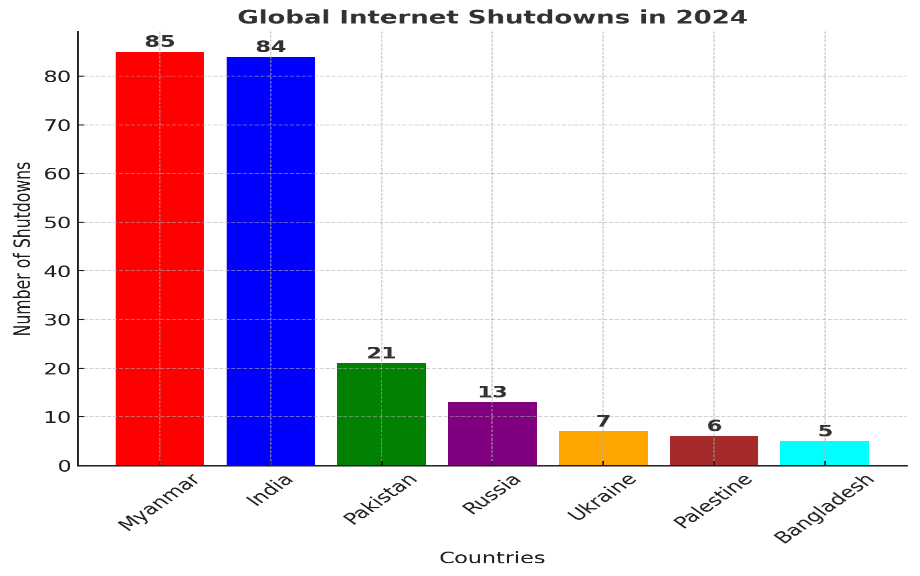
Geography: India logged 84 shutdowns (2024), highest among democracies; Myanmar led globally.

Hotspots: Manipur, Haryana, Jammu & Kashmir together triggered 45 of India’s 84 blocks.

Quick Facts for MCQs

Legal & Policy

  • Provision: Telegraph Act allows shutdown for undefined “public emergency/safety”.
  • 2017 Rules: Mandate written order, review within 48 hrs, publication for transparency.
  • Shift: §144 CrPC use phased down post-2017 but still invoked ad-hoc.

Global Ranking

  • Milestone: 2024 marks first year in six India not at top.
  • Democratic contrast: India’s 84 exceeds all other democracies combined.
  • Monitoring: Figures sourced from Access Now & KeepItOn coalition database.

State Trends

  • Northeast focus: Manipur alone responsible for 25% of national cuts.
  • Northern belt: Haryana, J&K each enforced dozen blackouts, often around unrest.
  • Pattern: Shutdowns cluster around election cycles and agrarian protest corridors.

Shutdown Triggers

  • Protest response: Farmers, ethnic clashes, CAA & reservation rallies prompt most suspensions.
  • Violence control: Communal flare-ups lead to targeted district-level outages.
  • Exam integrity: Competitive recruitment exams see pre-emptive state-wide throttling.

Key Data Points

FeatureData-Point
Global No.-1 in 2024Myanmar – 85 shutdowns
India’s 2024 tally84 shutdowns (2nd globally)
Years India topped earlier2018-2023 (six years)
Top Indian stateManipur – 21 shutdowns
Next two statesHaryana 12; Jammu & Kashmir 12
Main trigger categoryProtests – 41 instances
Other key triggersCommunal violence 23; Govt exams 5
Core statuteIndian Telegraph Act 1885
Rule detailing processTemporary Suspension of Telecom Services, 2017
Pre-2017 toolCrPC §144 orders

Related UPSC Prelims PYQs

ESE_GS 2024PYQ 1

Which one of the following Acts mandates schools and libraries in India to use some form of technological protection to block computer access to obscene material, pornography, and anything else considered harmful to minors?
GS-3Economy

2.India Fertilizer Import Reduction Strategy (Fertilizer Subsidy)

Indian Express
Illustration for India Fertilizer Import Reduction Strategy (Fertilizer Subsidy)

What & Where

High-analysis fertilizers: Urea 46-0-0, DAP 18-46-0, MOP 0-0-60 dominate Indian nutrient use

Import geography: DAP from Saudi Arabia / Morocco / Jordan / China, MOP fully from Canada / Russia / Jordan

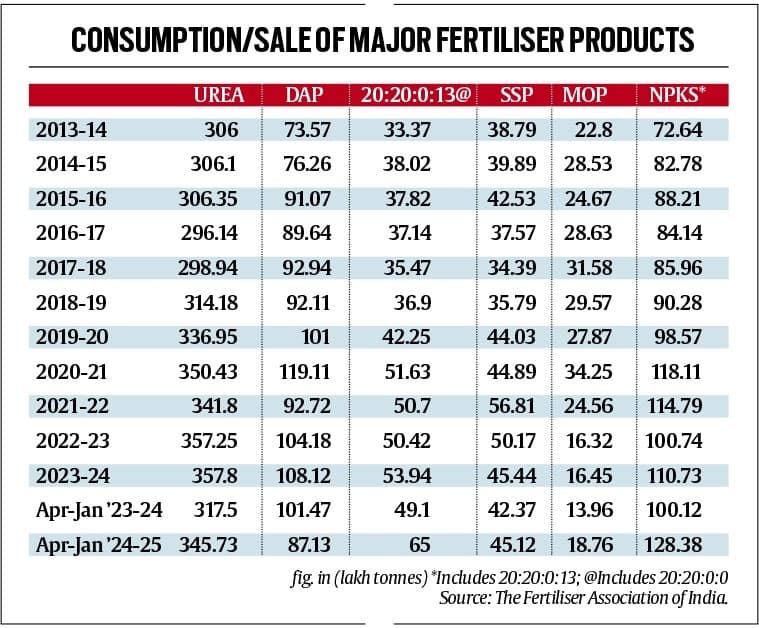
Policy pivot: Centre promoting balanced options—APS, SSP, complex NPKS, Nano variants—to curb subsidy and import load

Quick Facts for MCQs

Economic Angle

  • Import bill High-analysis trio drives forex outgo and fiscal stress
  • Volatility Global fertilizer spikes inflate subsidy abruptly
  • Savings Substitutes need less phosphoric acid / potash cutting import dependence

Environmental Impact

  • Soil health Overuse lowers organic carbon and microbial diversity
  • Water quality Nitrate leachate contaminates groundwater
  • Productivity Chronic N-P imbalance depresses yields over time

Tech & Schemes

  • Nano Urea 40 ml replaces 45 kg bag improving nutrient use efficiency
  • PM-PRANAM Rewards states shifting to organic and biofertilizers
  • FarmVibes AI Enables field-specific dose optimisation

Governance & Policy

  • Subsidy design Open-ended urea support encourages overapplication and diversion
  • Black marketing Cheap bags leak to industry or neighbouring markets
  • Reform call Redirect Nutrient-Based Subsidy toward APS, SSP, complex NPKS

Key Data Points

FeatureData-Point
Urea domestic capacity31.4 MT (2023-24)
Urea import7 MT (2023-24); 9.8 MT (2020-21)
DAP import cost$636 t ≈ ₹55,150
Govt DAP sale price₹27,000 t
MOP domestic share0 % (100 % imported)
Fertilizer subsidy FY24₹1.75 lakh crore
Govt support per urea bag≈ ₹1,500
APS sales rise32.4 % YoY
NPKS sales14 MT (2024-25) vs 7.3 MT (2013-14)
Nano urea yield gain15-20 % in trials

Related UPSC Prelims PYQs

CDS_GK, NDA_GAT 2022PYQ 1

Which one of the following statements about fertilizers is not correct?

CDS_GK, NDA_GAT 2020PYQ 2

As per the Budget Estimates of expenditure on major subsidies during 2019–20, the maximum expenditure was likely to be on

GS-3Economy

3.RBI Quality of Public Expenditure Index (Fiscal Efficiency)

Indian Express

What & Where

Quality of Public Expenditure (QPE) Index – RBI tool measuring efficiency of Centre & states’ spending, not just volume.

Five-indicator matrix: Capital-GDP, Rev/Cap ratio, Dev-GDP, Dev share of budget, Interest/Expenditure.

Coverage: All Indian governments; FY 2024-25 score highest since 1991 reforms.

Quick Facts for MCQs

Fiscal Trajectory

  • 1991-03 liberalisation & Pay-Commission hikes drove interest costs, lowering quality.
  • 2003-13 FRBM discipline then GFC stimulus produced mixed gains.
  • 2013-25 14th FC, GST realignment, Covid dip; post-pandemic capex lifts index peak.

Indicator Logic

  • Capital-GDP high ⇒ stronger infrastructure, long-run growth.
  • Low Rev/Cap ratio ⇒ funds shift from salaries-subsidies to assets.
  • Low Interest/Expenditure ⇒ healthier fisc, larger development headroom.

Challenges

  • Revenue-heavy budgets swell deficits, debt and crowd out capex.
  • Subsidies, pensions, Pay-Commission awards strain fiscal sustainability.
  • Weak quality ratios erode investor confidence and macro stability.

Prescriptions

  • Zero-Based & Performance budgeting link outlay with outcomes.
  • JAM-powered DBT curbs leakages in welfare expenditure.
  • Promote self-financing projects, devolve funds prudently to states & ULBs.

Key Data Points

FeatureData-Point
DeveloperReserve Bank of India
Indicators counted5
Best aggregate scoreFY 2024-25
Union Budget 2025-26 Capex₹11.21 lakh cr (3.1 % GDP)
Centre Capex growth FY 248.2 % YoY
State revenue spend growth FY 2412 % YoY
Key law aiding qualityFRBM Act 2003

Related UPSC Prelims PYQs

GS1, NDA_GAT 1996PYQ 1

The following Table shows the percentage distribution of revenue expenditure of Government of India in 1989-90 and 1994-95:

GS1, NDA_GAT 2025PYQ 2

S1. Liberalisation and globalisation freed India's economy from the low GDP trap that had impeded India's progress

GS-1History

4.Tea Horse Road Indo-China Trade (Ancient Trade Routes)

Indian Express
Illustration for Tea Horse Road Indo-China Trade (Ancient Trade Routes)

What & Where

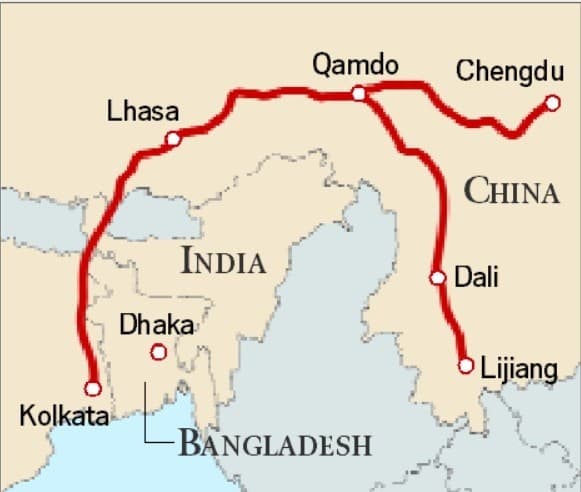
Route: Ancient Tea Horse Road (Chamadao) linked southwest China–Tibet–India over ≈2,000 km Himalayan terrain.

Terminals: Yunnan/Sichuan markets to Kolkata port via Tibet & Nepal, merging with Southern Silk Road at Lijiang.

Function: Barter corridor exchanging Chinese tea for Tibetan war-horses, later diversified goods.

Quick Facts for MCQs

Historical Timeline

  • Tang origin; Song institutionalisation; Ming-Qing expansion with state monopolies.
  • Post-1949 Mao land reforms and roads caused rapid decline.
  • WWII revival for overland wartime logistics.

Trade Mechanics

  • Caravans: Yaks, mules, horses carried tea, textiles, sugar; returned with horses, gold, saffron, herbs.
  • Packaging: Compressed brick-tea eased load, doubled as barter money in Tibet.
  • Hazards: Steep cliffs, snow, banditry demanded seasoned muleteers.

Cultural Exchange

  • Buddhism, medicinal knowledge, woven textiles diffused across Himalayan communities.
  • Multilingual caravan hubs fostered Sino-Tibeto-Indian artistic motifs.
  • Tea rituals and equine breeding techniques cross-pollinated societies.

Tourism & Heritage

  • Lijiang Old Town preserved as distribution-center showcase; part of UNESCO bid.
  • Provincial governments market trekking circuits along restored trail segments.
  • Heritage drives bolster rural incomes via homestays and craft sales.

Strategic & Military

  • Tibetan war-horses critical for Chinese border armies against northern nomads.
  • Route enabled imperial resupply where coastal access was blocked.
  • Geostrategic narrative now invoked in China-India diplomatic outreach.

Key Data Points

FeatureData-Point
First recorded useTang Dynasty, 7th century CE
Official tea-for-horse marketsSong Dynasty (960-1279 CE)
Peak regulationMing-Qing eras, 1368-1912 CE
Max altitude crossed≈10,000 ft Himalayan passes
Key Chinese provincesYunnan, Sichuan
Main Tibetan exchange goodHorses for imperial cavalry
Tea transport formBrick-tea, also used as currency
WWII roleAllied supply line into China
Modern heritage pushProposed UNESCO cultural route
Nickname in ChineseChamadao (Cha = tea, Ma = horse)
GS-1MappingQuick Bite

5.World's Unusual Rivers Highlights (Unique Rivers)

PR

What & Where

Globally scattered rivers/aquifers exhibiting rare colour shifts, extreme temperatures, tidal bores or subterranean flow.

Found across Colombia, Peru, China, Russia, Brazil-Amazon basin & Antarctica; each tied to distinctive geomorphic or biotic drivers.

Key processes include aquatic-plant pigmentation, deep geothermal circulation, tidal amplification, heavy-metal pollution and porous-rock seepage.

Quick Facts for MCQs

Unique Hydrological Phenomena

  • Colouration: Pigment-bearing macrophyte in Caño Cristales activates under specific light-water chemistry.
  • Boiling: Shanay-Timpishka lacks volcanic heat; relies on rainwater percolation to deep crustal hotspots.
  • Tidal Bore: Qiantang estuary funnel shape amplifies East China Sea tides creating surfable walls.

Geothermal & Subsurface Processes

  • Deep-seated convection heats Shanay-Timpishka without magmatic contact.
  • Hamza flow extremely slow—centimetres per year—through porous sandstone 4 km below surface.
  • Subsurface-to-surface faults vent warmed waters, sustaining high river temperatures.

Environmental Concerns

  • Heavy-metal leakage from Norilsk nickel operations stained Daldykan, signalling Arctic river pollution risks.
  • Antarctic Onyx sensitive to glacial melt variability; indicator for climate-linked hydrological change.
  • Multicolour Caño Cristales threatened by sediment run-off and uncontrolled tourism.

Key Data Points

FeatureData-Point
Caño Cristales“River of Five Colors”, Colombia; July–Nov hues via Rhyncholacis clavigera
Shanay-TimpishkaPeru; 45-100 °C boiling river heated by deep geothermal circulation
Hamza Aquifer4 km deep, 6,000 km long underground flow beneath Amazon River
Qiantang RiverChina; Silver Dragon tidal bore advancing 40 km h⁻¹ upstream
Daldykan RiverRussia; blood-red water from nickel & heavy-metal contamination
Onyx RiverAntarctica’s longest river, 32 km; flows inland to Lake Vanda only in summer
GS-3Environment

6.Similipal Tiger Reserve Profile (Tiger Reserve)

New Indian Express
Illustration for Similipal Tiger Reserve Profile (Tiger Reserve)

What & Where

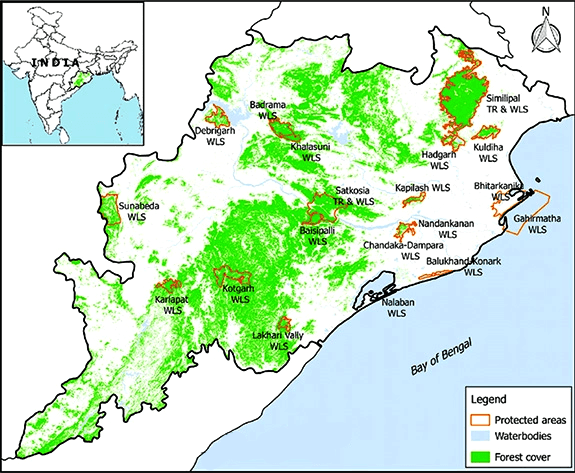
Similipal Tiger Reserve : Project Tiger site in Mayurbhanj, Odisha; UNESCO Biosphere Reserve (2009); moist deciduous-semi-evergreen forest mosaic.

Environs host Munda, Erenga Kharia & Mankirdia tribes with sacred groves inside core wildlife zone.

Current flashpoint : tribal access curbed after creation of tiger enclosure for translocated tigress Zeenat.

Quick Facts for MCQs

Biodiversity & Ecology

  • Habitat diversity supports tigers, elephants, hill mynahs; waterfalls and 1500 m peaks create micro-climates.
  • Core-buffer design now includes fenced enclosure for tigress Zeenat.
  • Forest corridors connect to Hadgarh, Kuldiha ensuring elephant movement.

Cultural Significance

  • Sacred groves central to Munda animist rites; each clan guards totemic plant/animal.
  • Seasonal festivals Sarhul, Karam celebrate forest regeneration and clan solidarity.
  • Burial-site rituals reinforce ancestral link to Similipal landscape.

Conflict & Rights

  • Access denial to groves triggered Munda protests against STR management.
  • Tension highlights overlap of wildlife protection rules and FRA-backed tribal rights.
  • Issue underscores need for participatory park governance in tiger reserves.

Key Data Points

FeatureData-Point
StateOdisha
DistrictMayurbhanj
Tiger Reserve notification1973 (Project Tiger)
Wildlife Sanctuary status1979
UNESCO Biosphere tag2009
Highest peaksKhairiburu & Meghashini – 1515 m
Major waterfallsJoranda, Barehipani
Forest typeTropical moist deciduous with semi-evergreen patches
Largest fauna tagHighest tiger population in Odisha
Linked elephant reserveMayurbhanj Elephant Reserve
Corridor sanctuariesHadgarh, Kuldiha
Founder wardenPadma Shri Saroj Raj Chowdhury
Fostered tigressKhairi
Dominant tribeMunda (Schedule Tribe)
Munda language arrival~4000 years ago from SE Asia
Iconic freedom fighterBirsa Munda
Key festivalsSarhul, Karam

Related UPSC Prelims PYQs

GS1 2012PYQ 1

Consider the following protected areas:

GS1 2011PYQ 2

Two important rivers – one with its source in Jharkhand (and known by a different name in Odisha), and another, with its source in Odisha – merge at a place only a short distance from the coast of Bay of Bengal before flowing into the sea. This is an important site of wildlife and biodiversity and a protected area. Which one of the following could be this?

GS-3Environment

7.Waste Segregation and WTE Policy (Solid Waste Management)

The Hindu
Illustration for Waste Segregation and WTE Policy (Solid Waste Management)

What & Where

Waste segregation: on-site division of MSW into wet, dry, sanitary/special or bio-, non-bio, hazardous streams under SWM Rules.

Where: Supreme Court scrutiny on National Capital Region—Delhi plus adjoining districts of Haryana, Uttar Pradesh, Rajasthan.

Waste-to-Energy: plants converting high-calorific, non-recyclable waste to power/heat/fuels via incineration, gasification, anaerobic digestion, pyrolysis.

Quick Facts for MCQs

Legal & Policy

  • SupremeCourt; CPCB asked to map health, environmental impact of NCR WtE plants.
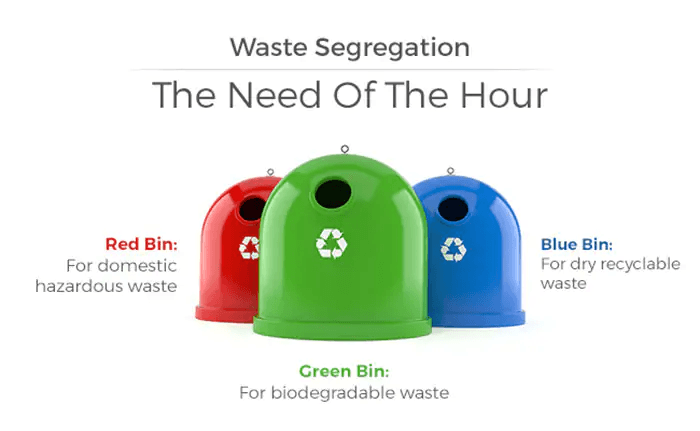
  • SWM Rules 2016 prescribe three-bin source segregation, RDF, co-processing mandates.
  • Draft SWM 2024 adds four-bin norm, stubble-burning penalties, on-spot fines by sanitation staff.

Technology

  • Incineration: high-temp combustion → steam → turbines → electricity.
  • Gasification/Pyrolysis: oxygen-starved thermal treatment yielding syngas, bio-oil, char.
  • AnaerobicDigestion: microbial breakdown of organics → biogas/Bio-CNG.

Statistics

  • Only 53 % of national MSW treated (91,512⁄1,70,338 TPD) as of 2021-22.
  • Delhi landfills receive ≈3,000 MT daily surplus, escalating pollution loads.
  • High-calorific waste share suited for WtE estimated at 30-35 % of urban MSW.

Environmental Impact

  • Segregation prevents hazardous contamination, lowers landfill methane, boosts material recovery.
  • WtE curtails fossil fuel use but raises concerns over dioxin, particulate emissions.
  • SC focus signals priority on public-health safeguards alongside energy recovery.

Key Data Points

FeatureData-Point
Avg. solid waste India 2021-221,70,338 TPD; 91,512 TPD treated
Delhi daily waste≈11,000 MT generated; 8,073 MT treatment capacity
Waste processed share18 % in FY15 ➜ 78 % in FY24
Calorific cut-off for WtE≥1,500 kcal/kg; landfill barred
RDF fuel substitution≥5 % for units within 100 km of RDF plant
Segregation streams Draft-2024Wet, Dry, Sanitary, Special-care
Fine authority Draft-2024Safai Karamcharis empowered to penalise unsegregated waste
Act enabling rulesEnvironment (Protection) Act, 1986

Related UPSC Prelims PYQs

GEO_GS, GS1 2019PYQ 1

As per the Solid Waste Management Rules, 2016 in India, which one of the following statements is correct?

GEO_GS, GS1 2023PYQ 2

According to the Solid Waste Management Rules, 2016, the responsibility of waste generators has been fixed for segregation of waste in which of the following streams?

GS-3Environment

8.Cleaner Energy Generation Technologies India (Clean Energy)

The Hindu
Illustration for Cleaner Energy Generation Technologies India (Clean Energy)

What & Where

Cleaner power = renewable/low-carbon technologies generating electricity with minimal air pollution.

Key Indian options: solar, wind, hydropower, nuclear, biomass, hydrogen fuel cells, waste-to-energy, osmotic (salinity-gradient) power.

Geography highlights: 7,500 km coastline for osmotic sites; nine windy states; large river systems supporting hydropower.

Quick Facts for MCQs

Environmental Impact

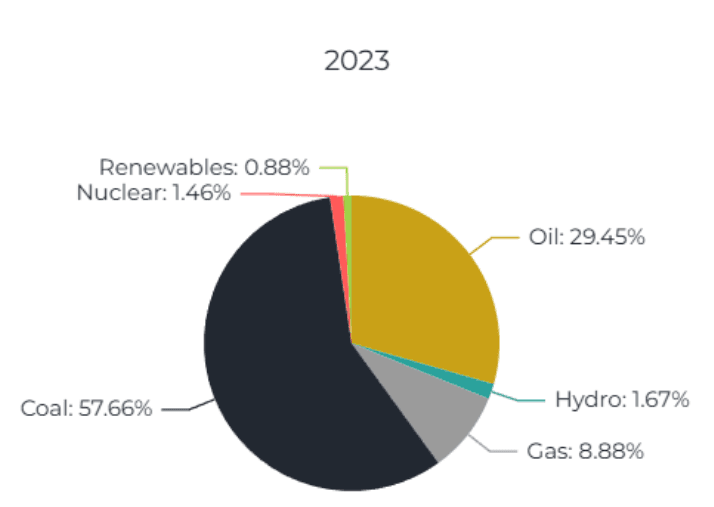
  • NO₂ & ozone from coal negate six years of agri growth despite better inputs.
  • Hydrogen fuel cells emit only water vapour.
  • WTE reduces landfill volume while producing power.

Capacity & Targets

  • Nuclear planned to triple by 2031-32; centenary target 100 GW.
  • Wind & solar already contribute 100 GW+ combined, scaling via auctions.
  • Biomass currently supplies nearly one-third of India’s primary energy mix.

Technology Snapshot

  • Osmotic power exploits river-sea salinity gradient to drive pressure-retarded osmosis turbines.
  • Gasification converts MSW to syngas (CO, H₂, CH₄) for electricity or fuels.
  • Pyrolysis yields bio-oil, syngas, biochar without oxygen, enabling circular-carbon products.

Key Data Points

FeatureData-Point
Wheat & rice yield loss from NO₂/O₃>10 % in some regions
Biomass available annually450–500 million t (≈32 % primary energy)
Wind power rank4th globally; 50 GW installed
Solar power rank3rd globally (after China, USA)
Hydropower (top 5 dams)≈50 GW
Nuclear capacity 20248,180 MW
Nuclear target 2031-3222,480 MW
Nuclear long-term target100 GW by 2047
Coast length usable for osmotic7,500 km
Waste-to-energy key routesIncineration, gasification, pyrolysis

Related UPSC Prelims PYQs

GEO_GS, GS1 2026PYQ 1

India's installed solar capacity in 2025 is close to

GEO_GS, GS1 2023PYQ 2

निम्नलिखित कथनों पर विचार कीजिए :

GS-3SpeciesQuick Bite

9.White Rhino IVF Conservation Efforts (White Rhino)

PhysOrg
Illustration for White Rhino IVF Conservation Efforts (White Rhino)

What & Where

In-vitro fertilisation (IVF): lab fertilisation of egg; embryo later implanted into female uterus.

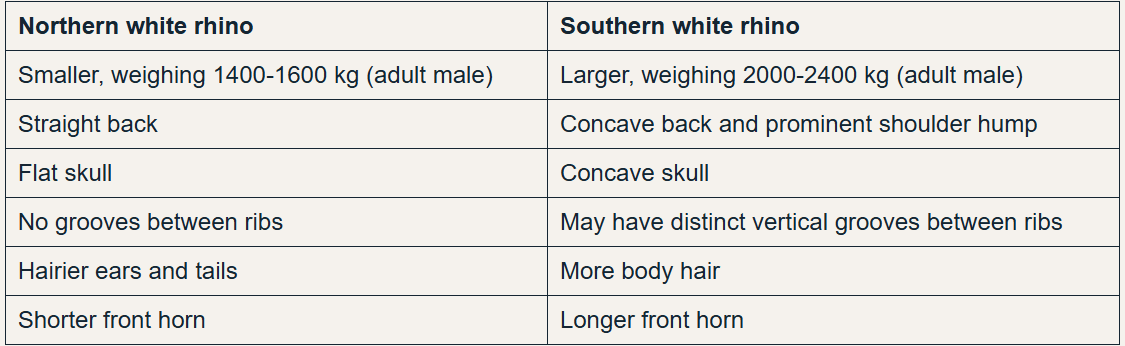
White rhinoceros: African megafauna; two subspecies—Northern (Ceratotherium simum cottoni) and Southern (C. s. simum).

Northern white rhino now only 2 females in Kenyan captivity; 36 IVF embryos prepared for rescue effort.

Quick Facts for MCQs

Conservation Status

  • Northern subspecies declared functionally extinct; breeding impossible without technology.
  • Southern population >15,000; still vulnerable to illegal hunting.
  • IUCN listings differentiate conservation urgency between subspecies.

Reproductive Technology

  • IVF uses cryopreserved sperm from deceased males to create embryos.
  • Embryos planned for implantation into related Southern white surrogate females.
  • Breakthrough aims to restore genetic diversity and revive wild populations.

Threat Factors

  • Poaching driven by horn demand remains primary mortality cause.
  • Habitat loss from agriculture, settlements, water scarcity intensifies pressure.
  • Low genetic diversity heightens disease susceptibility, especially in Northern group.

Key Data Points

FeatureData-Point
Land-mammal size rank2nd after elephant
Northern white rhinos alive2 females
IVF embryos ready36
Northern subspecies IUCNCritically Endangered
Southern subspecies IUCNNear Threatened
Current Northern habitatCaptivity, Ol Pejeta, Kenya
Southern rangeSouth Africa, Namibia, Zimbabwe, Kenya
DietPure grazer on short grasses
SocialitySemi-social; males territorial
Key threatPoaching for horn
GS-3Editorial

10.Surveillance Capitalism Data Monetization (Data Privacy)

The Hindu

What & Where

Definition: Economic system monetising personal behavioural data via platforms like Google, Meta, Amazon to shape user choices

Core processes: Behavioural data extraction, AI-based predictive analytics, instrumentarian power steering collective behaviour

Geography: US-centred big tech operating globally; regulatory pushback from EU (GDPR) and India (DPDPA 2023)

Quick Facts for MCQs

Tech Processes

  • Behavioural tracking: every click, search, purchase logged to build granular digital profiles
  • Predictive analytics: algorithms forecast future actions, feed personalised ads, content, political messaging
  • Social physics: massive datasets model collective patterns, enabling real-time nudges at population scale

Social Concerns

  • Privacy erosion: non-consensual surveillance normalised, individuals unaware of profiling depth
  • Autonomy loss: algorithmic nudges bias shopping, news, voting, shrinking meaningful choice
  • Democracy risk: hyper-targeted political ads polarise electorates, weaken deliberative equality

Legal & Policy

  • Data protection: GDPR, DPDPA impose consent, purpose limitation, user rights to access/delete data
  • Antitrust push: break or regulate digital monopolies to curb data-linked market dominance
  • Transparency demand: mandatory algorithmic audits, disclosure of data sale/sharing practices

Key Data Points

FeatureData-Point
Coined byShoshana Zuboff, 2018
Key commodityHuman experience/behavioural data
Signature powerInstrumentarian power (non-coercive control)
Major scandalCambridge Analytica data misuse, 2014
Election cited2016 US Presidential polls micro-targeting
EU shieldGeneral Data Protection Regulation, 2018
India shieldDigital Personal Data Protection Act, 2023
Child data lawCOPPA, United States
Core firmsGoogle, Meta, Amazon
Data cycle24 × 7 continuous harvesting
GS-3S&T

11.Project FarmVibes AI Agriculture (Precision Agriculture)

The Hindu

What & Where

Project FarmVibes – Microsoft Research AI suite for precision farming using satellite, drone & IoT data.

Core processes – sensor-fusion analytics, vernacular AI advisory, spot fertilisation, climate-responsive irrigation.

Geography – Piloted in Baramati, Maharashtra; scaling from 1 000 to 50 000 farmers via Agricultural Development Trust.

Quick Facts for MCQs

Tech & Schemes

  • Sensor-fusion integrates drone, satellite, soil probes for real-time field maps.
  • Vernacular chatbot delivers parcel-level advice in Marathi, boosting adoption.
  • Spot fertilisation algorithm guides variable-rate spreaders, limiting chemical hotspots.

Environmental Impact

  • Water-use optimisation halves groundwater extraction, aiding drought-prone Deccan basin.
  • Reduced fertiliser curbs nitrate leaching, improving soil and downstream water quality.

Economic Angle

  • Higher yield plus shorter sugarcane cycle lifts farmer revenue without extra acreage.
  • Input savings on fertiliser and water lower cost of cultivation, raising profit margins.

Key Data Points

FeatureData-Point
Lead developerMicrosoft Research & Azure AI
Key partner in IndiaAgricultural Development Trust, Baramati
Academic collaboratorOxford University AI researchers
Yield gain (Baramati)≈ 40 % increase
Fertiliser saving≈ 25 % reduction
Water conservation≈ 50 % less usage
Sugarcane crop cycle18 → 12 months
Farmers in next phase50 000
GS-3S&T

12.Astronaut Health Risks in Space (Human Spaceflight)

Economic Times

What & Where

Concept: Spaceflight-induced physiological & psychological changes in astronauts

Primary setting: International Space Station (≈400 km Low-Earth Orbit)

Key processes: Microgravity exposure, cosmic radiation, prolonged confinement

Quick Facts for MCQs

Physiological Effects

  • Brain: Ventricular expansion, increased intracranial pressure, cognitive decline risk
  • Cardiovascular: Weakened myocardium, post-flight orthostatic intolerance, higher CVD probability
  • Bones & Muscles: Osteopenia, muscle wasting, fracture susceptibility

Causal Factors

  • Microgravity: Fluid head-shift, load removal from bones & muscles
  • Radiation: High-energy particles penetrate tissues, DNA damage escalation
  • Isolation: Confined habitat elevates stress hormones, immune dysregulation

Recovery & Permanence

  • Duration-linked: Longer stays prolong rehabilitation; some bone, ocular, cardiac changes irreversible
  • Short-term: Most physiological alterations normalize swiftly on Earth
  • Medical gap: Limited in-orbit care hampers early intervention

Key Data Points

FeatureData-Point
Mission delaySunita Williams & Butch Wilmore stranded > 9 months
Vision disorderSpaceflight-Associated Neuro-Ocular Syndrome (SANS)
Bone mineral loss2.1 % after long missions
Short mission recovery≈ 95 % effects reversible within days
Radiation outcomeElevated neurodegenerative & cancer risk
Muscle impactCardiac & skeletal atrophy in microgravity
GS-3S&T

13.HIV Self-Testing Success in Mizoram (HIV Self-Testing)

Indian Express

What & Where

HIV self-testing – individual collects blood/saliva, reads result privately via single-use kit

Mizoram – highest Indian HIV prevalence 2.73 % (≈13× national); pilot run by ICMR-NITVAR & Mizoram University

WHO – endorsed self-testing 2016; 41 countries adopted, India yet to frame norms

Quick Facts for MCQs

Epidemiological Drivers

  • Injecting-drug-use, commercial sex work fuel state epidemic
  • Stigma-linked late testing heightens mortality risk
  • Unsafe blood, shared needles add transmission routes

Testing & Diagnosis

  • Rapid-diagnostic kits yield same-day results; self-testing boosts reach
  • Positive self-test needs facility-based confirmatory virological test
  • Early testing enables timely lifelong Antiretroviral Therapy

Policy & Programme

  • National AIDS Control Programme operational since 1992; core implementation arm
  • SDG 3.3 aims HIV epidemic end by 2030; India on 44 % new-infection decline path
  • ART free under public sector; daily regimen suppresses virus, no cure yet

Key Data Points

FeatureData-Point
Mizoram HIV prevalence2.73 % (2023)
National adult prevalence0.2 %
People living with HIV-India2.5 million
New infection fall 2010-2344 %
Countries with self-testing41
Indian self-testing guidelineNot released
Main Mizoram risk groupsInjecting drug users; sex workers
WHO AHD cut-offCD4 < 200 cells/mm³
GS-3S&TQuick Bite

14.Perovskite LED Anion Migration Fix (Next-Gen Lighting)

PIB

What & Where

Breakthrough: Indian scientists curbed anion migration in perovskite nanocrystals, stabilising colour for lighting displays.

Key product: Perovskite LEDs (PeLEDs) merging OLED flexibility with QLED colour purity at higher efficiency.

Locale: Research accomplished in India; lighting ≈20 % of global electricity use.

Quick Facts for MCQs

Technology & Innovation

  • PeLEDs achieve superior efficiency via controlled halide anion distribution.
  • Method enhances long-term emission stability, vital for commercial lighting screens.
  • Indian success advances indigenisation of advanced nanotechnology.

Energy Angle

  • Stable PeLEDs can slash electricity demand in lighting, aiding climate targets.
  • Higher luminous efficacy means fewer fixtures for same lux output.

Comparative Lighting Tech

  • Incandescent → Fluorescent → LEDs → OLED/QLED → PeLEDs; each step doubled efficiency.
  • Micro/Mini-LEDs excel in brightness but remain production-cost heavy.

Key Data Points

FeatureData-Point
Problem tackledAnion migration‐induced colour instability
Material classPerovskite nanocrystals
End devicePeLED (Perovskite Light-Emitting Diode)
Global power consumed by lighting≈20 %
OLED strengthsThin, flexible, lightweight
OLED drawbacksHigh cost, shorter life
QLED strengthsHigh colour purity, durability
QLED concernsCd toxicity, resource scarcity
PeLED edgeCombines OLED flexibility + QLED purity; cheaper, efficient
Blue LED breakthrough1993 (Shuji Nakamura); Nobel 2014
Earlier lampsIncandescent, Fluorescent
Emerging rivalsMicro/Mini-LEDs: bright, stable, costly
GS-2Misc

15.African-Asian Rural Development Organization (South-South Cooperation)

News on Air

What & Where

African-Asian Rural Development Organization (AARDO): inter-governmental body for Asia-Africa rural development cooperation.

HQ: New Delhi, India; constitutional adoption 31 Mar 1962, Cairo, Egypt.

Geographic scope: 33 member countries across both continents.

Quick Facts for MCQs

Historical Timeline

  • 1955 Tokyo conference sparked Asia-Africa rural reconstruction dialogue.
  • 1961 New Delhi conference resolved to create AARDO.
  • HQ operational in 1966, cementing India’s host role.

Core Functions

  • Policy coordination platform for rural-centric strategies among member states.
  • Conducts workshops, scholarships, field projects; channels advisory & grant support.
  • Champions climate-resilient farming, agri-tech, rural infrastructure upgrades.

South-South Cooperation

  • Facilitates economic & technical exchange strictly among Global South members.
  • Joint projects with FAO, IFAD, UNESCO, UNDP, ICA leverage wider multilateral resources.
  • Target outcomes: poverty reduction, sustainable agriculture, assured food security.

Key Data Points

FeatureData-Point
Legal natureInter-governmental organisation
Current members33 (Asia + Africa)
Constitution adopted31 March 1962, Cairo
Seed event1955 East Asian Rural Reconstruction Conf., Tokyo
Formation decided1961 Afro-Asian Conf. on Rural Reconstruction, New Delhi
HQ established1966, New Delhi
Latest meet21st AARDO Conference, New Delhi
Core mandateRural devt., South-South cooperation
Key UN partnersFAO, IFAD, UNESCO, UNDP, ICA
Capacity toolsTraining, seminars, tech & financial assistance
GS-1Polity

16.National Assessment Accreditation Council Role (Higher Education)

Times of India
Illustration for National Assessment Accreditation Council Role (Higher Education)

What & Where

NAAC – autonomous UGC body assessing & accrediting Higher Education Institutions (HEIs) across India

Core process – eight-grade CGPA accreditation (A++ to D) via on-site, online & hybrid evaluations

Geography – headquarters in Bengaluru, Karnataka; nationwide institutional coverage

Quick Facts for MCQs

Governance & Integrity

  • Cleanup: NAAC delisted ~900 peer reviewers after corruption allegations in grading process
  • Safeguards: Randomised assessor selection, compulsory digital evidence, grievance portal to curb bias & bribery
  • Oversight: UGC and Education Ministry supervise disciplinary action and rule updates

Functions & Powers

  • Accreditation: Rates universities, colleges, deemed universities on curriculum, governance, research, infrastructure parameters
  • Monitoring: Periodic review, compliance audits, power to revoke or downgrade institutional grades
  • Support: Advises government on higher-education policy, promotes research & innovation through quality benchmarks

Historical Evolution

  • Origin: Created 1994 to arrest higher-education quality decline identified by NPE-1986 reforms
  • Shift: Voluntary accreditation turned mandatory as grades linked to funds, autonomy, recognition
  • Modernisation: Post-2020 adoption of hybrid assessments to enhance reach, transparency, cost-efficiency

Key Data Points

FeatureData-Point
Year established1994
Parent organisationUniversity Grants Commission
Legal genesisNational Policy on Education 1986 & Programme of Action 1992
HeadquartersBengaluru, Karnataka
Accreditation scaleA++, A+, A, B++, B+, B, C, D
Grade denoting non-accreditationD
Latest corrective moveRemoval of ~900 peer reviewers over bribery charges
Evaluation modeIncreasing shift to online & hybrid visits
Accreditation natureMandatory for UGC funding/recognition
Primary mandateQuality assurance in higher education

Related UPSC Prelims PYQs

ESE_GS, GEO_GS 2021PYQ 1

Which one of the following statements is NOT correct regarding the National Education Policy 2020 in India ?

ESE_GS, GEO_GS 2023PYQ 2

What is Academic Bank of Credit (ABC) as per the National Education Policy (NEP), 2020?

Ready to practice?

Test your knowledge with our UPSC test series.

Start Free Trial