UPSC Current Affairs

16 topicsGS-1: 2GS-2: 7GS-3: 7
0/16 done
GS-2Polity

1.Chief Election Commissioner Powers and Appointment (Election Commission)

Business Standard

What & Where

Constitutional body; Chief Election Commissioner heads Election Commission of India ensuring free, fair nationwide elections

Jurisdiction pan-India for Lok Sabha, Rajya Sabha, State Assemblies, President and Vice-President polls; HQ New Delhi

Empowered by Article 324 and the Chief Election Commissioner & Other Election Commissioners Act 2023

Quick Facts for MCQs

Appointment Process

  • Multistage; Search Committee shortlists, Selection Committee recommends, President appoints
  • 2023 Act replaces sole PM advice, institutes bipartisan scrutiny
  • Leader of Opposition participation injects minority voice in high-level selections

Service Conditions

  • Cabinet Secretary salary, perks, order of precedence safeguard institutional independence
  • Fixed tenure or age cap curbs executive interference

Powers & Functions

  • Conducts, schedules, countermands elections across Union and states
  • Enforces Model Code of Conduct, oversees party registration and poll finance
  • Advises President or Governor on disqualifications, bye-poll timings

Latest Appointments

  • Gyanesh Kumar, 1988 IAS (Kerala cadre), notified as 26th Chief Election Commissioner
  • Haryana Chief Secretary Dr Vivek Joshi elevated as Election Commissioner
  • Both selections made March 2024 under new statutory framework

Key Data Points

FeatureData-Point
Constitutional article324
New statute2023 CEC & ECs Act
Appointment authorityPresident of India
Selection CommitteePM + Union Cabinet Minister + LoP, Lok Sabha
Search Committee headLaw Minister
EligibilityServing/retired Secretary-rank, integrity, election expertise
Tenure6 years or age 65, whichever earlier
Service parityEquivalent to Cabinet Secretary
CEC removalSC-judge impeachment procedure
EC removalOnly on CEC recommendation

Related UPSC Prelims PYQs

CDS_GK, GS1 2022PYQ 1

Which one of the following statements with regard to the Election Commission is not correct ?

CDS_GK, GS1 2002PYQ 2

Consider the following statements with reference to India:
GS-2Polity

2.Constitutional Morality Principles and Applications (Constitutional Values)

The Hindu

What & Where

Definition adherence to constitutional values beyond textual obedience ensuring justice equality accountability

Scope applies to lawmakers executives judiciary citizens; underpins ethical governance in Indian democracy

Roots term from George Grote on Athens; popularised by Dr B R Ambedkar in Assembly

Quick Facts for MCQs

Legal & Policy

  • Preamble embeds justice liberty equality fraternity; sets moral compass
  • Articles 50 121 211 enforce separation promoting constitutional morality
  • DPSPs guide State towards social economic justice reflecting doctrine

Judicial Landmark Cases

  • Navtej Johar decriminalised Section 377 citing constitutional morality over public morality
  • K S Puttaswamy affirmed privacy as fundamental right within moral framework
  • Sabarimala review showcased clash between constitutional and popular morality

Governance Challenges

  • Political agencies allegedly weaponised compromising fairness
  • Majoritarian opinion pressures organs against minority rights
  • Weak enforcement mechanisms dilute accountability of executive actions

Key Data Points

FeatureData-Point
Term originGeorge Grote study on Athenian democracy
Indian championDr B R Ambedkar, Constituent Assembly
Constitutional anchorsPreamble; Arts 14-21; DPSPs
Key SC rulingsNavtej 2018; Puttaswamy 2017; Krishnamoorthy 2015
Core principlesSupremacy; Checks-balances; Pluralism; Freedom with restraint
Major challengesPolitical misuse; Executive overreach; Low civic literacy
UPSC PYQ year2021 GS II

Related UPSC Prelims PYQs

CDS_GK, GS1 2017PYQ 1

निम्नलिखित कथनों में से कौन-सा/से भारतीय नागरिक के मूल कर्तव्यों के विषय में सही है/हैं?

CDS_GK, GS1 2021PYQ 2

भारत का संविधान शब्द स्वतंत्रता और अभिव्यक्ति की स्वतंत्रता की गारंटी देता है, किन्तु राज्य द्वारा यह स्वतंत्रता उचित प्रतिबंधों के अधीन हो सकती है। ये प्रतिबंध निम्नलिखित में से किससे संबंधित हैं?

GS-3Economy

3.Deposit Insurance and Credit Guarantee Corporation Overview (Deposit Insurance)

LiveMint

What & Where

DICGC: RBI subsidiary insuring bank deposits and offering credit guarantees across India.

Present cover: up to ₹5 lakh per depositor per bank; Finance Ministry weighs upward revision.

Applies nationwide to commercial, regional rural, cooperative and Indian branches of foreign banks.

Quick Facts for MCQs

History & Evolution

  • Trigger events: 1948 Bengal failures; 1960 Palai Central & Laxmi Bank collapse.
  • Deposit Insurance Corporation launched 1962; merged 1978 creating DICGC.
  • Continual limit hikes: latest to ₹5 lakh (2020); hike under consideration.

Coverage & Exclusions

  • Coverage breadth: all scheduled & non-scheduled banks except primary cooperative credit societies.
  • Branch rule: deposits across a bank’s branches clubbed for one insurance sum.
  • Exclusions detailed: foreign govt deposits, central/state funds, RBI-approved exemptions.

Functional Scope

  • Insurance role: compensates depositors when RBI liquidates/supervises failed bank.
  • Credit guarantee: supports priority-sector lending institutions to mitigate default risk.
  • Monitoring duty: assesses bank health, builds Deposit Insurance Fund via bank-paid premiums.

Economic Angle

  • Proposed limit hike aims to bolster depositor confidence amid sporadic cooperative bank stresses.
  • Higher cover shifts perceived risk from households to insurer, marginally raises bank premium outgo.
  • Global context: India’s ₹5 lakh (~US $6 k) below US FDIC’s $250 k, EU’s €100 k ceilings.

Key Data Points

FeatureData-Point
Parent organisationReserve Bank of India
Governing ActDeposit Insurance & Credit Guarantee Corporation Act, 1961
Insurance ceiling₹5 lakh (principal + interest)
Beneficiary unitPer depositor, per bank
Ministry oversightDept. of Financial Services, MoF
First proposal year1948 (Bengal banking crises)
Act commencement1 Jan 1962
Merger forming DICGC1978 with Credit Guarantee Corporation
Accounts coveredSavings, fixed, current, recurring deposits
Major exclusionsGovt, inter-bank, SLDB, overseas deposits

Related UPSC Prelims PYQs

CDS_GK 2020PYQ 1

Recently the Reserve Bank of India has imposed limitations, initially for a period of six months, on the withdrawal of amount by account holders of which one of the following banks?

GS-3Economy

4.APEDA Exports Sangola and Bhagwa Pomegranates (Agricultural Exports)

The Print

What & Where

Sangola & Bhagwa: premium pomegranate cultivars with high sugar, deep-red arils, long shelf life.

Core geography: semi-arid Solapur belt, Maharashtra—country’s main hub for both varieties.

Milestone: APEDA-led first commercial sea shipment of these fruits to Australia.

Quick Facts for MCQs

Trade & Exports

  • Initiative: First sea shipment expands Indian pomegranate reach, cuts freight cost v. air.
  • Partnership: APEDA + AgroStar + Kay Bee Exports manage sourcing, packaging, compliance.
  • Objective: Diversify agri-export basket, raise farm incomes through premium fruit markets.

Varietal Traits

  • Sangola: Bright rind, very sweet juice, minimal cracking, long storability.
  • Bhagwa: Larger fruit, intense red colour, high antioxidants, global consumer preference.
  • Both command premium prices due to colour uniformity & soft seeds.

Institutional Framework

  • APEDA: Statutory body under 1986 Act; mandates export promotion, quality control.
  • Support: Funds pack-houses, cold chains; issues certifications; runs ANARNET for traceability.
  • Policy role: Implements schemes to boost farmer earnings, cut post-harvest loss.

Logistics Support

  • Cold-chain: Containerised refrigeration ensures aril firmness during long maritime transit.
  • Post-harvest: Grading, waxing, controlled-atmosphere packing done in Solapur belt.
  • Scale-up potential: Successful trial paves path for routine sea exports to high-value markets.

Key Data Points

FeatureData-Point
Cultivars exportedSangola, Bhagwa
Primary growing stateMaharashtra (Solapur)
First sea-route marketAustralia
Lead export agencyAPEDA
APEDA set-up year1986
Parent ministryCommerce & Industry
Traceability toolANARNET
Key fruit traitsHigh sugar, deep-red arils
Seed characterSoft, edible
Shelf-life edgeLong, suits shipping
GS-1History

5.Syrian UNESCO Sites Palmyra, Crac des Chevaliers (UNESCO Sites)

The Hindu

What & Where

Syrian Heritage Sites: Palmyra & Crac des Chevaliers, both UNESCO-listed, sit in Homs Governorate desert/Al-Husn hillscape.

Palmyra: 2,000-year Roman ruins; Silk Road hub; briefly capital of Palmyrene Empire under Queen Zenobia, 3rd century.

Crac des Chevaliers: 12th-century Crusader fortress built by Knights Hospitaller, commanding Levant trade/military routes.

Quick Facts for MCQs

Conflict Damage & Restoration

  • War-impact: Shelling, looting left monuments structurally compromised.
  • Restoration-drive: Archaeologists and conservators launching phased repairs to safeguard authenticity.

Tourism & Economy

  • Revival-goal: Reopened sites expected to draw international visitors and hard currency.
  • Government-pitch: Cultural heritage positioned as post-conflict economic catalyst.

Historical Significance

  • Palmyrene-Empire: Zenobia’s revolt momentarily challenged Roman supremacy in Near East.
  • Crusader-Network: Crac served as key Hospitaller garrison between Mediterranean ports and inland trade paths.

Key Data Points

FeatureData-Point
Palmyra locationSyrian desert, Homs Governorate
Palmyra eraRoman-era, 1st–3rd century CE
Palmyra roleSilk Road commercial hub
Palmyra rulerQueen Zenobia, 3rd century
Crac locationAl-Husn, Homs Governorate
Crac builderKnights Hospitaller, 12th century
Crac functionCrusader stronghold controlling routes
UNESCO statusBoth declared World Heritage Sites
Current actionExpert-led restoration after war damage
Economic aimHeritage tourism revival for Syrian economy
GS-1Mapping

6.Delhi Shallow Earthquake 2025 Insights (Earthquakes)

Indian Express

What & Where

Delhi experienced a 4.0-magnitude shallow earthquake (5 km) inside Aravalli-Delhi Fold Belt, not Himalayan-linked.

Trigger was local normal faulting aided by groundwater-driven hydro-fracturing of ancient folded rocks.

City sits in Seismic Zone IV (MSK-8), hosting multiple minor faults capable of ≤ 6 M quakes.

Quick Facts for MCQs

Seismology Basics

  • Classification: Shallow quakes release more surface energy, intensifying tremors in soft alluvium like Yamuna plains.
  • Scale contrast: Magnitude quantifies energy; MSK intensity records observed effects.
  • Acoustic myth: Human-heard “booms” stem from building resonance, not direct seismic sound.

Geological Setting

  • Aravalli-Delhi Fold Belt: Precambrian rocks, now largely inactive yet hosting residual stresses.
  • Hydro-fracturing: Pressurised groundwater widens fractures, periodically releasing stored elastic strain.
  • Alluvium factor: Soft sediments amplify incoming waves compared with harder basement rocks.

Risk & Preparedness

  • Zoning: Delhi’s Zone IV status demands MSK-8-compliant building codes and retrofitting.
  • Cascading threat: Large Himalayan MCF event could transmit severe shaking through unconsolidated Yamuna deposits.
  • Monitoring need: Dense seismograph network vital for mapping hidden urban faults.

Key Data Points

FeatureData-Point
Event dateFeb 2025
Magnitude4.0 (Mw)
Focal depth5 km
EpicenterWithin Delhi city
Tectonic settingAravalli-Delhi Fold Belt
Dominant fault typeNormal faulting
Key triggerHydro-fracturing by aquifers
Seismic zoneZone IV, MSK-8
Most vulnerable zoneZone V, MSK-9
Local faultsMahendranagar, Sohana
Max local quake potential≈ 6 M
Himalayan threatM 8 on Main Central Fault
Sound during quakeFrom vibrating structures, not seismic waves
Depth classesShallow 0-70 km; Intermediate 70-300 km; Deep 300-700 km
MSK scale measuresIntensity, not energy

Related UPSC Prelims PYQs

CDS_GK, GS1 2021PYQ 1

Who amongst the following will be at more risk with respect to the earthquake hazard zone specified by the Geological Survey of India?

CDS_GK, GS1 2004PYQ 2

Consider the following geological phenomena:

GS-3Environment

7.Parambikulam Tiger Reserve Biodiversity Highlights (Tiger Reserve)

The Hindu
Illustration for Parambikulam Tiger Reserve Biodiversity Highlights (Tiger Reserve)

What & Where

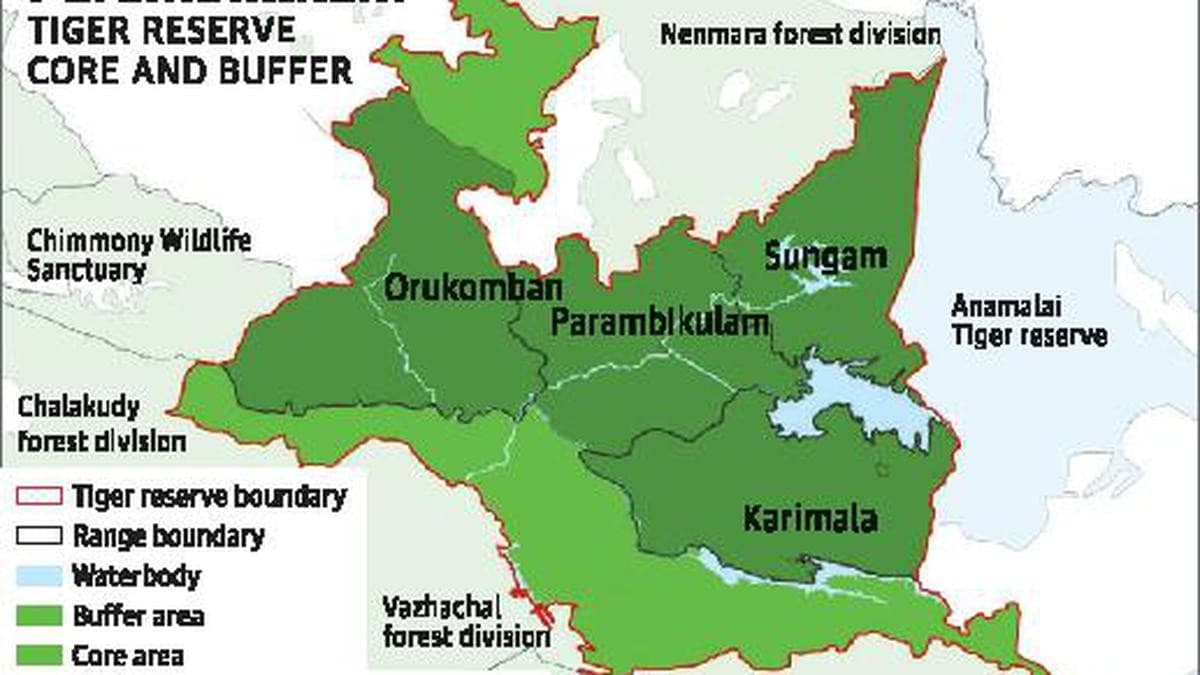
Parambikulam Tiger Reserve – protected forest-cum-grassland landscape originally declared wildlife sanctuary, now tiger reserve.

Nestled between Anamalai & Nelliampathy Hills, Palakkad-Thrissur districts, Kerala Western Ghats.

Latest faunal survey added 15 previously unrecorded birds, butterflies, odonates to site checklist.

Quick Facts for MCQs

Biodiversity Update

  • Survey recorded 15 new species boosting avifauna, lepidoptera, odonate diversity count.
  • Adds scientific baseline aiding future monitoring & management actions.

Flora & Fauna Highlights

  • Habitat mosaic supports arboreal mammals like Malabar giant squirrel, flying squirrel.
  • Presence of smooth-coated otter indicates healthy riverine ecosystem.

Tribal Communities

  • Tribes practise traditional sustainable harvest of non-timber forest produce.
  • Co-management models enhance livelihood while aiding conservation vigilance.

Legal & Policy

  • Tiger Reserve notification offers higher funds, stricter protection than sanctuary status.
  • NTCA guidelines govern core-buffer zoning, human-wildlife conflict mitigation, eco-tourism.

Key Data Points

FeatureData-Point
Legal statusWildlife Sanctuary 1973, expanded 1984, Tiger Reserve 2010
Total area643.66 sq km
PhysiographyEvergreen, moist & dry deciduous forests, grasslands
UNESCO tagWestern Ghats, Anamalai Sub-cluster
Flagship programmeProject Tiger under NTCA
Medicinal plantsCoscinium fenestratum, Utleria salicifolia (IUCN Red List)
Endemic frogTomopterna parambikulamana
Endemic fishGarra surendranathanii
Key mammalsLion-tailed macaque, Nilgiri langur, elephant, leopard
Indigenous tribesKadar, Malasar, Muduvar, Mala Malasar (6 colonies)

Related UPSC Prelims PYQs

GS1 2019PYQ 1

Which of the following are in Agasthyamalai Biosphere Reserve?

GS1 2017PYQ 2

From the ecological point of view, which one of the following assumes importance in being a good link between the Eastern Ghats and the Western Ghats ?

GS-3Environment

8.Fecal Coliform River Pollution Indicators (Water Pollution)

Hindustan Times

What & Where

Fecal coliform = coliform subgroup from intestines of warm-blooded animals; key indicator of sewage pollution

High counts reported by CPCB in Ganga & Yamuna at Prayagraj during Maha Kumbh 2025

Includes Escherichia coli; strain O157:H7 is pathogenic

Quick Facts for MCQs

Environmental Impact

  • Oxygen-sag zones form; aquatic fauna face suffocation
  • Elevated COD signals toxic, non-biodegradable load harming river ecology
  • River water unsuitable for bathing/drinking during pilgrimage peak

Health Concerns

  • Pathogen presence raises risk of water-borne outbreaks among pilgrims
  • E. coli O157:H7 can trigger severe intestinal infections, kidney damage
  • Contaminated fish/shellfish act as additional transmission vectors

Governance & Regulation

  • CPCB monitors coliform levels; NGT seeks compliance reports
  • Permissible limits guide municipal sewage-treatment obligations
  • Findings may trigger stricter discharge standards before Kumbh gatherings

Key Data Points

FeatureData-Point
CPCB inland-water limit2,500 CFU / 100 ml
Drinking-water normE. coli must be absent
Reporting agencyCentral Pollution Control Board
Submitted toNational Green Tribunal
Key eventMaha Kumbh 2025, Prayagraj
Indicative diseasesTyphoid, Hepatitis A, Gastroenteritis
Effect on BODOxygen depletion via organic-waste decomposition
Effect on CODRise due to non-biodegradable sewage/industrial load
Pollution cluesPoor sewage treatment, septic leakage, agricultural runoff
GS-3S&T

9.EAST Superconducting Tokamak Fusion Breakthrough (Nuclear Fusion)

The Hindu
Illustration for EAST Superconducting Tokamak Fusion Breakthrough (Nuclear Fusion)

What & Where

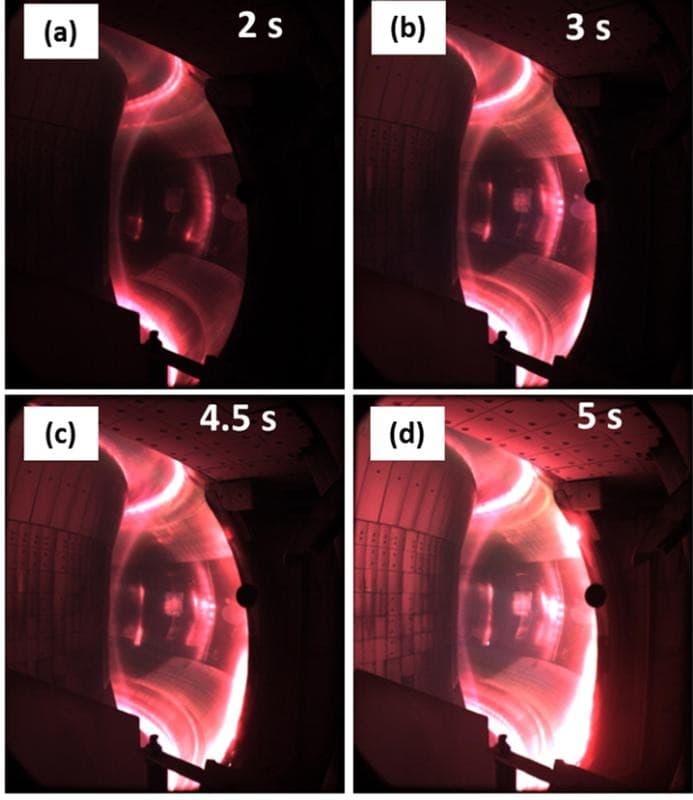
Tokamak: Experimental Advanced Superconducting Tokamak (EAST) located at Hefei, Anhui, China

Purpose: Magnetic-confinement fusion testbed using toroidal + poloidal superconducting magnets for long, steady-state plasma

Linkage: Generates operational data for ITER; China finances about 9 % of that multinational project

Quick Facts for MCQs

Technical Milestones

  • Sustained-plasma: 1 066 s run more than doubled 2023 benchmark
  • Magnet-upgrade: Higher-efficiency superconductors lowered energy loss, improved field stability
  • Heating-power: Auxiliary systems roughly doubled, maintaining 70 million °C without disruption

ITER Linkages

  • Data-transfer: EAST shots refine ITER control algorithms, divertor and steady-state designs
  • Supply-chain: Chinese firms provide superconducting strands, diagnostics modules for ITER components
  • Momentum: EAST success helps offset ITER schedule slips, keeping fusion R&D internationally coordinated

Key Hurdles

  • Net-gain: Present tokamaks consume more energy than produced, Q>1 yet to be achieved
  • Tritium-scarcity: No natural deposits; breeding blankets or alternative fuels like He-3 under study
  • Finance-delay: High capital, cost overruns and timeline extensions hamper rapid commercialization

Key Data Points

FeatureData-Point
Record plasma sustainment1 066 s at ≈70 million °C (Jan 2025)
Earlier EAST record403 s (2023)
China’s ITER share9 % construction & operation
ITER first-plasma target2033 (revised)
ITER spending so far> €18 billion

Related UPSC Prelims PYQs

GS1 2016PYQ 1

India is an important member of the ‘International Thermonuclear Experimental Reactor’. If this experiment succeeds, what is the immediate advantage for India?

GS-3S&TQuick Bite

10.High-Entropy Alloy Catalyst Boosts Hydrogen (Green Hydrogen)

BL

What & Where

High-Entropy Alloy catalyst developed to enhance water electrolysis efficiency for green hydrogen production

Composition equiatomic mix of platinum palladium cobalt nickel manganese forming stable multimetal lattice

Field tests stable 100 + hours in alkaline seawater, suiting coastal hydrogen plants

Quick Facts for MCQs

Technology

  • Catalyst lowers activation energy, speeding water splitting into hydrogen and oxygen
  • Multimetal lattice offers synergistic active sites, outperforming monometallic platinum electrodes
  • Stable operation with seawater feed broadens electrolyser input flexibility

Economic Angle

  • Sevenfold cut in platinum demand slashes electrode cost in green hydrogen projects
  • Inclusion of cobalt, nickel, manganese limits dependence on scarce platinum-group metals

Environmental Impact

  • Green hydrogen from seawater avoids freshwater stress and delivers zero-carbon fuel
  • Longer catalyst life reduces replacement frequency, curbing material waste and mining footprint

Key Data Points

FeatureData-Point
HEA constituent elementsPt, Pd, Co, Ni, Mn
Platinum saving versus pure Pt~7 × lower usage
Tested electrolyteAlkaline seawater
Verified durability> 100 hours continuous run
Key material traitsHigh strength, corrosion & wear resistance
GS-2Infrastructure

11.India-EU Urban Forum Sustainable Partnership (Urban Cooperation)

PIB

What & Where

India-EU Urban Forum – high-level platform for smart, sustainable urbanization, born of 2017 Joint Declaration.

4th edition convened Feb 2025, New Delhi; strengthens India-EU city-level collaboration.

Operates across 40+ Indian cities exchanging solutions on climate-smart planning and mobility.

Quick Facts for MCQs

Policy Framework

  • Declaration-driven; forum institutionalises annual India-EU urban dialogue.
  • Alignment; activities sync with EU Global Gateway and Indian urban missions.
  • Objective; share policies, best practices, innovative urban solutions.

Financial Support

  • Investment; EU committed over ₹9,000 crore toward Indian urban projects.
  • Coverage; funds target climate-smart development, mobility, waste management, climate action.
  • Scale; support extended to 40+ municipal bodies nationwide.

Thematic Priorities

  • Urban Alliance; promotes integrated planning among multiple stakeholders.
  • Innovation & Circularity; advances waste-to-resource, clean tech, circular economy models.
  • Inclusive Mobility; focuses on low-carbon, accessible urban transport networks.

Key Data Points

FeatureData-Point
Launch basis2017 Joint Declaration on Partnership for Smart & Sustainable Urbanization
Current edition4th India-EU Urban Forum (Feb 2025)
Host cityNew Delhi
EU investment in Indian cities> ₹9,000 crore since 2017
Indian cities covered40 plus
Core focus areasUrban Alliance & Integrated Approaches; Innovation & Circularity; Inclusive Urban Mobility
EU alignmentGlobal Gateway Strategy
Linked Indian missionsSmart Cities, AMRUT, Aspirational Blocks Programme

Related UPSC Prelims PYQs

ESE_GS 2026PYQ 1

What is the name of the initiative launched by India and Denmark in November 2025 to enhance bilateral ties?

ESE_GS 2022PYQ 2

Consider the following statements regarding Forum for Decarbonizing Transport:

GS-2Security

12.Indian Ocean Conference 2025 Maritime Cooperation (Indian Ocean Conference)

Indian Express
Illustration for Indian Ocean Conference 2025 Maritime Cooperation (Indian Ocean Conference)

What & Where

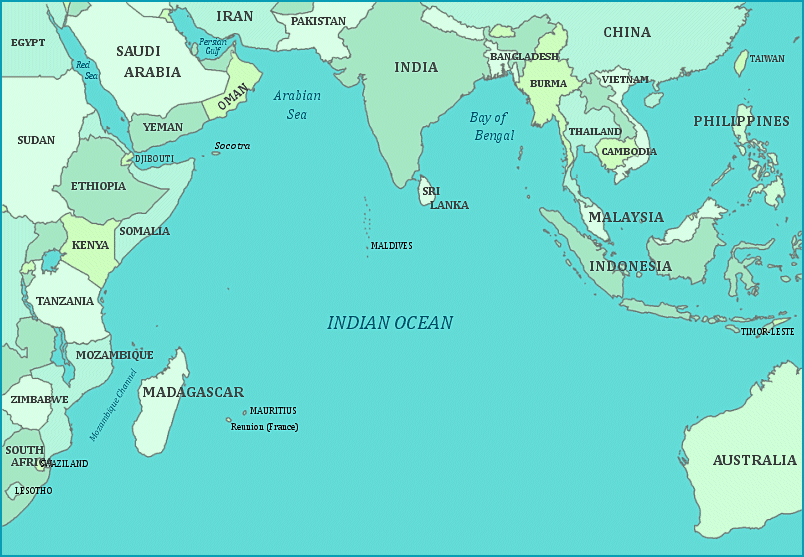
Indian Ocean Conference (IOC): annual summit (since 2016) uniting Indian Ocean Region (IOR) leaders on maritime issues

8th IOC: held Feb 2025, Muscat (Oman); theme “Voyage to New Horizons of Maritime Partnership”

IOR spans Strait of Malacca to Mozambique Channel, covering ~20 % global water surface and key energy routes

Quick Facts for MCQs

Institutional Setup

  • Establishment: IOC by India Foundation to advance India’s SAGAR vision
  • Participation: 30 states joined inaugural 2016 meet; open, issue-centric forum
  • Frequency: Annual rotation among IOR capitals ensures shared ownership

Economic Angle

  • Trade-route: 80 % global maritime oil and Asia–Europe containers transit Indian Ocean
  • Choke-points: Malacca, Hormuz, Bab-el-Mandeb, Mozambique Channel govern freight costs and energy security
  • Landmass: IOR rim covers quarter of world land, hosting vast littoral markets

Security Dimension

  • Threats: Piracy, illegal fishing, sovereignty disputes drive demand for coordinated maritime domain awareness
  • Bases: Diego Garcia, Djibouti, Duqm, Chabahar enable extra-regional naval presence
  • SAGAR: India commits capacity building, HADR, rule-based order for littorals

Resource Potential

  • Polymetallic-Nodules: Central Indian Ocean Basin rich in nickel, copper, cobalt, manganese
  • Hydrocarbons: ~75 % proven global oil reserves lie within IOR states
  • Fisheries: Warm waters nurture tuna, shrimp stocks facing over-exploitation

Key Data Points

FeatureData-Point
IOC founding year2016
Founding bodyIndia Foundation (think tank)
First venueSingapore
2025 host cityMuscat, Oman
2025 edition number8th
2025 themeVoyage to New Horizons of Maritime Partnership
Countries at first IOC~30
IOR water-surface share~20 % of world
IOR landmass share~25 % of world
Global oil reserves in IOR~75 %
Global maritime oil via IOR~80 %
India’s oil imports via IOR~80 %
Major choke pointsMalacca, Hormuz, Bab-el-Mandeb, Mozambique Channel

Related UPSC Prelims PYQs

CDS_GK, GS1 2024PYQ 1

The 7th edition of the Indian Ocean Conference was held at

CDS_GK, GS1 2015PYQ 2

‘क्षेत्रीय सहयोग के लिए हिन्द महासागर रिम संघ (Indian Ocean Rim Association for Regional Cooperation – IOR-ARC)’ के संदर्भ में, निम्नलिखित कथनों पर विचार कीजिए :

GS-2Security

13.DRC M23 Conflict and Regional Implications (DRC Conflict)

The Hindu
Illustration for DRC M23 Conflict and Regional Implications (DRC Conflict)

What & Where

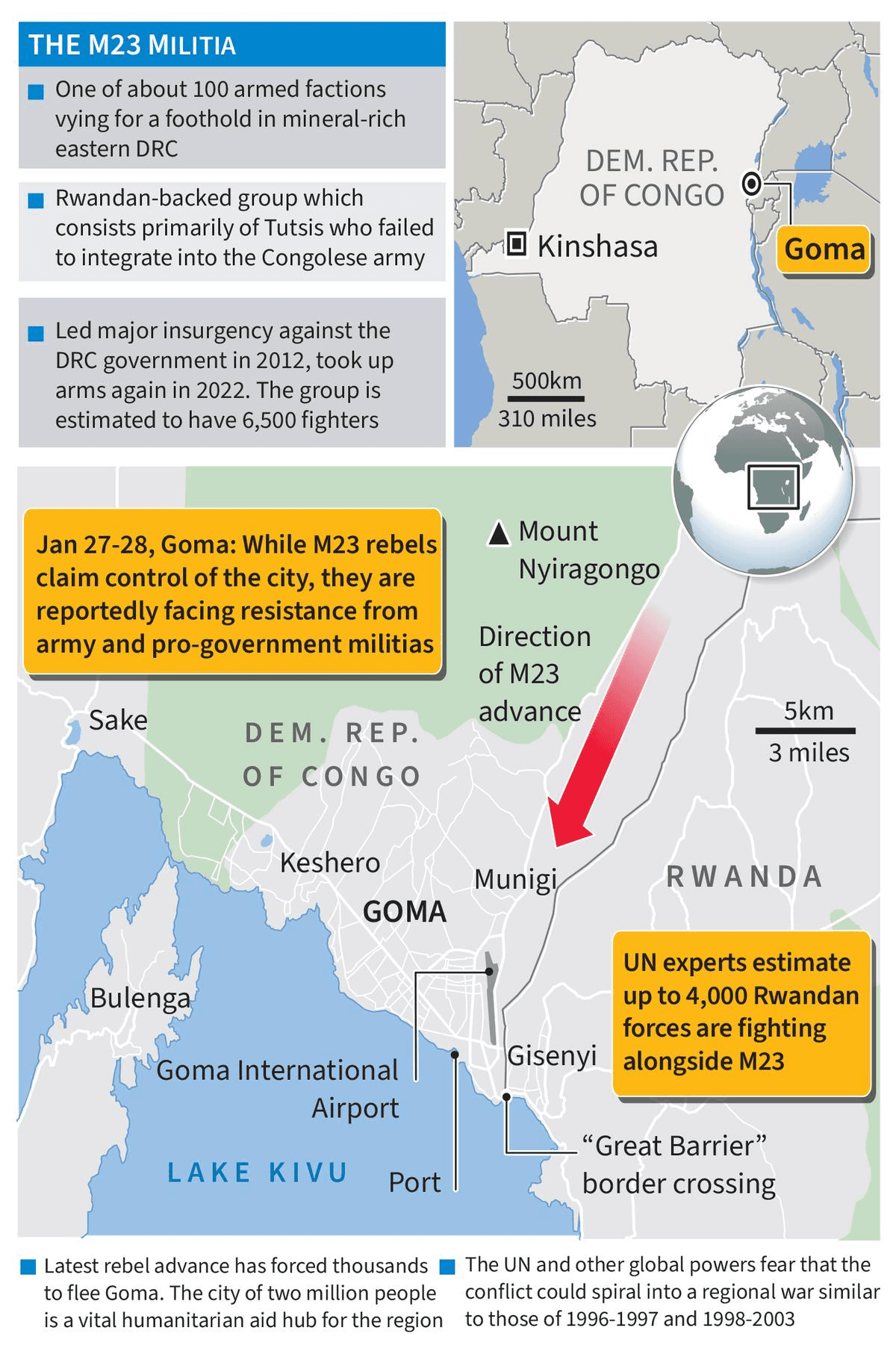
M23 rebel group, formed 2012, now controls Goma in eastern Democratic Republic of Congo (DRC).

Conflict zone spans North & South Kivu provinces bordering Rwanda, an area rich in coltan and other minerals.

Contest primarily between Tutsi-led M23 (backed by Rwanda) and Hutu-oriented FDLR plus DRC forces.

Quick Facts for MCQs

Security Dimension

  • M23 captures Goma, threatens provincial capital Bukavu as fighting extends southward.
  • Rwanda alleged to supply arms, logistics, international scrutiny increases.
  • DRC army and UN peacekeepers redeploy forces, frontline shifts daily.

Ethnic Context

  • Colonial Belgium and Germany favored Tutsis over Hutus, sowing lasting divisions.
  • M23 claims Tutsi protection; FDLR frames struggle for Hutu rights.
  • 1994 Rwandan genocide remains backdrop shaping regional insecurities.

Resource Economics

  • Coltan abundant in Kivu finances armed groups via illicit mining routes.
  • High tantalum demand from smartphones, EVs amplifies geopolitical stakes.
  • Mineral control motivates militia offensives toward mine clusters.

Humanitarian Impact

  • Civilian deaths near 3,000; figures likely under-reported in remote zones.
  • Nearly 7 lakh internally displaced crowd Goma, Bukavu camps, strain aid.
  • Schools, clinics shut; malnutrition and disease risks surge.

Key Data Points

FeatureData-Point
Militia nameMarch 23 Movement (M23)
Formation year2012
Origin of nameFailed 23 Mar 2009 peace deal
Principal backerRwanda
Opposing rebel groupFDLR (Hutu)
City recently seizedGoma, North Kivu
Conflict spreadInto South Kivu
Recorded deaths≈2,900
Displaced persons≈7 lakh
DRC coltan share~40 % global output
Key coltan useTantalum capacitors for electronics
Ethnic flashpointHutu-Tutsi rivalry
Genocide year in Rwanda1994

Related UPSC Prelims PYQs

GS1 2004PYQ 1

In which one of the following countries, did an ethnic violence between the communities of Hema and Lendu result in the death of hundreds of people?

GS-3Security

14.Distributed Denial of Service Attack Overview (Cyber Security)

The Hindu
Illustration for Distributed Denial of Service Attack Overview (Cyber Security)

What & Where

Distributed Denial of Service: coordinated cyber flood overwhelming target servers, denying legitimate access.

Target: Kaveri 2.0, Karnataka online property-registration and valuation portal housed in State Data Centre.

Geography: Karnataka, India; disruption cascaded across sub-registrar offices statewide.

Quick Facts for MCQs

Security Dimension

  • Botnet formation: compromised IoT, PCs, servers act as remotely controlled attack nodes.
  • Traffic overload: fake requests saturate bandwidth or consume server threads, rejecting genuine users.
  • Diversion tactic: DDoS often masks simultaneous exfiltration or ransomware deployment.

Tech & Schemes

  • Traffic filtering: AI/behavioural analytics discard abnormal packets before server queue.
  • Rate limiting & CAPTCHA: throttle request counts, distinguish humans from automated bots.
  • Robust authentication plus 24×7 incident response mandated for critical e-governance portals.

Operational Impact

  • Registration stoppage delayed property deals, affecting state revenue and citizen services.
  • Event highlights cybersecurity as key Ease-of-Doing-Business parameter for digital India initiatives.
  • Necessitates state-level redundancy, surge-capacity planning, and periodic stress testing.

Key Data Points

FeatureData-Point
Attack categoryVolumetric Distributed Denial of Service
Core toolsetMalware-created botnet generating spurious traffic
Immediate effectBandwidth/CPU exhaustion, portal outage
Possible diversionParallel data breach or malware drop
Key defencesAI filtering, rate-limiting, CAPTCHA, incident teams

Related UPSC Prelims PYQs

ESE_GS 2024PYQ 1

Which one of the following attacks is one in which a malicious hacker takes over computers via the Internet and causes them to flood a target site with demands for data and other small tasks?

ESE_GS 2026PYQ 2

Which one of the following statements is related to key feature of ThreatRadar reputation to prevent DDoS attacks on cloud infrastructure?

GS-2Scheme

15.PM-AASHA Price Support Umbrella Scheme (Price Support Scheme)

PIB

What & Where

PM-AASHA: umbrella price-support scheme for farmers across India, launched 2018, now extended till FY 2025-26.

Ensures remunerative prices via MSP procurement, deficit payments, buffer stocking and market intervention.

Operates through Ministry of Agriculture & Farmers’ Welfare with NAFED, NCCF and State agencies.

Quick Facts for MCQs

Scheme Components

  • Price Support Scheme: physical MSP purchase of pulses, oilseeds, copra; storage managed by NAFED/NCCF.
  • Price Deficit Payment: DBT compensates MSP-market gap without procurement, easing logistics.
  • Market Intervention Scheme: state-led support for short-shelf horticulture; cash paid directly.

Economic Angle

  • Buffer stocks under PSF curb hoarding, tame retail inflation in pulses/onions.
  • 100 % Tur-Urad-Masur procurement targets import-substitution, savings in forex outgo.
  • Guaranteed MSP uptake boosts sowing incentives, stabilises farm incomes.

Implementation

  • Pre-registration mandatory; farmers sell at notified centres only.
  • States share logistics costs; Centre reimburses price differential and service charges.
  • Digital platforms track arrivals, payments, stock movement for transparency.

Key Data Points

FeatureData-Point
Finance Commission cycle15th (2021-26)
Admin MinistryAgriculture & Farmers’ Welfare
Central Nodal AgenciesNAFED, NCCF
Core componentsPSS, PSF, PDPS, MIS
PSS procurement cap25 % of national pulses-oilseeds-copra output
Exception 2024-25100 % Tur, Urad, Masur
PDPS cover40 % oilseed output; 4 months
MIS cover25 % perishable horticulture production
PSF buffer itemsPulses, Onions
Farmer payment modeDirect Benefit Transfer

Related UPSC Prelims PYQs

CAPF_GAI, ESE_GS 2025PYQ 1

Which one among the following schemes focuses on developing modern infrastructure and optimizing supply chain from farm to retail in Indian agriculture sector?

CAPF_GAI, ESE_GS 2025PYQ 2

Which one of the following Yojanas replaces two schemes – National Agricultural Insurance Scheme (NAIS), 1999 as well as the Modified National Agricultural Insurance Scheme (MNAIS), 2010 – by incorporating the best features of all these schemes while removing the previous shortcomings and weaknesses?

GS-2Scheme

16.Pradhan Mantri Fasal Bima Yojana Milestones (Crop Insurance)

PIB

What & Where

PMFBY: central-sector crop insurance launched 2016, implemented pan-India, cleared for continuation till 2025-26

Objective: indemnify farmers for crop losses from calamities, pests, disease; sister RWBCIS pays on predefined weather deviation

Scale: world’s largest crop-insurance scheme by farmers and hectares in 2023-24; marking 9th anniversary in 2025

Quick Facts for MCQs

Legal & Policy

  • Continuation approved by Union Cabinet for PMFBY & RWBCIS till 2025-26
  • Scheme open to all cultivators including sharecroppers, tenants; enrolment voluntary
  • Unlimited central subsidy keeps farmer premium capped at notified rates

Technology Use

  • Satellite imagery & drones aid area mapping, yield dispute resolution, loss assessment
  • CCE-Agri App uploads real-time yields to NCIP ensuring transparent calculation
  • RWBCIS uses rainfall, temperature, humidity proxies, dispensing with field loss surveys

Implementation Gaps

  • Subsidy release lag causes claim pendency up to 18 months, eroding trust
  • Claims concentrated in Gujarat, Maharashtra, AP, MP; Bihar, Assam, NE under-penetrated
  • Coverage excludes quality loss, wild-animal damage; 14-day post-harvest window restrictive

Suggested Fixes

  • Monitoring mechanism to enforce prompt insurer settlement and curb reinsurance gaming
  • Community/FPO models to lower transaction costs for small, marginal farmers
  • Deploy banks, BCs, private agents to expand awareness and uptake

Key Data Points

FeatureData-Point
Launch year2016
9th anniversary2025
Farmer premium-share Kharif2 %
Farmer premium-share Rabi1.5 %
Farmer premium-share commercial/horticulture5 %
Govt pays 100 % premium inNE States, J&K, Himachal Pradesh
Prevented-sowing indemnity≤25 % sum insured
Post-harvest cover window14 days
Claim settlement target≤2 months after harvest
Non-loanee share in enrolment55 %
Tech tool for CCE dataCCE-Agri App
Data portalNational Crop Insurance Portal
Key risks coveredFlood, drought, cyclone, hailstorm, pest, disease, landslide, unseasonal rain

Related UPSC Prelims PYQs

ESE_GS, GS1 2025PYQ 1

Which one of the following Yojanas replaces two schemes – National Agricultural Insurance Scheme (NAIS), 1999 as well as the Modified National Agricultural Insurance Scheme (MNAIS), 2010 – by incorporating the best features of all these schemes while removing the previous shortcomings and weaknesses?

ESE_GS, GS1 2016PYQ 2

With reference to ‘Pradhan Mantri Fasal Bima Yojana’, consider the following statements:

Ready to practice?

Test your knowledge with our UPSC test series.

Start Free Trial