
Honest HCS Interview Experience: UPSC Personality Tips
Neil Sir shares his honest HCS interview experience and the mindset, confidence and discussion-not-interrogation lessons for UPSC and State PCS personality tests.
This is an honest, no-filters account of Neil Sir's HCS (Haryana Civil Services) interview experience, shared so that UPSC and State PCS aspirants know exactly what a personality test feels like from the inside. He walks through the actual board, the questions asked across each panel member, the mindset that scores marks, and the moment the insider-outsider bias seemed to surface. His final score was 40 out of 75, which he describes as average, and the interview ran for about 30 minutes.
Key takeaways
- Confidence must stay balanced with politeness; confidence that crosses politeness becomes arrogance, and boards prefer a humble candidate over an arrogant one every time.
- The personality test is a discussion, not an interrogation. The panel wants to draw out your personality, and if they cannot, that is partly their failure too.
- A little nervousness is natural and even expected. Reframe the room as a conversation rather than a courtroom.
- Aptitude is as valuable as knowledge. A welfare-centric outlook, the ability to take people along, and a positive attitude carry real weight.
- On administrative questions, the board often wants a hopeful, innovation-oriented answer rather than a purely rule-bound, realistic one.
- The insider-outsider bias can be real in State PCS interviews, despite efforts to hide candidate identity.
What the HCS interview process actually looked like
Neil Sir's session was on the morning of February 4th. He found the administrative side of the process fair and cordial. Document verification was handled politely, no candidate was intimidated, and even missing documents were dealt with calmly. Before the interviews began, the Secretary of the Commission addressed the candidates and explained that the panel had deliberately removed names and roll numbers so members would not know whether a candidate was a Haryana insider or an outsider, a step taken specifically to prevent regional bias.
The board itself was a large one, chaired by Rajendra Kumar. Alongside the chairman sat four members, including one lady member, and the HPSC chairman, a retired Forest Service officer, who stepped in and out of the room. Neil Sir notes the members appeared to come from different regions, including Haryana, South India and Punjab.
The mindset that matters most in a personality test
Before sharing the questions, Neil Sir lays out what he believes actually earns marks.
Confidence balanced with politeness
You need to be confident but polite. The moment confidence overtakes politeness it becomes arrogance, and an arrogant candidate is rarely preferred no matter how knowledgeable. As he puts it, a board would rather work with a humble person than fix an arrogant one. Attitude and aptitude are worth as much as raw knowledge.
A welfare-centric, positive outlook
Carry a welfare-centric outlook, show that you can take people along, and stay positive. Demonstrating this orientation, he says, solves half the battle before you even open your mouth.
Discussion, not interrogation
His core mental reframe is this: the interview is a discussion, not an interrogation. Interrogation is for suspects; a discussion is meant to help the board know you. He often asks aspirants whether they feel nervous while simply talking to him, and they do not, because no one is judging them. The same calm should carry into the interview room. If, across four or five questions, the panel cannot surface your personality, that reflects on them as much as on you, so there is no reason to feel embarrassed or scared.
A little nervousness is fine
It is natural to be slightly nervous, and even the interviewer quietly enjoys the dynamic. The fix is not to fake bravado but to go in with respect, both for the board and for yourself, remembering how hard you have worked to reach this stage.
The questions Neil Sir faced, board by board
The chairman opened by asking for a broad self-introduction without specifics. From there the baton passed across the panel.
- Member One (from Haryana) probed his engineering and graduation background and its relevance to power plants, asked about industrial disasters caused by instrumentation failures (Neil Sir cited the Bhopal gas tragedy and a couple of others), and explored his work, how he moved into mobile computing, and his UPSC performance.
- Member Two asked how he would ensure safety norms in industry. Here Neil Sir flags a mistake: he gave a realistic, rule-bound answer, arguing a bureaucrat should execute the law rather than improvise, when the panel clearly wanted an idealistic, innovation-led response. He was also asked whether his engineering background was relevant to administration, and how he teaches and prepares students.
- Member Three (from South India) ran a long, engaging exchange on poverty. Neil Sir offered a multidimensional view spanning education, health, nutrition, skill development and environment, then handled an energy-poverty example, the government-versus-civil-society debate on poverty alleviation, the apparent contradiction between empowerment and hand-holding (using the analogy of a child first taught to walk by holding hands), conflict of interest, and sustainable development goals.
- Member Four (the lady member) turned to local governance, asking why Gurugram is developed while Nuh is not, and about electricity problems in Gurugram. When he could not answer the on-the-ground specifics, she asked whether he was from Haryana, and he had to admit he was from New Delhi. The conversation then moved to healthcare deficits in Delhi, anemia, malnutrition, sanitation and handwashing.
The chairman closed by returning to his graduation and hobbies, asking why he plays virtual football tournaments rather than real football (a question he had also faced in his UPSC mocks), and a question on balanced versus unbalanced growth, before wishing him luck for his UPSC interview the following month. The final touch was a trivia question on what the Ganga is called once it enters Bangladesh.
The insider-outsider bias and what it may have cost
Despite the Commission's effort to hide candidate identity, Neil Sir felt the bias surface. The moment he revealed he was from Delhi rather than Haryana, he sensed the atmosphere in the room change. He believes this affected his score of 40 out of 75, though he deliberately leaves the final judgment to the viewer. He also notes a separate, more troubling concern from a later cycle: of the roughly 1,200 candidates who sat the Mains, only 61 received interview calls, whereas in his view 250 to 300 should have, a point he covers in a separate video.
Who should watch this
This is for UPSC and State PCS aspirants approaching the interview stage who want a realistic, unvarnished picture of what the personality test is actually like, not a polished highlight reel. It is especially useful for HCS aspirants and for anyone anxious about nervousness, board dynamics, or the kind of administrative and current-affairs questions that come up.
Your personality test sits at the end of a long road, and you only reach it by first clearing a strong, scoring Mains. Build that foundation with structured practice through the Mains test series, and explore more mentor-led guidance on the blog as you prepare for your own interview.
Frequently asked questions
What mindset should you carry into a UPSC or HCS interview?
Treat it as a discussion, not an interrogation. The board wants to know you, not trap you, so go in with confidence balanced by politeness and a genuine respect for yourself and the panel.
Is it normal to feel nervous in the personality test?
Yes. A little nervousness is natural and even expected, and the board often enjoys it. The key is to remember you are not being judged like a suspect, you are simply being understood.
What kind of questions were asked in Neil Sir's HCS interview?
A mix of his engineering and work background, industrial safety norms, poverty and multidimensional poverty, empowerment versus hand-holding, conflict of interest, sustainable development, and local Haryana governance issues.
Does the insider-outsider bias affect State PCS interviews?
Neil Sir felt the room's mood shift once he revealed he was from Delhi and not Haryana, and believes it may have affected his score of 40 out of 75. He leaves the final judgment to the viewer.
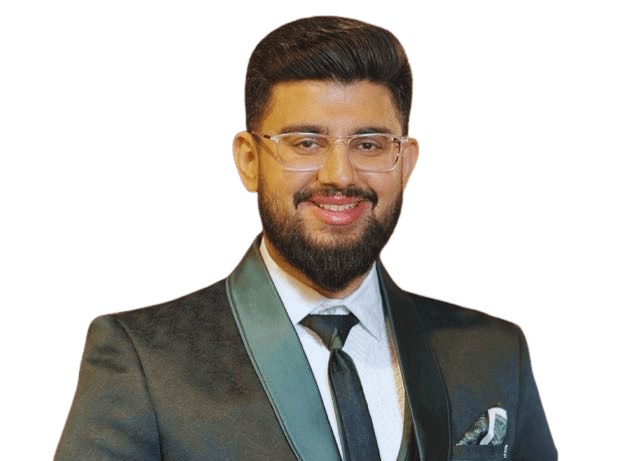
Neil Sir shows how PYQ mapping reveals what UPSC actually rewards in Mains — the decode step behind the whole Sprint — on Telegram.
Join @UPSCneil to see moreReady to practice?
Apply what you learned with the UnlockIAS test series and Daily Answer Writing.
Related posts
UPSC Interview Prep: DAF, Newspaper and PYQ Strategy
Neil Sir's UPSC interview strategy: how to prepare your DAF, read the newspaper, and use previous-year transcripts to ace the personality test.
UPSC Interview Strategy: DAF, Personality Test Qualities
Crack the UPSC interview with Neil Sir's guide: how to fill the DAF, the personality test qualities UPSC judges, and how to score 50+ extra marks.