
How Shaurya Arora Scored AIR 14 in UPSC CSE 2023
AIR 14 Shaurya Arora shares his UPSC CSE 2023 strategy: PYQ analysis, basic sources, Physics optional, answer writing, and the mindset that worked.
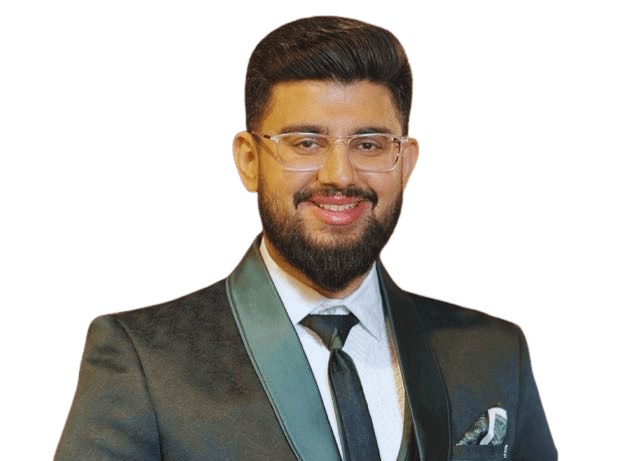
In this Topper Talk, Neil Sir speaks with Shaurya Arora, AIR 14 in UPSC CSE 2023, on exactly how he cracked the exam in his second attempt. A B.Tech (Mechanical) graduate from IIT Bombay and a resident of Bahadurgarh, Haryana, Shaurya took Physics as his optional and also cleared the IFoS Prelims cut-off in the same cycle. This conversation breaks down his Prelims sources, Mains and answer-writing strategy, his Physics optional approach, and the mindset that carried him through.
Key takeaways
- The old "IIT or top-college" advantage in UPSC has largely faded in the era of democratised online learning; survivorship bias makes that edge look bigger than it is.
- Exhaustive previous year question (PYQ) analysis plus reliable basic sources was the single biggest shift between his first and second attempts.
- Answer writing is the most important Mains skill because your copy is the only reflection of what you know; he wrote roughly 30-35 full-length GS tests.
- Physics optional rewards structure, presentation and visible effort, and it follows partial marking, not binary marking.
- You do not need 470-480 in the optional; a well-structured 420-450 can put you in a strong position.
- Consistency beats intensity: about 8-9 focused hours a day, sustained, beats short bursts of 12-14 hours followed by burnout.
Does coming from an IIT give a UPSC advantage?
Shaurya is candid that any real college advantage was about access to guidance, not intelligence. Earlier, alumni networks were the best way to get first-hand guidance from someone who had cleared the exam. Today, with open platforms, Topper Talks, Telegram communities and free resources, that edge has largely eroded.
Neil Sir adds the crucial counterpoint of survivorship bias: cameras only show the top-college students who succeed, while many candidates from great colleges never even clear Prelims. The honest message for aspirants worried about their background: the playing field is far more level than it appears.
Shaurya Arora's UPSC Prelims strategy
Two changes made the difference after his first attempt:
- PYQ analysis as the core engine. He printed previous year questions and analysed them himself, a habit he built using the 2022 Prelims analysis content.
- A mindset shift towards consistent, structured preparation rather than chasing perfection.
Sources he relied on
- Polity: Laxmikant
- History: Spectrum
- Economics: Sanjeev Verma
- Geography: Class 11 NCERT, supplemented selectively
- Science & Tech / Environment: the original Udaan compilation (the 2021 version), with Shankar available for Environment
- Current affairs: PT365, used very selectively for Economics, Science & Tech, Environment and IR
His take on current affairs, mocks and notes
- Current affairs is overrated at 60%. Most current-affairs questions are static in nature and solvable with base sources plus common sense and logic. Cover important themes with an overarching understanding rather than exhaustively.
- Mocks are for time management and mindset, not marks. He advises against chasing 70-100 mocks; even 20-30 is plenty. He preferred open tests across different institutes so he was not over-conditioned to one paper-setter's style, and treated mocks as practice for sitting two hours and filling the OMR correctly. Mock scores in the 60-80 range should not demoralise you.
- No separate Prelims notes. He smartly underlined relevant parts of Spectrum and Laxmikant (which already carry summaries) and revised iteratively. Crisp, revisable material beats bulky notes.
How to approach UPSC Mains and answer writing
AIR 14 is built on Mains, and Shaurya treated each GS paper slightly differently:
- GS2 is more analytical, requiring dynamic concepts and a polity-governance lens.
- GS4 (Ethics) draws on personal experience and examples, with lighter theory.
- GS3 demands stronger fundamentals and theory.
He stresses multi-dimensional answering and interlinkages across papers, what Neil Sir calls syllabus parsing: if you internalise the syllabus, you can link almost any topic to multiple dimensions (for example, bringing governance or sectoral angles into an economy question).
On the most important skill, both agree: answer writing is presentation, and presentation comes only through practice. Shaurya built it early, starting daily answer writing (two questions a day) in his first cycle by mid-2022, later doing sectional and around 30-35 full-length GS tests. He calls it "immediate answer writing", a kind of muscle memory: like a footballer who reacts to the ball without looking, repetition lets you write under exam pressure.
For Mains notes, he kept them short and crisp, leaning on a topic-wise, bullet-point GS Mains book series for content (his time was dominated by the Physics optional). His advice: handwritten short notes help, but never make bulky notes you cannot revise.
Physics optional: scoring big and the partial-marking truth
Shaurya chose Physics because of both attitude and aptitude, a genuine passion plus a strong JEE Physics background. His honest disclaimers: it needs at least a year to master, is time-consuming, and is risky because low scores do happen. But it can be highly rewarding, and he posted one of the year's highest Physics scores (around 314), including 164 in Paper 2.
What worked for him:
- Put visible effort into every answer: fill the pages, add an extra diagram, and close with a small interpretation or application bullet.
- Treat Physics like a structured language, not just maths: state the given quantities, write the statement, mark equation one, then equation two, and show the steps (for example, dividing equation two by equation one). Explain in words first, then substantiate with maths.
- Partial marking is real. He made silly numerical mistakes in Paper 2 and still scored 164, so never abandon a question in the hall.
- Don't aim to be Einstein in the exam. Attempt questions you have already practised at home rather than gambling on new ones.
A liberating data point from the discussion: you do not need 470-480 in the optional. A well-structured 420-450 can land a top rank.
Mindset, study hours, and handling uncertainty
Shaurya repeatedly returns to mindset: confidence on exam day matters as much as knowledge, and it has to be conditioned over the weeks before, not summoned on the morning of the paper. He embraces the idea of amor fati and detachment from the result, references he picked up from talks in the community.
On effort, he is refreshingly honest: between Prelims and Mains he aimed for roughly 8-9 hours of focused sitting most days (occasionally 10, occasionally less, with breaks), sustained over those crucial ~90 days. Motivation lasts a week; discipline and consistency carry you through.
He is also clear-eyed about the uncertainty in evaluation: you cannot predict which paper will score high, benchmark effects (the copy checked before yours) play a role, but consistently good preparation across all papers tends to produce a good total. Do your karma fully and leave the rest.
Who should watch this
This talk is ideal for serious UPSC aspirants, especially those worried about not coming from an elite college, anyone considering Physics as an optional, and candidates who want a realistic, non-hyped view of mocks, study hours, and answer writing. It is equally useful for repeaters planning their second attempt.
If Shaurya's emphasis on answer writing resonates, build the habit through structured daily answer writing practice and learn the method in how to write Mains answers. To convert that practice into exam-ready performance, simulate the real thing with our Mains test series and sharpen your basics with the Prelims test series (upcoming). For more topper strategies and guides, explore the blog.
Frequently asked questions
What was Shaurya Arora's optional subject and score in UPSC 2023?
Shaurya Arora took Physics as his optional and scored one of the highest marks of the year in it (around 314), including a strong score of 164 in Paper 2 despite silly numerical mistakes.
How many mock tests did Shaurya Arora give for UPSC?
He kept Prelims mocks limited (roughly 20-30, mostly open tests across different institutes) and wrote around 30-35 full-length GS Mains tests across his cycle.
Does Physics optional have binary or partial marking in UPSC Mains?
Shaurya's experience suggests partial marking, not binary. He made silly mistakes in Paper 2 numericals yet still scored 164, because structure, presentation and effort earn marks.
How many hours a day did Shaurya Arora study for UPSC?
Between Prelims and Mains he aimed for about 8-9 hours of focused sitting most days, emphasising consistency over extreme 12-14 hour intensity.
Did Shaurya Arora make separate notes for UPSC Prelims?
No. He smartly underlined the relevant parts of standard books like Spectrum and Laxmikant and revised them iteratively, making only short, crisp notes for Mains.
Neil Sir shows how PYQ mapping reveals what UPSC actually rewards in Mains — the decode step behind the whole Sprint — on Telegram.
Join @UPSCneil to see moreReady to practice?
Apply what you learned with the UnlockIAS test series and Daily Answer Writing.
Related posts
Mehak Jain AIR 17: Honest UPSC Mains & Prelims Strategy
Mehak Jain (AIR 17, 2021) shares her honest UPSC strategy: consolidating notes, vertical-reading answer writing, ethics, CSAT and bouncing back from prelims failure.
HCS DySP Medical & Physical Standards: A Topper's Journey
Neil Sir documents his HCS DySP medical and physical measurement in Panchkula, with HCS Mains insights, personality tips, and the truth about the process.