UPSC Current Affairs

15 topicsGS-1: 1GS-2: 5GS-3: 9
0/15 done
GS-1Mapping

1.Strait of Hormuz Maritime Chokepoint

FP
Illustration for Strait of Hormuz Maritime Chokepoint

What & Where

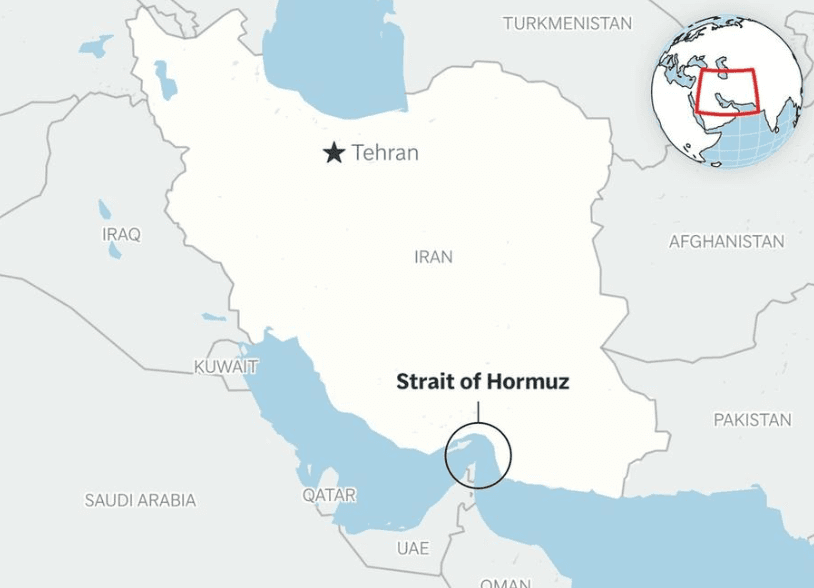
Chokepoint: world-vital maritime passage connecting Persian Gulf to Gulf of Oman and Indian Ocean

Location: separates Iran’s southern coast from Oman’s Musandam Peninsula, flanked westward by UAE

Exit-route: only seaway for Persian Gulf hydrocarbons toward global markets

Quick Facts for MCQs

Security Dimension

  • Drill: Iran’s “Smart Control of the Strait of Hormuz” briefly closed sections for live-fire exercises
  • Presence: Iranian forces stationed on strategic islands enabling de facto control of shipping lanes
  • Signal: Exercise coincided with Geneva nuclear talks, messaging U.S. amid heightened regional tensions

Economic Angle

  • Price-shock: Any slowdown instantly elevates global crude prices and maritime insurance premiums
  • Volume: Route handles ~20 % world petroleum, making alternatives economically unviable
  • Carrier-fit: Depth accommodates VLCCs, essential for bulk crude economics

Physical Geography

  • Depth: 60–100 m central channel contrasted by hazardous shallow coastal shelves
  • Funnel: Musandam Peninsula creates narrow throat forcing dual 3-km lanes with 2-km buffer
  • Climate: Hot, clear conditions aid navigation but strong currents near island clusters pose risk

Key Data Points

FeatureData-Point
Total length~167 km
Narrowest width~33 km
Inbound lane width3 km
Outbound lane width3 km
Buffer zone2 km
Average depth60–100 m
World petroleum share≈20 % daily
World LNG share≈20 % daily
Daily oil volume~20 million barrels
Bordering nationsIran, Oman, UAE
Key Iranian islandsAbu Musa; Greater & Lesser Tunbs; Qeshm; Hormuz; Larak
GS-2Editorial

2.Ensuring Diversity in Higher Judiciary

The Hindu

What & Where

Judicial diversity: proportional inclusion of caste, gender, region, minority groups in higher judiciary appointments.

Constitution (Amendment) Bill, 2026: Private member move to mandate diversity quotas & create Supreme Court regional benches.

Regional SC benches proposed for Chennai, Mumbai, Kolkata under Article 130 to decentralise appellate access.

Quick Facts for MCQs

Legal & Policy

  • Article 130 already permits alternate SC seats; Bill seeks mandatory regional benches.
  • Diversity to be inserted as explicit criterion in Memorandum of Procedure for judicial appointments.
  • Suggests reviving NJAC with executive & civil-society representation to enhance transparency.

Representation Gaps

  • No woman Chief Justice in 75 years underscores gender deficit.
  • Elite collegium networks labelled “old boys’ club”, perpetuating caste & regional imbalance.
  • Geographical centralisation in Delhi skews elevations toward NCR bar practitioners.

Reform Measures

  • 90-day deadline for government to clear collegium names to curb pocket-veto delays.
  • Formal mentorship pipelines for first-generation, marginalised lawyers toward judgeships.
  • Supreme Court Bar Association pushing one-third women representation to widen applicant pool.

Efficiency Concerns

  • 33 % HC vacancies aggravate backlog; regional benches expected to cut travel costs & pendency.
  • Performance evaluation proposed beyond raw disposal rates to include quality & constitutional alignment.
  • Decentralisation projected to reduce Delhi-centric appellate influx, easing SC docket pressure.

Key Data Points

FeatureData-Point
SC pending cases (Jan 2026)~90,000
HC judges upper-caste share (2018-24)78 %
HC judges: SCs share~5 %
HC judges: STs share~5 %
Women in HCs (Aug 2024)14 %
Women in SC (2024)1 sitting judge
HC vacancy rate≈33 %
Religious minorities in higher judiciary (6 yrs)<5 %
Relevant Articles124, 217, 130
Bill typePrivate Member (Rajya Sabha)

Related UPSC Prelims PYQs

UPSC 2006PYQ 1

What does the 104th Constitution Amendment Bill relate to?

UPSC 2007PYQ 2

Consider the following statements: 1. The Judges (Inquiry) Bill, 2006 contemplates establishing a Judicial Council which will receive complaints against judges of the Supreme Court including the Chief Justice of India, High Court Chief Justices and Judges. 2. Under the Protection of Women from Domestic Violence Act, 2005, a woman can file a petition before a 1st Class Judicial Magistrate. Which of the statements given above is/are correct?

GS-2Polity

4.Parliamentary Privileges Committee Functions

New Indian Express

What & Where

Privileges Committee standing quasi judicial body in Parliament and State Legislatures safeguarding legislative immunities

Exists separately in Lok Sabha 1952 onward and Rajya Sabha 1954 onward following British Westminster precedent

Investigates alleged breaches or contempts affecting House dignity across India’s Union and State arenas

Quick Facts for MCQs

Legal & Policy

  • Article 105 and 194 grant unspecified privileges Supreme Court reference to House practices
  • Parliament may by law define privileges yet no comprehensive statute enacted
  • Committee reports tabled debated and require House approval for enforcement

Membership & Structure

  • Selection Speaker or Chairman nominates based on party proportionality convention
  • Chairperson usually senior ruling member ensuring bipartisan functioning
  • Tenure lasts for life of respective House reconstitution every general election

Powers & Procedure

  • Summoning Authority can compel attendance of members outsiders under oath
  • Inquiry Process examines documents witnesses decides breach then drafts report
  • Sanction Recommendation only becomes operative after majority vote in full House

Key Data Points

FeatureData-Point
Constitutional basisArticles 105 (Parliament) & 194 (State)
Lok Sabha strength15 members nominated by Speaker
Rajya Sabha strength10 members nominated by Chairman
Typical state panel9–15 members eg Maharashtra 9
Core aimProtect freedom of speech vote and functioning
Key punishmentsAdmonition Reprimand Suspension Expulsion Imprisonment Apology
Evidence powersSummon persons demand papers record statements
Current issueLok Sabha committee not reconstituted for nearly two years
Historical originMedieval English Commons versus Monarch
NatureQuasi judicial Standing Committee

Related UPSC Prelims PYQs

UPSC 2020PYQ 1

Which of the following statements with regard to the privileges of the Members of the Parliament are correct? 1. Privileges would not be fettered by the Article 19(1)(a) of the Constitution of India. 2. Privileges must be read subject to the Articles 20-22 and Article 32 of the Constitution of India. 3. Immunity is available in relation to both civil and criminal prosecution. 4. Immunity is available in relation to freedom of speech even in his/her private or personal capacity. Select the correct answer using the code given below:

UPSC 2025PYQ 2

भारत की संसद के सदस्यों के लिए संसदीय विशेषाधिकार से संबंधित निम्नलिखित कथनों में से कौन-सा/कौन-से सही है/हैं? 1. अध्यक्ष विशेषाधिकार के किसी भी प्रश्न की जाँच के लिए उसे विशेषाधिकार समिति को भेजने के लिए उत्तरदायी है। 2. विशेषाधिकार के प्रश्न को कार्यसूची में अन्य मदों पर प्राथमिकता दी जाती है। 3. इस विशेषाधिकार का विस्तार विधायकों की गिरफ्तारी या हिरासत से संरक्षण तक है। नीचे दिए गए कूट का प्रयोग कर उत्तर चुनिए:

GS-2Polity

5.Digital Media Code of Ethics Compliance

Times of India

What & Where

Code of Ethics: guideline set under IT (Intermediary Guidelines & Digital Media Ethics Code) Rules 2021 for online journalism in India

Processes: mandatory grievance redressal, verification-before-publish, 3-tier self-regulation plus MIB oversight

Geography/Jurisdiction: reinforced by Uttarakhand High Court; applicable pan-India to all social-digital news publishers

Quick Facts for MCQs

Legal & Policy

  • Mandate: digital publishers must follow Press Council’s Norms of Journalistic Conduct under IT Rules
  • Court action: Uttarakhand HC warns of criminal defamation, extortion charges for unethical digital reporting
  • Proposal: compulsory MIB registration for every digital news outlet

Data Trends

  • Growth: massive user base accelerates viral spread, magnifying harm from unverified posts
  • Deepfakes: 2026 rules require AI content labelling to curb deceptive impersonation
  • Clickbait: ad-driven revenue model incentivises sensational, low-verification stories

Implementation Gaps

  • Anonymity: ghost portals lack registered editor, hampering legal notice service
  • Self-regulation: small publishers often bypass 3-tier mechanism, risking impunity
  • Tech-capacity: regional creators struggle to detect synthetic audio-video

Recent Cases

  • SBI manager: departmental action after unverified post, complaint later withdrawn
  • Manipur violence video: Myanmar clip mislabelled, threatened communal peace until fact-check
  • Dharmendra death rumour: widespread false report causing public distress

Key Data Points

FeatureData-Point
Indian internet users (2026)1.03 billion
Active social-media users~800 million
Trust in Indian news (2025)36 %
Takedown window pre-2026 vs post-202636 hrs → 3 hrs
IT Rules focus area (2026 amend.)Synthetically Generated Information / deepfakes
Exit-poll violation flaggerElection Commission of India
Three-tier regulation levelsPublisher → Self-regulatory Body → MIB
Penalty critique by SC (2025)Fines termed toothless
GS-2SchemeQuick Bite

6.Vibrant Villages Programme Phase II

The Hindu

What & Where

Vibrant Villages Programme-II: Central Sector border-area development scheme cleared April 2025

Targets 1,954 strategic villages along Pakistan, Nepal, Bangladesh, Bhutan, Myanmar borders beyond earlier China focus

Covers 18 border States/UTs including Arunachal Pradesh, Assam, Gujarat, Ladakh, Punjab, Rajasthan, Uttarakhand, West Bengal

Quick Facts for MCQs

Security Dimension

  • Deterrence: populated vigilant villages form first line against infiltration and trans-border crimes
  • Surveillance: residents act as eyes and ears for Border Guarding Forces
  • Demography: retaining native populace prevents adverse demographic shifts

Economic Angle

  • Livelihoods: scheme funds local enterprise to curb outward migration
  • Growth Centres: villages planned as hubs radiating trade and services to hinterland
  • Infrastructure: emphasis on all-weather roads, power, telecom, health for market integration

Social Concerns

  • Outreach: culturally sensitive programmes deepen trust between security agencies and communities
  • Inclusion: saturation of welfare schemes boosts education, health, financial access
  • Anti-crime: engagement steers youth away from smuggling and illicit trades

Key Data Points

FeatureData-Point
Original launch (Phase-I)2023
Cabinet nod for Phase-IIApril 2025
Scheme typeCentral Sector (100 % Centre funding)
Financial outlay₹6,839 crore
Implementation spanFY 2025-26 to 2028-29
Strategic villages1,954
Average spend per village~₹3 crore
Border nations coveredPakistan, Nepal, Bangladesh, Bhutan, Myanmar (+ China legacy)
Participating States/UTs18
Nodal ministryMinistry of Home Affairs

Related UPSC Prelims PYQs

UPSC 2024PYQ 1

Which one among the following statements about the objectives of Vibrant Village Programme is correct?

UPSC 2024PYQ 2

Which of the following statements about 'Vibrant Village Programme' of the Government of India is/are correct? 1. It aims at comprehensive development of the identified villages 2. Fairs, festivals, sports meet etc. are organized under this programme Select the answer using the code given below:

GS-3Scheme

7.Sahakar Cooperative Bharat Taxi Model

The Hindu
Illustration for Sahakar Cooperative Bharat Taxi Model

What & Where

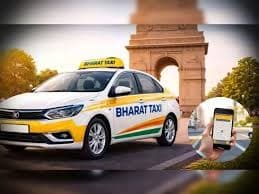
Bharat Taxi: first cooperative-based taxi platform in India, operated by Sahakar Taxi Cooperative Ltd.

Model: multi-state drivers’ cooperative, zero-commission rides, democratic ownership via share purchase.

Geography: planned pan-India rollout within three years, launched nationally by Union Home & Cooperation Minister.

Quick Facts for MCQs

Legal & Policy

  • Registration: multi-state cooperative status provides federal jurisdiction, easier interstate operation.
  • Governance: one-member-one-vote; Sarathi directors ensure driver control.
  • Expansion goal: Kashmir-to-Kanyakumari coverage within 3 years endorsed by Union ministry.

Economic Angle

  • Revenue: platform survives on flat daily fee, undercuts 20-30 % corporate commissions.
  • Profit-sharing: member shares confer dividend rights, boosting driver income stability.
  • Market effect: pressures private aggregators to lower commissions countrywide.

Social Concerns

  • Safety: Sarathi Didi offers women dignified, affordable rides.
  • Welfare: e-Shram linkage unlocks health insurance, pensions, future gig-worker schemes.
  • Empowerment: ownership model turns drivers from gig labourers to micro-entrepreneurs.

Key Data Points

FeatureData-Point
Registration lawMulti-State Cooperative Societies Act, 2002
Establishment date6 June 2025
Promoter agenciesNCDC, IFFCO, GCMMF, KRIBHCO, NAFED, NABARD, NDDB, NCEL
Member titleSarathi (driver-owner)
Share price (entry)₹500 onwards
Daily access fee₹30 - cabs; ₹18 - autos
Commission on fare0 %; entire fare to Sarathi
Women safety windowSarathi Didi, female drivers on two-wheelers
Pricing policyNo surge pricing, transparent fixed rates
Social-security linke-Shram portal; PM Jan Arogya up to ₹5 lakh
Board representation2 Sarathi seats on Board of Directors
GS-3Economy

8.Transition to Corporate Bond Financing

The Hindu

What & Where

Corporate bond market reforms; announced in Union Budget 2026-27 to shift long-term credit risk from banks to markets.

Key tools: market-making framework, total-return swaps, bond-index derivatives, infrastructure risk-guarantee fund, CPSE-based REITs.

Geography: India; current market depth 15-16 % of GDP versus >80 % in US.

Quick Facts for MCQs

Legal & Policy

  • Market-making: designated intermediaries obliged to post two-way quotes, backed by repo and funding lines.
  • TRS & bond-index derivatives notified under Securities Contracts (Regulation) Act for hedging, price discovery.
  • Infrastructure Risk Guarantee Fund grants partial credit cover during construction phase.

Banking Impact

  • Overburden: banks carry thrice the OECD average share of corporate credit, causing asset-liability mismatch.
  • Fiscal strain: repeated public recap infuses scarce budgetary resources, crowding out welfare outlays.
  • Transmission drag: long-dated loan books blunt RBI rate signals, slowing credit repricing.

Market Deepening Steps

  • Proposal: centrally-cleared corporate bond repo to unlock collateralised liquidity.
  • Greenium push: lower listing fees, expedited approvals for certified ESG bonds to tap global appetite.
  • Mandate: 20-30 % of new infrastructure funding via public bond issues to instil market discipline.

Key Data Points

FeatureData-Point
Corporate bond stock FY25₹53.6 trillion
Share of non-financial corporate debt with banks60-65 %
Bank recapitalisation (FY17-FY25)₹3.2 lakh crore
Bond issuances via private placement98 %
Secondary-market turnover ratio0.3
Retail investor share<2 %
Target market size by 2030₹100-120 trillion

Related UPSC Prelims PYQs

UPSC 2021PYQ 1

भारत के संदर्भ में, निम्नलिखित कथनों पर विचार कीजिए : 1. खुदरा निवेशक डिमैट खातों के माध्यम से प्राथमिक बाजार में 'ट्रेज़री बिल' और 'भारत सरकार के ऋण बॉण्ड' में निवेश कर सकते हैं। 2. 'नेगोशिएटेड डीलिंग सिस्टम-ऑर्डर मैचिंग' भारतीय रिज़र्व बैंक का सरकारी प्रतिभूति व्यापार मंच है। 3. 'सेंट्रल डिपॉज़िटरी सर्विसेज लिमिटेड' का संयुक्त रूप से भारतीय रिज़र्व बैंक और बॉम्बे स्टॉक एक्सचेंज द्वारा प्रवर्तन किया जाता है। उपयुक्त कथनों में से कौन-सा/कौन-से सही है/हैं?

UPSC 2024PYQ 2

निम्नलिखित कथनों पर विचार कीजिए : 1. भारत में, नॉन-बैंकिंग वित्तीय कंपनियाँ (NBFCs) द्वारा प्रायोजित परिसंपत्ति पुनर्संरचना कंपनियाँ लाभ कमा सकती हैं। 2. भारत में, विदेशी संस्थागत निवेशक सरकारी प्रतिभूतियों (G-Secs) के धारक बन सकते हैं। 3. भारत में, शेयर बाज़ार (स्टॉक एक्सचेंज) ऋणों के लिए एकीकृत व्यापारिक मंच (ट्रेडिंग प्लेटफॉर्म) प्रदान कर सकते हैं। उपर्युक्त में से कौन-सा/कौन-से कथन सही है/हैं ?

GS-3Infrastructure

9.America-India Subsea Cable Connectivity

News on Air
Illustration for America-India Subsea Cable Connectivity

What & Where

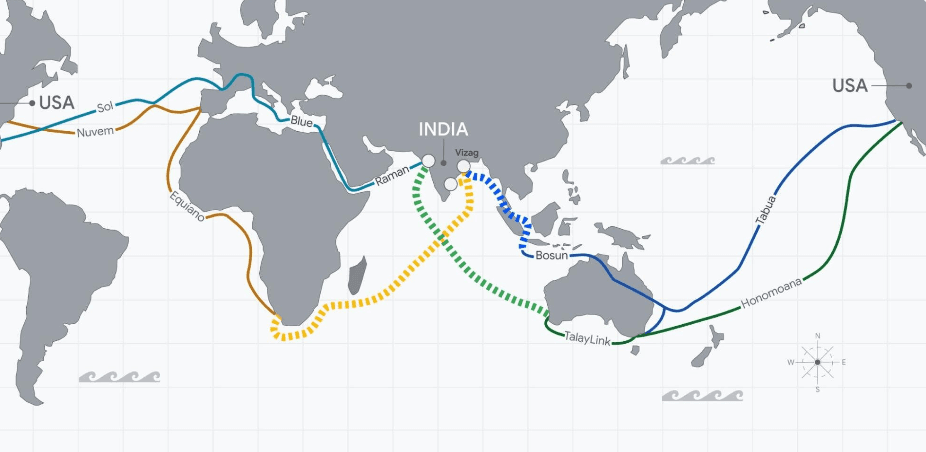
Definition Massive Google-led subsea-cable network anchoring a USD 15 bn, 5-year investment to boost AI-ready connectivity

Core geography New international gateway at Visakhapatnam plus direct routes to Singapore, South Africa, Australia and US coasts

Key process Lays four inter-continental fibre paths creating low-latency, resilient links across Asia, Africa, Pacific and Americas

Quick Facts for MCQs

Tech & Schemes

  • Infrastructure Direct Mumbai–Western Australia fibre planned for west-coast load balancing
  • AI readiness Low-latency network designed for frontier AI model training and cloud workloads
  • Skilling AI-enabled modules to be integrated in 800+ districts via Karmayogi Bharat

Economic Angle

  • Trade routes Transforms ancient maritime corridors into digital commerce arteries between India, US and Southern Hemisphere
  • Investment signal Largest single digital-infra outlay by Google in India, boosting data-centre attractiveness
  • Job creation High-capacity cables spur local data-hosting, marine engineering and maintenance roles

Security Dimension

  • Resilience Multiple landings safeguard backbone during natural disasters or geopolitical cable cuts
  • Strategic autonomy India reduces over-reliance on narrow Far-East routing chokepoints
  • Data sovereignty Domestic gateway allows India to host and process sensitive AI datasets locally

Key Data Points

FeatureData-Point
Announced atIndia AI Impact Summit 2026
PromoterGoogle (CEO Sundar Pichai)
Total investmentUSD 15 billion over 5 years
First east-coast gatewayVisakhapatnam, Andhra Pradesh
New subsea pathsIndia–Singapore, India–South Africa, India–Australia
Extra fibre routesUS East/West ↔ India via Africa & South Pacific
Domestic redundancyDiversifies beyond existing Mumbai & Chennai landings
Skilling tie-upKarmayogi Bharat, 20 million public servants
Healthcare pilotAIIMS partnership for symptom-to-report tools
Strategic aimPrevent AI divide; position India as global AI hub

Related UPSC Prelims PYQs

UPSC 2026PYQ 1

What is the name of the national digital framework launched at India Maritime Week 2025 to make Indian ports data-driven and AI-enabled?

GS-3S&T

10.ISA AI-for-Energy Global Mission

Down to Earth
Illustration for ISA AI-for-Energy Global Mission

What & Where

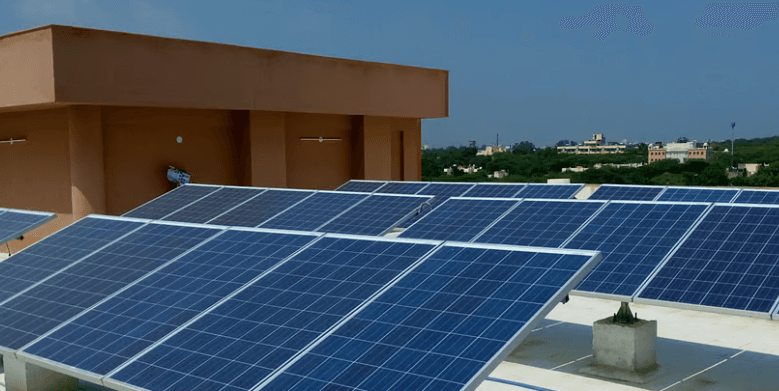
Mission: Global AI-for-Energy, integrates AI into clean-energy systems of 120+ ISA member nations.

Launch: Unveiled at India AI Impact Summit, New Delhi; led by International Solar Alliance with Indian Power & IT ministries, REC.

Geography: Focus on developing & emerging economies across Africa, Asia-Pacific, Latin America.

Quick Facts for MCQs

Tech & Schemes

  • Digital-public-infrastructure: India Energy Stack exported as interoperable, utility-consumer-vendor connector.
  • Predictive-maintenance: Digital Twin enables real-time simulation, outage minimisation, loss reduction.
  • Citizen-tools: One Solar App supplies transparent rooftop-solar data and automated net-metering.

Economic Angle

  • Cost-cutting: AI lowers technical losses, enhancing financial viability of renewables in low-income states.
  • Leapfrogging: Bypasses legacy grid investments, accelerating decentralised energy markets.
  • Financing-focus: Sustainable funding highlighted among five mission priorities.

Capacity Building

  • Training: Emphasis on AI skill-development for utilities and regulators in member nations.
  • Start-up-innovation: Dedicated pillar to nurture clean-energy AI enterprises.
  • Standards: Push for interoperable protocols to unify diverse national grids.

Key Data Points

FeatureData-Point
Parent bodyInternational Solar Alliance (ISA)
Indian partnersMinistry of Power; MeitY; REC Limited
Core digital modelIndia Energy Stack (DPI template)
Flagship appOne Solar App for net-metering, performance
Tech demoDigital Twin of power DISCOMs
GIS useAsset-level mapping for rural & urban planning
Key goalsSmart bidirectional grids; equitable, affordable access
Priority areasAI for distributed energy, start-ups, standards, citizen benefits, financing
Main beneficiaries120+ developing/emerging ISA members
Summit venue & yearIndia AI Impact Summit, New Delhi, 2024

Related UPSC Prelims PYQs

UPSC 2022PYQ 1

The e-AMRIT web portal on electric vehicles, launched at COP26 Summit in Glasgow recently, has been developed by NITI Aayog in collaboration with the Government of

UPSC 2016PYQ 2

Consider the following statements: 1. The International Solar Alliance was launched at the United Nations Climate Change Conference in 2015. 2. The Alliance includes all the member countries of the United Nations. Which of the statements given above is/are correct?

GS-3S&T

11.Graphics Processing Unit Fundamentals

The Hindu
Illustration for Graphics Processing Unit Fundamentals

What & Where

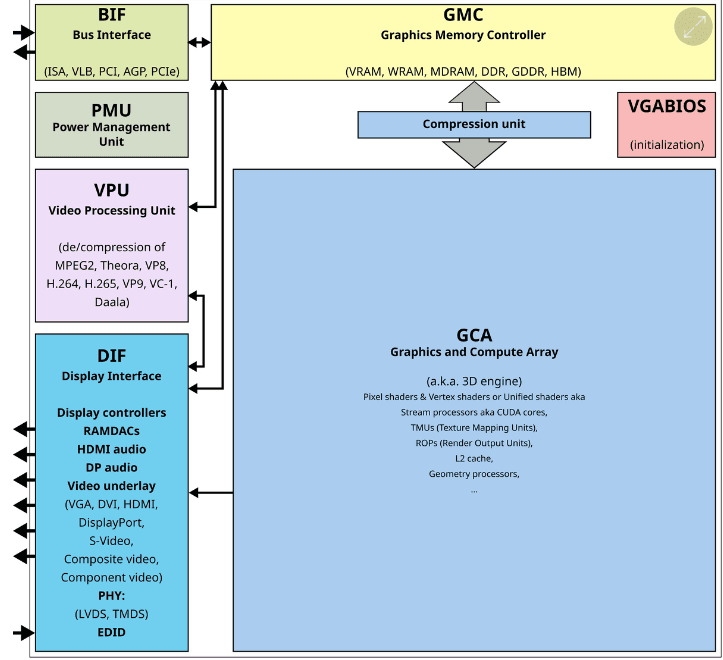
Definition: GPU is a specialised processor for highly parallel, data-intensive computations

Core use-cases: modern AI, cloud servers, gaming, scientific & industrial high-performance computing

Geography: housed inside PCs, game consoles, data-centre racks worldwide; term popularised 1999 by Nvidia

Quick Facts for MCQs

Architecture & Design

  • Parallelism: hundreds-to-thousands of lightweight cores handle simultaneous threads
  • Bandwidth: dedicated VRAM enables ultra-fast read-write for graphics or tensors
  • Energy density: higher flops per watt than CPUs yet rising absolute draw

Compute Pipeline

  • Vertex stage: matrix math positions 3D objects onto 2D plane
  • Rasterization: geometric primitives converted into pixel fragments for shading
  • AI shift: visual stages skipped; same cores execute matrix multiplications

Applications

  • AI: training & inference for GPT-4, Gemini, digital-twin factories
  • Scientific: climate models, molecular dynamics, genomic sequencing workloads
  • Blockchain: Proof-of-Work hash crunching in crypto mining

Energy & Cooling

  • Consumption: flagship GPUs already 600 W; roadmap exceeds 1 kW
  • Cooling tech: immersion or cold-plate liquid loops replacing air fans in data halls
  • Sustainability concern: power-hungry clusters challenge green-datacentre targets

Key Data Points

FeatureData-Point
Coined year & firm1999, Nvidia GeForce 256
Primary aimEmbarrassingly parallel workloads
Core typesCUDA cores, Tensor cores
Memory techGDDR6X, HBM3
Programming stacksNvidia CUDA, OpenCL (GPGPU)
Peak device power (2026)> 1000 W each
Key pipeline stagesVertex processing → Rasterization → Shading
AI roleMassive matrix multiplications for neural networks
Cooling needAdvanced liquid solutions in hyperscale centres
Example verticalsLLMs, ray-traced gaming, weather models, drug discovery
GS-3S&T

12.VoicERA Voice AI Stack on BHASHINI

PIB

What & Where

VoicERA – open-source, end-to-end Voice AI stack for multilingual speech & conversation.

Deployed on BHASHINI National Language Infrastructure, India; unveiled at India AI Impact Summit 2026.

Provides national execution layer for population-scale, secure voice services across sectors.

Quick Facts for MCQs

Tech & Schemes

  • Open-standard stack reduces duplication, aligns with Digital Public Infrastructure principles.
  • Modular APIs ease integration with existing e-Gov platforms like UMANG, PM-KISAN portals.
  • Population-scale design supports concurrent load from nationwide citizen interactions.

Governance & Access

  • Enables natural-speech interface for government schemes, boosting inclusivity for non-English speakers.
  • Reduces vendor lock-in, ensuring long-term sovereign control over language data.
  • Supports policy goals under Digital India & National Language Translation Mission.

Security Dimension

  • Secure execution layer mandates safe processing, storage, and transit of citizen voice data.
  • On-premise option aids sensitive departments needing air-gapped deployments.
  • Open codebase fosters auditability, lowering cybersecurity risks.

Collaboration & Ecosystem

  • Academia–industry–non-profit consortium accelerates R&D and dataset sharing.
  • Encourages startups to build domain-specific voice bots over shared stack.
  • Interoperability standards open pathway for future global language integrations.

Key Data Points

FeatureData-Point
Launch year/eventIndia AI Impact Summit 2026
Parent ministryMeitY
Implementing armDigital India BHASHINI Division, Digital India Corporation
Key collaboratorsEkStep Foundation, C-DOT COSS, IIIT Bengaluru, AI4Bharat
Core natureOpen-source Digital Public Good
Architecture styleModular, pluggable, vendor-agnostic
Deployment optionsCloud & on-premise
Functional spanReal-time ASR, conversational AI, multilingual support
Primary aimVoice access to government services across Indian languages
Security layerDedicated secure backend for voice data
GS-3S&T

13.Sarvam AI Vikram Language Models

The Hindu

What & Where

Product: Vikram 30B & 105B Large Language Models by Bengaluru-based Sarvam AI

Venue: Unveiled at India-AI Impact Summit 2026, New Delhi

Purpose: Sovereign, voice-first AI covering all 22 scheduled Indian languages

Quick Facts for MCQs

Tech & Schemes

  • Mission: IndiaAI funding and GPU pool enabled model training
  • Goal: Build sovereign LLM ecosystem, open-source 120B model for public services
  • Partners: Soket defence-healthcare model; Gan AI 70B TTS foundation

Indian Language Edge

  • Dataset: Curated Indic corpora solving data scarcity hurdle
  • Capability: Accurate translation, content generation, dialect comprehension
  • Inclusivity: Voice-first design eases adoption among non-literate users

Open-Source Dimension

  • Licensing: Weights and code freely available for downstream applications
  • Benefit: Lowers entry barrier for startups, academia, government projects
  • Ecosystem: Encourages community-driven fine-tuning and sectoral custom models

Tribute Aspect

  • Naming: Vikram honours scientist Vikram Sarabhai
  • Symbolism: Highlights national pride in indigenous science & technology

Benchmark & Competition

  • Reference: OpenAI IndQA signals global interest in Indic evaluation
  • Scale note: Vikram smaller than GPT-4 yet tailored for local relevance

Key Data Points

FeatureData-Point
DeveloperSarvam AI, Bengaluru
Models launchedVikram-30B, Vikram-105B
Parameter counts30 billion; 105 billion
Language coverageAll 22 Scheduled Indian languages
Optimisation focusVoice-first interaction
Access modelFully open-source code & weights
Training hardwareGPUs via IndiaAI Mission common compute
Comparable size105B ≈ one-sixth DeepSeek R1 600B
Benchmark contextOpenAI released IndQA for Indic evaluation
IndiaAI Mission targetSeparate 120B sovereign model for governance
Additional firmsSoket, Gnani, Gan AI also building sectoral models
Name inspirationVikram Sarabhai, father of Indian space programme
GS-3S&T

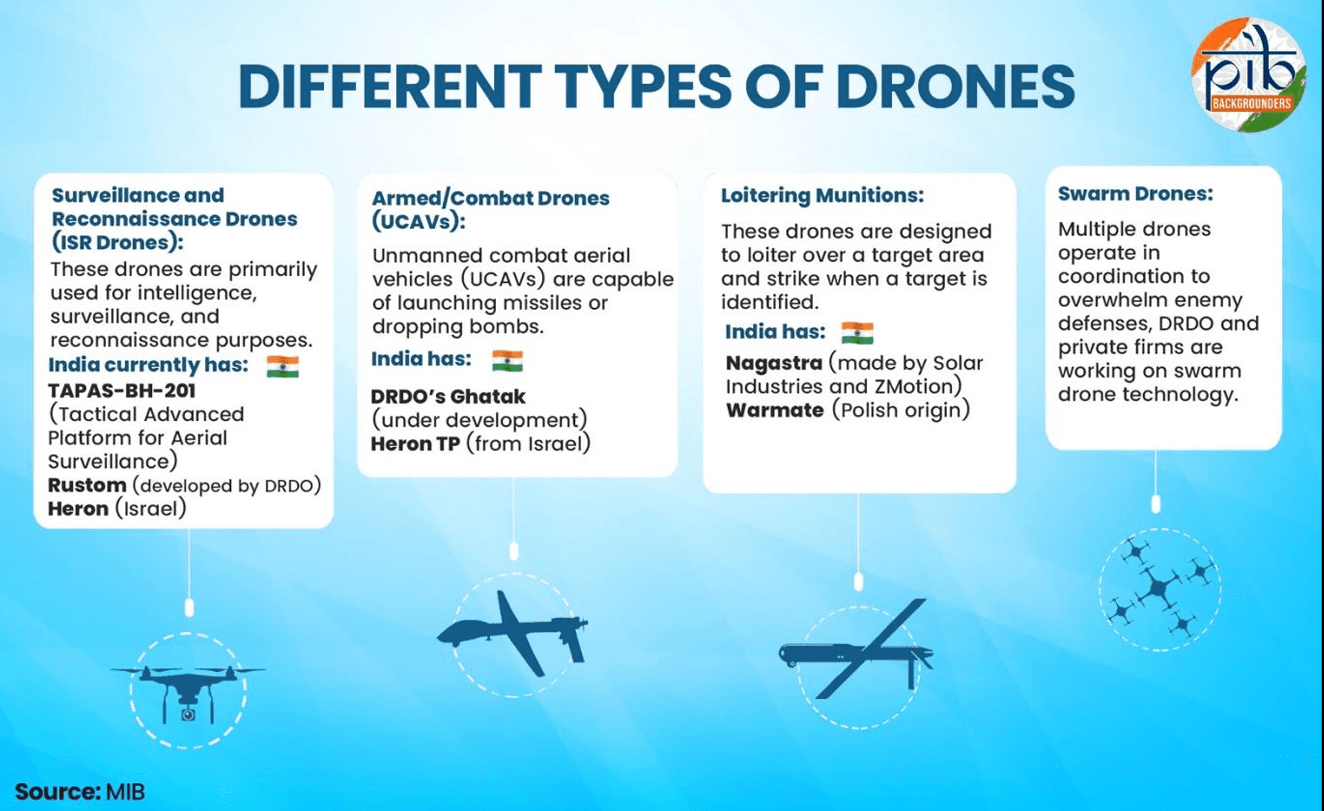
14.India's Drone Ecosystem Expansion

PIB
Illustration for India's Drone Ecosystem Expansion

What & Where

India’s drone ecosystem governed by Drone Rules 2021-23, Digital Sky/eGCA single-window platforms, GST/PLI fiscal pushes

Core processes: online registration, type & pilot certification, automatic airspace permission, incentivised domestic manufacture

Geography: nationwide coverage; drones used from rural SVAMITVA mapping (3.28 lakh villages) to border surveillance operations

Quick Facts for MCQs

Legal & Policy

  • Liberalisation: 25 approvals cut, fee slab delinked from drone weight, pilot licence replaced by DGCA Remote Pilot Certificate
  • Green airspace: majority (~85 %) national skies pre-designated for instant “permission-less” civilian flights via Digital Sky map
  • Compliance: mandatory type certification for all non-Nano drones before sale or import

Economic Angle

  • Incentivisation: PLI + reduced GST aim to slash ownership cost, boost MSME-start-up manufacturing capacity
  • Market expansion: women-led SHGs under Namo Drone Didi create new rural service micro-enterprises
  • Job creation: nearly 40k certified pilots indicate fast-growing skilled workforce demand

Governance Uses

  • Land titling: SVAMITVA drone surveys curbing disputes, enabling collateral-based rural credit
  • Infrastructure: NHAI mandates monthly drone videography for progress tracking, dispute resolution evidence
  • Railways: drone inspection of tracks, bridges, yards; RPF surveillance lowers trespass and crowd risks

Security Dimension

  • Defence: drones integrated with radar-air-defence grid, showcased in Operation SINDOOR precision strikes
  • Disaster response: NECTAR heavy-lift drones provide live visuals over floods, landslides, aid coordinated rescues
  • Border monitoring: unmanned systems bolster intelligence, reduce troop exposure in sensitive zones

Key Data Points

FeatureData-Point
Drone Rules first notifiedAug 2021
Registered drones (Feb 2026)~38,500
Remote Pilot Certs issued~39,900
GST rate on drones5 %
PLI outlay (drones & parts)₹120 crore
SVAMITVA villages mapped3.28 lakh
Rural property cards readied2.76 crore
Launch of Namo Drone DidiNov 2023
Training driveSwaYaan Programme
Innovation contestNIDAR (National Innovation Challenge)

Related UPSC Prelims PYQs

UPSC 2022PYQ 1

Which one of the following ministries has repealed the Unmanned Aircraft Systems (UAS) Rules, 2021 and replaced the same with the liberalized Drone Rules, 2021?

UPSC 2025PYQ 2

मानव-रहित वायु वाहन (UAV) के संदर्भ में, निम्नलिखित कथनों पर विचार कीजिए : I. सभी प्रकार के UAV ऊर्ध्वाधर अवतरण (लैंडिंग) कर सकते हैं। II. सभी प्रकार के UAV स्वतः मण्डरा सकते हैं। III. सभी प्रकार के UAV सस्ती पूंजी के स्रोत के रूप में केवल बैटरी का प्रयोग कर सकते हैं। उपर्युक्त कथनों में से कितने सही हैं?

GS-3SpeciesQuick Bite

15.Loggerhead Sea Turtle Climate Threats

The Hindu

What & Where

Loggerhead sea turtle (Caretta caretta); large, omnivorous marine reptile with massive head and crushing jaws.

Global range spans Atlantic, Pacific, Indian Oceans and Mediterranean; ten recognised subpopulations.

Study links prey-loss (lower satellite chlorophyll) to reproductive decline across feeding grounds.

Quick Facts for MCQs

Climate Impact

  • Warming oceans reduce prey, extending female breeding gap to four years.
  • Satellite chlorophyll decline indicates falling marine productivity.
  • Energy-reserve erosion threatens long-term population viability.

Reproductive Biology

  • Capital breeders store multi-year foraging energy before nesting.
  • Both sexes migrate hundreds–thousands km between feeding and nesting sites.
  • Recent nests show fewer eggs, lowering hatchling output.

Legal & Policy

  • IUCN Vulnerable status elevates conservation urgency.
  • CMS provides Appendix I protection plus regional MOUs and South Pacific Action Plan.
  • Schedule I listing grants highest legal safeguard in India.

Key Data Points

FeatureData-Point
Scientific nameCaretta caretta
IUCN Red ListVulnerable
Indian WPA, 1972Schedule I
CMS listingAppendix I (since 1985)
Subpopulations10 worldwide
Core rangeAtlantic, Pacific, Indian, Mediterranean
Breeding interval shift2-year → 4-year
Primary threatPrey loss via ocean warming
Reproduction typeCapital breeder
Key CMS MOUsAtlantic Africa; IOSEA

Ready to practice?

Test your knowledge with our UPSC test series.

Start Free Trial