UPSC Current Affairs

15 topicsGS-1: 4GS-2: 3GS-3: 8
0/15 done
GS-2Polity

1.Indian Pharmacopoeia Commission Mandate (Drug Standards)

PIB
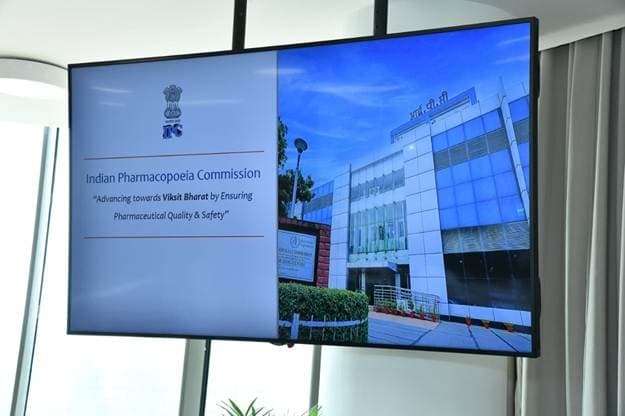
Illustration for Indian Pharmacopoeia Commission Mandate (Drug Standards)

What & Where

Indian Pharmacopoeia Commission (IPC) = autonomous body issuing Indian Pharmacopoeia, legal drug-quality standard for India.

Core processes: monograph revision, pharmacovigilance, reference-substance certification, National Formulary publication.

Geography: HQ Ghaziabad (Uttar Pradesh); administratively under Ministry of Health & Family Welfare.

Quick Facts for MCQs

Legal & Policy

  • Autonomy granted yet administratively controlled by MoHFW ensuring swift revision without bureaucratic delay.
  • Alignment with Drugs & Cosmetics Act provides statutory enforceability of published standards.
  • Full GoI funding safeguards impartiality from industry influence.

Key Functions

  • Publication: revises ~every 4-5 years covering APIs, excipients, devices, herbals.
  • Surveillance: PvPI collects, analyses adverse-drug-reaction data nationwide.
  • Standards: certifies reference substances enabling lab validation across India.

International Angle

  • Recognition by 19 countries elevates Indian formulations’ export acceptability.
  • Harmonisation with six leading pharmacopoeias reduces duplicate testing for global supply chains.
  • Supports pharma diplomacy, positioning India as pharmacy-of-the-world.

Economic Impact

  • Robust domestic standards strengthen generics credibility, aiding $25 bn pharmaceutical export market.
  • Training & self-reliance cut dependence on costly overseas reference standards.

Key Data Points

FeatureData-Point
Operational since1 Jan 2009
Legal mandateDrugs & Cosmetics Act 1940
Institutional typeAutonomous, fully GoI-funded
Parent ministryMoHFW
HeadquartersGhaziabad, Uttar Pradesh
Upcoming edition10th IP 2026, to launch Jan 2026
Current flagship bookIndian Pharmacopoeia (drug standards)
Companion bookletNational Formulary of India
Pharmacovigilance roleNational Coordination Centre, PvPI
Reference materialsIssues IP Reference Substances
Global tiesHarmonises with USP, BP, Ph.Eur., JP, ChP, WHO-IP
International recognitionIP accepted in 19 countries
Public-health aimEnsure identity, purity, strength, safety of medicines
National missions servedAtmanirbhar Bharat, Viksit Bharat
Capacity buildingRuns training & research on regulatory science

Related UPSC Prelims PYQs

ESE_GS 2026PYQ 1

Which organization developed the Online National Drugs Licensing System (ONDLS) portal?
GS-3Economy

2.Infrastructure Bonds Funding Projects (Infrastructure Bonds)

Indian Express

What & Where

Definition: long-term debt securities issued by Government, PSBs, or specialised FIs to finance roads, rail, power, airports

Types: Government bonds, Bank-issued bonds, Institutional bonds (PFC, IREDA, REC), Green infrastructure bonds

Geography: India-wide market dominated by Public Sector Banks under RBI supervision

Quick Facts for MCQs

Regulatory & Policy

  • RBI: CRR/SLR carve-out lowers funding cost for banks
  • SEBI: Listing and disclosure norms; extra climate disclosure for Green bonds
  • Government: Uses bonds to meet National Infrastructure Pipeline financing targets

Bank Funding Logic

  • Asset-liability: long bonds match 10–20-year project loans, easing mismatch
  • Cost: reserve exemptions make bonds cheaper than equivalent long-term deposits
  • Diversification: bond issuance reduces reliance on volatile retail deposits

Investor Perspective

  • Stability: predictable coupons suit retirees, pension, insurance pools
  • Nation-building: capital directly funds highways, rail, renewable grids
  • Diversification: sovereign or quasi-sovereign debt tempers equity volatility

Risk Matrix

  • Interest-rate: rising yields depress bond prices, especially long tenors
  • Liquidity: thin secondary market hampers early exit before maturity
  • Inflation: fixed coupons may lag persistent high CPI

Key Data Points

FeatureData-Point
RBI minimum maturity7 years
Typical tenure band10–15 years (can exceed 20)
CRR/SLR treatmentExempt for eligible bank issues
BoI issue Dec 2025₹10,000 cr raised on ₹5,000 cr base
Subscription level₹15,300 cr bids (≈3.06 ×)
Coupon natureFixed, paid semi-annually/annually
Key regulatorsRBI plus SEBI for listing
Principal risksInterest-rate, liquidity, credit, inflation

Related UPSC Prelims PYQs

GS1 2016PYQ 1

With reference to 'IFC Masala Bonds', sometimes seen in the news, which of the statements given below is/are correct?

GS1 2023PYQ 2

Consider the following statements:

GS-3Infrastructure

3.Plasser Quick Relaying System (Track Renewal Tech)

DD News
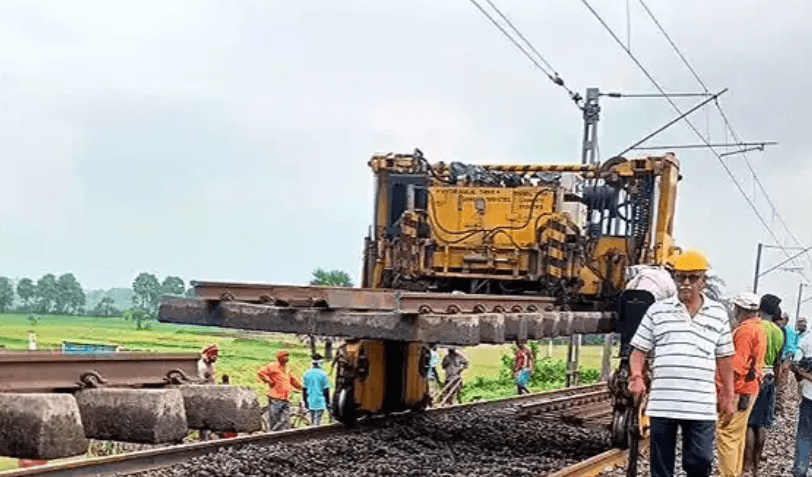
Illustration for Plasser Quick Relaying System (Track Renewal Tech)

What & Where

Semi-mechanised track-renewal system (PQRS) by Plasser & Theurer, Austria; adopted by Indian Railways.

Uses self-propelled portal cranes on 3.4 m auxiliary track to swap old rail-sleeper panels with prefabricated ones.

Northeast Frontier Railway set 1,033-metre single-day renewal record with PQRS.

Quick Facts for MCQs

Tech & Machinery

  • Portal cranes run on auxiliary track; integrated sleeper grippers & rail clamps ensure secure panel handling.
  • Turntable mechanism lets cranes rotate and mount/dismount BFRs mid-section.
  • Modular design simplifies transport and lowers maintenance downtime.

Operational Achievement

  • NFR’s 1,033 m renewal surpassed previous single-day mechanised records.
  • Longer stretches replaced per limited traffic block versus conventional manual methods.
  • Removed panels immediately transferred to BFRs, eliminating intermediate ground stacking.

Safety & Cost

  • Uniform relaying enhances track geometry, cutting derailment probability.
  • Semimechanisation reduces worker exposure to live tracks and heavy lifting injuries.
  • Rapid, precise laying lowers overall maintenance expenditure.

Key Data Points

FeatureData-Point
Full formPlasser’s Quick Relaying System
Technology typeSemi-mechanised track renewal
Developer HQAustria
Indian userIndian Railways (NFR, etc.)
Record length (NFR)1,033 track m in one day
Auxiliary track gauge3,400 mm
Portal crane lifting (old)≈5 t for 9 m panel
Portal crane lifting (PQRS-201)9 t for 13 m PRC panel
Core equipmentSelf-propelled portal cranes, Track Laying Equipment
Panel disposalDirect loading onto BFR wagons
Key aimsFaster renewal, minimal traffic block
Major benefitsUniform geometry, reduced labour & lifecycle cost

Related UPSC Prelims PYQs

NDA_GAT 2021PYQ 1

the transportation system so that it (P) and not just the affluent section of society (Q) provides mobility to everyone (R) there are many ways to restructure (S)

GS-3Infrastructure

4.Subansiri Lower Hydropower Project (Hydropower Project)

Indian Express
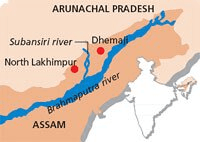
Illustration for Subansiri Lower Hydropower Project (Hydropower Project)

What & Where

Project: Subansiri Lower Hydroelectric, 2 000 MW run-of-river concrete-gravity dam straddling Arunachal Pradesh–Assam border.

River: Subansiri, largest upper Brahmaputra tributary, enters India via Miri Hills with steep fall enabling hydropower.

Aim: Generate power, moderate floods, supply irrigation & drinking water to downstream districts.

Quick Facts for MCQs

Environmental Impact

  • Downstream: Landslide-blocked tunnel stopped releases, dried riverbed, threatened aquatic biota.
  • Sediment: Long reservoir expected to alter silt load and fish migration, core activist concern.
  • Flood-moderation: Promised controlled Brahmaputra floods; efficacy questioned after repeated mishaps.

Tech & Infrastructure

  • Design: Run-of-river layout keeps upstream-downstream flows equal; gravity dam resists pressure by own weight.
  • Components: Eight spillways, five diversion tunnels, powerhouse with Francis units; only one tunnel functional now.
  • Generation: Target 7 500 MU annually, stabilising Northeast regional grid.

Governance & Timeline

  • Protests: Seismic and ecological fears led to eight-year construction halt by regional groups.
  • Clearance: NGT allowed restart 15 Oct 2019 under enhanced safety monitoring.
  • Setback: Nov 2023 landslide revives safety debate, may push back commissioning schedules.

Key Data Points

FeatureData-Point
Main riverSubansiri (Brahmaputra tributary)
States involvedArunachal Pradesh & Assam
Dam typeConcrete gravity, run-of-river
Dam height116 m
Installed capacity2 000 MW (8 × 250 MW)
Reservoir length34.5 km
Diversion tunnels5 (only Tunnel-3 open)
Spillways8
Annual energy7 500 MU at 90 % dependability
Executing agencyNHPC Ltd
Construction startJanuary 2005
Work haltDec 2011–Oct 2019 (local protests)
Restart clearanceNational Green Tribunal, Oct 2019
Nov 2023 issueLandslide blocked diversion tunnel, dried downstream channel

Related UPSC Prelims PYQs

CDS_GK 2021PYQ 1

The Luhri Hydro-Electric Power Project is being constructed on the river

GS-3InfrastructureQuick Bite

5.India’s Iconic Bridges Overview (Notable Bridges)

PIB

What & Where

Strategic bridges: large-scale road/rail structures boosting connectivity & defence readiness across seas, valleys, Himalayan rivers

Predominant types: sea-link, arch bridge, vertical-lift bridge, cable-stayed bridge

Geography: Maharashtra, J-K, Tamil Nadu, Assam-Arunachal; span Arabian Sea, Chenab, Palk Strait, Lohit, Anji

Quick Facts for MCQs

Engineering Feats

  • Chenab Bridge stands 35 m taller than Eiffel Tower, engineered for 120-year life
  • MTHL adopts orthotropic steel decks and seismic bearings for marine durability and earthquake resilience
  • New Pamban electric-operated lift eliminates manual opening, sustaining 10 t axle loads on 45 kmph trains

Security & Strategic

  • Dhola–Sadiya halves travel time to India–China LAC, enabling faster troop and supply mobilisation
  • USBRL bridges give year-round Kashmir valley access bypassing avalanche-prone Jawahar Tunnel route
  • MTHL provides alternate coastal evacuation and disaster-relief corridor for Mumbai Metropolitan Region

Economic Impact

  • MTHL expected cut Navi Mumbai–South Mumbai commute to 20 minutes, boosting port-airport logistics efficiency
  • Dhola–Sadiya saves 165 km detour, reducing vehicle fuel cost by ~₹10 lakh daily
  • Pamban upgrade anticipated to raise pilgrim inflow to Rameswaram and promote coastal tourism ventures

Key Data Points

FeatureData-Point
Atal Setu length/typeLongest sea bridge; 16.5 km sea + 5.5 km land
Chenab Bridge clearance359 m above river; 1,315 m long; 260 kmph wind
New Pamban BridgeFirst vertical-lift rail bridge; 2.07 km; 72.5 m lift span
Dhola–Sadiya Bridge9.15 km road link; Assam ↔ East Arunachal over Lohit
Anji Khad BridgeFirst cable-stayed rail bridge; 331 m high; 725 m long
USBRL inclusionChenab & Anji bridges form part of Udhampur–Srinagar–Baramulla line
GS-1History

6.Communist Party of India Centennial (CPI Centennial)

Indian Express
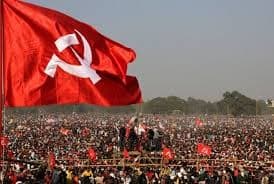
Illustration for Communist Party of India Centennial (CPI Centennial)

What & Where

Communist Party of India (CPI): India’s oldest Marxist party spearheading worker-peasant politics.

Founded at Kanpur (Cawnpore), United Provinces, 26 Dec 1925, via national conference of in-country communist groups.

Operates nationwide, electoral strongholds historically in Kerala, West Bengal, Tripura.

Quick Facts for MCQs

Origins & Splits

  • Russian-Revolution influence; repression via Kanpur, Meerut conspiracy trials in 1920s-30s.
  • 1964 split driven by constitutional path vs revolutionary line, Sino-Soviet ideological rift.

Mass Movements

  • Trade-union expansion among rail, textile, port workers during 1930s.
  • Led Tebhaga sharecroppers’ demand for two-thirds produce; Telangana armed struggle 1946-51.

Parliamentary Trajectory

  • Post-1947 shift to electoral politics while retaining agitational strategy.
  • Formed/partnered governments in Kerala, West Bengal, Tripura; often allied in national coalitions.

Key Personalities

  • M N Roy: Comintern liaison, Tashkent phase thinker.
  • S A Dange, Muzaffar Ahmad: Kanpur founders, labour organisers.
  • P C Joshi, A K Gopalan, EMS: built united-front and parliamentary presence.

Key Data Points

FeatureData-Point
Core ideologyMarxism, anti-imperialism, class struggle
Formal founding26 Dec 1925, Kanpur
Precursor émigré partyTashkent, 1920 (historical debate)
Trade-union wingAITUC
Major split1964 → birth of CPI(M)
Landmark agrarian agitationsTebhaga (Bengal), Telangana (Hyderabad State)
First elected communist govtKerala, 1957 (EMS Namboodiripad)
Key early conspiracy casesKanpur 1924, Meerut 1929

Related UPSC Prelims PYQs

GS1 2005PYQ 1

In October 1920, who of the following headed a group of Indians gathered at Tashkent to set up a communist party of India?

GS1 2018PYQ 2

Who among the following were the founders of the “Hind Mazdoor Sabha” established in 1948?

GS-3Environment

7.Nature-Based Solutions for Climate (Nature-Based Solutions)

The Hindu
Illustration for Nature-Based Solutions for Climate (Nature-Based Solutions)

What & Where

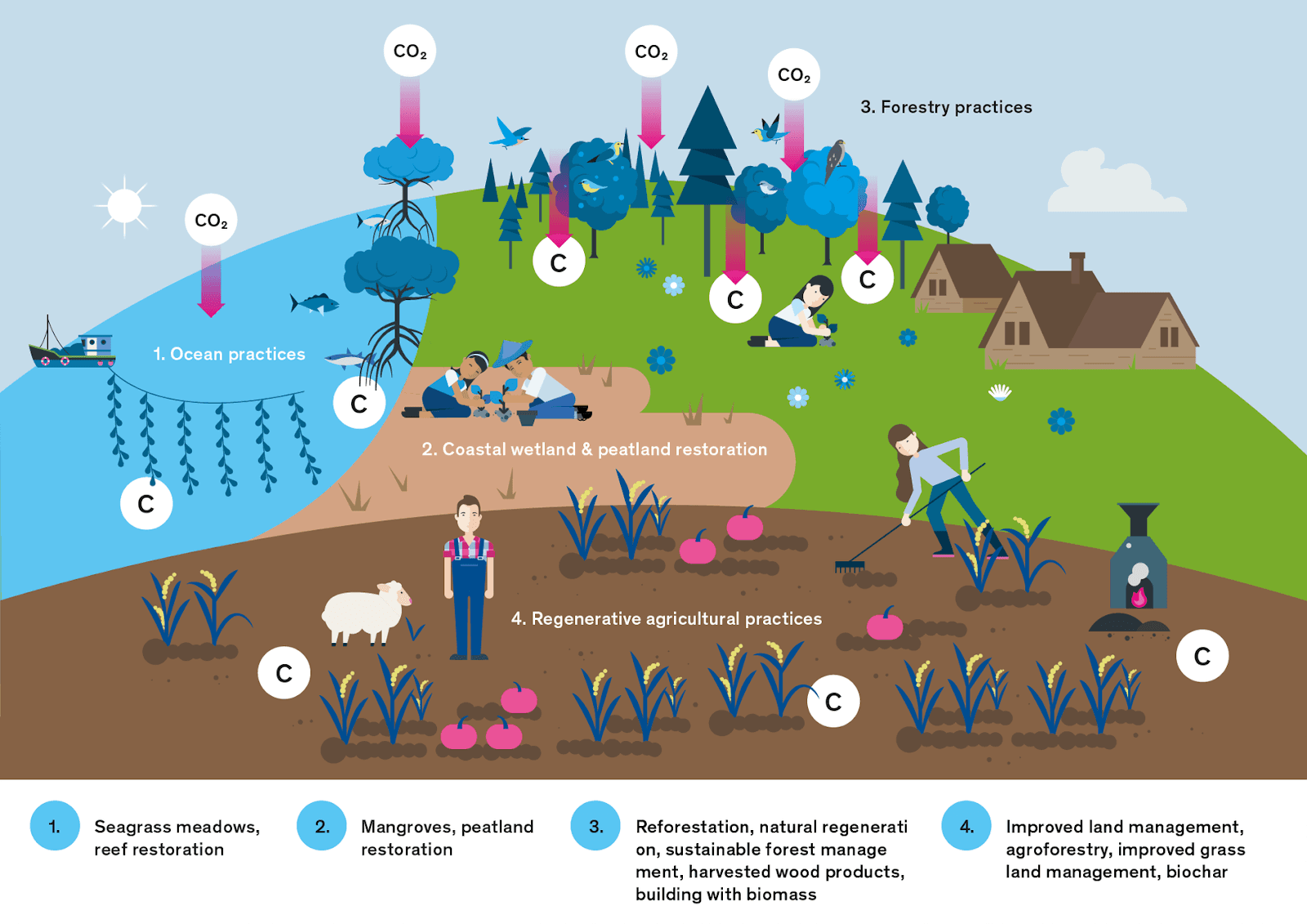
Definition NbS = protect, sustainably manage, restore ecosystems to meet societal challenges while boosting biodiversity & human well-being

Key types = Afforestation/Reforestation, Mangrove restoration, Agro-/Silvo-pastoral farming, Urban blue-green infrastructure

Core geography = COP-30 Belem (Amazon, Brazil) spotlights NbS; Indian exemplars—Pichavaram mangroves (TN), Aravalli Green Wall

Quick Facts for MCQs

International Governance

  • Partnership ENACT aligns UNFCCC, CBD, UNCCD agendas under one NbS umbrella
  • Leadership Egypt & Germany co-founded; IUCN drives implementation & tracking
  • Metrics Explicit carbon, biodiversity, gender-equity outcomes guide accountability

Finance & Corporate

  • Gap USD 200-plus billion annual shortfall versus UNEP 2025 target
  • Disclosure TNFD pushes nature risk into boardrooms yet biodiversity rarely material priority
  • Instruments Green bonds, blended finance proposed to unlock private capital

Indian Relevance

  • Carbon Forests/wetlands counter 12–15 % national emission share, act as major sinks
  • Disaster Mangroves/floodplains cut cyclone & flood damage costs markedly
  • Water Watershed-based NbS secure supplies for 600 million Indians under stress

Tech & Schemes

  • Monitoring ISRO Bhuvan & AI dashboards to verify plantation survival, carbon uptake
  • Flagship MISHTI mangroves, Green India Mission, AMRUT 2.0 integrate NbS across sectors

Key Data Points

FeatureData-Point
COP-30 hostBelem, Brazil (2025)
ENACT launchCOP-27, Sharm el-Sheikh
ENACT secretariatIUCN, Gland
ENACT land target2.4 billion ha (45 M protect + 2 B manage + 350 M restore)
Human resilience goal>1 billion people, incl. 500 M women/girls
NbS finance needUSD 384 billion/yr by 2025
Current private share≈18 % of NbS funding
TNFD adopters (2025)700 + entities
India disaster loss>USD 7.5 billion/yr
Urban NbS cooling2–4 °C temperature drop

Related UPSC Prelims PYQs

GS1 2025PYQ 1

Which organization has enacted the Nature Restoration Law (NRL) to tackle climate change and biodiversity loss?

GS-3Species

8.Anopheles stephensi Urban Malaria Vector (Invasive Mosquito)

The Hindu
Illustration for Anopheles stephensi Urban Malaria Vector (Invasive Mosquito)

What & Where

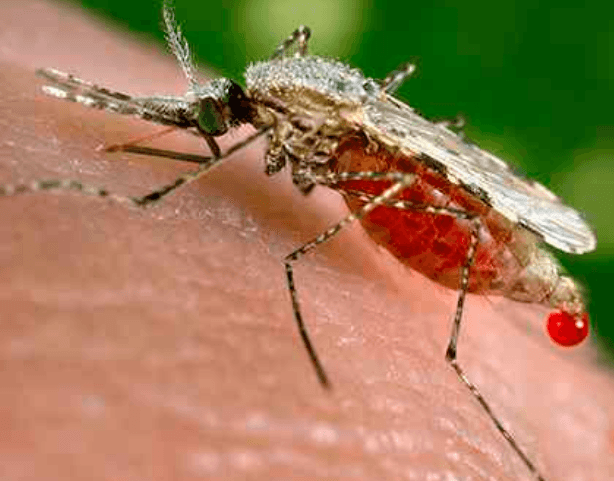
Anopheles stephensi — urban‐adapted malaria vector transmitting both Plasmodium falciparum & P. vivax.

Native to South Asia–Arabian Peninsula; now invading African nations and Indian metros (e.g., Delhi).

Breeds in artificial water containers within dense urban & peri-urban settings.

Quick Facts for MCQs

Urban Health Impact

  • Urbanisation creates perennial breeding sites, shifting malaria burden from rural to metropolitan zones.
  • High population density escalates transmission potential and outbreak scale.
  • Similar container habitats overlap with dengue vectors, complicating disease differentiation.

Control Challenges

  • Surveillance needs micro-mapping of construction sites, roof tanks, service lanes.
  • Requires multi-agency coordination: health, municipal, construction, water boards.
  • Conventional rural vector strategies less effective against container breeders.

Malaria Elimination Targets

  • Rapid spread jeopardises National Framework goal of elimination by 2030.
  • Urban resurgence threatens interim milestone of zero indigenous cases by 2027.
  • Failure may stall India’s contribution to global malaria reduction metrics.

Key Data Points

FeatureData-Point
Vector typeMalaria-transmitting Anopheles mosquito
Parasites carriedPlasmodium falciparum & P. vivax
Native rangeSouth Asia & Arabian Peninsula
Recent spreadMultiple African countries; Indian cities
Preferred habitatUrban, peri-urban man-made containers
Typical breeding sitesOverhead tanks, tyres, construction pits, storage vessels
India’s malaria targetsZero indigenous 2027; elimination 2030
GS-3Editorial

9.Human Thought Versus Algorithms (AI Ethics)

DD News

What & Where

Applied-ethics field examining AI/automation impact on human thought, agency, morality

Debate occurring across global academia, policy fora, tech industry as intelligent systems proliferate

Core issue: human intentional, reflexive cognition versus algorithmic, instrumental computation

Quick Facts for MCQs

Philosophical Foundations

  • Autonomy grounds personhood in Kantian ethics, not information processing
  • Reflexive agency enables belief evaluation, prerequisite for moral duty
  • Dignity, equality, justice are philosophical constructs underpinning legal rights

Decline Drivers

  • Market-led education values economic utility, sidelines reflective disciplines
  • Hyper-specialisation fragments knowledge, devalues slow conceptual synthesis
  • Ideological absolutism fills vacuum when philosophical skepticism recedes

Ethical Necessity

  • Frameworks like utilitarian, deontological, virtue ethics guide action amid uncertainty
  • Critical rationality counters misinformation, algorithmic persuasion, propaganda
  • Philosophy supplies meaning and purpose beyond computational efficiency

Tech Challenges

  • Autonomous systems complicate allocations of intent, liability, accountability
  • Algorithmic bias, opacity demand scrutiny of fairness, consent, distributive justice
  • Digital echo chambers revive concerns over language, truth, public discourse integrity

Key Data Points

FeatureData-Point
Cartesian cogitoSelf-conscious thought as indubitable proof of existence
IntentionalityDirectedness of consciousness, basis of moral responsibility
Normative reasoningHuman capacity to ask what ought to be
Instrumental rationalityAI focus on means optimisation, not moral ends
PhronesisPractical wisdom losing ground to technical expertise
Technocratic biasPolicy driven by data metrics, ethics sidelined
GS-2Mapping

10.Somaliland De Facto State (Horn of Africa)

TG
Illustration for Somaliland De Facto State (Horn of Africa)

What & Where

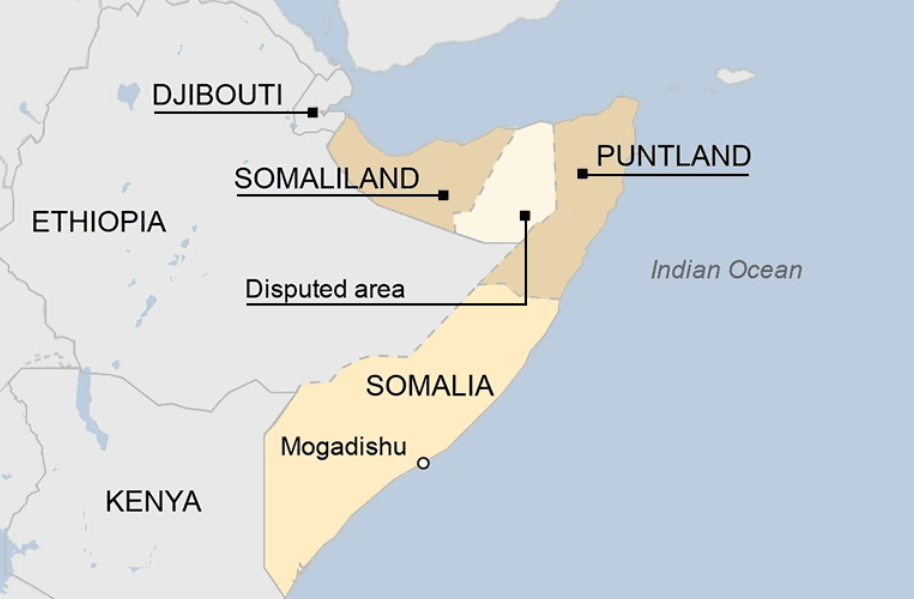
Somaliland: self-declared Horn of Africa state, broke from Somalia in 1991 after central-government collapse.

Geography: occupies former British Somaliland; coast on Gulf of Aden; borders Djibouti, Ethiopia, Puntland/Somalia.

Status: runs own government, currency, security forces; lacked recognition till Israel’s 2025 move.

Quick Facts for MCQs

Historical Timeline

  • 1888 protectorate establishment; 1960 independence & merger; 1991 unilateral secession; 2001 referendum validates stance.
  • 2025 Israeli recognition ends global non-recognition streak.
  • AU, Somalia immediately contest Israeli move.

Governance & Institutions

  • Maintains multi-party elections, separate judiciary, own security forces ensuring relative stability.
  • Issues Somaliland shilling; collects taxes; controls ports like Berbera.
  • Peace levels notably higher than federal Somalia regions.

Diplomatic & Security Dimension

  • Recognition risk: potential regional instability, AU precedent worries, Somali nationalism revival.
  • Israel may seek Red Sea strategic foothold; Gulf states, Ethiopia monitoring.
  • Somalia vows diplomatic push to reverse recognition; appeals to UN, Arab League.

Key Data Points

FeatureData-Point
Colonial originBritish protectorate (1888-1960)
1960 actionVoluntary union with Italian Somaliland forming Somali Republic
Year of breakaway1991 after Siad Barre overthrow
2001 referendum result97 % endorsed independence
Coastline waterbodyGulf of Aden
Capital & largest cityHargeisa
CurrencySomaliland shilling
First recogniserIsrael (2025)
AU / UN stanceNo recognition; Somalia’s territorial claim upheld
Neighbouring statesDjibouti, Ethiopia, Somalia (incl. Puntland)
GS-2Mapping

11.UN Blue Line Boundary (Israel-Lebanon Border)

UN
Illustration for UN Blue Line Boundary (Israel-Lebanon Border)

What & Where

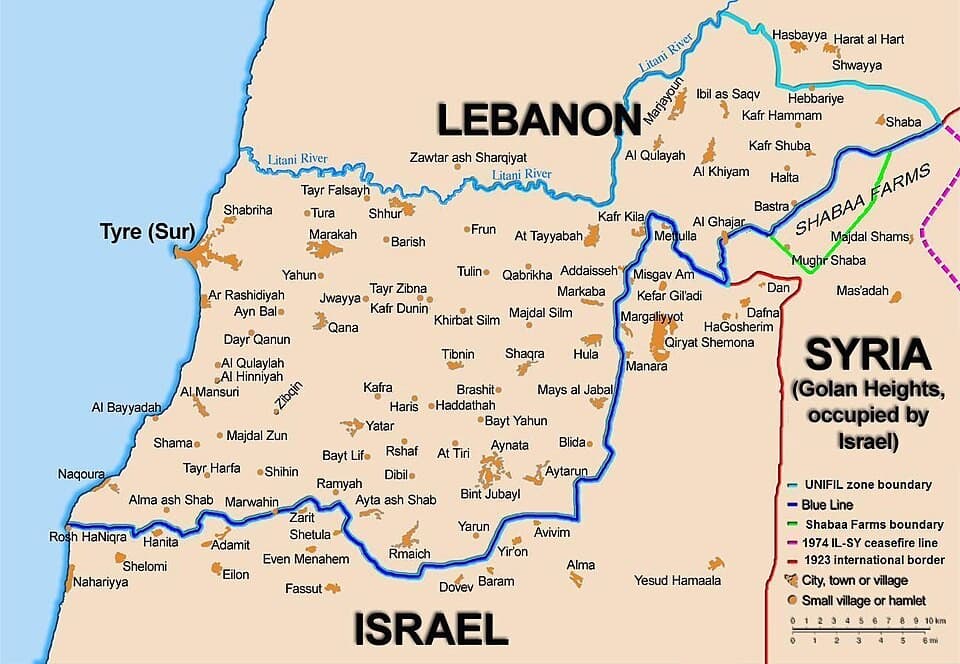
UN-identified withdrawal line, not an international border, verifying Israel’s 2000 pull-out per UNSC-425.

Runs ~120 km, Mediterranean coast → tri-border junction near Golan Heights.

Separates southern Lebanon from northern Israel; also abuts Israeli-occupied Golan Heights (Syria).

Quick Facts for MCQs

Legal & Policy

  • Unofficial boundary; no treaty-recognised international border status.
  • Sole purpose: verify Israeli withdrawal compliance under UNSC-425.
  • UNSC-1701 mandates weapons-free belt up to Litani River.

UN Oversight

  • UNIFIL conducts continuous land and maritime patrols along barrels marking GPS-fixed line.
  • Cartographers adjust coordinates only after Israel-Lebanon concurrence.
  • Peacekeeping force authorised to use force for mandate protection.

Security Dimension

  • Line is a flashpoint for Hezbollah–IDF skirmishes and drone intrusions.
  • Jan 2024: UNIFIL peacekeeper injured by gunfire from Israeli positions.
  • Violations frequently triggered by wall building, surveillance towers, shepherd movements.

Key Data Points

FeatureData-Point
Establishing year2000
Primary UNSC resolution425 (1978)
Reinforcing resolution1701 (2006)
Total length~120 km
Western terminusMediterranean Sea
Buffer zone spanBlue Line → Litani River
Forces allowed in zoneLebanese Army, UNIFIL
UN peacekeeping missionUNIFIL
Typical violationsCross-border firing, construction intrusions
Involved states/territoriesLebanon, Israel, Golan Heights (Syria)

Related UPSC Prelims PYQs

GEO_GS 2024PYQ 1

Which of the following statements about the ‘Blue Line’ is correct?

GS-3Security

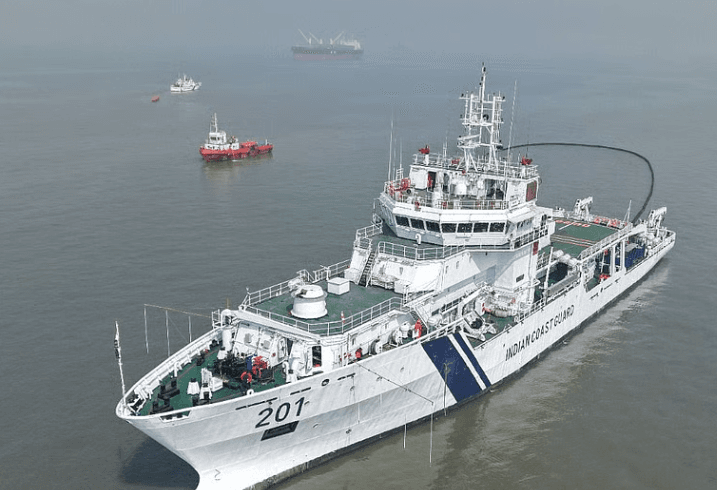
12.RPREX-2025 Oil Spill Drill (Oil Spill Drill)

FPJ
Illustration for RPREX-2025 Oil Spill Drill (Oil Spill Drill)

What & Where

RPREX-2025: regional-level maritime drill simulating major oil-spill response under National Oil Spill Disaster Contingency Plan.

Two-phase process: tabletop planning then live sea deployment of pollution-control assets.

Theatre: Arabian Sea off Mumbai coast, Maharashtra.

Quick Facts for MCQs

Operational Design

  • Two-phase structure ensures sequential testing of planning, communication, and field deployment.
  • Live sea stage evaluates skimming rates, boom deployment, dispersant spraying efficacy.
  • Exercise frequency aligns with ICG mandate to audit national spill readiness every 2 years.

Stakeholder Matrix

  • Multi-agency integration facilitates unified command between maritime, state, and private oil stakeholders.
  • Port contingency plans synchronised with coastal police for shoreline defence.
  • ONGC participation tests offshore installation emergency interfaces.

Environmental Angle

  • Mangrove belt shielding assessed for rapid boom placement near sensitive creeks.
  • Fisheries impact modelling embedded to secure coastal livelihoods.
  • Exercise data feed into updating Sensitive Environmental Index Maps.

Security & Economy

  • Rapid spill containment averts port closure, preserving trade flow via Mumbai harbour.
  • Successful drills bolster investor confidence in offshore hydrocarbon operations.

Key Data Points

FeatureData-Point
Full nameRegional Level Pollution Response Exercise 2025
Lead organiserIndian Coast Guard (ICG)
Key partnerOil & Natural Gas Corporation (ONGC)
Validation targetNational Oil Spill Disaster Contingency Plan
Exercise venueOff Mumbai coast, Arabian Sea
ScenarioTanker–fishing boat collision causing crude-oil spill
PhasesI-Planning/lectures/tabletop; II-Live sea exercise
Core assetsPollution Control Vessels, skimmers, containment booms
Shore focusMangrove protection & coastal livelihood security
Participating entitiesPort authorities, oil firms, coastal police, state agencies

Related UPSC Prelims PYQs

GEO_GS 2025PYQ 1

Naseem-Al-Bahr, held in October 2024, was a joint maritime exercise between the navies of India and

GS-1Social Issues

13.Child Marriage Prevalence and Law (Child Marriage Law)

The Hindu

What & Where

Definition: Child marriage = union where either spouse is < 18 yrs, violating rights to health, education, autonomy

Scale: India records ~1.5 million such marriages yearly, highest absolute global burden

Hotspots: Bihar, Andhra Pradesh, Rajasthan, parts Madhya Pradesh show persistently elevated prevalence

Quick Facts for MCQs

Historical Evolution

  • Colonial-reform: Raja Ram Mohan Roy, Ishwar Chandra Vidyasagar campaigned against early unions
  • Sarda-Act1929: fixed minimum age; enforcement remained weak
  • PCMA2006: makes marriage voidable, prescribes jail/fine, appoints Prohibition Officers

Prevalence Trends

  • NFHS: rate fell from 47 % to 27 % between 2005-06 and 2015-16
  • Current-level: 16 % of girls aged 15-19 are married
  • Hotspots: Bihar, Andhra Pradesh, Rajasthan continue above-national average figures

Drivers

  • Poverty: poorest wealth quintile shows markedly higher child-marriage incidence
  • Gender-norms: patriarchy views girls as paraya dhan, hastening marriage over schooling
  • School-dropout: limited secondary access, safety fears elevate vulnerability; completion sharply lowers risk

Enforcement Gaps

  • Convictions: negligible; lengthy case pendency blunts deterrence
  • Capacity: Prohibition Officers often hold additional duties, lack specialised training
  • Family-complicity: secret mass ceremonies and informal betrothals evade legal scrutiny

Mitigation Strategies

  • Education-incentives: conditional cash transfers tied to girls’ secondary attendance postpone marriage age
  • Economic-aid: cash-plus, skill schemes reduce poverty-driven marriage decisions
  • Community-action: panchayats, faith leaders, “Child Marriage-Free” village pledges foster norm change

Key Data Points

FeatureData-Point
Legal age (girls/boys)18 yrs / 21 yrs
First statute (Sarda Act)1929
Present lawProhibition of Child Marriage Act, 2006
Girls 15-19 currently married16 %
Prevalence drop 2005-06→2015-1647 % → 27 %
Annual child marriages in India~1.5 million
SDG target to end practice2030
States with high incidenceBihar, A.P., Rajasthan, M.P.
GS-1MiscQuick Bite

14.India Leads Global Doping Violations (Anti-Doping Oversight)

Times of India
Illustration for India Leads Global Doping Violations (Anti-Doping Oversight)

What & Where

Doping violations: athlete use of substances/methods on annually updated WADA Prohibited List

World Anti-Doping Agency: global watchdog founded 1999 by IOC to harmonise anti-doping worldwide

National Anti-Doping Agency: Indian body set up 2005 to run domestic Anti-Doping Programme

Quick Facts for MCQs

International Rankings

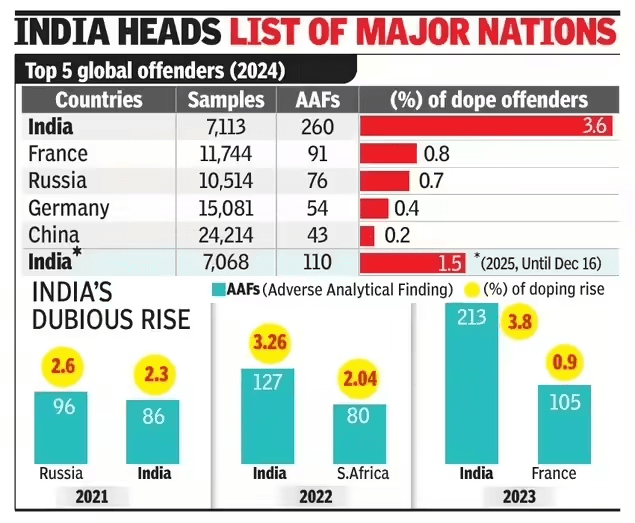
  • India leads with record 260 violations in 2024
  • France, Italy, Russia, USA trail at 91, 85, 76 each
  • Germany 54; China 43 complete top offenders list

Governance & Policy

  • WADA funding model: equal partnership between governments and global sport movement
  • World Anti-Doping Code harmonises rules across all sports and nations
  • Prohibited List updated yearly; applies in-competition, out-of-competition, sport-specific

Future Sports Bids

  • IOC flagged India’s doping record during 2030 Commonwealth Games feasibility review
  • Similar concerns noted in India’s 2036 Olympic bid assessment

Key Data Points

FeatureData-Point
India 2024 doping violations260 (highest)
India global rank 20241st for 3rd straight year
France 2024 violations91
Italy 2024 violations85
Russia & USA 202476 each
Germany 2024 violations54
China 2024 violations43
WADA founding year1999 (by IOC)
WADA core documentWorld Anti-Doping Code
NADA establishment year2005
GS-1Social Issues

15.Rabies Burden and Control (Rabies Burden)

The Hindu

What & Where

Rabies – viral, zoonotic Lyssavirus infection; 100 % fatal once clinical symptoms begin

Transmission via saliva from dog bites/scratches; prevention through prompt wound wash, vaccine, Rabies Immunoglobulin (RIG)

India – endemic hotspot; ≈ 20 000 deaths yearly (⅓ global); free-roaming dogs primary reservoir

Quick Facts for MCQs

Epidemiology & Demography

  • Burden concentrated among poor, marginalised rural-peri-urban populations lacking timely care
  • Children frequent victims owing to play behaviour, shorter height, delayed reporting
  • High turnover of stray dogs sustains viral circulation despite sporadic neuter-vaccinate drives

Prevention & Treatment

  • Immediate 15-min soap-water wash removes 90 % surface virus, critical step in PEP chain
  • Full ARV schedule plus RIG/monoclonal antibodies for Category III exposures prevents disease progression
  • Mass 70 % dog vaccination coverage recognised as most cost-effective human protection strategy

Policy & Programmes

  • National Rabies Control Programme under NHM funds free ARV & RIG in public facilities, IEC, training
  • Integrated Health Information Platform enables real-time reporting of bites, deaths across states
  • Supreme Court 2025 order asked states to remove strays from public institutions, sparking welfare debate

Economic Angle

  • Estimated global loss US $8.6 bn annually; PEP cost catastrophic for low-income households
  • High RIG price and patchy supply deter compliance, fuelling fatality
  • Mass dog vaccination cheaper long-term than human PEP burden

Key Data Points

FeatureData-Point
Global deaths/yr~59 000
India share~20 000 (≈ 33 %)
Dog bites India/yr~20 million
Child share (<15 yr)≈ 40 % cases
Dog contribution99 % human cases
Incubation2–3 months average
Case-fatality post-symptomsAlmost 100 %
ARV non-receipt India> 20 % bite victims
Incomplete vaccine courses≈ 50 % victims
RIG cost range₹5 000–₹20 000
Annual dog population turnover~40 %
WHO global targetZero dog-mediated deaths by 2030

Ready to practice?

Test your knowledge with our UPSC test series.

Start Free Trial