UPSC Current Affairs

14 topicsGS-1: 2GS-2: 4GS-3: 8
0/14 done
GS-2Polity

1.SHANTI Nuclear Energy Bill (Nuclear Governance)

PRS

What & Where

Nuclear energy: electricity via controlled fission of uranium-235/plutonium-239 in pressurised heavy-water, light-water or fast reactors

Process chain: ore mining, fuel fabrication, reactor operation, interim spent-fuel storage, eventual reprocessing/disposal

Indian clusters: Western coast Tarapur–Kakrapar–Jaitapur, Southern coast Kudankulam–Kalpakkam, Northern inland Rawatbhata

Quick Facts for MCQs

Legal & Policy

  • Provision: SHANTI Bill permits build-own-operate licences for private, including foreign-equity, players
  • Alignment: Mirrors global open-market models to access technology, finance, supply chains
  • Territoriality: Bill extends compensation regime to nuclear damage occurring abroad under set conditions

Liability Structure

  • Tiered-cap: Four slabs linked to reactor MW rating, max ₹3,000 cr operator liability
  • Government-backstop: Any damages beyond cap automatically shift to Consolidated Fund
  • Critique: Low caps plus no supplier liability seen as dilution of polluter-pays principle

Regulatory Framework

  • Upgrade: AERB becomes statutory body with licensing, safety, radiation control powers
  • Autonomy concern: Appointment and budget remain under executive, risking regulatory capture
  • Appellate layering: New Advisory Council offers first appeal, then Tribunal for Electricity

Environmental & Social Concerns

  • Waste gap: Bill silent on ring-fenced decommissioning and high-level waste fund
  • Labour issue: Private entry may boost contract labour, heightening occupational exposure risks
  • Justice lens: Critics recall Bhopal, Fukushima urging stronger criminal negligence provisions

Key Data Points

FeatureData-Point
Full nameSustainable Harnessing and Advancement of Nuclear Energy for Transforming India Bill 2025
Replaces ActsAtomic Energy Act 1962; Civil Liability for Nuclear Damage Act 2010
Ownership changeLicences open to private firms, JVs, other non-govt entities
Operator liability cap₹100 cr (small) to ₹3,000 cr (large)
Excess liabilityCentral Government bears amount above operator cap
Supplier liabilityRight of recourse removed except contractual/fraud cases
Regulator statusAERB granted statutory recognition under the Bill
Appellate pathAtomic Energy Redressal Advisory Council → Appellate Tribunal for Electricity
Foreign damage claimsCompensation admissible for trans-boundary nuclear damage
Targeted capacity driverAims enabling scale-up towards ~100 GW nuclear by 2047

Related UPSC Prelims PYQs

GS1, NDA_GAT 2025PYQ 1

The Joint Venture named ‘ASHVINI’ to develop nuclear power facility in India is between

GS1, NDA_GAT 2020PYQ 2

In India, why are some nuclear reactors kept under “IAEA Safeguards” while others are not?
GS-2Polity

2.Sabka Bima Insurance Reform Bill (Insurance Sector Reform)

Indian Express
Illustration for Sabka Bima Insurance Reform Bill (Insurance Sector Reform)

What & Where

Definition: Sabka Bima, Sabki Raksha (Amendment of Insurance Laws) Bill 2025 allows 100 % foreign ownership in Indian insurers

Process: updates Insurance Act 1938, LIC Act 1956 & IRDA Act 1999; liberalises reinsurance, strengthens regulator powers

Geography: applies nationwide; targets “Insurance for All by 2047” in India’s 10th-largest global insurance market

Quick Facts for MCQs

Legal & Policy

  • IRDAI powers: search, seize records, deploy officers, impose penalties, ensure stricter compliance across insurers
  • Policyholders’ Fund: finances awareness; data protection aligned with DPDP Act 2023
  • LIC autonomy: open new zonal offices sans government nod

Economic Angle

  • Capital: 100 % FDI expected to draw long-term global funds, technology, innovation
  • Scale: premiums jumped Rs 4.15 L cr → 11.93 L cr between 2014-25
  • Reinsurance: liberal norms aim to make India a regional risk-pooling hub

Social Concerns

  • Foreign dominance fear: profit repatriation, urban bias, rural neglect risk
  • Trust gap: citizens favour state insurers; mis-selling and delays erode confidence
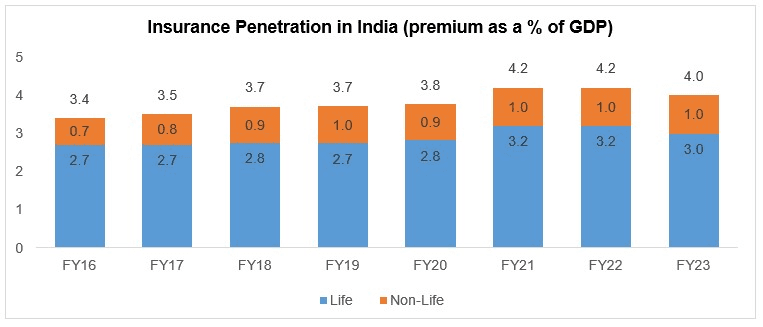
  • Coverage gap: rural, gig workers, MSMEs mostly uninsured; general penetration only 1 % GDP

Tech & Schemes

  • Digital stack: Aadhaar, e-KYC, UPI enable faster onboarding, premium collection, claim settlement
  • RegTech/SupTech: real-time compliance, fraud analytics, personalised underwriting promoted
  • Flagship schemes: PM-JAY, PMJJBY, PMSBY plus JAM trinity widening risk cover

Key Data Points

FeatureData-Point
New FDI limit100 %
Earlier FDI ceiling74 %
Foreign reinsurance NOFRs 1,000 cr (down from 5,000 cr)
Insurance penetration FY234.0 % of GDP
General insurance density FY23USD 25 per capita
Global rank (premium)10th now; 6th projected 2032
Total insurers 2024-2574
LIC life market share~60 %
GS-3Economy

3.Unified RRB Logo Initiative (RRB Branding)

PIB
Illustration for Unified RRB Logo Initiative (RRB Branding)

What & Where

Definition: regional rural banks providing credit and banking in rural and semi-urban India

Initiative: One RRB One Logo standardises branding post nationwide amalgamations

Coverage: present across India through 28 consolidated RRBs spanning multiple states and UTs

Quick Facts for MCQs

Branding Initiative

  • Logo: single emblem adopted by all 28 RRBs for unified identity
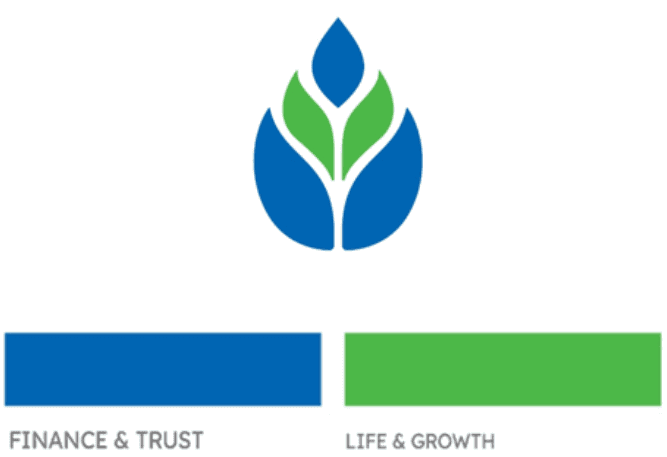
  • Symbolism: arrow progress, hands nurturing, flame enlightenment, colours dark blue trust green agriculture
  • Launch: unveiled jointly by Finance Ministry and NABARD 2024

Legal & Policy

  • Act: Regional Rural Banks Act 1976 formalised institutions created in 1975 Ordinance
  • Ownership: Centre 50 %, State 15 %, Sponsor commercial bank 35 %
  • Regulation: RBI regulator, NABARD supervisor and promoter

Consolidation Trend

  • Policy: One State One RRB guiding amalgamations since 2005
  • Scale: 196 RRBs compressed to 43 then 28 targeted by 2025

Development Role

  • Credit: priority lending to small farmers, labourers, artisans, SHGs, rural entrepreneurs
  • Inclusion: frontline for DBT, PMJDY, other government benefit delivery in villages
  • Focus: agriculture, allied activities, MSMEs, rural livelihoods support

Key Data Points

FeatureData-Point
Launch agenciesGoI Finance Ministry & NABARD
Initiative tag lineOne RRB, One Logo
Logo elementsArrow, hands, flame
Arrow meaningProgress of rural economy
Dark blue colourTrust, stability, finance
Green colourAgriculture, growth, life
Establishment year1975; Act 1976
Ownership shareCentre 50 % ; State 15 % ; Sponsor 35 %
RegulatorRBI
SupervisorNABARD
Current RRB count28 (target by 2025)

Related UPSC Prelims PYQs

GS1 2013PYQ 1

Which of the following grants/grant direct credit assistance to rural households?

GS1 2010PYQ 2

With reference to India, consider the following :

GS-3Economy

4.Corporate Bond Market Deepening (Corporate Bonds)

PIB

What & Where

Definition Corporate bond market = platform where companies issue debt securities directly to investors for medium-long term funding

Key processes Public issuance via exchanges, 98 % private placements, secondary trading largely OTC

Geography India; size Rs 53.6 trn (FY25) yet only 15-16 % of GDP

Quick Facts for MCQs

Market Size & Composition

  • Concentration Insurance, pension funds adopt buy-and-hold, curbing liquidity
  • MSME presence negligible, foreign portfolio investor interest limited by hedging costs
  • Bank credit parity reached, yet bond issuance skewed to large corporates

Key Challenges

  • Regulation Overlap among SEBI, RBI, MCA inflates compliance cost and time
  • Mandates Insurer and pension rules cap investment below AA, starving lower-rated firms
  • Tax & cost High listing fees, TDS on interest, unequal capital-gains treatment reduce appeal

Recent Reforms

  • RBI tools Tri-party repo, VRR, Retail Direct, Partial Credit Enhancement launched
  • Government moves IBC enacted, CDMDF set up, municipal bond push under AMRUT 2.0
  • Parliamentary panel seeks 3-month NCLAT limit, clearer valuer definitions, multiple resolution plans

Proposed Roadmap

  • Phase I (1-2 yr) Streamline rules, digitise retail access, AI credit scoring pilots, faster IBC timelines
  • Phase II (2-4 yr) Introduce covered bonds, SME platforms, relax insurer/pension diversification caps
  • Phase III (4-6 yr) Unified regulator, blockchain settlement, Euroclear linkage to attract stable foreign capital

Key Data Points

FeatureData-Point
Market size FY15Rs 17.5 trn
Market size FY25Rs 53.6 trn
10-yr CAGR~12 %
Share of GDP15-16 %
Global peersSouth Korea 79 %, Malaysia 54 % of GDP
Private placement share98 % of issuances
Retail investor share< 2 %
Secondary turnover ratio0.3
Top rating dominanceAAA/AA bulk
Resolution average713 days vs 330-day mandate
Target size 2030Rs 100-120 trn

Related UPSC Prelims PYQs

GS1 2021PYQ 1

भारत के संदर्भ में, निम्नलिखित कथनों पर विचार कीजिए :

GS1 2024PYQ 2

निम्नलिखित कथनों पर विचार कीजिए :

GS-1Environment

5.El Niño Climate Event (ENSO Phenomenon)

Down to Earth
Illustration for El Niño Climate Event (ENSO Phenomenon)

What & Where

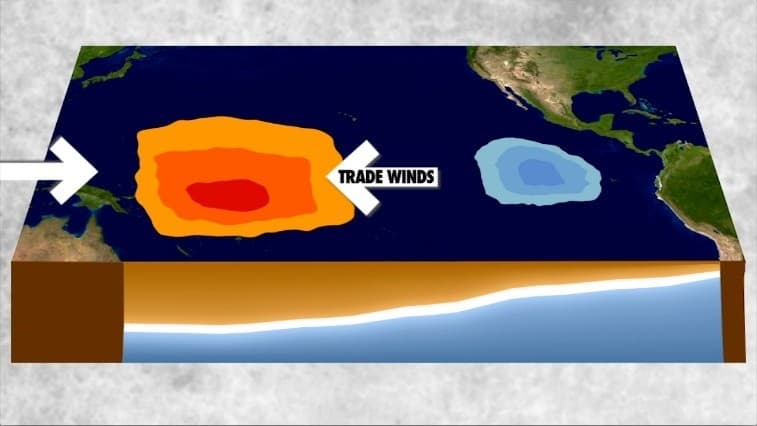
El Niño = warm ENSO phase; abnormal SST rise in eastern-central equatorial Pacific (~5° N–5° S, 120° W–170° W).

Appears irregularly every 2–7 yrs, shifting heat eastward, altering Walker Circulation.

Typically elevates annual global mean temperature, influencing monsoons, floods, droughts worldwide.

Quick Facts for MCQs

Formation Mechanics

  • Weakened trade winds push warm western-Pacific water east toward South America.
  • Deepened eastern-Pacific thermocline halts nutrient-rich cold upwelling.
  • Ocean-atmosphere coupling triggers Southern Oscillation pressure reversal.

Diagnostic Indicators

  • SST anomalies ≥ +0.5 °C recorded in Niño 3.4 for 5 tri-monthly periods.
  • Subsurface heat build-up detected via 100-250 m warm pool.
  • Walker Circulation weakening tracked by zonal wind anomalies and SOI drop.

Global Impacts

  • Temperature: many warmest years coincide with moderate-strong El Niños (e.g., 1998, 2016).
  • South America: heavy rains, floods, coastal erosion episodes during peak.
  • Australia–SE Asia: droughts, heatwaves, wildfire upticks under El Niño influence.

India Outlook

  • Southwest monsoon historically weak in strong El Niño years; increases drought probability.
  • Agriculture, hydropower and food inflation vulnerable to ENSO-driven rainfall deficits.

Contributing Factors

  • Subsurface heat content magnitude modulates event strength/duration.
  • Background global warming can intensify SST anomalies and broaden impact zone.

Key Data Points

FeatureData-Point
Periodicity2–7 years
ONI El Niño cut-off≥ +0.5 °C for 5 overlapping 3-month means
Key Niño boxes1+2, 3, 3.4, 4
Subsurface warm pool depth100–250 m
Trade-wind statusWeakens or reverses along equator
Thermocline changeDeepens in eastern Pacific, suppresses upwelling
Typical global temp effectAdds ~0.1 °C to annual average
Indian monsoon linkHigher drought/deficit risk during El Niño years
Return signalledModels hint possible 2026 event

Related UPSC Prelims PYQs

GS1 2002PYQ 1

For short-term climate prediction, which one of the following events, detected in the last decade, is associated with occasional weak monsoon rains in the Indian sub-continent?

GS1 2011PYQ 2

La Nina is suspected to have caused recent floods in Australia. How is La Nina different from El Nino ?

GS-1Mapping

6.Andhra Rare Earth Corridor (Critical Minerals)

Times of India
Illustration for Andhra Rare Earth Corridor (Critical Minerals)

What & Where

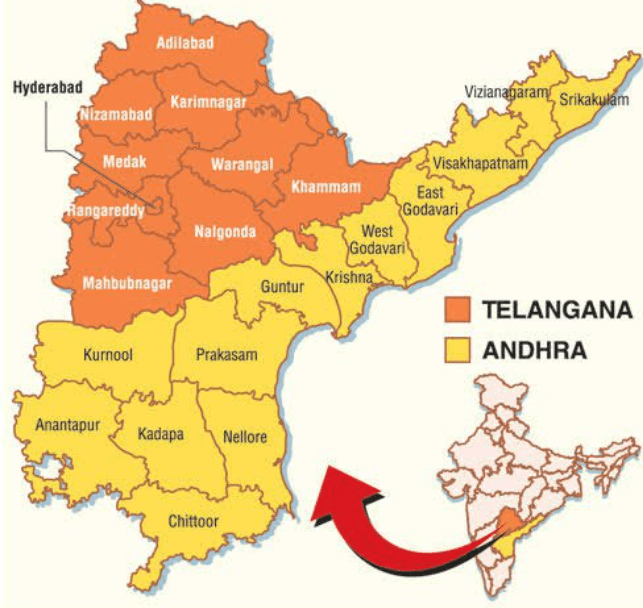
Continuous beach-sand belt rich in monazite-heavy minerals; rated a top under-utilised critical-mineral zone.

Runs 974 km along Andhra coast, Srikakulam→Nellore; key stretches Bhimunipatnam, Kakinada, Machilipatnam, Ramayapatnam, Dugarajapatnam.

Monazite contains 55-60 % rare-earth oxides, 8-10 % thorium; hosts light REEs – Nd, Pr, La, Ce.

Quick Facts for MCQs

Resource Profile

  • Monazite hosts complete light-REE suite vital for NdFeB permanent magnets.
  • Corridor listed as critical-mineral zone under national inventory.
  • Sand additionally bears other heavy minerals, boosting export potential.

Tech & Schemes

  • PLI incentives target REE magnets, electronics, clean-tech value chains.
  • NCMM pushes mining-waste recovery, permitting wider private participation.
  • IREL separation units feed processed oxides to semiconductor, defence industries.

Strategic Uses

  • REE magnets enable EVs, wind turbines, solar tracker motors.
  • Thorium stock underpins Generation-IV nuclear reactor roadmap.
  • Indigenous REE supply cuts defence import dependence for missiles, satellite optics.

Key Data Points

FeatureData-Point
Coastline length974 km
Monazite share30–35 % of India
Rare-earth oxide content55–60 %
Thorium content8–10 %
Key processing plantIREL Gudur, Nellore
Support schemesPLI, National Critical Mineral Mission
Major applicationsEV magnets, wind turbines, missiles, chips, thorium reactors
Prominent beach sitesBhimunipatnam, Kalingapatnam, Kakinada, Narsapur, Machilipatnam, Chirala, Vodarevu

Related UPSC Prelims PYQs

GS1 2022PYQ 1

With reference to India, consider the following statements :

GS1 2009PYQ 2

Consider the following statements :

GS-3Species

7.Erivan Anomalous Blue Butterfly (Endemic Butterfly)

Down to Earth
Illustration for Erivan Anomalous Blue Butterfly (Endemic Butterfly)

What & Where

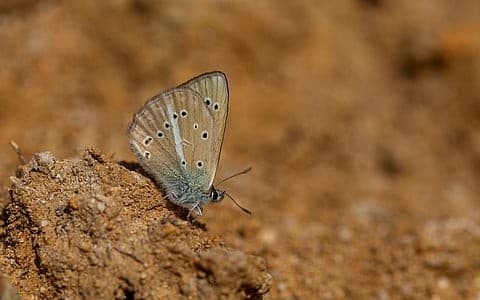
Endemic species Erivan Anomalous Blue Polyommatus eriwanensis inhabits Armenian calcareous grasslands 1 200–2 200 m elevation

Lifecycle single annual generation adults fly mid-June to mid-July host plant unknown

COP-17 Convention on Biological Diversity scheduled Yerevan Armenia October 2026

Quick Facts for MCQs

Conservation Status

  • Listing Not on global or European IUCN lists yet Endangered nationally
  • Protection Range overlaps Khosrov Forest State Reserve and Gnishik Protected Landscape
  • Vulnerability Narrow distribution and unidentified host plant heighten extinction risk

Logo Significance

  • Emblem Butterfly showcases Armenian biodiversity aligning with CBD goals
  • Colours Twenty-three blended shades represent interlinked Kunming-Montreal targets
  • Messaging Reinforces host nation commitment to mainstream nature globally

Biological Traits

  • Habitat Prefers sunny calcareous grasslands with scattered shrubs
  • Phenology Univoltine adults visible roughly four weeks annually
  • Indicator Butterflies act as rapid markers of grassland ecosystem health

Key Data Points

FeatureData-Point
Scientific namePolyommatus eriwanensis
Common nameErivan Anomalous Blue
Endemic regionSouthern Transcaucasia Armenia
Global IUCN listingNot assessed
Armenian statusEndangered Red Book 2010
Elevation range1 200–2 200 m
Adults activeMid-June – Mid-July
Larval host plantUnknown
Protected areas overlapKhosrov Forest Reserve; Gnishik Protected Landscape
COP-17 host cityYerevan
COP-17 scheduleOctober 2026
COP-17 themeTaking action for nature
Logo colours count23
CBD treaty year1992

Related UPSC Prelims PYQs

CDS_GK 2023PYQ 1

Which butterfly species was recently named the official butterfly of Jammu and Kashmir?

GS-3EnvironmentQuick Bite

8.Inhalable Urban Microplastics (Airborne Microplastics)

The Hindu
Illustration for Inhalable Urban Microplastics (Airborne Microplastics)

What & Where

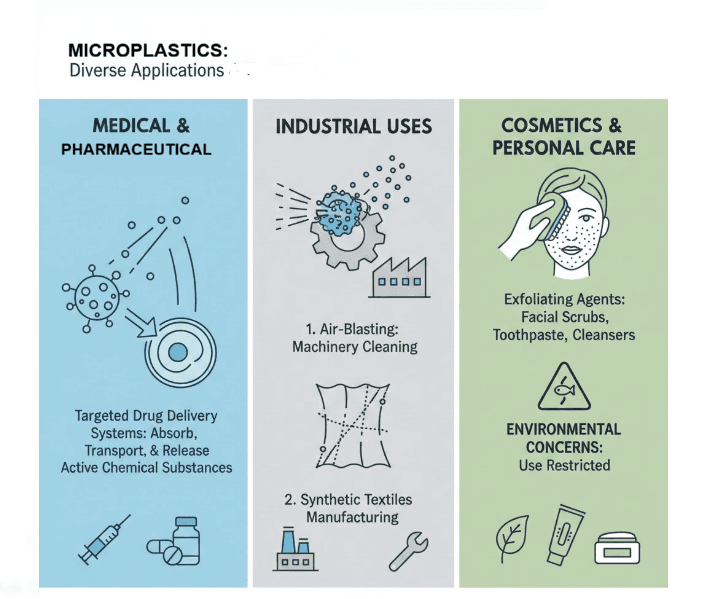
Inhalable microplastics: airborne plastic particles < 10 µm, penetrate deep lung tissue

Study sites: five busy markets across Delhi, Mumbai, Kolkata, Chennai (2025 Environment International)

Origins: tyre and brake wear, synthetic fibres, plastic packaging, open waste burning

Quick Facts for MCQs

Health Risks

  • Penetration: particles reach alveoli, bypass mucociliary clearance
  • Trojan-horse effect: heavy metals and endocrine disruptors hitchhike increasing toxicity
  • Potential outcomes: hormonal imbalance, carcinogenesis, drug-resistant respiratory infections

Study Insights

  • Novel pollutant: first quantified airborne microplastics across Indian metros
  • Urban exposure: chronic inhalation confirmed at human breathing height
  • Methodology: high-volume air samplers, Raman spectroscopy for polymer identification

Sources & Drivers

  • Transport: tyre and brake abrasion dominant contributor
  • Lifestyle: fast fashion polyester sheds fibres during wear and wash
  • Waste: open burning and litter fragmentation exponentially raise microplastic load

Regulatory Gap

  • AQI omission: current index ignores <10 µm plastic particles
  • Monitoring: CPCB stations lack polymer-specific sensors
  • Policy need: integrate microplastics into National Clean Air Programme targets

Key Data Points

FeatureData-Point
Particle size cut-off< 10 µm (inhalable range)
Mean daily inhalation≈ 132 µg per urban resident
Cities with highest loadDelhi and Kolkata
Dispersion advantageCoastal winds in Mumbai, Chennai
Key co-pollutants carriedLead, Cadmium, Phthalates
Detected microbesAspergillus fumigatus with antibiotic-resistance genes
Gravitational settlingVery low; long atmospheric residence
Present AQI coverageNot included in PM₂.₅/PM₁₀ indices
Primary sourcesTyre wear > plastic packaging > waste mismanagement
Relevant Indian rulesPlastic Waste Management (Amnd.) Rules 2024; Single-Use Plastic ban

Related UPSC Prelims PYQs

GS1 2019PYQ 1

पर्यावरण में निष्क्रिय हो जाने वाली ‘सूक्ष्ममणिकाएँ’ (Micro-beads) के विषय में अत्यधिक चिंता क्यों है?

GS1 2022PYQ 2

WHO के वायु गुणवत्ता दिशानिर्देशों के संदर्भ में, निम्नलिखित कथनों पर विचार कीजिए :

GS-3S&T

9.Agentic AI Systems (AI Agents)

WEF
Illustration for Agentic AI Systems (AI Agents)

What & Where

Definition: autonomous, goal-oriented AI systems executing multi-step tasks with minimal human oversight

Composition: one or many LLM-powered agents coordinated via AI orchestration for specialised subtasks

Context: operates in dynamic, real-time environments across enterprise, robotics, finance, healthcare, logistics

Quick Facts for MCQs

Functional Flow

  • Perception: gathers real-time data from sensors, databases, internet
  • Reasoning: analyses multimodal inputs to grasp context and objectives
  • Action: selects optimal tool/API, executes, then learns from outcome

Key Features

  • Autonomy: executes multi-step tasks sans continuous human input
  • Proactivity: initiates actions, monitors conditions, adapts to change
  • Specialisation: hierarchical or horizontal agent arrangement for subtasks

Significance & Applications

  • Productivity: reduces cognitive and operational load on human workforce
  • Scope: enables complex workflow automation beyond mere content creation
  • Adoption: rising in software development, finance risk checks, clinical decision support

Learning & Coordination

  • Feedback: integrates results to refine future plans and decisions
  • Collaboration: multiple agents synchronise via orchestration layer for efficiency

Key Data Points

FeatureData-Point
Core driverLarge Language Models (LLMs)
Key abilitiesReason, decide, act, learn
Interaction modeNatural language interface
Environment inputUsers, sensors, APIs, internet
Planning stepSets clear goals, sequences actions
Feedback loopReviews outcomes, self-improves
Autonomy levelEnd-to-end workflow automation
Sector reachEnterprise ops, dev-ops, robotics, finance, healthcare
GS-3S&T

10.DHRUV64 Indigenous Microprocessor (Indigenous Processor)

The Print
Illustration for DHRUV64 Indigenous Microprocessor (Indigenous Processor)

What & Where

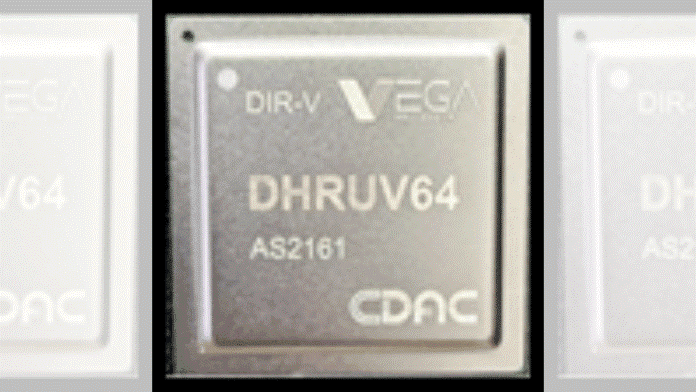
DHRUV64; India’s first indigenously designed 64-bit, 1.0 GHz dual-core microprocessor; uses open-source RISC-V architecture

Development; led by Centre for Development of Advanced Computing, Pune under MeitY’s Microprocessor Development Programme within DIR-V

Applications; strategic & commercial electronics covering 5G, automotive, industrial automation, IoT, consumer devices

Quick Facts for MCQs

Tech & Schemes

  • DIR-V Programme; accelerates open, indigenous processors reducing import dependence
  • Microprocessor Development Programme; finances design-to-fabrication chain, boosts domestic VLSI skills
  • Fabrication roadmap; DHRUV64 precedes DHANUSH64 series targeting full system-on-chip solutions

Security Dimension

  • Trusted hardware; curbs cyber-espionage risk in defence, telecom, critical infrastructure
  • Indigenous supply; shields India from export controls and semiconductor shortages
  • Strategic autonomy; reinforces Atmanirbhar Bharat & Digital India technological sovereignty

Startup & R&D

  • Domestic silicon; offers royalty-free platform for academia & startups to prototype devices
  • Low-cost prototyping; accelerates innovation in IoT sensors, consumer gadgets, industrial controllers
  • Skill creation; fosters jobs across VLSI design, embedded software, hardware testing domains

Key Data Points

FeatureData-Point
Architecture64-bit RISC-V
Clock speed1.0 GHz
Core countDual-core
DesignerC-DAC
Guiding bodyMeitY – Microprocessor Development Programme
DIR-V orderThird chip after THEJAS32 & THEJAS64
Target sectors5G, automotive, industrial, IoT, consumer
Planned successorsDHANUSH64 & DHANUSH64+ SoCs
GS-2Editorial

11.Daily Current Affairs Digest (Daily Digest)

Economic Times
Illustration for Daily Current Affairs Digest (Daily Digest)

What & Where

CEPA = Comprehensive Economic Partnership Agreement, deepening goods, services, investment and mobility ties.

Parties: India & Oman; Oman sits on Strait of Hormuz, gateway to West Asia & Africa.

Tariff outcome: 98.08 % Omani lines zero-duty, covering 99.38 % of Indian exports.

Quick Facts for MCQs

Legal & Policy

  • SHANTI Bill 2025 replaces 1962 Atomic Act & 2010 Liability Act, enabling private nuclear plants.
  • Operator liability capped ₹100–3,000 cr; supplier liability for defects deleted.
  • AERB gains statutory status; appeals through new Atomic Energy Redressal Advisory Council.

Tech & Schemes

  • DHRUV64: 1 GHz, 64-bit dual-core RISC-V chip by C-DAC under DIR-V programme.
  • Judiciary tools: LegRAA, SUPACE, Digital Courts 2.1 add AI-based research, voice-to-text, translation.
  • Agentic AI: autonomous, goal-driven LLM agents using external tools, orchestrated in multi-agent setups.

Environmental Impact

  • El Niño: ONI ≥ +0.5 °C for five overlapping tri-months; models flag possible 2026 event.
  • Erivan Anomalous Blue: Armenia-endemic butterfly; COP17-CBD logo; listed Endangered in Armenia’s Red Book.
  • Andhra rare-earth corridor: 974 km coast, monazite with 55–60 % REOs, 8–10 % thorium.

Economic Angle

  • CEPA removes duties on textiles, leather, gems, pharma, autos; boosts Indian MSME exports.
  • 100 % FDI permitted for Indian firms in major Omani service sectors, easing regional expansion.
  • USFDA/EMA/UK MHRA approvals accepted, accelerating Indian pharmaceutical market entry in Oman.

Key Data Points

FeatureData-Point
Omani tariff lines at zero duty98.08 %
Indian export coverage99.38 %
Services sub-sectors opened by Oman127
Intra-corporate transferee quota20 % → 50 %

Related UPSC Prelims PYQs

CAPF_GAI 2023PYQ 1

What are Airawat, Param Siddhi, Pratyus and Mihir?

CAPF_GAI 2024PYQ 2

Which of the following statements with regard to the outcomes of the talks between the Prime Minister of India and the President of UAE held in February, 2024 is/are correct?

GS-2Economy

12.India–Oman CEPA Trade Pact (Bilateral CEPA)

Economic Times

What & Where

Comprehensive Economic Partnership Agreement (CEPA) between India & Oman; deepens trade, services, investment, professional mobility.

Oman’s first FTA since 2006 (US-Oman FTA); India’s 2nd West Asia pact after UAE-CEPA 2022.

Geography lever: Oman abuts Strait of Hormuz—gateway to Gulf, East Africa, Red Sea trans-shipment routes.

Quick Facts for MCQs

Goods Market Access

  • Zero duty spans textiles, leather, gems-&-jewellery, autos, engineering, pharma—boosts Indian MSME exports.
  • Faster pharma export via mutual recognition of US/EU/UK approvals; trims compliance time & cost.

Services & Mobility

  • IT, professional, education, R&D, healthcare gain from 127-line liberalisation.
  • Mode 4 relaxations enlarge Indian workforce presence; longer stays enhance project continuity.

Strategic Significance

  • Diversifies export destinations amid EU CBAM, US protectionism; reduces tariff shock exposure.
  • CEPA + UAE-FTA give India bilateral foothold despite stalled India-GCC talks.
  • Duqm & Sohar ports envisaged as re-export hubs to Africa, Levant.

Implementation Challenges

  • Small Omani market limits volume; re-export model crucial.
  • Gulf consumers demand premium quality; Indian firms must upgrade branding, packaging.
  • Geopolitical shocks (Red Sea, oil price spikes) can erode logistic cost advantages.

Key Data Points

FeatureData-Point
Omani tariff lines at zero duty98.08 %
Share of India’s exports getting zero duty99.38 %
Services sub-sectors opened by Oman127
Intra-corporate transferee quota (Mode 4)Raised to 50 % from 20 %
Max stay for contractual service suppliers2 yrs + extensions
FDI allowed in Omani services for Indians100 %
Traditional medicine coverageAYUSH in all GATS modes (global first)
Acceptance of drug regulators for pharmaUSFDA, EMA, UK MHRA
Oman annual merchandise imports≈ USD 40 bn
India’s share in Oman’s services import5.3 %

Related UPSC Prelims PYQs

CAPF_GAI 2022PYQ 1

Recently, with which one of the following countries did India sign the 'Comprehensive Economic Partnership Agreement'?

CAPF_GAI 2024PYQ 2

Which of the following is NOT one of the pillars of India’s ‘Foreign Trade Policy-2023’?

GS-3SecurityQuick Bite

13.Exercise Desert Cyclone II (India-UAE Exercise)

The Hindu
Illustration for Exercise Desert Cyclone II (India-UAE Exercise)

What & Where

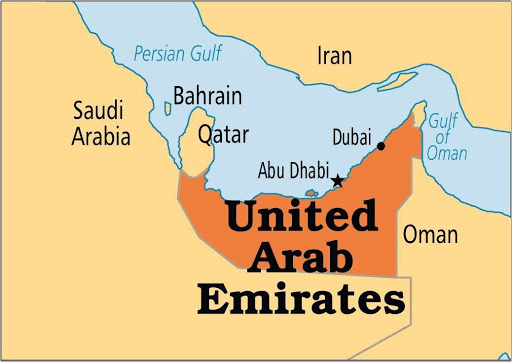
Desert Cyclone II: 2nd India–UAE bilateral Army exercise; venue – Abu Dhabi desert training zones, Dec 2025.

Focus: joint urban-warfare drills for sub-conventional ops under prospective UN peacekeeping mandate.

Complements naval Gulf Waves and air-force Desert Flag/Tarang Shakti, anchoring India–UAE defence pillar.

Quick Facts for MCQs

Defence Exercises Portfolio

  • Listing: Desert Cyclone, Gulf Waves, Desert Flag, Tarang Shakti, Milan; cover land, sea, air domains.
  • Multilateral slots: Desert Flag & Tarang Shakti enable wider coalition training with Gulf partner participation.
  • Naming change: Zayed Talwar re-designated Gulf Waves to reflect broader maritime cooperation.

Service-wise Participation

  • Army: bilateral only—Desert Cyclone—centred on sub-conventional, UN-style missions.
  • Navy: Gulf Waves bilateral; Milan multilateral observer status strengthens maritime interoperability.
  • Air Force: recurrent entry in Desert Flag abroad; hosted Tarang Shakti 2024 with UAE flyers.

Industrial & Expo Links

  • Platforms: IDEX, NAVDEX, Dubai Air Show showcase UAE tech; Aero India, DefExpo display Indian systems.
  • Objective: promote co-development, joint ventures, indigenous manufacturing in missiles, UAVs, MRO.
  • Expo reciprocity deepens supply-chain integration beyond pure platforms.

Security Dimension

  • Partnership buttresses Persian Gulf maritime security and Indian Ocean sea-lane protection.
  • Interoperability drills shorten response time for evacuation, peacekeeping, HADR in West Asia.
  • Regular engagement signals counter-terrorism alignment against regional extremist threats.

Key Data Points

FeatureData-Point
Host nationUnited Arab Emirates
Indian contingent serviceIndian Army
First Desert Cyclone editionJan 2024
Current edition nicknameDesert Cyclone II
Tactical focusUrban warfare, counter-terrorism
Larger framework2017 Comprehensive Strategic Partnership
Navy bilateral exerciseGulf Waves (ex-Zayed Talwar)
Multilateral air exercise hosted by UAEDesert Flag
UAE role in Milan 2024Observer
Shared defence exposIDEX, NAVDEX, Dubai Air Show, Aero India, DefExpo

Related UPSC Prelims PYQs

NDA_GAT 2021PYQ 1

'Exercise Desert Knight – 21' is a bilateral air exercise between the Indian Air Force and the Air Force of which one of the following countries?

NDA_GAT 2020PYQ 2

'Naseem-Al-Bahr' is a bilateral naval exercise between India and

GS-3SecurityQuick Bite

14.ICG Sarthak Chabahar Port Call (Chabahar Port Call)

The Hindu
Illustration for ICG Sarthak Chabahar Port Call (Chabahar Port Call)

What & Where

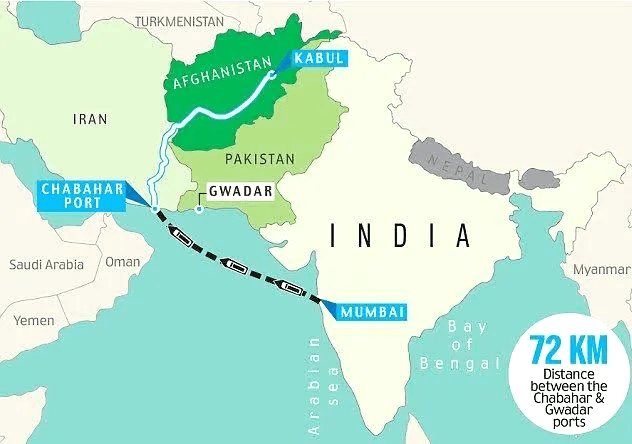
Chabahar Port – Iran’s lone deep-water, ocean-access port on Gulf of Oman outside Strait of Hormuz

Two terminals: Shahid Beheshti (India-developed & operated) and Shahid Kalantari anchoring INSTC sea leg

Dec 2025: Indian Coast Guard offshore patrol vessel ICGS Sarthak makes first port call to boost India-Iran-Central Asia link

Quick Facts for MCQs

Security Dimension

  • Port call enhances maritime domain awareness, patrol coordination, anti-smuggling efforts along Gulf of Oman
  • Sarthak visit signals India’s intent to secure supply chains bypassing Pakistan
  • ICG-Iran engagement fits SAGAR doctrine promoting collective maritime security

Environmental Outreach

  • Beach walkathon and games align with Puneet Sagar Abhiyan objective of plastic-free coastlines
  • NCC launched Puneet Sagar Abhiyan in 2021 for cleaning seas rivers lakes and other water bodies
  • Integration of campaign during port call spotlights India’s blue economy plus conservation commitment

Connectivity & Trade

  • Chabahar provides India direct maritime gateway to Iran Afghanistan Central Asia circumventing Pakistan land routes
  • Port supports secure supply lines under MAHASAGAR vision enhancing regional logistics resilience
  • Part of INSTC multimodal corridor linking Indian Ocean with Eurasian markets

Key Data Points

FeatureData-Point
CountryIran
ProvinceSistan-Baluchistan
Water bodyGulf of Oman
Agreement year2016 Chabahar Agreement
CorridorInternational North-South Transport Corridor
TerminalsShahid Beheshti & Shahid Kalantari
India-run terminalShahid Beheshti
Operator since 2018India Ports Global Ltd via IPGCFZ
Visiting vessel 2025ICGS Sarthak
Linked doctrinesSAGAR & MAHASAGAR
Environmental campaignPuneet Sagar Abhiyan (2021, NCC)

Related UPSC Prelims PYQs

CDS_GK, GEO_GS 2022PYQ 1

Chabahar Port is located in which one of the following countries?

CDS_GK, GEO_GS 2024PYQ 2

Which of the following statements is not correct?

Ready to practice?

Test your knowledge with our UPSC test series.

Start Free Trial