UPSC Current Affairs

13 topicsGS-1: 3GS-2: 5GS-3: 5
0/13 done
GS-2Polity

1.Supreme Court Dowry Violence Guidelines (Dowry Law)

B&B

What & Where

Dowry-related violence: coercive extraction of money/gifts before/after marriage, punishable under IPC 304B, 498A, DP Act 1961.

Landmark locus: Supreme Court judgment “State of Uttar Pradesh vs Ajmal Beg (2025)” issuing national guidelines.

Core geography: ~80 % dowry death FIRs from UP, Bihar, Jharkhand, MP, Odisha, Rajasthan, West Bengal, Haryana.

Quick Facts for MCQs

Legal & Policy

  • Supreme Court restored trial-court convictions, overturning Allahabad HC acquittal.
  • High Courts directed to fast-track all IPC 304B/498A pendencies.
  • Dowry framed as constitutional breach, making eradication a State obligation.

Enforcement Gaps

  • Only ~4,500 of 7,000 cases reach charge-sheet stage annually.
  • Dowry Prohibition Officers largely unappointed, invisible at district level.
  • Two-decade trial delays observed; deterrence diluted.

Social Concerns

  • Dowry disguised as “gifts”, sustaining cultural legitimacy despite prohibition.
  • Practice transcends religion; even Islamic mehr diluted by parallel demands.
  • Hypergamous marriage markets monetise grooms by income, education.

Capacity-Building

  • Mandatory value-based curriculum on equality & dignity in schools.
  • Regular sensitisation training for police, prosecutors, judges on psycho-social aspects.
  • District Legal Services Authorities to run community outreach beyond formal education.

Data & Monitoring

  • Supreme Court ordered States/HCs to map pendency oldest-to-newest.
  • Evidence-based policing emphasised for timely, quality investigation.
  • Continuous judicial oversight to ensure compliance with guidelines.

Key Data Points

FeatureData-Point
Year of judgment2025
Key IPC sections applied304B & 498A
Indian Evidence Act section invoked113B (presumption against husband/relatives)
Avg. annual dowry deaths (NCRB)~7,000
Annual conviction count~100
Pending investigations >6 months (2022)67 %
Urban hotspotDelhi: ~30 % among major cities
Court direction on officersStates to notify & empower Dowry Prohibition Officers
Constitutional articles violated by dowry14, 15, 21
Monitoring mechanismJudgment circulated; Supreme Court to keep oversight

Related UPSC Prelims PYQs

GS1 2007PYQ 1

Consider the following statements:
GS-2Polity

2.Central Information Commission Strengthening Measures (Right to Information)

The Hindu
Illustration for Central Information Commission Strengthening Measures (Right to Information)

What & Where

Statutory body under RTI Act 2005; hears complaints and second-appeals on information access.

Composition capped at 1 Chief + 10 Information Commissioners; fully staffed Dec 2025 after 9-year gap.

Jurisdiction spans Central ministries, PSUs, financial institutions, Union Territories; headquarters New Delhi.

Quick Facts for MCQs

Composition & Eligibility

  • Eligibility: persons of eminence in law, tech, social service, media, admin, governance.
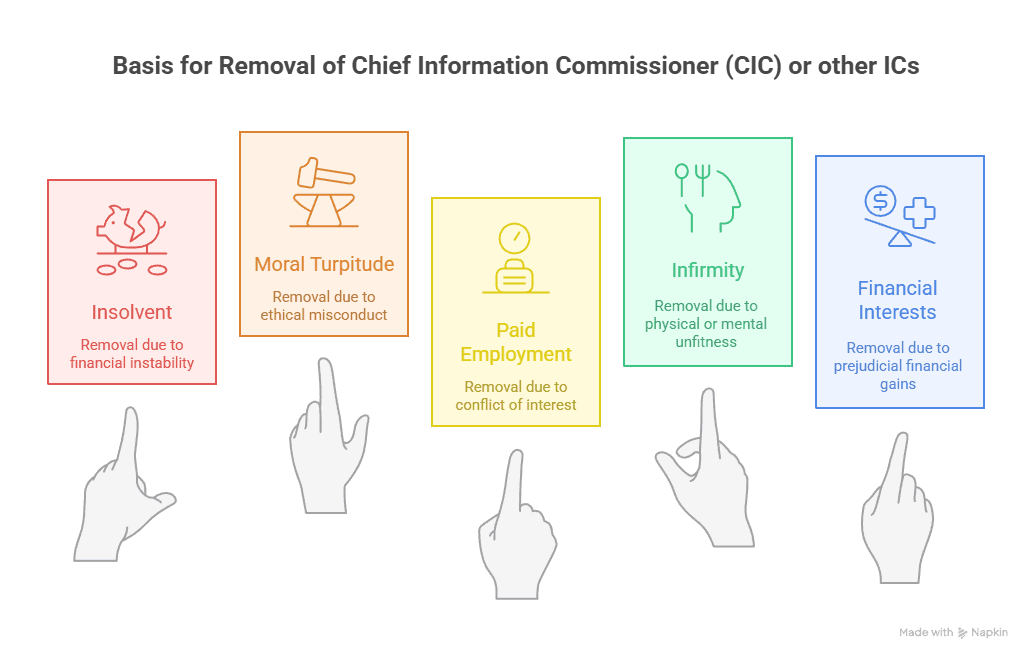
  • Disqualification: MPs, MLAs, office-of-profit holders, party officials, active business/profession.
  • Service terms: no reappointment; salary, allowances now delinked from Election Commission.

Powers & Functions

  • Authority: civil-court powers to summon, take evidence, require records without exemption.
  • Obligation: submits annual RTI implementation report to Centre; laid before Parliament.
  • Sanction: may levy ₹25,000 penalty per case but lacks direct coercive enforcement.

Operational Issues

  • Backlog: vacancies caused ≈22,000 pending cases; hearings often delayed for years.
  • Transparency: opaque selection flagged in Anjali Bhardwaj v Union 2019; SC ordered disclosure.
  • Compliance: many departments ignore orders; penalties invoked in just 2.2 % cases.

Reform Proposals

  • Appointments: follow SC-mandated, time-bound, publicly disclosed selection process.
  • Efficiency: create sectoral benches, impose disposal timelines, deploy end-to-end digital hearings.
  • Enforcement: grant contempt powers; monitor directive compliance via parliamentary and internal tracking.

Key Data Points

FeatureData-Point
Year created2005
Parent lawRight to Information Act 2005
Maximum strength1 CIC + 10 ICs
Current status Dec 2025Chief plus 8 new ICs appointed
Appointing committeePM (chair) + LoP + Union Cabinet Minister
Tenure post-2019Fixed by Central Government notification
Upper age limit65 years
Salary authority post-2019Central Government
Pending appeals Nov 2024≈ 22,000
Penalty use 2024~2.2 % of disposed cases

Related UPSC Prelims PYQs

CAPF_GAI, GEO_GS 2023PYQ 1

सूचना का अधिकार अधिनियम, 2005 के बारे में निम्नलिखित में से कौन-सा/कौन-से कथन सही है/हैं ?

CAPF_GAI, GEO_GS 2022PYQ 2

Article 324 of the Constitution of India provides for the establishment of which one of the following institutions in India?

GS-1HistoryQuick Bite

3.54th Vijay Diwas Commemoration (1971 Indo-Pak War)

PIB

What & Where

Vijay Diwas: 16 Dec; commemorates India’s decisive victory in the 1971 Indo-Pakistan War and birth of Bangladesh

Theatre: Eastern front centred on Dhaka, West front along Rajasthan–Punjab; naval action off Karachi

Span: 13-day war, 3–16 Dec 1971, ending with unconditional Pakistani surrender

Quick Facts for MCQs

Humanitarian Crisis

  • Operation Searchlight unleashed mass killings, rape, cultural repression in East Pakistan
  • Refugee influx of ~10 million into Indian states strained resources, compelled intervention
  • Global opinion shifted against Pakistan after genocide reportage by media and diplomats

Strategic Operations

  • Eastern Command executed swift multi-axis thrust isolating Dhaka, forcing rapid capitulation
  • Navy’s Operation Trident night-raided Karachi, sinking vessels, igniting oil tanks, celebrating Navy Day thereafter
  • Battle of Longewala: 120 Indian soldiers and air support repelled tank brigade, key morale booster

Diplomatic Aftermath

  • Shimla Agreement re-designated ceasefire line as Line of Control, urged bilateral dispute settlement
  • India repatriated POWs under Geneva Convention, enhanced image as responsible power
  • Victory consolidated Indo-Soviet Treaty era, elevated India’s regional and global strategic standing

Key Data Points

FeatureData-Point
War duration3–16 Dec 1971 (13 days)
Observance date16 December every year
Pakistani POWs≈ 93,000 surrendered in Dhaka
Refugees into IndiaAbout 10 million
Trigger operationOperation Searchlight, 25 Mar 1971
Indian military headField Marshal Sam Manekshaw
Notable naval opOperation Trident vs Karachi port
Iconic land battleBattle of Longewala, Rajasthan desert
Post-war treatyShimla Agreement, 2 Jul 1972
New nation formedBangladesh (ex-East Pakistan)
GS-1Mapping

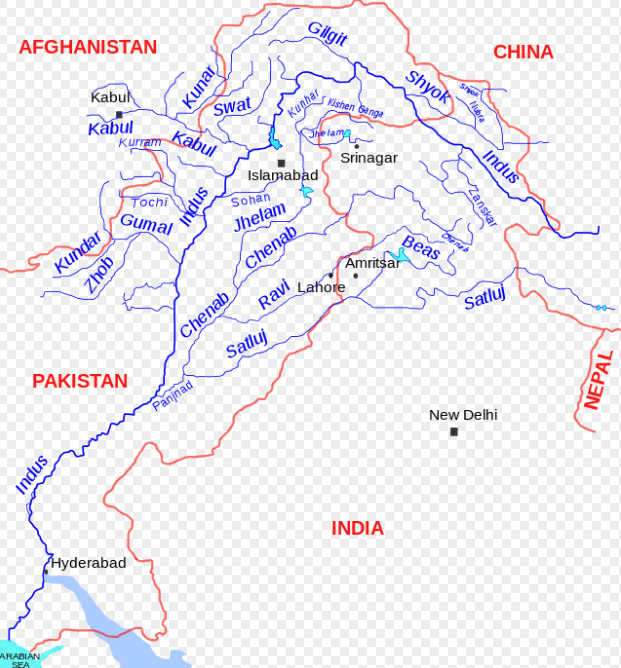
4.Kunar River Transboundary Mapping (Transboundary River)

NDTV
Illustration for Kunar River Transboundary Mapping (Transboundary River)

What & Where

River: Kunar (Chitral) is a glacial-fed, transboundary Himalayan stream within the Indus Basin.

Course: Rises at Chiantar Glacier; flows Chitral (Pakistan) → Kunar & Nangarhar (Afghanistan) → meets Kabul River near Jalalabad.

Return: Kabul River re-enters Pakistan, joining the Indus at Attock.

Quick Facts for MCQs

Legal & Policy

  • Vacuum: Absence of bilateral treaty magnifies dispute potential over Kunar waters.
  • Precedent: Unlike Indus Waters Treaty, no mechanism for arbitration or data exchange.
  • Risk: Upstream unilateral projects remain unchecked under international law gaps.

Security Dimension

  • Border: River basin overlaps insurgency hotspots in Khyber Pakhtunkhwa and eastern Afghanistan.
  • Leverage: Flow control provides Taliban authorities strategic influence over downstream Pakistan.
  • Instability: Water stress can intensify existing cross-border tensions.

Economic Angle

  • Irrigation: Supports crop, livestock, and drinking supply for millions in both countries.
  • Hydropower: Diversion aims to enhance Darunta Dam generation near Jalalabad.
  • Agriculture: Khyber Pakhtunkhwa relies on summer glacier melt for canal networks.

Key Data Points

FeatureData-Point
Alternate nameChitral River
Source glacierChiantar Glacier, Hindu Kush
Countries traversedPakistan → Afghanistan → Pakistan
Major tributaryPech River
Other tributaryLotkoh River
Empties intoKabul River
Ultimate basinIndus River system
Flow origin share60–70 % generated in Pakistan
Planned diversion siteDarunta Dam, Afghanistan
Legal treatyNone between Pakistan & Afghanistan
Strategic zoneConflict-prone border region
GS-3Species

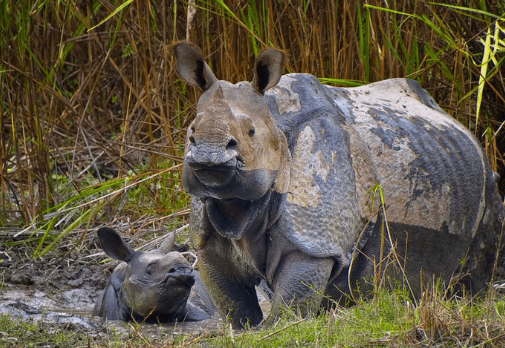
5.Global Rhinoceros Conservation Status (Rhino Conservation)

The Hindu
Illustration for Global Rhinoceros Conservation Status (Rhino Conservation)

What & Where

Definition Large, herbivorous megafauna of family Rhinocerotidae; horns of keratin, not bone

Species Five extant: White, Black, Greater one-horned, Javan, Sumatran

Range Africa; South & Southeast Asia—India, Nepal, Indonesia

Quick Facts for MCQs

Anti-Poaching Measures

  • Dehorning Data-backed 75–78 % fall in rhino killings; considered cost-effective conservation aid
  • Enforcement Complementary to patrols, intelligence, community incentives

Conservation Status

  • Population recovery hampered by slow reproduction; gestation ~15–16 months (species average)
  • International demand for horns drives illegal trade; CITES Appendix I protects all except some White-rhino populations

Biological Traits

  • Hearing & smell Excellent; eyesight comparatively poor
  • Behaviour Indian rhino semi-aquatic, frequent wallows and riverine habitats

Ecological Importance

  • Habitat engineering Grazing creates heterogeneous grassland benefiting smaller herbivores and birds
  • Indicator Healthy rhino numbers signal robust governance, anti-poaching success, community participation

Key Data Points

FeatureData-Point
FamilyRhinocerotidae
Extant species count5
Indian speciesGreater one-horned (Rhinoceros unicornis)
Horn compositionKeratin
Poaching curb techniqueDehorning
Poaching reduction from dehorning75–78 % (African reserves)
IUCN status: Javan/Sumatran/BlackCritically Endangered
IUCN status: Greater one-hornedVulnerable
IUCN status: WhiteNear Threatened
Key Indian strongholdKaziranga NP, Assam
Ecological roleKeystone grazer & seed disperser

Related UPSC Prelims PYQs

GS1 1999PYQ 1

"India has the largest population of the Asian X. Today, there are just about 20,000 to 25,000 X in their natural habitat spreading across the evergreen forests, dry thorn forests, swamps and grasslands. Their prime habitats are, however, the moist deciduous forests. The X population in India ranges from Northwest India where they are found in the forest divisions of Dehradun, Bijnor and Nainital districts of UP to the Western Ghats in the states of Karnataka and Kerala and in Tamil Nadu. In Cen

GS1 2012PYQ 2

What is the difference between the antelopes Oryx and Chiru?

GS-3EnvironmentQuick Bite

6.Anthropause Impact on Urban Bird Evolution (Urban Wildlife Evolution)

NYT

What & Where

Anthropause – global slowdown of human activity during early-2020 Covid-19 lockdowns

Study site – urban habitats with dark-eyed juncos, a North American sparrow

Observation – beak morphology flipped between “urban-type” and “wild-type” within two bird generations

Quick Facts for MCQs

Evolutionary Biology

  • Selection pressure – altered food supply quickly reshaped junco beaks
  • Proof – reversible trait change confirms environment-driven microevolution
  • Insight – evolution can proceed in decades, not millennia

Urban Ecology

  • Human presence – provisioning and waste create novel niches for city wildlife
  • Morphology shift – urban traits reappear when anthropogenic resources return
  • Human-driven ecosystems – cities act as strong, continuous selective filters

Pandemic Observations

  • Behavioural shifts – reduced noise enabled richer bird song complexity
  • Spatial response – mammals and birds ventured deeper into urban zones
  • Lesson – temporary curbs on activity expose direct human impact on fauna

Key Data Points

FeatureData-Point
Coined termAnthropause
Trigger eventCovid-19 lockdowns (early 2020)
Focal speciesDark-eyed junco (Junco hyemalis)
Urban beak formShort, thick; suited to human food waste
Lockdown cohort beakLonger, slender; wild-type
Reversion timingPost-2022, with return of people/food waste
Evolution speed shown1–2 generations
Other lockdown effectsQuieter bird songs, wildlife nearer cities
GS-3S&T

7.Department of Biotechnology 2025 Review Highlights (Biotechnology Sector)

PIB
Illustration for Department of Biotechnology 2025 Review Highlights (Biotechnology Sector)

What & Where

Biotechnology: use of cellular / biomolecular processes for products enhancing health, agriculture, environment.

Key types: Red (healthcare), Green (crop improvement), White (industrial & environmental).

Core geography: India—12th global biotech hub; 3rd in Asia-Pacific; largest worldwide vaccine producer.

Quick Facts for MCQs

Legal & Policy

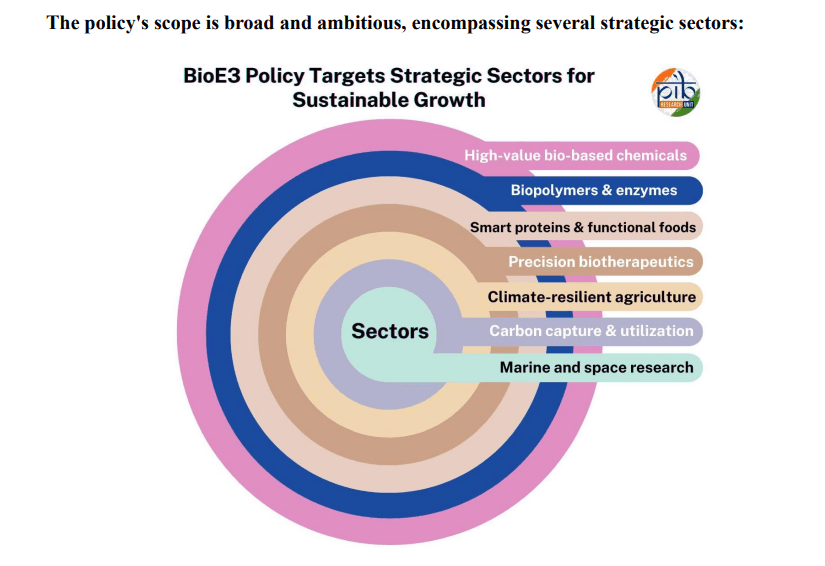
  • BioE3 Policy drives bio-based chemicals, precision biotherapeutics, climate-resilient agriculture.
  • Stacked Plant Guidelines 2025 ensure biosafety while enabling combined HT + Bt traits.
  • Centre-State BioE3 Cells launched for cooperative federalism in biotech promotion.

Tech & Schemes

  • Indigenous AI model predicts preterm birth using 66 genetic markers.
  • Engineered glucoamylase-secreting yeast cuts external enzyme need by 50 % in 1G ethanol.
  • DESIGN for BioE3 Challenge targets youth-led sustainable innovations.

Agriculture & Environment

  • DEP1-edited rice, ADVIKA & SAATVIK chickpea boost yield and drought tolerance.
  • White rust-resistant mustard tech transferred to eight seed firms.
  • Theaflavin extraction from wild tea enhances North-East agri value chains.

Health & Space

  • Lactobacillus crispatus consortia commercialised for nutraceuticals and cosmetics.
  • Microalgae show 2× growth; cyanobacteria utilise CO₂ + urea in microgravity, aiding space nutrition.
  • Human muscle stem-cell test in ISS models sarcopenia acceleration.

Key Data Points

FeatureData-Point
Sector value 2014 → 2024USD 10 bn → USD 165.7 bn
2030 targetUSD 300 bn bio-economy
Global standing12th largest biotech hub
Asia-Pacific rank3rd
Startup ecosystem rank3rd worldwide
National Biofoundry Network1st in India, 2025
BioE3 thematic areas6 (chemicals, therapeutics, agri-resilience etc.)
Stacked Plant GuidelinesNotified 2025
GenomeIndia samples10,000 whole genomes
One Day One GenomeDaily public microbial genome release
GARBH-INi cohort size12,000 pregnant women
Dare2eraD TB genomes18,000 MTB isolates sequenced
Gene-edited rice yield gain+20 % over wild type
ADT 39-Sub1 traitSubmergence tolerance
E-YUVA coverage19 centres, 460+ fellows

Related UPSC Prelims PYQs

CAPF_GAI, CDS_GK 2025PYQ 1

भारत में नवाचार तथा अनुसंधान और विकास के बारे में निम्नलिखित कथनों पर विचार कीजिए :

CAPF_GAI, CDS_GK 2024PYQ 2

Biotechnological research is promoted through the development of "Biotechnology Parks". Which of the following is/are essential to bring technology to market?

GS-2S&T

8.UN Declaration on NCDs and Mental Health (Global Health Declaration)

WHO

What & Where

Global Declaration on NCDs & Mental Health – first joint UN political pact on both issues

Endorsed at 80th UNGA during Fourth High-Level Meeting on NCDs & Mental Health, New York

Applies worldwide; implementation period up to 2030

Quick Facts for MCQs

Targets & Metrics

  • Triple 150-million goals anchor monitoring and mid-term reviews
  • Calls for national indicators aligned with WHO NCD “best buys”

Scope Expansion

  • Includes previously neglected diseases: oral, kidney, liver, rare, childhood cancer
  • Recognises mental disorders as equal priority with cardiovascular, cancer, diabetes

Regulatory Measures

  • Seeks mandatory front-of-pack nutrition labelling and total industrial trans-fat elimination
  • Urges strict regulation of e-cigarettes, novel tobacco, child-focused junk-food ads

Vulnerable Groups

  • Prioritises SIDS, climate-affected communities, humanitarian settings, persons with disabilities
  • Encourages civil-society, youth, lived-experience participation in national plans

Key Data Points

FeatureData-Point
PublisherUnited Nations General Assembly
Adoption forumFourth UN High-Level Meeting on NCDs & Mental Health (2025)
“Fast-track” outcome targets–150 mn tobacco users, +150 mn hypertension control, +150 mn mental-health coverage
Time horizonAchieve targets by 2030
Risk factors flaggedUnhealthy diet, tobacco, alcohol, physical inactivity, air pollution
New NCD areas addedOral, lung, childhood cancer, kidney, liver, rare diseases
Environmental actionsClean cooking, cut air pollution, curb lead exposure
Digital harms notedExcessive screen time, harmful content, misinformation
Regulatory asksE-cigarette rules, FOPL, junk-food marketing ban, eliminate industrial trans-fat
ApproachWhole-of-government & whole-of-society, strong primary health care
GS-2Misc

9.India’s 2026 BRICS Chairmanship (BRICS Presidency)

The Hindu
Illustration for India’s 2026 BRICS Chairmanship (BRICS Presidency)

What & Where

Rotating BRICS Chair: India will be pro-tempore President for calendar year 2026.

Key process: annual, alphabetical rotation among member states; presidency sets agenda & hosts summit.

Core geography: 11 members across Asia, Africa, South America & West Asia; NDB HQ in Shanghai.

Quick Facts for MCQs

Governance & Structure

  • Informality: no treaty-bound charter; coordination via Sherpa track & working groups.
  • Decision-making: consensus-based; presidency drafts joint communiqués.
  • Four pillars: Political, Economic/Finance, Development, People-to-people.

Rotational Mechanics

  • Alphabet principle: B-R-I-C-S order cycles irrespective of expansion.
  • Fixed tenure: full calendar year; incoming chair announced at prior summit.
  • Continuity ensured by outgoing, current, incoming (“Troika”) coordination.

India’s Agenda Scope

  • Reform push: UN, IMF, World Bank, WTO representation equity.
  • Development finance: scale NDB lending for Global South infra, climate, health.
  • Tech equity: digital public goods, affordable vaccines, resilient supply chains.

Development Finance

  • NDB capital: USD 100 bn authorised, lends in local currencies.
  • Focus sectors: transport, renewable energy, water, urban development.
  • Membership open to non-BRICS EMDCs, enhancing South-South funding pool.

Key Data Points

FeatureData-Point
Origin of BRIC dialogue2006 UNGA sidelines, FM-level
1st Leaders’ Summit2009, Yekaterinburg (Russia)
South Africa entry2011 → BRICS
Current total members11 (Brazil, Russia, India, China, South Africa, Egypt, Ethiopia, Iran, UAE, Saudi Arabia, Indonesia)
Permanent SecretariatNone; informal platform
Presidency selectionAutomatic yearly rotation, alphabetical
India’s next term1 Jan–31 Dec 2026 (18th presidency)
Brazil → India handoverAnnounced 2024
Core presidency rolesSet priorities; chair Sherpa/Minister/Leader meets; host summit
Official languageNot prescribed
NDB HeadquartersShanghai, China

Related UPSC Prelims PYQs

CDS_GK, GS1 2020PYQ 1

BRICS Summit, 2020 will be hosted by

CDS_GK, GS1 2025PYQ 2

Consider the following statements with regard to BRICS:

GS-3Security

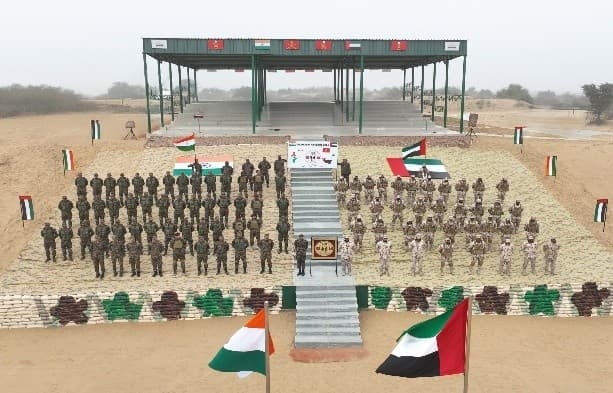
10.Desert Cyclone-II India-UAE Military Exercise (India-UAE Exercise)

PIB
Illustration for Desert Cyclone-II India-UAE Military Exercise (India-UAE Exercise)

What & Where

Bilateral field exercise DESERT CYCLONE–II between Indian Army and UAE Land Forces

Hosted at Abu Dhabi, United Arab Emirates, scheduled for 2025

Focus on sub-conventional urban operations under prospective UN mandate

Quick Facts for MCQs

Training Components

  • FIBUA modules emphasize room clearance, hostage rescue, street fortification breaching
  • Heliborne insertion and extraction refine speed, shock and mechanised coordination
  • UAS integration provides real-time surveillance; counter-UAS neutralises hostile drones

Security Dimension

  • Scenario framed around UN peacekeeping rules of engagement and civilian protection
  • Counter-terror focus enhances joint platoon/company interoperability and C2 procedures
  • Detailed joint mission planning aligns tactics, techniques, procedures (TTPs)

Bilateral Defence Ties

  • Continuation of inaugural 2024 edition, institutionalising army cooperation
  • Complements naval GULF STAR and air DESERT EAGLE exercises between nations
  • Reinforces India–UAE Comprehensive Strategic Partnership and defence diplomacy

Key Data Points

FeatureData-Point
Exercise nameDESERT CYCLONE–II
Edition2nd India–UAE army exercise
Year2025
VenueAbu Dhabi, UAE
Indian contingent45 troops, Mechanised Infantry Regiment
UAE contingent53 Mechanised Infantry Battalion
Core aimTrain for peacekeeping, counter-terror, stability ops
Signature drillsFIBUA, heliborne ops, UAS & counter-UAS

Related UPSC Prelims PYQs

NDA_GAT 2021PYQ 1

'Exercise Desert Knight – 21' is a bilateral air exercise between the Indian Air Force and the Air Force of which one of the following countries?

NDA_GAT 2020PYQ 2

'Naseem-Al-Bahr' is a bilateral naval exercise between India and

GS-3SecurityQuick Bite

11.Diving Support Craft A20 Commissioning (Diving Support Craft)

PIB

What & Where

Diving Support Craft (DSC): specialised catamaran vessel enabling coastal-harbour diving, salvage, repairs, inspections.

DSC A20 commissioned 18 Dec 2025 at Naval Base Kochi, Southern Naval Command.

Operates mainly within littoral Indian waters, supporting underwater fleet logistics.

Quick Facts for MCQs

Technical Specs

  • Catamaran design ensures higher stability during dive missions and crane operations
  • Advanced diving systems support prolonged underwater tasks in shallow to moderate depths
  • IRS rules compliance enhances structural safety, crew habitability and fitment of salvage gear

Operational Roles

  • Harbour clearance, wreck removal, underwater hull repairs for fleet units
  • Coastal inspections of jetties, pipelines, cables supporting maritime infrastructure security
  • Acts as on-scene platform during salvage or humanitarian diving emergencies

Indigenisation & Policy

  • Built by Indian shipyard, lowering import dependence for niche support vessels
  • Contributes to domestic skill, supply-chain development under Defence Acquisition Procedure 2020 ethos
  • Aligns with Make-in-India maritime capability roadmap

Recent Naval Additions

  • INS Nistar: diving support vessel complementing DSC fleet
  • Frigate Himgiri, INS Surat, INS Udaygiri: Project-17A surface combatants enhancing blue-water reach
  • INSV Kaundinya: sail training platform fostering oceanic seamanship

Key Data Points

FeatureData-Point
Vessel nameDSC A20
CategoryIndigenous Diving Support Craft
Commissioning date18 December 2025
Commissioned atNaval Base Kochi
CommandSouthern Naval Command
Hull formCatamaran
Displacement~390 tonnes
Classification standardIndian Register of Shipping (IRS)
National programmeAatmanirbhar Bharat–defence indigenisation

Related UPSC Prelims PYQs

CDS_GK, GS1 2024PYQ 1

Which one of the following statements about 'INS Tarmugli' is not correct?

CDS_GK, GS1 2016PYQ 2

Which one of the following is the best description of 'INS Astradharini', that was in the news recently?

GS-2Scheme

12.Nuclear Energy Mission for Indigenous SMRs (Small Modular Reactors)

Times of India

What & Where

Nuclear Energy Mission: India‐wide programme to expand atomic power using advanced, mostly indigenous technologies.

Small Modular Reactors (SMRs): compact ≤ 300 MWe units; India targets first 5 indigenous SMRs by 2033.

Core geography: NPCIL & BARC sites across multiple states; captive industry clusters and remote/off-grid areas envisaged.

Quick Facts for MCQs

Tech & Schemes

  • Design-pipeline: BARC advancing light-water and high-temperature gas-cooled SMRs for power, hydrogen, process heat.
  • Deployment-model: NPCIL to build; private firms join under evolving Atomic Energy Act amendments.
  • Repowering-option: SMRs sized to fit retiring coal plant sites using existing switchyards.

Economic Angle

  • Capital-push: ₹20,000 crore earmarked solely for SMR R&D and first-fleet deployment.
  • Cost-control: Factory-fabrication of modules aims 20–30 % lower overnight cost versus large reactors.
  • Market-focus: Captive industrial loads, remote mines, islands to secure firm electricity without costly grid upgrades.

Environmental Impact

  • Emissions-cut: Lifecycle CO₂ far below coal; aids Net Zero 2070 pathway.
  • Baseload-support: 24×7 clean power complements variable solar-wind for grid stability.
  • Hydrogen-production: HTGR variant enables low-carbon hydrogen for hard-to-abate sectors.

Implementation Roadmap

  • Phase-I (2025-33): R&D, licensing, build 5 SMRs, validate supply chain.
  • Phase-II (2033-47): Scale to additional ~40 GW SMR capacity alongside 60 GW large reactors.
  • Regulatory-timeline: AERB clearances parallel to construction to compress overall schedules.

Key Data Points

FeatureData-Point
Formal launchUnion Budget 2025-26
R&D outlay FY 25-26₹20,000 crore
Indigenous SMRs due≥ 5 units by 2033
Long-term nuclear target~100 GW capacity by 2047
Lead design agencyBARC
Flagship SMR modelsBSMR-200 (200 MWe), SMR-55 (55 MWe), HTGR (~5 MW)
Expected public-sector share58–60 GW of 100 GW
Key implementerNPCIL; NTPC–NPCIL JV in pipeline

Related UPSC Prelims PYQs

GS1, NDA_GAT 2025PYQ 1

The Joint Venture named ‘ASHVINI’ to develop nuclear power facility in India is between

GS1, NDA_GAT 2016PYQ 2

India is an important member of the ‘International Thermonuclear Experimental Reactor’. If this experiment succeeds, what is the immediate advantage for India?

GS-1Editorial

13.Rising Self-Financed Indian Student Migration (Student Migration)

The Hindu

What & Where

Phenomenon; self-financed Indian student migration used as long-term mobility ladder rather than pure education

Geography; top shifts from US-UK-Canada to cost-effective Germany, France, Australia amid visa tightening in traditional hubs

Scale; projected 13.8 lakh enrolment 2025, Kerala shows student migrants now 11.3 % of its emigrants

Quick Facts for MCQs

Drivers of Migration

  • Aspirations; post-study work & PR pathways outweigh higher fees in Australia, Germany
  • Mismatch; only 51 % graduates employable, pushing degree-plus-visa strategy
  • Agents; commission-led consultants redirect students to low-quality foreign colleges

Economic Impact

  • Remittances; Kerala spent ₹43,378 cr on education outward 2023-24
  • Debt; families borrow ₹35-40 lakh, often mortgaging land
  • Contraction; 23 % remittance drop after Canada, UK, US tightening 2024-25

Challenges & Risks

  • Deskilling; UK 2024 skilled-visa limits shove STEM grads into gig economy
  • Exploitation; Canada housing crunch fuels hot-bedding, undocumented warehouse jobs
  • Mental-health; consulates report spike in distress calls post-2024 violence

Policy & Regulation

  • Registration; Punjab amendment targets unlicensed study-abroad consultants
  • Awareness; 2024 MEA Surakshit Jaaye / Prashikshit Jaaye offers pre-departure counselling
  • Bilateral; India-Australia MATES scheme sets regulated youth visa quotas

Key Data Points

FeatureData-Point
Overseas Indian students Dec 202582 lakh in 153 countries
2025 enrolment projection13.8 lakh
Growth in Germany intake~49 % (2018-23)
Kerala student migrants 20232.5 lakh
Kerala education remittances 2023-24₹43,378 cr ≈20 % of labour inflow
Canada study-visa approval 2024-25~30 %
YoY fall in education remittances23 % after 2024-25 visa curbs
Average education loan 2024₹35-40 lakh
Employable Indian graduates 202451 % (India Skills Report)

Related UPSC Prelims PYQs

GEO_GS 2021PYQ 1

Which one of the following statements with regard to the World Immigration Report, 2020 prepared by the United Nations is NOT correct?

Ready to practice?

Test your knowledge with our UPSC test series.

Start Free Trial