UPSC Current Affairs

15 topicsGS-1: 4GS-2: 2GS-3: 9
0/15 done
GS-2Polity

1.Health Security Cess Bill 2025 (Cess Legislation)

Indian Express

What & Where

Cess Bill: Health Security se National Security Cess Bill 2025; imposes special excise cess on specified manufactures.

Scope: Starts with pan masala; Centre may notify more goods or double rates.

Coverage: All-India; proceeds flow to Consolidated Fund for national security & public health.

Quick Facts for MCQs

Fiscal Design

  • Liability: Applies irrespective of assessee’s other tax status, ensuring blanket coverage.
  • Concurrency: Levied in addition to GST, excise or other duties already applicable.
  • Temporality: Continues until adequate resources gathered for stated security & health needs.

Enforcement & Penalties

  • Violations: Undeclared machinery, cess evasion, false records, obstruction of officials.
  • Powers: Officers authorised to inspect premises, seize goods, arrest accused persons.
  • Deterrence: Penalty plus possible imprisonment emulate stringent Central Excise Act norms.

Dispute Resolution

  • Appeal chain: Appellate Authority → Tribunal → High Court → Supreme Court.
  • Coverage: Orders on assessment, confiscation, penalty or any cess demand.
  • Objective: Provide layered judicial remedy, reduce arbitrary action by field officers.

Key Data Points

FeatureData-Point
Initial taxable goodPan masala
Levy natureCapacity-linked special excise cess
Calculation yardsticksMachine max speed, pack weight, or flat rate (manual)
Fund credited toConsolidated Fund of India
Rate-enhancement ceilingUp to 2 × existing rate by notification
Revenue sharingExcluded from divisible pool under Art 270
Taxable personAny owner/operator/controller of relevant machinery/process
Enforcement toolsPenalty, prosecution, arrest, confiscation
GS-3Economy

2.Hindu Rate of Growth Concept (GDP Growth Term)

NDTV

What & Where

Definition Persistent 3.5–4 % real GDP growth in India during 1950s-80s called Hindu rate of growth

Scope Refers to long-run aggregate growth, not religion-specific economic behaviour

Location India’s pre-liberalisation mixed economy under Licence–Permit–Quota Raj

Quick Facts for MCQs

Historical Context

  • Postcolonial India faced wars droughts political churn yet growth stayed near 3.5 %
  • 1980s Deregulation raised trend growth to about 5.6 % signalling exit from stagnation
  • Coinage Term gained currency in 1978 academic discourse by Raj Krishna

Policy Framework

  • Licence Raj restricted private entry import competition and technology inflows
  • State Dominance over heavy industry credit trade planning curbed market competition
  • Tariffs High import duties and substitution strategy insulated economy from global productivity gains

Comparative Growth

  • EastAsia Peers South Korea Taiwan recorded 7–10 % growth highlighting India underperformance
  • Critique Phrase viewed as colonial communal mislabel linking stagnation to Hindu culture
  • Evidence 1980s acceleration shows policy choices not religion determine growth outcomes

Key Data Points

FeatureData-Point
Coined byRaj Krishna, Delhi School of Economics
Coined in1978 (late 1970s)
Average GDP growth3.5–4 % per year
Time span1950s–1980s pre-liberalisation
Per-capita income riseSlower than GDP due to high population growth
1980s growth uptick5.6–5.8 % annually
Primary policy milieuState-led mixed economy, Licence–Permit–Quota Raj
GS-3Economy

3.Currency Depreciation Dynamics (Exchange Rate)

The Hindu
Illustration for Currency Depreciation Dynamics (Exchange Rate)

What & Where

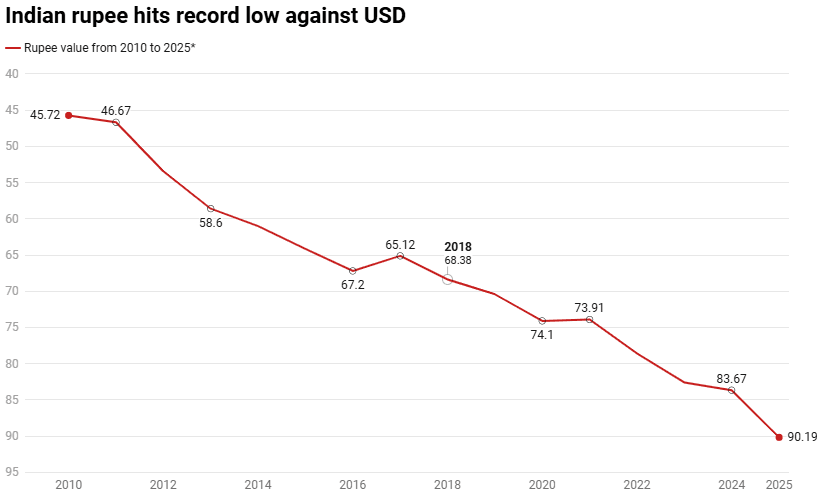
Currency depreciation – market-driven fall in domestic currency value against foreign currency.

Processes include excess rupee supply, capital outflows, trade gaps, policy expectations.

India: rupee breached ₹90 / US$ in 2025, among Asia’s worst performers.

Quick Facts for MCQs

Causes of Depreciation

  • Capital-outflows: FPI selling, funds chase higher US yields, AI/tech equities
  • Trade-deficit: expensive oil, gold, tariff uncertainty erode forex earnings
  • Dollar-strength: US rate hikes, safe-haven flows boost greenback

Economic Implications

  • Imported-inflation: costlier fuel, fertiliser, electronics raise CPI/WPI
  • External-debt-burden: dollar loans costlier in rupee terms, pressuring corporates, government
  • Perception-risk: persistent slide heightens risk premium, deters long-term FDI

Policy Responses

  • RBI-intervention: calibrated spot/forward selling of dollars, swap lines smooth volatility
  • Rate-liquidity: selective tightening to raise rupee appeal while balancing growth
  • Forex-inflows: sweetened NRI deposits, FCNR schemes, exporter incentives attract dollars

Key Data Points

FeatureData-Point
Spot rate (2025)≈ ₹90 per US dollar
Exchange-rate regimeFully floating
Asia ranking 2025One of worst-performing currencies
Prime capital driverFPI shift to high-return AI/tech abroad
Import pressure itemsCrude oil, gold, fertilisers, electronics
Safe-haven tiltStronger US dollar & gold demand

Related UPSC Prelims PYQs

CDS_GK, GS1 2025PYQ 1

मुद्रा मूल्यह्रास (Currency depreciation) किस प्रकार से निवल निर्यात (net exports) की वृद्धि को प्रेरित कर सकता है?

CDS_GK, GS1 2019PYQ 2

भारत के संदर्भ में, मुद्रा संकट के जोखिम को कम करने में निम्नलिखित में से किस/किन कारण/कारकों का योगदान है?

GS-3Economy

4.RBI Repo Rate Cut Analysis (Monetary Policy)

Economic Times

What & Where

Repo Rate: RBI’s overnight lending rate to banks; cut 25 bps to 5.25 % (Dec 2025).

Jurisdiction: Applies economy-wide under Monetary Policy Committee, Reserve Bank of India.

Goldilocks Phase: 8.2 % GDP with sub-2 % CPI delivers balanced growth-inflation mix.

Quick Facts for MCQs

Monetary Policy

  • Disinflation: Sub-2 % CPI created unprecedented policy room under FIT, enabling accommodative stance.
  • RBI-Move: 25 bps cut seeks to prolong Goldilocks, spur credit, maintain liquidity.
  • Collateral: Banks borrow via repo by pledging government securities, repurchase later with interest.

Growth Drivers

  • Consumption: Lower rates expected to amplify festive spending, post-GST rationalisation demand surge.
  • Investment: Cheaper credit can encourage capex by corporates, sustaining 8 %-plus GDP run.
  • Domestic-Led: Cut aims to offset weak global trade by fortifying internal demand pillars.

Inflation Dynamics

  • Trajectory: CPI averaged 1.7 % Q2, plunged to 0.3 % in Oct 2025.
  • Benchmark: Level breached 2 % lower band, first occurrence since FIT adoption 2016.
  • Outlook: RBI expects inflation to stay within 2–6 % corridor despite liquidity infusion.

External Risks

  • Trade: Global slowdown, geopolitical tensions threaten exports; rate cut buffers fallout.
  • Currency: Lower yield may soften rupee, boosting exports yet raising import costs.
  • BoP: Wider trade deficit possible, calling for vigilant external-sector management.

Key Data Points

FeatureData-Point
Repo rate (Dec 2025)5.25 %
Latest cut size25 bps
2025 cumulative easing125 bps
Q2 FY26 GDP growth8.2 %
Q2 FY26 avg CPI1.7 %
October 2025 CPI0.3 %
FIT target range2–6 % CPI
First lower-band breach2025, post-FIT

Related UPSC Prelims PYQs

CDS_GK, GS1 2020PYQ 1

Which one of the following is not correct about Repo rate?

CDS_GK, GS1 2015PYQ 2

When the Reserve Bank of India reduces the Statutory Liquidity Ratio by 50 basis points, which of the following is likely to happen?

GS-3Infrastructure

5.Revised FDTL Norms Impact (Aviation Safety Norms)

Indian Express

What & Where

FDTL: DGCA safety rules capping pilot duty hours, night landings, mandating minimum weekly rest

Coverage: Applies to every scheduled airline operating within or from Indian airspace

Oversight: Implemented by DGCA, an attached office of Ministry of Civil Aviation, New Delhi

Quick Facts for MCQs

Safety Regulations

  • Fatigue: ICAO labels as major risk, new norms target early-morning and night-sector alertness
  • Reporting: Airlines must file quarterly fatigue risk submissions; DGCA empowered to audit rosters
  • Exemption: IndiGo received single-use night-operation waiver purely for stabilisation

Sector Growth

  • Traffic: Passenger numbers expected to rise six-fold by 2040 to 1.1 billion
  • Infrastructure: Airports grew from 74 (2014) to 163 (2025) via PPP and greenfield push
  • Fleet: Indian operators hold 2.4 % of world fleet with large pending aircraft orders

Operational Challenges

  • Manpower: Pilot shortages plus stricter FDTL triggered widespread cancellations and delays
  • Congestion: Delhi, Mumbai, Bengaluru runways and parking bays near saturation during peaks
  • Costs: Elevated ATF, dollar-linked leases, maintenance expenses erode airline profitability

Reform Measures

  • Buffers: Maintain standby crews, reserve aircraft, diversified schedules to absorb shocks
  • Passenger: Strengthen real-time information, auto refunds, statutory compensation mechanisms
  • Sustainability: Promote Sustainable Aviation Fuel and adopt CORSIA for carbon-neutral growth

Key Data Points

FeatureData-Point
Weekly rest (new)48 consecutive hours
Weekly rest (old)36 consecutive hours
Night landings limit (new)2 per roster period
Continuous night duties capMaximum 2
Fatigue report frequencyQuarterly to DGCA
India domestic rank3rd largest globally
Operational airports 2025163
Jobs supported 20257.7 million
Aviation GDP share1.5 % of GDP
Passenger traffic 2040~1.1 billion forecast
GS-3EconomyQuick Bite

6.GIFT City Reinsurance Hub Plan (IFSC Reinsurance)

Economic Times

What & Where

India’s first International Financial Services Centre, branded Gujarat International Finance Tec-City (GIFT City)

Located on Sabarmati River, Gandhinagar (Gujarat) inside a Special Economic Zone

Offers onshore & offshore financial services in foreign currency to non-residents and eligible residents

Quick Facts for MCQs

Legal Basis

  • Statutes: SEZ Act 2005, FEMA 1999, IFSCA Act 2019 provide enabling framework
  • Zone classification: GIFT SEZ for foreign entities, Domestic Tariff Area for Indian market operations
  • Non-resident designation: transactions treated offshore for FEMA, simplifying capital movement

Regulatory Setup

  • Unified oversight: IFSCA consolidates RBI, SEBI, IRDAI, PFRDA powers, single-window clearances
  • Coverage: banking, capital markets, insurance, pensions within IFSC jurisdiction
  • Approach: principle-based, lighter compliance than mainland regulations

Fiscal Incentives & Economic Angle

  • Direct tax: 100% exemption for 10 consecutive years within first 15 years of operation
  • Capital norms: no additional capital infusion required for branch relocation or set-up
  • Goal: cultivate global reinsurance hub; over 10 foreign insurers already operating

Key Data Points

FeatureData-Point
Establishing legislationSEZ Act 2005
Governing authorityInternational Financial Services Centres Authority
IFSCA Act year2019
Zonal structureGIFT SEZ & Domestic Tariff Area
FEMA statusNon-resident zone
Core objectiveAttract global capital, rival Singapore/Dubai
Tax holiday10 consecutive years
Foreign insurers present10 +
Location stateGujarat
Transaction currencyForeign currency
GS-1History

7.Dadabhai Naoroji Bicentenary (Freedom Leader)

FPJ
Illustration for Dadabhai Naoroji Bicentenary (Freedom Leader)

What & Where

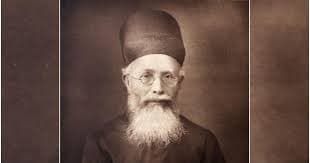
Dadabhai Naoroji (1825-1917): Parsi Bombay-born nationalist, economist, social reformer; nicknamed “Grand Old Man of India”.

Propounded Drain-of-Wealth theory, spotlighting colonial outflow; wrote Poverty and Un-British Rule in India.

Worked in London as first Indian MP (Central Finsbury, 1892-95) while steering INC at home.

Quick Facts for MCQs

Economic Angle

  • Theory quantified export surplus, remittances, pensions siphoned to Britain.
  • Persistent lobbying led to 1895 Welby Commission on Indian expenditure.
  • Ideas fuelled Swadeshi and fiscal self-reliance movements.

Political Milestones

  • INC founder; mediated Moderates–Extremists; presided 1906 session demanding Swaraj.
  • First Indian MP amplified India’s case through questions and committees.
  • Advocated constitutional, parliamentary methods over violence.

Social Reform

  • Pushed compulsory primary schooling; memo to Hunter Commission with Phule.
  • Promoted women’s education via classes, scholarships, advocacy.
  • Modernised Parsi society through Rahnumai Mazdayasan Sabha.

Organisational Building

  • Set up London Indian Society 1865, East India Association 1866 for global lobbying.
  • Rast Goftar spread reformist thought in Gujarati vernacular press.
  • Mentored Tilak, Gokhale, Gandhi, nurturing next-gen leadership.

Key Data Points

FeatureData-Point
Birth date4 Sept 1825
BirthplaceBombay (alt. Navsari)
UK Parliament seatCentral Finsbury, 1892
Party in BritainLiberal Party
INC presidency1886, 1893, 1906
1906 Calcutta callFirst formal demand of Swaraj
Key workPoverty and Un-British Rule in India (1901)
Economic theoryDrain of Wealth, 1867
Commission roleMember, Welby Commission 1895
Reform bodyRahnumai Mazdayasan Sabha 1851
Newspaper foundedRast Goftar 1854

Related UPSC Prelims PYQs

GS1 2008PYQ 1

Who among the following used the phrase ‘Un-British’ to criticize the English colonial control of India?

GS1 2000PYQ 2

That the per capita income in India was Rs. 20 in 1867-68, was ascertained for the first time by

GS-1Environment

8.Sudden Stratospheric Warming Phenomenon (Atmospheric Warming)

NW
Illustration for Sudden Stratospheric Warming Phenomenon (Atmospheric Warming)

What & Where

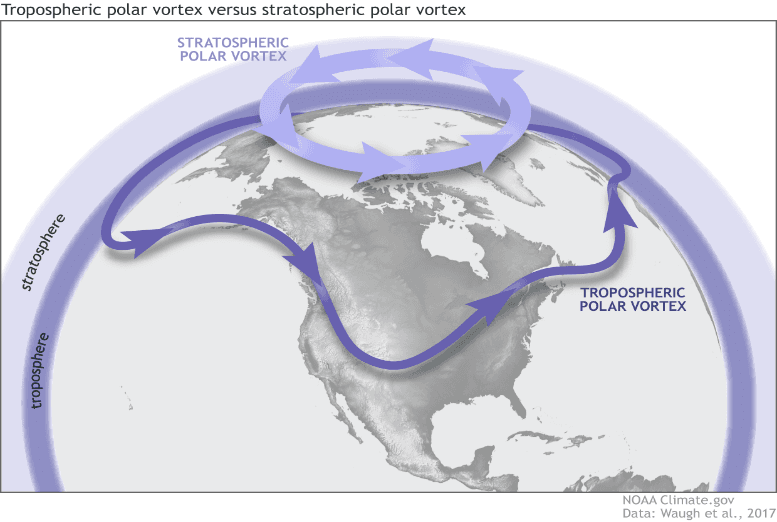
Sudden Stratospheric Warming: rapid ≤50 °C rise in polar stratosphere (10–50 km) disrupting Arctic polar vortex.

Geography: Mostly Northern Hemisphere winters; effects propagate to mid-latitude North America, Europe, Asia.

Core process: Upward Rossby-wave energy weakens/reverses westerlies, sometimes splitting or displacing vortex southward.

Quick Facts for MCQs

Atmospheric Mechanics

  • Polar vortex: tight winter westerlies encircle Arctic, trapping cold air aloft.
  • Wave-breaking: Rising planetary Rossby waves distort, decelerate, even reverse stratospheric winds.
  • Collapse outcome: Vortex may split or shift, allowing stratospheric air to descend and warm rapidly.

Weather Impacts

  • Cold-wave outbreaks: Arctic air slides into mid-latitudes causing severe freezes, blizzards.
  • Jet-stream waviness: Amplified meridional flow, blocking highs, altered storm tracks North Atlantic–Eurasia.
  • Event severity varies; not all SSWs yield surface extremes.

Forecasting Issues

  • Predictability window: Dynamic models struggle beyond 10 days for exact timing/location.
  • Descent path uncertainty: Hard to pinpoint where displaced Arctic air will surface.
  • Two-way coupling: Tropospheric conditions can feedback, complicating model skill.

Key Data Points

FeatureData-Point
Temp. jumpup to 50 °C within days
Altitude band10 – 50 km (stratosphere)
Wind changeWesterly → easterly during event
Surface impact lag1 – 3 weeks after stratospheric signal
Lead-time skillReliable forecasts ≤7-10 days
OccurrenceIrregular; not every winter
Primary driverBreaking Rossby waves from troposphere
GS-3Environment

9.Invasive Alien Plant Species Crisis (Invasive Plants)

Down to Earth
Illustration for Invasive Alien Plant Species Crisis (Invasive Plants)

What & Where

Invasive alien plants: non-native flora that outcompete natives, degrade ecosystems, hit economy & health.

India already invaded across 2.67 lakh km²; spreading ~15,500 km² of natural areas yearly.

Top culprits: Lantana camara, Chromolaena odorata, Prosopis juliflora; thrive in Shivalik-Terai, NE Duars, Aravallis, Dandakaranya, Nilgiris.

Quick Facts for MCQs

Environmental Impact

  • Biodiversity erosion; ecosystem homogenisation, soil degradation, disrupted food webs.
  • Native herbivore decline cascades to predator displacement.
  • Fodder, fuelwood scarcity heightens rural resource stress.

Economic Angle

  • Losses ₹8.3 lakh crore over six decades; affects agriculture, forestry, grazing.
  • Manual removal costly; ineffective without follow-up restoration.
  • Biofuel utilisation touted for revenue-linked control.

Vulnerable Regions

  • Shivalik-Terai & NE Duars witness fastest spread due to moist subtropical climate.
  • Western Ghats’ Nilgiris and dry Aravallis face invasions in grass-savanna mosaics.
  • Wet Ganga-Brahmaputra plains highly susceptible to rapid colonisation.

Governance Gaps

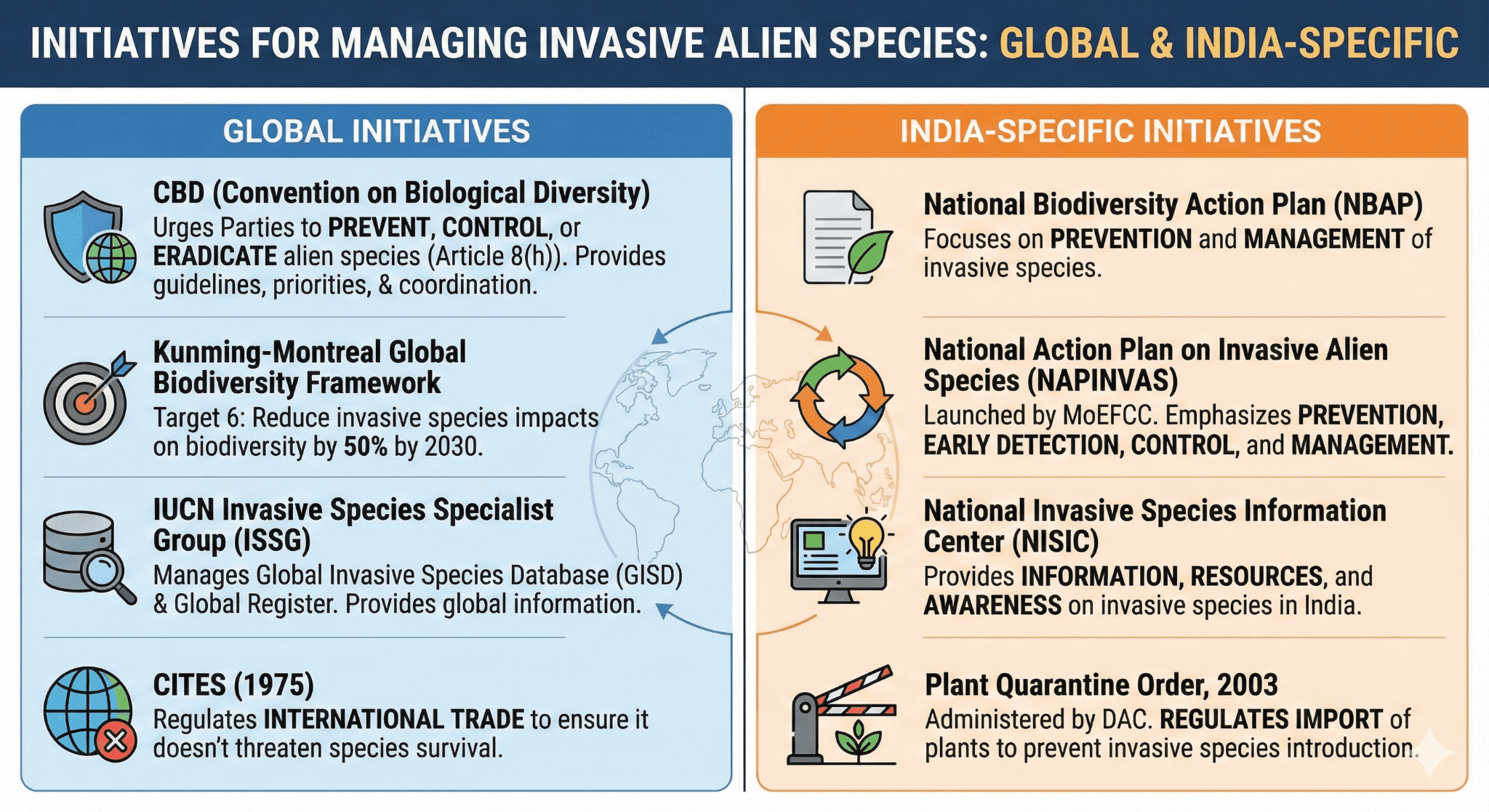
  • No central authority; fragmented state efforts lack synergy.
  • Absence of GIS-based national database and early-warning system.
  • Weak quarantine permits new plant/seed introductions.

Key Data Points

FeatureData-Point
Annual expansion rate≈15,500 km² natural area/year
Cumulative invaded area2,66,954 km² (till 2022)
Economic loss (1962-2022)₹8.3 lakh crore
People exposed (2022)144 million
Livestock affected2.79 million heads
Smallholder farmland exposed2 lakh km²
High-risk open ecosystemsDry grasslands, savannas, shola grasslands, Ganga-Brahmaputra plains
Key acceleratorsClimate change, land-use change, altered fire & grazing patterns
Current national missionNone; policy vacuum
Study sourceNature Sustainability, 2025

Related UPSC Prelims PYQs

GEO_GS, GS1 2025PYQ 1

Which one of the following is an example of endemic plant species of India?

GEO_GS, GS1 2020PYQ 2

If a particular plant species is placed under Schedule VI of The Wildlife Protection Act, 1972, what is the implication?

GS-3Mapping

10.Eturnagaram Wildlife Sanctuary (Wildlife Sanctuary)

New Indian Express
Illustration for Eturnagaram Wildlife Sanctuary (Wildlife Sanctuary)

What & Where

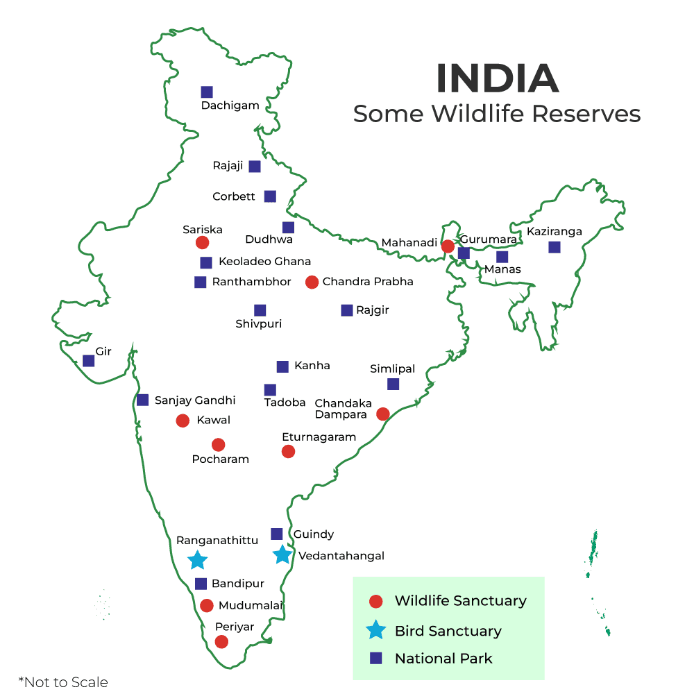
Eturnagaram Wildlife Sanctuary — one of Telangana’s oldest protected Deccan dry-deciduous forests along the Godavari River.

Lies in Mulugu district, close to Telangana–Maharashtra–Chhattisgarh tri-border; links contiguous interstate habitats.

Telangana Forest Dept launching first in-sanctuary safari to boost controlled eco-tourism and livelihoods.

Quick Facts for MCQs

History & Culture

  • Medaram Jatara draws Asia’s largest tribal gathering inside sanctuary every two years.
  • Stone-age remains and cave dwellings evidenced at Rakshasa Gullu.
  • Early protection status predates Wildlife (Protection) Act, showing long-standing conservation ethos.

Biodiversity Highlights

  • Predator–prey assemblage supports ecological balance across connected central Indian landscape.
  • Mixed teak-dominated canopy interspersed with riverine belts sustains varied ungulate populations.
  • Functions as genetic corridor linking tiger habitats of three adjoining states.

Eco-Tourism Potential

  • Proposed safari plus accommodation can diversify local incomes while funding habitat management.
  • Visitor regulation crucial to avoid disturbance during Medaram Jatara surge periods.
  • Interpretive trails can showcase prehistoric sites, promoting conservation awareness.

Geographical Connectivity

  • Undulating terrain, dense forest patches and Godavari tributaries provide natural wildlife movement routes.
  • Acts as buffer between northern Tiger Reserves of Maharashtra/Chhattisgarh and southern Telangana landscapes.

Key Data Points

FeatureData-Point
State / DistrictTelangana / Mulugu
Main riverGodavari
Tri-border proximityMaharashtra & Chhattisgarh
First notification30 Jan 1952
Wildlife Act rules7 Jul 1999
Forest typeDeccan dry deciduous
Dominant treeTeak (Tectona grandis)
Key carnivoresTiger, Leopard, Wolf
Large herbivoresGaur, Sambar, Chital, Nilgai, Blackbuck
ReptilesPython species
Prehistoric siteRakshasa Gullu
Tribal festivalMedaram Jatara (biennial)
Planned activityJeep safari service
GS-2Environment

11.Seventh UN Environment Assembly (UNEA-7 Forum)

UNEP

What & Where

UNEA-7 – apex UN forum framing global environmental policy; every UN member has one vote.

Meets at UNEP Headquarters, Nairobi, Kenya; 7th session opened Feb 2024.

Focus: adopt UNEP Medium-Term Strategy 2026-30, align treaties, negotiate 15 draft resolutions.

Quick Facts for MCQs

Legal & Policy

  • Negotiations; some states seek reopening MTS text, others urge straight adoption without edits.
  • UNEA resolutions non-binding yet steer multilateral treaties, national laws and funding priorities.
  • MTS aims strengthening compliance systems, transparent monitoring, science-policy interfaces.

Funding Crunch

  • UNEP heavily reliant on voluntary Environment Fund; donor fatigue worsening gap.
  • US arrears trigger cascade; regular UN allotment reduced one-fifth, stressing programme delivery.
  • Shrinking budget pushes members to demand leaner, “life-support” resolution package.

Strategy Pillars

  • Climate Stability: upscale mitigation, adaptation, early-warning science.
  • Thriving Biodiversity: enable nature-positive restoration, Kunming-Montreal targets.
  • Zero Pollution: lifecycle approach to plastics, chemicals, air, waste management.

Key Data Points

FeatureData-Point
UNEA creation2012 Rio+20 outcome
First Assembly year2014
Total resolutions till UNEA-6105
UNEA-7 theme“Advancing sustainable solutions for a resilient planet”
Proposed resolutions (UNEA-7)19; only 15 retained
UNEP Medium-Term Strategy span2026–2030
Core MTS pillarsClimate, Biodiversity, Zero-Pollution, Land, Resources, Governance
US halt impact20 % fall in UNEP regular UN budget share
Environment Fund fall11–12 % decline in contributions
UNEA uniquenessOnly UN body tackling climate, biodiversity, pollution together
GS-3Security

12.National Intelligence Grid (Intelligence Platform)

The Hindu
Illustration for National Intelligence Grid (Intelligence Platform)

What & Where

NATGRID – real-time, integrated intelligence platform linking government/private databases for authorised agencies in India.

Key Process – seamless, secure data-pull; “single window” replaces multiple, sequential information requests.

Location/Control – Ministry of Home Affairs, nationwide roll-out to Central bodies & State police.

Quick Facts for MCQs

Tech & Schemes

  • Integration – API-based fusion of 20+ siloed databases for instant analytics.
  • Security – Layered encryption, role-based access, audit trails to curb misuse.
  • Scalability – Cloud-ready architecture targets future inclusion of GSTN, FASTag data.

Security Dimension

  • Intelligence-gap plug – Allows “dot-joining” even before FIR registration.
  • Predictive analytics – Flags suspicious travel, telecom or banking patterns in near real time.
  • Investigation speed – Cuts inter-departmental correspondence delays, crucial in terror manhunts.

Governance & Coordination

  • Federal parity – State police receive same intel depth earlier limited to Central agencies.
  • Inter-agency synergy – Common dashboard fosters coordinated probes, reduces duplication.
  • Oversight – Access logged; internal audits and parliamentary committees can seek records.

Key Data Points

FeatureData-Point
Parent ministryHome Affairs (MHA)
Conceptualised2009, post-26/11 Mumbai attacks
Operationalised2023 (functional, opened to wider agencies)
Avg. monthly data pulls~45,000 requests
Lowest access rankSuperintendent of Police (State)
Key datasetsAadhaar, DL, bank, telecom, airline PNR, immigration, social media
Main usersIB, RAW, NIA, ED, FIU, DRI, NCB, State police
Primary objectiveCounter-terrorism & organised crime
Cyber safeguardAdvanced encryption & dedicated security operations centre
GS-3Security

13.Border Roads Organisation Projects (Border Infrastructure)

DD News

What & Where

BRO: premier MoD road-construction force; est. 7 May 1960; HQ New Delhi.

Mandate: create, maintain strategic border infrastructure for armed forces and friendly nations.

Geography: Himalayas, Northeast, deserts, islands; overseas in Afghanistan, Bhutan, Myanmar, Tajikistan, Sri Lanka.

Quick Facts for MCQs

Organisational Setup

  • Parentage: overseen by BRDB under Ministry of Defence.
  • Composition: military engineers plus civilians enable dual peace–war tasking.
  • Funding: ₹5,000 cr batch inaugurated, highlighting rapid capital deployment.

Roles & Functions

  • Peace: builds roads, bridges, airfields; spurs socio-economic growth in remote terrain.
  • War: maintains troop mobility, clears snow, landslides, avalanches, keeps supply lines open.
  • Disaster: provides rescue support during tsunamis, earthquakes, floods, landslides.

Strategic Significance

  • Military: boosts mobility along China and Pakistan frontiers, high-altitude zones.
  • Geopolitics: infrastructure diplomacy strengthens neighbourhood outreach.
  • Economic: improves trade, tourism, connectivity for border communities.

Technology & Innovation

  • Innovation: deploys indigenous Class-70 modular bridges for swift, heavy-load crossings.
  • Capability: executes projects in extreme climate and very high altitude using specialised techniques.

Key Data Points

FeatureData-Point
Parent bodyBorder Roads Development Board
Establishment7 May 1960
HeadquartersNew Delhi
MinistryDefence
Latest launch125 projects worth ₹5,000 cr (largest single-day)
Overseas projectsAfghanistan, Bhutan, Myanmar, Tajikistan, Sri Lanka
Workforce>2 lakh local labourers employed

Related UPSC Prelims PYQs

CAPF_GAI 2022PYQ 1

Which of the following statements about the Border Roads Organization (BRO) is/are correct?

GS-1Polity

14.NEP 2020 School Education Reforms (Education Policy)

PIB
Illustration for NEP 2020 School Education Reforms (Education Policy)

What & Where

NEP 2020 – India’s overarching policy replacing 1986 NEP; targets quality, equity, access, affordability

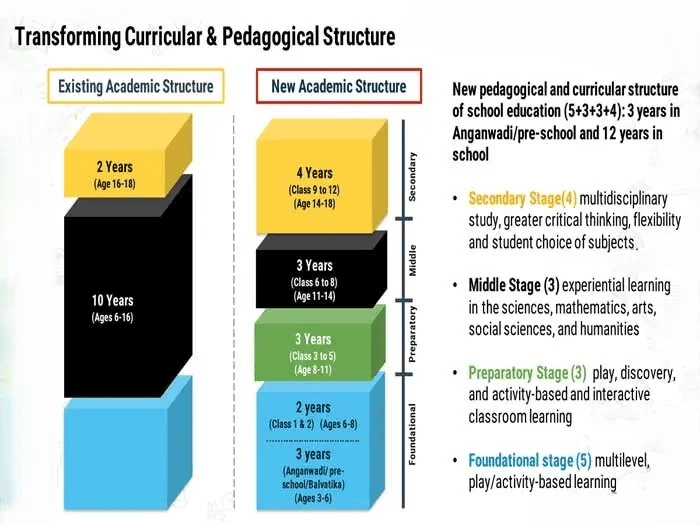
Processes: 5+3+3+4 school structure, vocational/art integration from Grade 6, competency-based assessments

Geography: Pan-India coverage of ~25 crore learners across 28 States & 8 UTs

Quick Facts for MCQs

Structural Reforms

  • Structure: 5+3+3+4 replaces 10+2, foundational stage ages 3-8 fully play-based
  • Autonomy: College affiliation removal, graded independence, new National Higher Education Regulatory Council
  • Teacher pathway: Common National Professional Standards; merit-based promotion, four-year B.Ed mandatory

Assessment & Learning Shift

  • Assessment: 360° Holistic Progress Card tracking cognitive, social, emotional growth
  • Competency focus: Textbooks, papers, classrooms geared to application, innovation over rote recall
  • PARAKH: National Assessment Centre standardises learning outcomes, enables comparability across boards

Digital & Innovation Schemes

  • Platforms: PM e-VIDYA, DIKSHA, Virtual Labs deliver multilingual content, teacher upskilling
  • Atal Tinkering Labs: 15,000+ labs, 3-D printers & robotics kits engaging 1.1 crore students in STEM
  • Atal Incubation Centres & ANIC: 3,500+ startups mentored; challenge grants seed tech solutions

Inclusivity & Equity

  • Funds: Gender Inclusion Fund, Special Education Zones for aspirational districts
  • Disability support: Resource centres, assistive tech, universal design in curricula
  • Vocational inclusion: Hands-on skill training from Grade 6 aligns with Atmanirbhar Bharat vision

Key Data Points

FeatureData-Point
Approval year2020
Drafting bodyDr K. Kasturirangan Committee
School GER goal100% by 2030
Higher-ed GER goal50% by 2035 (3.5 crore new seats)
Out-of-school reintegration2 crore children targeted
Teacher minimum qualification4-year integrated B.Ed by 2030
Board exam frequencyTwice a year, overseen by PARAKH
Affiliation systemPhased-out; graded autonomy to colleges in 15 yrs
Digital platform reachPM e-VIDYA/DIKSHA serve ~25 crore students
Gender Inclusion FundSupports girls & transgender learners

Related UPSC Prelims PYQs

CDS_GK, ESE_GS 2025PYQ 1

NEP 2020 के दिशा-निर्देश के अनुसार, 'पोषण और पढ़ाई पूर्व' (PPBP), निम्नलिखित में से किस कार्यक्रम के अंतर्गत प्रारंभ की गई है?

CDS_GK, ESE_GS 2021PYQ 2

Which one of the following statements is NOT correct regarding the National Education Policy 2020 in India ?

GS-1Misc

15.Rising Student Suicides India (Student Mental Health)

FL
Illustration for Rising Student Suicides India (Student Mental Health)

What & Where

Student suicides = self-inflicted deaths among enrolled learners, spanning school to university levels.

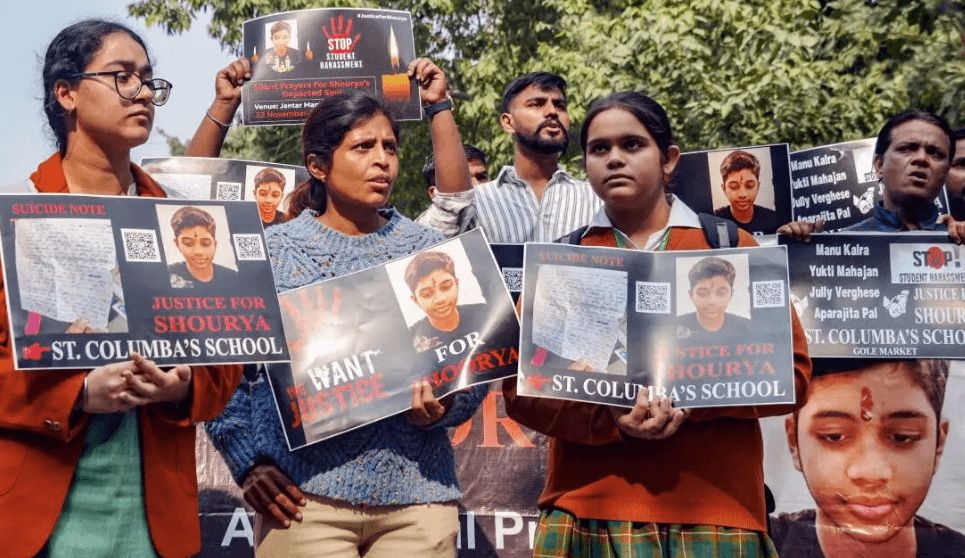
India saw a 65 % jump in such cases (2013-23), now touching pre-teen (9 yrs) to late-teen cohorts.

Clusters peak during exam months; hotspots include Telangana, Uttar Pradesh, Delhi NCR.

Quick Facts for MCQs

Statistical Trend

  • Surge outpaces overall national suicide growth, indicating education-specific stressors.
  • 9-17 yrs segment now visible, earlier limited to late teens/young adults.
  • Examination months correlate with localised suicide spikes across multiple States.

Institutional Gaps

  • Counsellor–student ratios remain “dismal”; most schools lack budgets or safe disclosure spaces.
  • Early warning signs (withdrawal, irritability, grade drop) often mislabelled “normal teenage behaviour.”
  • SC-mandated helplines, staff sensitisation largely unimplemented at ground level.

Proposed Reforms

  • Mandatory full-time counsellors, crisis teams, confidential reporting in every > 100-student school.
  • Shift to phased assessments, project learning; regulate coaching hours and create exam buffer days.
  • Embed mental-health modules in B.Ed/in-service training; outlaw humiliation-based discipline.

Key Data Points

FeatureData-Point
NCRB student suicides 20138,423
NCRB student suicides 202313,892
Decadal rise65 %
Youngest reported age9 years
UNICEF-India 2024 finding23 % schoolchildren show psychiatric symptoms
SC guideline year2025 (helplines, counsellors mandatory)
School size needing full-time counsellor (proposal)> 100 students
Common exam-linked StatesTelangana, Uttar Pradesh
Key post-pandemic risk factorsHigher screen time, social withdrawal

Ready to practice?

Test your knowledge with our UPSC test series.

Start Free Trial