UPSC Current Affairs

13 topicsGS-1: 2GS-2: 4GS-3: 7
0/13 done
GS-2Editorial

1.Digital Constitutionalism Principles (Digital Rights)
The Hindu
Illustration for Digital Constitutionalism Principles (Digital Rights)

What & Where

Definition: Digital constitutionalism = application of liberty, dignity, privacy, equality, due-process principles to digital technologies & governance.

Origin: Gained traction post K.S. Puttaswamy (2017, India) and EU-GDPR (2018); reaction to expanding platform/surveillance power.

Geography: Discussed globally; article focuses on Indian digital rights and state mandates (Sanchar Saathi rollback).

Quick Facts for MCQs

Concept Features

  • Rights-based governance: embeds privacy, autonomy, equality into digital design & policy.
  • Surveillance limits: mandates necessity, proportionality, independent oversight for state/corporate monitoring.
  • Algorithmic transparency: requires audits, explainability, public disclosure of decision logic.

Indian Legal & Policy

  • Article 21 anchors privacy; IT Act 2000 + Rules regulate intermediaries, cybersecurity.
  • DPDP Act manages consent/storage but allows expansive government access.
  • No dedicated surveillance statute; interceptions via Telegraph Act & Sec 69 IT Act.

Challenges

  • Unchecked facial recognition, metadata monitoring without judicial warrants.
  • Click-wrap consent models undermine autonomy, enable excessive data harvest.
  • Black-box AI bias disproportionately affects caste, gender, economic minorities.

Reform Path

  • Enact modern surveillance law with judicial warrants, proportionality tests, periodic audits.
  • Set up independent Digital Rights Commission for algorithm review & grievance redress.
  • Narrow DPDP exemptions, impose strict retention limits, mandate high-risk AI impact assessments.

Key Data Points

FeatureData-Point
First Indian apex judgment on digital privacyK.S. Puttaswamy v. Union of India, 2017
Core tests mandated by judgmentLegality, necessity, proportionality
Key statute on personal dataDigital Personal Data Protection Act, 2023
Major exemption concernBroad state immunity under DPDP Act
Main legacy surveillance lawIndian Telegraph Act, 1885
Mandatory identity law scrutinisedAadhaar Act, 2016 (purpose-limitation added)
App that triggered debateSanchar Saathi (DoT, 2024 directive withdrawn)
Global privacy benchmarkEU General Data Protection Regulation, 2018

Related UPSC Prelims PYQs

CDS_GK, GS1 2018PYQ 1

Right to Privacy is protected as an intrinsic part of Right to Life and Personal Liberty. Which of the following in the Constitution of India correctly and appropriately imply the above statement?

CDS_GK, GS1 2024PYQ 2

Who among the following filed the Writ Petition that led to the famous verdict of the Supreme Court of India recognising the Right to Privacy as a Fundamental Right?
GS-2Polity

2.Directorate General of Civil Aviation (Aviation Regulator)

Economic Times
Illustration for Directorate General of Civil Aviation (Aviation Regulator)

What & Where

Regulator: DGCA is India’s statutory civil-aviation watchdog ensuring aircraft, crew, aerodrome safety and ICAO compliance

Genesis: set up 1927; acquired statutory status via Aircraft (Amendment) Act 2020

Location: New Delhi headquarters; administratively under Ministry of Civil Aviation

Quick Facts for MCQs

Legal & Policy

  • Statutory_basis: Aircraft Act 1934, Aircraft Rules 1937 plus 2020 amendment confer regulatory powers
  • Rulemaking: Issues Civil Aviation Requirements, Air Safety Circulars governing FDTL, airworthiness, operations
  • Enforcement: May levy penalties, suspend licences, revoke Air Operator Certificates for non-compliance

Safety Oversight Tools

  • Surveillance: Conducts audits, spot checks on airlines, airports, MROs, training centres
  • Certification: Registers aircraft, issues Certificates of Airworthiness, certifies aerodromes for safety compliance
  • Dangerous_goods: Approves operators handling hazardous cargo, oversees related procedures

Licensing & Training

  • Licences: Grants permits to pilots, AMEs, ATCOs, cabin crew, flight dispatchers after exams and skill checks
  • Training_nodes: Approves flying schools, AME institutes, simulators, aviation-training organisations

International Alignment

  • ICAO_coordination: Harmonises Indian rules with Annexes, participates in USOAP safety audits
  • Civil-military_airspace: Coordinates use of airspace with defence to optimise navigation services

Key Data Points

FeatureData-Point
Parent ministryMinistry of Civil Aviation
First creation year1927
Statutory upgradeAircraft (Amendment) Act 2020
Accident probe weight limit≤ 2250 kg AUW for serious incidents
Recent exception grantedOne-time FDTL waiver to IndiGo, 2024
Core mandateSafety oversight, licensing, certification

Related UPSC Prelims PYQs

ESE_GS, GS1 2003PYQ 1

Which one of the following statements is correct?

ESE_GS, GS1 2022PYQ 2

Which one of the following ministries has repealed the Unmanned Aircraft Systems (UAS) Rules, 2021 and replaced the same with the liberalized Drone Rules, 2021?

GS-2Polity

3.Right to Disconnect Bill 2025 (Labour Welfare Bill)

Indian Express

What & Where

Right to Disconnect Bill 2025: Private Member’s Bill in Lok Sabha creating a legal “after-hours shield” for employees in India.

Covers establishments with >10 workers; proposes Employees’ Welfare Authority, overtime pay, counselling and digital-detox centres.

Mirrors right-to-disconnect laws already active in France, Portugal and Australia.

Quick Facts for MCQs

Legal & Policy

  • Authority: Employees’ Welfare Authority to enforce right, run baseline studies, negotiate after-hour protocols.
  • Compliance: Employers must pay overtime; no disciplinary action for refusal to respond off-duty.
  • Bill mandates counselling services plus digital detox centres to curb techno-stress.

Labour Welfare

  • Targets telepressure, stress, “info-obesity” from 24×7 connectivity.
  • Seeks concrete work–life boundaries via statutory right to ignore communications.
  • Recognises after-hour assignments as compensable overtime.

Parliamentary Procedure

  • Any non-minister MP = “Private Member”; ministers bring Government Bills.
  • PMBs rarely succeed: 14 enacted, none since 1970.
  • Limited debate window (Fridays) lowers passage odds.

International Examples

  • France 2017 Labour Code amendment guarantees disconnect right.
  • Portugal 2021 law penalises bosses contacting staff off-hours.
  • Australia’s Fair Work Act amendments embed similar employee safeguards.

Key Data Points

FeatureData-Point
Bill typePrivate Member’s Bill (PMB)
House & dateLok Sabha, Dec 2025
Employer size triggerMore than 10 employees
Reserved day for PMBsFriday sittings
PMBs passed since 194714
Last PMB cleared by both Houses1970

Related UPSC Prelims PYQs

ESE_GS 2025PYQ 1

Which one of the following is correct with respect to the Industrial Relations Bill?

GS-3Economy

4.RBI Open Market Operation Purchase (Monetary Policy)

Business Standard
Illustration for RBI Open Market Operation Purchase (Monetary Policy)

What & Where

Definition: RBI’s Open Market Operation (OMO) purchase = buying govt securities from banks to inject durable rupee liquidity.

Geography: Conducted in domestic G-Sec market; executed via electronic auction platform, Mumbai.

Key types: Expansionary (buy), Contractionary (sell), Special “Operation Twist” (simultaneous buy-sell).

Quick Facts for MCQs

Monetary Policy Tool

  • Liquidity-Injection: Expansionary OMO lowers short-term rates, eases credit transmission.
  • Inflation-Control: Contractionary OMO absorbs excess money, raises yields when prices overheat.
  • Yield-Curve-Shaping: Operation Twist flattens long end without altering net liquidity.

Market Impact

  • Bond-Yields: RBI buy orders create demand, compressing G-Sec yields and borrowing costs.
  • Money-Market: Added reserves pull call, TREPS rates toward repo corridor floor.
  • Government-Borrowing: Prevents disorderly spikes, ensuring smoother auction outcomes.

Operational Process

  • Announcement: RBI releases auction notice specifying quantum & maturities.
  • Participation: Banks/PDs submit bids on NDS-OM; highest yields accepted.
  • Settlement: RBI credits funds; securities move to its SGL, expanding systemic liquidity.

Currency Management

  • Rupee-Support: Injected liquidity offsets FX outflow drain, stabilising domestic money supply.
  • Swap-Synergy: Dollar-rupee swap supplies dollars while simultaneously absorbing/adding rupees per tenor.

Key Data Points

FeatureData-Point
Current OMO size₹1 trillion purchase
Complementary tool$5 billion dollar–rupee swap
Immediate goalCounter rupee slide past 90/$ & foreign outflows
Effect on bank reservesDurable increase
Impact on WACRSoftening toward policy repo
Policy stance signalledAccommodative liquidity without rate cut
Securities targetedCentral Govt dated securities
Settlement cycleT+1 via RBI’s PDO-NDS

Related UPSC Prelims PYQs

GS1 2013PYQ 1

In the context of Indian economy, ‘Open Market Operations’ refers to

GS1 2023PYQ 2

Which one of the following activities of the Reserve Bank of India is considered to be part of ‘sterilization’?

GS-3Economy

5.Masala Bonds (Rupee-Denominated Bonds)

The Hindu

What & Where

Masala Bonds: rupee-denominated debt sold overseas by Indian corporates/government agencies.

Issued under RBI’s External Commercial Borrowing route; forex risk lies with foreign investor.

Chief venues London & Singapore; concept debuted 2014 via IFC issue.

Quick Facts for MCQs

Regulatory Framework

  • RBI: classifies Masala Bonds under ECB; prescribes size, tenor, end-use caps.
  • SEBI: requires listing disclosures, investor-protection compliance on foreign bourses.
  • FEMA: violations attract ED investigations and monetary penalties.

Issue & Maturity Norms

  • Minimum tenure 3 years (≤ USD 50 mn), 5 years for larger issues.
  • Popular listings on LSE & SGX tap deep global institutional demand.

Permitted vs Restricted Uses

  • Permitted: refinance rupee loans, infrastructure, affordable housing, working capital.
  • Restricted: land deals, speculative real estate, domestic equity, barred-FDI sectors.
  • On-lending for any prohibited activity expressly forbidden.

Global Analogues

  • Dim-Sum & Panda: RMB bonds outside vs inside mainland China.
  • Samurai: Yen bonds issued in Japan by foreign entities.
  • Yankee & Kangaroo: USD in US; AUD in Australia by non-resident issuers.

Enforcement Action

  • ED served show-cause to Kerala CM & ex-FM over KIIFB Masala Bond, citing alleged FEMA breach.

Key Data Points

FeatureData-Point
Currency DenominationIndian Rupee (INR)
First IssueNov 2014, IFC, London Stock Exchange
Minimum Maturity3 yr ≤ USD 50 mn; 5 yr above
Governing LawFEMA + RBI ECB guidelines + SEBI norms
Forex Risk BearerOverseas bondholder, not Indian issuer
Eligible IssuersIndian corporates, NBFCs, government-linked bodies

Related UPSC Prelims PYQs

GS1 2016PYQ 1

With reference to 'IFC Masala Bonds', sometimes seen in the news, which of the statements given below is/are correct?

GS1 2019PYQ 2

Which one of the following is not the most likely measure the Government/RBI takes to stop the slide of Indian rupee?

GS-3Economy

6.Indian Rupee Depreciation (Exchange Rate)

Indian Express

What & Where

Currency depreciation : fall in value under floating rates; rupee buys fewer dollars.

Sep–Dec 2021 : INR slipped 2.2 %, turning Asia’s worst-performing currency.

Geography : Impact centred on Indian forex, equity and import-dependent sectors.

Quick Facts for MCQs

Causes

  • Trade-deficit surge; expensive crude raised import payments.
  • Fed-RBI policy gap; higher US yields strengthened dollar, RBI kept rates low.
  • Portfolio outflows plus Omicron risk spooked foreign investors.

Economic Impact

  • Exports gain price competitiveness, aiding recovery.
  • Imported inflation risk on fuel, electronics; pressures RBI’s low-rate stance.
  • Costlier overseas borrowing for firms with unhedged dollar debt.

Concepts & Terms

  • Appreciation : domestic currency buys more foreign units; hurts exports.
  • Depreciation : market-driven fall; opposite of appreciation; encourages exports.
  • Devaluation : deliberate cut in fixed/semi-fixed regime, unlike market-led depreciation.

Key Data Points

FeatureData-Point
Forex pull-out Sep–Dec 2021≈ US $4 billion from equity market
Rupee fall in same quarter2.2 % versus USD
November 2021 trade deficitRecord ≈ US $23 billion
USD/INR peak Dec 2021About ₹76 per dollar
Oil price roleRebound widened import bill

Related UPSC Prelims PYQs

CDS_GK, GS1 2025PYQ 1

मुद्रा मूल्यह्रास (Currency depreciation) किस प्रकार से निवल निर्यात (net exports) की वृद्धि को प्रेरित कर सकता है?

CDS_GK, GS1 2019PYQ 2

भारत के संदर्भ में, मुद्रा संकट के जोखिम को कम करने में निम्नलिखित में से किस/किन कारण/कारकों का योगदान है?

GS-3Economy

7.India-US DTAA Residency Dispute (Double Taxation Treaty)

Economic Times

What & Where

RNOR (Resident but Not Ordinarily Resident): transitional Indian tax status for returning NRIs.

DTAA: India-US Double Taxation Avoidance Agreement governing cross-border income taxation.

Geography: Applies to income flows between India and United States.

Quick Facts for MCQs

Legal & Policy

  • Interpretation shift: US may deny RNOR “resident” status under Article 4 of DTAA.
  • Justification: OECD says residency requires worldwide income taxation by home country.
  • Domestic laws unchanged: India still exempts RNOR foreign income.

Economic Angle

  • Cost escalation: Higher US withholding directly reduces net returns on dividends, interest, capital gains.
  • Investment structures: Cross-border funds, ESOPs, trusts planned on treaty rates now at risk.
  • Financial planning: Returning professionals/retirees must reassess cash flows and tax credits.

OECD Influence

  • Influence: Both India and US participate in OECD tax forums, lending weight to commentary.
  • Precedent: Other treaties may adopt similar ‘full-tax-liability’ interpretation.
  • Debate: Non-binding status leaves room for bilateral consultation or Competent Authority relief.

Key Data Points

FeatureData-Point
RNOR Indian tax on foreign incomeNil during RNOR period
RNOR stay requirement120–182 days in India in FY
Alternate RNOR testsNRI in 9/10 past years OR ≤729 days in 7 years
Normal US dividend withholding15–25 % under DTAA
Post-shift dividend withholding30 % (treaty benefit lost)
Post-shift interest withholding30 % vs 15 % earlier
OECD Commentary year cited2021 update
Binding nature of CommentaryPersuasive, not compulsory
GS-1History

8.UNESCO Intangible Heritage Committee Session (Intangible Cultural Heritage)

PIB

What & Where

UNESCO Intergovernmental Committee for Safeguarding of Intangible Cultural Heritage (ICH) — 24-member body under 2003 ICH Convention.

20th session hosted by India at Red Fort (Lal Qila), New Delhi.

ICH = living traditions, expressions, knowledge; protected via Representative, Urgent Safeguarding Lists & Good Practices Register.

Quick Facts for MCQs

Committee Structure

  • Membership: 24 States elected by Convention General Assembly; seats equitably split among six regional groups.
  • Tenure: fixed 4 years; staggered biennial replacement; no consecutive terms ensures wider participation.
  • Experts: each State nominates ICH-qualified professionals to serve on committee.

Committee Functions

  • Promotion: advances 2003 Convention objectives, community involvement, international cooperation for safeguarding living heritage.
  • Guidance: drafts operational directives, ICH Fund plans, technical advice and best-practice models for States.
  • Evaluation: reviews nominations for Representative List and Urgent Safeguarding List, selects Good Safeguarding Practices.

ICH Lists

  • Representative List: highlights global cultural diversity; aims visibility and dialogue.
  • Urgent Safeguarding List: identifies endangered traditions requiring immediate protection and funding.
  • Good Practices Register: documents exemplary safeguarding projects for replication worldwide.

Indian Angle

  • Hosting: India convenes 20th Committee session at iconic Mughal-era Red Fort enhancing venue’s heritage symbolism.
  • Record: 15 Indian elements inscribed on Representative List, including Yoga, Kumbh Mela, Vedic chanting.
  • Visibility: event spotlights India’s crafts, rituals, festivals before global cultural community.

Key Data Points

FeatureData-Point
Session number20th
Host countryIndia
VenueRed Fort, New Delhi
Committee size24 Member States
Convention year2003 (in force 2008)
Membership term4 years
Immediate re-electionNot allowed
Regional groups6
Biennial rotationHalf members replaced every 2 years
India’s elements on Rep. List15
GS-1History

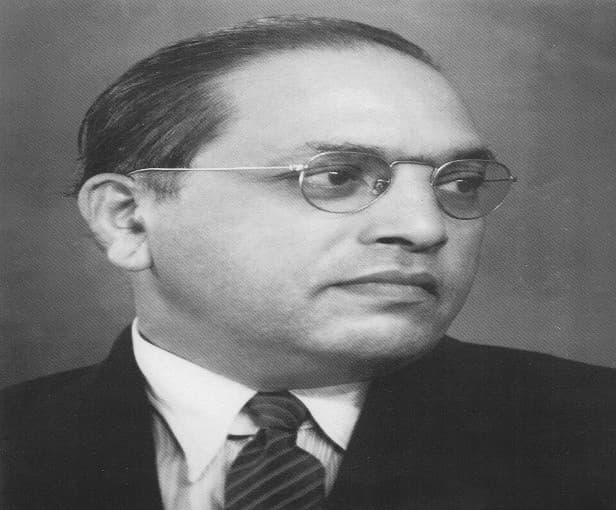
9.Dr B.R. Ambedkar Mahaparinirvan Diwas (National Personalities)

News on Air
Illustration for Dr B.R. Ambedkar Mahaparinirvan Diwas (National Personalities)

What & Where

Mahaparinirvan Diwas: 6 December; nation-wide homage to Dr B.R. Ambedkar’s passing (1956).

Nodal observance: Chaitya Bhoomi, Dadar (Mumbai); parallel events at Parliament House lawns, Delhi.

Core recall: constitutional authorship, anti-caste crusade, pioneering Indian monetary economics.

Quick Facts for MCQs

Early Life & Education

  • Birth Mahar caste; early exclusion shaped lifelong anti-untouchability stance.
  • Baroda scholarship enabled Columbia PhD 1917, LSE D.Sc. 1923, Gray’s Inn barrister.
  • Seminal papers on caste, provincial finance, rupee crisis gained global academic acclaim.

Social Reform Mobilisations

  • Mahad Satyagraha asserted Dalit access to public water, dismantling purity–pollution taboo.
  • Kalaram Temple Satyagraha demanded Hindu temple entry, foregrounding worship equality.
  • Poona Pact swapped separate electorates for 148 reserved seats; template for reservations.

Constitution & Governance

  • Chaired Drafting Committee (29 Aug 1947); embedded justice, liberty, equality, fraternity.
  • Articles 17, 46, 338 abolished untouchability, mandated SC welfare, created SC Commission.
  • Viceroy’s Executive Council (1942-46) introduced 8-hour day, maternity leave, provident-fund precursors.

Economic Thought

  • “Problem of the Rupee” informed RBI Act 1934, exchange-rate management.
  • Provincial Finance thesis (1921) anticipated constitutional fiscal federalism, Finance Commission.
  • Championed multipurpose river schemes; pushed Damodar Valley and Central Water Commission creation.

Key Data Points

FeatureData-Point
Birth14 Apr 1891, Mhow (MP)
Death6 Dec 1956, Delhi
Mahaparinirvan day6 December every year
Memorial siteChaitya Bhoomi, Mumbai
ConversionBuddhism, 14 Oct 1956, Nagpur
Iconic protestMahad Satyagraha 1927
Temple campaignKalaram Temple Satyagraha 1930
Political pactPoona Pact 1932 with Gandhi
Influential book“Problem of the Rupee” 1923
Posthumous honourBharat Ratna 1990

Related UPSC Prelims PYQs

CAPF_GAI, GS1 1996PYQ 1

His ‘principal forte was social and religious reform. He relied upon legislation to do away with social ills and worked unceasingly for the eradication of child marriage, the purdah system …… To encourage consideration of social problems on a national scale, he inaugurated the Indian National Social Conference, which for many years met for its annual sessions alongside the Indian National Congress.’ The reference in this passage is to

CAPF_GAI, GS1 2021PYQ 2

निम्नलिखित उद्धरण पर विचार कीजिए :

GS-3Environment

10.Barcelona Convention (Marine Pollution Treaty)

UNEP
Illustration for Barcelona Convention (Marine Pollution Treaty)

What & Where

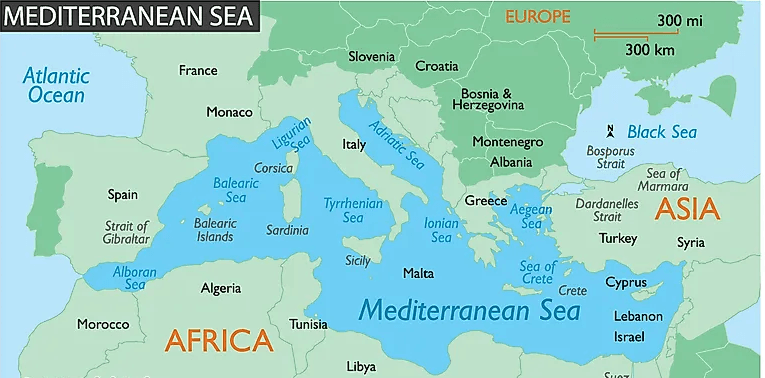
Barcelona Convention 1976: UNEP-led, legally binding pact to curb Mediterranean Sea pollution.

Scope: marine, coastal zones of 21 rim nations across Europe-Asia-Africa.

Venue link: COP24 (2023) Cairo adopted tighter commitments under same framework.

Quick Facts for MCQs

Legal & Policy

  • Commitments aim: prevent, reduce, eliminate land-based, marine, atmospheric pollution sources.
  • Supports regional sustainable development via coordinated action & protocol implementation.
  • COP24 outcome: EU + Med partners upgraded targets; details awaited in COP24 decisions text.

Physical Geography

  • Formed by African–Eurasian plate convergence; semi-enclosed intercontinental sea.
  • Major islands: Sicily, Sardinia, Corsica, Crete, Cyprus, Mallorca, Lesbos.
  • Sub-basins examples: Alborán, Algerian, Tyrrhenian (west); Ionian, Levantine (east).

Connectivity

  • Atlantic via Strait of Gibraltar (14 km narrowest).
  • Black Sea via Dardanelles–Marmara–Bosporus chain; Red Sea via Suez Canal.
  • Sicily ridge divider influences western–eastern circulation and ecology.

Key Data Points

FeatureData-Point
Original titleConvention for Protection of Mediterranean Sea Against Pollution
Adoption date16 Feb 1976, Barcelona
In-force year1978
Amended & renamed1995 (adds “Marine Environment & Coastal Region”)
Current protocols7 (dumping, emergencies, LBS, SPA, offshore, hazardous waste, ICZM)
Institutional leadUNEP / Mediterranean Action Plan (MAP)
Sea area covered~2.5 million km² (≈0.7 % of global ocean)
Deepest pointCalypso Deep, Ionian Sea – 5,267 m
Two major basinsWestern & Eastern, split by Sicily ridge
Key strait linkGibraltar to Atlantic (only natural outlet)
GS-3Science & Technology

11.Niger Eliminates River Blindness (Neglected Tropical Disease)

News on Air
Illustration for Niger Eliminates River Blindness (Neglected Tropical Disease)

What & Where

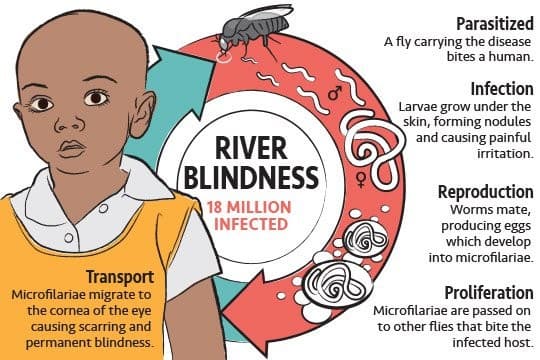
Neglected tropical disease; filarial worm Onchocerca volvulus transmitted by Simulium blackflies breeding near fast-flowing rivers.

Niger, validated by WHO, becomes first African nation to eliminate onchocerciasis (river blindness).

>99 % historical cases in sub-Saharan Africa & Yemen; minor focus on Brazil–Venezuela border.

Quick Facts for MCQs

Clinical Manifestations

  • Skin: relentless pruritus, rashes, thickened depigmented “leopard skin”.
  • Eye: corneal opacities, retinal damage, irreversible blindness.
  • Nodules: firm subcutaneous lumps shelter adult worms.

Treatment & Control

  • Drug: community Ivermectin rounds disrupt microfilariae transmission cycle.
  • Vector control: larviciding blackfly breeding sites along rivers.
  • Surveillance: serology and fly dissections document elimination thresholds.

Socio-Economic Impact

  • Productivity: vision loss curtails farming, escalating rural poverty.
  • Childhood: early infection linked to epilepsy and schooling drop-outs.
  • Stigma: chronic dermatitis drives social isolation and mental distress.

Milestone Achievement

  • Verification: WHO certified Niger’s elimination in 2023.
  • Precedent: first African success among 31 endemic countries.
  • Partnership: government, Carter Center, APOC and NGOs sustained 20-year campaign.

Key Data Points

FeatureData-Point
Causative agentOnchocerca volvulus (filarial worm)
Vector genusSimulium blackflies
Transmission habitatRapidly flowing rivers, streams
Infectious blindness rankSecond after trachoma
Adult worm lifespan10–15 years
Core symptomsIntense itching, leopard skin, eye lesions
Primary drugIvermectin (Mectizan)
Dose schedule1–2 times / year for 10–15 years
Elimination verifierWorld Health Organization
GS-3SecurityQuick Bite

12.Exercise Harimau Shakti 2025 (Bilateral Military Exercise)

PIB
Illustration for Exercise Harimau Shakti 2025 (Bilateral Military Exercise)

What & Where

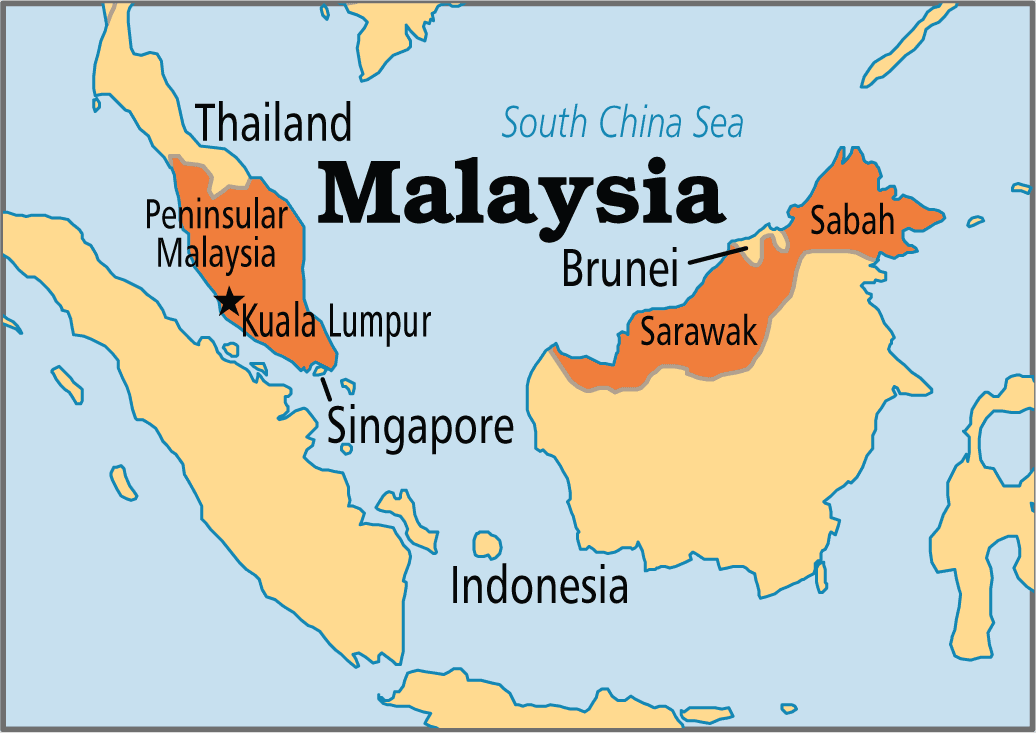
Exercise Harimau Shakti – bilateral Army drill between India & Malaysia, launched 2012

5th edition 2025 hosted in Rajasthan, desert–jungle mix terrain

Core training on jungle warfare, counter-insurgency & UN Ch VII peace-enforcement ops

Quick Facts for MCQs

Security Dimension

  • Interoperability focus; sub-conventional ops rehearsed under realistic counter-terror scenarios
  • UN Ch VII allows sanctions, blockades, troop deployment for peace enforcement

Bilateral Relations

  • Exercise deepens defence pillar of India–Malaysia Comprehensive Strategic Partnership
  • Tri-service spread visible via Harimau Shakti, Samudra Laksamana, Udara Shakti

Training Components

  • Jungle-desert adaptability via small-team tactics, survival and evacuation drills
  • Physical conditioning integrated through AMAR routines and Yoga sessions

Key Data Points

FeatureData-Point
Participating units 2025Dogra Regiment (India) & 25th Bn Royal Malaysian Army
Edition number5th
First year held2012
2025 venueRajasthan, India
Policy linkageIndia’s Act East Policy
UN mandate referencedChapter VII (peace enforcement)
Key drillsCordon–search, heliborne insertion, casualty evacuation
Complementary skillsArmy Martial Arts Routine, combat reflex shooting, Yoga
Other Indo-Malaysia drillsSamudra Laksamana (Navy), Udara Shakti (Air)

Related UPSC Prelims PYQs

CDS_GK 2023PYQ 1

The 16th edition of Indo-Nepal annual joint training exercise in jungle warfare and counter-terrorism operations was held in December 2022 at Nepal Army Battle School, Saljhandi. What is the name of this exercise?

CDS_GK 2023PYQ 2

The eighth edition of the Exercise Garuda Shakti, a bilateral military-to-military exercise, was conducted recently between the special forces of India and

GS-2Scheme

13.Disability Rights Empowerment Roadmap (Disability Rights)

PIB

What & Where

Persons with Disabilities (PwDs): long-term physical, intellectual, sensory or mental impairments needing equal rights and accessibility.

Rights of Persons with Disabilities Act, 2016: pan-India law recognising 21 disability types, mandating reservation and barrier-free access.

Context: India, International Day of PwDs (3 Dec) and “Purple Fest 2025” driving nationwide inclusivity push.

Quick Facts for MCQs

Legal & Policy

  • RPwD Act 2016: reservations in education, employment; legal duty on governments for universal accessibility.
  • National Trust Act 1999 targets Autism, Cerebral Palsy, Mental Retardation, Multiple Disabilities welfare.
  • RCI Act 1992 regulates rehabilitation education; maintains Central Rehabilitation Register.

Schemes & Technology

  • Sugamya Bharat retrofits infrastructure, transport, ICT; app provides grievance redressal and accessibility mapping.
  • ADIP supplies subsidised aids, appliances, cochlear implants to boost mobility and independence.
  • UDID issues single digital ID, scrubs duplicates, speeds benefit delivery.

Economic Empowerment

  • NDFDC offers concessional credit via Divyangjan Swavalamban Yojana for self-employment.
  • PM-DAKSH-DEPwD portal: “Kaushal Vikas” training + “Rozgar Setu” job linkage.
  • Divya Kala Mela markets PwD entrepreneurs’ products, echoing “Vocal for Local”.

Accessibility Gaps

  • Infrastructure: only 3 % buildings accessible; ramps, tactile paths, signage scarce.
  • Education: shortage of trained teachers; secondary attainment merely 19.3 %.
  • Employment: private reluctance; just 34 lakh of 1.3 crore employable PwDs working.

Way Forward

  • Enforcement: empower Chief Commissioner to penalise RPwD Act violations, set strict compliance deadlines.
  • Retrofitting: audit and upgrade all public assets under Accessible India, meeting UNCRPD standards.
  • Innovation: fund AI-based assistive tech via ALIMCO, incubate accessibility start-ups.

Key Data Points

FeatureData-Point
PwD share of population (Census 2011)2.21 %
Absolute PwD count2.68 crore
Disability categories under RPwD Act21
Public buildings fully accessible (2018)3 %
Employable PwDs1.3 crore
PwDs actually employed34 lakh
PwDs with secondary+ education19.3 %
Unique ID schemeUDID national database & card

Related UPSC Prelims PYQs

CDS_GK, GS1 2011PYQ 1

India is home to lakhs of persons with disabilities. What are the benefits available to them under the law?

CDS_GK, GS1 2024PYQ 2

Consider the following statements regarding the Sugamya Bharat Abhiyan:

Ready to practice?

Test your knowledge with our UPSC test series.

Start Free Trial