UPSC Current Affairs

15 topicsGS-1: 1GS-2: 6GS-3: 8
0/15 done
GS-2Polity

2.Alternative Dispute Resolution Mechanisms India (ADR Mechanisms)

The Hindu

What & Where

Definition: ADR = out-of-court resolution via arbitration, mediation, conciliation, negotiation, Lok Adalat.

Legal anchors: Article 39A, Section 89 CPC 1908, Arbitration & Conciliation Act 1996 (2021 amend.), Legal Services Authorities Act 1987.

Geography: Pan-India; first Lok Adalat — Gujarat 1999; aligned with UNCITRAL Model Law for cross-border enforceability.

Quick Facts for MCQs

Legal & Policy

  • Article 39A mandates equal justice; Section 89 CPC legitimises arbitration, mediation, conciliation, Lok Adalat.
  • 1996 Act (2021 amend.) introduces Indian Arbitration Council, fixes 180-day award period.
  • Mediation Act 2023 provides statutory backing, accreditation, institutional mediation.

Infrastructure & Capacity

  • Backlog: 4.57 crore cases; HC vacancies 33 %, district courts 21 %.
  • ADR centres scarce; court-annexed facilities uneven in UP, Bihar, Andhra Pradesh.
  • Measures: nationwide accredited centres, public awareness, strict neutral accreditation.

Global & Economic Angle

  • UNCITRAL compliance ensures international enforceability, boosting foreign investor confidence in India.
  • Investors favour ADR for neutrality, cost and speed, aiding India’s global economic engagement.
  • Panch Parmeshwar doctrine cited to blend cultural consensus with modern ADR cooperation.

Key Data Points

FeatureData-Point
Pending cases (all courts)4.57 crore
High Court vacancy rate33 %
District court vacancy rate21 %
Arbitration award time-limit180 days post-pleadings
First Lok AdalatGujarat, 1999
Constitutional basis for legal aidArticle 39A

Related UPSC Prelims PYQs

GS1 2009PYQ 1

With reference to Lok Adalats, consider the following statements :

GS1 2010PYQ 2

With reference to Lok Adalats, which of the following statements is correct ?

GS-3Economy

3.India Logistics Sector Transformation (Logistics Infrastructure)

Sansad TV
Illustration for India Logistics Sector Transformation (Logistics Infrastructure)

What & Where

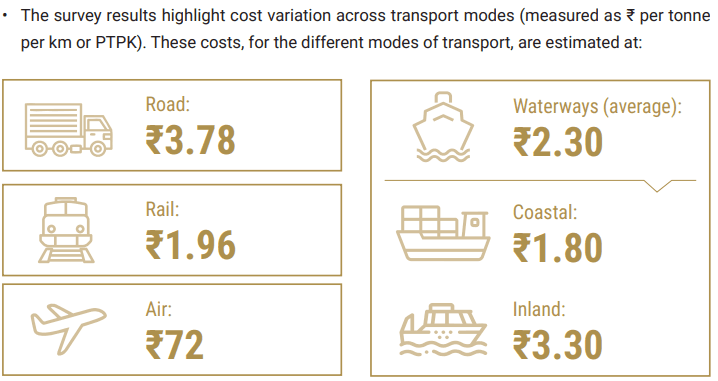
Logistics: integrated transport-warehousing-supply-chain network linking farms, factories, ports, retail across India.

Core plans: PM Gati Shakti GIS platform + National Logistics Policy aim to cut cost to single digits.

Geography: 35 multimodal parks nationwide; Eastern & Western DFCs (Delhi–Mumbai, Ludhiana–Dankuni) 96 % ready.

Quick Facts for MCQs

Legal & Policy

  • National Logistics Policy 2022 targets single-digit cost via infra, digitisation, standardisation.
  • PM Gati Shakti unifies project planning; empowered group of secretaries ensures inter-ministerial clearances.
  • Maritime Amrit Kaal Vision 2047 envisages hydrogen hubs, shipbuilding, port modernisation.

Economic Angle

  • Cost-intensive logistics erodes export competitiveness; savings unlock value-chain integration.
  • Sector creates mass employment in transport, warehousing, IT-enabled services, boosting regional income.
  • Efficient logistics enlarges tax base through higher manufacturing and trade volumes.

Tech & Schemes

  • ULIP offers single API gateway for real-time cargo visibility across modes.
  • Logistics Data Bank uses RFID to track containers, reduce dwell time at ports.
  • GIS-based 1,700-layer Gati Shakti portal maps roads, rails, utilities for gap analysis.

Challenges & Sustainability

  • High costs, port congestion, poor last-mile links persist despite corridor upgrades.
  • Regulatory overlaps among ministries delay clearances; skill deficit in analytics and automation notable.
  • Over-reliance on diesel trucking elevates emissions; green fuels and electric/hydrogen fleets still nascent.

Key Data Points

FeatureData-Point
Sector valuation (2021)USD 215 billion
Workforce22 million persons
GDP share≈ 14 %
Current logistics cost14–16 % of GDP
China’s cost≈ 8 % of GDP
1 % cost cut effect+2 % GDP growth
Ministries on Gati Shakti57
States/UTs on platform36
GIS layers mapped~1,700
Dedicated Freight CorridorsEastern & Western; 96 % operational
Approved MMLPs35
National Logistics Policy year2022
Gati Shakti launch2021
Digital toolsULIP, Logistics Data Bank
Maritime Vision horizonAmrit Kaal 2047

Related UPSC Prelims PYQs

CAPF_GAI, NDA_GAT 2024PYQ 1

Which of the following statements with regard to National Logistics Policy (NLP) is NOT correct?

CAPF_GAI, NDA_GAT 2024PYQ 2

Consider the following statements:

GS-3InfrastructureQuick Bite

5.VLGC Shivalik Induction (Maritime Logistics)

The Hindu

What & Where

VLGC Shivalik – Very Large Gas Carrier for LPG, 3rd to bear Indian flag

Built in South Korea; operated by Shipping Corporation of India (SCI)

Arrived October 2025 at Visakhapatnam Port, Andhra Pradesh

Quick Facts for MCQs

Technical Specs

  • Size: 225 m length; segregated, temperature-controlled tanks
  • Compliance: Global safety, fuel-efficiency standards
  • Role: Bulk LPG transport cutting voyage frequency

Strategic Significance

  • Dependence: Lowers use of foreign-flagged gas carriers
  • Connectivity: Strengthens Arabian Gulf–India energy corridor
  • Ambition: Supports Viksit Bharat 2047 maritime rank goal

Policy Support

  • Schemes: Shipbuilding Financial Assistance, Maritime Development Fund, Shipbuilding Development Scheme
  • Ecosystem: Build-Own-Repair-Recycle model to boost EXIM efficiency
  • Self-reliance: Vessel induction showcases practical Atmanirbharata

Key Data Points

FeatureData-Point
Vessel classVery Large Gas Carrier (VLGC)
Length225 m
Cargo capacity82,000 CBM LPG
Cargo typesPropane, Butane
Flag stateIndia
Builder nationSouth Korea
Indian operatorShipping Corporation of India
Port of inductionVisakhapatnam
Sequence3rd Indian-flagged VLGC
Key trade routeArabian Gulf ↔ India
Core policy visionAtmanirbhar maritime ecosystem
Target yearTop-5 maritime nation by 2047

Related UPSC Prelims PYQs

CDS_GK 2021PYQ 1

Which one of the following ships was involved in ‘Mission Sagar – II’?

GS-1Mapping

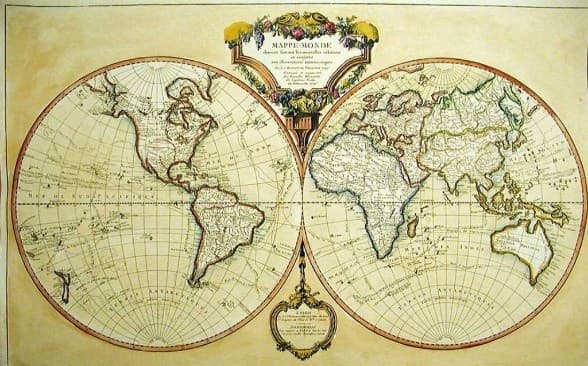
6.Red Sea Rift Geography (Red Sea Rift)

Times of India
Illustration for Red Sea Rift Geography (Red Sea Rift)

What & Where

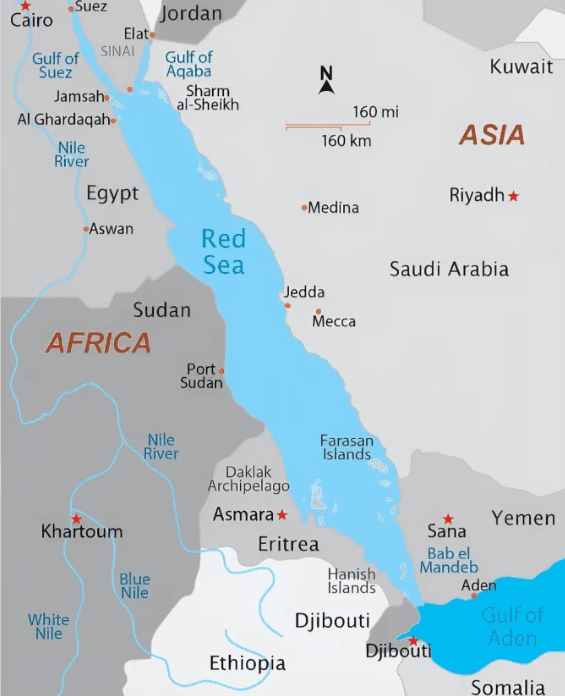
Narrow rift sea between Northeast Africa & Arabian Peninsula, born from African-Arabian plate split.

Stretches ~1,930 km Suez–Bab el-Mandeb, opening to Gulf of Aden & Indian Ocean.

Evidence shows total desiccation for ~100 k yrs around 6.2 Ma, later refilled by ocean flood.

Quick Facts for MCQs

Geological History

  • Desiccation: evaporation exceeded inflow, basin became land canyon 6.2 Ma.
  • Refill: catastrophic Bab el-Mandeb flood restored marine conditions.

Physical Parameters

  • Rift morphology hosts underwater volcanoes, geothermal vents, hypersaline brine pools.
  • High evaporation drives extreme salinity and warm surface temperatures year-round.

Strategic Value

  • Critical maritime corridor linking Mediterranean & Indian Ocean; heavy container and energy traffic.
  • Generates border-state revenues via shipping tolls, coastal tourism, fisheries.

Marine Biodiversity

  • Supports 2,000 km coral reef chain with heat-tolerant corals.
  • Brine pool extremophiles offer insights for biotechnology and astrobiology.

Key Data Points

FeatureData-Point
Sea typeRift-valley inlet of Indian Ocean
Geological age~30 million years
Desiccation event6.2 Ma, lasted ≈100 k yrs
Total length~1,930 km
Surface area~4.5 lakh sq km
Maximum depth3,040 m
Connecting straitBab el-Mandeb
Northern limitGulf of Suez, Egypt
Border nationsEgypt, Sudan, Eritrea, Saudi Arabia, Yemen
Salinity statusAmong hottest & saltiest seas
Strategic linkSuez Canal route Europe–Asia
Key ecosystemsCoral reefs, deep brine pools
Tectonic settingPart of East African Rift System
VolcanismActive submarine volcanoes present
GS-3S&T

7.India Mobile Congress 2025 Exhibition (Telecom Exhibition)

ITV

What & Where

Exhibition; Asia’s largest digital communications & technology forum held annually in India

9th edition (IMC 2025) inaugurated at Yashobhoomi convention centre, New Delhi

Jointly organised by Department of Telecommunications & Cellular Operators Association of India

Quick Facts for MCQs

Tech & Schemes

  • 5G/6G; demos include terabit optical links, AI network management, quantum-secured communication
  • Innovation; pushes indigenous semiconductor design, green telecom gear, advanced cybersecurity tools
  • Research; hosts academia-industry hackathons displaying 1,600 use cases across mobility, health, defence

Economic Angle

  • Investment; catalyses capital for domestic manufacturing, startup funding, 5G-6G infrastructure roll-out
  • Jobs; boosts telecom skilling via Digital India labs and sector-specific R&D centres

International Collaboration

  • Delegations; six nations exploring co-development of global 6G standards and interoperable telecom solutions
  • Partnerships; MoUs expected on spectrum harmonisation, satellite backhaul, fraud-risk mitigation technologies

Key Data Points

FeatureData-Point
Edition9th (2025)
ThemeInnovate to Transform
VenueYashobhoomi, New Delhi
Visitors expected>1.5 lakh
Participating countries150 +
Participating companies400 +
New tech use-cases1,600 +
OrganisersDoT + COAI
Foreign delegationsJapan, UK, Russia, Canada, Austria, Ireland
Mission alignmentDigital India & Atmanirbhar Bharat

Related UPSC Prelims PYQs

ESE_GS, GS1 2024PYQ 1

Which Union Ministry announced '5G & Beyond Hackathon 2023' aimed at shortlisting India-focused cutting-edge ideas workable beyond products and solutions?

ESE_GS, GS1 2025PYQ 2

ग्रैण्ड पैलै (Grand Palais) पेरिस में नवम्बर 2025 में आयोजित होने वाले AI शिखर सम्मेलन के सन्दर्भ में, निम्नलिखित कथनों पर विचार कीजिए :

GS-3S&T

8.Indian Radio Software Architecture Standard (Software Defined Radio)

DD News

What & Where

Standard: Indian Radio Software Architecture (IRSA) 1.0, first national software architecture for military Software Defined Radios

Scope: Provides unified development, integration, upgrade of secure communication across Army, Navy, Air Force

Geography: Conceived, developed and fielded in India by DRDO with Integrated Defence Staff support

Quick Facts for MCQs

Tech & Schemes

  • Architecture: Common software modules enable plug-and-play waveforms across naval, airborne, ground radios
  • Scalability: Design anticipates AI, 5G, next-gen tech without hardware overhaul
  • Certification: Prescribes security and reliability tests ensuring uniform procurement benchmarks

Security Dimension

  • Interoperability: Tri-service radios communicate seamlessly enhancing joint C4ISR effectiveness
  • Autonomy: Indigenous framework eliminates proprietary foreign waveforms lowering cyber-espionage risk
  • Reliability: Standardised conformance checks ensure hardened, mission-ready communication systems

Economic Angle

  • Industry boost: Clear interface specs open market for domestic MSME radio components
  • Export potential: Standardised SDRs align with Defence Export Policy for partner nations
  • Cost saving: Waveform reuse cuts lifecycle expenditure versus platform-specific radio development

Key Data Points

FeatureData-Point
Standard nameIRSA Standard 1.0
Developed byDRDO + IDS + Tri-Services
Applicable domainMilitary Software Defined Radios
Service coverageArmy, Navy, Air Force
Core goalInteroperability across SDR platforms
Key capabilityWaveform portability
Scalability targetAI and 5G technologies
CertificationBuilt-in testing & conformance framework
Strategic benefitReduced foreign dependence
Export scopeIRSA-compliant SDRs for friendly nations
GS-3S&T

9.Nobel Physics 2025 Quantum Tunnelling (Quantum Tunnelling)

The Hindu
Illustration for Nobel Physics 2025 Quantum Tunnelling (Quantum Tunnelling)

What & Where

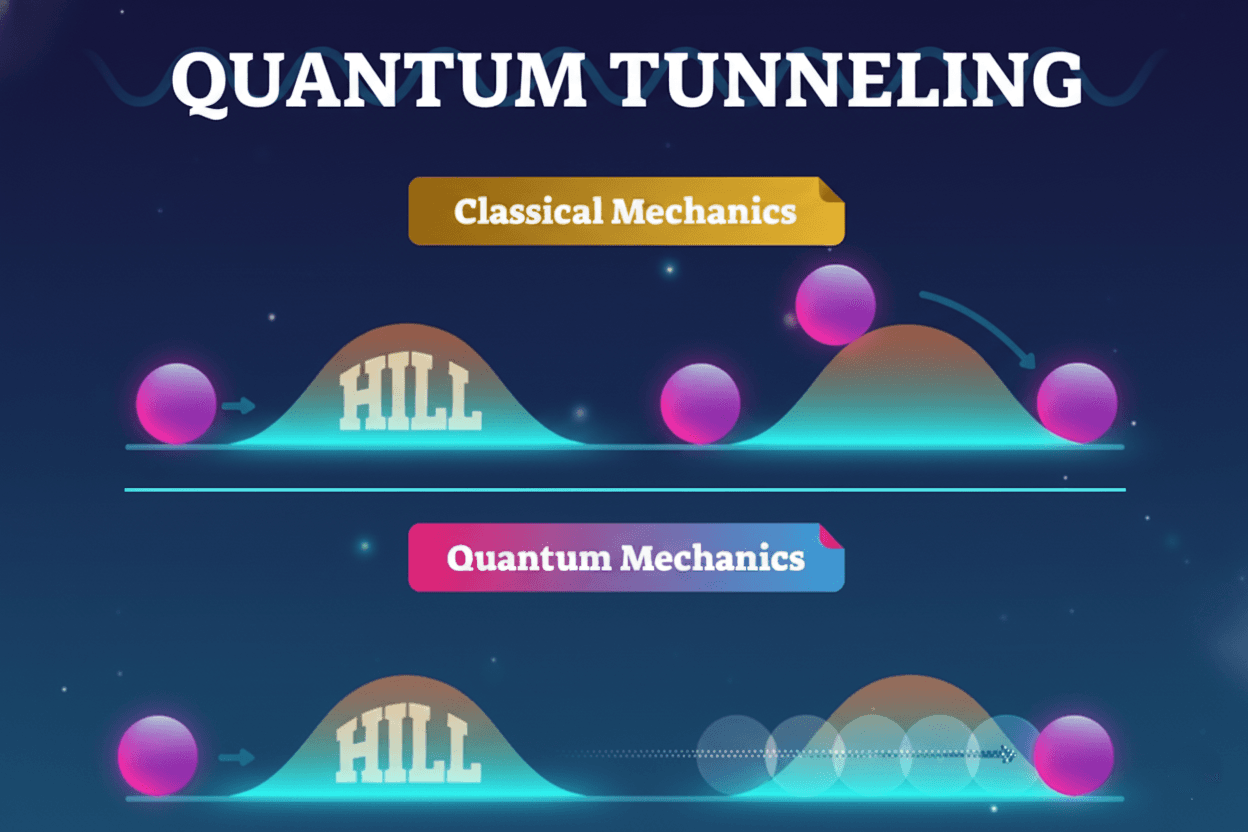
Phenomenon: Macroscopic quantum tunnelling—collective Cooper-pair wavefunction crosses energy barrier in superconducting circuits

Device: Josephson junction—two superconductors + thin insulator; platform for observing energy quantisation

Geography: Prize announced Stockholm; research triggers global quantum-tech races incl. India, U.S., EU

Quick Facts for MCQs

Tech & Schemes

  • Superconducting-qubit design uses quantised energy levels as two-state logical unit
  • SQUIDs exploit Josephson effect for pico-tesla magnetic sensing
  • India allocating INR 6000 cr (est.) under National Quantum Mission

Security Dimension

  • Quantum computers threaten RSA, ECC via Shor algorithm
  • Post-quantum cryptography research accelerated in U.S. NIST standardisation
  • Quantum tech race viewed as critical infrastructure security issue

Applications

  • STM mapping atomic surfaces relies on electron tunnelling current
  • Flash memory employs Fowler–Nordheim tunnelling for charge storage
  • Stellar fusion proceeds as protons tunnel Coulomb barrier, powering Sun

Key Data Points

FeatureData-Point
Nobel Physics Year2025
LaureatesJohn Clarke, Michel Devoret, John Martinis
Core DiscoveryMacroscopic quantum tunnelling & energy quantisation in electric circuit
Key MaterialSuperconductors cooled near 0 K
Quantum ObjectBillions of Cooper pairs act collectively
Flagship DeviceJosephson junction
Main OutcomeBasis for superconducting qubits
Indian MissionNational Quantum Computing Mission, target 2031
Security ImpactPotential to break classical public-key encryption
Major ApplicationQuantum computers, SQUID sensors, STM imaging, flash memory

Related UPSC Prelims PYQs

ESE_GS 2026PYQ 1

Consider the following statements regarding quantum dots:

GS-3S&T

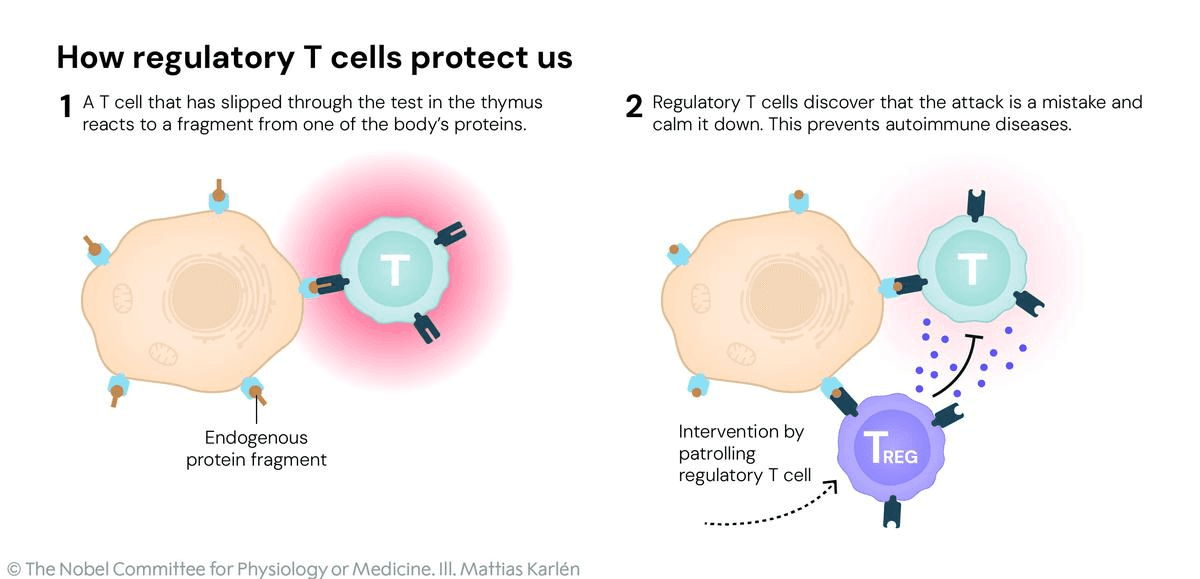
10.Nobel Medicine 2025 Regulatory T Cells (Regulatory T Cells)

The Hindu
Illustration for Nobel Medicine 2025 Regulatory T Cells (Regulatory T Cells)

What & Where

Peripheral immune tolerance: in body tissues, prevents self-attack via Regulatory T cells (Tregs).

FOXP3 gene: X-chromosome transcription factor governing CD4⁺CD25⁺ Treg development and function.

2025 Nobel Prize awarded at Karolinska Institute, Sweden, to Brunkow (US), Ramsdell (US), Sakaguchi (Japan).

Quick Facts for MCQs

Scientific Discovery

  • Experimentation: FOXP3 mutations in mice mirrored human IPEX, proving gene’s regulatory role.
  • Insight: FOXP3 expression converts conventional CD4⁺ T cells into suppressive Tregs.
  • Paradigm shift: Immune suppression seen as active, gene-programmed process, not passive failure.

Medical Applications

  • Cancer therapy: Depleting tumor-resident Tregs may unleash cytotoxic T cell attack on malignancies.
  • Autoimmunity: Expanding or infusing Tregs offers potential treatment for T1 diabetes, rheumatoid arthritis.
  • Transplantation: Treg modulation lowers graft-versus-host and rejection risks.

Immune System Basics

  • Innate arsenal: skin, mucosa, phagocytes, inflammation provide immediate non-specific defence.
  • Adaptive cells: B cells secrete antigen-specific antibodies; T cells kill infected or aberrant cells.
  • Fail-safe: Tregs curb collateral tissue damage during normal immune responses.

Indian Context

  • Legacy: Khorana’s 1968 Nobel remains India’s lone Medicine prize to date.
  • Opportunity: Indigenous research in Treg biology could address high autoimmune disease burden.

Key Data Points

FeatureData-Point
Nobel category 2025Physiology or Medicine
LaureatesMary E. Brunkow, Fred Ramsdell, Shimon Sakaguchi
Core discoveryRegulatory T cells & FOXP3 control of peripheral tolerance
First Treg description1995 by Sakaguchi
FOXP3–linked diseaseIPEX (Immune dysregulation-Polyendocrinopathy-Enteropathy-X-linked)
Immune branchesInnate (rapid) ; Adaptive (specific, memory)
Tolerance typesCentral (thymus/bone marrow) ; Peripheral (tissue level)
Indian Medicine NobelHar Gobind Khorana, 1968

Related UPSC Prelims PYQs

GS1 2007PYQ 1

What is the broad area in which the Nobel Prize winners for the year 2006 in Physiology or Medicine worked to get the prize?

GS-2Editorial

11.India-Multipolar West Relations (Multipolar West)

Indian Express
Illustration for India-Multipolar West Relations (Multipolar West)

What & Where

Multipolar West – waning trans-Atlantic cohesion; power diffused among US, EU, UK, Japan and assertive middle powers

Core theatre spans Europe–North America, now stretching into Indo-Pacific via EU, UK security-trade outreach

India pivots from non-alignment to multi-alignment, courting each Western pole while guarding strategic autonomy

Quick Facts for MCQs

Drivers of Change

  • Nationalism; Trump’s America First questioned NATO, trade, global commitments
  • Tech-economic disputes over data, subsidies, AI split US–EU positions
  • Cultural polarisation; US right-wing culture wars unsettle liberal Europe

Opportunities for India

  • Diplomatic flexibility; engage US, EU, UK separately without bloc alignment
  • China-plus-one shift offers trade, investment, tech relocation into India
  • Standard-setting chance in digital public infrastructure, green tech, AI governance

Risks for India

  • Fragmented West may dilute collective deterrence against China, Russia
  • Simultaneous great-power balancing risks diplomatic-security overstretch
  • Domestic reform lag—bureaucracy, slow liberalisation—can waste external openings

Key Data Points

FeatureData-Point
EU 2025 Indo-Pacific paperTags India as “pivotal partner”
Autonomy championsEmmanuel Macron; Ursula von der Leyen
Divergent threat focusEurope → Russia; US/Japan → China
Key Indian trade tracksEFTA, UK FTA, EU FTA negotiations
EU connectivity planGlobal Gateway, maritime & supply-chain tie-ups with India
Rising middle powersIndia, Australia, South Korea
GS-2Security

12.EU Biometric Entry-Exit System (EU Border Tech)

DD News

What & Where

Biometric Entry/Exit System (EES); automated border control for non-EU visitors to Schengen Area

Geography; 27 EU Schengen states plus Iceland, Norway, Switzerland, Liechtenstein

Replaces passport-stamping; captures facial image & four fingerprints at first entry

Quick Facts for MCQs

Implementation Timeline

  • Pilot & infrastructure testing 2024-25; phased airport/land crossing rollout
  • Mandatory enrolment at first post-Oct 2025 entry; subsequent crossings use stored data
  • Integration buffer till Apr 2026 to minimise border queues

Tech & Schemes

  • Biometric capture; facial recognition plus fingerprint matching for identity verification
  • Automated gates; replaces manual stamp, accelerates throughput
  • Centralised EU-level repository; real-time alerts to national border guards

Security Dimension

  • Overstay detection; automatic calculation of remaining legal days
  • Fraud mitigation; prevents multiple identity use via biometrics
  • External border integrity; faster flagging of watch-listed individuals

Traveller Impact

  • No pre-trip application; data taken on arrival
  • UK & other visa-free nationals still need ETIAS once operational
  • Frequent travellers face one-time biometric capture, then quicker crossings

Key Data Points

FeatureData-Point
Launch underEU Smart Borders initiative
Initial go-live12 Oct 2025
Full operational target10 Apr 2026
Applies toAll non-EU nationals incl. UK citizens
Overstay limit monitored90 days in any 180-day period
Data storedBiometrics + passport details in central database
Registration costNil for traveller
Linked future systemETIAS travel authorisation (2026 planned)
GS-2International RelationsQuick Bite

13.Seventh Moscow Format Afghanistan (Moscow Format)

Indian Express

What & Where

Moscow Format Consultations: Russia-launched (2017) regional dialogue mechanism on Afghanistan’s peace, stability & development.

7th round (Oct 2025, Moscow) saw India, Taliban, Pakistan, China, Russia share positions.

Bagram Air Base: Afghanistan’s largest military airfield near Kabul; handles heavy transport aircraft; vacated by US in 2021.

Quick Facts for MCQs

Diplomatic Composition

  • Platform mixes immediate neighbours, regional powers, Central Asian republics.
  • Operates independent of UN; complements earlier Doha & Istanbul processes.
  • Taliban included post-2021 takeover, increasing de-facto legitimacy.

Security Dimension

  • Bagram capable of strategic airlift, runway supports bombers & C-17s.
  • U.S. re-entry plan viewed as threat to regional security balance.
  • Collective opposition signals pushback against renewed Western military footprint.

India’s Stand

  • First time India publicly aligns with Taliban on security issue.
  • Aims to prevent extra-regional military hubs near its strategic neighborhood.
  • Seeks multilateral hedge while maintaining independent outreach to Kabul.

Key Data Points

FeatureData-Point
Launch year2017
Original six membersRussia, India, Afghanistan, Iran, China, Pakistan
Later entrantsKazakhstan, Kyrgyzstan, Tajikistan, Turkmenistan, Uzbekistan
Current round7th (Oct 2025)
Key agendaFuture control of Bagram Air Base
Common stanceIndia, Taliban, Pakistan, China, Russia oppose Trump plan to seize Bagram
GS-3Security

14.Indian Air Force Day 2025 (Air Force Day)

IT
Illustration for Indian Air Force Day 2025 (Air Force Day)

What & Where

Observance: Indian Air Force Day celebrated nationwide every 8 October to mark IAF foundation in 1932

2025 Venue Focus: Parade at Hindon Air Base, wreath-laying at National War Memorial, Delhi NCR

Purpose: Honour air warriors, display air power, reaffirm humanitarian, security and global outreach roles

Quick Facts for MCQs

History & Evolution

  • Origin: Raised as Royal Indian Air Force under British rule, auxiliary to RAF
  • Growth: Expanded from 25 personnel in 1933 to fourth-largest air force globally
  • Modernisation: Transitioned from biplanes to Sukhoi-30MKI, Rafale, indigenous Tejas

Security Dimension

  • Wars: Key roles in 1947-48, 1965, 1971, Kargil 1999 conflicts with Pakistan
  • Humanitarian: Regular disaster relief, airlift of citizens, UN peacekeeping logistics
  • Strategic: Enhances deterrence across Himalayas, Indian Ocean, Indo-Pacific corridors

Fleet Update

  • Phase-out: MiG-21, India’s longest-serving fighter (since 1963), bows out in 2025
  • Induction: Focus on multirole fighters, force multipliers, indigenous UAVs and AEW&C platforms

Key Data Points

FeatureData-Point
Edition in 202593rd
IAF establishment date8 October 1932
First operational flight1 April 1933
Initial fleet4 Westland Wapiti biplanes
First squadronNo. 1 Squadron, Drigh Road (Karachi)
2025 special noteRetirement of MiG-21 fighter jet
IAF world ranking by size4th largest
Motto (Sanskrit)Nabha Sparsham Deeptham

Related UPSC Prelims PYQs

GS1 2025PYQ 1

भारत की रक्षा के संदर्भ में, निम्नलिखित युग्मों पर विचार कीजिए :

GS-2Scheme

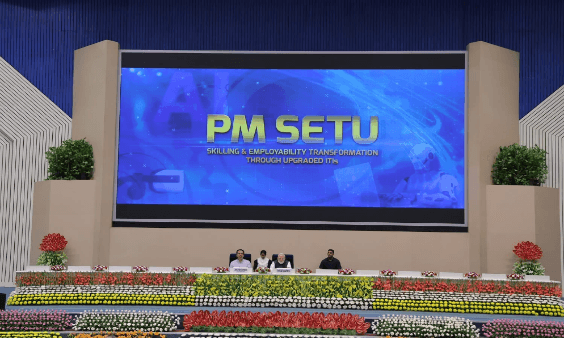
15.PM-SETU ITI Upgradation Scheme (ITI Modernisation)

News On Air
Illustration for PM-SETU ITI Upgradation Scheme (ITI Modernisation)

What & Where

Scheme PM-SETU upgrades 1,000 Government ITIs across India for global-grade vocational skills

Ministry MSDE executes under Government-owned, Industry-managed hub-and-spoke framework

Geography Nationwide; 200 Hub ITIs each steer four Spoke ITIs

Quick Facts for MCQs

Funding & Timeline

  • Allocation ₹60,000 crore jointly by Centre and States
  • Phase 2025-28 for staggered infrastructure and curriculum rollout
  • Funding supports MSME-led Atmanirbhar Bharat job creation

Governance Model

  • Partnership Industry bodies anchor each cluster for training, placement, production units
  • Hub ITIs handle trainer upskilling, R&D, innovation, market linkage
  • Structure embodies Government-owned, Industry-managed principle for accountability

Infrastructure & Innovation

  • Provision Modern machinery, digital learning systems, smart classrooms in every ITI
  • Addition Innovation centres, start-up incubation zones located at Hubs
  • Goal Bridge classroom learning with evolving global technology demands

Key Data Points

FeatureData-Point
Acronym expansionPrime Minister’s Scheme for Empowerment through Technology Upgradation
Scheme natureCentrally Sponsored Flagship
LauncherPrime Minister of India
Nodal MinistrySkill Development & Entrepreneurship
Total ITIs covered1,000
Hub ITIs200
Spoke ITIs800
Project outlay₹60,000 crore
Funding shareCentre + States
Time frame2025-28
Core sectorsManufacturing, Agriculture, Hospitality, New-age tech
Industry anchorsCII, FICCI, local associations
Key facilitiesSmart classrooms, advanced machinery, innovation centres
Skill ecosystem add-onTrainer training, R&D, start-up incubation
Strategic aimAlign skills with global supply chains

Ready to practice?

Test your knowledge with our UPSC test series.

Start Free Trial