UPSC Current Affairs

13 topicsGS-1: 4GS-2: 3GS-3: 6
0/13 done
GS-2Polity

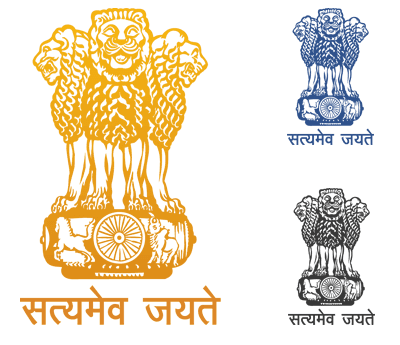
1.State Emblem of India Symbolism (National Symbols)

Hindustan Times
Illustration for State Emblem of India Symbolism (National Symbols)

What & Where

Definition: State Emblem of India, adapted Lion Capital of Ashoka, symbolises sovereignty

Adoption: 26 Jan 1950, Republic Day, via Government notification

Origin site: Sarnath, Uttar Pradesh; original capital preserved in Sarnath Museum

Quick Facts for MCQs

Historical Origin

  • Ashokan Pillars: Meant to disseminate Dhamma after Kalinga war
  • Discovery: Lion Capital excavated 1905 by German archaeologist F Oertel
  • Preservation: Declared protected antiquity under Ancient Monuments Act

Design Elements

  • Lions: Symbolise power, courage, confidence, pride
  • Abacus reliefs: Represent Buddha’s birth signs and cardinal directions
  • Wheels: 24 spokes denote perpetual motion of righteousness

Legal & Policy

  • Emblem of India (Prohibition of Improper Use) Act 2005 prescribes penalties
  • Government guidelines restrict commercial or political party usage
  • Violation: Punishable with fine or imprisonment under State Emblem Act

Security Dimension

  • Srinagar incident: Plaque with emblem vandalised at Hazratbal, ~50 detained
  • Emblem misuse considered affront to national symbols, invoking IPC Sections 153, 295
  • Authorities: Kashmir Police and Waqf Board coordinating investigation

Key Data Points

FeatureData-Point
Original sculptorEmperor Ashoka, 3rd cent BCE
MaterialChunar sandstone (original capital)
Visible lions in emblemThree; fourth hidden at rear
Abacus animalsElephant, Bull (right), Horse (left), Lion
Central wheelDharma Chakra with 24 spokes
Lotus baseOmitted in adopted emblem
Motto scriptDevanagari
Motto wordsSatyameva Jayate
Official adoption date26 January 1950
Custodian museumSarnath Museum, ASI

Related UPSC Prelims PYQs

CDS_GK, GS1 2024PYQ 1

Consider the following statements:

CDS_GK, GS1 2014PYQ 2

The national motto of India, ‘Satyameva Jayate’ inscribed below the Emblem of India is taken from
GS-3Editorial

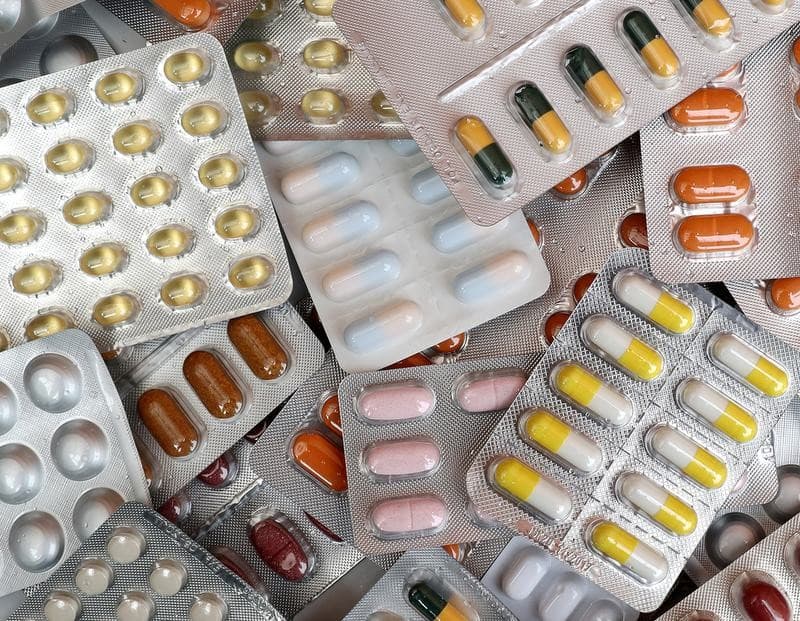
2.Indian Generic Drugs Export Strategy (Pharma Exports)

The Hindu
Illustration for Indian Generic Drugs Export Strategy (Pharma Exports)

What & Where

Generics drugs = off-patent, bio-equivalent medicines; India nicknamed “Pharmacy of the World”

Process chain = low-cost API synthesis → bulk formulations → global supply under WHO-GMP norms

Geography focus = USA (31.35% exports), yet shipped to 200+ nations across Africa, LATAM, ASEAN

Quick Facts for MCQs

Legal & Policy

  • Tariff-pressure; US pushing zero-tariff deals yet demands IP concessions
  • TRIPS-plus asks: data exclusivity, longer monopolies, stricter patents
  • India uses compulsory licensing, WTO coalitions to defend affordability

Economic Angle

  • Exports generate billions and millions of domestic jobs
  • Diversification aim: Africa, Latin America, ASEAN, Central Asia to cut US reliance
  • Rising competition from China, Brazil, Eastern Europe squeezing margins

Tech & Schemes

  • Schemes: PLI-Pharma, Make in India accelerating API self-reliance
  • Innovation pivot: biosimilars, vaccines, low-cost R&D hubs emerging
  • India–US TRUST initiative exploring biotech co-development and regulation alignment

Key Data Points

FeatureData-Point
India’s share of global generic supplyLargest, serving 200+ countries
US share in India’s pharma exports31.35 %
US dependence on Indian generics47 % of its generic imports
US prescriptions filled by generics>90 %
2022 US savings from Indian genericsUSD 219 billion
Global generics market by 2030USD 614 billion
Annual Indian pharma export value≈ USD 25 billion
Typical price gapIndian generics 20–25 % of branded
US import tariff on Indian drugs26 % + 25 % penalty
Key API import dependenceChina
GS-3Economy

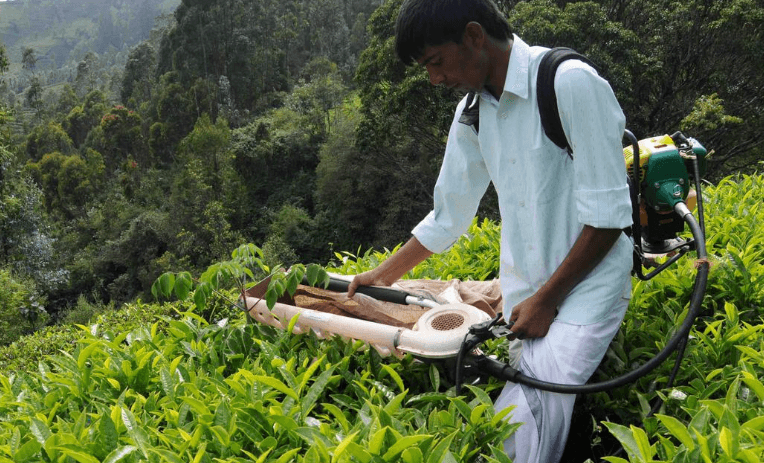
3.Nilgiri Tea Geographical Indication (GI Agricultural Product)

The Hindu
Illustration for Nilgiri Tea Geographical Indication (GI Agricultural Product)

What & Where

Variety Camellia sinensis var. sinensis; brisk, fragrant, full-bodied liquor, popular in iced teas and masala chai

Cultivation core Nilgiris district Tamil Nadu; minor tracts Kerala, Karnataka; registered GI 2008

Products orthodox rolled and CTC teas from 1,000–2,500 m Western Ghats slopes

Quick Facts for MCQs

Agro-Climate

  • Altitude band 1,000–2,500 m delivers slow vegetative growth enhancing aroma
  • Dual monsoons enable near year-round leaf flush sustaining 32 pluckings annually
  • Lateritic loam soil provides drainage nutrient richness critical for liquor clarity

Economic Angle

  • GTL farm price dips ₹10–15 kg below production cost per reports, threatening viability
  • Factory overcapacity squeezes margins as quality leaf supply diluted
  • Escalating labour fertiliser power bills burden 70 % small growers

Market & Auction

  • Legacy dependence on USSR/Russia left export portfolio weakly diversified
  • Auction system rife with advance deals and bidder collusion muting true price discovery
  • Adulteration inconsistent standards erode consumer trust and premium positioning

Key Data Points

FeatureData-Point
Altitude range1,000–2,500 m
Climate patternSouthwest & Northeast monsoons, alternating fog-rain-sunshine
Soil typeLateritic loam, rich, well-drained
Plucking frequency≈32 times per year
First harvestFrost tea after short winter dormancy
Product formsOrthodox rolled; CTC
Flavour notesCitrus, floral; retains clarity when cooled
GI registration year2008
Major blender useNestea & other global brands
Historic key marketRussia/USSR
GTL price trendOften below cost of production
Overcapacity factorFactories exceed crop volume
Auction concernManipulation weakens price discovery
GS-1History

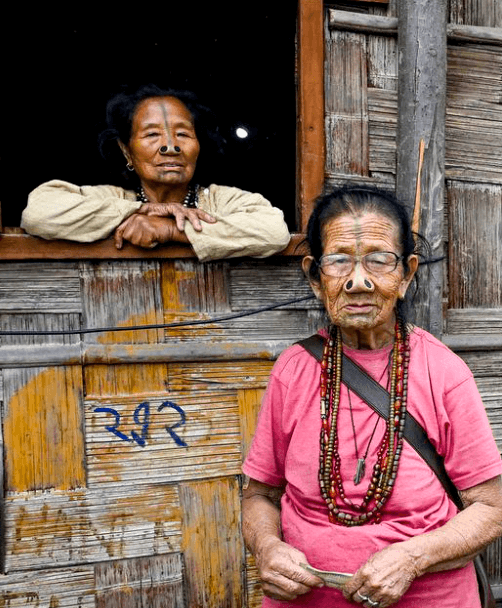
4.Apatani Tribe Facial Tattoos (Tribal Culture)

The Hindu
Illustration for Apatani Tribe Facial Tattoos (Tribal Culture)

What & Where

Apatani tribe = indigenous group of Eastern Himalayas; famed for female facial tattoos + wooden nose plugs.

Core habitat = bowl-shaped Ziro Valley, Lower Subansiri district, central Arunachal Pradesh.

Tattoo-nose-plug tradition banned early 1970s; now survives only among elderly women.

Quick Facts for MCQs

Origins & Purpose

  • Security; body modifications made women less desirable targets for raiders.
  • Identity; markings signified honour, lineage, communal belonging.
  • Beauty norm; within Apatani, tattoos later became aesthetic prestige.

Custom & Procedure

  • Process; bamboo needle, soot-based ink applied without anaesthesia.
  • Healing; wood cleaned, plugs inserted gradually to avoid infection.
  • Community celebration; ritual songs, feasts marked completion of tattooing.

Legal & Policy

  • Government ban cited social stigma, modern job barriers for women.
  • No legal penalty today, yet practice voluntarily discontinued by younger cohorts.
  • Cultural preservation efforts now focus on documentation, not revival.

Key Data Points

FeatureData-Point
Local tribe namesTanw, Apa Tani, Apa
Valley altitude≈1,500–1,750 m (Eastern Himalayas)
Tattoo designOne vertical line forehead-to-nose; five parallel lines on chin
Nose plug termYaping Hullo (hollow wooden discs)
Typical tattoo ageAround 10 years, done by elder women
Primary original purposeDeter abduction by rival tribes
Ban imposedEarly 1970s by Arunachal administration
Current bearersLast generation of 60 + year-old women
GS-1History

5.Centenary of Self-Respect Movement (Social Reform)

The Hindu

What & Where

Movement: Self-Respect Movement, anti-caste socio-political campaign begun 1925.

Founder & Base: E V Ramasamy (Periyar); core geography Tamil Nadu, Madras Presidency.

Process: Mass meetings, pamphlets, priest-less marriages to institutionalise rationalism and social equality.

Quick Facts for MCQs

Ideological Goals

  • Eradication: caste hierarchy, Brahminical dominance, Devadasi practice, widow-remarriage restrictions.
  • Promotion: rational thought, individual dignity, social equality across gender and caste lines.
  • Slogan focus: “Self-Respect” as prerequisite for political freedom.

Reform Measures

  • Marriage: simple, secular ceremonies without priests; challenged Vedic rituals.
  • Campaign: state-wide agitations, public debunking of superstition, temple entry support.
  • Publications: Tamil pamphlets, periodicals for mass education on rationalism.

Women Leadership

  • Pioneering: Annai Meenambal presided over major conferences, conferred “Periyar” title.
  • Inclusion: women encouraged to speak, lead protests, and author columns.
  • Recognition: B R Ambedkar addressed Meenambal as “my sister Meena”.

Influences & Legacy

  • Intellectual: drew upon Phule’s anti-Brahminism, Ambedkar’s social justice.
  • Organisational: foundation for Dravidian movement; inspired later parties like DMK, AIADMK.
  • Legal: Self-Respect Marriage clauses later adopted in Tamil Nadu Marriage Acts.

Key Data Points

FeatureData-Point
Launch year1925
Centenary2025
FounderE V Ramasamy (Periyar)
Key weeklyKudi Arasu (Republic)
Core pamphletsNamathu Kurikkol; Tiravitak Kalaka Lateiyam
Landmark practiceSelf-Respect Marriage (priest-less, later legally recognised)
InfluencesJyotirao Phule; B R Ambedkar; Vaikom Satyagraha
Women leadersAnnai Meenambal; Veeramal
Title “Periyar” given byAnnai Meenambal
Organisation evolvedDravidar Kazhagam

Related UPSC Prelims PYQs

GEO_GS, GS1 2025PYQ 1

Who among the following was the founder of the ‘Self-Respect Movement’?

GEO_GS, GS1 2021PYQ 2

The self-respect movement was started by:

GS-1Mapping

6.Red Sea Geostrategic Waterway (Strategic Waterway)

DD News

What & Where

Red Sea: narrow rift sea between NE Africa & Arabian Peninsula, linking Suez Canal (Mediterranean) with Bab el-Mandeb (Arabian Sea).

Submarine cables: seabed fibre-optic lines transmitting ~95 % of global cross-border data traffic.

2024 cut: Damage to SMW-4 & IMEWE cables in Red Sea slowed internet across Asia–Middle East, incl. India.

Quick Facts for MCQs

Geology & Ecology

  • Rift-activity: Ongoing volcanic, seismic movements shape basin.
  • Water-quality: High heat–salinity supports resilient but sensitive coral reef ecosystems.

Connectivity & Technology

  • Capacity: Bundled glass fibres ferry terabits per second with low latency.
  • Vulnerability: External anchor drags or natural hazards can sever cables; repairs need specialised cable-laying ships.

Strategic & Economic

  • Shipping-lane: Essential shortcut for global trade, avoiding Cape of Good Hope.
  • Disruption-impact: Internet slowdowns affect cloud, finance, telecom sectors across Asia & Middle East.

Key Data Points

FeatureData-Point
Red Sea length~1,930 km Suez–Bab el-Mandeb
Bordering nationsEgypt, Sudan, Eritrea, Djibouti, Saudi Arabia, Yemen
Extra littoralsJordan & Israel on Gulf of Aqaba
Sea typeActive tectonic rift depression
Temp/SalinityAmong the world’s hottest & saltiest seas
Key straitsSuez Canal (N), Bab el-Mandeb (S)
Global data via seabed cables≈95 % of international traffic
Recent damaged systemsSEA-ME-WE-4, IMEWE
Cable weak pointsAnchors, quakes, volcanic activity, sabotage
Economic roleOne of busiest Europe–Asia–Africa shipping corridors

Related UPSC Prelims PYQs

GS1 2024PYQ 1

Consider the following statements:

GS-3Environment

7.Climate-Resilient Indian Cities Planning (Urban Resilience)

Indian Express

What & Where

Concept: Climate-resilient city integrates adaptation + mitigation into land, housing, services to withstand climate shocks

Scope: Targets floods, extreme heat, cyclones, quakes threatening rapidly growing Indian urban agglomerations

Geography: India’s urban population may near 1 billion by 2070, making resilience a nationwide imperative

Quick Facts for MCQs

Urban Climate Hazards

  • Flooding: unchecked sprawl, wetland encroachment, poor drains amplify waterlogging and economic loss
  • Heatwave: high concrete, low canopy raise mortality and cut labour productivity
  • Cyclone + earthquake: coastal and seismic zone cities face compounded infrastructure and service failures

Governance & Finance Challenges

  • Weak ULBs: staff shortages, low own-source revenue, limited climate expertise
  • Fragmented mandates: state, city, parastatal overlap delays integrated action
  • Finance access: slow international fund flows, sparse municipal green bonds hinder projects

Schemes & Measures

  • Policy frameworks: NAPCC, SAPCCs, Sustainable Habitat Mission mainstream adaptation in urban planning
  • Mission tools: Smart Cities, AMRUT, PMAY-Urban enable resilient infrastructure, green buildings, climate-smart housing
  • Local actions: Ahmedabad Heat Action Plan pioneered early warnings, cool roofs; model scaled to multiple states

Key Data Points

FeatureData-Point
Urban population 2070~1 billion
City share of jobs / GDP>70 %
Residents flood-vulnerable≈ ⅔ urbanites
Flood damage projection 2070> $30 billion
Urban heat island gap3–5 °C hotter
Flood-prone urban roads25 % length
Future housing yet to be built>50 % stock
Transport capacity lost when roads partly submerged≈ 50 %

Related UPSC Prelims PYQs

CDS_GK, ESE_GS 2024PYQ 1

Which one of the following is not among the thematic areas of National Mission on Sustainable Habitat?

CDS_GK, ESE_GS 2020PYQ 2

Which one of the following is an iterative and evolutionary process for achieving sustainable development?

GS-3S&T

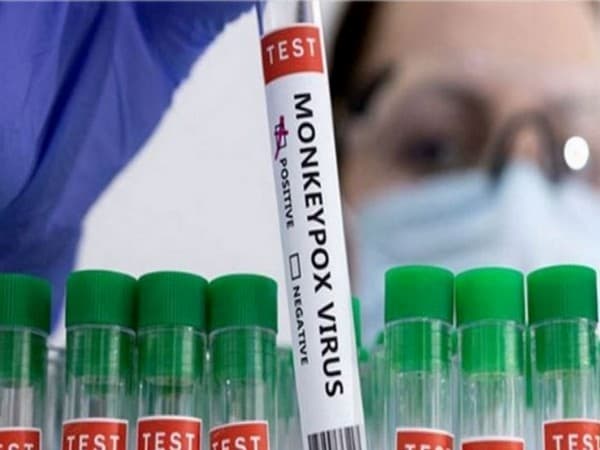
8.Mpox Viral Zoonotic Disease (Viral Zoonosis)

DD News
Illustration for Mpox Viral Zoonotic Disease (Viral Zoonosis)

What & Where

Viral zoonosis; monkeypox virus (MPXV), Orthopoxvirus genus, Poxviridae family

Endemic in Central & West Africa; sporadic global outbreaks via travel, animal trade

WHO removed Public Health Emergency of International Concern status after steady fall in cases

Quick Facts for MCQs

Origin & Reservoir

  • 1958 discovery in monkeys Denmark; 1970 first human case DR Congo
  • Endemic maintenance in African rodents, primates; reservoir still unconfirmed
  • Susceptible hosts include squirrels, dormice, Gambian pouched rats

Clinical Features

  • Incubation 5–21 days; prodrome fever, headache, back pain, lymph node swell
  • Rash evolves macule → papule → vesicle → pustule → scab, heals in 2–4 weeks
  • Severe complications possible in paediatrics, pregnancy, immunodeficiency

Transmission Routes

  • Human contact: skin-to-skin, sexual networks, respiratory droplets at close range
  • Fomites: contaminated clothing, bedding, needles aid spread
  • Vertical and zoonotic transmission documented via placenta, bites, bushmeat

Treatment & Care

  • Supportive management: hydration, nutrition, analgesia, skin hygiene, infection control
  • No licensed mpox-specific antiviral; smallpox antivirals/vaccines under evaluation

Key Data Points

FeatureData-Point
Virus familyPoxviridae
GenusOrthopoxvirus
First animal detection1958, captive monkeys, Denmark
First human case1970, Democratic Republic of Congo
Natural reservoirUnknown; likely small mammals (rodents, squirrels)
Incubation period5 – 21 days
Early symptomsFever, headache, myalgia, lymphadenopathy, low energy
Rash patternFace/genitals first → body, palms, soles
High-risk groupsChildren, pregnant women, immunocompromised (HIV)
Human transmissionSkin contact, sexual, droplets, fomites, vertical
Animal transmissionBites, scratches, hunting, bushmeat
Specific antiviralNone proven; supportive care only
WHO PHEIC statusTerminated May 2023
GS-3S&TQuick Bite

9.Stellar Parallax Space Navigation (Space Navigation)

The Hindu

What & Where

Stellar parallax navigation uses apparent star shift from two distant viewpoints to locate spacecraft in deep space

Proof-of-concept achieved by NASA’s New Horizons at ~7 billion km (≈46 AU) from Earth

Target stars for measurement : Proxima Centauri 4.2 ly & Wolf 359 7.9 ly from Sun

Quick Facts for MCQs

Tech & Schemes

  • Stellar parallax method derives position by comparing simultaneous images from Earth orbit and far-spacecraft viewpoint
  • Removes dependence on Earth radio beacons enabling autonomous navigation
  • Accuracy improves with larger baselines and high-resolution onboard cameras

Spacecraft Mission

  • New Horizons performed Pluto fly-by in 2015 then continued into Kuiper Belt
  • Current extended mission exploits 7 billion km distance for navigation experiments
  • Powered by RTG enabling operations far beyond solar power range

Alternative Navigation

  • Stellar Astrometric Navigation measures angular separation between star pairs with relativity corrections for 3D position and velocity
  • Pulsar navigation times periodic X-ray or radio pulses from millisecond pulsars acting as cosmic clocks
  • Combining multiple techniques can provide redundancy for future interstellar probes

Key Data Points

FeatureData-Point
Demonstrated techniqueStellar parallax navigation
Test platformNew Horizons spacecraft
Distance from Earth during test~7 billion km
Baseline sizeEarth–spacecraft separation ≈46 AU
Launch year of New Horizons2006
Primary mission goalStudy Pluto, moons, Kuiper Belt objects
Observed starsProxima Centauri, Wolf 359
Alternative methodsStellar Astrometric Navigation; Pulsar Navigation

Related UPSC Prelims PYQs

GS1 2020PYQ 1

“The experiment will employ a trio of spacecraft flying in formation in the shape of an equilateral triangle that has sides one million kilometres long, with lasers shining between the craft.” The experiment in question refers to

GS-2Editorial

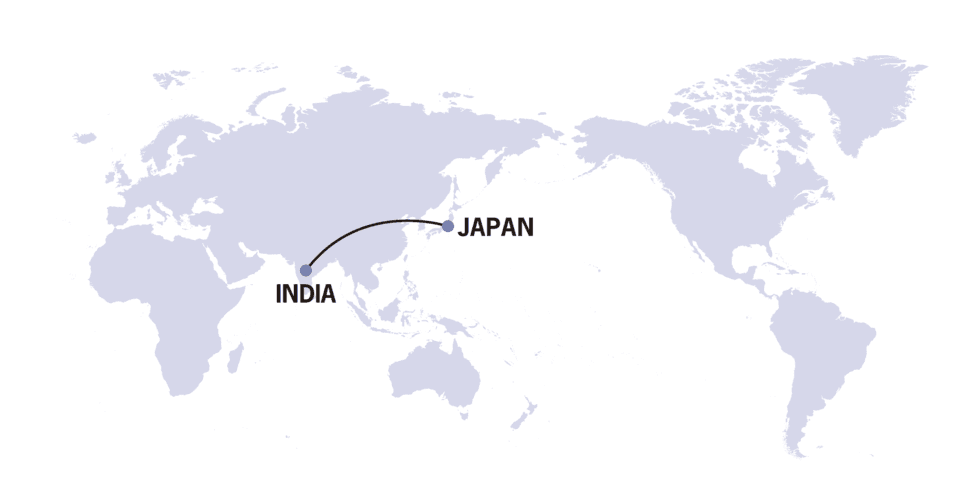
10.India-Japan Strategic Partnership Advances (Strategic Partnership)

The Hindu
Illustration for India-Japan Strategic Partnership Advances (Strategic Partnership)

What & Where

Partnership – India-Japan Special Strategic & Global Partnership (2014); top-tier, treaty-level cooperation spanning politico-security to socio-cultural fields.

Geography – Projects stretch from Mumbai-Ahmedabad high-speed rail to Indo-Pacific maritime domain; Japan remains India’s largest ODA source.

Roadmap – 2025 Joint Vision lists eight priority pillars: economy, security, mobility, ecology, tech, health, people ties, sub-national links.

Quick Facts for MCQs

Economic Angle

  • Investment – Japan’s China+1 strategy drives semiconductor, critical-minerals, GIFT-City finance inflows.
  • Trade – CEPA reform, SCRI expansion aimed at addressing USD 12 bn deficit.
  • Aid – Continuous yen-loan pipeline for metros, industrial corridors, Northeast connectivity.

Defence & Security

  • Interoperability – ACSA 2020, JWG-DETC, first Joint Services Staff Talks 2023 boost tri-service logistics.
  • Co-development – DRDO-ATLA working on missile defence, maritime surveillance with technology transfer clauses.
  • Indo-Pacific – FOIP-IPOI alignment, Quad coordination on rules-based order and maritime domain awareness.

Infrastructure & Connectivity

  • High-speed rail – Shinkansen tech adoption, seismic-zone adaptations, 7 000 km Indian network vision by 2047.
  • Mobility – Next-Gen Mobility Partnership covers EVs, hydrogen, urban transit digitalisation.
  • Regional links – Act East Forum funds roads, ports, power in Northeast and Bay-of-Bengal littoral.

People & Knowledge

  • Human resource pact – 5 lakh mobility slots, including 50 000 Indian workers in Japan’s aged economy.
  • Skills – IT professionals to support Japanese digital transition under Digital Partnership 2.0.
  • Culture – Next-Gen State-Prefecture programme, language scholarships, diplomat training exchanges.

Key Data Points

FeatureData-Point
Investment pledge10 trillion yen ≈ USD 68 bn (2025-35)
Priority pillars8 sectors in Joint Vision Roadmap
Security pact2025 Joint Declaration updates 2008 accord
Defence drillsDharma Guardian, Veer Guardian, Milan (tri-service)
Bullet-train speed goal360 km h operational by 2030
MAHSR completion targetRevised to 2028 (land delays)
ODA rankJapan is India’s largest bilateral donor
FY24 tradeJapan → India USD 17.69 bn; India → Japan USD 5.15 bn
Trade gap≈ USD 12.5 bn in Japan’s favour
CEPA statusUnder review to cut non-tariff barriers

Related UPSC Prelims PYQs

CDS_GK, GS1 2022PYQ 1

समृद्धि के लिए हिंद-प्रशांत आर्थिक ढाँचा (Indo-Pacific Economic Framework for Prosperity) का गठन करते समय, सदस्य देशों ने चार स्तंभों पर भावी समझौता-वार्ता के लिए सामूहिक परिचर्चा शुरू की है। उन स्तंभों में, निम्नलिखित में से कौन-सा नहीं है ?

CDS_GK, GS1 2019PYQ 2

Recently, India signed a deal known as ‘Action Plan for Prioritization and Implementation of Cooperation Areas in the Nuclear Field’ with which of the following countries?

GS-3SecurityQuick Bite

11.Advanced Radars for Drone Defence (Anti-Drone Radars)

Indian Express

What & Where

Advanced low-level radars to detect low-RCS drones, procured by Indian Army post-Operation Sindoor.

Three systems: LLLR-I, LLLR-E, ADFCR-DD; all serve short-range air-defence roles.

Will plug into Akashteer command-and-control network for nationwide real-time tracking.

Quick Facts for MCQs

Tech & Schemes

  • AESA radars give high resolution, low probability of intercept.
  • Passive RF enables silent detection; EOTS adds visual confirmation.
  • ADFCR-DD merges sensing and engagement, shortening kill-loop.

Security Dimension

  • Operation Sindoor exposed drone gaps, spurring fast-track buys.
  • New radars strengthen last-mile defence for forward posts & critical bases.
  • Covers diverse terrains, improving border anti-drone shield.

Operational Integration

  • Akashteer feeds radar data to shooters in near-real time.
  • Systems coordinate guns with VSHORADS for layered response.
  • Mobility allows quick redeployment along sensitive sectors.

Key Data Points

FeatureData-Point
LLLR-I antenna techAESA-based 3-D
LLLR-I max range50 km
LLLR-I track capacity> 100 aerial targets
LLLR-E extra sensorsEOTS + passive RF
LLLR-E capabilityDay-night, silent drone tracking
ADFCR-DD platformVehicle-mounted
ADFCR-DD roleRadar + fire-control + IFF for guns & VSHORADS
Target type focusLow radar-cross-section drones
Integration backboneAkashteer network
Trigger eventPost-Operation Sindoor procurement

Related UPSC Prelims PYQs

ESE_GS, GS1 2024PYQ 1

Ministry of Defence signed contract with which one of the following organizations for Upgraded Super Rapid Gun Mount (SRGM) and other equipment for around 3000 crores?

ESE_GS, GS1 2018PYQ 2

What is "Terminal High Altitude Area Defense (THAAD)", sometimes seen in the news?

GS-2Scheme

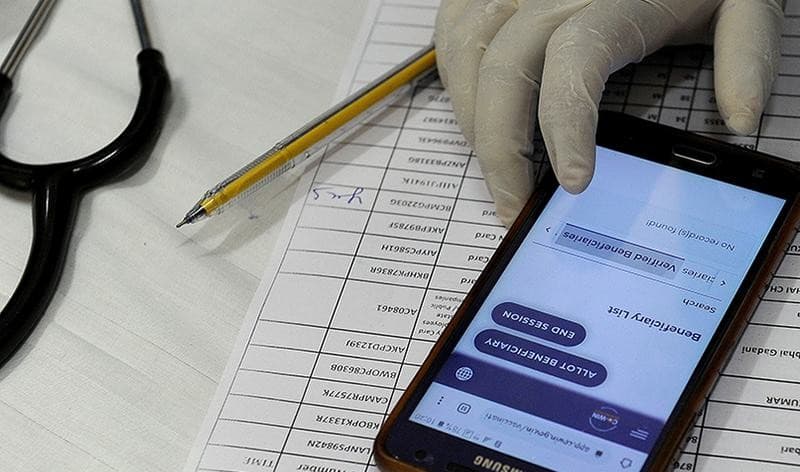
12.CoWIN Digital Vaccination Platform (Digital Health Platform)

The Hindu
Illustration for CoWIN Digital Vaccination Platform (Digital Health Platform)

What & Where

Platform: CoWIN, digital COVID-19 vaccination management network

Geography: India, national to sub-district health system

Processes: registration, scheduling, dose tracking, certificate issuance

Quick Facts for MCQs

Tech & Schemes

  • Architecture: end-to-end public health stack enabling real-time beneficiary, dose, wastage dashboards
  • Equity: identity verification ensures targeted delivery and prevents duplicate or fraudulent vaccinations

Operational Modules

  • Orchestration: session planning, inventory assignment, stakeholder coordination
  • Cold-chain: live vaccine logistics, temperature compliance, wastage alerts
  • Citizen module: self, bulk registrations via mobile or portal interface

Significance

  • Digital public good showcased internationally; India offered codebase to interested nations under CoWIN Global Conclave 2021
  • Certificates became travel, employment, service-access proof during pandemic restrictions

Current Issue

  • Portal inaccessible since Aug 2025, blocking retrieval of vaccination certificates for citizens needing documentation
  • Outage raises concerns over long-term archival and disaster recovery of critical health data

Key Data Points

FeatureData-Point
Launch month-yearJanuary 2021
Parent ministryUnion MoHFW
Full formCOVID Vaccine Intelligence Network
Core modulesOrchestration, Cold-chain, Citizen, Vaccinator, Certificate
Authentication modesOTP, biometric, demographic
App integrationsAarogya Setu, UMANG, DigiLocker
Doses recorded>2 billion
Global offering year2021
Outage beganEarly August 2025

Related UPSC Prelims PYQs

CDS_GK, GS1 2025PYQ 1

Which one of the following platforms marks a transformative step in India's immunization efforts by digitizing vaccination records for pregnant women and children up to 16 years?

CDS_GK, GS1 2022PYQ 2

Consider the following :

Ready to practice?

Test your knowledge with our UPSC test series.

Start Free Trial