UPSC Current Affairs

15 topicsGS-1: 3GS-2: 3GS-3: 9
0/15 done
GS-2Polity

1.Income Tax Bill 2025 Highlights (Income Tax Bill)

Indian Express

What & Where

Income Tax Bill 2025: Indian legislation replacing Income Tax Act 1961, cleared by both Houses of Parliament

Covers “virtual digital space”: any email, social-media, cloud, website or online account environment

Establishes single “tax year” nationwide: 1 Apr – 31 Mar for all taxpayers

Quick Facts for MCQs

Legal & Policy

  • Replaces dual concepts “assessment year” and “previous year” with single “tax year”
  • Aligns AMT rules for LLPs, ensuring minimum tax despite deductions
  • Grants tax authority access to virtual digital space, mandates company assistance

Compliance & Administration

  • Introduces advance nil-TDS certificates for individuals without tax liability
  • Removes TCS on education-related LRS remittances via financial institutions
  • Simplification aimed at reducing litigation and easing filing procedures

Fiscal Numbers

  • Reports 1.9 % dip in gross direct tax collections FY 2025-26 vs FY 2024-25
  • Collections stand at ₹7.99 lakh crore despite policy rationalisation
  • AMT expected to marginally boost revenue from deduction-heavy entities

Key Data Points

FeatureData-Point
Bill purposeSimplify, rationalise, shorten 1961 Act
Virtual digital spaceEmail, social media, online accounts, cloud, websites
Tax year span1 Apr – 31 Mar
TCS on LRS educationNil when financed by recognised financial institutions
Nil-TDS certificateAvailable in advance to zero-tax-liability individuals
AMT scopeNow applicable to LLPs, aligned with IT Act norms
Investigative powerTax officers may bypass passwords during probes
FY 2025-26 gross direct tax₹7.99 lakh crore (-1.9 % YoY)

Related UPSC Prelims PYQs

GS1 2004PYQ 1

Which of the following is not a recommendation of the task force on direct taxes under the chairmanship of Dr. Vijay L. Kelkar in the year 2002?
GS-3Economy

2.Next-Generation GST Rate Reform (GST Reform)

Financial Express

What & Where

Reform: “Next-gen” GST revamp replacing current multi-slab system with two core rates plus one special rate

Scope: Nationwide Goods & Services Tax under Article 279A; rollout target Diwali 2025, post GST Council nod

Types: 5 % merit, 18 % standard, 40 % sin/luxury; zero-rated essential food unchanged

Quick Facts for MCQs

Legal & Policy

  • Authority: GST Council under Art 279A to approve rate rationalisation, states consultative role mandatory
  • Instrument: Recommendation forwarded to GoM, followed by Central & State GST amendment notifications
  • Compliance: Fewer slabs aimed at streamlined classification disputes and litigation reduction

Economic Angle

  • Consumption: Lower rates on soaps, mobiles, garments expected to spur household demand multiplier
  • Inflation: Downward pressure on Consumer Price Index via merit goods moving from 12 % to 5 %
  • Growth: Simplified tax architecture projected to lift MSME margins, supporting GDP and formalisation

Sectoral Impact

  • MSMEs: Reduced compliance cost due to fewer HSN permutations, easier ITC reconciliation
  • Sin Goods: Tobacco, pan masala, online betting isolated at 40 % to protect revenue neutrality
  • Exports: Diamonds, jewellery retain present rates to preserve global price competitiveness

Key Data Points

FeatureData-Point
Target rolloutDiwali 2025
Core slabs5 % and 18 %
Special high rate40 % (7 sin/luxury goods)
Items shifting 12 → 5 %99 % of present 12 % list
Items shifting 28 → 18 %~90 % of present 28 % list
Zero-rated groupUnprocessed food grains, veggies, milk etc.
Governance bodyGST Council + Group of Ministers
Retained concessional sectorLabour-intensive exports (e.g., cut & polished diamonds)

Related UPSC Prelims PYQs

CDS_GK, GS1 2017PYQ 1

वस्तु एवं सेवा कर (Goods and Services Tax/GST) के क्रियान्वयन हेतु निम्नलिखित संभावित लाभ क्या है/हैं ?

CDS_GK, GS1 2024PYQ 2

Which one of the following statements regarding GST is not correct?

GS-3Economy

3.Cess in Union Finances (Cess Funding)

The Hindu

What & Where

Cess – Union additional tax under Article 270, earmarked for a stated purpose, credited first to Consolidated Fund of India.

Surcharge – Extra “tax on tax” under Article 271, progressive, revenue fully retained by Centre like normal taxes.

CAG 2025 flagged ₹3.69 lakh crore cess collections not moved to respective purpose-specific funds.

Quick Facts for MCQs

Legal & Policy

  • Provision: Cess purpose must be Union-centric, outside State List, stated in parent Act.
  • Commission: 13th & 14th FC urged curbing Centre’s surcharge reliance.
  • Compliance: Statute mandates separate non-lapsable fund for each cess.

Economic Angle

  • Control: Cess/surcharge revenue empowers Centre vis-à-vis states, bypassing divisible pool.
  • Equity: Surcharge’s rising slabs aim income-progressivity and redistribution.
  • Shortfall: Large un-transferred sums undermine targeted spending efficiency.

Administrative Process

  • Flow: Levy collected → Consolidated Fund → required transfer to designated reserve fund.
  • Lapse risk: Delayed transfer enables ad-hoc general expenditure, breaching earmarked intent.
  • Audit: CAG scrutiny essential for transparency in earmarked-fund utilisation.

Key Data Points

FeatureData-Point
Constitutional base-CessArticle 270
Constitutional base-SurchargeArticle 271
Revenue account enteredConsolidated Fund of India
Share with StatesGenerally nil for both levies
Divisible pool statusExcluded from devolution
Named examplesEducation Cess, Swachh Bharat Cess
Surcharge triggerIncome > ₹50 lakh (slab-linked)
Character of surchargeProgressive, “tax on tax”
Finance Commissions stand13th-14th upheld exclusion, sought lower dependence
CAG shortfall 2025₹3.69 lakh crore un-transferred

Related UPSC Prelims PYQs

CDS_GK, GS1 2024PYQ 1

Which one of the following taxes is not included in the Central Pool to be shared with the States according to the recommendations of Finance Commission of India?

CDS_GK, GS1 2011PYQ 2

All revenues received by the Union Government by way of taxes and other receipts for the conduct of Government business are credited to the

GS-1History

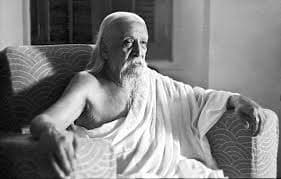
4.Sri Aurobindo Freedom Legacy (Freedom Movement)

Indian Express
Illustration for Sri Aurobindo Freedom Legacy (Freedom Movement)

What & Where

Identity: Sri Aurobindo Ghose—yogi–philosopher–poet who linked India’s political freedom with spiritual evolution.

Core idea: Integral Yoga seeks transformation of individual and collective life, not world-renunciation.

Geography: Born Calcutta (1872); major work in Bengal & Puducherry, where Sri Aurobindo Ashram founded (1926).

Quick Facts for MCQs

Freedom Struggle Role

  • Demand: First leader publicly advocating Poorna Swaraj (complete independence) before 1907 Surat split.
  • Method: Supported boycott–swadeshi and covert armed action; rejected moderate constitutionalism.
  • Legacy: Ideological bridge between Extremists (Tilak) and later revolutionaries (Bhagat Singh).

Integral Yoga

  • Aim: Harmonise matter, life, mind into ‘Supermind’; enable divine life on earth.
  • Practice: Synthesis of Vedanta, Tantra, Bhagavad Gita yoga paths; no monastic withdrawal required.
  • Outcome: Sees individual perfection as precursor to collective human unity.

Literary & Philosophical Output

  • Periodicals: Arya journal (1914-21) serialized most major philosophical texts.
  • Themes: Evolution of consciousness, human unity, critique of materialist modernity.
  • Style: Blend of Western rationalism with Vedic-Upanishadic mysticism.

Key Data Points

FeatureData-Point
Birth date15 Aug 1872
Birth placeCalcutta, Bengal Presidency
Western educationSt Paul’s School (London); King’s College, Cambridge
Newspaper editedBande Mataram (1906–08)
Revolutionary groupAnushilan Samiti
Landmark trialAlipore Bomb Case, 1908 (acquitted)
Key philosophyIntegral Yoga & spiritual nationalism
Major proseThe Life Divine; The Synthesis of Yoga
Epic poemSavitri: A Legend and a Symbol
Ashram founded1926, Puducherry with Mirra Alfassa (“The Mother”)

Related UPSC Prelims PYQs

GS1 1999PYQ 1

Match List I with List II and select the correct answer using the codes given below the Lists:

GS1 1999PYQ 2

The Congress policy of pray and petition ultimately came to an end under the guidance of

GS-1History

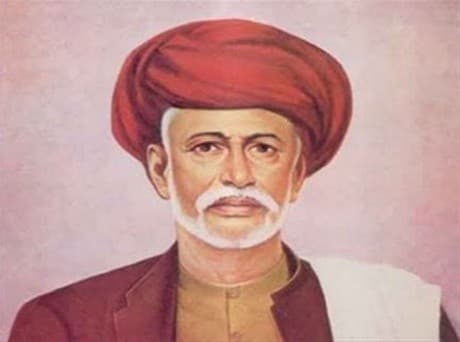
5.Mahatma Jyotiba Phule Contributions (Social Reformers)

Hindustan Times
Illustration for Mahatma Jyotiba Phule Contributions (Social Reformers)

What & Where

What: Year-long national commemoration of Mahatma Jyotiba Phule’s 200th birth anniversary announced by Prime Minister.

Where: Focus in Maharashtra (birth Satara, work Pune) but events planned pan-India.

Core: Highlights Phule’s reforms in caste equity, universal education, women’s rights.

Quick Facts for MCQs

Education Reforms

  • Pioneered female education; opened India’s first girls’ school, trained Savitribai as teacher.
  • Advocated universal, secular schooling for Shudras, women, oppressed.
  • Saw education as tool to dismantle Brahmanical dominance.

Caste & Social Justice

  • Founded Satyashodhak Samaj to secure social rights, reject priestly mediation.
  • Opened own well to all castes; practised inter-dining to erode untouchability.
  • Gulamgiri equated caste hierarchy with American slavery, rallying oppressed masses.

Women & Welfare

  • Campaigned against child marriage; encouraged widow remarriage through community support.
  • Ran shelters for destitute widows, abandoned children, pregnant rape survivors.
  • Stressed economic self-reliance of women via skill training.

Legacy & Influence

  • Ideological forerunner to Dr B.R. Ambedkar and later Dalit & feminist movements.
  • Bicentenary aims to mainstream Phule’s egalitarian philosophy in curricula, public discourse.

Key Data Points

FeatureData-Point
Full nameJyotirao Govindrao Phule
Birth & Place11 Apr 1827, Katgun—Satara, Maharashtra
Death & Place28 Nov 1890, Pune
Social identityMali caste (Shudra)
First girls’ schoolPune, 1848
Wife’s distinctionSavitribai Phule – India’s 1st woman teacher
Reform bodySatyashodhak Samaj, 1873
Landmark bookGulamgiri (Slavery), 1873
Key social standsAnti-child marriage; pro-widow remarriage
Anniversary planGovt-led events April 2027-April 2028 (bicentenary)

Related UPSC Prelims PYQs

GS1, NDA_GAT 2022PYQ 1

The Satyashodhak Samaj (Truth-Seeking Society) was set up by

GS1, NDA_GAT 2020PYQ 2

Who among the following was associated with the publication of the first Marathi newspaper for the depressed classes, ‘Din Bandhu’?

GS-1EnvironmentQuick Bite

6.Sentinel-3 Global Wildfire Data (Global Wildfires)

Indian Express
Illustration for Sentinel-3 Global Wildfire Data (Global Wildfires)

What & Where

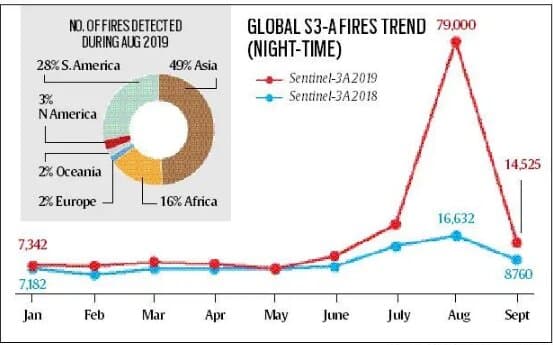
Sentinel-3 World Fire Atlas : ESA prototype mapping global wildfire hotspots via Sentinel-3A/B thermal channels F1, F2.

Coverage : southern ESA nations but outputs global monthly fire counts.

August 2019 wildfires : 79,000 events; Asia major locus, followed by South America, Africa.

Quick Facts for MCQs

Environmental Trend

  • Surge : 2019 August wildfires quintupled previous year indicating escalating global fire activity.
  • Amazon focus : high-profile blazes boosted international alarm on rainforest loss.

Tech & Schemes

  • Sentinel-3 constellation supplies 1-day revisit, 300 m resolution thermal data for near-real-time fire monitoring.
  • World Fire Atlas ensures post-2012 continuity to legacy ATSR fire datasets.

Geography of Fires

  • Asia dominant share driven by agricultural burning and forest fires in Siberia, Indonesia.
  • South America figure largely Amazonian; African fires concentrated in savanna belt.

Key Data Points

FeatureData-Point
Fires detected Aug 201979,000
Fires detected Aug 2018just over 16,000
Increase 2019 over 2018~5 times
Continental share Aug 2019Asia 49% > S.America 28% > Africa 16% > others
Peak Amazon fires monthsAugust & September 2019
Mission operatorEuropean Space Agency (ESA)
Parent programmeEU Copernicus Earth Observation
Satellites usedSentinel-3A and Sentinel-3B
Dedicated fire channelsF1, F2
Sentinel-3 instruments roleMeasure land/sea temp, topography, colour
GS-3Environment

7.Cauvery Wildlife Sanctuary Profile (Protected Areas)

New Indian Express
Illustration for Cauvery Wildlife Sanctuary Profile (Protected Areas)

What & Where

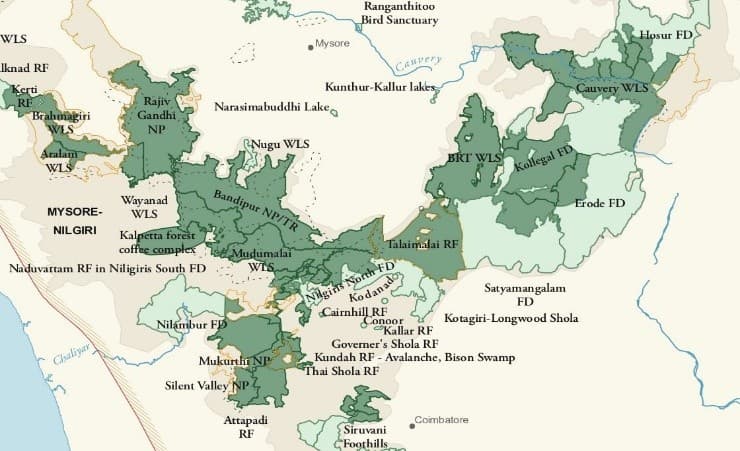
Protected-area: Cauvery Wildlife Sanctuary, declared 1987 under Wildlife Protection Act; expanded 2013 to 1,027 km².

Geography: Straddles Cauvery River across Mandya, Chamarajanagar, Ramanagara (Karnataka); abuts Tamil Nadu’s Dharmapuri forests.

Corridor-role: Links Bannerghatta NP, BRT Tiger Reserve, MM Hills WS, enabling tiger–elephant movement between Western & Eastern Ghats.

Quick Facts for MCQs

Flora

  • Dominant-trees: Terminalia arjuna, Syzygium cumini, Hardwickia binata, Albizia amara, Tamarindus indica.
  • Vegetation-mix: Deciduous with evergreen patches ensures high niche diversity.
  • Shola-pockets: Support moisture-loving species amid otherwise dry landscape.

Fauna

  • Apex-predators: Tiger, dhole, leopard maintain trophic balance.
  • Ungulates: Sambar, spotted & barking deer, wild boar serve prey base.
  • Avifauna-rich: >280 bird species recorded, aids sanctuary’s IBA potential.

Conservation Significance

  • Genetic-connectivity: Crucial bridge between Western-Eastern Ghats carnivore populations.
  • Water-security: Forest cover stabilises flow, limits silt into Cauvery River.
  • Multi-state-coordination: Shares boundary with Tamil Nadu, demanding joint anti-poaching patrols.

Key Data Points

FeatureData-Point
Notification year1987
Current area1,027 km² (post-2013 expansion)
StateKarnataka
Main riverCauvery
Adjacent TN forestDharmapuri
Districts coveredMandya, Chamarajanagar, Ramanagara
Forest typesDry deciduous, thorn, riverine, evergreen shola
ClimateSemi-arid; SW & NE monsoon rainfall
Flagship mammalsTiger, Asian elephant, leopard
Endangered mammalsGrizzled giant squirrel, smooth-coated otter
Iconic fishHump-backed mahseer
Important birdsWhite-rumped vulture, Nilgiri wood-pigeon
Tourist hotspotsHogenakkal Falls, Mekedatu, Sangam
Hydrological valueProtects Cauvery catchment for south-Indian drinking & irrigation
Wildlife corridor linksBannerghatta NP, BRT TR, MM Hills WS

Related UPSC Prelims PYQs

GS1 2020PYQ 1

Which of the following Protected Areas are located in Cauvery basin ?

GS1 2004PYQ 2

Match List I (National Park/Sanctuary) with List II (State) and select the correct answer using the codes given below:

GS-3Environment

8.Global Plastic Treaty Negotiation Deadlock (Global Plastic Treaty)

Down to Earth
Illustration for Global Plastic Treaty Negotiation Deadlock (Global Plastic Treaty)

What & Where

Global Plastic Treaty: proposed legally binding pact covering plastic’s full life-cycle, from production to disposal

Negotiations held by Intergovernmental Negotiating Committee (INC) under UNEP; latest stalled round in Geneva

Seeks worldwide rules on production caps, toxic chemical limits, waste management and support for developing nations

Quick Facts for MCQs

Legal & Policy

  • Proposal: global caps on virgin polymer output, phase-out lists for single-use plastics
  • Reform ask: hybrid voting system—consensus default, majority fallback to avoid stalemate
  • Alignment goal: integrate with existing MEAs to curb overlap and enhance enforceability

Environmental Impact

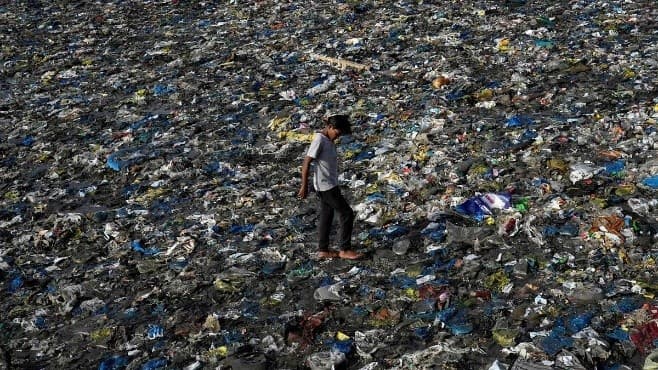
  • Persistence: plastic fragments linger centuries, disrupt soils, oceans, food webs
  • Climate link: fossil-fuel intensive production accelerates greenhouse gas emissions
  • Ecosystem loss: fisheries, tourism, agriculture incur damage costs from debris spread

Negotiation Dynamics

  • Divergence: development narrative versus environmental ambition dominates talks
  • Finance fault-line: equity-based funding, tech transfer, historical responsibility unresolved
  • Draft criticism: perceived dilution—voluntary measures outweigh enforceable obligations

Key Data Points

FeatureData-Point
ConvenorINC under UNEP
Legal intentBinding international agreement
Life-cycle scopeProduction → use → disposal, incl. marine impact
Decision rule usedFull consensus (allows single-state veto)
Pro-ambition blocHigh-Ambition Coalition: Norway, EU, UK, etc.
Opposition blocLike-Minded Group: Kuwait, Saudi Arabia, Iran, Russia + China & India
Key sticking pointsProduction caps, phase-out lists, finance & equity
Meeting outcomeSecond deadlock within eight months (Geneva)

Related UPSC Prelims PYQs

GEO_GS 2021PYQ 1

Montreal Protocol ratifies:

GS-3S&T

9.Black Hole Supernova Discovery (Astrophysics)

DD News

What & Where

Supernova– first-seen explosion where black hole drained a massive companion until collapse

Binary system– star and black hole each ≈10 M☉ located ≈700 million light-years away

Detection– AI flagged event; global telescopes tracked full timeline

Quick Facts for MCQs

Observational Tech

  • AI-scouting algorithm scanned real-time transients flagging event within seconds
  • Rapid follow-up using ground and space telescopes captured pre-, peak-, post-spectra
  • Continuous monitoring measured debris fallback onto black hole

Binary Interaction Physics

  • Accretion– black hole siphoned stellar mass over years distorting star
  • Stripping– hydrogen envelope removed exposing helium core pre-collapse
  • Aftermath– black hole consumed remaining ejecta gaining mass and spin

Astrophysics Significance

  • Mechanism– demonstrates companion black holes can directly trigger supernovae
  • Classification– suggests new subclass beyond core-collapse and thermonuclear types
  • Modelling– informs stellar evolution, binary dynamics, gravitational-wave source predictions

Key Data Points

FeatureData-Point
Stellar massesBoth components ≈10 times Sun
Distance from Earth~700 million light-years
Lost layerEntire hydrogen envelope stripped
Energy releaseMore in 1 s than Sun over lifetime
Discovery triggerReal-time AI transient scanner
Post-blast outcomeBlack hole accreted remaining debris

Related UPSC Prelims PYQs

GS1 2019PYQ 1

Recently, scientists observed the merger of giant 'blackholes' billions of light-years away from the Earth. What is the significance of this observation?

GS-3S&T

10.Socratic AI Transforming Education (EdTech AI)

The Hindu

What & Where

Socratic AI = inquiry-driven artificial intelligence acting as question-asking partner instead of answer-spitting tool

Key processes : adaptive questioning, ethical refusal, multidisciplinary guidance toward reasoning

Geography : piloted globally; potential for wide Indian rollout amid digital-divide concerns

Quick Facts for MCQs

Pedagogical Shift

  • Inquiry-driven design asks probing questions matching student prior knowledge
  • Ethical guardrails refuse to supply shortcut answers undermining integrity
  • Multidisciplinary reach spans economics, medicine, law, sciences

Skill Benefits

  • Reasoning boost via stepwise problem exploration
  • Argumentation polish through evidence-based dialogue
  • Humility fostered by challenging assumptions and revising views

Implementation Challenges

  • Infrastructure gaps limit rural, low-income learner access
  • Faculty scepticism over job displacement and classroom disruption
  • Technical limits in nuanced, context-rich questioning versus human mentors

Policy Way Forward

  • Digital infrastructure investment for equitable AI availability
  • Teacher training modules on integrating Socratic tools with curricula
  • Assessment reform shifting from memorisation to reasoning evaluation

Key Data Points

FeatureData-Point
New paradigm nameSocratic AI
Core pedagogyQuestion-prompting dialogue
Main traditional AI flawEncourages plagiarism & rote copying
Key advantageStrengthens critical thinking
Teacher roleAI seen as supplement, not replacement
Major equity riskDigital divide in device & bandwidth access
GS-3S&T

11.India Semiconductor Industry Outlook (Semiconductor Manufacturing)

PIB
Illustration for India Semiconductor Industry Outlook (Semiconductor Manufacturing)

What & Where

National India Semiconductor Mission (2021, MeitY) — umbrella to catalyse chip fabs, packaging, design and talent.

Recent Cabinet nod: 4 projects in Odisha, Punjab, Andhra Pradesh; tally now 10 projects across 6 states.

Targets creation of wafer fabs, display fabs, compound-semiconductor units and ATMP/OSAT facilities within India.

Quick Facts for MCQs

Market Dynamics

  • Demand: 5G rollout, AI diffusion steepen domestic chip consumption curve.
  • Imports: ICs +2000 %, memory +4500 %, amplifiers +4800 % during FY16-24; China supplies ~⅓.
  • Dominance: Taiwan & South Korea host 80 % of global foundry capacity.

Policy Tools

  • PLI: Output-linked incentive for large-scale electronics & IT hardware manufacture.
  • SPECS & EMC: Capital subsidy plus cluster infrastructure for components/semiconductors.
  • FDI: 100 % automatic route permitted in electronics manufacturing.

Key Challenges

  • Infrastructure: Fab construction needs ultra-cleanrooms, stable power, abundant water, heavy capex.
  • Talent: Existing 2.2 lakh professionals; gap could reach 3 lakh by 2027.
  • Environmental: Hazardous chemicals, high energy raise compliance and disposal costs.

Strategic Opportunities

  • Diplomacy: Tech partnerships with US, Japan aid know-how transfer, reduce China dependence.
  • Niche focus: MEMS, sensors, silicon photonics offer quicker, lower-capex entry points.
  • Geopolitics: US-China chip rift opens supply-chain realignment favouring India.

Key Data Points

FeatureData-Point
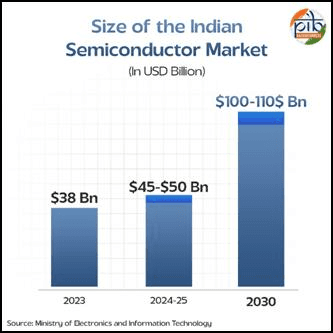
Market size FY25USD 52 billion
Projected size 2030USD 103.4 billion
CAGR 2024-3013 %
Mobile+IT+industrial revenue share≈70 %
Fiscal support (Fabs/Display/Compound)Up to 50 % of cost
DLI scheme cap₹15 crore per firm
Projects cleared Aug 20254
ISM project total10 in 6 states
Skilled shortfall by 20272.5–3.5 lakh workers
India’s 5G phone market share13 % (Rank 2)

Related UPSC Prelims PYQs

ESE_GS 2026PYQ 1

Which state is home to India’s first Silicon Carbide (SiC) semiconductor manufacturing plant?

GS-3Security

12.Sarvottam Yudh Seva Medal Overview (Military Honours)

The Print

What & Where

Definition: India’s highest wartime distinguished-service decoration for exceptional leadership during war, conflict or hostilities

Origin: Instituted 26 Jan 1980; conferred sparingly by President on tri-service personnel, reserves and nursing services

Geography: National award; precedence equals peacetime Param Vishisht Seva Medal across Army, Navy, Air Force

Quick Facts for MCQs

Features & Design

  • Shape: Circular 35 mm gold gilt; obverse state emblem with Hindi inscription
  • Reverse: Five-pointed star symbolising joint-services wartime excellence
  • Ribbon: Golden 32 mm with single 6 mm red stripe; bar signifies second award

Eligibility & Precedence

  • Coverage: Officers, JCOs, ORs, Auxiliary, Territorial Army, Reserves, Nursing Services
  • Placement: Above Uttam Yudh Seva Medal; below gallantry series like Param Vir Chakra
  • Conferment: Based on exceptional operational leadership; recommended by service chiefs, approved by Defence Ministry, President

Awardees

  • Historical: Only three awardees pre-2025—Lt Gen Kalkat 1989, Air Mshl Patney 1999, Lt Gen Khanna 2000
  • 2025 batch: Seven senior commanders from Operation Sindoor—four IAF, two Army, one Navy
  • Cumulative: Total recipients now 10, making SYSM among rarest Indian decorations

Significance & Impact

  • Morale: Rewards highest joint-operations planning, incentivises inter-service synergy during hostilities
  • Status: Considered wartime parallel to PVSM; confers lifelong honorific, ceremonial precedence

Key Data Points

FeatureData-Point
Institution year1980
First award operationOperation Pawan 1989
Latest award operationOperation Sindoor 2025
Awarding authorityPresident of India
Peacetime equivalentParam Vishisht Seva Medal
Medal hierarchyHighest wartime distinguished service
EligibilityAll ranks Army, Navy, Air Force, Auxiliaries
PosthumousAllowed
Medal designGold gilt 35 mm circular; star reverse
Ribbon coloursGolden field, central red stripe
Total recipients till 202510
Repeat award insigniaBar plus miniature star
GS-3Security

13.Golden Dome Missile Defence Project (Missile Defence)

DD News

What & Where

Multi-layer U.S. Golden Dome missile defence combining space and land intercept architecture

Coverage spans continental United States, Hawaii, Alaska against ballistic, hypersonic, cruise missiles

Components: satellite boost-phase kill, upgraded California-Alaska GBMD, five new sites, Patriot limited-area layer

Quick Facts for MCQs

Tech & Schemes

  • Space-Layer satellites wield kinetic interceptors or lasers for boost-phase kills
  • Ground-Layer upgraded GBMD interceptors in California, Alaska tackle midcourse trajectory
  • Terminal-Layer common launchers with Patriot sensors shield critical cities

Security Dimension

  • Shield promises full-spectrum defeat of ICBM, hypersonic, cruise threats
  • Integration via Hypersonic & Ballistic Tracking Space Sensor constellation enables global cueing
  • Deterrence value expected to raise adversary launch cost calculations

Economic Angle

  • Budget allocation pegged at USD 175 billion across decade
  • Private-Sector partners include SpaceX, Palantir, Anduril, L3Harris, Lockheed Martin, RTX
  • Five new launch sites projected to generate high-skill jobs in mainland, islands

International Examples

  • Inspiration drawn from Israel Iron Dome expanded to continental scale
  • Concept resurrects Reagan era Strategic Defense Initiative space intercept vision
  • Benchmarks set for emerging boost-phase kill capability rarely fielded globally

Key Data Points

FeatureData-Point
Project costUSD 175 billion
Primary layersSpace boost, ground midcourse, terminal area
Space constellation sizeHundreds of interceptor-capable satellites
Existing GBMD sitesFort Greely AK, Vandenberg CA
New launch sites3 mainland US, 1 HI, 1 AK
Threat typesICBM, hypersonic glide, cruise missiles
Core sensor networkHypersonic & Ballistic Tracking Space Sensor sats
Industry partnersSpaceX, Palantir, Anduril, L3Harris, Lockheed Martin, RTX
Heritage systemsIsrael Iron Dome, US SDI

Related UPSC Prelims PYQs

CDS_GK, GS1 2022PYQ 1

The term ‘Terminal High Altitude Area Defense’, sometimes mentioned in news, refers to

CDS_GK, GS1 2018PYQ 2

What is "Terminal High Altitude Area Defense (THAAD)", sometimes seen in the news?

GS-2Scheme

14.National Deep-Water Exploration Mission (Hydrocarbon Exploration)

New Indian Express
Illustration for National Deep-Water Exploration Mission (Hydrocarbon Exploration)

What & Where

Mission-mode programme to probe untapped deep-water oil & gas for long-term energy security

Led by Ministry of Petroleum & Natural Gas; executed via Directorate General of Hydrocarbons and allied labs

Core blocks in Andaman–Nicobar basin, ultra-deep Andhra coast and >1 mn sq km erstwhile No-Go offshore

Quick Facts for MCQs

Objectives

  • Import-cut aim Reduce crude & gas dependency to bolster Aatmanirbhar Bharat
  • Capacity-build Enhance domestic hydrocarbon production through accelerated discoveries
  • Security-boost Cushion economy from volatile global energy markets

Key Features

  • Deep-water focus Prioritises unexplored ultra-deep zones, high-pressure reservoirs
  • Large-scale bidding Invites domestic & global firms via liberalised terms
  • Tech infusion Employs advanced imaging, high-spec rigs, AI-driven prospect ranking

Significance

  • Forex-saving Lower import bill channels funds to welfare & infrastructure
  • Strategic control Strengthens sovereignty over critical energy resources in Indian EEZ
  • Economic multiplier Spurs allied services, shipyards, coastal employment

Key Data Points

FeatureData-Point
Launch announcement79th Independence Day address (15 Aug 2025)
Nodal ministryPetroleum & Natural Gas
Policy backboneOpen Acreage Licensing Policy (OALP) reforms
Offshore area unlocked>1 million sq km
Current import reliance88 % crude oil; 50 % natural gas
Tech tools2D/3D seismic, modern drilling, AI analytics
Prime target basinsAndaman Sea, deep Andhra offshore

Related UPSC Prelims PYQs

CDS_GK 2024PYQ 1

Which of the following statements is not correct?

GS-2SchemeQuick Bite

15.SHRESTH Health Regulation Index (Health Regulation)

PIB

What & Where

SHRESTH Index — virtual gap-assessment tool grading state drug regulators.

Pan-India coverage for all States & UTs.

Designed by CDSCO, Union Health Ministry; unveiled Aug 2025.

Quick Facts for MCQs

Tech & Schemes

  • Digital-first platform; states upload metrics, CDSCO auto-compiles index, monthly scorecards circulated
  • Classification engine separates Manufacturing from Distribution states tailoring evaluation

Health Governance

  • Accountability mechanism; lagging indicators flagged for corrective action, aligns with Drugs & Cosmetics Act enforcement
  • Capacity-building focus; index nudges recruitment, lab upgradation, surveillance strengthening to secure regulatory maturity

International Benchmarking

  • Compliance push; ML3 parity positions India as Pharmacy of World, easing global acceptance of Indian drugs
  • WHO hierarchy ML1–ML4 denote rising robustness; ML3 equals stable, integrated, well-functioning regulatory system

Key Data Points

FeatureData-Point
Launch year2025
Parent ministryHealth & Family Welfare
DeveloperCDSCO
NatureVirtual assessment index
Primary goalDrug safety, quality, efficacy
State groupingManufacturing; Distribution/UT
Data submissionMonthly by states
Benchmark referenceWHO GBT ML3
India’s WHO statusML3 achieved 2024
Key parametersHR, labs, licensing, surveillance, grievance redress

Related UPSC Prelims PYQs

ESE_GS 2026PYQ 1

Which organization developed the Online National Drugs Licensing System (ONDLS) portal?

Ready to practice?

Test your knowledge with our UPSC test series.

Start Free Trial