UPSC Current Affairs

14 topicsGS-2: 5GS-3: 9
0/14 done
GS-2Polity

1.Supreme Court ruling on governor assent (Governor Assent)

Live Law
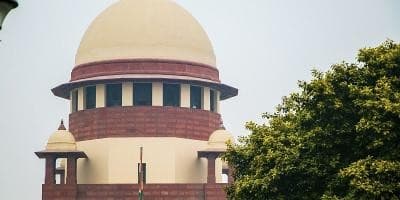
Illustration for Supreme Court ruling on governor assent (Governor Assent)

What & Where

Supreme Court verdict (State of Tamil Nadu v Governor) on gubernatorial assent to State Bills.

Scrutinises Article 200 pathway: assent, withhold, return, reserve; links to Articles 163 & 142.

Triggered by delay on 10 Tamil Nadu Bills; guidance now pan-India.

Quick Facts for MCQs

Constitutional Provisions

  • Article 200 keyword “shall” = mandatory; proviso bars withholding after re-passage.
  • Article 163 obliges Governor to act on Cabinet advice except limited discretion.
  • Article 142 enables Court to deem assent, ensuring “complete justice”.

Governance Issues

  • Pocket-veto misuse: Governors in opposition-ruled states delaying Bills indefinitely.
  • Absence of statutory timelines caused federal friction & litigation (Kerala, Punjab, Telangana).
  • Non-communication of reasons breaches constitutional accountability and transparency.

Judicial Directives

  • Delay beyond set windows unconstitutional; silence equals assent lapse.
  • Governors cannot reserve Bills to President post re-enactment by Assembly.
  • Framework applies uniformly, bolstering states’ legislative autonomy and cooperative federalism.

Key Data Points

FeatureData-Point
Judgement nameState of Tamil Nadu v Governor of Tamil Nadu & Anr
Source Article(s)200, 163, 142
Bills affected10 State Bills re-passed in Nov 2023
SC tool usedArticle 142 “complete justice” power
Initial assent/reserve window1 month
Withhold-against-advice window3 months (must communicate reasons)
Assent after re-passage1 month; no further reservation
Max reserve for President3 months
Nature of veto allowedNo absolute/pocket veto; only time-bound actions
Discretion exceptionSecond proviso of Art 200 (e.g., High Court powers)

Related UPSC Prelims PYQs

CAPF_GAI, GS1 2022PYQ 1

The landmark case of D. C. Wadhwa vs. State of Bihar in the Supreme Court is related to which one of the following powers of the Governor?

CAPF_GAI, GS1 2019PYQ 2

With reference to the Constitution of India, prohibitions or limitations or provisions contained in ordinary laws cannot act as prohibitions or limitations on the constitutional powers under Article 142. It could mean which one of the following?
GS-3Economy

2.One State One RRB consolidation (RRB Consolidation)

Business Standard

What & Where

Reform: “One State, One RRB” consolidates all Regional Rural Banks within a state into one entity.

Geography: 26 RRBs in 10 states + 1 UT merged; pan-India RRB tally drops to 28.

Timeline: Finance Ministry notification effective 1 May 2025.

Quick Facts for MCQs

Legal & Policy

  • Notification: 26 amalgamations approved under Section 23A of RRB Act.
  • Objective: Remove intra-state competition among multiple sponsor banks.
  • Compliance: Aligns with DFS mandate “One State, One RRB”.

Operational Benefits

  • Scale: Larger coverage enables lower unit costs and better outreach.
  • Technology: Uniform core banking platform across merged entities streamlines services.
  • Credit: Bigger balance sheets permit higher exposure limits and diversified risk.

Institutional Structure

  • Ownership: Tripartite equity ensures joint accountability of Centre, State, Sponsor Bank.
  • Governance: Post-merger board anchored by single sponsor bank simplifies oversight.
  • Role: RRBs supplement cooperative credit, focus on agriculture, MSME, rural services.

Key Data Points

FeatureData-Point
Parent ministryDepartment of Financial Services, MoF
Policy start year2005 (post-Dr Vyas Committee)
Legal baseRegional Rural Banks Act, 1976
Present RRB count (post-merger)28
Shareholding patternCentre 50 % ; State 15 % ; Sponsor Bank 35 %
Primary regulatorsRBI (regulation) ; NABARD (supervision)
Effective merger date1 May 2025
Sponsor bank per stateSingle after consolidation
Original concept reportNarasimham Committee, 1975
GS-3Economy

3.India Skills Accelerator skilling platform (Skill Development)

PIB

What & Where

Initiative: India Skills Accelerator, national public–private platform for future-ready skilling and inclusive workforce.

Launch Venue: Joint move by Ministry of Skill Development & Entrepreneurship and World Economic Forum.

Geography: Pan-India coverage; aims to align training with high-growth domestic sectors.

Quick Facts for MCQs

Legal & Policy

  • Framework upgrade; align skilling policies to dynamic labour demands, ensure agility and responsiveness.
  • Data-led governance enables evidence-based regulation and funding decisions.
  • Sectoral mapping aims to formalise informal jobs through supportive policy tweaks.

Tech & Schemes

  • Priority sectors: AI, robotics, advanced manufacturing, renewable energy, Global Capability Centres.
  • Emphasis on lifelong learning; mobilises investment for continuous upskilling, reskilling.
  • Benchmarking uses WEF Global Learning Network digital tools for peer comparison.

Collaboration & Governance

  • 10–12 thematic working groups drive high-impact, measurable skilling initiatives.
  • Stakeholder surveys enhance knowledge sharing, reduce duplication.
  • Partnership offers global perspective via WEF’s Future of Jobs 2025 insights.

Key Data Points

FeatureData-Point
Launch partnersMSDE + World Economic Forum
Initiative levelNational public-private platform
Core aimFuture-ready, inclusive skilling ecosystem
Change leversMindset, Collaboration, Policy upgrade (3)
Sector focusAI, robotics, advanced manufacturing, energy, GCCs
High-impact priorities10–12 thematic working groups
Governance toolWEF Global Learning Network benchmarking
Global insight baseWEF “Future of Jobs 2025” report

Related UPSC Prelims PYQs

GEO_GS, GS1 2026PYQ 1

Consider the following statements about the SANKALP Scheme:

GEO_GS, GS1 2018PYQ 2

प्रधान मंत्री कौशल विकास योजना के संदर्भ में, निम्नलिखित कथनों पर विचार कीजिए:

GS-3Editorial

4.Three waves of Indian environmentalism (Environmental Movements)

The Hindu

What & Where

Environmentalism: socio-political pursuit of ecological balance against exploitative industrialisation.

Three Indian waves: Pre-Independence intellectual (c.1900-47), Grassroots Gandhian (1970-80s), Youth climate activism (2000s-present).

Core geography: Himalayan forests, Western Ghats rivers, expanding to urban air-pollution & e-waste hubs.

Quick Facts for MCQs

Historical Waves

  • Firstwave: Howard, Gandhi, Kumarappa emphasised village self-reliance, tropical fragility.
  • Secondwave: women-led non-violent forest defence, merged ecology with livelihoods.
  • Thirdwave: climate justice narrative, tech-savvy youth, global linkages.

Key Movements

  • Chipko1973: tree-hugging saved Himalayan oak-pine forests.
  • SilentValley1978: activism preserved Kerala evergreen hotspot.
  • NarmadaBachao1985+: challenged mega-dam displacement-ecology impacts.

Policy & Law

  • MoEFCC, Forest Conservation Act1980 institutionalised green oversight.
  • EPA1986 empowered Centre for blanket anti-pollution orders.
  • FRA2006 recognised tribal forest rights, blending equity with conservation.

Social Concerns

  • Equity: environmental degradation disproportionately burdens women, tribals, fisherfolk.
  • GreenJobs: youth demand renewable-energy, circular-economy employment.
  • DigitalReach: social media accelerates nationwide protest coordination.

Key Data Points

FeatureData-Point
First-wave focusCritique of colonial forestry & promotion of organic farming
Key first-wave thinkerJ.C. Kumarappa—“Economy of Permanence”
Chipko year & region1973, Uttarakhand’s Alaknanda valley
Silent Valley outcome1980 govt. cancels Kerala hydel project
MoEFCC formation1980 (as Dept. of Environment; ministry 1985)
Environment Protection ActEnacted 1986 under Art. 253
Digital tool, 3rd waveFridays for Future hashtags mobilise school strikes
Recent urban protest2019 Aarey Colony tree-felling, Mumbai

Related UPSC Prelims PYQs

CDS_GK, GEO_GS 2024PYQ 1

The Chipko Movement was initiated under the leadership of Sunderlal Bahuguna around the year:

CDS_GK, GEO_GS 2025PYQ 2

Consider the following social movements:

GS-3Environment

5.Bandipur National Park traffic-ban protest (Tiger Reserve)

IT
Illustration for Bandipur National Park traffic-ban protest (Tiger Reserve)

What & Where

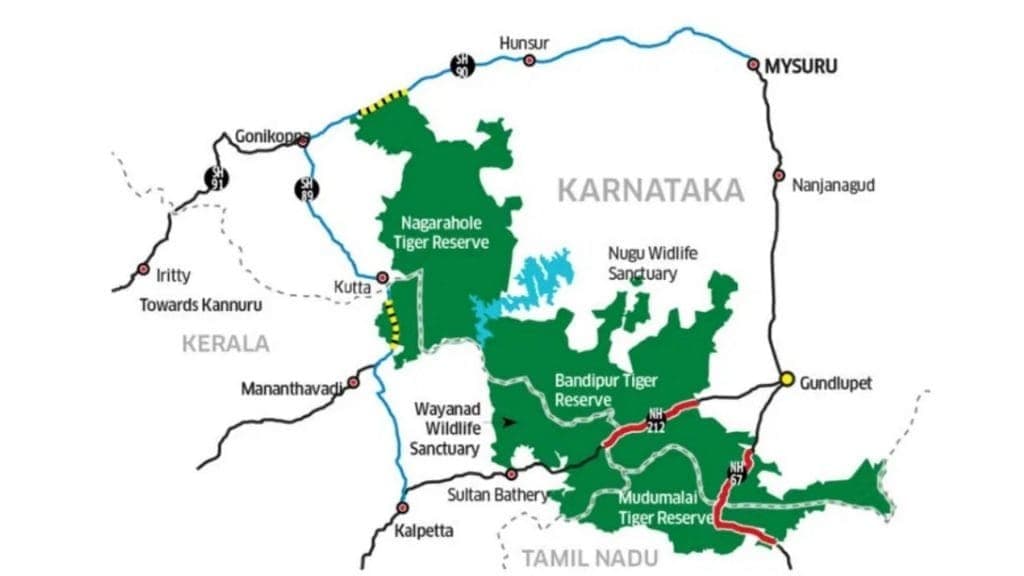
Bandipur National Park: 868.63 km² tiger reserve within Nilgiri Biosphere Reserve, Chamarajanagar district, Karnataka.

Core habitat intersected by NH-766 (ex-NH 212) linking Kozhikode (KL)-Kollegal (KA).

2009 night-traffic ban (21:00-06:00) imposed to cut wildlife roadkills.

Quick Facts for MCQs

Environmental Impact

  • Mortality-cut: 88% drop in roadkills post-2009 ban.
  • Habitat continuity: reduced vehicular disturbance aids tiger, elephant movement.
  • Biosphere buffer: park forms critical link in Western Ghats-Nilgiri wildlife corridor.

Legal & Policy

  • Supreme Court 2019 order validated Karnataka’s ban as “conservation success”.
  • Night-ban aligns with Wildlife (Protection) Act mandates on core-area integrity.
  • Any lifting requires MoEFCC clearance plus state wildlife board nod.

Civil Society Action

  • “Save Bandipur” campaign revived after reports of potential ban rollback.
  • Stakeholders: environmentalists, local citizens, wildlife researchers.
  • Tactics: protests, petitions, social-media outreach highlighting SC judgment.

Biodiversity Significance

  • IUCN-listed species presence elevates global conservation value.
  • Part of UNESCO-recognised Nilgiri Biosphere, hosting >100 mammal, 350 bird species.
  • Supports largest contiguous Asian elephant population with Mudumalai-Wayanad landscape.

Key Data Points

FeatureData-Point
Original name/yearVenugopala Wildlife Park, 1931
Tiger Reserve since1973, Project Tiger
Biosphere tagNilgiri BR, 1986
Dominant biomesDry & moist deciduous, scrub
Key floraTeak, rosewood, sandalwood, bamboo
Flagship faunaBengal tiger, Asian elephant
Endemics notedBlack-naped hare, Malabar squirrel
Highway codeNH-766 (old NH-212)
Highway routeKozhikode-Kollegal
Night-ban window9 PM–6 AM
Pre-ban kills (2004-09)286 animals
Post-ban kills (2010-18)34 animals
SC verdict year2019, ban upheld

Related UPSC Prelims PYQs

GS1 2012PYQ 1

Consider the following protected areas:

GS-3EnvironmentQuick Bite

6.CPCB introduces blue pollution category (Pollution Classification)

Hindustan Times
Illustration for CPCB introduces blue pollution category (Pollution Classification)

What & Where

CPCB’s revised industry classification adds a “Blue Category” for essential environmental services across India.

Key processes: landfill upkeep, biomining, waste-to-energy, select compressed biogas (CBG) plants.

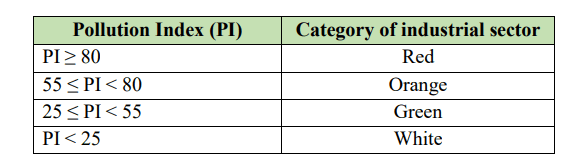
Built on Pollution Index (air, water, waste) previously giving Red, Orange, Green tags.

Quick Facts for MCQs

Legal & Policy

  • CPCB classification circular revises Environment (Protection) Rules schedule.
  • Blue tag overrides high PI when service is “public environmental necessity.”
  • Consent renewal eased to cut regulatory burden on crucial waste infrastructure.

Industrial Categories

  • Red: highly polluting industries; examples unchanged.
  • Orange: moderate-high pollution range; PI 55-<80.
  • Green: PI <25, minor pollution, retain standard renewal cycle.

Incentives & Compliance

  • Blue units receive longer consent validity, lowering compliance cost.
  • Encourages private entry into landfill remediation and WtE sectors.

Tech & Schemes

  • CBG plants processing segregated organic waste likely Blue; mixed-feed plants assessed case-wise.

Key Data Points

FeatureData-Point
AuthorityCentral Pollution Control Board (statutory)
New category nameBlue
Eligibility driverEssential environmental service, not PI score
Consent-to-operate extension2 years for Blue units
Waste-to-energy PI value97.6 (yet Blue)
Red category thresholdPI > 80
Orange threshold55 ≤ PI < 80
Green thresholdPI < 25
Constituting Act (CPCB)Water (Prevention & Control) Act 1974
Additional powersAir Act 1981; Environment (Protection) Act 1986

Related UPSC Prelims PYQs

ESE_GS 2020PYQ 1

Basel Convention provides

GS-3S&T

7.Dire wolf de-extinction attempt (De-Extinction)

CNN

What & Where

De-extinction: biotech-enabled revival of extinct species via gene editing, ancient DNA reconstruction, cloning.

First dire-wolf attempt: three engineered wolf pups by U.S. firm Colossal Biosciences, Texas laboratory.

Core geography: extinct dire wolves once roamed Pleistocene grasslands-forests of North America.

Quick Facts for MCQs

Tech & Methods

  • CRISPR-Cas9 enables targeted genome edits inserting dire-wolf alleles into modern wolf DNA.
  • Ancient-DNA sequencing reconstructs extinct genome fragments for synthetic insertion.
  • Cloning protocols replicate edited embryos, implanted in surrogate wolves.

Biodiversity & Ecology

  • Species revival aims ecosystem restoration by reinstating apex-predator functions.
  • Potential climate resilience through reintroducing cold-adapted genotypes.
  • Success benchmarks include survival, breeding, prey-population regulation.

Public & Scientific Impact

  • High-visibility project boosts citizen interest in conservation genomics.
  • Offers living model for studying Pleistocene predator evolution.
  • Raises ethical, ecological risk debates on releasing engineered carnivores.

Key Data Points

FeatureData-Point
Target speciesDire wolf (Aenocyon dirus)
Extinction timeline≈ 12,500 years ago
Epoch livedLate Pleistocene
Habitat zoneNorth American grasslands & forests
Company leading workColossal Biosciences (USA)
Milestone achievedBirth of 3 gene-edited wolf pups
Key tech toolsCRISPR-Cas9, ancient-DNA sequencing, cloning
Dire-wolf buildMore muscular, larger skull than modern wolves
Primary preyBison, horses, other megafauna
Pack behaviourApex, social hunters
GS-3S&T

8.3D printing additive manufacturing advances (Additive Manufacturing)

Indian Express
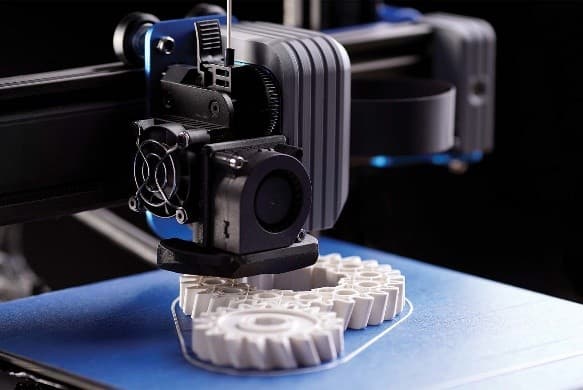
Illustration for 3D printing additive manufacturing advances (Additive Manufacturing)

What & Where

Definition: 3D Printing/Additive Manufacturing builds objects layer-by-layer directly from a digital CAD model.

Key types: FDM, SLS, DMLS, Material Jetting enabling plastics-to-metal fabrication.

Geography: Hatsushima, Arida City, Wakayama Prefecture, Japan—world’s first 3D-printed train station.

Quick Facts for MCQs

Process Steps

  • Design: CAD model saved as .STL/.OBJ.
  • Slicing: software splits model into thin horizontal layers.
  • Printing & Post-processing: material deposition, quick solidification, then curing/sanding/painting.

Tech Variants

  • FDM extrudes molten thermoplastic filament sequentially.
  • SLS laser-sinters plastic/metal powder into solid layers.
  • DMLS laser-fuses metal powder; Material Jetting UV-cures photopolymer droplets.

Limitations

  • Material scope narrow; many conventional inputs incompatible.
  • Build volume limited; large objects need multi-part assembly.
  • Layer adhesion weakens under stress; digital files ease counterfeiting.

International Example

  • Japan unveils first 3D-printed railway station, signaling rapid, waste-minimal infrastructure possibilities.

Key Data Points

FeatureData-Point
Station nameHatsushima
City/CountryArida, Japan
BuilderWest Japan Railway Co.
Construction time< 6 hours
File formats.STL, .OBJ
Core methodLayer-by-layer additive
Main tech variantsFDM, SLS, DMLS, Material Jetting
Key limitationRestricted material choices
GS-3S&TQuick Bite

9.GenomeIndia Indian population genome mapping (Genome Mapping)

The Hindu
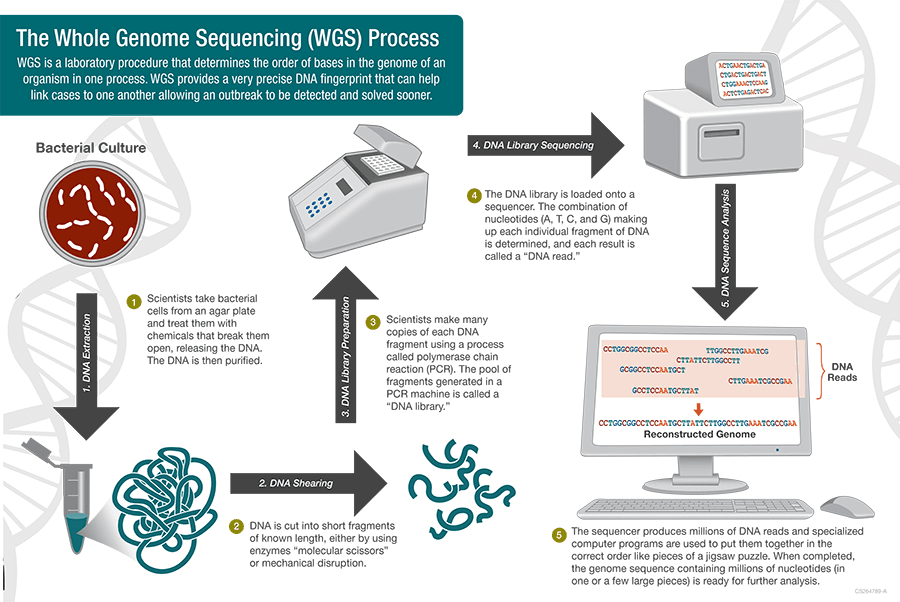
Illustration for GenomeIndia Indian population genome mapping (Genome Mapping)

What & Where

GenomeIndia Project – DBT-launched 2020 mission to sequence 10,000 Indian genomes for a national reference

Whole-genome sequencing decodes full nucleotide order; applied to 85 population groups (32 tribal, 53 non-tribal) across India

Data warehoused at Indian Biological Data Centre, Regional Centre of Biotechnology, Faridabad, Haryana

Quick Facts for MCQs

Tech & Schemes

  • Initiative complementors include CSIR IndiGen 2019 and One Day One Genome 2024 microbial rollout
  • GA4GH 2013 frames global data standards ensuring Indian datasets interoperable
  • Human Genome Project 1990-2003 sets precedent for reference genome building

Health Relevance

  • Variants catalogue aids precision medicine and rare disease diagnostics in Indian cohorts
  • Underrepresented Indian alleles now available for genome-wide association studies
  • Tribal-specific mutations may inform targeted public-health screening

International Position

  • Indian genomes earlier <1 % of global databases now significantly boosted
  • Reference genome elevates India to contributor status alongside US, UK, China
  • Indigenous data sovereignty strengthened through domestic storage at IBDC

Key Data Points

FeatureData-Point
PublicationNature Genetics, Apr 2025
Total genomes sequenced~10,000
Population groups covered85 (32 tribal + 53 non-tribal)
Genetic variants found180 million
Autosomal variants130 million
Sex-chromosome variants50 million
Lead ministryDept of Biotechnology
Key partnersIISc-CBR, CCMB, NIBMG
Data repositoryIBDC, Faridabad
Launch year2020
Comparable CSIR IndiGen size1,029 genomes
One Day One Genome focusBacterial diversity
GS-2Editorial

10.Rise of regionalism and minilateralism (Regionalism Trend)

Indian Express

What & Where

Concept: Shift from universalist multilateralism to interest-based regionalism and minilateralism (QUAD, BRICS, I2U2)

Drivers: UNSC paralysis, pandemic supply shocks, reform-stalled WTO-IMF-World Bank

Geography: Indo-Pacific focus with India anchoring South Asia, Bay of Bengal, Indian Ocean Rim

Quick Facts for MCQs

Drivers

  • Conflict-stalemate: Russia-Ukraine, Israel-Gaza spotlight UNSC ineffectiveness
  • Pandemic-lesson: vaccine inequity, supply disruptions push health, economic sovereignty
  • Reform-fatigue: unequal WTO-IMF governance spurs alternatives like AIIB, New Development Bank

Indian Role

  • Connectivity: BBIN, Kaladan, IMEC corridors amplify trade, transit
  • Security: Net-security provider in Indian Ocean through anti-piracy patrols, HADR missions
  • Culture: Buddhist Circuit, Nalanda University nurture civilisational links, soft-power goodwill

Challenges

  • Perception: Smaller neighbours wary of Indian hegemony, hesitate on India-led projects
  • Bilateral-friction: Kashmir issue, Galwan 2020 undercut SAARC viability, stall projects
  • China-factor: BRI infrastructure diplomacy creates strategic counterweight to Indian leadership

Way Forward

  • Institutional-revamp: Energise BIMSTEC, IORA with funding, functional secretariats
  • Sub-regionalism: Leverage BBIN, sectoral minilaterals in health, green energy when SAARC stuck
  • Trade-boost: Simplify customs, harmonise standards, expand digital and physical connectivity

Key Data Points

FeatureData-Point
UNSC deadlock causesGreat-power veto rivalry on Ukraine, Gaza
Intra-South Asia trade share≈ 5 % of region’s total commerce
Intra-ASEAN trade share≈ 25 %
India-ASEAN trade 2023USD 101.9 bn, 2.86 % of ASEAN total
South Asian largest economyIndia
Key India disaster missionsMaitri (Nepal 2015), Brahma (Myanmar 2023)

Related UPSC Prelims PYQs

CAPF_GAI, GS1 2023PYQ 1

क्वाड (Quad) के बारे में निम्नलिखित में से कौन-सा/कौन-से कथन सही है/हैं?

CAPF_GAI, GS1 2025PYQ 2

BIMSTEC के संदर्भ में, निम्नलिखित कथनों पर विचार कीजिए :

GS-3Security

11.Technology-driven India-Pakistan border security (Tech Border Surveillance)

The Hindu
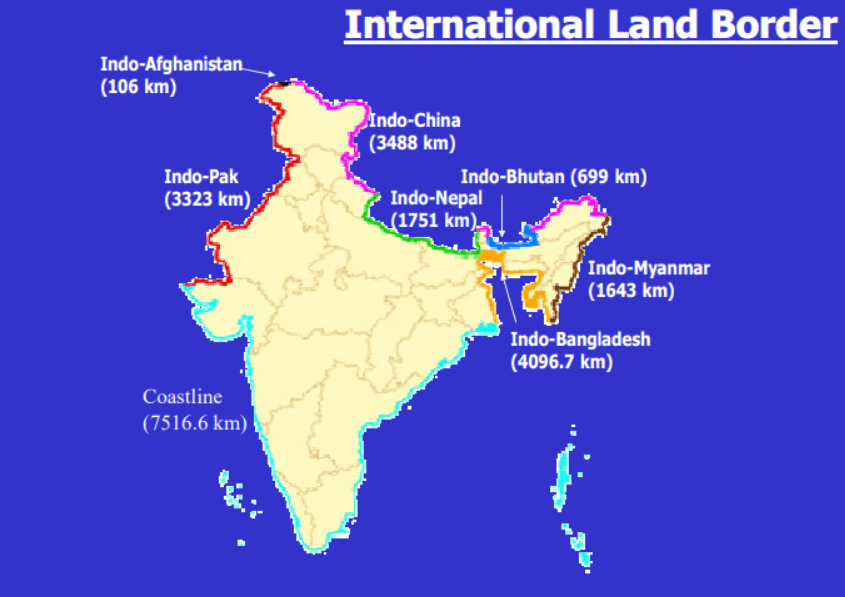
Illustration for Technology-driven India-Pakistan border security (Tech Border Surveillance)

What & Where

Definition Comprehensive electronic surveillance plan along entire 3,323 km India-Pakistan border, incl. 744 km LoC, 200 km J&K IB.

Processes Integration of anti-drone, tunnel-detection, high-mast lighting, smart fences under CIBMS framework within four years.

Geography Focus sectors Kathua-Poonch (J&K) and Punjab plains; desert stretches Rajasthan; marshy Kutch Gujarat.

Quick Facts for MCQs

Security Dimension

  • Threat Cross-border terrorism by LeT, JeM; Uri 2016, Pulwama 2019 cited triggers.
  • Smuggling Death Crescent heroin, arms, counterfeit currency exploit porous stretches Punjab & J&K.
  • Sovereignty Visible tech deterrence counters Pakistan infiltration and Chinese claim narratives.

Tech & Schemes

  • Scheme Border Infrastructure & Management funds fences, roads, ICPs, watchtowers.
  • Innovation iDEX startups like ideaForge supply rugged ISR drones to BSF, Army.
  • Data Project Himshakti AI model processes satellite imagery for patrol optimisation; proposed western expansion.

International Examples

  • USA SBInet uses fixed towers, radars, RF sensors across Mexico line.
  • Israel Smart Fence integrates AI motion detection, underground sensors, facial recognition.
  • EU EUROSUR network fuses drones, satellites, AI for real-time border picture.

Issues & Gaps

  • Terrain Deserts, marshes, forests demand customised sensors; one-size fails.
  • Coordination Overlapping BSF, Army, police mandates delay real-time response.
  • Sustainability Extreme heat, snow impair electronics; high O&M costs challenge remote upkeep.

Key Data Points

FeatureData-Point
Total India-Pakistan border3,323 km
LoC length744 km
J&K international border≈200 km
Deadline for full e-surveillance4 years (2029)
Announced atKathua visit, Apr 2025
Reported Jammu terror incidents since 202130 +
Core technologiesAnti-drone, tunnel sensors, high-mast towers
Lead force on this borderBorder Security Force
Umbrella tech frameworkCIBMS
Smart-fence pilot on Myanmar border100 km planned

Related UPSC Prelims PYQs

CDS_GK 2025PYQ 1

किस फ़ायरवॉल को चालू करने के उपयोग निम्नलिखित में से कौन-से हैं?

GS-2Scheme

12.Palna childcare crèche scheme (Childcare Crèche)

DD News
Illustration for Palna childcare crèche scheme (Childcare Crèche)

What & Where

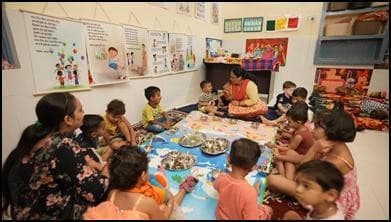
Scheme Palna centrally sponsored crèche intervention under Samarthya, Mission Shakti for children 6 months–6 years

Coverage pan-India, urban and rural, prioritising children of working mothers

Two operational models — Standalone Crèche and Anganwadi-cum-Crèche integrated with existing AWCs

Quick Facts for MCQs

Budget & Funding

  • Ratio Centre 60%, State 40%; enhanced 90:10 for Northeast and special category states
  • Financial layout mirrors structure of other Mission Shakti components, ensuring parity across childcare interventions

Implementation Mechanism

  • Delivery models Standalone near workplaces/homes; Anganwadi-cum-Crèche leverages existing Anganwadi infrastructure
  • Services include hot meals, growth tracking, early stimulation, preschool education, immunisation linkage
  • Staffing mandates trained workers, enabling continued breastfeeding support and child safety compliance

Social Concerns

  • Objective empower working mothers through reliable, affordable day-care, aiding female labour participation
  • Focus on early childhood nutrition aligns with Poshan Pakhwada’s 2024 theme, strengthening first-1000-days outcomes
  • Proximity of crèches to residence/work expected to curb post-maternity workforce attrition

Key Data Points

FeatureData-Point
Year launched2022
Implementing ministryMinistry of Women & Child Development
Umbrella programmeMission Shakti
Sub-schemeSamarthya
Centre:State ratio60:40
NE & SCS ratio90:10
Age group6 months–6 years
Max children per unit25
Crèche modelsStandalone; Anganwadi-cum-Crèche

Related UPSC Prelims PYQs

NDA_GAT 2024PYQ 1

Which of the following statements about 'ULLAS' scheme is/are NOT correct?

GS-2Scheme

13.Niveshak Didi financial literacy drive (Financial Literacy)

PIB

What & Where

Scheme: Niveshak Didi, women-led financial-literacy drive empowering rural communities through peer education.

Geography: Pan-India rollout via India Post network, targeting rural, semi-urban and tribal pockets.

Timeline: Pilot 2023; Phase-2 expansion from April 2025.

Quick Facts for MCQs

Institutional Setup

  • Authority: IEPFA finances mission under Companies Act mandate for investor education.
  • Bank: IPPB supplies doorstep, paperless, cashless banking backbone.
  • Agreement: MoA signed 2024 to operationalise Phase-2 scale-up.

Outreach Mechanics

  • Training: 40,000 women Gramin Dak Sevaks groomed as “Niveshak Didis”.
  • Camps: 4,000+ grassroots sessions scheduled across underserved districts.
  • Language: Vernacular delivery in 13 tongues ensures inclusivity.

Gender Focus

  • Beneficiaries: 60 % women reached in Phase-1; gender lens retained.
  • Influence: Local women educators leverage community trust for behaviour change.
  • Safety: Curriculum embeds fraud-awareness to protect female users of digital finance.

Key Data Points

FeatureData-Point
Launching bodiesIEPFA (Ministry of Corporate Affairs) + IPPB (Dept of Posts)
Phase-2 startApril 2025
Women postal educators40,000 +
New literacy camps4,000 +
Beneficiary gender share (Phase-1)> 60 % women
Instruction languages13 Indian languages
Core modulesSavings, digital banking, safe investment, fraud prevention

Related UPSC Prelims PYQs

CAPF_GAI, CDS_GK 2025PYQ 1

नवीनी सहकार योजना के बारे में निम्नलिखित कथनों पर विचार कीजिए:

CAPF_GAI, CDS_GK 2021PYQ 2

NIDHI is an umbrella scheme for the promotion of

GS-2SchemeQuick Bite

14.Ten years of Pradhan Mantri Mudra Yojana (Microcredit Scheme)

PIB
Illustration for Ten years of Pradhan Mantri Mudra Yojana (Microcredit Scheme)

What & Where

Flagship, nationwide scheme giving collateral-free institutional credit to micro/small units since April 2015.

Three slabs: Shishu (≤ ₹50k), Kishor (₹50k–5 L), Tarun (₹5–10 L) routed through banks, RRBs, NBFCs, MFIs.

MUDRA Ltd handles refinance; Credit Guarantee Fund for Micro Units backs default risk.

Quick Facts for MCQs

Credit Expansion

  • Disbursal growth Compound Annual Rate touches 13 % for women, deposits 14 % FY16-25.
  • MSME credit nearly tripled in a decade; scheme nudged formalisation.
  • Higher ticket loans now dominate, signalling maturing enterprise needs.

Social Inclusion

  • Women, SC, ST, OBC form bulk beneficiaries, advancing gender and caste equity.
  • Minority entrepreneurs secure 11 % accounts, reflecting outreach breadth.
  • Zero-collateral, no-fee design lowers entry barriers for first-time borrowers.

Pandemic Support

  • Interest-subvention cushioned Shishu borrowers, curbing default spike during lockdown.
  • Measure aligned with Atmanirbhar Bharat liquidity push for micro units.

Regional Spread

  • Southern and Northern leaders diverge; Bihar, West Bengal show latent credit potential.
  • Per-capita winners small, eastern states, indicating effective microfinance penetration.

Key Data Points

FeatureData-Point
Launch8 Apr 2015
Scheme typeCentral Sector
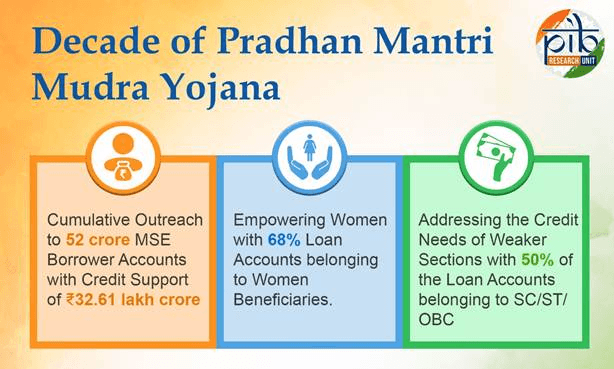
Total loans (FY15-25)52 crore
Amount disbursed₹32.61 lakh crore
Women share68 % accounts
SC/ST/OBC share~50 % accounts
Minority share11 % accounts
MSME bank credit FY14→FY24₹8.5 → 27.25 lakh crore
MSME share in total credit15.8 % → ~20 %
Shishu share decline92 % → 63 %
Kishor+Tarun rise5.9 % → 44.7 %
COVID aid2 % interest subvention on Shishu
Top states (total)Tamil Nadu, Uttar Pradesh, Karnataka
Top per-capita statesTripura, Odisha, Tamil Nadu
Leading UTJammu & Kashmir

Related UPSC Prelims PYQs

CAPF_GAI, GS1 2024PYQ 1

Which of the following statements is NOT correct for Pradhan Mantri Mudra Yojana (PMMY)?

CAPF_GAI, GS1 2016PYQ 2

Pradhan Mantri MUDRA Yojana is aimed at

Ready to practice?

Test your knowledge with our UPSC test series.

Start Free Trial