UPSC Current Affairs

13 topicsGS-1: 4GS-2: 4GS-3: 5
0/13 done
GS-2Polity

1.Restatement of Values of Judicial Life (Judicial Ethics)

Indian Express

What & Where

Restatement of Values of Judicial Life: 16-point non-statutory ethical code for higher judiciary in India

Adopted unanimously by Supreme Court in full-court meeting May 1997; cited again during 2024 asset-declaration decision

Applicable nationwide to Supreme Court and High Court judges, guiding conduct in absence of parliamentary law

Quick Facts for MCQs

Legal & Policy

  • Non-statutory code referenced in several Supreme Court rulings on recusal, conflict-of-interest
  • Complements Constitution Articles 124(4) & 217, providing behavioural standards beyond rare impeachment threshold
  • Reiterates maxim justice must be seen to be done, anchoring public confidence doctrine

Accountability Measures

  • Asset-declaration by all SC judges 2024 materialises transparency ethos embedded in Restatement
  • Prohibitions on gifts, hospitality, speculative trading shield judges from monetary influence
  • Mandatory shareholding disclosure before hearing corporate matters prevents perceived bias

Ethics & Conduct

  • Aloofness clause restricts close association with Bar; family lawyers cannot appear before related judge
  • Express ban on public political views or media interviews safeguards judicial neutrality
  • No contesting elections or external offices, preserving separation from partisan or organisational interests

Key Data Points

FeatureData-Point
Year adopted1997
Document typeNon-statutory code of ethics
Total guidelines16 points
Adopting bodySupreme Court Full Court
Binding statusSelf-adopted, morally binding
Primary aimPreserve public faith in judiciary
Recent trigger2024 SC judges’ asset disclosure

Related UPSC Prelims PYQs

GS1 2007PYQ 1

Consider the following statements:
GS-1History

2.Decline of Buddhism in India (Decline of Buddhism)

New Indian Express

What & Where

Buddhism: 6th – 5th BCE śramaṇa tradition by Siddhartha Gautama; enlightenment – Bodh Gaya; first sermon – Sarnath.

Key streams: Theravada (Pali Canon), Mahayana (Bodhisattva ideal), Vajrayana (tantric, Bengal-Bihar).

Geographic core: Magadha heartland; later universities Nalanda & Vikramshila; missions to Sri Lanka, China, SE Asia.

Quick Facts for MCQs

Origin & Councils

  • Enlightenment: Bodhi tree, Uruvela; Four Noble Truths, Eightfold Path codified.
  • Councils: Rajgir (483 BCE), Vaishali, Pataliputra, Kashmir – canon preservation, sect splits.
  • Early patrons: Bimbisara, Ajatashatru legitimised Sangha against Brahmanism.

Expansion & Institutions

  • Missionary network: Ashoka’s edicts sent Mahendra to Sri Lanka; Silk Road monks reached China.
  • Universities: Nalanda, Vikramshila, Taxila attracted Korea-Tibet-SE Asia scholars with free boarding.
  • Art crossover: Gandhara Greco-Buddhist icons, Amravati limestone reliefs spread doctrinal stories.

Social & Cultural Contribution

  • Equality: Sangha discarded caste, enabled women ordination via Bhikkhuni order.
  • Literature: Pali, Prakrit Jataka tales influenced Panchatantra, regional storytelling.
  • Ahimsa ethos: Shaped Ashoka’s Dhamma, later Gandhi’s satyagraha vocabulary.

Decline Factors

  • Cultural absorption: Hinduism recast Buddha as Vishnu’s 9th avatar, eroding separate identity.
  • Social pull: Grihastha ideal outcompeted celibate monasticism; wealthy viharas lost lay connect.
  • Political loss: Gupta-Rajput shift to Vaishnavism/Shaivism; Turkish raids razed monastic hubs.

Key Data Points

FeatureData-Point
Founder’s lifespan563–483 BCE (traditional)
BirthplaceLumbini, present-day Nepal
First Council siteRajgir, 483 BCE
Royal mega-patronAshoka, 268–232 BCE
Language of TipitakaPali
Oldest schoolTheravada
Mahayana emergence1st cent BCE–1st cent CE
Vajrayana cradleBengal & Bihar, 7th cent CE
Iconic stupasSanchi, Bharhut, Amaravati
Last big patronsPala dynasty, 8th–12th CE
Key destroyed varsitiesNalanda, Vikramshila (c. 1193 CE)

Related UPSC Prelims PYQs

GS1 2010PYQ 1

Why did Buddhism start declining in India in the early medieval times ?

GS1 2020PYQ 2

With reference to the religious history of India, consider the following statements:
GS-1Mapping

3.Ionian Islands Location and Features (Greek Islands)

IDR
Illustration for Ionian Islands Location and Features (Greek Islands)

What & Where

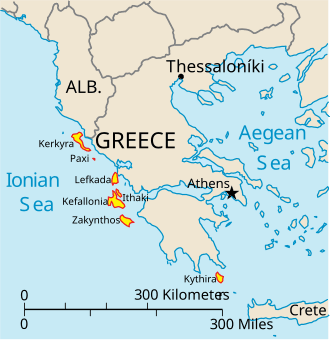
Ionian Islands: seven-island Heptanesos off west Greece, between Albanian coast and Peloponnese, facing Italy

Lefkada: central Ionian island, fertile yet seismic, host to newly unearthed classical theater on Koulmos Hill

Discovery: 4th c BCE stone koilon with 21 seating rows, capacity 3 500, planned expansion to 11 000

Quick Facts for MCQs

Physical Geography

  • Fertility: olives vines citrus flourish, supporting regional export agriculture
  • Harbors: deep sheltered bays enable Mediterranean trade and naval routes
  • Seismicity: islands sit on Hellenic arc, frequent quakes

Archaeological Details

  • Architecture: limestone koilon carved for optimal acoustics and sightlines
  • Components: orchestra floor, skene bases partly exposed, digs ongoing
  • Leadership: excavation led by Dr Olympia Vikatou, Greek Ministry of Culture

Historical Timeline

  • Polis era: Lefkada prospers within Acarnanian league during 4th c BCE
  • Roman shift: Actium victory spurs Nikopolis colony; theater use ends
  • Reuse: stone blocks quarried through Byzantine, Venetian, Ottoman periods

Seismicity

  • 1953 quake: magnitude ~7.2 devastates Kefalonia, Zakynthos, Lefkada
  • Records: Ionian zone shows Greece’s highest quake frequency
  • Regulation: stricter building codes adopted island-wide post-1953

Key Data Points

FeatureData-Point
Alternate nameHeptanesos
Political statusPeripheral region, Hellenic Republic
Sea locationIonian Sea, east of Italy
Geographic stretchAlbania coast down to Peloponnese
Main islandsCorfu, Lefkada, Kefalonia, Zakynthos, Ithaca, Cythera, Paxos
Discovery siteKoulmos Hill, Lefkada
Theater epoch4th century BCE
Seating rows21
Initial capacity~3 500
Planned capacity~11 000
Abandonment triggerRoman Nikopolis, 31 BCE
Major earthquake1953, mag ~7.2
GS-1Mapping

4.Diego Garcia and Chagos Archipelago (Chagos Archipelago)

Times of India
Illustration for Diego Garcia and Chagos Archipelago (Chagos Archipelago)

What & Where

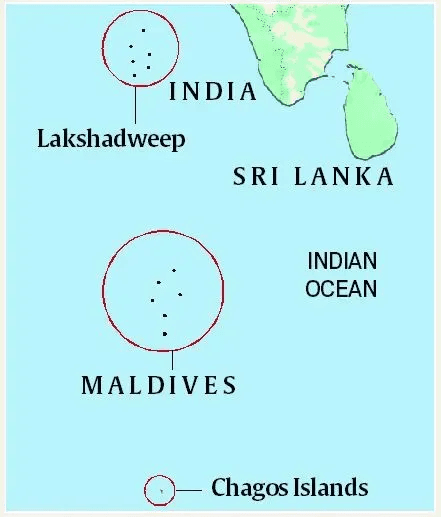
Chagos Archipelago – 58-island British-controlled Indian Ocean group, 500 km south of Maldives, forming the British Indian Ocean Territory.

Diego Garcia – largest coral atoll (7° S), leased by UK to USA; sole major American base in Indian Ocean.

Base provides long-range air/sea power projection spanning Asia, Africa and Middle East.

Quick Facts for MCQs

Legal & Policy

  • 1965 detachment created BIOT, violating UN decolonisation norms.
  • ICJ 2019 said continued UK control “unlawful”, urged return to Mauritius.
  • 2024 accord: UK to transfer islands, retains Diego Garcia on 99-year lease.

Security Dimension

  • Diego Garcia supported Gulf War, Iraq, Afghanistan, post-9/11 strikes.
  • April 2025: six B-2 bombers deployed amid Iran tensions.
  • Only Indian Ocean base allowing rapid US strategic reach to three continents.

Human Displacement

  • ~1,500–2,000 Chagossians expelled 1960s–70s for base construction.
  • Community seeks right of return; compensation claims ongoing.
  • Issue remains point of contention in UK, Mauritian and UN forums.

Key Data Points

FeatureData-Point
No. of islands in Chagos58
Distance from Maldives~500 km south
Latitude of Diego Garcia7° S
Treaty ceding Chagos to BritainTreaty of Paris, 1814
BIOT carved out of Mauritius1965; £3 million compensation
ICJ advisory opinion favouring Mauritius2019
UK–Mauritius sovereignty deal2024; UK keeps base under 99-yr lease
Original inhabitantsCreole-speaking Chagossians
Forced displacement period1960s–70s
Recent US deploymentSix B-2 stealth bombers

Related UPSC Prelims PYQs

GS1 2002PYQ 1

In the map given below, four islands of Indian Ocean region, i.e. A) Seychelles, B) Chagos, C) Mauritius and D) Socatra are marked as 1, 2, 3 and 4. Match them and select the correct answer from the codes given below.

GS-3Environment

5.Ice Stupas Artificial Glaciers for Irrigation (Artificial Glaciers)

PO
Illustration for Ice Stupas Artificial Glaciers for Irrigation (Artificial Glaciers)

What & Where

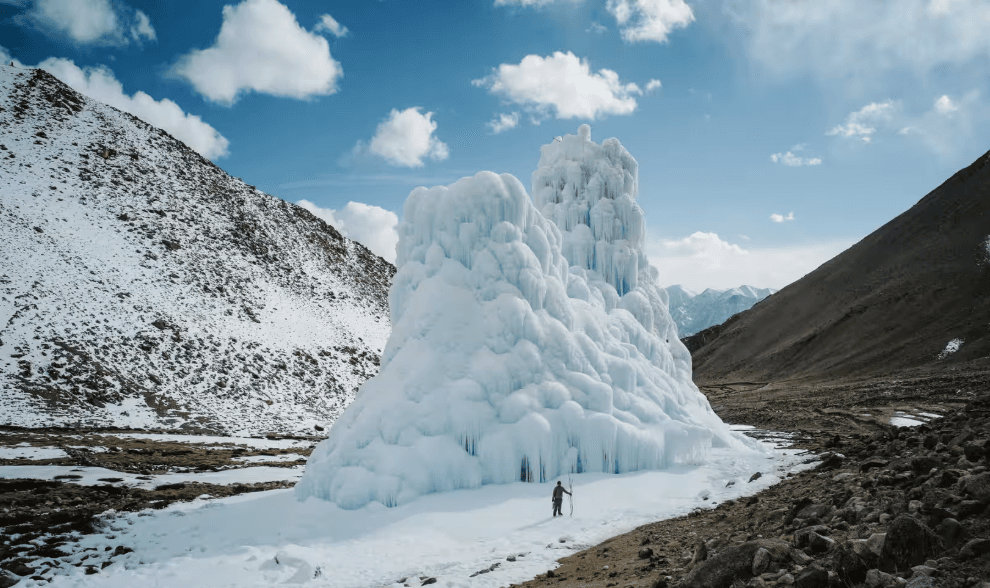
Ice Stupa: cone-shaped artificial glacier storing winter stream water as ice for later irrigation.

Process: gravity-fed pipe sprays water into sub-zero air, freezing layer-by-layer around support frame.

Geography: Invented in Ladakh; now replicated by farmers in Gilgit-Baltistan’s cold-arid Himalayas.

Quick Facts for MCQs

Science & Mechanics

  • Gravity-fed pipes ensure continuous flow without pumps or electricity.
  • Spray freezing forms fine droplets that solidify mid-air, building tall ice columns.
  • Cone geometry limits solar exposure, insulating core and delaying melt.

Agricultural Impact

  • Multiple-crop possibility replaces single short summer crop cycle.
  • Timely melt aligns with sowing season, stabilising orchard and cereal yields.
  • Community construction keeps costs minimal, boosting smallholder viability.

Climate & Disaster

  • Adaptation tool against retreating natural glaciers and erratic snow.
  • Slow, controlled melt curbs sudden glacial lake outburst flood risk.
  • Local water security enhances resilience in high-altitude semi-deserts.

Key Data Points

FeatureData-Point
ShapeVertical cone / stupa-like dome
Water sourceDiverted glacial melt streams
Energy needNone; gravity-driven flow
Creation seasonWinter nights below 0 °C
Melt windowGradual spring–early summer
Key proponentSonam Wangchuk, Ladakh engineer
Physics usedPhase change, latent heat, hydraulic gradient
Main crops aidedApple, apricot, wheat, barley
Recent adoptersGilgit-Baltistan mountain villages
GS-3EnvironmentQuick Bite

6.Pipalapanka Dam Impact on Rushikulya River (Rushikulya River)

Down to Earth
Illustration for Pipalapanka Dam Impact on Rushikulya River (Rushikulya River)

What & Where

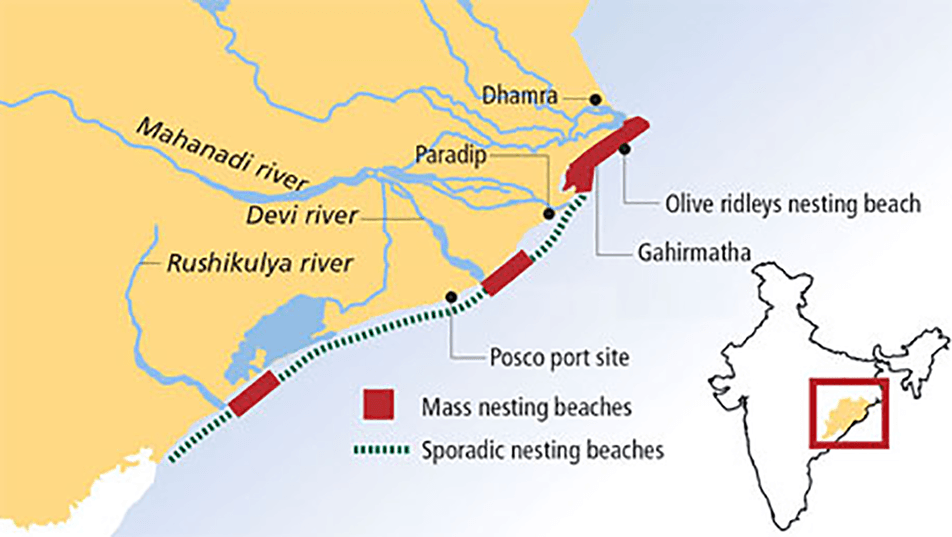
Rushikulya River in Odisha; rises Rushimala Hills, Eastern Ghats; flows Kandhamal-Boudh-Ganjam into Bay of Bengal

Proposed Pipalapanka dam on midstream stretch to divert water for industrial use

River-mouth Rushikulya Beach hosts Olive Ridley Arribada mass-nesting; river lacks delta

Quick Facts for MCQs

Environmental Impact

  • Salinity intrusion likely to intensify with diminished freshwater release
  • Dam plus sand mining reducing depth, harming fisheries and groundwater recharge
  • Tributaries already weakened by upstream barrages, shrinking perennial flow

Biodiversity

  • Rushikulya Beach among world’s largest Olive Ridley nesting grounds
  • Arribada involves simultaneous egg-laying by thousands of females each season
  • Rising sand temperature producing disproportionate female hatchlings, risking long-term viability

Social Concerns

  • Local residents protest, alleging project favours industries over community water security
  • Fisherfolk foresee catch reduction and income loss from altered estuarine ecology
  • Activists demand comprehensive environmental impact assessment and alternative water planning

Key Data Points

FeatureData-Point
Origin locationDaringbadi, Kandhamal district
Source hillsRushimala Hills, Eastern Ghats
Districts traversedKandhamal, Boudh, Ganjam
Main tributariesJarau, Badanadi, Baghua, Dhanei, Ghodahada
Delta formationNone; direct Bay of Bengal outflow
Key wildlife siteRushikulya Beach turtle rookery
Nesting monthsJanuary-March
Mass-nesting termArribada
Planned structure150 m Pipalapanka dam (revived proposal)
Major threatsDam, illegal sand mining, industrial abstraction
Climate concernHigher sand temperature skewing sex ratio female

Related UPSC Prelims PYQs

GS1 2011PYQ 1

Two important rivers – one with its source in Jharkhand (and known by a different name in Odisha), and another, with its source in Odisha – merge at a place only a short distance from the coast of Bay of Bengal before flowing into the sea. This is an important site of wildlife and biodiversity and a protected area. Which one of the following could be this?

GS-3S&T

7.CAPTCHA Systems and Online Security (Human Verification Tech)

The Hindu
Illustration for CAPTCHA Systems and Online Security (Human Verification Tech)

What & Where

CAPTCHA: online Turing-test verifying humans versus bots; puzzles like distorted text, image selection, behaviour tracking.

Key types: classic text CAPTCHA, reCAPTCHA (2009) using scanned book words, Invisible reCAPTCHA (2014) analysing cursor/behaviour.

Ubiquity: deployed worldwide across websites, e-commerce, comment forms, logins, payments.

Quick Facts for MCQs

Technology & Versions

  • reCAPTCHA digitised books by crowdsourcing scanned word recognition.
  • Invisible variant omits visible test, tracks mouse movement & browsing behaviour.
  • Evolution driven by need to outpace machine-learning bots.

Security Dimension

  • Additional verification layer protects logins, payments, password recovery from brute-force scripts.
  • Widely embedded APIs integrate easily with thousands of platforms.
  • Rising AI capability undermines reliability, prompting multi-factor defences.

Social Concerns

  • Usability friction: extra step can lower user experience, especially on mobiles.
  • Accessibility gap: audio/text challenges hinder differently-abled compliance.
  • Potential user drop-off risks for high-traffic commercial sites.

Key Data Points

FeatureData-Point
Full formCompletely Automated Public Turing test to tell Computers and Humans Apart
reCAPTCHA launch2009
Invisible reCAPTCHA launch2014
Major supporterGoogle
Core functionBlocks spam, fake sign-ups, automated attacks
Common puzzle typesDistorted text, image picking, checkbox, behaviour sensing
Accessibility issueVisually/audibly impaired users struggle
AI threatAdvanced bots can bypass certain CAPTCHAs
GS-3S&T

8.HALEU Thorium Fuel for PHWRs (HALEU Thorium Fuel)

Indian Express

What & Where

India’s three-stage nuclear programme: PHWRs → Fast Breeder Reactors → Thorium reactors.

Proposed HALEU-thorium fuel: enrich U-235 (5-20 %) plus Th-232 inside existing 700 MWe PHWRs.

Key sites: 18 PHWRs nationwide; Prototype FBR at Kalpakkam, Tamil Nadu; nuclear tests at Pokhran, Rajasthan.

Quick Facts for MCQs

Tech & Schemes

  • HALEU-thorium blend allows thorium use without waiting for large FBR fleet.
  • Molten Salt Reactors earmarked for reprocessed HALEU-thorium spent fuel.
  • Advanced Heavy Water Reactor and MSRs under design for Stage-3 deployment.

Fuel Cycle

  • Stage-1 PHWRs yield Pu-239, feed Stage-2 breeders for surplus fissile inventory.
  • FBRs convert U-238 into additional Pu-239, multiplying fuel resources.
  • Reprocessing of PHWR HALEU-thorium spent fuel maximises fissile recovery, cuts waste.

Security Dimension

  • Indigenous three-stage route ensures strategic autonomy amid limited domestic uranium.
  • 1974 and 1998 Pokhran tests placed India as sixth nuclear-armed state.
  • Thorium reliance reduces proliferation risks linked to high-enrichment uranium imports.

Key Data Points

FeatureData-Point
HALEU enrichment range5 % – 20 % U-235
Current PHWR unit size700 MWe
PHWRs built so far18
Stage-1 moderatorHeavy water (D₂O)
Stage-2 reactor typeFast Breeder Reactor
Prototype FBR siteKalpakkam, Tamil Nadu
Stage-3 fertile materialThorium-232
Fissile bred in Stage-3Uranium-233
First nuclear testSmiling Buddha (1974)
Pokhran-II tests5 devices, 1998
Programme architectHomi J. Bhabha

Related UPSC Prelims PYQs

GS1 2012PYQ 1

To meet its rapidly growing energy demand, some opine that India should pursue research and development on thorium as the future fuel of nuclear energy. In this context, what advantage does thorium hold over uranium?

GS1 2006PYQ 2

In which one of the following areas did the Indira Gandhi Center for Atomic Research make significant progress in the year 2005?

GS-2Editorial

9.India Sri Lanka Bilateral Agreements 2025 (India-Sri Lanka Ties)

The Print
Illustration for India Sri Lanka Bilateral Agreements 2025 (India-Sri Lanka Ties)

What & Where

India–Sri Lanka: 2024 PM-level visit in Colombo; 7 MoUs covering defence, energy, digital, health, culture.

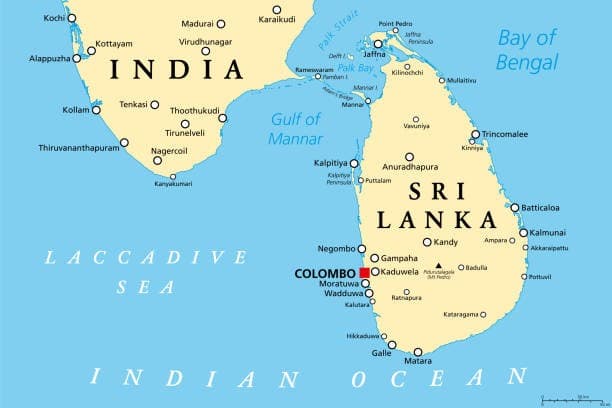
Geography pivot: Northern & Eastern Provinces, Trincomalee energy hub, Hambantota port, Palk Strait fishing grounds.

Key processes: debt-restructuring aid, joint military drills (SLINEX, MITRA SHAKTI), FTA → proposed ETCA.

Quick Facts for MCQs

Security Dimension

  • Vigilance: Yuan Wang-5 docking 2022, Hambantota lease heighten Indian Ocean surveillance concerns.
  • Expansion: Colombo Security Conclave suggested inclusion of Mauritius, Maldives for domain awareness.
  • Defence: Structured MoU enables joint patrols, information sharing, capacity-building.

Economic Angle

  • Conversion: USD 100 m Indian credit turned grant; interest reduction on prior loans eases Lankan debt.
  • Connectivity: USD 106 m Indian-financed railway upgrades, resumed Nagapattinam–Kankesanthurai ferry.
  • Prospect: Early ETCA finalisation to boost tourism, manufacturing, digital investment inflows.

Cultural Diplomacy

  • Heritage: Buddha relics from Gujarat slated for Vesak 2025 exhibition across Lanka.
  • Restoration: India funding Thirukoneswaram and Sita Eliya temple renovations, strengthening people-to-people ties.
  • Circuit: Proposed Bodh Gaya–Anuradhapura Buddhist corridor to amplify soft power.

Challenges

  • Fishermen: Frequent Tamil Nadu arrests near Katchatheevu; maritime boundary ambiguity persists.
  • Politics: Shifting Colombo coalitions, some pro-China, complicate continuity of India-friendly policies.
  • Reconciliation: Limited 13th Amendment devolution keeps Tamil grievances unresolved.

Key Data Points

FeatureData-Point
MoUs signed (2024 visit)7
New Umbrella pactDefence cooperation
Trincomalee project partnersIndia–Sri Lanka–UAE
Indian aid during 2022 crisisUSD 4 billion
Loans converted to grantsUSD 100 million
Trade volume 2023-24USD 5.54 billion
Hambantota lease to China99 years
Key naval exerciseSLINEX
Buddha relic displayVesak 2025
Houses built by India60,000 (since 2014)

Related UPSC Prelims PYQs

GEO_GS, GS1 2009PYQ 1

Elephant Pass, which is frequently in the news, is mentioned in the context of the affairs of which one of the following ?

GEO_GS, GS1 2026PYQ 2

With reference to the Human Development Report (2023–2024), consider the following countries:

GS-2Editorial

10.Global South Role in Peace Mediation (Global South Diplomacy)

The Hindu
Illustration for Global South Role in Peace Mediation (Global South Diplomacy)

What & Where

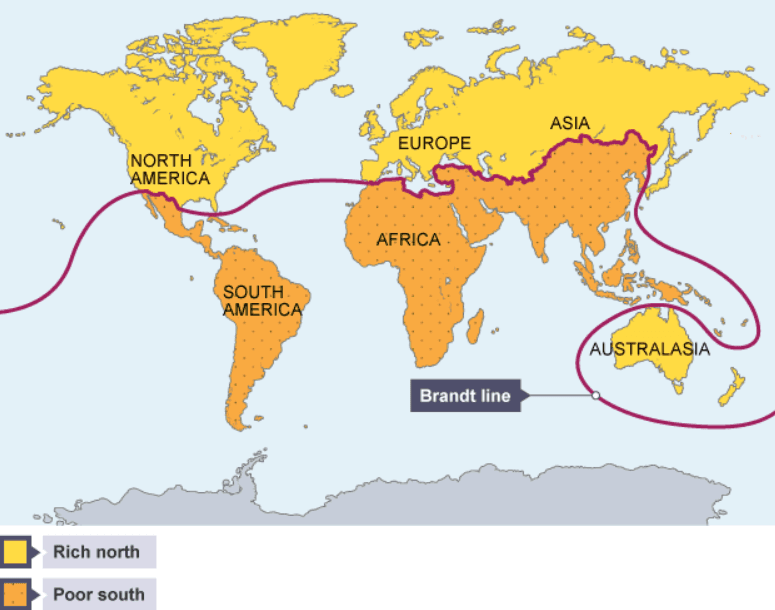
Definition: “Global South” = Latin America, Asia, Africa, Oceania nations historically exploited by Global North.

Process: Acts as neutral, non-aligned mediator and UN peacekeeper in contemporary conflicts.

Geography: Region lies mainly south of Brandt Line (~30° N), excluding Europe & North America.

Quick Facts for MCQs

Peacemaker Roles

  • Mediator: Non-alignment gives legitimacy for shuttle diplomacy between warring parties.
  • Peacekeeper: Supplies bulk troops to UN missions, enhancing ground credibility.
  • Convenor: Platforms like BRICS demand ceasefire, offering alternate negotiation venues.

Operational Constraints

  • Ceasefire prerequisite: Deployment risky without enforceable truce.
  • UNSC mandate: Legal authority hinges on Security Council consensus, often polarised.
  • Capacity gaps: Limited rapid-deployment, funding, high-tech logistics despite manpower surplus.

Illustrative Examples

  • India balanced stance enables dialogue with both Russia & Ukraine.
  • Indian forces long-standing presence in Congo, African Union active in Somalia.
  • 2007 Liberia mission fielded first all-women Indian UN police unit, showcasing inclusive peacebuilding.

Key Data Points

FeatureData-Point
Term originCoined by Carl Oglesby, 1969
Brandt Line latitudeRoughly 30° North
Brandt Line proponentWilly Brandt, 1970s
Leading advocatesChina & India
Key UN peacekeeping donorsGlobal South states (e.g., India, African nations)
GS-3Security

11.Project Varsha Nuclear Submarine Base (Nuclear Submarine Base)

Times of India

What & Where

Project Varsha: classified Navy project building INS Varsha, India’s first dedicated nuclear-submarine base.

Location: Rambilli, ~50 km south-west of Visakhapatnam, Andhra Pradesh on Bay of Bengal coast.

Capacity: underground pens for 12 SSBN/SSN; first phase commissioning planned 2026.

Quick Facts for MCQs

Infrastructure & Design

  • Underground pens; stealth from satellites, aerial surveillance, hydro-acoustic tracking.
  • Docking capacity; 12 SSBN/SSN with shore-based reactor and weapons servicing.
  • BARC linkage; rapid reactor refit, nuclear material handling within high-security perimeter.

Nuclear Deterrence

  • Second-strike; survivable sea-based missiles complete land-air-sea triad.
  • INS Aridhaman; larger payload, longer patrol endurance than Arihant class.
  • Continuous at-sea deterrence; rotational SSBN deployments enabled from secure bastion.

Regional Security

  • Counter-China; offsets PLA Navy footprints at Hambantota, BNS Sheikh Hasina, Djibouti.
  • Malacca access; swift deployment to eastern IOR chokepoint for sea-lane control.
  • Bay-of-Bengal bastion; secure launch corridor within Indian EEZ, away from hostile ASW assets.

Key Data Points

FeatureData-Point
Project nameVarsha
Base designationINS Varsha
StateAndhra Pradesh
Exact siteRambilli (50 km from Vizag)
Commissioning year2026 (phase-1)
Docking capacity12 nuclear submarines
Structural designRock-cut underground pens & tunnels
Adjacent facilityBARC Atchutapuram
Nearest chokepointStrait of Malacca
Third SSBNINS Aridhaman
Aridhaman displacement~7,000 tonne
Missile loadK-4 SLBM, 3,500 km
Aridhaman commissioning2025
ATV predecessorsINS Arihant, INS Arighaat
Strategic roleStrengthens second-strike leg of nuclear triad

Related UPSC Prelims PYQs

CDS_GK, ESE_GS 2024PYQ 1

Which one of the following statements about 'INS Tarmugli' is not correct?

CDS_GK, ESE_GS 2024PYQ 2

Which one of the following ships does NOT come under Indian Navy's eight ASW Shallow Water Craft project?

GS-2Scheme

12.UGC Foreign Qualification Equivalence Regulations 2025 (Foreign Degree Recognition)

NDTV
Illustration for UGC Foreign Qualification Equivalence Regulations 2025 (Foreign Degree Recognition)

What & Where

Regulatory framework (2025) for recognising foreign academic qualifications in India.

Implemented nationwide by University Grants Commission under Ministry of Education.

Enables study, research, employment parity for foreign degree-holders.

Quick Facts for MCQs

Process & Timelines

  • Digital-first; applicant uploads documents, tracks status real-time.
  • Expert Standing Committee issues advice within 10 days, UGC notifies in 15.
  • Rejected cases get single-stage review mechanism.

Coverage & Exemptions

  • Inclusion: degrees, diplomas, certificates, school boards from foreign recognised institutions.
  • Offshore campuses valid; must satisfy both jurisdictional regulations.
  • Statutory-council professions and UGC-approved joint programmes expressly carved out.

Governance & Policy

  • Framework derived from UGC Act, aligns with NEP 2020 internationalisation pillar.
  • Moves equivalence power from AIU to statutory regulator for uniformity.
  • Enhances transparency via mandatory online publication of every decision.

Key Data Points

FeatureData-Point
Regulating bodyUGC (statutory, Min. of Education)
Replaces earlier evaluatorAssociation of Indian Universities
Legal instrument year2025
Application modeDedicated UGC online portal
Scrutiny bodyStanding Committee of education experts
Recommendation deadline10 working days
Final decision deadline15 days (from receipt)
PublicationDecisions uploaded on portal; review option for rejects
Eligibility modesOn-campus, distance, online from recognised foreign HEIs
Offshore campusesAllowed if compliant with host & home laws
School qualification rule12 years schooling abroad valid for Indian UG entry
Excluded domainsMedicine, Law, Nursing, Pharmacy, Architecture, other council-regulated
Joint/dual/twinning degreesNot eligible; already under separate UGC approvals
NEP 2020 linkSupports internationalisation objectives

Related UPSC Prelims PYQs

ESE_GS, GEO_GS 2021PYQ 1

Which one of the following statements is NOT correct regarding the National Education Policy 2020 in India ?

ESE_GS, GEO_GS 2023PYQ 2

What is Academic Bank of Credit (ABC) as per the National Education Policy (NEP), 2020?

GS-1Editorial

13.Preventive Healthcare Against Non-Communicable Diseases (Non-Communicable Diseases)

The Hindu

What & Where

Preventive healthcare – proactive system prioritising early detection, vaccination, lifestyle change over curative care

Core processes: periodic screenings (BP, glucose), holistic diet–exercise–mental health, tech-enabled risk prediction

Indian roll-out: Ayushman Bharat HWCs, National Cancer Screening drive combat soaring NCD burden

Quick Facts for MCQs

Economic Angle

  • Productivity-loss: NCDs may erase USD 3.5–4 trillion from GDP by 2030
  • Workforce-threat: rising obesity, hypertension among youth undermines demographic dividend
  • Cost-saving: 80 % cardiovascular events avoidable via diet, exercise, tobacco control

Tech & Schemes

  • Digital-push: 750 million phones enable AI alerts, wearables, tele-monitoring
  • Flagship-scheme: 1.5 lakh Ayushman Bharat HWCs offer free screening, counselling, medicines
  • Private-tool: Apollo ProHealth app predicts individual risk from vitals and lifestyle data

Challenges

  • Low-awareness: only 30 % urban adults opt annual check-ups; “no illness = no doctor” mindset
  • Infrastructure-gap: rural areas lack diagnostics; doctor density 1 : 1,457 nationally, poorer in villages
  • Budget-constraint: health outlay 2.1 % GDP limits preventive programmes

Key Data Points

FeatureData-Point
Share of deaths by NCDs66 %
Annual NCD deaths>5 million
Premature NCD death risk (<70 yr)22 % Indians
Projected NCD economic cost 2030USD 3.5–4 trillion
Public health spend2.1 % GDP
Doctor : Population ratio1 : 1,457
Smartphone users (digital reach)750 million

Related UPSC Prelims PYQs

GS1, NDA_GAT 2022PYQ 1

With reference to Ayushman Bharat Digital Mission, consider the following statements:
GS1, NDA_GAT 2022PYQ 2

भारत सरकार की प्रमुख टेलीमेडिसिन सेवा ‘ई-संजीवनी’ को हाल ही में किसके साथ एकीकृत किया गया?

Ready to practice?

Test your knowledge with our UPSC test series.

Start Free Trial