UPSC Current Affairs

17 topicsGS-1: 5GS-2: 5GS-3: 7
0/17 done
GS-2Editorial

1.Big Tech Competition Regulation (Competition Law)

The Hindu

What & Where

Case: CCI fined Meta ₹213 cr, banned WhatsApp-to-Meta data sharing (India, 2024 order on 2021 policy).

Forum: NCLAT granted stay, directing 50 % deposit, pending detailed appellate review.

Issue: Data-centric dominance, network effects, privacy-competition overlap in Indian digital markets.

Quick Facts for MCQs

Legal & Policy

  • SupremeCourt 2015: Section 79 gives safe-harbour; blocking only via Section 69A, “necessary” under Article 19(2).
  • MeitY Sahyog portal 2024 allows Section 79 blocking, challenged by X Corp for overreach.
  • EU model: DMA targets gatekeepers; GDPR imposes heavy privacy fines, inspiring Indian ex-ante approach.

Regulatory Challenges

  • Lag: Competition Act lacks data-dominance tools; framed for price/output, not network effects.
  • Fragmentation: CCI, MeitY, yet-to-form Data Protection Board operate with weak coordination.
  • Transnationality: Cross-border operations hinder territorial enforcement; Meta simultaneously probed in US, EU, Australia.

Proposed Reforms

  • Recommendation: Digital Market & Data Unit inside CCI for time-bound digital cases.
  • Mandate: Algorithm transparency, interoperability, prohibition on cross-platform data sharing sans explicit consent.
  • Shift: Ex-ante scrutiny of SSDEs to curb lock-ins; central anonymised data repository for fair access.

Key Data Points

FeatureData-Point
CCI penalty on Meta₹213 crore
Data-sharing ban length5 years
Appellate body staying orderNCLAT
Deposit ordered by NCLAT50 % of fine
Law invoked by CCICompetition Act 2002
Privacy policy under scannerWhatsApp 2021 update
Proposed new statuteDigital Competition Act (CDCL 2023)
Tag for large platformsSSDEs in Digital Competition Bill 2024
Data law passedDPDP Act 2023
Blocking rule upheld in Shreya SinghalIT Act Section 69A
GS-2Polity

2.Lok Sabha Secret Sitting Provision (Parliamentary Procedure)

Indian Express

What & Where

Definition: Closed-door session of Lok Sabha/Rajya Sabha with no public or media presence

Location: Parliament of India; enabled by internal rules, not Constitution text

Purpose: Debate matters requiring confidentiality, records released only by House order

Quick Facts for MCQs

Legal & Policy

  • Empowerment: Rules derive validity from Art 118 not from any explicit constitutional article
  • Secrecy status: Proceedings treated as confidential state documents until House decides otherwise
  • Disclosure: Subsequent publication enters official reports like Lok Sabha Debates only after release

Historical Footprint

  • 1962 proposal: Lok Sabha moved to secret mode amid Chinese aggression, withdrawn on PM’s advice
  • No precedent: India unlike UK (e.g., WW-II) has never executed the provision
  • Continued relevance: Rule retained unchanged across successive editions of House rules

Procedure & Control

  • Motion: Leader submits written request, Speaker fixes date & time, members informed in advance
  • Chamber security: Galleries cleared, electronic transmission halted, staff sworn to secrecy
  • Adjournment: House resumes public sitting by separate motion or Speaker declaration

Breach & Penalties

  • Unauthorized leak: Attracts privilege motion, possible suspension, imprisonment within parliamentary precincts
  • Media curb: Reporting any part without sanction violates Parliament (Prevention of Disqualification) ethics
  • Deterrence: Strict rules aim to safeguard national security, sensitive diplomacy, or defense debates

Key Data Points

FeatureData-Point
Constitutional hookArt 118 empowers each House to make rules
Lok Sabha ruleRule 248, Chapter 25, Rules of Procedure
Rajya Sabha ruleRule 266, Rules of Procedure
Requesting authorityLeader of the House
Approving authoritySpeaker (LS); Chairman (RS)
Visitors in chamberCompletely barred
Record publicationOnly with Speaker/Chairman consent & House motion
Note-keeping by MPsProhibited during secret sitting
First proposed1962 India-China war; PM Nehru declined
Official sittings heldNone till date
Breach consequenceGross breach of privilege; disciplinary action

Related UPSC Prelims PYQs

CDS_GK 2020PYQ 1

Who among the following moved the motion of Secret Sitting Session of the Assembly (1942)?

CDS_GK 2025PYQ 2

भारत की संसद में स्थगन प्रस्ताव के बारे में निम्नलिखित में से कौन-सा कथन सही नहीं है?

GS-2Polity

3.Election Form 17C Details (Election Documentation)

The Hindu
Illustration for Election Form 17C Details (Election Documentation)

What & Where

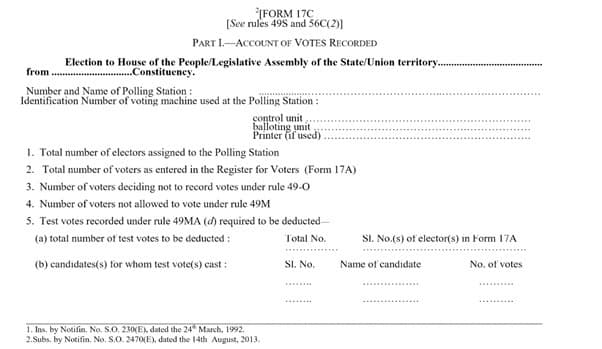
Election form; captures booth-wise voter turnout & candidate-wise results across India.

Two segments: Part I “Account of Votes Recorded”, Part II “Result of Counting”.

Mandatory under Conduct of Election Rules 1961 framed via Representation of the People Act 1951.

Quick Facts for MCQs

Legal & Policy

  • Conduct Rules prescribe Form 17C use; non-compliance amounts to election malpractice.
  • Supreme Court hearing petition seeking online publication of booth-wise Form 17C data.
  • Public disclosure debate focuses on balancing transparency with secrecy of ballot.

Procedural Flow

  • Presiding Officer prepares Part I, gives signed copies to agents, seals original.
  • Strong Room custody continues till counting; then Returning Officer opens for tally.
  • After result declaration, certified copies can be sought through statutory channels.

Transparency & Accountability

  • Form 17C enables cross-verification of EVM counts with voter turnout.
  • Signatures of agents deter later tampering or data alteration.
  • Availability helps spot turnout-result mismatches, bolstering electoral trust.

Key Data Points

FeatureData-Point
Statute baseConduct of Election Rules 1961
Parent ActRepresentation of the People Act 1951
Parts in formPart I & Part II
Part I filled byPresiding Officer immediately after polling
Part II filled byReturning Officer on counting day
Storage of Part ISealed in Strong Room till count
Key signatoriesPolling/Counting agents + respective officer
Data recorded Part IElectors, votes cast, EVM ID, tendered ballots, discrepancies
Data recorded Part IICandidate-wise votes from EVM result button
Legal statusSignatures make entries legally binding
GS-2PolityQuick Bite

4.Permanent Residence Certificates for Morans (Residence Certification)

Indian Express

What & Where

Moran tribe — indigenous to Upper Assam; smaller pockets in adjoining Arunachal Pradesh.

Permanent Residence Certificate (PRC) — Assam government document proving long-term domicile.

2025 move: Assam to issue PRCs to Moran residents of Arunachal Pradesh.

Quick Facts for MCQs

Legal & Policy

  • Assam Cabinet decision extends domicile benefit beyond state boundary to preserve tribal rights.
  • Moran demand for Scheduled Tribe status in Assam remains pending.
  • PRC aids access to jobs, education, and land rights within Assam.

Cultural History

  • Neo-Vaishnavism promotes egalitarian worship, attracting lower-caste peasants like Morans.
  • Satras & Namghars serve as socio-religious nuclei across Upper Assam villages.
  • Aniruddha Deva’s preaching catalysed Moamoria identity formation.

Historical Rebellion

  • Moamoria revolt drained Ahom resources over three decades.
  • British military support pivotal in suppressing insurgents.
  • Resultant instability eased later colonial annexation of Assam.

Key Data Points

FeatureData-Point
Tribe classificationIndigenous community of Assam (seeking ST tag)
Core faithNeo-Vaishnavism, Moamoria sect
Key reformerSri Aniruddha Deva (1553-1624), disciple of Srimanta Sankardev
Worship hubsSatras (monasteries) & Namghars (village prayer halls)
PRC lineage ruleForefathers in Assam ≥ 50 years
PRC residence ruleApplicant living in Assam ≥ 20 years
New policy scopeMoran people settled in Arunachal Pradesh
Historic uprisingMoamoria Revolt, 1769-1799
Revolt targetAhom monarchy; sought British aid to suppress
AftermathAhom weakness → Burmese conquest (First Anglo-Burmese War 1824-26) → British rule
GS-3Editorial

5.Green Growth for Viksit Bharat (Green Growth)

Indian Express

What & Where

Green growth: development pathway linking ≥8 % GDP expansion with emissions decline, central to Viksit Bharat 2047 vision

Key processes: renewables scale-up, green hydrogen, PLI-driven clean manufacturing, carbon-pricing incentives

Core geography: pan-India push to cut 85 % oil-import dependence and coal dominance in power mix

Quick Facts for MCQs

Economic Angle

  • Jobs: WEF Mission 2070 foresees 50 million new positions across solar, EVs, hydrogen
  • Competitiveness: Decarbonised exports avert USD 150 billion annual carbon penalties by 2040
  • Energy security: Lower crude imports cushions trade deficit, rupee volatility

Tech & Schemes

  • Missions: National Green Hydrogen, 100 GW nuclear plan, grid-scale battery support in Budget 2025
  • Incentives: PLI for solar modules, advanced batteries, other green tech boosts domestic manufacturing
  • Capacity: Target 500 GW renewables backed by 180 GW present base, fastest global expansion rate

Challenges & Risks

  • Finance: USD 290 billion funding gap to 2030; blended-finance, green bonds proposed
  • Skills: 3.7 million technicians must be trained for RE sector by 2030
  • Climate impacts: Heat stress threatens agriculture, labour productivity, slicing GDP up to 4.5 %

Policy Tools & Way Ahead

  • Instruments: Carbon pricing, sovereign green bonds, PLI tweaks to steer private capital
  • Demand-side: Affordable resilient tech for farmers, MSMEs; priority sector green credit
  • Collaboration: Global tech transfer, joint R&D on hydrogen, CCUS, grid modernisation

Key Data Points

FeatureData-Point
Viksit Bharat timeline2047
Net-zero commitment2070
Green jobs potential50 million by 2070
Added GDP from green shiftUSD 1 trillion by 2030
Renewable capacity target500 GW by 2030
Current RE installed180 + GW (2024)
Green hydrogen goal5 MMT yr⁻¹ by 2030
Needed RE investmentUSD 290 billion by 2030
Coal share in power55–60 %
Extreme-heat GDP risk2.5–4.5 % loss by 2030

Related UPSC Prelims PYQs

CAPF_GAI, GEO_GS 2025PYQ 1

India’s key climate targets include

CAPF_GAI, GEO_GS 2026PYQ 2

India's installed solar capacity in 2025 is close to

GS-3Economy

6.Anti-Dumping Duties Framework (Trade Remedies)

Hindustan Times

What & Where

Anti-dumping duty: tariff countering imports sold below “normal value” to prevent injury to local producers.

India: DGTR investigates & recommends; Department of Revenue (FinMin) imposes for set period.

Latest move: Duties on 5 Chinese products, applicable up to 5 years.

Quick Facts for MCQs

Legal & Policy

  • WTO-compliant measure; considered remedial not protectionist under multilateral rules.
  • Imposition needs proof of “material injury” and dumping margin via DGTR investigation.
  • Finance Ministry notification essential before duty becomes operational.

Economic Angle

  • Duty shields domestic makers from price undercutting, preserves capacity utilisation and jobs.
  • May raise input costs for downstream users; review mechanisms balance producer–consumer interests.

Tech & Uses

  • Soft Ferrite Cores critical for EV chargers, telecom gear.
  • Trichloro Isocyanuric Acid widely used in water treatment & pools.
  • PVC Paste Resin feeds artificial leather, flooring, toys industries.

Key Data Points

FeatureData-Point
WTO legal basisGATT Article 6; WTO Anti-Dumping Agreement
Recommending agencyDirectorate General of Trade Remedies (Commerce)
Levying authorityDepartment of Revenue, Ministry of Finance
Standard validity≤ 5 years, subject to review
Recent goods hitSoft Ferrite Cores, Vacuum Flasks, Al Foil, TCCA, PVC Paste Resin
GS-3Economy

7.Revised MSME Classification Criteria (MSME Policy)

News on Air
Illustration for Revised MSME Classification Criteria (MSME Policy)

What & Where

MSME re-classification; India-wide; under MSME Development Act 2006

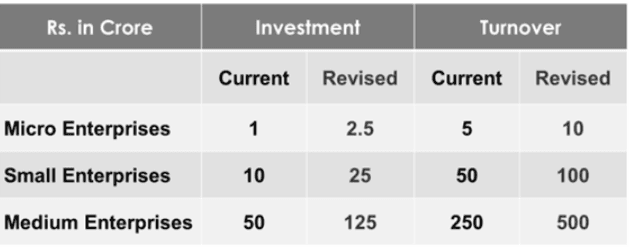
Thresholds now based on higher investment & turnover for Micro, Small, Medium units

Notified by Ministry of MSME; effective 1 Apr 2025

Quick Facts for MCQs

Legal & Policy

  • Amendment revises Schedule specifying enterprise size limits under MSMED Rules
  • Aligns statutory definition with contemporary cost structures and inflation trends
  • Facilitates uniform criteria investment+turnover, avoiding manufacturing-services split

Economic Angle

  • Higher caps allow firms to grow without losing benefits, encouraging formal expansion
  • Enhanced eligibility eases bank lending under priority sector norms
  • Supports Atmanirbhar Bharat push for resilient local supply chains

Sectoral Impact

  • Potential inclusion of ~1.5 lakh additional units into MSME fold (govt estimate)
  • Likely boost employment, MSMEs currently 30% of GDP share
  • Simplified classification aids digital portals like Udyam for quick registration

Key Data Points

FeatureData-Point
Governing Act sectionSec 7, MSMED Act 2006
Notification authorityMinistry of MSME, GoI
Announcement platformUnion Budget speech
Effective date1 April 2025
Multiplier over old limitsInvestment ×5; Turnover ×2
Micro: investment cap₹2.5 crore
Micro: turnover cap₹10 crore
Small: investment cap₹25 crore
Small: turnover cap₹100 crore
Medium: investment cap₹125 crore
Medium: turnover cap₹500 crore
Previous Micro investment₹1 crore
Previous Small turnover₹50 crore
Previous Medium investment₹50 crore
Policy goalScaling-up, credit access, market reach

Related UPSC Prelims PYQs

CAPF_GAI, GS1 2023PYQ 1

Consider the following statements with reference to India:

CAPF_GAI, GS1 2020PYQ 2

What is meant by MSME?

GS-1History

8.Aurangzeb and Maratha Struggle (Mughal-Maratha Conflict)

Indian Express

What & Where

Aurangzeb – sixth Mughal emperor (1658-1707); empire largest yet riven by southern wars

Maratha Empire – Western Deccan kingdom founded by Shivaji 1674; hill-forts and Ghats suited to guerrilla tactics

Khuldabad near Aurangabad – houses Aurangzeb’s 1707 grave now facing demolition calls

Quick Facts for MCQs

Religious Policies

  • Jizya, pilgrim taxes revived; Akbar’s sulh-i-kul reversed
  • 1669 order razed Kashi Vishwanath, Keshavdev; temple valuables appropriated
  • Guru Tegh Bahadur executed 1675; catalysed Khalsa militarisation

Administrative Measures

  • Mansabdars on fixed salaries; Daag & Chehra checks revived to curb fraud
  • Subahdar, Zamindar autonomy reduced; Zabt assessment retained despite famines
  • Fatawa-e-Alamgiri standardised Hanafi law, lending the state a theocratic tint

Economic & Military Angle

  • Prolonged Deccan, Rajput campaigns drained treasury; heavy war-booty reliance
  • Trade rules favoured Muslim merchants; rigid Islamic contracts dampened entrepreneurship
  • Shivaji fielded 30-40 k cavalry, first Indian blue-water navy; soldiers paid cash, chiefs via Saranjam

Maratha Resistance

  • Shivaji raided Junnar 1657, Surat 1664; escaped Aurangzeb’s Agra court 1666
  • Sambhaji’s guerrilla blows 1681-89 stalled Mughal advance till his capture
  • Tarabai, then Shahu with Peshwa Balaji Vishwanath, sustained post-1700 resurgence

Key Data Points

FeatureData-Point
Aurangzeb’s accession1658
Jizya re-imposed1679
Temple-demolition farman1669
Fatawa-e-Alamgiri compiled1667-75
Sack of Burhanpur1681 by Sambhaji
Sambhaji’s execution11 March 1689
Shivaji’s coronation1674 at Raigad
Ashtapradhan members8
Chauth levy rate25 % on alien areas
Sardeshmukhi levy10 % extra tribute

Related UPSC Prelims PYQs

CAPF_GAI, GS1 2020PYQ 1

Which one of the following statements about the religious policies of the Mughal kings is NOT correct?

CAPF_GAI, GS1 2010PYQ 2

What was the immediate reason for Ahmad Shah Abdali to invade India and fight the Third Battle of Panipat ?

GS-1History

9.Shaheed Diwas Commemoration (Martyrs Remembrance)

Indian Express
Illustration for Shaheed Diwas Commemoration (Martyrs Remembrance)

What & Where

Observance: Shaheed Diwas/Martyrs’ Day on 23 March across India.

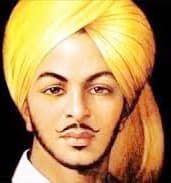
Commemorates: hanging of Bhagat Singh, Sukhdev Thapar, Shivaram Rajguru, Lahore Central Jail, 1931.

Distinct: NOT the 30 January Martyrs’ Day that marks Mahatma Gandhi’s assassination.

Quick Facts for MCQs

Revolutionary Actions

  • Saunders shooting: 17 Dec 1928, Lahore; planned to punish Scott for Rai’s death.
  • Assembly bombing: low-intensity devices, leaflets; duo surrendered to publicise revolution.
  • Execution: ages 23-24; remains secretly cremated on Sutlej riverbank.

Organisations & Ideology

  • HRA renamed HSRA in 1928; objective: socialist republic via armed struggle.
  • Naujawan Bharat Sabha (1926) mobilised Punjab youth; open, anti-imperialist platform.
  • Influences: Marxism, anarchism, Iqbal’s poetry shaped slogan and programme.

Prison & Protest

  • 1929 jail hunger strike demanded equal political-prisoner treatment; lasted 112 days collectively.
  • Jatin Das died on 63rd day; strike stirred nationwide sympathy.
  • Court speeches, writings (Kirti editorship) spread socialist, anti-colonial thought.

Key Data Points

FeatureData-Point
Alternate nameSarvodaya Day
Executed trioBhagat Singh, Sukhdev, Rajguru
Execution date23 March 1931
Execution placeLahore Central Jail
Crime chargedMurder of ASP John Saunders (1928)
Mistaken targetSuperintendent James Scott
Avenged leaderLala Lajpat Rai (died after lathi-charge)
Assembly bombing8 April 1929, Delhi
Slogan raised“Inquilab Zindabad”
Key organisationHindustan Socialist Republican Association (HSRA)

Related UPSC Prelims PYQs

GEO_GS 2021PYQ 1

The Lahore session of Congress, held in 1929, was famous for:

GS-1HistoryQuick Bite

10.Dr Ram Manohar Lohia Legacy (Freedom Leader)

PIB
Illustration for Dr Ram Manohar Lohia Legacy (Freedom Leader)

What & Where

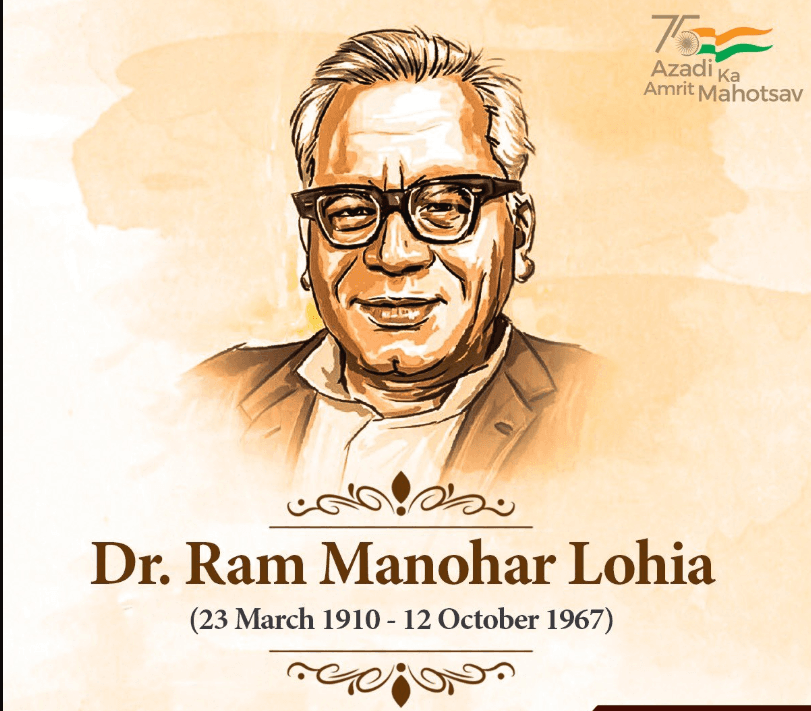
Ram Manohar Lohia (1910-1967): socialist thinker, freedom-fighter from Uttar Pradesh, India.

Worked within and beyond Indian National Congress; opposed British rule, WWII involvement.

Operated nationally; ideas on decentralised governance (Chaukhambha Raj) aimed at pan-India application.

Quick Facts for MCQs

Freedom Struggle

  • Led underground propaganda, arrests during Quit India Movement.
  • Publicly opposed British WWII effort; multiple imprisonments 1939-46.

Political Career

  • General Secretary, Praja Socialist Party 1952-55; resigned over policy rifts.
  • Post-1964 faction became Samyukta Socialist Party under his influence.

Ideological Contributions

  • Sapta Kranti: targets caste, gender, colonialism, capitalism, inequality, war, ecological neglect.
  • Advocated Hindi as link language; emphasised socio-economic equality over mere political freedom.

Key Data Points

FeatureData-Point
Birth date23 March 1910
Birth placeAkbarpur, Uttar Pradesh
Joined CSP1934; executive member & journal editor
Quit Congress1948
Formed Socialist PartyHyderabad, 1955 (chairman)
Lok Sabha entry1963, Farrukhabad seat
Signature doctrineSapta Kranti (Seven Revolutions)
Governance modelChaukhambha Raj: four-tier decentralisation
Key movement jailedQuit India, 1942
Death12 Oct 1967, New Delhi

Related UPSC Prelims PYQs

CDS_GK 2020PYQ 1

‘सामक्रांति (सात क्रांतियों)’ का समाजवादी विचार किसके द्वारा प्रतिपादित था?

GS-1Mapping

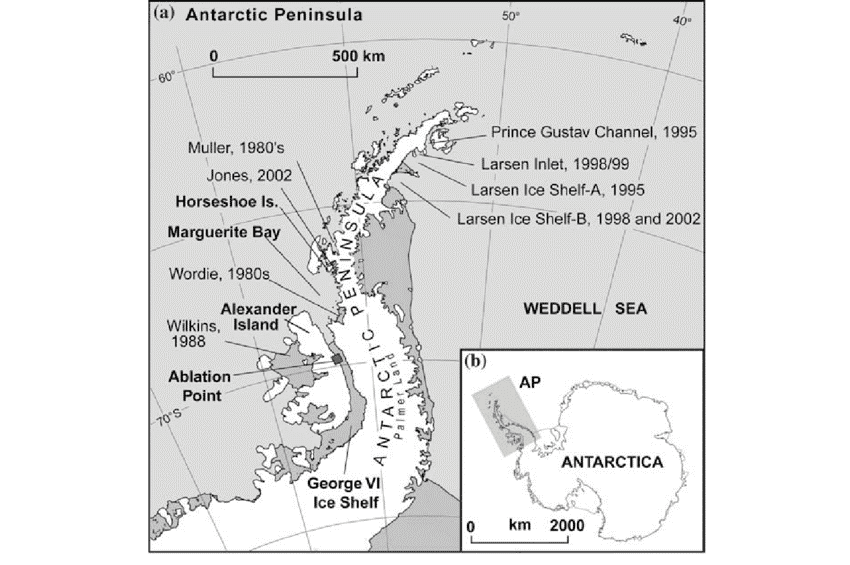
11.George VI Ice Shelf Overview (Antarctic Ice Shelf)

Indian Express
Illustration for George VI Ice Shelf Overview (Antarctic Ice Shelf)

What & Where

Floating ice shelf occupying George VI Sound between Alexander Island & Palmer Land, Antarctica.

Borders Bellingshausen Sea; ice >150 m thick, water column reaches ~1,300 m.

Post-A-84 calving expedition exposed rich sub-ice ecosystem for first time.

Quick Facts for MCQs

Biodiversity

  • Giant sea spiders, corals, octopi, phantom jellyfish recorded beneath 150 m ice.
  • Organisms thrive without sunlight, indicating alternative energy or nutrient pathways.
  • Multiple specimens likely represent previously undescribed species.

Climate Implications

  • Under-ice community resilience informs projections for ice-shelf-loss scenarios.
  • Shelf melt could disrupt nutrient delivery, reshaping Southern Ocean food webs.
  • Data refine polar carbon-sequestration and climate-feedback models.

Research & Exploration

  • Natural access window created by A-84 calving enabled submersible sampling.
  • Challenger 150 aims to map global deep-sea ecosystems through 2030.
  • Surveys employed trawls and cameras down to 1,300 m within George VI Sound.

Conservation Angle

  • Findings bolster case for new Antarctic Peninsula Marine Protected Areas.
  • Under-ice habitats deemed vulnerable to warming, fishing, and acidification.
  • Supports stronger CCAMLR conservation measures under treaty framework.

Key Data Points

FeatureData-Point
LocationGeorge VI Sound, Antarctica
SeparatesAlexander Island & Palmer Land
Adjacent SeaBellingshausen Sea, Southern Ocean
Ice thickness>150 m
Water depth~1,300 m
GovernanceAntarctic Treaty System
Lead research nationsUnited Kingdom; United States
Calved icebergA-84
Expedition programmeUNESCO Challenger 150
Species depth record1,300 m
GS-3Environment

12.UNEP Global Environmental Data Strategy (Environmental Data)

UN
Illustration for UNEP Global Environmental Data Strategy (Environmental Data)

What & Where

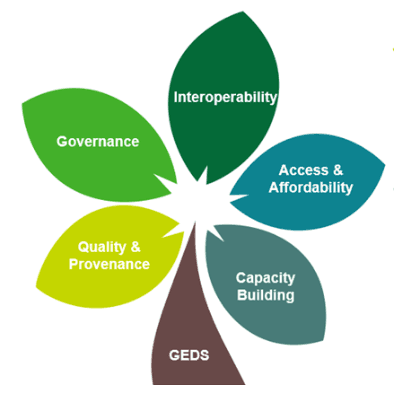
Strategy: UNEP’s Global Environmental Data Strategy, global blueprint for high-quality, shareable environmental data.

Pillars: Data quality, governance, interoperability, inclusive access, capacity-building.

Timeline: Drafting 2024-25; adoption aimed by Dec 2025 for climate, pollution, biodiversity action.

Quick Facts for MCQs

Governance & Structure

  • Data-Governance: promotes ethical, sustainable data management frameworks.
  • Provenance: standardises classification, traceability of datasets for credibility.
  • Multistakeholder: governments, academia, private sector share stewardship roles.

Benefits & Opportunities

  • Decision-Making: evidence-based policies via reliable, granular datasets.
  • Innovation: enables AI, advanced analytics for environmental solutions.
  • Collaboration: harmonised standards boost cross-border research and monitoring.

Implementation Challenges

  • Resource-Gap: limited funds, tech expertise in developing countries.
  • Privacy-Balance: open access versus ethical data protections.
  • Consensus: differing national standards slow interoperability agreements.

SDG Linkages

  • SDG 13, 14, 15: data backbone for climate, oceans, terrestrial ecosystems targets.
  • SDG 17: strengthens global partnerships through shared information infrastructure.

Key Data Points

FeatureData-Point
Lead agencyUnited Nations Environment Programme
Finalisation targetDecember 2025
Pillar countFive
Core crisesClimate change / Pollution / Biodiversity loss
Access ruleOpen, affordable, machine-readable data
Interoperability toolFederated global & thematic standards
Capacity priorityGlobal South skill-building
Equity aimNarrow North-South data divide

Related UPSC Prelims PYQs

GS1 2022PYQ 1

“जलवायु कार्रवाई ट्रैकर (क्लाइमेट ऐक्शन ट्रैकर)” जो विभिन्न देशों के उत्सर्जन अनुमानों के लिए दिए गए वचनों की निगरानी करता है, क्या है ?

GS-3Species

13.Anthurium Flower Species Highlights (Ornamental Flora)

ANI

What & Where

Anthurium flower — herbaceous ornamental of Araceae; inflorescence = spadix + showy spathe.

Native Americas (N. Mexico → N. Argentina + Caribbean); Indian hotspot = Mizoram & other North-East hills.

Feb 2024: first export consignment from Mizoram flagged to Singapore via APEDA.

Quick Facts for MCQs

Botanical Traits

  • Growth: Shade-loving; thick, glossy leaves; thrives 20-30 °C, high humidity.
  • Propagation: Seed, tissue culture, suckers; spathe coloration key commercial trait.
  • Caution: Sap irritates skin/eyes; ingestion poisonous to pets & humans.

Economic Angle

  • Revenue: Anthurium a premium cut-flower, boosts northeastern growers’ income.
  • Logistics: Requires cold-chain 18-22 °C, airfreight within 48 h for vase life retention.
  • APEDA: Facilitates pack-house certification, export documentation for floriculture.

International Trade

  • Singapore dispatch: Part of India’s Look-East export diversification.
  • Demand: Asian wedding & décor markets seeking long-lasting exotic blooms.
  • Future targets: Japan, Australia, Gulf retail chains under negotiation.

Festivals & Culture

  • Tourism: Anthurium Festival coincides with Mizoram’s autumn, draws domestic & foreign visitors.
  • Events: Flower exhibitions, grower training, handicraft fairs promote rural livelihoods.

Key Data Points

FeatureData-Point
Scientific nameAnthurium spp.
Plant habitEpiphytic or terrestrial herb
Toxic principleCalcium oxalate crystals
Export value FY 24 (floriculture)USD 86.62 million
Leading floriculture states shareTamil Nadu 21 % > Karnataka 16 % > MP 14 % > WB 12 %
Major importing countriesUSA, Netherlands, UAE, UK, Canada
Mizoram eventAnnual Anthurium Festival
Inflorescence partsSpadix & colorful spathe (red, pink, orange…)
Reproductive outputJuicy berries containing seeds
First new market 2024Singapore

Related UPSC Prelims PYQs

GS1 2011PYQ 1

Among the following States, which one has the most suitable climatic conditions for the cultivation of a large variety of orchids with minimum cost of production, and can develop an export-oriented industry in this field?

GS-3S&TQuick Bite

14.Photo-Assisted Self-Charging Battery Technology (Energy Storage Tech)

PIB
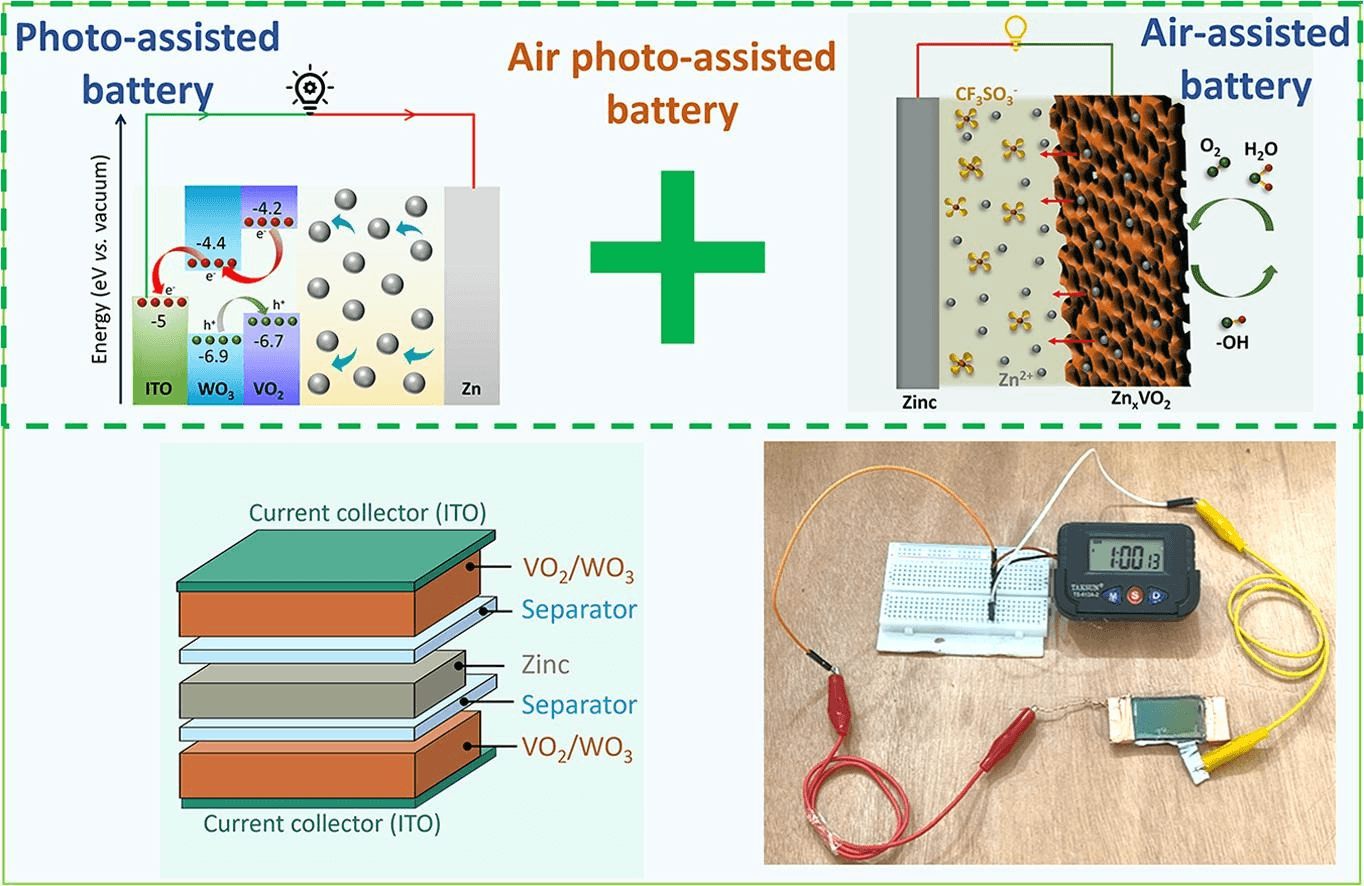
Illustration for Photo-Assisted Self-Charging Battery Technology (Energy Storage Tech)

What & Where

Definition: Photo-assisted, self-charging energy storage device combining solar conversion with oxygen-driven auto-recharge.

Key process: Dual charging—photo-assisted via light, air-assisted via atmospheric O₂ at air cathode.

Geography: Developed in India; info released through PIB (GoI).

Quick Facts for MCQs

Technology & Innovation

  • Air-cathode enables oxygen reduction, harvesting ambient O₂ for self-recharge.
  • Charge-separating layer boosts photon absorption, curbing recombination losses.

Performance Metrics

  • Rapid-charge: 0.9 V OCP achieved in under 2½ minutes.
  • Enhanced energy retention delivers 170 % higher storage when illuminated.

Application Scope

  • Renewable integration: Acts as storage buffer for intermittent solar.
  • Mobility: Potential lightweight solution for electric vehicles and drones.

Research & Development

  • Indian public-sector laboratory backed by Government of India initiative.
  • Seeks scaling pathways for large-format cells and manufacturing.

Key Data Points

FeatureData-Point
Primary energy inputsSunlight + atmospheric oxygen
Dual componentsAir cathode & charge-separating layer
Light current density tested0.02 mA cm⁻²
Energy storage gain under light170 % over dark state
Open-circuit potential reached0.9 V in 140 s
Peak OCP observed1 V
Main limitation erased vs photo-batteriesNeed for external charger
Illustrative usesRenewable grids, EVs, off-grid power
GS-2MiscQuick Bite

15.World Happiness Report 2025 Findings (Happiness Index)

Indian Express

What & Where

World Happiness Report 2025: annual index by Oxford Wellbeing Research Centre, Gallup & UN-SDSN, released every 20 March.

Measures self-rated life satisfaction on 0–10 ladder, averaged over the last three Gallup World Poll years.

Coverage 147 countries; Finland tops, Afghanistan ranks last.

Quick Facts for MCQs

Global Rankings

  • Finland 1st; Denmark 2nd; Iceland 3rd; Sweden 4th.
  • India rises eight spots; Pakistan 109th, Myanmar 126th, Sri Lanka 133rd, Bangladesh 134th.
  • Sierra Leone 146th, Lebanon 145th, Malawi 144th, Zimbabwe 143rd.

Methodology

  • Indicators combined into single happiness score against hypothetical dystopia baseline.
  • Three-year average 2022-24 improves statistical reliability.
  • Trust, social connections, generosity often outweigh GDP in explaining variations.

UN Observance

  • Day established by UNGA resolution, July 2012, after Bhutan’s advocacy.
  • Celebrates holistic development beyond GDP via Gross National Happiness concept.
  • 2025 observance stresses collective wellbeing through “Caring and Sharing”.

Key Data Points

FeatureData-Point
Release dayWorld Happiness Day, 20 March 2025
2025 theme“Caring and Sharing”
Publishing partnersOxford WRC, Gallup, UN-SDSN
Happiest countryFinland (8th consecutive year)
India’s rank 2025118th
India’s rank 2024126th
Best South Asian rankNepal – 92nd
Bottom countryAfghanistan – 147th
Consecutive years Afghanistan last4
Indicators counted6 (GDP, support, life expectancy, freedom, generosity, corruption)
UNGA recognition year2012
Originating nationBhutan (GNH focus)

Related UPSC Prelims PYQs

CDS_GK, GEO_GS 2024PYQ 1

Arrange the following countries in the descending order of their rank in the World Happiness Report, based on a three-year average 2020-2022, published by the Sustainable Development Solutions Network:

CDS_GK, GEO_GS 2023PYQ 2

विश्व का एकमात्र देश कौन-सा है, जिसने आधिकारिक रूप से सकल राष्ट्रीय खुशहाली (GNH) को देश की प्रगति का मान्य मापक घोषित किया है ?

GS-3Security

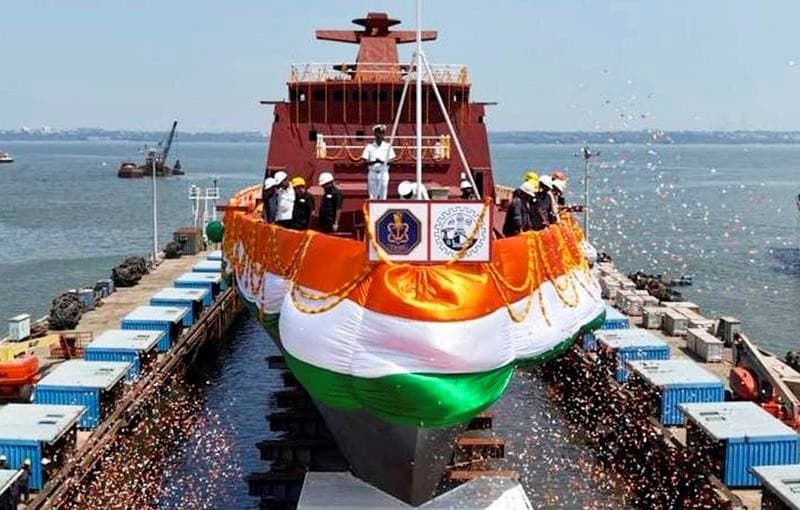
16.Tavasya Stealth Frigate Launch (Naval Frigate)

PIB
Illustration for Tavasya Stealth Frigate Launch (Naval Frigate)

What & Where

Tavasya – Krivak-class stealth frigate launched 22 Mar 2025 at Goa Shipyard Limited, Goa.

Part of India-Russia Project 1135.6 “Additional Follow-on Ships” for multi-role naval combat.

Strengthens Indian Navy’s blue-water presence in Arabian Sea & Indian Ocean.

Quick Facts for MCQs

Technical Specs

  • Propulsion: Gas-turbine mix enabling 28 knots high-speed manoeuvre.
  • Sensors: AESA radar & hull-mounted sonar for 360° detection envelope.
  • Weapon suite: BrahMos, torpedoes, air-defence SAMs for tri-domain lethality.

Production & Collaboration

  • Aatmanirbharta: Over 75 % indigenous fittings in Indian-built hulls.
  • Russia: Designs, critical systems supplied under Transfer-of-Technology pact.
  • GSL: First time constructing 3,600 t class stealth frigate domestically.

Strategic Significance

  • Deterrence: Enhances maritime dominance across choke-points like Strait of Hormuz & Malacca.
  • Fleet mix: Complements P-15B destroyers & P-17A frigates for layered task-groups.
  • Export learnings: Upskills Indian yards for future South-East Asian orders.

Key Data Points

FeatureData-Point
ClassKrivak-class stealth frigate
Project code1135.6 (Addl. Follow-on)
BuilderGoa Shipyard Limited
Tech partnerRussia (ToT)
Launch date22 March 2025
Length8 m (article figure)
Beam15.2 m
Displacement3,600 t
Top speed28 knots
Primary missileBrahMos
Indigenous fitTorpedo launchers, auxiliary control systems
Combat envelopeSurface, sub-surface, air
Name inspirationBhima’s mace “Tavasya”
Earlier Russian-built sistersINS Tushil (Dec 2024), Tamal (Jun 2025)
Indian-built sistersTriput (Jul 2024), Tavasya (Mar 2025)

Related UPSC Prelims PYQs

CDS_GK, GS1 2024PYQ 1

Which one of the following statements about 'INS Tarmugli' is not correct?

CDS_GK, GS1 2004PYQ 2

INS Trishul acquired by the Indian Navy in 2003 has been built by

GS-1Editorial

17.India's Tuberculosis Control Initiatives (Tuberculosis Control)

The Hindu
Illustration for India's Tuberculosis Control Initiatives (Tuberculosis Control)

What & Where

Tuberculosis (TB): contagious mycobacterial lung disease; India carries world’s heaviest caseload.

BPaLM regimen: 6-month drug-resistant-TB therapy deployed nationwide under National TB Elimination Programme.

WHO EndTB Initiative: global push for universal TB care and 90% mortality drop by 2030.

Quick Facts for MCQs

Progress Metrics

  • Decline: Incidence dropped 42 cases/lakh between 2015-2023
  • Diagnostics: Rapid molecular testing decentralised to Ayushman Arogya Mandirs and PHCs
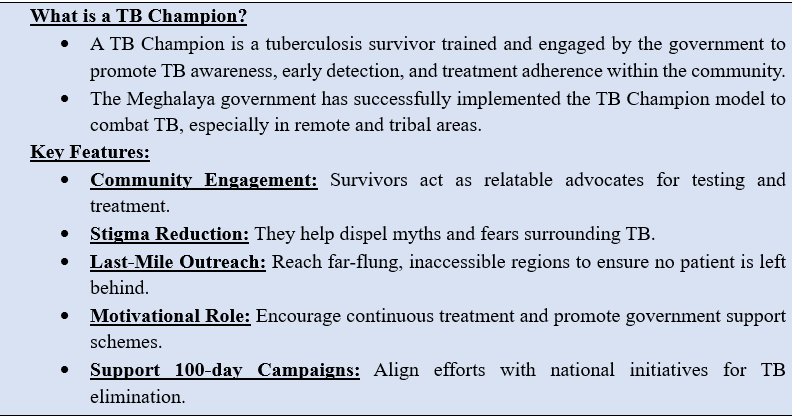
  • Champions: Treated survivors enlisted as grassroots adherence motivators

Key Schemes

  • Nikshay: Direct cash for nutrition during treatment period
  • BPaLM: Bedaquiline-Pretomanid-Linezolid-Moxifloxacin replaces 18-month injectables for DR-TB
  • PM TB-Mukt Bharat Abhiyan: Community sponsorship of patient nutrition kits

Challenges

  • Dependency: Majority rely on private sector, raising out-of-pocket expenditure
  • Intersectionality: Gender, caste, disability create diagnostic and adherence gaps
  • Stigma: Myths deter timely testing and successful completion

Way Forward

  • Person-centred: Tamil Nadu TN-KET model prioritises vulnerable, door-step drug delivery
  • Integration: Combine TB, COPD, diabetes screening using AI-based X-ray tools
  • Support: Expand wage-loss compensation and livelihood programmes for affected families

Key Data Points

FeatureData-Point
TB incidence 2015237 per lakh population
TB incidence 2023195 per lakh population
Incidence decline 2015-2317.7 %
India elimination target year2025
Global EndTB target year2030
Nikshay Poshan Yojana benefit₹1,000 per patient per month
BPaLM regimen duration6 months
Patients choosing private care> 50 %
WHO annual reviewGlobal Tuberculosis Report

Ready to practice?

Test your knowledge with our UPSC test series.

Start Free Trial