UPSC Current Affairs

15 topicsGS-1: 5GS-2: 5GS-3: 5
0/15 done
GS-2Editorial

1.India’s Misinformation Challenge (Misinformation Regulation)

New Indian Express

What & Where

Infodemic = fast, large-scale spread of online fake news, hate speech, deepfakes undermining public trust

Key types : AI-generated video-audio, verified-handle misinformation, algorithm-driven echo chambers on social platforms

Core geography : India with 95.04 crore netizens; contributes 1 in 6 fake news items worldwide

Quick Facts for MCQs

Drivers

  • Unregulated-platforms enable unchecked forwards; WhatsApp COVID cures caused panic
  • AI-tools craft deepfake videos, audios deceiving even educated users
  • Political-campaigns weaponise misinformation to polarise voters during elections

Challenges

  • Legal-vacuum; BNS, IT Act 2000, DPDP 2023 address issues only partially
  • Platform-delay; Meta, X, YouTube slow in removing flagged content
  • Low-digital-literacy; WhatsApp rumours triggered mob lynchings, illustrating detection failure

Regulatory Models

  • Singapore POFMA imposes corrections, fines on deliberate falsehoods
  • Germany NetzDG mandates 24-hour takedown with hefty penalties
  • EU AI Act requires watermarking of AI-generated media to prevent deception

Election Impact

  • Deepfakes of speeches, leaders swayed 2024 voter sentiment, reinforcing biases
  • 38 % fake news stems from verified pages, boosting perceived authenticity during campaigns
  • Election Commission resource-constraints hamper real-time fact-checking against AI propaganda

Digital Literacy

  • Finland-style nationwide media-literacy programme suggested to train users in source-verification
  • UNESCO-Ipsos survey shows majority Indians struggle to spot misinformation cues
  • Awareness campaigns crucial to balance fake-news control with free-speech protections

Key Data Points

FeatureData-Point
Internet users (India)95.04 crore
COVID-era misinformation spike214 %
India share in global fake news1 in 6 pieces
Urban Indians seeing hate speech85 %+
Attribution of hate speech to social media64 %
Fake news from verified pages38 %
Misinformation via ≥1 verified handle70 %
Primary vectorsWhatsApp, Facebook, YouTube, X
Deepfakes targeted electionLok Sabha 2024
Key legal gapNo comprehensive anti-fake-news law
GS-3Economy

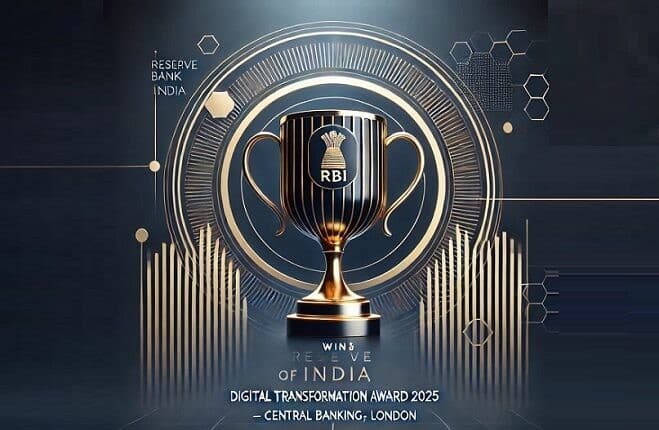
2.RBI Wins Digital Transformation Award (RBI Digital Initiatives)

Times of India
Illustration for RBI Wins Digital Transformation Award (RBI Digital Initiatives)

What & Where

Digital Transformation Award 2025 – annual honour for tech-driven governance in monetary sector

Presented in London by Central Banking, a global policy platform

2025 recipient: Reserve Bank of India for ‘Saarathi’ (internal) & ‘Pravaah’ (external) portals

Quick Facts for MCQs

Tech & Schemes

  • Saarathi replaces manual files, automates task tracking, unifies RBI departments
  • Pravaah boosts transparency, cybersecurity, and applicant turnaround times
  • Integration ensures seamless data flow from external submissions to internal approval loops

Institutional Impact

  • Workflow digitisation cut paperwork backlog, sped decision cycles across policy, supervision, currency wings
  • Data tracking now real-time, aiding evidence-based regulation and audit trails

Governance Angle

  • Award signals global recognition of India’s push for tech-centric central-bank operations
  • Sets benchmark for other regulators adopting end-to-end digital compliance systems

Key Data Points

FeatureData-Point
Award focusExcellence in digital innovation & governance
PresenterCentral Banking, London
EligibilityCentral banks, regulators, monetary institutions
2025 winnerReserve Bank of India
Key RBI toolsSaarathi, Pravaah
Saarathi natureInternal workflow digitisation system
Saarathi aimRecord management, secure submissions, collaboration
Pravaah natureDigital regulatory application platform for external users
Pravaah scope>70 regulatory applications digitised
Saarathi-Pravaah linkDirect integration for end-to-end paperless processing

Related UPSC Prelims PYQs

ESE_GS, GEO_GS 2024PYQ 1

To increase transparency and consumer awareness and handle customer complaints, a 'Centralised Receipt and Processing Centre' and an 'Integrated Ombudsman Scheme' have been set up. These two schemes are related to which one of the following institutions?

ESE_GS, GEO_GS 2021PYQ 2

Web Ratna Awards were re-named as:

GS-1History

3.Megalithic Menhirs Significance (Megalithic Structures)

Indian Express
Illustration for Megalithic Menhirs Significance (Megalithic Structures)

What & Where

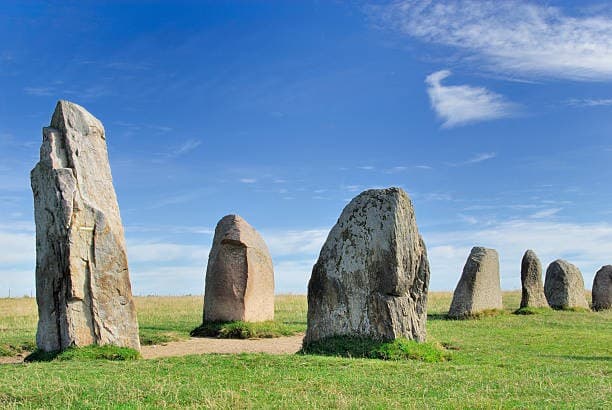
Definition — Menhir: large, human-placed upright stone, usually tapering toward the top

Context — Typical of Neolithic–Bronze Age megalithic complexes; serve ritual, burial, astronomical roles

Geography — Key Indian site: Mudumal, Narayanpet (Telangana); now on UNESCO Tentative List 2025

Quick Facts for MCQs

Heritage & Recognition

  • UNESCO listing: Mudumal menhirs proposed for 2025 World Heritage inscription
  • Significance: Largest megalithic observatory identified in India
  • Living-culture: Select stones revered as Yellamma deity

Chronology & Cultures

  • Europe: 7 k BP structures tied to Beaker culture settlements
  • India: Mudumal menhirs pre-Iron Age, among subcontinent’s earliest stone monuments
  • Spread: Concentrations in Deccan, Central India, Northeastern hills

Physical Features & Functions

  • Construction: Man-carved, erected individually or in alignments; tapering, sometimes sculpted
  • Scale: Heights vary metres to 20 m+; arranged for solar, funerary, ritual purposes
  • Orientation: Specific stones mark solstice points, indicating prehistoric sky-watching

Key Data Points

FeatureData-Point
EtymologyBrittonic “maen” = stone, “hîr” = long
Term usage first18th c. by Théophile Corret de la Tour d’Auvergne
Oldest European age≈ 7,000 BP (Beaker culture)
Oldest Indian ageMudumal: 3,500–4,000 BP
Tallest recordedGrand Menhir Brisé, Brittany: 20.6 m
UNESCO statusMudumal in 2025 Tentative List
Indian states with menhirsTelangana, Karnataka, Chhattisgarh, Northeast
Mudumal specialityIndia’s largest megalithic observatory
Astronomical traitStones align with solstice sunrise/sunset
Sacred aspectLocal worship as Goddess Yellamma
GS-1History

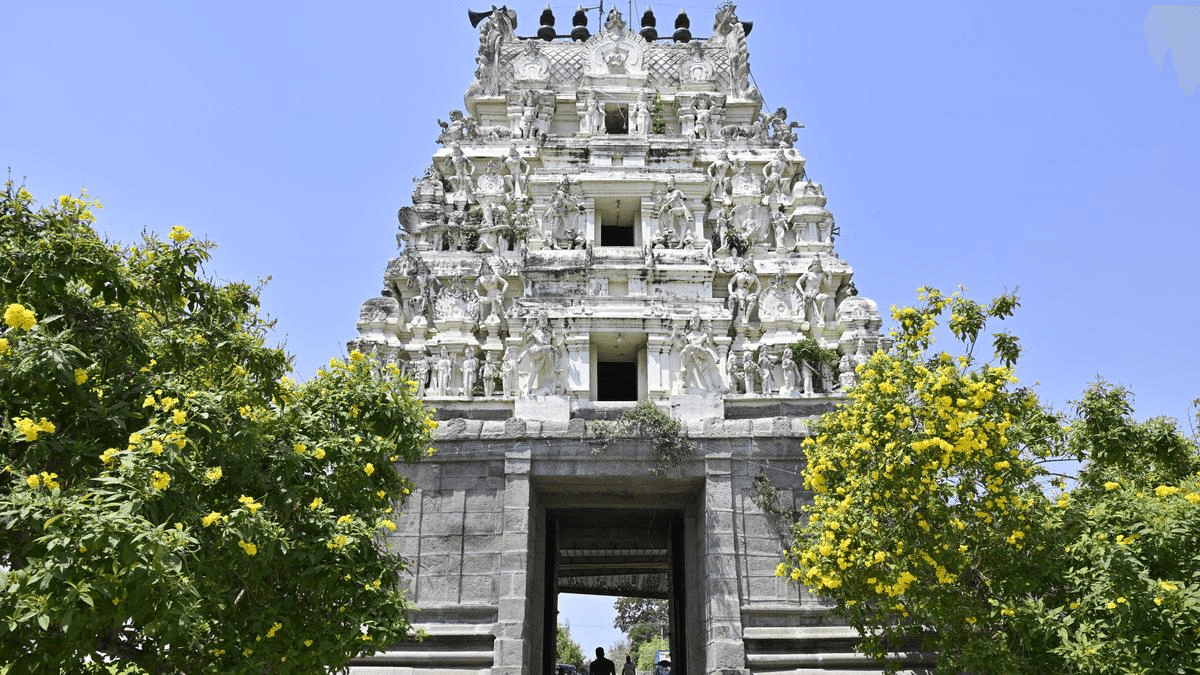
4.Jalanatheswarar Temple Heritage (Dravidian Architecture)

The Hindu
Illustration for Jalanatheswarar Temple Heritage (Dravidian Architecture)

What & Where

Jalanatheswarar Temple, 9th-century Shiva shrine at Thakkolam, Ranipet district, Tamil Nadu.

Stands on Kosasthalai river bank; 1.5-acre Dravidian architectural complex with 3-tier Rajagopuram.

Among 275 Paadal Petra Sthalams praised in Tevaram hymns by 7th-century saint Sambandar.

Quick Facts for MCQs

Historical Patronage

  • Pallava Aparajitha Varman founded temple, documented in 9th-century inscription.
  • Chola Aditya I grants of land, gold, goats recorded on site.
  • Vijayanagara ruler Sadasiva Maharayar added three-tier Rajagopuram in 1543.

Architecture & Features

  • Granite enclosure walls, sand-based Lingam enabling touch worship (Theenda Thirumeni).
  • Dravidian motifs mirror monumental Brihadeeswarar, Meenakshi precedents.
  • Compact 1.5-acre layout integrates shrine, gopuram, temple tank.

Conservation Issues

  • Structural neglect evident: collapsed boundary wall, vegetation-filled tank.
  • Kumbabishekam overdue; last held more than fifteen years back.
  • Urgent restoration needed to safeguard epigraphs and heritage fabric.

Key Data Points

FeatureData-Point
State & districtTamil Nadu, Ranipet
Nearby riverKosasthalai
Original construction876 AD, Pallava King Aparajitha Varman
Rajagopuram built1543 AD, Vijayanagara King Veera Prathaba Sadasiva Maharayar
Gopuram tiers3
Complex area~1.5 acre
Main deitySand-based Prithvi Lingam (Theenda Thirumeni) of Shiva
Architectural styleClassic Dravidian; parallels Brihadeeswarar & Meenakshi
Key inscriptionsPallava Aparajita & Chola Aditya I land-grant records
Paadal Petra Sthalam serial1 of 275
Tevaram composerSambandar; 383/384 hymns extant
Last kumbabishekam>15 years ago
Present conditionNeglected; wall collapsed, tank overgrown
GS-1Mapping

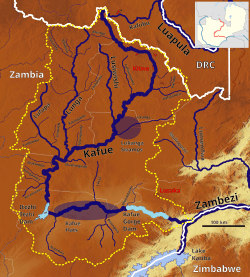
5.Zambia Geographical Features (African Geography)

Unknown
Illustration for Zambia Geographical Features (African Geography)

What & Where

Tailings-dam collapse at Chinese-owned copper mine released acidic effluent into Zambia’s Kafue River.

Kafue River: major Zambezi tributary, arises near Zambia–DRC border, curves south-east through central Zambia to Chirundu.

Zambia: land-locked, south-central Africa; capital Lusaka; shares borders with 8 countries.

Quick Facts for MCQs

Environmental Impact

  • Acid spill contaminates Kafue, threatening potable water and aquatic life.
  • Incident highlights mining-related river pollution risk in Southern Africa.

Physical Geography

  • Zambia flanked by eight neighbours, enhancing transboundary river significance.
  • Terrain includes Nyika Plateau and Luangwa Rift Valley besides Mafinga Hills.
  • Multiple river systems drain into Zambezi basin, shaping national hydrology.

Hydrology

  • Lukanga Swamp buffers Kafue floods, Lunga River augments discharge downstream.
  • Kafue joins Zambezi below Kariba Dam, influencing downstream flow to Mozambique Channel.
  • River corridor supports agriculture, hydropower and urban water supply.

Key Data Points

FeatureData-Point
Country locationSouth-Central Africa, landlocked
CapitalLusaka
Bordering nationsAngola, DRC, Tanzania, Malawi, Mozambique, Zimbabwe, Botswana, Namibia
Highest pointMafinga Hills ≈ 2,300 m
Major riversZambezi, Kafue, Luangwa, Luapula
Deep shared lakeLake Tanganyika
Kafue originNear Zambia–DRC border
Kafue mouthConfluence with Zambezi at Chirundu
Key Kafue tributaryLukanga Swamp (flow regulator)
Cities along KafueKitwe, Lusaka, Kafue Town, Mazabuka, Chirundu
GS-1Mapping

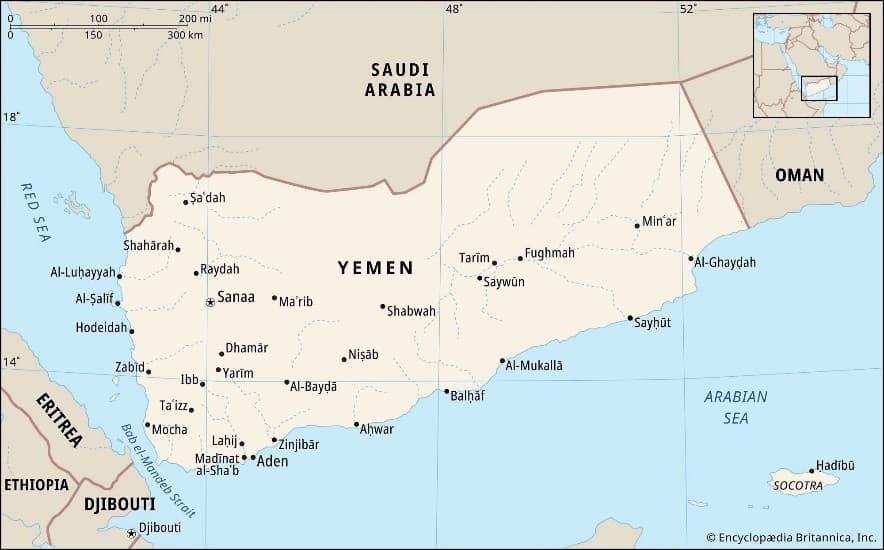
6.Yemen Strategic Geography (Middle East Geography)

Times of India
Illustration for Yemen Strategic Geography (Middle East Geography)

What & Where

Yemen: country at SW Arabian Peninsula controlling Bab-el-Mandeb entrance to Red Sea

Capital: Sana'a; neighbours Saudi Arabia north, Oman east; coasts on Red Sea, Gulf of Aden, Arabian Sea

Houthis: Zaidi Shia rebel movement from northern Yemen, emerged 1990s opposing Saudi-backed Sunni influence

Quick Facts for MCQs

Geography & Topography

  • Mountains: Hadhramaut, Haraz, Sarawat dominate interior, rising over 3000 m
  • Wadis: Hadhramaut, Zabid provide seasonal water flow, influence settlement
  • Coastal plain: Tihama stretches along Red Sea, hot and humid

Security Dimension

  • Airstrikes: ordered by US President Trump, targeted Houthi-held zones, killed 31 including civilians
  • Strategic chokepoint: Bab-el-Mandeb vital for global shipping, heightens international involvement
  • Conflict: part of broader Yemen civil war featuring regional Saudi-Iran proxy dynamics

Rebel Profile

  • Origin: Northern Yemen, Sa'dah stronghold, emerged 1990s under Hussein Badreddin al-Houthi
  • Ideology: Zaidi Shia, opposes Saudi-supported Sunni Wahhabi influence
  • Alias: Ansar Allah controls large swathes including capital since 2014

Key Data Points

FeatureData-Point
RegionSouthwestern Arabian Peninsula
Capital citySana'a
Northern neighbourSaudi Arabia
Eastern neighbourOman
Adjacent water bodiesRed Sea; Gulf of Aden; Arabian Sea
Strategic chokepointBab-el-Mandeb
Key mountain rangesHadhramaut; Haraz; Sarawat
Major wadisHadhramaut; Zabid
Coastal plainTihama
Rebel group nameAnsar Allah (Houthis)
Rebel sectZaidi Shia
US airstrikes deaths31
GS-3Scheme

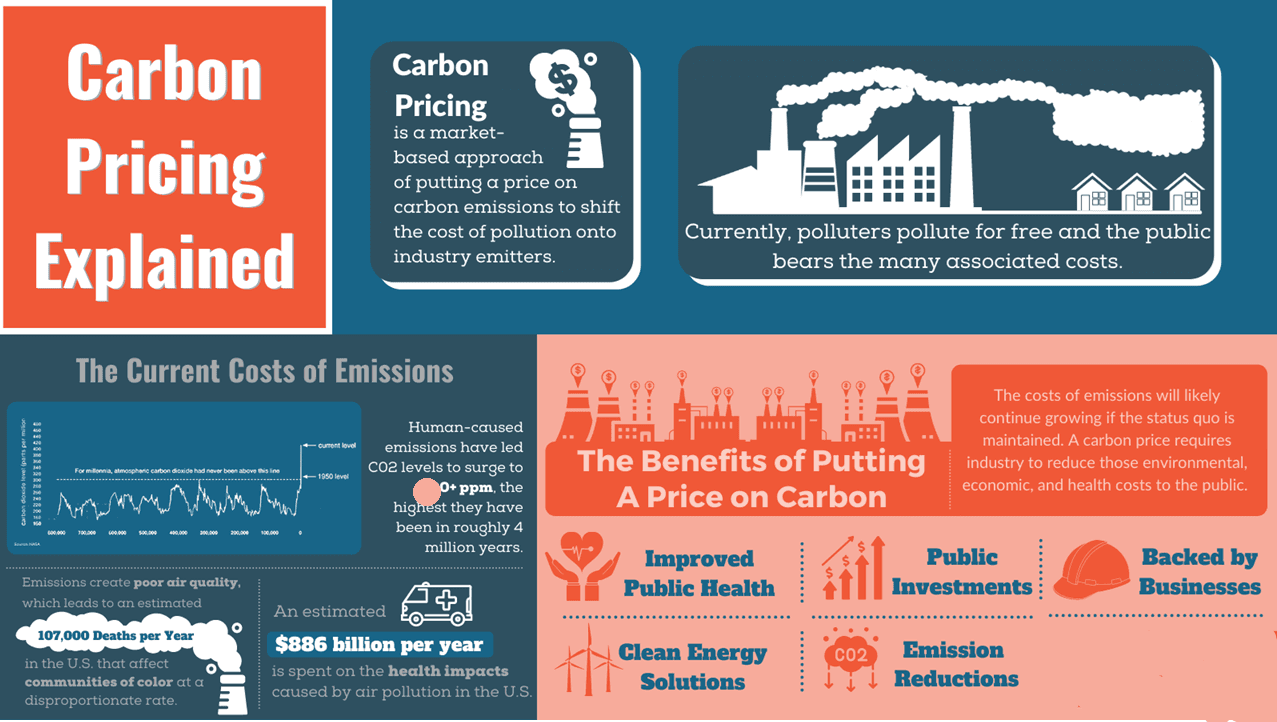
7.Carbon Credit Trading Scheme 2023 (Indian Carbon Market)

Financial Express
Illustration for Carbon Credit Trading Scheme 2023 (Indian Carbon Market)

What & Where

Scheme – Carbon Credit Trading Scheme 2023; market tool pricing and trading emissions within Indian Carbon Market

Transition – replaces PAT; issues Carbon Credit Certificates equal to 1 tCO2e via compliance and offset pathways

Geography – nationwide application; initial focus on energy-intensive industries; overseen by BEE & National Steering Committee

Quick Facts for MCQs

Legal & Policy

  • Statute – Energy Conservation (Amendment) Act 2022 empowers CCTS; rules notified July 2023
  • Oversight – Bureau of Energy Efficiency manages MRV; National Steering Committee sets caps and sector coverage

Mechanisms & Scope

  • Compliance mechanism mandates sectoral GHG intensity targets; surplus earn CCC, deficit must buy
  • Offset route allows non-covered entities generate tradable credits via verified emission reductions
  • Coverage – Iron & Steel, Aluminium, Cement, Fertiliser, Refineries, Pulp-Paper, Textiles; power sector slated later

Implementation Challenges

  • Enforcement weak; under PAT 50 % ESCerts unsold, no penalties recorded
  • Crediting delays since 2021 eroded participant confidence
  • Data opacity risks double counting and inaccurate reporting

Reinforcement Measures

  • Cap tightening and price-stability reserve modelled on EU ETS
  • Digital registry with blockchain-style tracking for fraud prevention
  • Incentives – tax benefits and concessional finance for early over-achievers

Key Data Points

FeatureData-Point
Notification year2023
Parent legislationEnergy Conservation (Amend.) Act 2022
Replaced schemePerform, Achieve & Trade (PAT)
Unit per CCC1 tCO2e
Initial sectors’ emission share16 % of national GHG
Power sector emission share40 %
India target – emission intensity cut45 % by 2030 vs 2005
Global carbon pricing coverage12.8 Gt CO₂ (25 % emissions)

Related UPSC Prelims PYQs

GS1 2009PYQ 1

In the context of CO₂ emission and Global Warming, what is the name of a market-driven device under the UNFCCC that allows developing countries to get funds/incentives from the developed countries to adopt better technologies that reduce greenhouse gas emissions ?

GS1 2011PYQ 2

Regarding “carbon credits”, which one of the following statements is not correct?

GS-3S&T

8.Hyperloop Development in India (Hyperloop Transport)

New Indian Express
Illustration for Hyperloop Development in India (Hyperloop Transport)

What & Where

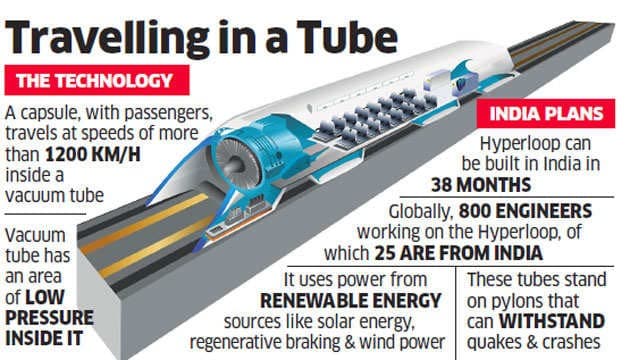
Hyperloop: maglev pods in near-vacuum tubes; target speed ≈1,220 km/h.

India’s R&D: IIT-Madras 425 m test track (Asia’s longest) + production at Integral Coach Factory, Chennai.

Ministry of Railways steering indigenous system to position India as futuristic-transport leader.

Quick Facts for MCQs

Tech & Schemes

  • Propulsion uses linear electric motors; vacuum drops air pressure to ~0.001 atm reducing drag.
  • Energy need estimated 2-3 kWh per passenger per 100 km, lower than aviation.
  • Ministry exploring PPP & Make-in-India route for scalable deployment.

Institutional Setup

  • IIT-Madras handles design, simulations, prototype pods, control systems.
  • ICF to fabricate tubes, propulsion hardware, electronic subsystems under Railway R&D budget.
  • Collaboration targets indigenous IP, avoiding foreign licensing costs.

Global Context

  • International pilots: Virgin Hyperloop (USA), Zeleros (Spain), TransPod (Canada) at ≤500 m tracks.
  • Indian track now Asia’s longest, positioning country for first large-scale commercial rollout.
  • Open-source model encourages cross-border research, yet nations race for proprietary patents.

Key Data Points

FeatureData-Point
Concept year & author2013; Elon Musk’s Hyperloop Alpha paper
PropulsionElectromagnetic motor inside low-pressure tube
Levitation methodMagnetic levitation; no wheel-rail contact
Indian test track length≈425 m at IIT-Madras
Manufacturing hubIntegral Coach Factory (ICF), Chennai
Lead academic teamAvishkar Hyperloop, IIT-Madras
Claimed top speed1,220 km/h
Key benefitsEnergy-efficient, low emissions, cuts road congestion & noise
GS-2Editorial

9.Need for Global Governance Reform (UN Reform)

Business Standard
Illustration for Need for Global Governance Reform (UN Reform)

What & Where

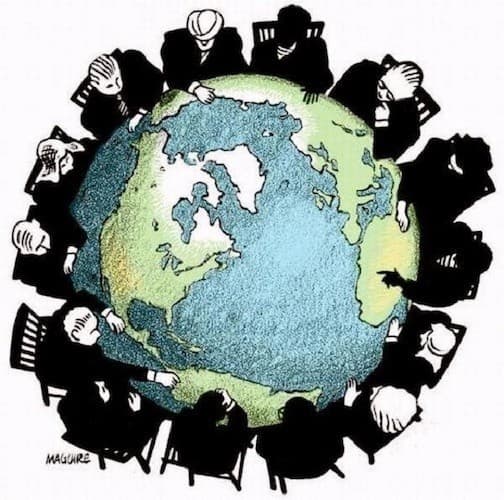
Global governance = UN + Bretton Woods (IMF, World Bank) + WTO + regional blocs managing cross-border issues

Key processes = peacekeeping, economic stabilisation loans, trade rule-setting, pandemic & climate coordination

Geography hubs = UN-NYC, IMF/World Bank-Washington DC, WTO-Geneva; influence spans Global North & South

Quick Facts for MCQs

Structural Gaps

  • Representation deficit = India, Africa, Latin America lack UNSC permanency
  • Voting weight skew = IMF, World Bank favour developed economies
  • Enforcement weakness = UN resolutions on DPRK, Myanmar largely ignored

Reform Proposals

  • Security Council expansion including Global South heavyweights
  • Multilateral transparency via tech tools AI, blockchain, open data dashboards
  • Planetary governance vision combining supranational oversight with robust local bodies

Challenges

  • Sovereignty concerns = China, Russia resist intrusive mandates
  • Geopolitical rivalries = US-China trade war, Russia sanctions stall consensus
  • Public distrust rising populism erodes support for global compacts

Illustrative Cases

  • COVID-19 vaccine hoarding spotlighted WHO limits
  • Rohingya crisis delayed UN action shows bureaucratic drag
  • Fridays for Future youth movement nudged climate agenda globally

Key Data Points

FeatureData-Point
UN establishment year1945
IMF & World Bank birthBretton Woods 1944
WTO criticismSlow dispute panels, Global South bias claims
UNSC permanent seatsUSA, UK, France, Russia, China
G4 reform seekersIndia, Germany, Japan, Brazil
Vaccine inequity exampleAfrica doses lagged months behind West during COVID-19
US IMF veto power>15 % votes, blocking 85 % threshold moves
Regional blocs citedEU, ASEAN, BRICS, G20

Related UPSC Prelims PYQs

GS1 2010PYQ 1

Stiglitz Commission established by the President of the United Nations General Assembly was in the international news. The commission was supposed to deal with

GS1 2009PYQ 2

NAMA-11 (Nama-11) group of countries frequently appears in the news in the context of the affairs of which one of the following?

GS-2Misc

10.Raisina Dialogue 2025 Overview (Global Conference)

The Hindu

What & Where

Raisina Dialogue – India’s annual flagship conference on geopolitics & geo-economics, held in New Delhi.

Jointly organised by MEA & Observer Research Foundation since 2016.

Serves as global platform for leaders, diplomats, academics to debate security, diplomacy, economy.

Quick Facts for MCQs

Security Dimension

  • Emphasis on global security challenges, defence cooperation, multilateral stability.
  • High-level participation from heads of state, ministers, strategists ensures policy impact.
  • Sessions evaluate threats from technology, terrorism, maritime domains.

Tech & Schemes

  • Panels assess emerging tech governance, cyber norms, AI regulation for strategic advantage.
  • Dialogue feeds into India’s Digital Public Infrastructure outreach & tech-led diplomacy.

Economic Angle

  • Geo-economics discussions cover resilient supply chains, trade reforms, climate finance.
  • Platform bolsters India’s role in shaping Indo-Pacific economic architecture.

International Examples

  • Presence of 100+ countries provides comparative policies on security, tech, economy.
  • New Zealand keynote highlights small-state perspectives within Indo-Pacific calculus.

Key Data Points

FeatureData-Point
Inception year2016
Founder bodiesMinistry of External Affairs + ORF
Usual venueNew Delhi, India
10th edition dates17-19 March 2025
2025 theme“Kalachakra” (Wheel of Time)
2025 chief guestNZ Prime Minister Christopher Luxon
Focus areasGlobal security, diplomacy, emerging geopolitical trends
Core formatKeynotes, panel discussions, networking

Related UPSC Prelims PYQs

CDS_GK, ESE_GS 2026PYQ 1

What is the name of the initiative launched by India and Denmark in November 2025 to enhance bilateral ties?

CDS_GK, ESE_GS 2022PYQ 2

समृद्धि के लिए हिंद-प्रशांत आर्थिक ढाँचा (Indo-Pacific Economic Framework for Prosperity) का गठन करते समय, सदस्य देशों ने चार स्तंभों पर भावी समझौता-वार्ता के लिए सामूहिक परिचर्चा शुरू की है। उन स्तंभों में, निम्नलिखित में से कौन-सा नहीं है ?

GS-3Security

11.Bongosagar 2025 Naval Exercise (India-Bangladesh Exercise)

Indian Express
Illustration for Bongosagar 2025 Naval Exercise (India-Bangladesh Exercise)

What & Where

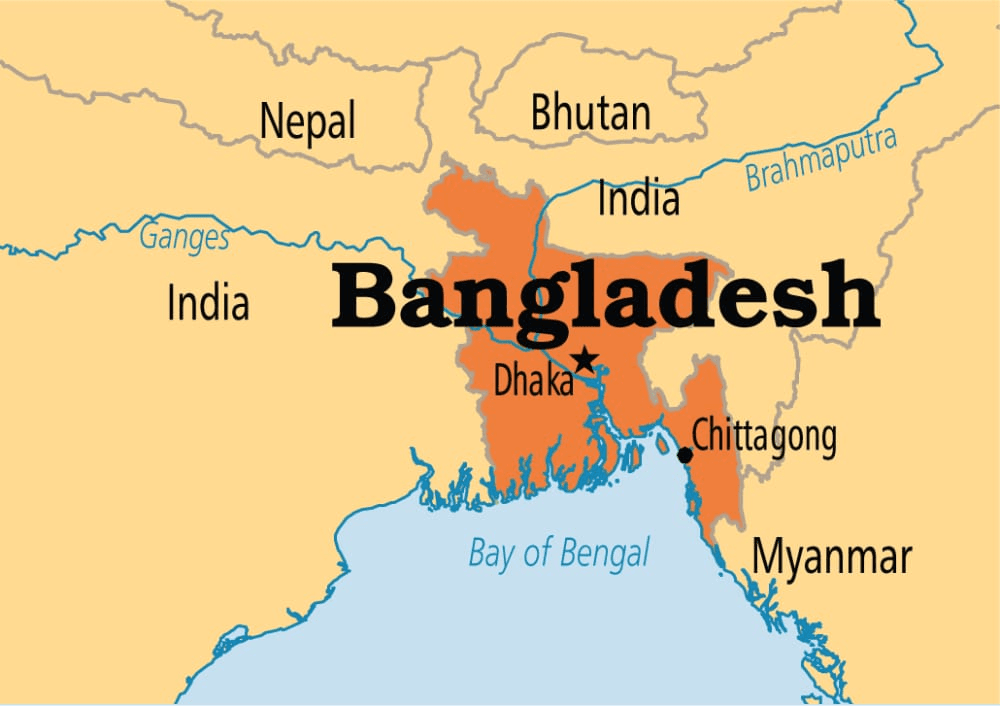
Bongosagar 2025: bilateral Indian–Bangladesh naval drill in Bay of Bengal under SAGAR vision.

Participants: Indian Navy’s INS Ranvir and Bangladesh Navy’s BNS Abu Ubaidah.

Core area: Bay of Bengal, eastern Indian Ocean strategic corridor.

Quick Facts for MCQs

Security Dimension

  • Objective: boost interoperability, maritime domain awareness, regional stability in Bay of Bengal.
  • Scope: surface manoeuvres, weapon firing, tactical communication.
  • Strategic fit: operationalises India’s SAGAR vision for Indo-Bangla maritime security.

Policy & Initiatives

  • SAGAR 2015: doctrine for cooperative maritime security and growth across Indian Ocean littorals.
  • MAHASAGAR 2025: extends SAGAR toward Global South security, trade, development.
  • Rajput-class specifics: five Guided Missile Destroyers; INS Ranvir is fourth, commissioned July 1986.

Bilateral Engagements

  • Exercise Sampriti: biennial India-Bangladesh army training on counter-insurgency and disaster response.
  • Naval touchpoints: Bongosagar exercise plus India-Bangladesh CORPAT along maritime boundary.
  • Defence ties: regular high-level visits, connectivity, capacity-building projects augment partnership.

Key Data Points

FeatureData-Point
ExerciseBongosagar 2025
LocationBay of Bengal
Indian shipINS Ranvir (Rajput-class)
Bangladeshi shipBNS Abu Ubaidah
INS Ranvir commissioned1986
SAGAR launched2015
Successor initiativeMAHASAGAR (2025)
Other bilateral drillsSampriti (Army), CORPAT (Navy)

Related UPSC Prelims PYQs

CDS_GK 2023PYQ 1

The joint multinational maritime exercise named IBSAMAR is conducted by the Navies of which of the following countries?

CDS_GK 2021PYQ 2

‘CARAT Bangladesh 2020’ was a joint naval exercise between Bangladesh and

GS-3Security

12.Maritime Security Belt 2025 Drills (China-Iran-Russia Drills)

Times of India
Illustration for Maritime Security Belt 2025 Drills (China-Iran-Russia Drills)

What & Where

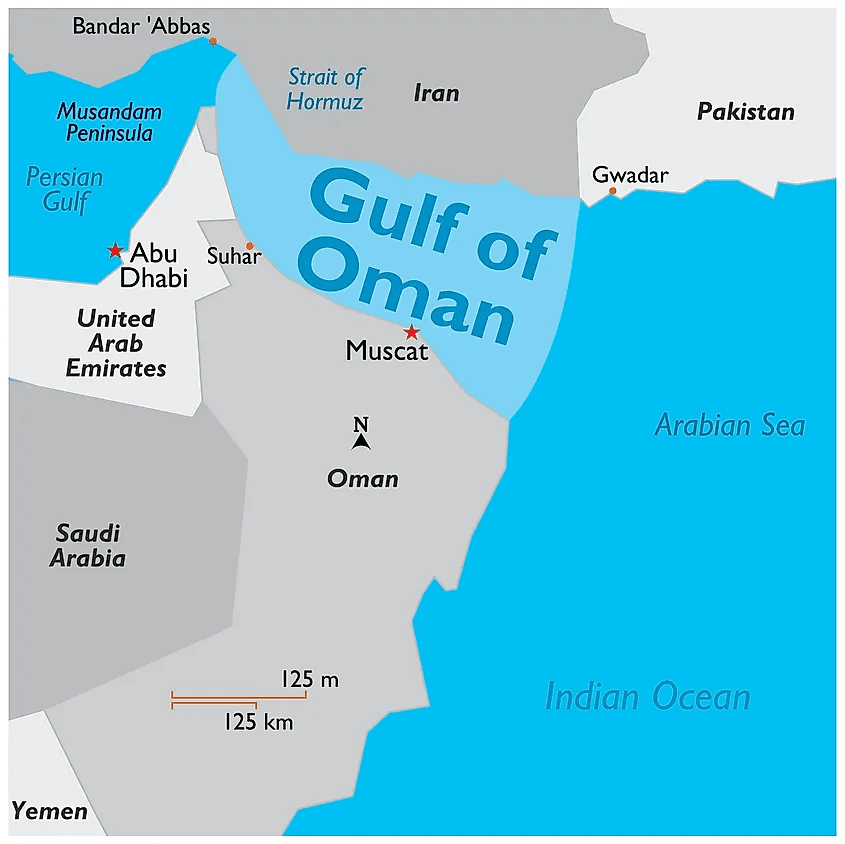
Gulf of Oman western extension of Arabian Sea linking to Strait of Hormuz and Persian Gulf

Strait of Hormuz narrow chokepoint between Iran UAE Oman controlling access from Persian Gulf to open seas

Maritime Security Belt 2025 trilateral naval drill conducted in Gulf of Oman near the strait amid Iran nuclear tensions

Quick Facts for MCQs

Security Dimension

  • Exercise aims joint maritime security, anti-piracy coordination, search-and-rescue interoperability
  • Location chosen amid heightened scrutiny of Iran’s nuclear program and regional naval posturing
  • Strait historically sensitive with tanker incidents reinforcing need for multilateral patrols

Energy & Trade

  • Chokepoint status ensures about one-fifth of world oil trade transits daily influencing global price stability
  • Gulf provides Iran its sole maritime gateway to open seas facilitating export and import logistics

Physical Geography

  • Waterway links Arabian Sea, Strait of Hormuz, Persian Gulf forming core Indian Ocean corridor
  • Northern, western, southern shores respectively touch Iran, UAE, Oman shaping distinct coastal ecosystems

Key Data Points

FeatureData-Point
Bordering countriesIran, UAE, Oman
Key islandsSheytan, Al Fahal, Dimaniyat, Sawadi
Daily global oil flow~20 % through Strait of Hormuz
Naval drillMaritime Security Belt 2025
Participant naviesChina, Iran, Russia
Water body typeArabian Sea extension
Iran’s sea outletGulf of Oman via Strait

Related UPSC Prelims PYQs

GEO_GS, NDA_GAT 2025PYQ 1

Naseem-Al-Bahr, held in October 2024, was a joint maritime exercise between the navies of India and

GEO_GS, NDA_GAT 2020PYQ 2

'Naseem-Al-Bahr' is a bilateral naval exercise between India and

GS-2Scheme

13.Mission Saffron Expansion Northeast (Mission Saffron)

PIB
Illustration for Mission Saffron Expansion Northeast (Mission Saffron)

What & Where

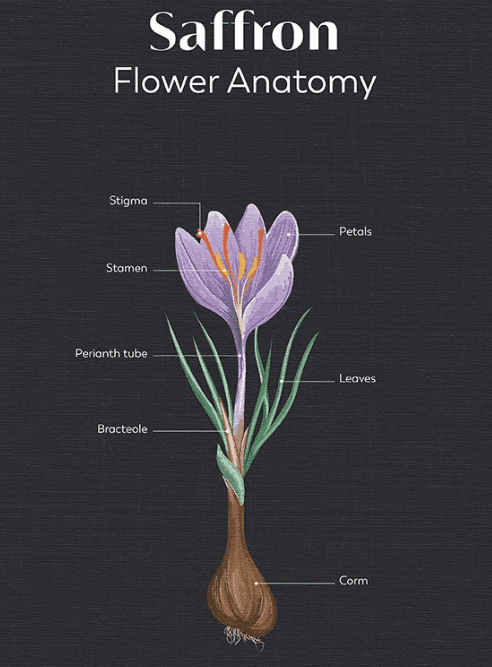
Saffron; high-value spice from Crocus sativus stigmas, historically grown in Pampore, J&K

Mission Saffron; centrally funded project (2010-11) now steering Northeast saffron via Saffron Bowl

NECTAR; DST autonomous body, Shillong campus to anchor technology support

Quick Facts for MCQs

Tech & Schemes

  • Mission Saffron centrally funded; started J&K focus, expanded 2021
  • Saffron Bowl Project executed by NECTAR, supplies corms and agronomy training

Agricultural Requirements

  • Altitude around 2000 m; loamy, sandy, calcareous soils work
  • Soil pH 6-8; low-moderate moisture preferred
  • Temperature window summer <40 °C, winter down to –20 °C

Institutional Bodies

  • NECTAR established 2014; permanent campus coming up Shillong
  • Mandate technology solutions for agriculture, infrastructure, economy of Northeast
  • Acts as nodal agency for Northeast saffron cultivation

Key Data Points

FeatureData-Point
Spice source plantCrocus sativus
Optimum altitude~2000 m
Soil pH range6–8
Preferred climateDry–moderate
Summer temp limit<40 °C
Winter tolerance–20 °C
Mission launch year2010-11
NE expansion year2021
States in Saffron BowlSikkim, Arunachal, Meghalaya
NECTAR set up2014
GS-2Scheme

14.ASHA Workers Roles and Issues (ASHA Programme)

Indian Express

What & Where

ASHA workers – community health volunteers launched 2005 under National Rural Health Mission

Merged into National Health Mission 2013; deployment norm one per 1 000 population across rural-urban India

Ongoing wage-pension protests in Kerala spotlight service conditions

Quick Facts for MCQs

Roles & Services

  • Maternal care: antenatal, postnatal, breastfeeding, infant nutrition counselling
  • Immunisation & disease control: vaccine outreach, TB DOTS support, malaria screening, health education
  • Primary care: basic drugs, first aid, birth-death reporting, community referrals

Pay & Employment Issues

  • Low pay: irregular incentives, centre-state fund delays
  • No security: lacks pension, PF, gratuity, medical insurance; not treated as government staff
  • Recognition gap: global award yet persistent domestic precarity and gender bias

Reform Suggestions

  • Formalisation: classify under Code on Social Security 2020 for labour rights
  • Fixed salary: combine assured wage with DBT-routed incentives to end delays
  • Upskilling: train for progression to Auxiliary Nurse Midwife and higher health cadres

Key Data Points

FeatureData-Point
Launch year2005 (NRHM)
Current umbrellaNational Health Mission (NHM)
NRHM–NUHM merger2013
Worker–population norm1 : 1 000
Total ASHAs (2022-23)9.2 lakh rural; 79 900 urban
Age eligibility25 – 45 years
Minimum educationClass 10
Employment tagVolunteer, incentive-based
Typical pay range₹5 000 – 15 000 per month
WHO honourWorld Health Leaders Award 2022

Related UPSC Prelims PYQs

GS1 2012PYQ 1

With reference to National Rural Health Mission, which of the following are the jobs of ‘ASHA’, a trained community health worker?

GS-1Editorial

15.Public Health Education Crisis (Public Health Education)

The Hindu

What & Where

Definition: multi-disciplinary training in prevention, epidemiology, health policy, management

Mandate: Article 47 directs State to improve public health

Geography: MPH colleges sparse in Assam, Bihar, Jharkhand

Quick Facts for MCQs

Government Schemes

  • NHM offers workforce skilling and introduced non-medical public-health posts
  • PMSSY increases teaching seats via new AIIMS network
  • IDSP strengthens disease surveillance competence across states

Key Challenges

  • Jobs: thousands vie for single program assistant opening
  • Curriculum: MPH courses lack common standards and practical modules
  • Funding: research and regulatory allocation remains minimal, e.g., ₹ 2 crore to Data Protection Board

Reform Agenda

  • Cadres: create State Public Health Cadres for assured recruitment
  • Regulation: propose Public Health Education Council under UGC/NMC for uniform syllabus and faculty norms
  • Training: mandate field internships in NHM, WHO, IDSP projects

Key Data Points

FeatureData-Point
Constitutional articleArticle 47
NRHM launch year2005
PMSSY deliverableAIIMS-like institutes
FPHM focusPublic-health leadership
IDSP roleEpidemiology training
Data Protection Board grant₹ 2 crore

Related UPSC Prelims PYQs

CDS_GK 2023PYQ 1

निम्नलिखित में से कौन-सा/कौन-से, प्रधानमंत्री स्वास्थ्य सुरक्षा योजना (PMSSY) का/के उद्देश्य है/हैं?

Ready to practice?

Test your knowledge with our UPSC test series.

Start Free Trial