UPSC Current Affairs

18 topicsGS-1: 3GS-2: 9GS-3: 6
0/18 done
GS-2Polity

1.Supreme Court Bans Manual Scavenging Nationwide (Manual Scavenging)

New Indian Express

What & Where

Definition: manual scavenging = hand removal of human excreta from dry latrines, sewers, septic tanks.

Process banned: hazardous sewer/septic cleaning manually; Supreme Court order applies to Delhi, Mumbai, Chennai, Kolkata, Bengaluru & Hyderabad.

Key law: Prohibition of Employment as Manual Scavengers & Rehabilitation Act (PEMSR), 2013 across India.

Quick Facts for MCQs

Judicial & Legal

  • Supreme Court 2024 bars manual entry, fixes accountability on municipalities/contractors under PEMSR Act.
  • 2014 judgment ordered retrospective ₹10 lakh compensation, periodic compliance reports from States.
  • Manual scavenging classified as offence; imprisonment up to 5 years for repeat violators.

Health Hazards

  • Exposure causes cholera, typhoid, hepatitis, chronic respiratory infections.
  • Inhaled hydrogen sulfide/methane can lead to instant asphyxiation inside sewers.
  • Continuous contact triggers dermatological, ocular ailments, premature mortality.

Persistence Factors

  • Caste hierarchy: Dalits dominate 97 % workforce despite legal ban.
  • Weak enforcement, under-reporting and contractual hiring enable continuation.
  • Outdated, narrow drainage networks compel manual entry; mechanised options scarce, costly.

Tech & Schemes

  • Mechanisation push: suction, jetting machines, pipe-inspection robots for urban local bodies.
  • Rehabilitation via Self-Employment Scheme for Rehabilitation of Manual Scavengers, MGNREGS, PM-KVY skilling.
  • IEC campaigns with NGOs to register workers, spread awareness of rights and benefits.

Key Data Points

FeatureData-Point
SC blanket ban year2024
Deaths 2018-23 (national)443
Delhi deaths 2009-2394
Convictions in Delhi deaths1
Workforce share SCs (2024)97 %
Registered SC scavengers42,594
Safai Karamchari Andolan verdict2014
Court-mandated compensation₹10 lakh per sewer death since 1993
Constitutional breach citedArticles 17 & 21
Typical toxic gasHydrogen sulfide

Related UPSC Prelims PYQs

GS1 2016PYQ 1

'Rashtriya Garima Abhiyaan' is a national campaign to
GS-2Polity

2.Waqf Amendment Bill 2024 Overview (Waqf Boards)

The Hindu

What & Where

Waqf Board: statutory body managing Muslim charitable/religious endowments under Waqf Acts 1954 & 1995

Operations: identification, protection, revenue use, dispute redress of Waqf properties across Indian states/UTs

Upcoming change: Waqf (Amendment) Bill 2024 slated for Budget Session clearance

Quick Facts for MCQs

Statutory Framework

  • Power: Board can sue, be sued, sanction sale/lease/mortgage of immovable Waqf assets
  • Recovery: Boards mandated to reclaim encroached properties, appoint custodians for revenue utilisation
  • Tribunal: Special forums under Act for speedy civil dispute settlement

Governance Changes

  • Inclusion: Non-Muslim members aimed at transparency, wider oversight
  • Oversight: Collector’s ownership ruling integrates land records, quick enforcement
  • Modernisation: Aligns Waqf regulation with contemporary administrative practices

Contentious Issues

  • Autonomy: Critics cite dilution of Muslim control, potential Article 26 infringement
  • Expertise: Loss of Muslim-law specialist feared to impair culturally nuanced adjudication
  • Abuse risk: Collector-centric model could invite bias, politicised land decisions

Way Forward

  • Consultation: Structured dialogue with ulema, mutawalis, civil society before passage
  • Safeguards: Statutory checks, periodic audits, reasoned orders to curb executive overreach
  • Capacity-building: Training modules on Waqf jurisprudence for Collectors, tribunal members

Key Data Points

FeatureData-Point
Parent MinistryMinority Affairs
Foundational ActWaqf Act 1954; overhauled 1995
Apex advisory bodyCentral Waqf Council, 1964
Board compositionMuslim legislators, MPs, Bar Council, Islamic scholars, mutawalis
Chairperson appointing authorityState Government
2024 Bill: non-Muslim quotaMinimum 2 in State Boards & CWC; may form majority
2024 Bill scrapsConcept of “Waqf by User”
Property dispute deciderDistrict Collector empowered to update revenue records
Tribunal changeMuslim-law expert seat deleted
Appeal routeDirect High Court appeal; Tribunal no longer final
GS-2Polity

3.Lateral Entry Scheme Legal Challenges (Civil Services)

Indian Express
Illustration for Lateral Entry Scheme Legal Challenges (Civil Services)

What & Where

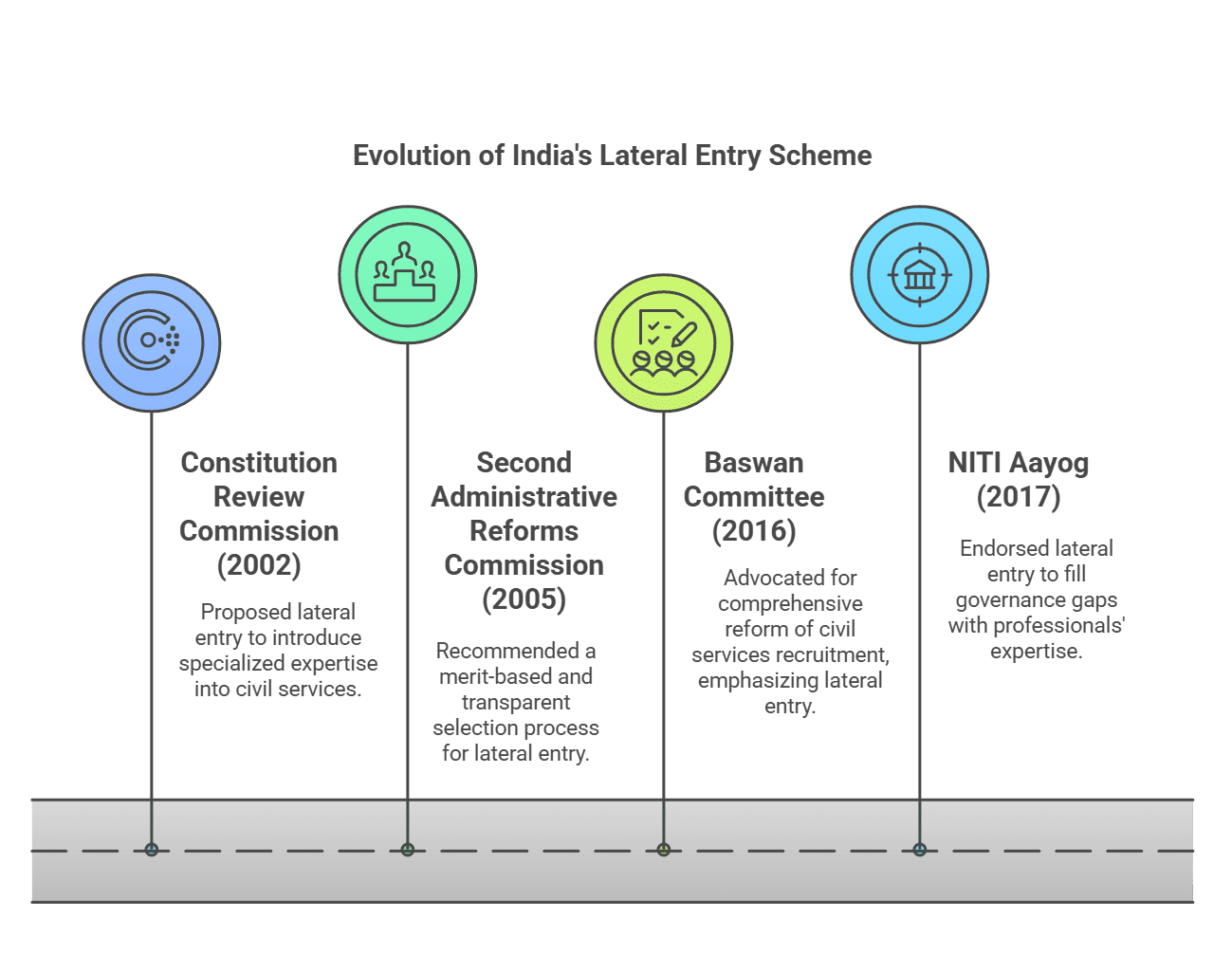
Lateral Entry Scheme (LES); contractual mid-senior civil-service intake from private sector, Government of India

Selection by UPSC; postings across central ministries; initial tenure 3 yrs, extendable to 5

Posts treated as single-seat; reservation quotas waived; 63 recruits till Aug 2023

Quick Facts for MCQs

Legal & Policy

  • Article 309 cited against LES; no statutory recruitment law backing
  • Govt defends via Article 310 doctrine of pleasure for specialist hires
  • Nainital CAT case 2020; petitioner IFS officer Sanjiv Chaturvedi

Social Concerns

  • Reservation exemption criticised as dilution of SC ST OBC EWS guarantees
  • Bureaucrat morale risk; cadre views outsiders as promotion blockade
  • Conflict-of-interest fear; corporate entrants may skew public policy

Operational Gaps

  • Tenure three years; considered too brief for accountability or impact
  • Govt flags 1500 IAS shortfall; critics note 18 empanelled per vacancy
  • UPSC halt in 2024 shows procedural uncertainty amid quota dispute

Potential Benefits

  • Specialist expertise fills knowledge gaps in tech, finance, management
  • Private-sector methods may cut red-tapism, drive results orientation
  • Wider stakeholder presence fosters participatory, collaborative governance

Way Forward

  • Dual-entry model proposed; regular UPSC 25-30 plus lateral 37-42 band
  • Dedicated administrative university mooted for intensive induction training

Key Data Points

FeatureData-Point
Launch year2018
Total recruits (till Aug 2023)63
Still serving Aug 202357
Tenure3 years
Max extension5 years
Recruitment withdrawn45 posts, Aug 2024
GS-3Economy

5.NITI Aayog Fiscal Health Index 2025 (State Finances)

PIB
Illustration for NITI Aayog Fiscal Health Index 2025 (State Finances)

What & Where

Fiscal Health Index (FHI): NITI Aayog tool rating states’ fiscal soundness

Covers 18 large Indian states; base year FY 2022-23

Guides state-level reforms, competitive fiscal discipline, sustainable growth

Quick Facts for MCQs

Structure & Metrics

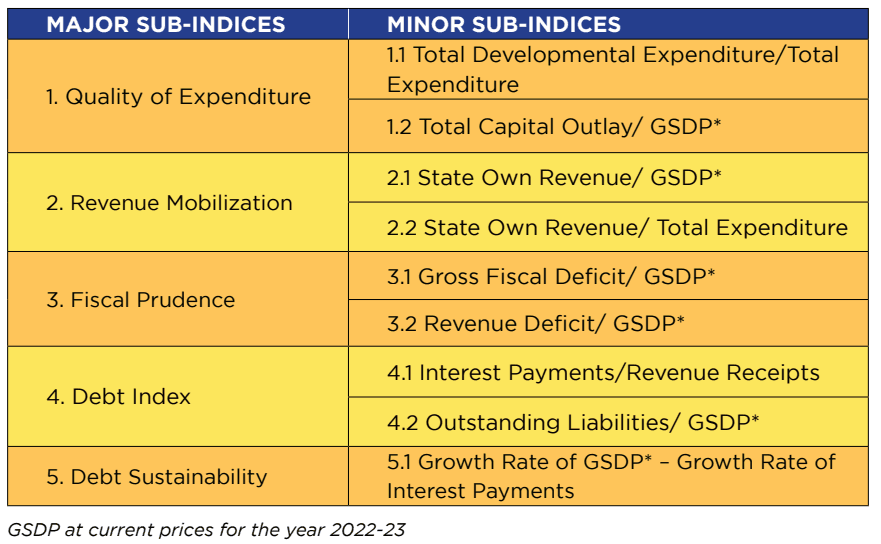
  • Metrics: five sub-indices gauge expenditure quality, revenue strength, deficits, debt stock, sustainability
  • Sustainability: positive GSDP–interest spread signals manageable debt trajectory
  • Capex-ratio: higher capital outlay share flags future-growth orientation

State Rankings

  • Leadership: Odisha tops overall; Chhattisgarh, Goa, Jharkhand, Gujarat follow
  • Revenue stars: Goa, Telangana, Odisha; mining royalties boost Odisha, coal auctions aid Chhattisgarh
  • Laggards: West Bengal, Punjab weak in revenue, high debt, low prudence

Fiscal Challenges

  • Debt stress: Punjab, Kerala face heavy interest bills, poor expenditure mix
  • Deficit issue: Andhra Pradesh registers wide fiscal gap, skews spending toward revenue heads
  • Liability growth: West Bengal, Punjab rising debt burdens heighten default risk

Key Data Points

FeatureData-Point
First releaseJan 2025
Released byNITI Aayog
Coverage year2022-23
States assessed18 major states
Sub-indices count5
Overall topperOdisha – score 67.8
Next fourChhattisgarh 55.2, Goa 53.6, Jharkhand 51.6, Gujarat 50.5
Revenue-mobilisation leadersGoa, Telangana, Odisha
Peak capex share27 % – MP, Odisha, Goa, Karnataka, UP
Low capex share10 % – WB, Andhra, Punjab, Rajasthan
Frequent laggardsPunjab, West Bengal, Andhra Pradesh, Kerala

Related UPSC Prelims PYQs

CAPF_GAI 2021PYQ 1

Which one of the following States ranked first on Sustainable Development Goal India Index, 2020-21 released by NITI Aayog?

CAPF_GAI 2022PYQ 2

Based on the scoring on SDG (Sustainable Development Goals) India Index, the NITI Aayog has classified various States into certain categories. Which one of the following is not one of the categories?

GS-1HistoryQuick Bite

6.Lala Lajpat Rai 160th Anniversary (Freedom Fighter)

PIB

What & Where

Lala Lajpat Rai: nationalist leader, social reformer; nicknamed “Punjab Kesari”.

Born 28 Jan 1865, Dhudike village, Ferozepur (now Moga), Punjab.

Died 17 Nov 1928, Lahore, following lathi-charge while protesting Simon Commission.

Quick Facts for MCQs

Freedom Movement

  • Non-Cooperation, Swadeshi, Home Rule: active organiser, fiery speeches mobilised Punjab masses.
  • INC veteran; advocated self-reliance, education, Hindu-Muslim unity within Congress forums.
  • Instrumental in boycotting British goods during partition-of-Bengal protests.

International Outreach

  • 1914–19 US stay; lectured, raised funds, wrote “Young India” explaining colonial exploitation.
  • Home Rule League of America linked diaspora activism with Tilak-Besant campaign in India.
  • Engaged early Indian diaspora in California, New York, fostering Ghadar connect.

Social Reform

  • Founded Servants of the People Society (1921), Lajpat Rai College, arya samaj-based schools.
  • Campaigned against caste discrimination, child marriage; promoted women’s education.
  • Edited journals like “The People”, “Punjabee”, spreading reformist ideas.

Legacy & Commemoration

  • Statues at Parliament House, Shimla Ridge; annual Punjab Kesari award instituted.
  • Death anniversary observed as National Martyrs’ Day in several Punjab institutions.
  • Inspiration for Bhagat Singh and HSRA retaliation against Saunders in 1928.

Key Data Points

FeatureData-Point
Birth anniversary marked160th (2025)
Lal-Bal-Pal trio membersLala Lajpat Rai, Bal Gangadhar Tilak, Bipin Chandra Pal
Key sobriquetPunjab Kesari (Lion of Punjab)
Major Congress rolePresident, Calcutta Session 1900 (INC)
1905 standOpposed Partition of Bengal
1917 initiative abroadFounded Home Rule League of America, New York
Key acts protestedRowlatt Act, Jallianwala Bagh massacre
1920 standSupported Non-Cooperation Movement
1928 event leading to deathLed anti-Simon Commission procession, Lahore
Famous slogan on injuries“Every blow to me is a nail in the coffin of British rule”

Related UPSC Prelims PYQs

GEO_GS, GS1 2021PYQ 1

The Lahore session of Congress, held in 1929, was famous for:

GEO_GS, GS1 1995PYQ 2

100. Which one of the following pairs is not correctly matched?

GS-1Mapping

7.Goma DR Congo Location & Significance (Place in News)

CNN
Illustration for Goma DR Congo Location & Significance (Place in News)

What & Where

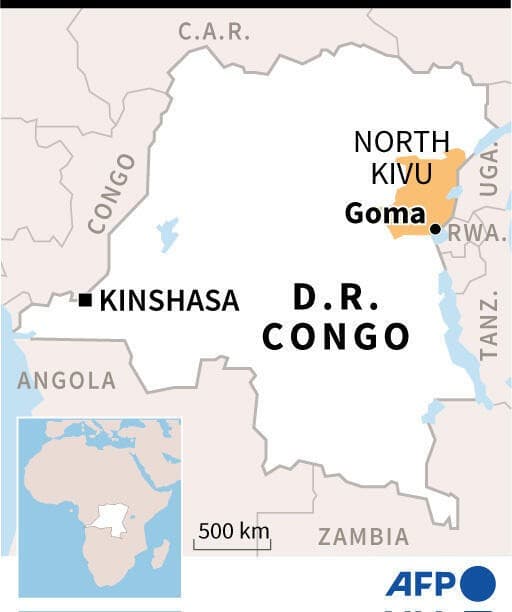
Goma: capital of North Kivu, eastern DRC, on Lake Kivu at Rwanda-Uganda tri-border

M23: March 23 Movement, Tutsi-led rebel formation active since 2012 in eastern DRC

DRC: Central African state, second-largest in Africa, administered from Kinshasa

Quick Facts for MCQs

Security Dimension

  • Offensive:M23 recently captured zones around Goma, heightening regional tensions
  • Composition:Group asserts Tutsi protection, blames Kinshasa for failed peace terms
  • Border:Proximity to Rwanda-Uganda facilitates cross-border militia support

Humanitarian Issues

  • Displacement:Goma shelters about half-million IDPs needing sustained aid
  • Risk:Continued fighting plus active Nyiragongo volcano escalates civilian peril
  • Aid:City serves as eastern DRC hub for UN and NGOs

Economic Angle

  • Trade:Goma links inland DRC with Kigali and Kampala via roads and lake transport
  • Minerals:Surrounding areas rich in cobalt, copper, coltan attracting armed competition
  • Hub:City functions as major commercial and transit centre for Great Lakes region

Physical Geography

  • Rift:Albertine arm of East African Rift shapes mountainous North Kivu topography
  • Hydrography:Lake Kivu a Great Lake shared between DRC and Rwanda
  • Volcano:Nyiragongo highly active, historic lava flows devastated Goma

Conflict History

  • Wars:First Congo War 1996-97, Second Congo War 1998-2003 caused massive casualties
  • Independence:DRC broke from Belgium in 1960 yet remains instability-prone
  • Resources:Mineral wealth repeatedly fuels insurgencies and foreign interventions

Key Data Points

FeatureData-Point
Province of GomaNorth Kivu
Adjacent lakeLake Kivu
Rift systemAlbertine Rift (East African)
Nearby volcanoMount Nyiragongo
Displaced in Goma≈ 5 lakh people
DRC land rank AfricaSecond largest
International borders9 countries
Capital cityKinshasa
M23 launch year2012
Dominant M23 ethnicityTutsi
Key DRC mineralCobalt
GS-3S&T

8.China EAST Tokamak Achieves 1000-s Plasma (Nuclear Fusion)

Indian Express

What & Where

Nuclear fusion: light nuclei (mainly Deuterium + Tritium) merge to release massive energy, star-like process

EAST tokamak: Experimental Advanced Superconducting Tokamak, Hefei (Anhui, China); achieved 1 000+ s steady plasma

ITER megaproject: 35-nation fusion device at Cadarache, southern France, targeting 500 MW output by 2039

Quick Facts for MCQs

Major Experiments

  • EAST milestone: longest steady-state plasma among tokamaks, key for future DEMO power plants
  • ITER: world’s largest fusion collaboration; India supplies cryostat, RF sources, diagnostic components
  • Next phase: commercial DEMO reactors expected post-2040 once ITER physics validated

Technical Requirements

  • Temperature surpassing 100 million °C creates fully ionised plasma suitable for D-T fusion
  • Superconducting magnets confine plasma, preventing wall contact and energy losses
  • Thermal energy from helium ash planned to produce steam and drive turbines for grid electricity

Fusion vs Fission

  • Fusion combines light nuclei; fission splits heavy ones
  • Fusion delivers higher energy per gram, produces no long-lived high-level waste
  • Fission reactors risk meltdowns (Chernobyl, Fukushima) while fusion reactions shut down if containment lost

Key Data Points

FeatureData-Point
Latest EAST plasma duration1 000+ s (≈17 min)
Previous EAST mark400+ s (2023)
Required fusion temperature>100 million °C
Confinement approachTokamak with superconducting magnetic fields
Core fuel isotopesDeuterium & Tritium
ITER first-plasma schedule2025-26 (planned)
ITER rated fusion power500 MW by 2039
Fusion waste profileMinimal, short-lived radioactivity
Fission fuel exampleUranium-235 or Plutonium-239
Meltdown risk in fusionNegligible, reaction self-quenching

Related UPSC Prelims PYQs

GS1 2016PYQ 1

India is an important member of the ‘International Thermonuclear Experimental Reactor’. If this experiment succeeds, what is the immediate advantage for India?

GS1 2007PYQ 2

Recently, the European Union and six other countries including India signed the International Thermonuclear Experimental Reactor (ITER) Project. Which one of the following was NOT a signatory to it?

GS-3S&T

9.RNA Therapies for Inherited Retinal Diseases (Medical Biotechnology)

The Hindu
Illustration for RNA Therapies for Inherited Retinal Diseases (Medical Biotechnology)

What & Where

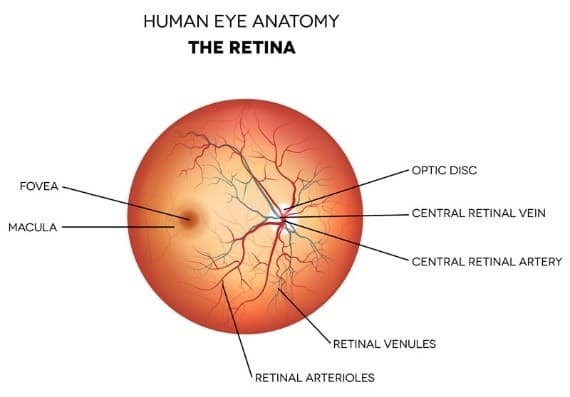
Retina: light-sensitive neural layer at eye’s back; converts photons to impulses via rods & cones

Retinal diseases: progressive disorders causing vision loss; include inherited, metabolic, vascular, neoplastic, mechanical categories

Inherited Retinal Diseases (IRDs): >300 gene mutations; examples Retinitis Pigmentosa, Leber Congenital Amaurosis, Stargardt Disease

Quick Facts for MCQs

Genetic Basis

  • Mutation spectrum: point changes, stop-codons, frame shifts addressed by tailored RNA modalities
  • Single-gene inheritance enables precision interventions over polygenic age-related retinal disorders

Tech & Schemes

  • Antisense-oligo: binds faulty mRNA, modulates splicing or translation
  • ADAR editing: converts adenosine→inosine on RNA, correcting coding errors without DNA cut
  • Suppressor tRNA & Ataluren: read-through technology restoring full-length protein in retinal cells

Clinical Focus

  • Safety edge: transient RNA action lowers off-target, germline risks versus DNA editing
  • Versatility: same delivery vectors adaptable across multiple IRDs, accelerating orphan-disease pipelines
  • Extension: ocular successes guiding similar RNA trials for cystic fibrosis, Duchenne, aniridia

Key Data Points

FeatureData-Point
Photoreceptor typesRods (low-light), Cones (colour, acuity)
Genes implicated in IRDs300 plus
Central retina termMacula
RNA therapy natureGenome unaltered; effects temporary
Antisense oligonucleotide useSpinal muscular atrophy; trials in Stargardt, Retinitis Pigmentosa
ADAR enzyme roleSite-specific RNA editing of point mutations
Suppressor tRNA targetPremature stop-codon mutations
Small-molecule examplePTC124 / Ataluren

Related UPSC Prelims PYQs

GS1 2019PYQ 1

'RNA interference (RNAi) technology has gained popularity in the last few years. Why?

GS-3S&T

10.India’s Snakebite Burden and Antivenom Gaps (Antivenom)

The Hindu
Illustration for India’s Snakebite Burden and Antivenom Gaps (Antivenom)

What & Where

Snakebite envenoming; WHO-listed neglected tropical disease with high fatality and disability burden

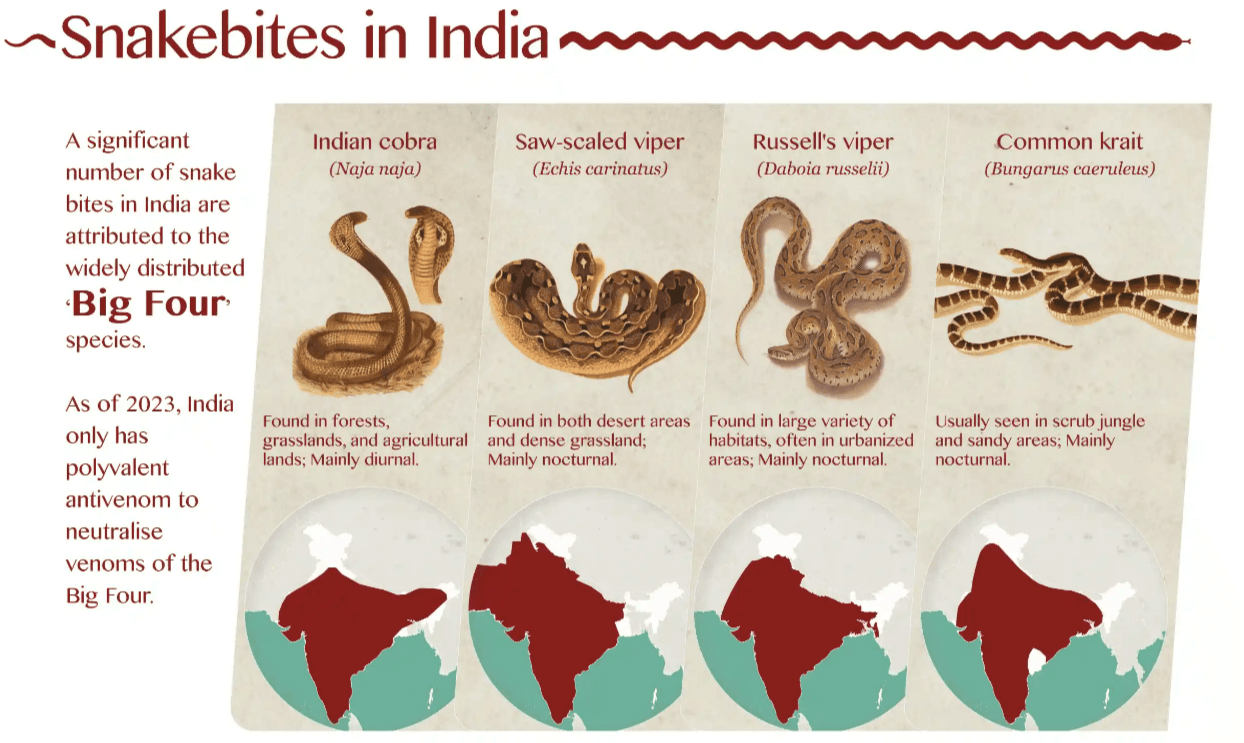
Big Four species; Indian cobra, common krait, Russell’s viper, saw-scaled viper supply venom for polyvalent antivenom

India; hosts >300 snake species, causes nearly 50 % of global snakebite deaths, rural belt most affected

Quick Facts for MCQs

Health Burden

  • Mortality; India contributes nearly half of global snakebite deaths despite highest antivenom output
  • Disability; amputations and tissue loss common, 3.6 million Indians disabled 2001-14
  • Seasonality; monsoon months spike cases among agricultural workers

Production & Supply

  • Antivenom process; horse immunisation → antibody harvest → purification into polyvalent vials
  • Capacity; several Indian firms, Irula Cooperative supplies majority raw venom
  • Gap; existing polyvalent ineffective against king cobra, pit viper regional variants

Legal & Policy

  • Wildlife Act; snake capture/milking banned without Chief Wildlife Warden permit, Schedule I needs Centre nod
  • NAP-SE 2023; targets 50 % cut in deaths and disabilities by 2030
  • WHO listing; global push for affordable, effective antivenoms through R&D funding

Tech & Schemes

  • Synthetic antibodies; AI-designed proteins and recombinant DNA promise safer, species-specific antidotes
  • Region-specific antivenom; IISc Bengaluru developing formulations tuned to local venom profiles
  • Rapid test kits; portable venom detection under trial to guide precise dosing

Social Concerns

  • Delay; superstition and faith healers prolong time-to-hospital in rural belts
  • Urban risk; poor waste management and flooding push snakes into cities
  • Economic hit; high antivenom cost and lost labour income deepen rural poverty

Key Data Points

FeatureData-Point
Global bites/yr5.4 million
Venom exposures/yr1.8–2.7 million
Global deaths/yr81,410–137,880
India annual deaths~58,000
Indian deaths 2001-14~1.2 million
Permanent disabilities India 2001-14~3.6 million
Risk of dying before 70 in India1 in 250
Venomous Indian species>60
Antivenom coverageOnly Big Four
Irula tribe venom share~80 %

Related UPSC Prelims PYQs

GS1 2008PYQ 1

For which one of the following snakes is the diet mainly composed of other snakes?

GS-3S&TQuick Bite

11.WHO Guidelines on Lower-Sodium Salt (Health Guidelines)

WHO

What & Where

LSSS: table salt with NaCl partly replaced by KCl, MgSO₄, CaCl₂

Guideline issuer: WHO 2025 global advisory against hypertension, CVD, strokes

Hotspot: India averages 10.4 g salt/day versus WHO limit 5 g

Quick Facts for MCQs

Health Impact

  • Hypertension control: sodium cut plus potassium boost lowers population blood pressure levels
  • CVD burden: 1.9 million sodium-linked deaths annually targeted for prevention
  • Palatability: mineral blend retains taste, aiding long-term adherence

WHO Guidance

  • Integrated programmes: LSSS adoption urged in public food schemes, hospitals, schools
  • Processed foods: manufacturers pressed to meet new sodium benchmarks via NaCl substitution
  • Labelling: clear front-of-pack sodium disclosure and standard low-sodium criteria recommended

Indian Regulation

  • Purity rule: edible salt must hold ≥97 % NaCl; anticaking agents ≤2.2 %
  • Labelling: mandatory numeric sodium display for low-sodium or sodium-free claims
  • Intake gap: 10.4 g/day average salt amplifies national hypertension challenge

Key Data Points

FeatureData-Point
Global diet-linked deaths8 million/year
Deaths from high sodium1.9 million/year
WHO salt limit (adults)<5 g salt ≈ 2 g sodium/day
Indian average intake10.4 g salt/day
LSSS key mineralsKCl, MgSO₄, CaCl₂
FSSAI NaCl purity rule≥97 % in edible salt
FSSAI anticaking cap2.2 %
Labelling claim thresholdNumeric sodium needed for “low” or “free” tags
GS-3S&TQuick Bite

12.ISRO Marks 100th Launch at SDSC (Space Launches)

The Hindu

What & Where

SDSC Sriharikota, Andhra Pradesh; venue for ISRO’s 100th overall launch

GSLV-F15 three-stage rocket, 11th use of indigenous cryogenic upper stage

NVS-02 second 2nd-generation NavIC satellite; regional navigation for India + 1,500 km neighborhood

Quick Facts for MCQs

Launch Vehicle & Site

  • GSLV-F15 payload capacity to GEO class ≈ 2–2.5 t (common figure)
  • Indigenous cryogenic stage improves payload by ~0.5 t over Russian variant
  • SDSC offers equatorial advantage, dual launchpads, sea-range safety

NavIC System

  • Constellation uses L1, L5, S-band signals; interoperable yet independent of GPS, GLONASS
  • 2nd-gen NVS series adds protected L1 civilian signal, better atomic clocks
  • Applications: marine fishing, rail safety, disaster management, telecom sync

ISRO Milestone Timeline

  • Chandrayaan-1 2008 lunar orbiter; discovered water molecules on Moon
  • MOM 2013 first Asian Mars orbiter; achieved in maiden attempt
  • Chandrayaan-3 2023 soft-landed near lunar south pole; lander Vikram, rover Pragyan

Key Data Points

FeatureData-Point
Overall SDSC launches100
Vehicle in spotlightGSLV-F15
GSLV flights so far17
Flights with Indian cryo stage11
Satellite placedNVS-02
NavIC generationSecond
NavIC operational sats7
Orbit split3 GEO, 4 GSO
Service footprintIndia + ≈1,500 km
First SDSC launchAug 1979, Rohini TP
PSLV-C37 record104 satellites, 2017
Recent flagship missionsChandrayaan-3 2023, Aditya-L1 2023

Related UPSC Prelims PYQs

CDS_GK, GS1 2018PYQ 1

भारत के उपग्रह प्रक्षेपित करने वाले वाहनों के संदर्भ में, निम्नलिखित कथनों पर विचार कीजिए :

CDS_GK, GS1 2025PYQ 2

Which one of the following PSLVs, launched by ISRO, is not correctly matched with their Missions?

GS-2Infrastructure

13.Mission 300 Africa Energy Summit Outcomes (Energy Access)

Down to Earth

What & Where

Mission 300 Africa Energy Summit; high-level meet on universal energy access, held at Dar es Salaam, Tanzania

Focus region: Sub-Saharan Africa; target 300 million new electricity connections by 2030

Aligns with UN SDG 7 on affordable, reliable, sustainable energy and clean cooking for all

Quick Facts for MCQs

International Cooperation

  • Partnership World Bank-AfDB-AU under Tanzanian chairmanship ensures finance, policy support
  • Compacts provide country-led roadmaps binding domestic and multilateral actors

Targets & Numbers

  • Goal 300 mn electrified equals halving current unelectrified Africans by 2030
  • Nigeria plus wider Sub-Saharan bloc hosts 80 % of world’s electricity-deprived population

Participating Countries

  • Signatories include landlocked (Chad, Niger, Malawi) and coastal (Côte d'Ivoire, Senegal) economies
  • Diverse energy mixes expected: hydro DR Congo, solar-wind Sahel states, gas Nigeria

Key Data Points

FeatureData-Point
VenueDar es Salaam, Tanzania
Core InitiativeMission 300: 300 mn people electrified by 2030
Organising BodiesGovt of Tanzania, African Union, AfDB, World Bank
People without reliable power600 mn+ Africans (≈80 % of global unelectrified)
National Energy Compacts presented12 countries
Sample Compact nationsChad, DR Congo, Nigeria, Tanzania, Zambia
SDG linkageSDG 7 – universal electricity & clean cooking by 2030
GS-2S&T

14.Paris AI Summit 2025 Global Governance (AI Governance)

Indian Express

What & Where

Global summit on AI regulation, innovation, ethical governance scheduled 10-11 Feb 2025, Paris, France

Co-chaired by French President Emmanuel Macron and Indian PM Narendra Modi

Successor to AI Safety Summits 2023 (UK) & 2024 (South Korea)

Quick Facts for MCQs

Legal & Policy

  • Governance: draft frameworks for ethical, secure, inclusive AI deployment
  • Regulation: balance innovation incentives with risk mitigation; avoid overregulation choke
  • Competition: scrutinise market concentration in foundational models held by few tech giants

Economic Angle

  • Competitiveness: bolster European AI capacity against US and Chinese dominance
  • Investment: deliberate mega-projects like US $500 bn Stargate compute cluster
  • Affordability: promote low-cost, widely accessible AI models to cut development expenses

India’s Role

  • Leadership: Modi’s co-chair spot signals India’s rising voice in global digital rule-making
  • Collaboration: deepens Indo-French strategic tech ties, complementing IndiaAI mission
  • Soft power: showcases Digital Public Infrastructure success as replicable template

Security Dimension

  • Safety: ensure AI systems align with trust, transparency, public interest
  • International cooperation: share best practices for threat detection and containment
  • Ethical guardrails: embed principles preventing misuse in defence, surveillance, disinformation

Key Data Points

FeatureData-Point
Summit nameParis AI Summit 2025
Host countryFrance
Venue cityParis
Dates10-11 February 2025
ChairEmmanuel Macron
Co-ChairNarendra Modi
Precedent meetsBletchley Park 2023, Seoul 2024
Core focusGlobal AI governance & safety
Key participantsHeads of state, researchers, industry, civil society
Highlighted big tech firmsMicrosoft, Google, Amazon, Meta

Related UPSC Prelims PYQs

GEO_GS, GS1 2025PYQ 1

ग्रैण्ड पैलै (Grand Palais) पेरिस में नवम्बर 2025 में आयोजित होने वाले AI शिखर सम्मेलन के सन्दर्भ में, निम्नलिखित कथनों पर विचार कीजिए :

GEO_GS, GS1 2024PYQ 2

Which of the following statements about GPAI (Global Partnership on Artificial Intelligence) is/are correct?

GS-2Scheme

15.TEAM Initiative for MSME E-Commerce (MSME Digital Commerce)

BW

What & Where

Definition: Trade Enablement and Marketing (TEAM) – MSME Ministry scheme to onboard small firms onto Open Network for Digital Commerce (ONDC).

Core process: Digital storefront, payments, logistics & workshop support delivered via National Small Industries Corporation under RAMP programme.

Geography: Pan-India focus, especially Tier-2/3 city clusters.

Quick Facts for MCQs

Tech & Schemes

  • ONDC-based architecture enables platform-neutral listing, discovery, transaction, delivery.
  • Dedicated TEAM portal offers catalogue tools, finance links, grievance redress.

Economic Angle

  • Productivity: Digital market access expected to scale revenue and reduce intermediary costs for 5 lakh MSMEs.
  • Budget utilisation tied to RAMP’s broader $808 mn World Bank-backed productivity agenda.

Social Concerns

  • Inclusivity: Mandated 50 % slots for women-run enterprises; focus also on SC/ST clusters.
  • Outreach: Workshops structured to close digital literacy gaps in non-metro areas.

Key Data Points

FeatureData-Point
Launch ministryMSME
Parent programmeRaising and Accelerating MSME Productivity (RAMP)
Implementation agencyNational Small Industries Corporation
Budget outlay₹277.35 crore
Scheme span2025-2028 (3 years)
MSME onboarding target5 lakh units
Planned workshops150 + in Tier-2/3 cities
Women-led participation goal50 % of beneficiaries
Key enablerOpen Network for Digital Commerce (ONDC)
Main support pillarsDigital storefronts, payment integration, logistics facilitation
GS-2Scheme

16.National Critical Minerals Mission Approved (Critical Minerals)

The Print

What & Where

Strategic mission under Ministry of Mines to secure critical minerals for energy, electronics, defence sectors.

Covers end-to-end chain: domestic/offshore exploration, mining, processing, recycling, overseas asset acquisition.

India-centric with global tie-ups for lithium, cobalt, nickel, REEs and allied resources.

Quick Facts for MCQs

Legal & Policy

  • MMDR-2023; amendments enable auction of 24 critical minerals, composite licences.
  • Approvals; single-window, time-bound clearances for mining and processing projects.
  • Stockpile; mandated national reserve ensures long-term strategic autonomy.

Economic Angle

  • Funding; ₹34,300 crore aims to cut import bill, boost domestic jobs.
  • Incentives; exploration grants, sustainable recovery subsidies, processing parks.
  • Overseas equity; PSUs/private firms encouraged to buy foreign mineral assets.

Tech & Schemes

  • Centres of Excellence; advance beneficiation, battery-grade refining technologies.
  • Recycling; push to reclaim EV battery and REE magnet materials.
  • R&D grants; focus on low-carbon, high-efficiency extraction methods.

Key Data Points

FeatureData-Point
Parent ministryMinistry of Mines
AnnouncementUnion Budget 2024-25
Cabinet-cleared govt spend₹16,300 crore
PSU / private investment₹18,000 crore
Total planned corpus₹34,300 crore
Core objectiveSupply-chain security for critical minerals
Value-chain spanExploration → Beneficiation → Processing → Recycling
Priority mineralsLi, Co, Graphite, Nickel, REEs, Ti, W
Legislative supportMMDR Act 1957, amended 2023
Stockpile planNational reserve of critical minerals

Related UPSC Prelims PYQs

CDS_GK, GS1 2025PYQ 1

Consider the following statements:

CDS_GK, GS1 2024PYQ 2

Recently the Government of India entered into an agreement for a lithium exploration and mining project with which one among the following countries?

GS-2Scheme

17.PM Surya Ghar Rooftop Solar Scheme (Rooftop Solar)

The Hindu
Illustration for PM Surya Ghar Rooftop Solar Scheme (Rooftop Solar)

What & Where

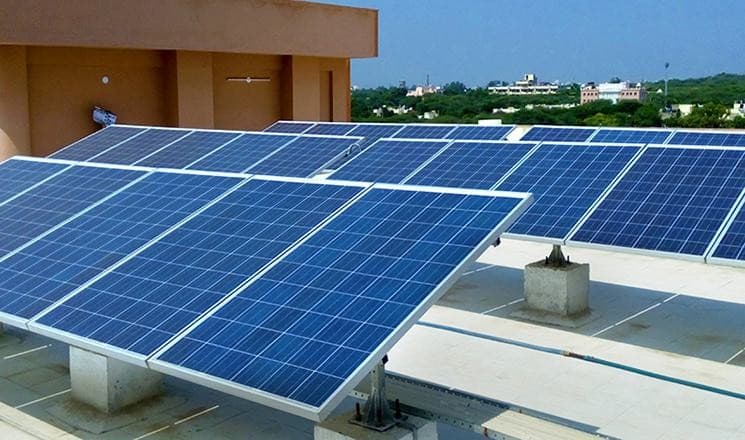
Centrally sponsored PM Surya Ghar Muft Bijli Yojana subsidises residential rooftop solar, delivering up to 300 free electricity units/month.

Nationwide roll-out by Ministry of New & Renewable Energy; DISCOMs function as State Implementation Agencies.

Launched 15 Feb 2024; targets installation on 1 crore homes by FY 2026-27.

Quick Facts for MCQs

Implementation Status

  • Progress: 8.5 lakh rooftops energised within first operational year.
  • Agency: DISCOMs earn graded incentives for capacity added above baseline.

Economic Angle

  • Savings-House: Beneficiary families slash annual bills by about ₹18,000.
  • Savings-Govt: Scheme projected to cut central power subsidy ₹75,000 crore yearly.

Environmental Impact

  • Decarbonisation: Distributed solar increases renewable share, curbing coal dependence.
  • Emission-cut: Rooftop generation lowers transmission losses, shrinking carbon footprint.

Key Data Points

FeatureData-Point
Total financial outlay₹75,021 crore
DISCOM incentive pool₹4,950 crore
Subsidy up to 2 kW60 % of cost
Subsidy 2–3 kW slab40 % of additional cost
Maximum subsidised capacity3 kW
Free electricity entitlement300 units/household/month
Target beneficiary homes1 crore
Completion timelineFY 2026-27
Expected household saving₹18,000 per year
Govt saving on power outlay₹75,000 crore/year
Current installations (≈1 yr)8.5 lakh households
Eligibility keyIndian citizen with own roof & valid connection
Nodal ministryMNRE
Launch date15 Feb 2024

Related UPSC Prelims PYQs

CDS_GK, GS1 2025PYQ 1

Consider the following statements about ‘PM Surya Ghar Muft Bijli Yojana’ :

CDS_GK, GS1 2020PYQ 2

Saubhagya, a Government of India Scheme, relates to which of the following areas?

GS-1Editorial

18.Crosspathy Debate on Mixed Prescriptions (Medical Regulation)

The Hindu

What & Where

Crosspathy: AYUSH practitioners prescribing modern-medicine treatments beyond authorised scope.

Directive: Dec 2024 Maharashtra FDA permits homeopaths with pharmacology certificate to prescribe allopathic drugs.

Geography: Order limited to Maharashtra; opposed by national bodies NMC & IMA.

Quick Facts for MCQs

Legal & Policy

  • Regulation: IMC Act 1956 & 2002 ethics code prohibit cross-system practice without qualification.
  • Permission: Crosspathy legal only when state expressly authorises, per SC rulings.
  • Conflict: Maharashtra order clashes with NMC Act 2019 and Central Council for Homeopathy norms.

Human Resource Gap

  • Shortage: Rural CHCs lack specialists, driving state to tap AYUSH pool.
  • Distribution: Urban clustering persists despite favourable national doctor ratio.
  • Deterrents: Low pay, poor amenities reduce MBBS interest in rural posts.

Patient Safety

  • Risk: Inadequate modern-medicine training may cause misdiagnosis and wrong therapy.
  • Liability: SC terms unauthorised cross-practice medical negligence.
  • Employment: IMA fears dilution of MBBS roles, compromised care standards.

Key Data Points

FeatureData-Point
Issuing authorityMaharashtra FDA
Directive dateDecember 2024
Supreme Court precedentPoonam Verma vs Ashwin Patel, 1996
MCI ethics regulation2002 Code under IMC Act 1956
Doctor-population ratio1:836 (WHO norm 1:1000)
CHC specialist shortfall80 % ; need 21,964, have 4,413
Allopathic doctors (2022)>13 lakh
AYUSH practitioners (2022)>5.5 lakh

Related UPSC Prelims PYQs

CDS_GK, GEO_GS 2024PYQ 1

भारत की पारम्परिक चिकित्सा पद्धतियों के संदर्भ में निम्नलिखित में से कौन-सा कथन सही नहीं है?

CDS_GK, GEO_GS 2022PYQ 2

Which of the following are the parts of the Government of India's AYUSH initiative?

Ready to practice?

Test your knowledge with our UPSC test series.

Start Free Trial