UPSC Current Affairs

19 topicsGS-1: 4GS-2: 5GS-3: 10
0/19 done
GS-2PolityQuick Bite

1.Blood Money versus Plea Bargaining (Criminal Justice)

The Hindu

What & Where

Blood money (diya) — monetary compensation under Sharia for unintentional murder or when heirs waive qisas.

Current case: Indian nurse on Yemen death row; talks ongoing for diya-based acquittal.

Even after victim–offender settlement, Yemen state can still impose penal sanction.

Quick Facts for MCQs

Legal & Policy

  • Constitution Article 20 limits ex-post penalties; diya absent from IPC/BNSS corpus.
  • Plea bargaining requires voluntary written application and judicial satisfaction.
  • State prosecution in India retains authority irrespective of private settlements.

International Example

  • West Asian nations incl. Saudi, UAE, Yemen operationalise diya with set tariff values.
  • Diplomatic missions often mediate fundraising from expatriate communities for diya.

Historical Context

  • Arthashastra prescribed quantified fines scaled by varna and gravity.
  • Manusmriti emphasised monetary atonement when corporal punishment waived.

Key Data Points

FeatureData-Point
Governing faith-lawSharia
Crime types eligible for diyaUnintentional homicide, culpable homicide
India’s stance on diyaNot recognised in domestic law
Rough Indian analoguePlea bargaining (CrPC Ch. XXIA)
Plea bargaining brought byCriminal Law (Amendment) Act 2005
Offence ceiling for plea dealMax imprisonment < 7 years
Excluded offencesMurder, rape, crimes vs women/children <14
Victim compensation via pleaPermitted, court-monitored
Classical Indian precedentArthashastra & Manusmriti fine-based reparations
GS-3Economy

2.Recent Rupee Depreciation Analysis (Exchange Rate)

The Hindu
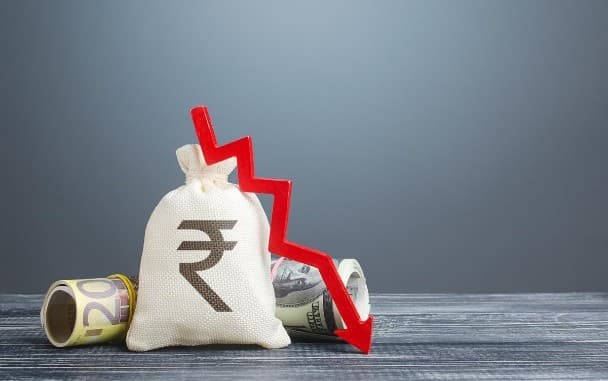
Illustration for Recent Rupee Depreciation Analysis (Exchange Rate)

What & Where

Devaluation – planned cut in currency value by Govt/RBI under fixed/pegged regime.

Depreciation – market-driven rupee fall under managed-float; recent drop versus US $ after long stability.

Geography focus – India’s external sector: oil-import dependence, FPI flows, Fed-led dollar surge.

Quick Facts for MCQs

Economic Drivers

  • Inflation; domestic price spike erodes real rupee, hurts export cost edge.
  • Capital-outflows; FPIs exit amid higher US yields and risk aversion.
  • Geopolitics; Ukraine war lifts oil prices, bloating current-account deficit.

Macroeconomic Impacts

  • Imports; dearer energy & inputs widen CAD and pressure fiscal math.
  • Inflation; pass-through from expensive imports pushes CPI/WPI upward.
  • Debt-service; government and corporates face heavier rupee repayments.

Policy Toolkit

  • Intervention; RBI spot sales, swap lines, NDF monitoring to curb volatility.
  • Rates; calibrated repo hikes raise rupee carry, lure portfolio inflows.
  • Fiscal; export incentives, import substitution, FDI facilitation ease imbalance.

Way Ahead

  • Framework; transparent, consistent exchange-rate stance boosts investor confidence.
  • Production; Make-in-India, logistics upgrades cut import reliance, raise export depth.
  • Reserves; diversify into non-USD assets to hedge against dollar strength.

Key Data Points

FeatureData-Point
Decision maker: DevaluationGovt / RBI policy move
Decision maker: DepreciationSupply-demand in forex market
Major internal dragWidening trade & fiscal deficits
Top external dragUS Fed rate hikes strengthening dollar
Immediate import impactCostlier crude, electronics, raw materials
RBI fire-power (Aug 2023)≈ $600 bn forex reserves
Tool: FX interventionRBI sells $ to absorb rupee demand
External-debt effectServicing cost rises when rupee weakens

Related UPSC Prelims PYQs

CDS_GK, GS1 2021PYQ 1

निम्नलिखित कथनों पर विचार कीजिए :

CDS_GK, GS1 2025PYQ 2

मुद्रा मूल्यह्रास (Currency depreciation) किस प्रकार से निवल निर्यात (net exports) की वृद्धि को प्रेरित कर सकता है?

GS-3EconomyQuick Bite

4.UPI Access for PPI Wallet Holders (Digital Payments Reform)

The Hindu

What & Where

RBI allows full-KYC Prepaid Payment Instrument (PPI) users to access UPI via third-party apps across India

PPIs include digital wallets, gift cards; UPI is NPCI’s instant inter-bank mobile payment rail

Change removes issuer-app restriction, expanding payment flexibility within domestic digital ecosystem

Quick Facts for MCQs

Legal & Policy

  • Amendment issued under Master Direction on PPIs, overriding earlier issuer-only usage clause
  • Objective enhances consumer choice, interoperability, and aligns with RBI’s payments vision 2025

Tech & Schemes

  • Integration requires PPI identifier mapping on UPI rails by NPCI
  • Full-KYC status ensures transaction limits on par with bank accounts

Economic Angle

  • Expanded access expected to lift UPI volumes beyond current 70 % market share
  • PPI-UPI convergence may deepen fintech penetration among lightly banked users

Key Data Points

FeatureData-Point
Regulator issuing amendmentReserve Bank of India
EligibilityFull-KYC PPI holders
Third-party apps enabledPhonePe, Google Pay, Paytm (indicative)
PPIs in circulation≈ 1.14 billion (banks + non-banks)
UPI share in 2023-24 digital transactions~70 %
Oct 2024 UPI volume16.58 billion transactions
Oct 2024 UPI value₹ 23.49 lakh crore
YoY growth Oct 2024~45 %
International pushUPI & RuPay being promoted abroad
Implementation year of regulation2025

Related UPSC Prelims PYQs

GS1 2017PYQ 1

Which of the following is a most likely consequence of implementing the ‘Unified Payments Interface (UPI)’?

GS1 2018PYQ 2

पहचान प्लेटफॉर्म ‘आधार’ खुला (ओपन) ‘एप्लिकेशन प्रोग्रामिंग इंटरफेस’ (ए.पी.आई.) उपलब्ध कराता है। इसका क्या अभिप्राय है ?

GS-1History

5.Kuka Rebellion Punjab 1872 (19th-Century Revolt)

Indian Express
Illustration for Kuka Rebellion Punjab 1872 (19th-Century Revolt)

What & Where

Anti-British uprising by Namdhari (Kuka) Sikhs combining religious reform with political resistance.

Peak clashes January 1872 at Malerkotla & Malaudh Fort, eastern Punjab (then British India).

Commemorated each 17 January as Kuka Martyrs’ Day at Namdhari Shaheed Smarak, Malerkotla.

Quick Facts for MCQs

Causes & Ideology

  • Religious-reform; banned meat, liquor, foreign cloth, idol worship.
  • Cow-protection central; slaughter inflamed community sentiment.
  • Swadeshi-style boycott signalled rejection of colonial economy.

Timeline & Battles

  • 13 Jan 1872 Malerkotla clash following cow slaughter.
  • 15 Jan 1872 assault on pro-British Malaudh Fort.
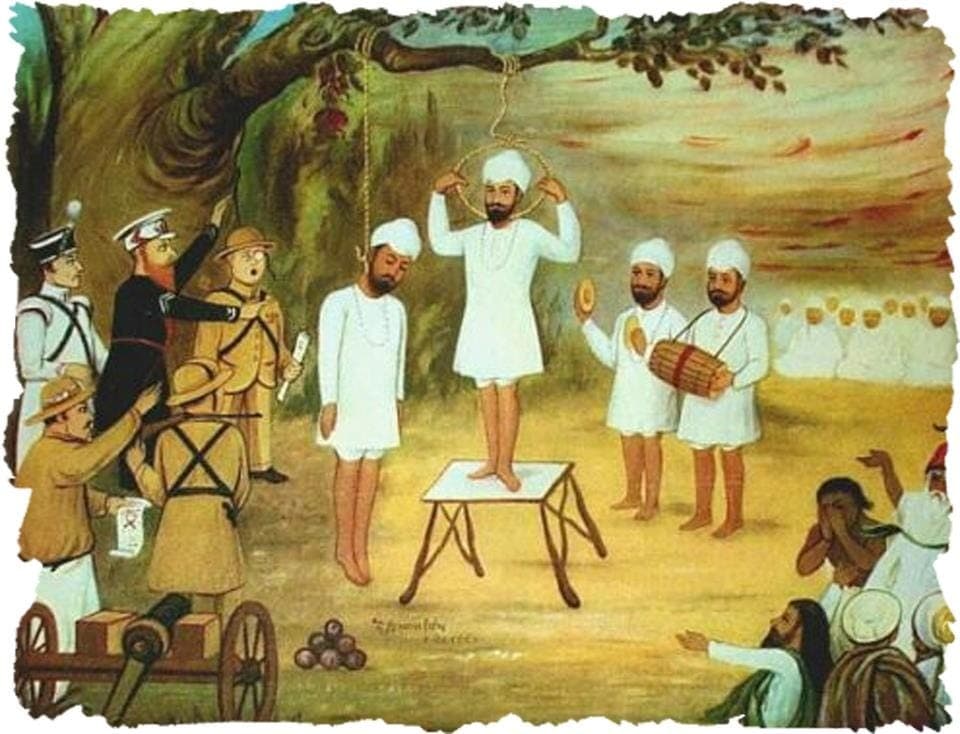
  • 17-18 Jan 1872 cannon executions after rebel surrender.

Repression Measures

  • Deputy Commissioner Cowan ordered instant, trial-less executions.
  • Thousands compelled to watch, intended as deterrent.
  • Section 144-type restrictions; Namdhari assemblies and arms banned.

Legacy & Inspiration

  • Ram Singh’s non-cooperation foreshadowed later Gandhian tactics.
  • Martyrdom of 12-year-olds Bishan & Waryam Singh fuels Punjabi folklore.
  • Sect regrouped at Bhaini Sahib, sustaining subterranean resistance.

Key Data Points

FeatureData-Point
Alternate nameNamdhari movement
Founder-leaderSatguru Ram Singh
Peak year1872
Spark incidentCow slaughter at Malerkotla
Key attack dates13 Jan 1872 & 15 Jan 1872
British officerJohn Lambert Cowan
Execution methodRebels blown from cannons
Rebels executed49 on 17 Jan; 17 on 18 Jan
Youngest martyr age12 years
Exile destinationRangoon, Burma

Related UPSC Prelims PYQs

GS1 2020PYQ 1

With reference to the history of India, "Ulgulan" or the Great Tumult is the description of which of the following events?

GS-1HistoryQuick Bite

6.Kokborok Language Script Debate (Tribal Language Script)

The Hindu

What & Where

Kokborok – Sino-Tibetan language of Borok (Tripuri) tribes, Tripura

Spoken chiefly in all eight Tripura districts; minor presence in adjoining Northeast states

Current flashpoint: demand to allow Roman script in textbooks, official work

Quick Facts for MCQs

Historical Roots

  • Chronicle Rajratnakar first written in Kokborok using Koloma in 1st century AD
  • Etymology Kok = language, Borok = man signifying language of the Borok people
  • Continuous oral-literary presence across Tripuri royal era

Language Policy

  • Tripura Assembly site of repeated script agitations since 1979 recognition
  • Two expert commissions endorsed Roman but recommendations unimplemented
  • Script choice affects curriculum, official notifications, competitive exams

Social Concerns

  • Tribal bodies view Bengali or Devanagari imposition as cultural dilution risk
  • Roman script seen as neutral, identity-affirming, internet friendly
  • Detentions of TSF members highlight growing youth mobilisation

Key Data Points

FeatureData-Point
Language familySino-Tibetan
2011 Census share23.97 % of Tripura population
Official status year1979 (with Bengali)
Present writingMainly Bengali script; Roman widely used informally
Original scriptKoloma
Favoured script by tribesRoman
Govt-preferred scriptBengali; considers Devanagari option
Key protest groupTwipra Students’ Federation
Supportive panelsShyama Charan Tripura Commission; Pabitra Sarkar Commission
GS-3Environment

7.2025 International Year of Glaciers Preservation (Glacier Conservation)

Hindustan Times
Illustration for 2025 International Year of Glaciers Preservation (Glacier Conservation)

What & Where

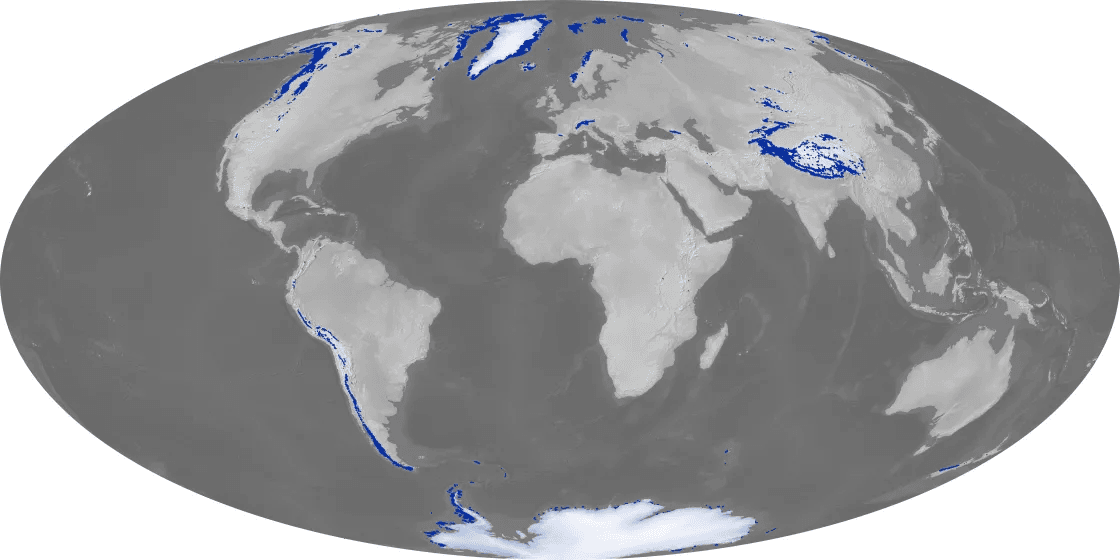
Glaciers = land-based, slow-flowing snow–ice bodies storing ≈2 % of Earth’s water, relics of last Ice Age.

Spatial spread: polar Greenland–Antarctica plus high-mountain tropics/HKH (“Third Pole”) owing to low insolation or altitude.

UN designates 2025 International Year of Glaciers’ Preservation; 21 March becomes annual World Day for Glaciers.

Quick Facts for MCQs

Environmental Impact

  • Sea-level-rise >60 m potential; present melt already accelerates coastal erosion and storm surge risk.
  • Albedo loss warms oceans, disturbs jet stream/polar vortex, triggering extreme weather worldwide.
  • Arctic sea-ice decline may render polar bears extinct by 2100; walrus, fisheries, tundra ecosystems stressed.

Regional Snapshot

  • Hindu Kush Himalaya warming twice global average; high Glacial-Lake-Outburst-Flood vulnerability.
  • HKH stores largest ice outside poles; nicknamed “Water Tower of Asia”.
  • Amu Darya summer flow 27 % from glaciers; La Paz, Ladakh ice-stupas rely on meltwater.

International Response

  • UNGA 2022 resolution flagged glacier urgency; 2025 Tajikistan conference + GEF IWC11 prioritize preservation.
  • WGMS under UNEP-UNESCO-WMO provides long-term cryosphere datasets.
  • World Glacier Day & International Year aim global awareness, funding, policy traction.

Proposed Activities

  • Outreach: global media plus youth ambassadors to spotlight GHG-glacier linkage.
  • Capacity-building: train communities, policymakers on glacier dynamics, DRR integration.
  • Finance: tap governments, private sector, philanthropy for monitoring, research, adaptation projects.

Key Data Points

FeatureData-Point
International Year2025
World Day for Glaciers21 March
Global glaciers (count)> 275,000
Global glacier area≈ 7 lakh km²
WGMS sites monitored210,000
Inevitable loss by 2100> 33 %
HKH range length≈ 3,500 km
HKH river basins served12 (10 transboundary)
Ice-sheet freshwater share≈ 70 %
Sea-level rise if all melt> 60 m (195 ft)

Related UPSC Prelims PYQs

CDS_GK 2023PYQ 1

The resolution adopted by the United Nations General Assembly on 3 March, 2021 decided to celebrate the year 2023 as the International Year of

GS-3S&T

8.Satish Dhawan Space Centre Expansion (Spaceport Expansion)

Indian Express
Illustration for Satish Dhawan Space Centre Expansion (Spaceport Expansion)

What & Where

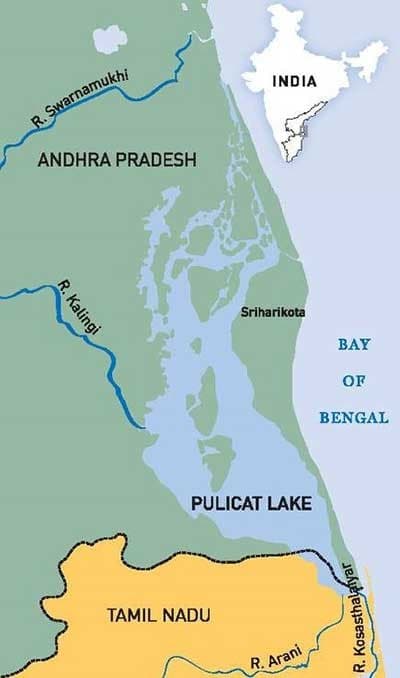
Satish Dhawan Space Centre (SDSC) — ISRO’s main launch complex on Sriharikota barrier island, Tirupati district, Andhra Pradesh.

Hosts launch pads for sounding rockets, PSLV, GSLV; Union Cabinet okays a third pad for rising mission load.

Island separates Pulicat Lake from Bay of Bengal, enabling safe eastward sea-overflight near the Equator.

Quick Facts for MCQs

Location Advantages

  • East-coast launch gains Earth-rotation velocity, boosts payload to orbit.
  • Sparsely inhabited site lowers risk; debris predicted to fall in ocean.
  • Near-equator latitude suits geostationary transfer trajectories.

Historical Timeline

  • 1968: Site selected by Vikram Sarabhai; surveys backed by Abid Hussain.
  • 1971: Facility becomes operational with sounding rocket programme.
  • 2002: Renamed to honour pioneering ISRO chairman Satish Dhawan.

Tech & Schemes

  • Infrastructure supports sounding rockets, PSLV, GSLV, future Gaganyaan crewed flights.
  • Third pad expected to raise annual launch capacity and open slots for private vehicles.

Key Data Points

FeatureData-Point
Operational since9 Oct 1971 (Rohini-125)
Initial nameSriharikota Range (SHAR)
Renamed as SDSC2002, after Satish Dhawan
District / StateTirupati, Andhra Pradesh
Land acquired≈40,000 acres (1968)
Geographic settingBarrier island between Pulicat Lake & Bay of Bengal
Latest move3rd launch pad sanctioned by Union Cabinet
Flagship missionsPSLV, GSLV, Chandrayaan, Mangalyaan

Related UPSC Prelims PYQs

GS1 2008PYQ 1

ISRO successfully conducted a rocket test using cryogenic engines in the year 2007. Where is the test-stand used for the purpose, located?

GS1 2018PYQ 2

भारत के उपग्रह प्रक्षेपित करने वाले वाहनों के संदर्भ में, निम्नलिखित कथनों पर विचार कीजिए :

GS-3S&T

9.Rare Planet Parade Alignment 2025 (Celestial Alignment)

Times of India
Illustration for Rare Planet Parade Alignment 2025 (Celestial Alignment)

What & Where

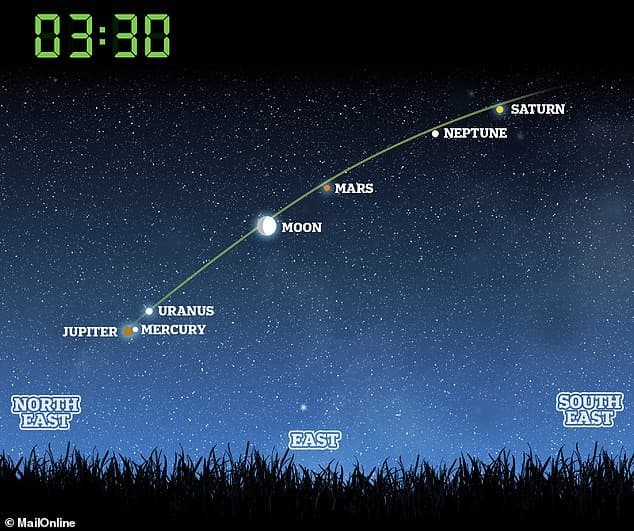
Planet parade = simultaneous visibility of several planets aligned along the ecliptic in night or morning sky.

Alignment forms curved arc; lasts briefly because planets have differing orbital speeds and distances.

Jan 2025 evening sky shows Venus-Saturn-Jupiter-Mars-Uranus-Neptune in one sightline.

Quick Facts for MCQs

Astronomical Education

  • Outreach; boosts public interest in astronomy and celestial mechanics.
  • Schools, planetariums schedule observation events.

Cultural Relevance

  • History; alignments often interpreted as omens or folklore inspiration.
  • Modern media revives ancient sky-watch traditions.

Scientific Exploration

  • Researchers exploit combined visibility to compare planetary light spectra and motion.
  • Distant Uranus, Neptune observation aided when clustered with brighter inner planets.

Key Data Points

FeatureData-Point
Official term statusNot recognised by IAU; popular usage
Alignment planeEcliptic plane of Solar System
Sky timing optionsMorning sky or evening sky
2025 participating planetsVenus, Saturn, Jupiter, Mars, Uranus, Neptune
Key viewing monthJanuary 2025
GS-3S&T

10.Twigstats Genetic Ancestry Tool (Genetic Analysis)

The Hindu
Illustration for Twigstats Genetic Ancestry Tool (Genetic Analysis)

What & Where

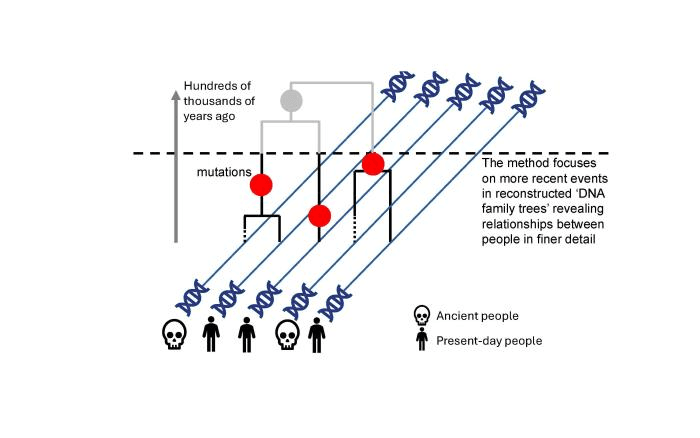
Twigstats; advanced R/C++ tool reconstructing genetic family trees via recent DNA mutations

Applied to ancient DNA from Northern & Central Europe, 500 BC – 1000 AD

Integrates haplotypes, rare variants & SNPs under a time-stratified ancestry framework

Quick Facts for MCQs

Tech & Schemes

  • Compatibility; R interface allows plug-in of custom demographic modules
  • C++ backend supplies high-speed computation for millions of variants
  • Complements SNP-only panels when closely related ancestries overlap

Methodological Edge

  • Time-stratified modeling minimises era-based demographic confounders
  • Recent-mutation tracking resolves individual links beyond population averages
  • Genealogical trees directly connect ancient remains with modern genomes

Research Scope

  • Enables retrospective mapping of pathogen susceptibility across millennia
  • Tests migration narratives like Celtic, Roman or Viking movements
  • Supports forensic pedigree reconstruction in low-quality DNA cases

Key Data Points

FeatureData-Point
Tool typeGenetic ancestry analysis software
Core inputsAncient + modern DNA mutations
Key region testedNorthern & Central Europe
Temporal span500 BC – 1000 AD
Analytical approachTime-stratified ancestry tracing
Combined techniquesHaplotypes, rare variants, SNPs
Programming supportR interface, C++ backend
Output granularityIndividual-level ancestral links
GS-3S&TQuick Bite

11.Gravity Energy Storage Technology (Energy Storage Tech)

Down to Earth
Illustration for Gravity Energy Storage Technology (Energy Storage Tech)

What & Where

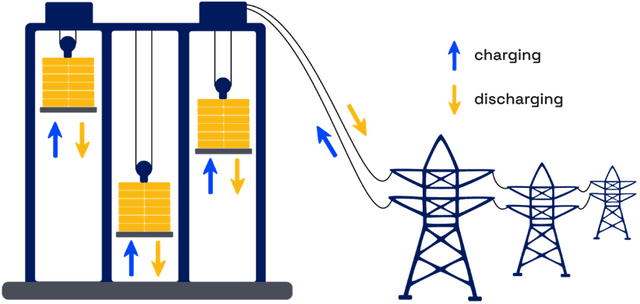
Definition: mechanical system storing electricity by lifting heavy mass, later releasing it to spin turbine.

Process: surplus power → hoist piston/weights; demand phase → descent forces fluid/air through generator.

Geography: installable on brownfield sites, mine shafts, tall towers; no specific topography unlike pumped-hydro.

Quick Facts for MCQs

Technology & Operation

  • Hoisting system: electric motors/cranes lift 35-10,000 t masses during low-cost power windows.
  • Discharge: weight descent powers pump-turbine; efficiency 70-85 %.
  • Modularity: stackable blocks/pistons enable MWh–GWh scale designs.

Advantages

  • Longevity: 20-40 year life, no capacity fade like batteries.
  • Maintenance: few moving parts, lower OPEX than electro-chemical systems.
  • Safety: no fire risk, non-toxic components.

Indian Context

  • Grid need: addresses diurnal solar dips after 6 pm, reducing diesel peaker dependence.
  • Complementary schemes: National Solar Mission, green open-access rules favour storage addition.
  • Land use: disused open-cast mines in Jharkhand, Rajasthan offer ready shafts for early pilots.

Key Data Points

FeatureData-Point
Core energy formGravitational potential
Typical mediumSolid concrete blocks or water-filled piston
Round-trip lifeDecades; minimal mechanical wear
Site flexibilityWorks in plains, urban fringes, retired mines
Main rival techLithium-ion battery storage
Chemical usageNil; hence low disposal hazard
Grid roleMitigates solar-wind intermittency
India’s 2030 RE goal500 GW non-fossil capacity
GS-3S&TQuick Bite

12.ISRO CROPS Space Agriculture Module (Space Agriculture)

Indian Express

What & Where

CROPS Module: ISRO’s mini-greenhouse to study plant growth under microgravity aboard orbital platform.

Methods: hydroponics, aeroponics, porous-clay soil-analog with slow-release fertiliser.

Geography: Developed in India, operated remotely from Earth, deployed in low-Earth orbit.

Quick Facts for MCQs

Tech & Schemes

  • Microcontroller-based climate control maintains temperature, humidity, airflow automatically.
  • Sensors relay real-time plant health data to ISRO ground stations.
  • Modular design allows swap-in of varied crop trays for rapid experimentation.

Life-Support Benefits

  • Carbon-cycle: plants convert astronaut-exhaled CO₂ into breathable oxygen.
  • Waste-loop: plant biomass potentially composted for fertiliser, closing nutrient loop.
  • Psychological: green habitat shown to reduce crew stress on long missions.

Crop Selection Criteria

  • Nutrient-dense; short growth cycle; compact morphology for limited cabin volume.
  • Nitrogen-fixing legumes aid internal nutrient regeneration.
  • Edible fresh; minimal post-harvest processing required in microgravity.

Key Data Points

FeatureData-Point
Implementing agencyIndian Space Research Organisation (ISRO)
CROPS full formCompact Research Module for Orbital Plant Studies
First seed germinatedLobia / black-eyed pea
Lighting systemLED array simulating sunlight
Water deliveryEarth-operated, closed loop
Key growth mediaHydroponic solution, aeroponic mist, porous clay
Core benefitIn-situ food & life-support for long-duration missions
Ideal space cropsLeafy greens, beans/peas, radish, carrot, wheat, rice, tomato, strawberry
Air-quality roleCO₂ uptake, O₂ release, humidity regulation

Related UPSC Prelims PYQs

GS1 2010PYQ 1

An objective of the National Food Security Mission is to increase the production of certain crops through area expansion and productivity enhancement in a sustainable manner in the identified districts of the country. What are those crops?

GS-3S&TQuick Bite

13.Trichophyton Indotineae Naming Debate (Antifungal Resistance)

The Hindu

What & Where

Trichophyton indotineae: novel dermatophyte causing multi-drug-resistant tinea (ringworm) skin disease

First isolated 2020 in India-Nepal patients; earlier samples Australia, Oman, Iran; now in > 40 countries

Region-specific name “indotineae” criticised as stigmatic, origin scientifically uncertain

Quick Facts for MCQs

Taxonomy & Naming

  • WHO guidance: avoid geographic tags; prefer symptom/severity descriptors
  • Critics: “indotineae” breaches fungal nomenclature ethics, invites prejudice
  • Petition involves dermatologists from India and 13 other countries

Health Dimension

  • Infection difficult to treat owing to multi-drug resistance
  • Causes widespread, chronic ringworm outbreaks across continents
  • Heightens need for new antifungal strategies and stewardship

Social Concerns

  • Geographic naming risks stigma, misinformation, travel or trade barriers
  • Historical parallels show lasting harm from mislabels (e.g., Spanish flu)
  • Neutral naming sought to protect affected communities and public trust

Key Data Points

FeatureData-Point
Pathogen typeDermatophyte fungus (genus Trichophyton)
Year described2020
Discovering teamJapanese dermatologists
Initial case regionsIndia & Nepal
Global presenceReported from 40+ countries
Drug profileOften resistant to standard antifungals
Pre-2010 evidenceAustralia, Oman, Iran isolates
Contested epithet“indotineae” (India-linked)
Naming rulebookWHO 2015 best practices, ICD
Supportive bodiesWHO, OIE, FAO, ASM
Past misnomer modelsSpanish flu, Delhi boil
GS-2Editorial

14.WEF Global Cybersecurity and Risks Reports 2025 (WEF Reports)

WEF
Illustration for WEF Global Cybersecurity and Risks Reports 2025 (WEF Reports)

What & Where

World Economic Forum issues forward-looking reports benchmarking global cybersecurity and multidomain risks.

Global Cybersecurity Outlook 2025 (with Accenture) scans threat evolution and organisational resilience gaps.

Global Risks Report 2025 ranks short-, medium- and long-term global perils via expert survey.

Quick Facts for MCQs

Security Dimension

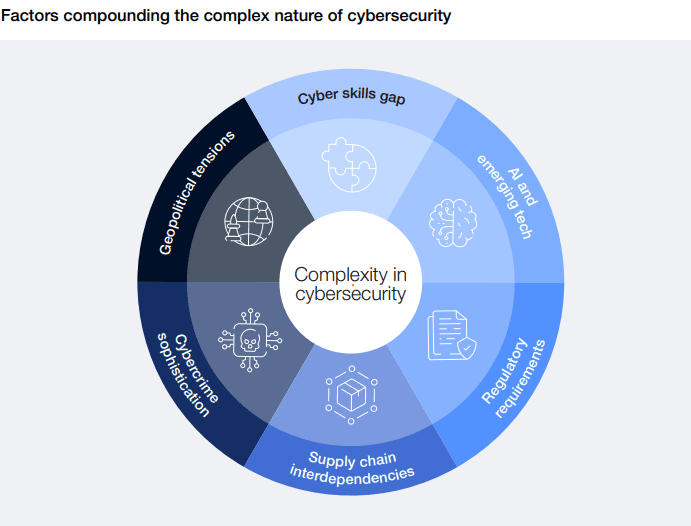
  • Escalation: Cybercrime sophistication rising amid geopolitical friction and new tech.
  • Infrastructure: Public utilities, supply chains flagged as high-vulnerability targets.
  • Priority: Cyber threats listed among most urgent 2025 global risks.

Regional Disparities

  • Confidence gap: Latin America & Africa report over double Europe/N. America insecurity levels.
  • Preparedness: Report urges localised strategies reflecting continental variance.
  • Resource strain: Smaller economies hardest hit by resilience funding shortages.

Public vs Private Contrast

  • Resilience: Public bodies 3-4× likelier to deem defences inadequate.
  • Talent: Nearly half of government agencies report cybersecurity staffing deficits.
  • Incentives: Private firms improving faster, aided by market-driven risk management.

Time Horizons

  • Immediate 2025: Focus on cyber attacks, geopolitical instability.
  • 2027 window: Risks tied to tech adoption, resource scarcity become prominent.
  • 2035 outlook: Climate resilience, demographic pressures dominate forecast.

Workforce Gap

  • Recruitment: Skilled cyber professionals remain scarce, especially in public entities.
  • Impact: Talent shortages directly widen organisational resilience gaps.
  • Call-to-action: Report advocates public-private training pipelines.

Key Data Points

FeatureData-Point
Publishing bodyWorld Economic Forum (WEF)
Cyber Outlook partnerAccenture
Survey base (Global Risks)>900 experts (GRPS)
Small-firm resilience gap7× worse than in 2022
Latin America lacking confidence42 % organisations
Africa lacking confidence36 % organisations
Europe & N. America lacking confidence15 % organisations
Public-sector inadequate resilience38 % entities
Private-sector inadequate resilience10 % entities
Public-sector talent shortfall49 % lack enough cyber experts
Time horizons analysed2025, 2027, 2035

Related UPSC Prelims PYQs

CAPF_GAI 2025PYQ 1

वर्ष 2025 में निम्नलिखित में से किसके तत्वावधान में आयोजित की गई बैठक का विषय 'दुश्मान युग के लिए सहयोग (Collaboration for the Intelligent Age)' था?

GS-2Polity

15.South Korea Martial Law Crisis 2024 (Martial Law)

Indian Express
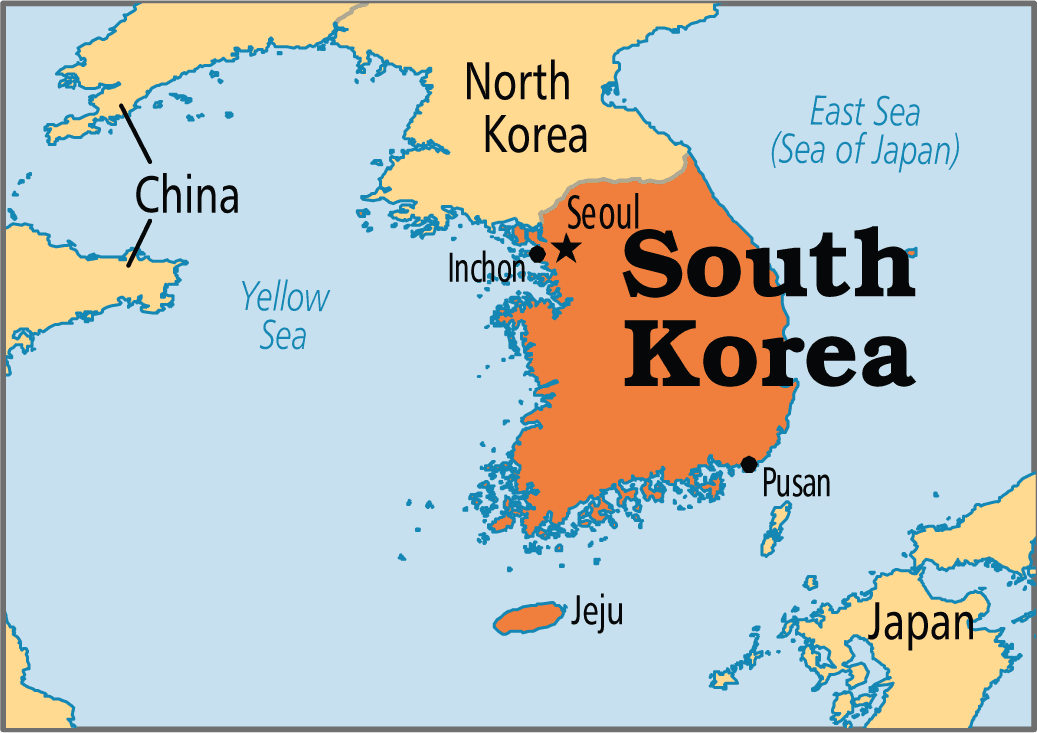
Illustration for South Korea Martial Law Crisis 2024 (Martial Law)

What & Where

Martial Law – military administration replacing civil authority during extreme war, rebellion or similar emergency

Declarations: explicit in South Korea Constitution Article 77; implicit in India with Article 34 indemnity provision

Geography: recent December 2024 imposition in South Korea; in India can be proclaimed area-specific within territory

Quick Facts for MCQs

Constitutional Provisions

  • SouthKorea Article77 permits president to mobilise forces, suspend warrants, speech, assembly
  • India lacks explicit declaration clause; Parliament may indemnify acts and validate sentences under Article34
  • SupremeCourt holds habeas corpus not auto-suspended during Indian martial law

Historical Timeline

  • ColonialRule 1910-45 Japanese; peninsula split at 38th parallel post WWII
  • Autocracy Rhee 1948-60 toppled by student uprising; martial law repeatedly used
  • DemocraticTransition 1987 elections brought Roh Tae-woo; liberal democracy consolidated 1988 onward

India–ROK Relations

  • Diplomacy established 1973; consular links 1962
  • CEPA 2010 and KoreaPlus cell accelerated trade and investments
  • Defence Roadmap 2019; India pavilion showcased at ADEX-2023 Seoul

Martial vs National Emergency

  • MartialLaw targets Fundamental Rights, suspends civil courts, area specific, no detailed constitutional code
  • NationalEmergency reshapes Centre-state powers, can cover whole nation, grounds limited to war, external aggression, armed rebellion

Key Data Points

FeatureData-Point
SK constitution article on martial lawArticle 77
Indian indemnity articleArticle 34
National emergency article IndiaArticle 352
SK martial law declarations since 194816; last full 1980
Impeachment vote needed for Indian PresidentTwo-thirds each House
India–ROK diplomatic ties year1973
Strategic Partnership upgrade to “Special”2015
CEPA operational from2010
2023 bilateral trade valueUSD 24.4 billion
Cumulative ROK FDI in India Jun 2023USD 8.02 billion
GS-2Scheme

16.PM Ayushman Bharat Health Infrastructure Mission (Health Infrastructure)

Indian Express
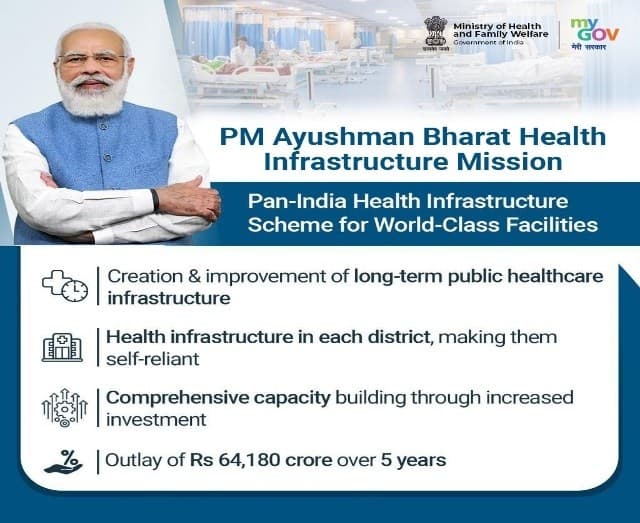
Illustration for PM Ayushman Bharat Health Infrastructure Mission (Health Infrastructure)

What & Where

Scheme: PM-Ayushman Bharat Health Infrastructure Mission; Centrally Sponsored with some Central Sector parts.

Coverage: Pan-India strengthening of primary-to-tertiary health infrastructure, surveillance and research.

Period: FY 2021-22 to 2025-26 under Health & Family Welfare Ministry.

Quick Facts for MCQs

Legal & Policy

  • Supreme-Court: Stayed Delhi HC order forcing Delhi Govt to sign MoU with Centre for PM-ABHIM rollout.
  • Federalism: Dispute underscores Centre-State concurrence needed for CSS participation.
  • MoU-Clause: Signing mandatory for fund release under mission guidelines.

Infrastructure Targets

  • Wellness-Centres: Focus on difficult rural areas and urban slums for preventive & promotive care.
  • Critical-Care: 150-bed blocks in 12 central institutes plus 602 district hospitals for referral readiness.
  • Surveillance-Network: Regional NCDCs, metropolitan units, IPHLs integrated via upgraded digital portal.

Pandemic Preparedness

  • One-Health: Institutions planned for zoonotic disease surveillance.
  • Virology-Capacity: Additional National Institutes of Virology, BSL-III labs to boost pathogen research.
  • Mobile-Hospitals: Mission envisages deployable facilities for health emergencies, natural disasters.

Key Data Points

FeatureData-Point
Launch year2021-22
Total outlay₹64,180 crore
Funding natureCSS + CS components
Central Institutions12 with 150-bed Critical Care Blocks
Health Emergency Operation Centres15
Rural HWCs17,788
Urban HWCs11,024
Block Public Health Units3,382
District Critical Care Hospital Blocks602 districts (>5 lakh pop.)
Integrated Public Health Labs730 districts
Portal expansionIntegrated Health Information Portal links all public labs
Pandemic labsNew NIVs & BSL-III labs
Implementing ministryMoHFW

Related UPSC Prelims PYQs

GS1, NDA_GAT 2022PYQ 1

भारत सरकार की प्रमुख टेलीमेडिसिन सेवा ‘ई-संजीवनी’ को हाल ही में किसके साथ एकीकृत किया गया?

GS1, NDA_GAT 2022PYQ 2

With reference to Ayushman Bharat Digital Mission, consider the following statements:

GS-2Scheme

17.SVAMITVA Rural Land Mapping Scheme (Rural Land Records)

News on Air
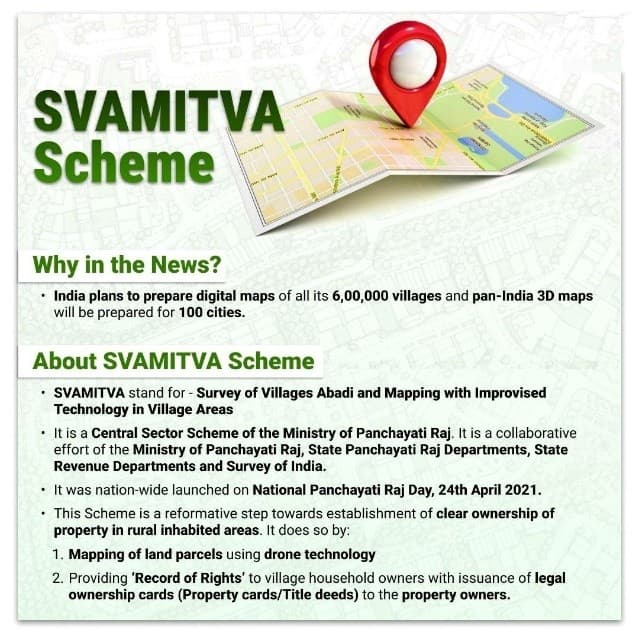
Illustration for SVAMITVA Rural Land Mapping Scheme (Rural Land Records)

What & Where

Scheme: SVAMITVA (Survey of Villages and Mapping with Improvised Technology in Village Areas), Central Sector, launched 2020

Process: Drone & CORS surveying of rural abadi areas to create GIS maps and digital Record of Rights

Geography: Targets all Indian villages; saturation achieved in six states/UTs including Puducherry, Tripura

Quick Facts for MCQs

Tech & Schemes

  • Drone mapping delivers centimeter accuracy parcel boundaries
  • CORS network supplies real time geospatial coordinates for consistency
  • GIS outputs assist Gram Panchayat Development Plan preparation

Economic Angle

  • Collateralisation of property cards widens formal credit access
  • Clear titles encourage property monetisation and rural investment
  • Dispute reduction lowers transaction costs boosting local economy

Governance & Implementation

  • MoPR partners state revenue departments for survey and card issuance
  • 65 lakh cards set for distribution via PM video conferencing ensuring visibility
  • Digital workflow enhances transparency and record permanency

Key Data Points

FeatureData-Point
Nodal ministryMinistry of Panchayati Raj
Scheme typeCentral Sector
Tech toolsDrones + Continuously Operating Reference Stations
Official outputProperty Card (Record of Rights)
Launch year2020
Villages surveyed17 lakh +
States/UTs saturated6 (e.g., Puducherry, Tripura)
Upcoming cards65 lakh to be distributed by PM

Related UPSC Prelims PYQs

CDS_GK 2024PYQ 1

Which one among the following statements about the objectives of Vibrant Village Programme is correct?

GS-1Editorial

18.UNICEF Prospects for Children 2025 (Child Welfare Report)

Down to Earth
Illustration for UNICEF Prospects for Children 2025 (Child Welfare Report)

What & Where

UNICEF’s “Prospects for Children 2025” flags multi-crises—conflict, debt, climate, digital divide—harming child rights worldwide.

Core hotspots: 473 mn children in conflict zones; 400 mn in high-debt nations; Africa & LICs worst digital lag.

India lens: 26th on Children’s Climate Risk Index; 350 mn children projected by 2050 needing resilient systems.

Quick Facts for MCQs

Conflict & Debt

  • Conflict: share of affected children doubled from 10 % (1990s) to 19 % now; risks include displacement, trauma.
  • Debt: 5 % external-debt rise may slash LMIC education spend by USD 12.8 bn, squeezing health & services.
  • Africa: 15 nations pay more on debt than education; >40 LICs pay more debt than health.

Climate & Digital Gap

  • Finance: <3 % climate funds child-responsive, weakening adaptive health/education services.
  • Heatwaves: Indian children’s exposure projected eightfold rise versus 2000s baseline.
  • Digital divide: DPI benefits skewed; adolescent girls, disabled children largest exclusion cohort.

India-Specific Challenges

  • Child labour: 10.1 mn (Census 2011); agriculture & informal sectors dominate despite amended legislation.
  • Child marriage: India 4th in South Asia; perpetuates female dropouts, poor health outcomes.
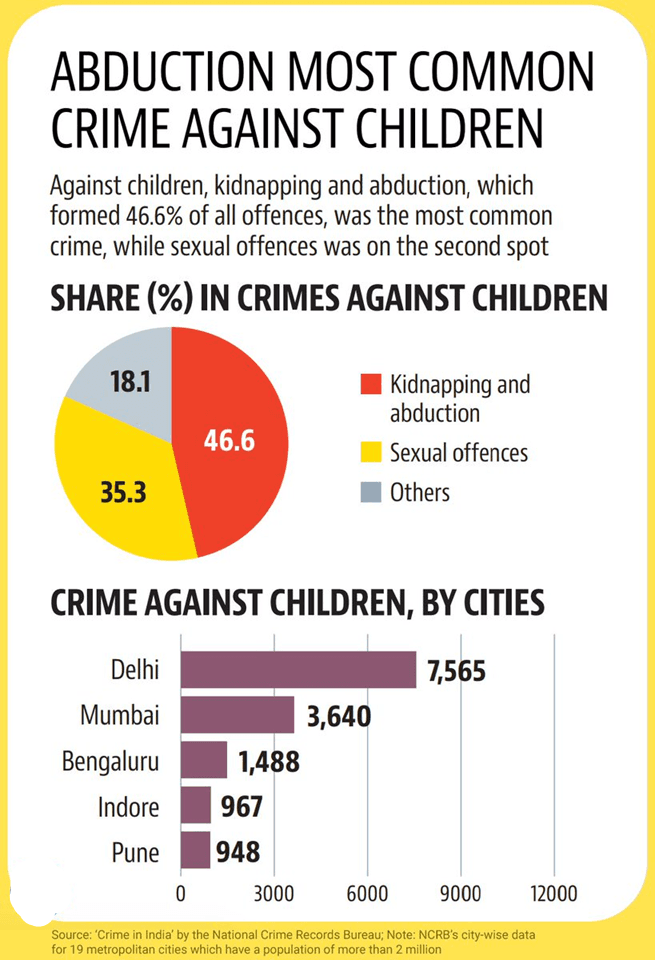
  • Juvenile crime: 30,555 cases in 2022; poverty, education gaps key drivers.

Policy Tools & Schemes

  • Flagship: Saksham Anganwadi-Poshan 2.0, Mission Vatsalya, Beti Bachao Beti Padhao, RTE Act 2009.
  • Digital: DIKSHA platform expands e-learning; needs bandwidth & device equity.
  • Protection: POCSO 2019, JJ Act 2015, DPDPA 2023 aim stronger child safety & data privacy.

Key Data Points

FeatureData-Point
Children in conflict zones (2023)473 million ≈ 19% global
Children in debt-stressed countries400 million
Debt vs social protectionDebt payments 11× higher
Climate finance for children2.4 % of total
Offline adolescent girls in LICs90 %
Youth (15-24) net access, Africa53 %
UNICEF founding year1946
UNICEF HQNew York City
UNICEF Nobel Peace Prize1965
India rank, Climate Risk Index26th
GS-1Misc

19.Major Dhyan Chand Khel Ratna Award (National Sports Award)

PIB
Illustration for Major Dhyan Chand Khel Ratna Award (National Sports Award)

What & Where

Apex Indian sports honour; instituted 1991-92, renamed 2021 after hockey legend Major Dhyan Chand

Conferred by President at Rashtrapati Bhavan; administered by Ministry of Youth Affairs & Sports

Rewards four-year outstanding international performance across Olympic, Paralympic, Commonwealth, Asian and World stages

Quick Facts for MCQs

Eligibility & Criteria

  • Performance: Outstanding results across consecutive four-year international cycle
  • Integrity: Mandatory clean anti-doping and disciplinary record
  • Events: Olympics, Paralympics, Asian, Commonwealth, World Championships considered

Nomination & Selection

  • Sources: NSF, SAI, State Governments, IOA; Government may add two names
  • Committee: Officials, Olympians, journalists, experts; medals weighted via points system
  • Finalisation: Union Sports Minister approves; President bestows award at Rashtrapati Bhavan

2024 Honour Roll

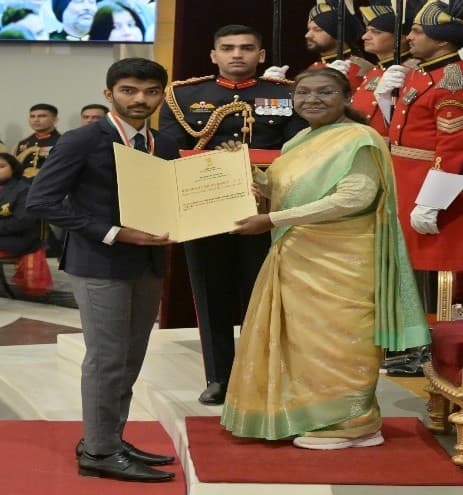
  • Names: Manu Bhaker, D Gukesh, Harmanpreet Singh, Praveen Kumar
  • Sports: Shooting, Chess, Hockey, Para High Jump respectively
  • Significance: Showcases excellence across individual, team, able-bodied and para disciplines

Key Data Points

FeatureData-Point
Instituted1991-92
Original nameRajiv Gandhi Khel Ratna
Renamed year2021
Namesake sportHockey
Administering ministryYouth Affairs & Sports
Performance windowLast 4 years
Anti-doping statusClean record compulsory
Eligible eventsOlympics, CWG, Asian, Worlds
Nomination sourcesNSF, SAI, States, IOA
Govt suo-moto quotaUp to 2 athletes
Selection toolPoints for medal value
Final approverUnion Sports Minister
2024 recipientsManu Bhaker, D Gukesh, Harmanpreet Singh, Praveen Kumar
Manu Bhaker’s sportShooting
D Gukesh’s sportChess
Harmanpreet Singh’s sportHockey
Praveen Kumar’s sportPara High Jump

Related UPSC Prelims PYQs

CDS_GK, ESE_GS 2022PYQ 1

Which one of the following is NOT correct regarding the Khel Ratna Award?

CDS_GK, ESE_GS 2025PYQ 2

Who among the following were awarded the Major Dhyan Chand Khel Ratna Award 2024?

Ready to practice?

Test your knowledge with our UPSC test series.

Start Free Trial