UPSC Current Affairs

15 topicsGS-1: 2GS-2: 4GS-3: 9
0/15 done
GS-2Polity

1.Atomic Energy Commission of India (Atomic Energy Governance)

Economic Times

What & Where

Apex‐level Atomic Energy Commission (AEC) steers India’s nuclear energy, research & applications.

First constituted Aug 1948; present statutory form from 1 Mar 1958 under Department of Atomic Energy (DAE).

HQ Mumbai; DAE reports directly to Prime Minister.

Quick Facts for MCQs

Legal & Policy

  • Mandate covers policy framing for nuclear energy, research, safety compliance.
  • Operates through Government of India Allocation of Business Rules, ensuring executive authority.
  • Facilitates treaty negotiations, safeguards adherence with IAEA obligations.

Membership & Structure

  • Composition mixes top bureaucrats and eminent scientists for strategic-technical balance.
  • Ex-officio lineup embeds highest security and fiscal oversight into nuclear decision-making.
  • Chairperson synchronises commission directives with DAE programme execution.

Functional Scope

  • Oversees nuclear power expansion, medical isotopes, agriculture irradiation projects.
  • Sanctions R&D budgets, advanced reactor tech, fuel cycle facilities.
  • Monitors safety regulation via subordinate bodies like AERB ensuring international benchmarks.

Key Data Points

FeatureData-Point
Parent departmentDepartment of Atomic Energy
Political chargePrime Minister of India
Initial setup10 Aug 1948 (Department of Scientific Research)
Present form since1 Mar 1958
HeadquartersMumbai, Maharashtra
Chairperson postSecretary, DAE (ex-officio)
Key ex-officio membersNSA, Principal Secy to PM, Foreign Secy, Cabinet Secy, Expenditure Secy
Recent reconstitution2023
Core mandatePolicy, R&D, safety, international cooperation in atomic energy
Notified underGovernment of India (Allocation of Business) Rules

Related UPSC Prelims PYQs

GS1 2009PYQ 1

Under the administration of which one of the following is the Department of Atomic Energy ?

GS1 2001PYQ 2

Consider the following organisations:
GS-3Economy

2.Privatisation of Power DISCOMs (Power DISCOMs)

Financial Express
Illustration for Privatisation of Power DISCOMs (Power DISCOMs)

What & Where

PowerDistributionCompany (DISCOM): last-mile electricity supplier, maintains local grid, bills consumers.

Privatisation: government transfers majority stake/management to private entity via competitive bidding under Electricity Act 2003.

Current hotspot: UT Chandigarh; earlier Delhi 2002, Dadra-Nagar Haveli & Daman-Diu 2022.

Quick Facts for MCQs

Legal & Policy

  • SupremeCourt Dec 2024 validated Punjab-Haryana HC nod for Chandigarh DISCOM privatisation.
  • ElectricityAct 2003 Sec 131 governs asset transfer and licence renewal during sale.
  • UnionTerritory model executed in Dadra-Nagar Haveli & Daman-Diu, 2022.

Economic Angle

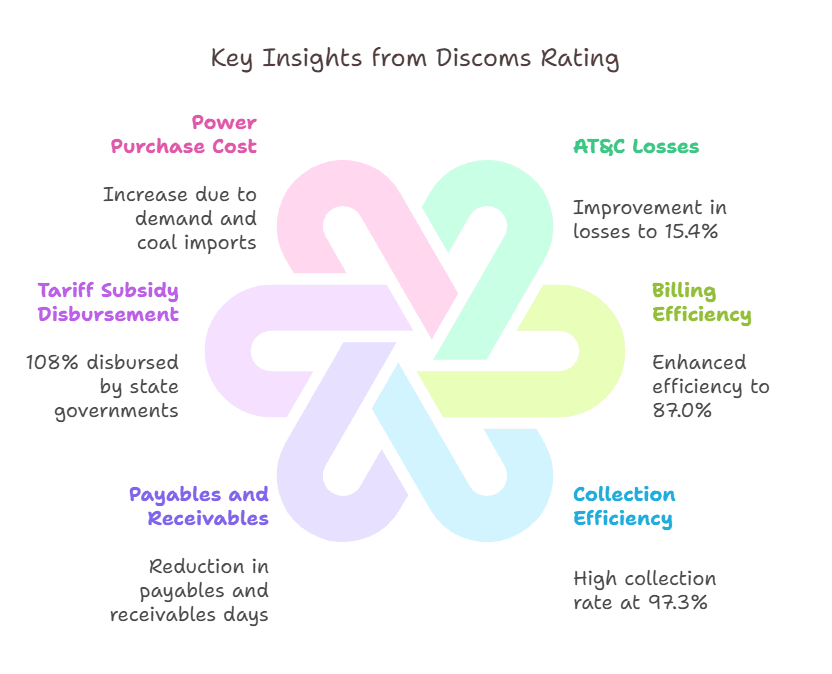
  • AT&C losses 17.6% FY24 erode revenues and restrict network investment.
  • ACS-ARR gap rose to 55 paise/unit FY23, deepening DISCOM debt dependence.
  • States financed ₹79,000 crore subsidies FY23, signalling unsustainable support.

Tech & Schemes

  • UDAY 2015 swapped 75% DISCOM debt into state bonds, targeted theft curbs via smart meters.
  • RDSS ₹3.04 lakh cr aims 12-15% AT&C loss, zero gap by FY25.
  • LatePaymentSurcharge rules trimmed payables to 126 days, receivables 119, easing liquidity.

Social Concerns

  • EmployeeResistance: job loss, VRS expenses mirrored in Delhi privatisation experience.
  • TariffHikes post-sale risk consumer backlash; phased rationalisation with subsidies advised.
  • TransitionFunds critical; Delhi got ₹3,450 cr, Odisha lacked support and failed.

Key Data Points

FeatureData-Point
AT&C loss (India FY24)17.6%
Billing efficiency87%
Collection efficiency97.3%
ACS-ARR gap FY2355 paise/unit (33 paise FY22)
State subsidy payout FY23₹79,000 crore
Power demand growth FY238%
Avg power purchase cost rise71 paise/kWh
Delhi AT&C loss drop>50% (2002) → single digit
RDSS budget₹3,03,758 crore (FY22-26)
Delhi transitional funds₹3,450 crore
Days payable after LPS rules126 days

Related UPSC Prelims PYQs

GS1 2016PYQ 1

Which one of the following is a purpose of 'UDAY', a scheme of the Government?

GS1 2006PYQ 2

Consider the following statements:

GS-1Environment

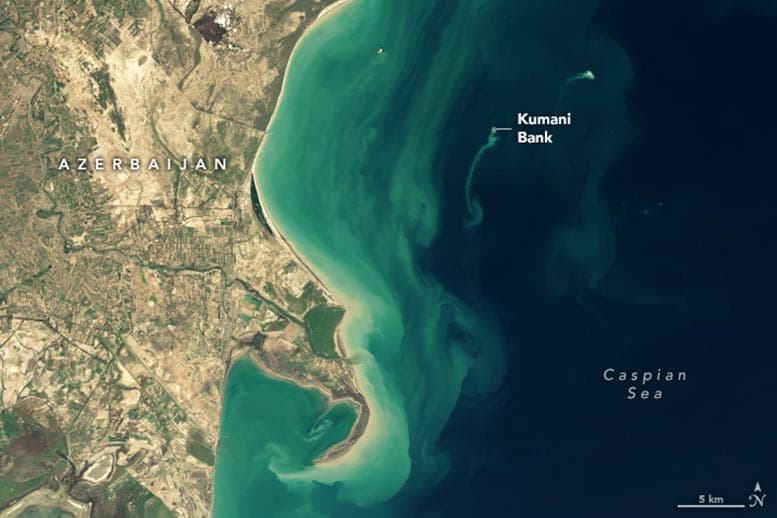
3.Kumani Bank Mud Volcano (Mud Volcano)

ST
Illustration for Kumani Bank Mud Volcano (Mud Volcano)

What & Where

Kumani Bank mud volcano: submarine cone ~25 km off Azerbaijan’s east coast, South Caspian Basin.

2023 eruption extruded mud/gas forming 400 m-wide “Ghost Island”; wave action eroded it by late 2024.

Azerbaijan hosts world’s densest mud-volcano field (>300), shaping regional geology and emissions.

Quick Facts for MCQs

Geological Insights

  • Venting episodes reveal subsurface pressure, sediment compaction and tectonic stress of South Caspian Basin.
  • Rapid island erosion illustrates weak mud cohesion versus marine abrasion dynamics.
  • Recurrent eruptions aid stratigraphic dating and basin evolution studies.

Environmental Impact

  • Mud/gas plumes release methane contributing to local greenhouse inventories.
  • Episodic seabed disturbance may alter benthic habitats and turbidity.
  • Hydrocarbon-rich expulsions mark active petroleum system indicators.

Planetary Analogues

  • Morphology parallels suspected mud volcanoes in Mars’ northern plains.
  • Studying flow textures refines rover target selection for past aqueous activity.

Regional Geography

  • Caspian Sea sits between Caucasus Mountains (W) and Central Asian steppe (E).
  • Landlocked basin supports major fisheries, energy shipping lanes and coastal wetlands.

Key Data Points

FeatureData-Point
Volcano typeSubaqueous mud volcano
First recorded island emergenceJuly 2023
Initial island diameter≈400 m (1,300 ft)
Island status by Dec 2024Largely vanished
Distance from shore~25 km (15 mi) E. of Azerbaijan
Sea hosting featureCaspian Sea (largest inland waterbody)
Caspian surface area~386,400 sq km
Major inflow riversVolga, Ural, Terek
Caspian littoral statesRussia, Azerbaijan, Kazakhstan, Turkmenistan, Iran
Azerbaijan mud-volcano count300 + (global maximum)
GS-3Editorial

4.Record Global Warming Impact on India (Global Warming)

Indian Express

What & Where

WMO; UN specialised agency for weather-climate science; HQ Geneva; 192 members including India

2024; global mean surface temp + 1.55 °C vs 1850-1900; inaugurates first 1.5 °C-exceeding year

India; 2024 anomaly + 0.65 °C from normal, about + 1.2 °C above 1901-10 baseline

Quick Facts for MCQs

Drivers of Lower Warming in India

  • Latitude; tropical location avoids polar amplification seen at higher latitudes
  • Aerosols; heavy particulate load scatters sunlight, induces short-term cooling
  • Albedo; snow feedback limited to Himalayas, reducing national average warming

Environmental Impact

  • Sea-level; +8 inches since 1880, projected +1 ft by 2100 inundating coasts
  • Hydro-climate; stronger droughts, heatwaves, longer wildfire seasons
  • Biodiversity; habitat shifts heighten extinction pressures across ecosystems

Tech & Schemes

  • Infrastructure; weather station in every major panchayat under Viksit Bharat 2047
  • Computing; invest in high-performance systems for forecasts, disaster analytics
  • Mission Mausam; integrate coastal & Himalayan early-warning with global networks

Key Data Points

FeatureData-Point
Warmest decade2015-2024
2024 global anomaly+1.55 °C
2024 India anomaly+0.65 °C (1981-2010 ref)
Ocean heat gain 202416 zettajoules in top 2 km
Heat gain vs power≈140 × 2023 global electricity
Land warming (IPCC-6)+1.59 °C since pre-industrial
Ocean warming (IPCC-6)+0.88 °C since pre-industrial
Extreme-heat exposure rise+89 % (1995-2020)
LMIC exposure share53.7 % but only 5.7 % labour pay
Paris Agreement limitWell < 2 °C; pursue 1.5 °C

Related UPSC Prelims PYQs

GEO_GS 2021PYQ 1

Which one of the following statements on Climate of India is NOT correct?

GEO_GS 2020PYQ 2

According to the Global Climate Risk Index 2020, published by environmental think tank Germanwatch, in the year 2018 India’s rank in the list of top most climate affected nations is:

GS-3SpeciesQuick Bite

5.Chimpanzee Conservation Efforts in Cameroon (Chimpanzee Conservation)

The Hindu
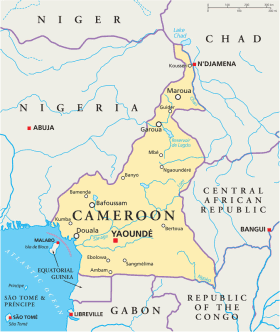
Illustration for Chimpanzee Conservation Efforts in Cameroon (Chimpanzee Conservation)

What & Where

Chimpanzee (Pan troglodytes) endangered great ape native to equatorial Africa

NGO Papaye International runs orphaned-chimpanzee sanctuary inside Douala-Edea National Park, Cameroon

Park sits on Cameroon’s Atlantic coast within Central African rainforest hotspot

Quick Facts for MCQs

Taxonomy & Status

  • Subspecies count four recognised lineages across West and Central Africa
  • Western chimpanzee meets Critically Endangered threshold per IUCN
  • Last common ancestor with humans dated 7–8 million years ago

Behaviour & Culture

  • Tool-use behaviors include termite fishing honey harvesting nut cracking
  • Vocal dialects and feeding techniques vary culturally between populations
  • Social organisation fission-fusion communities with hierarchical male alliances

Threats & Conservation

  • Habitat destruction logging agriculture reduces forest connectivity and genetic exchange
  • Hunting and pet trade drive population decline especially orphaned infants
  • Sanctuary rehabilitation efforts aim to preserve genetic and cultural traits

Geography

  • Cameroon borders Nigeria Chad Central African Republic Congo Gabon Equatorial Guinea
  • National park showcases coastal plains mangroves lowland rainforest mosaics
  • Country spans Sahel to Atlantic giving high biodiversity gradient

Key Data Points

FeatureData-Point
Scientific namePan troglodytes
Recognised subspeciesFour – Central, Western, Nigeria-Cameroon, Eastern
IUCN status overallEndangered
Western chimpanzee statusCritically Endangered
Sanctuary operatorNGO Papaye International
Protected areaDouala-Edea National Park
Typical group size20–150 individuals
Cameroon regionCentral Africa
GS-3S&T

6.Pixxel Private Hyperspectral Satellite Constellation (Hyperspectral Imaging)

DH

What & Where

India’s first private satellite constellation: 6 hyperspectral imaging satellites by Bengaluru-based Pixxel

Launched via SpaceX Falcon 9 from Vandenberg Space Force Base, California, USA

Delivers global high-resolution spectral data for agriculture, mining, environment, defense, resource management

Quick Facts for MCQs

Technology & Capability

  • Hyperspectral sensors capture reflected light across 400-1000 nm enabling material-level discrimination
  • Offers sub-5 m spatial resolution; richer than traditional multispectral systems
  • Constellation architecture ensures frequent revisit, near-real-time analytics delivery

Economic Angle

  • Commercial constellation positions India in $15 bn global Earth-observation market
  • 65 pre-booked customers give early revenue traction, de-risking expansion plans
  • Private investment signals growing VC interest post-IN-SPACe and New Space reforms

Sectoral Applications

  • Agriculture: nutrient mapping, crop stress detection, yield forecasting for ministry programmes
  • Mining & resources: grade estimation, illegal quarry detection, rehabilitation monitoring
  • Environment & security: oil-spill tracking, border surveillance, pollution hotspot mapping

Key Data Points

FeatureData-Point
Developer HQPixxel, Bengaluru
Strategic backerGoogle
Launch partnerSpaceX Falcon 9
Launch siteVandenberg SFB, California
Satellites in first batch6
Imaging typeHyperspectral (hundreds of bands)
Planned future launches18 more satellites by 2029
Signed clients65 (incl. BP, Ministry of Agriculture)
GS-3S&T

7.India Meteorological Department Milestone (Meteorological Services)

PIB
Illustration for India Meteorological Department Milestone (Meteorological Services)

What & Where

IMD = national meteorological agency forecasting weather, monitoring climate, issuing early-warning services.

Core processes: synoptic observation, Doppler radar & satellite analyses, numerical models for cyclones, monsoon, extreme events.

Geography: HQ New Delhi; network of 39 radars (2023) covering Indian landmass & adjoining seas.

Quick Facts for MCQs

History & Triggers

  • Disasters: 1864 Calcutta cyclone, monsoon famines spurred unified service creation.
  • 1875 formation consolidated fragmented colonial observatories under one authority.
  • Continuous evolution marked by indigenisation from 1950s onwards.

Tech & Schemes

  • Mission Mausam 2025: advanced sensors, AI models for “weather-ready, climate-smart” India.
  • Vision-2047: resilience, adaptation, sector-specific customised forecasts.
  • Dynamic composite risk atlas 2022 integrates hazards, exposure, vulnerability layers.

Disaster Management Impact

  • Cyclone forecasts: Fani 2019, Amphan 2020, Biparjoy 2023 enabled mass evacuations, thousands of lives saved.
  • Sectoral services: dedicated bulletins for agriculture, aviation, shipping enhance economic stability.
  • Public outreach: warnings via Doordarshan, mobile apps, social media widen last-mile reach.

Make in India

  • Indigenous radar 1958 reduced foreign dependence; continuous upgrades to S-, C-band systems.
  • Collaboration with ISRO since 1983 leverages INSAT, Oceansat for real-time data.
  • Radar-satellite fusion under Atmanirbhar initiative improves sub-kilometre rainfall estimates.

Key Data Points

FeatureData-Point
Establishment year1875
Parent ministryMinistry of Earth Sciences
HQ cityNew Delhi
Foundation Day14 Jan
150th Foundation Day14 Jan 2025
Initial trigger events1864 Calcutta cyclone, monsoon failures 1866 & 1871
Doppler radars 2014 vs 202315 → 39
Coverage gain by radars+35 %
Flagship tech planMission Mausam 2025
Long-term roadmapIMD Vision-2047
First indigenous weather radar1958
Satellite collaboration startISRO, 1983

Related UPSC Prelims PYQs

NDA_GAT 2025PYQ 1

Which one of the following organisations has completed 150 years of service to the nation in the year 2025?

NDA_GAT 2020PYQ 2

Which one of the following is the oldest scientific department of Government of India?

GS-3S&T

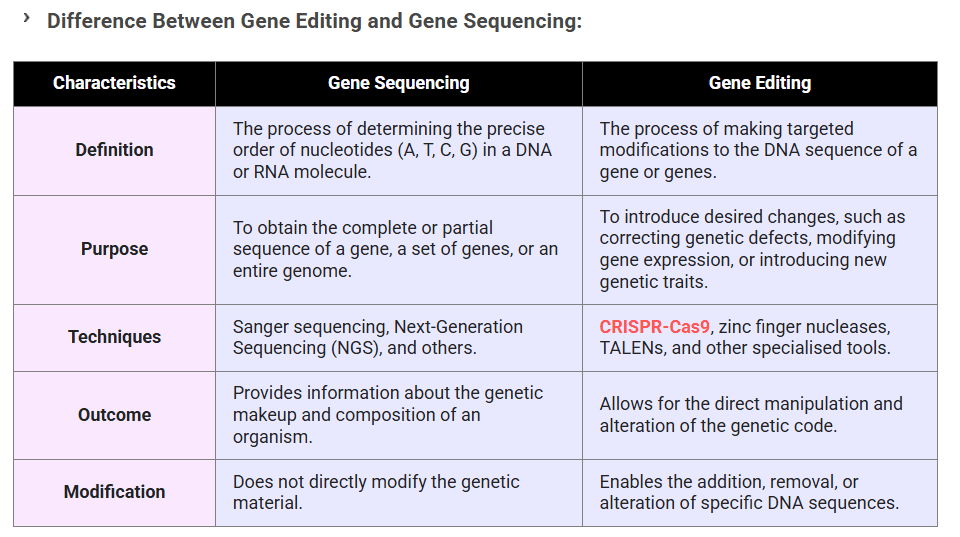
8.Indian Genomic Data Set Launch (Genomics Project)

PIB
Illustration for Indian Genomic Data Set Launch (Genomics Project)

What & Where

Indian Genomic Data (IGD): 10,000 whole-genome sequences of Indians, stored at Indian Biological Data Centre, RCB-Faridabad, Haryana

GenomeIndia Project (GIP): DBT-led national mission (2020) to map genetic diversity; Phase-1 completed, Phase-2 disease-focused

FeED Protocol & Biotech-PRIDE Guidelines: uniform framework for ethical, secure genomic data exchange within India

Quick Facts for MCQs

Legal & Policy

  • Biotech-PRIDE mandates timely data sharing, quality control, equitable access
  • FeED standardises consent, anonymisation, security for cross-institution exchange
  • BioE3 policy aims global biotech leadership via indigenous genomic assets

Tech & Schemes

  • Whole Genome Sequencing provides complete 3 billion base-pair map per individual
  • Phase-2 GIP sequencing targets cancer, diabetes, rare disease cohorts
  • IBDC portal offers researchers password-gated, metadata-rich downloads

Economic Angle

  • Indigenous datasets cut dependency on foreign databases, spurring local diagnostics
  • Genomics expected to accelerate India’s Fourth Industrial Revolution contribution
  • Vaccine manufacturing scale plus IGD data strengthen export competitiveness

International Examples

  • EU 1+Million Genomes ensures cross-border clinical data access
  • Earth BioGenome Project targets all eukaryote genomes; India participating

Key Data Points

FeatureData-Point
Samples in IGD Set10,000 WGS
RepositoryIndian Biological Data Centre (IBDC)
IBDC locationRegional Centre for Biotechnology, Faridabad
Launch platformGenome India Data Conclave 2025
Supervising ministryDept. of Biotechnology (DBT)
GIP Phase-1 coverage99 ethnic groups
Long-term GIP target1 million Indian genomes
FeED basisBiotech-PRIDE Guidelines 2021
Bio-Grid roleNational repository linking existing datasets
India biotech rank12th global, 3rd Asia-Pacific
Biotech startups 20238,500+
Bioeconomy size 2024USD 130 billion (up from 10 billion in 2014)
Unique Indian mutationMYBPC3 → early cardiac arrest
Upcoming policyBioE3 (Economy, Environment, Employment)
Comparable global projectHuman Genome Project 2003 completion
GS-3S&TQuick Bite

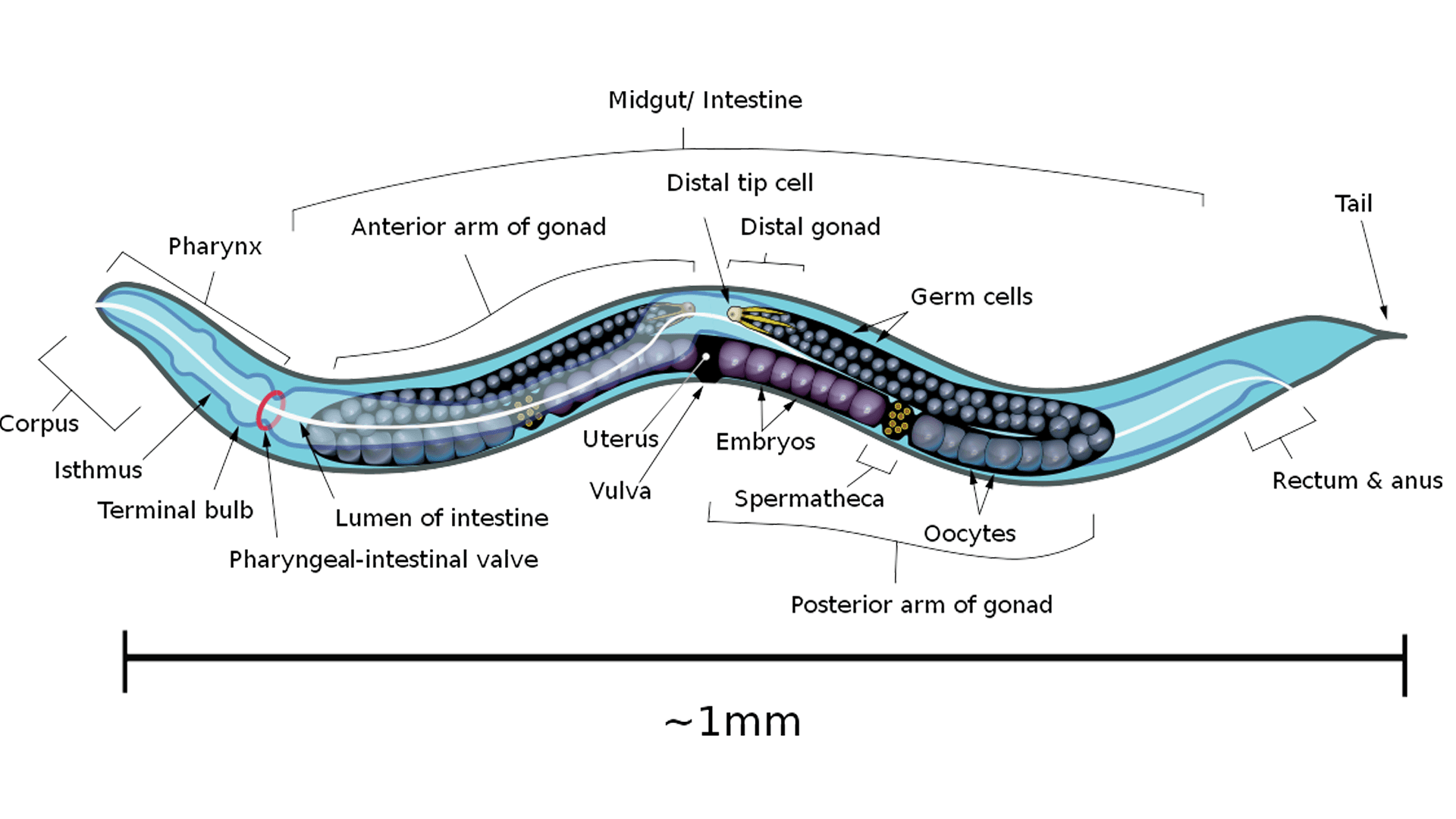
9.Biological Discoveries via C. elegans (C. elegans Research)

The Hindu
Illustration for Biological Discoveries via C. elegans (C. elegans Research)

What & Where

Caenorhabditis elegans; 1 mm, transparent, free-living soil nematode used as model animal.

Cosmopolitan in rotting vegetation/compost; survives on bacteria at 20-25 °C.

Chosen for genetics: short 3-day generation, invariant 959 somatic cells, mapped neural wiring.

Quick Facts for MCQs

Nobel-linked Discoveries

  • 2002 Brenner, Horvitz, Sulston: mapped lineage; revealed programmed cell death (apoptosis).
  • 2006 Fire & Mello: demonstrated dsRNA-triggered RNA interference gene silencing.
  • 2008 Shimomura, Chalfie, Tsien: adapted GFP for live fluorescence imaging; 2024 Ambros & Ruvkun: microRNA gene-regulation.

Tech & Schemes

  • GFP enables sub-cellular localisation, tracking protein dynamics in vivo.
  • RNAi now routine reverse-genetics screen; potential antiviral, cancer therapeutics.
  • MicroRNA studies aid biomarker discovery, personalised medicine research.

Research Advantages

  • Small size allows millions in Petri dish; cheap laboratory upkeep.
  • Well-annotated genome simplifies CRISPR, mutagenesis, drug screens.
  • Conserved pathways with humans (apoptosis, insulin, stress) validate translational insights.

Key Data Points

FeatureData-Point
PhylumNematoda
Body length≈ 1 mm
TransparencyOptical clarity enables live imaging
ReproductionSelf-fertile hermaphrodite & rare males
Genome statusFirst multicellular genome fully sequenced (1998)
Life cycleEgg to adult ≈ 3 days at 20 °C
Nobel links2002, 2006, 2008, 2024 Physio/Med & Chem prizes
Key toolsGFP tagging, RNAi, microRNA assays
Cell count959 somatic + 131 apoptotic cells
GS-2Polity

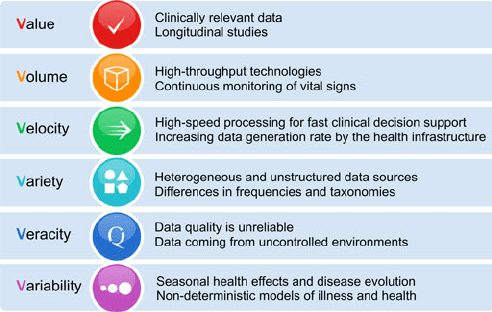
10.India Joins UN Big Data Panel (UN Big Data Panel)

The Hindu
Illustration for India Joins UN Big Data Panel (UN Big Data Panel)

What & Where

UN-CEBD – UN body (2014) using big data & data science for global official statistics

Works under United Nations Statistical Commission; HQ functions virtually with 31 member-states, 16 intl organisations

India joined Jan 2025 after election to UN Statistical Council, gaining say in global data-governance

Quick Facts for MCQs

Governance & Bodies

  • Advisory Board provides strategy, meets quarterly, guides global big-data programme
  • UN Bureau handles daily administration, coordination among task teams, capacity projects
  • Membership mix ensures global-regional balance, decisions by consensus within UNSC framework

Functional Mandate

  • Strategic-coordination for integrating non-traditional data into official statistics, especially 2030 Agenda indicators
  • Promotion of cross-border data use, common standards, ethical safeguards to build public trust
  • Capacity-building via training, tech assistance, peer-learning for national statistical offices

Indian Initiatives

  • NDAP offers unified open datasets; supports analytics aligned with UN-CEBD best practices
  • Big Data Management Policy drafts guidelines on storage, anonymisation, governance of large public datasets
  • National Data Warehouse on Official Statistics modernises collection, enabling real-time SDG tracking

Key Data Points

FeatureData-Point
UN-CEBD establishment2014
Parent bodyUN Statistical Commission (ECOSOC)
Member States31 (incl. India)
International organisations16
India’s inductionJan 2025
Advisory Board meetings≈4 times per year
Key objectiveSDG indicator monitoring & reporting
Core data sourcesSatellite imagery, IoT, private-sector datasets

Related UPSC Prelims PYQs

ESE_GS 2024PYQ 1

Which one of the following Institutions launched Centre of Data for Public Good (CDPG) for multidisciplinary research, bringing together experts from academia, industry, and Government to harness the power of data to benefit the public?

GS-2Security

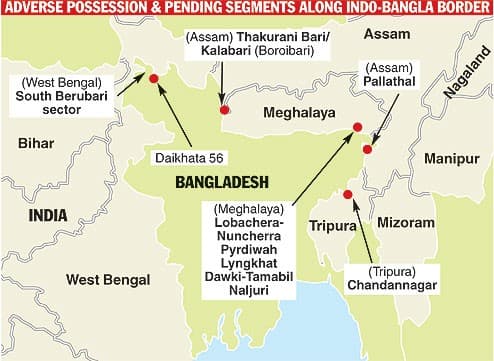
11.India Bangladesh Border Fencing Dispute (India-Bangladesh Border)

Indian Express
Illustration for India Bangladesh Border Fencing Dispute (India-Bangladesh Border)

What & Where

Boundary; stretches 4,096 km across West Bengal, Assam, Meghalaya, Tripura, Mizoram

Terrain; mix of plains, forests and ≈180 km riverine sections along Ganga, Brahmaputra tributaries

Geostrategic; conduit for SAARC-BIMSTEC trade, yet prone to migration, smuggling and fencing frictions

Quick Facts for MCQs

Legal & Policy

  • Guideline-1975; Bangladesh objects to fencing inside 150-yard restricted belt
  • LBA-2015; exchanged enclaves, reduced but did not erase minor disputes like Comilla-Tripura
  • River demarcation; unresolved channels hinder permanent fencing, require joint river commissions

Security Dimension

  • Migration; porous stretches enable undocumented movement causing demographic and political stress in bordering Indian states
  • Crime; cattle, narcotics, small arms smuggling persist despite fencing and joint patrols
  • Forces; BSF guards land, Water Wing patrols rivers, coordinates with BGB through flag meetings

Tech & Schemes

  • Smart-fence; CCTV, ground sensors, thermal imagers under Comprehensive Integrated Border Management System
  • Drones & radar; deployed over difficult terrain for real-time intrusion alerts
  • AI analytics; proposed to integrate feeds for faster BSF response

Social Concerns

  • Livelihoods; fence alignment cuts farmers from fields and markets across zero line
  • Access; villagers face delays at limited gate crossings impacting healthcare and education
  • Biodiversity; fencing fragments habitats across shared eco-zones, demanding joint conservation

Key Data Points

FeatureData-Point
Total border length4,096 km
Riverine stretch~180 km
States involvedWB, Assam, Tripura, Meghalaya, Mizoram
Fencing completed~3,141 km
1975 border guidelineNo defence structure within 150 yds
Main bilateral pact2015 Land Boundary Agreement
Joint patrol mechanismBSF–BGB coordinated patrols
Water patrol unitsBSF Water Wing

Related UPSC Prelims PYQs

GS1 2006PYQ 1

Consider the following statements:

GS-3SecurityQuick Bite

12.Armed Forces Veterans Day Observance (Veterans Day)

Indian Express
Illustration for Armed Forces Veterans Day Observance (Veterans Day)

What & Where

Armed Forces Veterans’ Day – national commemorative day across India on 14 January.

Army Day – national military celebration across India on 15 January.

Both dates anchored to Field Marshal K.M. Cariappa’s 1949 command takeover & 1953 retirement.

Quick Facts for MCQs

Historical Roots

  • Transition 1949; Cariappa replaces Bucher as first Indian Commander-in-Chief.
  • Retirement 1953; date chosen for Veterans’ Day symbolism.
  • Formal institution 2017 by MoD to annualise homage.

Significance & Objectives

  • Tribute; recognise valour, dedication, sacrifices of ex-servicemen.
  • Bond; strengthen link between veterans and serving personnel.
  • Platform; surface and solve pension, health, resettlement concerns.

Key Personalities

  • Cariappa; Padma Bhushan, later Field Marshal, icon for military professionalism.
  • Bucher; final British head, symbolises colonial handover.
  • Cariappa post-retirement; pioneered veteran resettlement mechanisms.

Institutional Setup

  • Directorate General Resettlement under MoD manages jobs, training for veterans.
  • Annual events include pension adalats, medical camps, gallantry felicitation.
  • Support network via Rajya Sainik Boards and Zila Sainik Kendras nationwide.

Key Data Points

FeatureData-Point
Veterans’ Day date14 January annually
Veterans’ Day start year2017
Instituting ministryMinistry of Defence
Retirement markedField Marshal K.M. Cariappa, 1953
Directorate formedDirectorate of Resettlement (now DG Resettlement)
Army Day date15 January annually
First Indian C-in-C assumption15 Jan 1949
Last British C-in-CGen Sir F.R.R. Bucher
Core purposeHonour veterans; address welfare
Observance spreadEvents at military stations nationwide

Related UPSC Prelims PYQs

CDS_GK, NDA_GAT 2024PYQ 1

Who among the following was the first Indian Commander-in-Chief of the Indian Army of independent India?

CDS_GK, NDA_GAT 2022PYQ 2

The Government of India has decided to observe 'Veer Baal Diwas' on

GS-3SecurityQuick Bite

13.Indian Army Day Celebrations (Army Day)

Indian Express

What & Where

Indian Army Day: annual 15 Jan observance of Gen. K. M. Cariappa becoming first Indian Commander-in-Chief, 1949.

2025 parade venue: Pune, Maharashtra—base for Southern Command HQ, National Defence Academy and multiple DRDO labs.

2025 focus: theme ‘Samarth Bharat, Saksham Sena’ underscoring capability and empowerment.

Quick Facts for MCQs

Commemorative Days

  • Army Day 15 Jan; Veterans’ Day 14 Jan; Navy Day 4 Dec; Air Force Day 8 Oct.
  • Veterans’ Day honors service, coincides with Cariappa’s retirement anniversary.

Defence Reforms

  • 2025 initiative: integrate theatre commands, advance tri-service synergy.
  • Objectives include procurement streamlining and stronger indigenous defence manufacturing.

Military Geography

  • Pune gains prominence hosting first-ever Army Day parade outside Delhi.
  • City houses Southern Command HQ, NDA at Khadakwasla, plus key DRDO R&D centres.

Key Data Points

FeatureData-Point
Observed on15 January (yearly)
First Indian C-in-CGen. K. M. Cariappa
British predecessorGen. Sir F. R. R. Bucher
Historic year1949 appointment
2025 ThemeSamarth Bharat, Saksham Sena
2025 Parade cityPune, Maharashtra
Tagged year2025 = Year of Defence Reforms
Veterans’ Day14 January (Cariappa’s 1953 retirement)
Navy Day4 December
Air Force Day8 October

Related UPSC Prelims PYQs

CDS_GK 2024PYQ 1

Who among the following was the first Indian Commander-in-Chief of the Indian Army of independent India?

GS-2Scheme

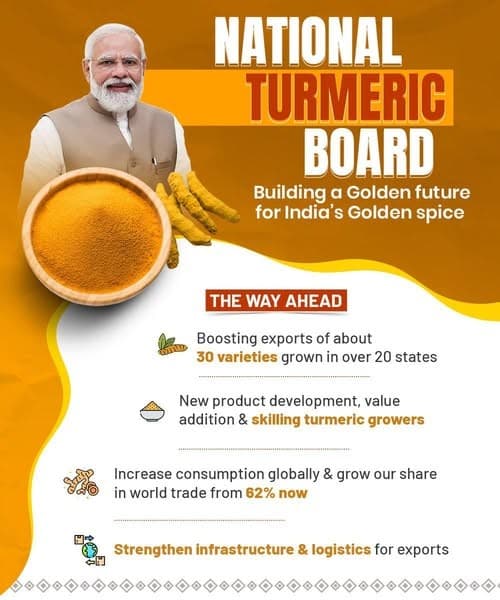
14.National Turmeric Board Launch (Turmeric Promotion)

PIB
Illustration for National Turmeric Board Launch (Turmeric Promotion)

What & Where

National Turmeric Board – dedicated body to promote turmeric cultivation, research and exports.

Headquarters at Nizamabad, Telangana; functions under Ministry of Commerce & Industry.

Mandate spans 20 turmeric-growing states, targeting higher production and global market share.

Quick Facts for MCQs

Governance & Structure

  • Leadership: Chairperson plus coordination with AYUSH, Agriculture, Commerce ministries.
  • Focus: Logistics, quality assurance, export promotion mechanisms.
  • Jurisdiction: Covers farmers, processors, exporters across 20 states.

Trade Dynamics

  • Export_dominance: India supplies two-thirds of world turmeric.
  • Import_markets: USA top; Netherlands & Germany key EU destinations.
  • Domestic_imports: Raw dry turmeric brought in for value addition, re-export or consumption.

Research & Farmer Support

  • R&D: High-yield varieties, value-added products, medicinal validation prioritised.
  • Farmer_outreach: Training, extension, price support envisioned across producing belts.
  • Awareness: Campaigns on curcumin content, health and essential-oil advantages.

Key Data Points

FeatureData-Point
Launching authorityUnion Minister of Commerce & Industry
Parent ministryCommerce & Industry
HeadquartersNizamabad, Telangana
First ChairpersonShri Palle Ganga Reddy
India’s export share (2023)67 % of global turmeric exports
Largest importerUSA – 18.98 % share (2023)
Major Indian producing statesTelangana, Tamil Nadu, Andhra Pradesh, Maharashtra, Meghalaya
Indian import formPrimarily dry turmeric
Key import sources for IndiaVietnam, Indonesia, Myanmar

Related UPSC Prelims PYQs

GS1 2025PYQ 1

Consider the following statements about turmeric during the year 2022-23:

GS-1Polity

15.Tribal Rights Enforcement in Tiger Reserves (Forest Rights Act)

Indian Express

What & Where

Forest Rights Act 2006: recognizes land, habitat, minor forest produce rights of STs & OTFDs across India

Jan 2025 directive: Ministry of Tribal Affairs asks states to set Institutional Mechanisms in 54 tiger reserves before any eviction

Focus geographies: Madhya Pradesh, Maharashtra, West Bengal reported unlawful evictions; NTCA lists 591 villages for relocation

Quick Facts for MCQs

Legal & Policy

  • Directive: set grievance redressal cells, submit status reports on pending claims
  • Conflict: FRA provisions frequently overridden by Indian Forest Act 1927 and wildlife rules
  • Amendment call: harmonise colonial forest laws with community rights to reduce litigation

Implementation Challenges

  • Rejections: high due to lack of evidence, unclear appeal procedures
  • Technology: VanMitra portal hampered by poor connectivity, low digital literacy
  • Gram Sabha: capacity gaps allow local elites to dominate decision making

Social Concerns

  • Eviction fear: development projects like mining, dams often bypass FRA consent norms
  • Inclusion: women, lower castes often excluded from benefit sharing
  • Awareness: limited knowledge of rights weakens community bargaining power

Conservation Trade-offs

  • NTCA timeline demand heightens park–people tension over critical tiger habitats
  • Co-management: proposed model to couple biodiversity protection with livelihood security
  • Relocation funding: states must ensure fair compensation, alternative land & livelihood packages

Key Data Points

FeatureData-Point
Nodal ministry for FRAMinistry of Tribal Affairs
Key safeguard clauseSection 4(2) — written Gram Sabha consent for relocation
Core wildlife law overlapWildlife Protection Act 1972
Minor Forest Produce (MFP)All non-timber products incl. bamboo, cane
Latest directive date15 Jan 2025
Villages proposed for shift591 in tiger reserves

Related UPSC Prelims PYQs

CAPF_GAI, GS1 2022PYQ 1

Which one of the following statements is not true with regard to tribal welfare?

CAPF_GAI, GS1 2013PYQ 2

Under the Scheduled Tribes and Other Traditional Forest Dwellers (Recognition of Forest Rights) Act, 2006, who shall be the authority to initiate the process for determining the nature and extent of individual or community forest rights or both?

Ready to practice?

Test your knowledge with our UPSC test series.

Start Free Trial