UPSC Current Affairs

15 topicsGS-1: 2GS-2: 6GS-3: 7
0/15 done
GS-2Polity

1.SC Stays UGC Equity Rules 2026 (Higher Education Regulation)

NDTV

What & Where

UGC Equity Regulations 2026: proposed binding anti-discrimination code for all Indian higher-education institutions.

Supreme Court, New Delhi, stayed 2026 rules; revived advisory UGC Guidelines 2012.

Coverage: universities, colleges, deemed-to-be universities across India.

Quick Facts for MCQs

Legal & Policy

  • Stay: SupremeCourt invoked inherent powers, kept 2012 norms operative.
  • Vagueness: undefined segregation, mentorship groups flagged for arbitrariness.
  • Redraft: Court urged expert panel for inclusive, precise language.

Compliance Infrastructure

  • EqualOpportunityCentre: dedicated cell with EquityAmbassador and EquitySquad.
  • EquityHelpline: compulsory 24×7 phone plus online portal.
  • Timeline: 24-hour initial reply, 15-day probe closure mandated.

Data Trends

  • UGCStats2026: 118.4 % surge in caste-discrimination complaints since 2019.
  • IITDelhiSuicides: Court linked Dalit deaths to sustained institutional neglect.
  • ScholarshipBacklog: four-month clearance deadline to reduce financial stress.

Social Concerns

  • Exclusion: General-category students lack explicit protection.
  • MisuseFear: no deterrent against false or malicious complaints.
  • Polarisation: CJI warned separate facilities may entrench caste identities.

Key Data Points

FeatureData-Point
Distinct groups namedSC, ST, OBC
Mandatory response time24 hours
Investigation deadline15 days
5-year rise in caste-bias cases118.4 % (UGC 2026)
Suicide pattern flaggedIIT Delhi, Dalit students
Scholarship backlog limit4 months (SC order 2026)
Non-compliance penaltyDe-recognition + grant loss
Personal accountabilityHead of Institution

Related UPSC Prelims PYQs

CDS_GK 2023PYQ 1

Which one of the following amendments to the Constitution of India has introduced reservations in education and in public employment for people from the Economically Weaker Sections (EWS) of society?
GS-2Polity

2.SC Upholds Menstrual Health Right (Fundamental Rights Expansion)

LL
Illustration for SC Upholds Menstrual Health Right (Fundamental Rights Expansion)

What & Where

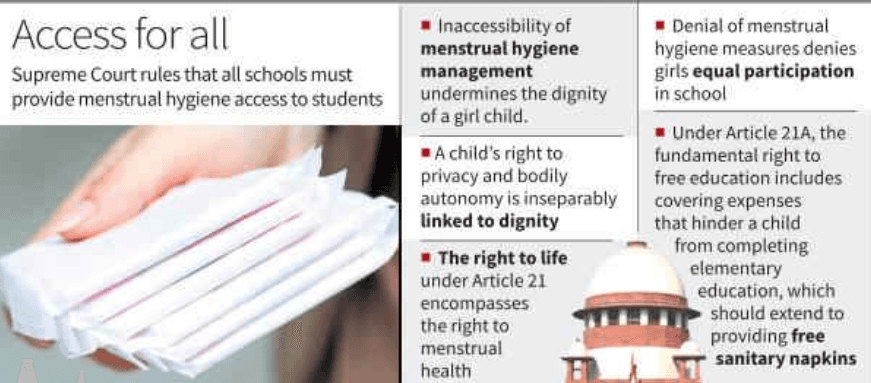
Definition Right to Menstrual Health: SC declares menstrual hygiene management part of Article 21 “Right to Life”

Coverage All schools India; free ASTM D-6954 biodegradable pads, gender-segregated disabled-friendly toilets, MHM corners

Geography Applies nationwide; enforced by District Education Officers with possible de-recognition of non-compliant private schools

Quick Facts for MCQs

Legal & Policy

  • Expansion Article 21 interpreted to include dignity, privacy during menstruation
  • Obligation Facilities termed constitutional duty not welfare freebie
  • Enforcement Annual DEO report uploaded to real-time portal proposed

Education Impact

  • Absenteeism Rural girls previously missed 2-5 days monthly
  • Equality Menstrual poverty recognised as gender-specific learning barrier
  • Retention Pads and privacy aim to curb girl drop-outs in secondary school

Health Angle

  • Infection Poor MHM linked to higher RTIs and bacterial vaginosis 2024-25 studies
  • Dignity Provision prevents humiliation from stains, odour, teasing
  • Awareness Male teachers, students to receive sensitivity training

Implementation Challenges

  • Maintenance Many existing toilets lack water, locks, cleaning budgets
  • Supply chain Remote tribal schools face pad stock-outs under past schemes
  • Disposal Clogged drains common without incinerators, discreet bins

Environmental Impact

  • Waste Biodegradable pad mandate aligns with Solid Waste Management Rules
  • Local production SHGs encouraged to cut cost, reduce transport emissions

Key Data Points

FeatureData-Point
Case nameDr. Jaya Thakur vs Union of India
Core Articles14, 21, 21A of Constitution
School classesVI to XII girls
Pad standardASTM D-6954 oxo-biodegradable
Inspection bodyDistrict Education Officer
Non-compliance penaltyPrivate school de-recognition
Compliance deadline3 months from judgment
Toilet mandateFunctional, gender-segregated, water & soap
Additional aidSpare uniform, innerwear, disposal bags
Feedback toolAnonymous student survey during annual audit

Related UPSC Prelims PYQs

CDS_GK 2022PYQ 1

Which one of the following statements is correct?

GS-2Polity

3.NCW 34th Foundation Day Observed (Statutory Women's Body)

PIB

What & Where

National Commission for Women (NCW): apex statutory watchdog for women’s rights, set up 31 Jan 1992 under NCW Act 1990.

Quasi-judicial; enjoys civil-court powers but only recommendatory enforcement.

HQ: New Delhi; jurisdiction—entire Republic of India.

Quick Facts for MCQs

Background & Evolution

  • CSWI (1974) + National Perspective Plan 1988-2000 urged dedicated women’s body.
  • Act passed 1990; Commission operational from 1992.

Structure & Tenure

  • Chairperson: must show commitment to women’s cause; Member-Sec: sociologist/manager or senior civil servant.
  • Age ceiling ensures leadership rotation and fresh expertise.

Functions & Powers

  • Review constitutional/legal safeguards; recommend amendments to plug lacunae.
  • Submit annual report to Centre; can inspect jails, remand homes, women’s institutions.
  • Suo-motu inquiries into deprivation, non-implementation, policy non-compliance.

Programmes & Capacity Building

  • “She is a Changemaker” trains women for electoral, leadership roles.
  • LBSNAA tie-up: sensitises Protection Officers & police on Domestic Violence Act 2005.
  • Cyber-safety studies, campaigns against online misogyny enhance digital resilience.

Key Data Points

FeatureData-Point
Parent lawNational Commission for Women Act 1990
Foundation Day31 Jan 1992 (34th in 2026)
Nominating authorityCentral Government
Composition1 Chair + 5 Members + Member-Secretary
Mandatory social quota≥ 1 SC & 1 ST member
Tenure3 yrs or 65 yrs age, whichever earlier
Current theme (2026)“Swasthya hi Sashaktikaran”
PowersSummon, examine on oath, call documents—civil-court status
Key grievance tools24×7 helpline, WhatsApp line, Mahila Jan Sunwai
Criticism tag“Toothless tiger” (advisory only)

Related UPSC Prelims PYQs

GEO_GS, GS1 2024PYQ 1

Consider the following statements regarding 'Nari Shakti Vandan Adhiniyam':

GEO_GS, GS1 2024PYQ 2

Consider the following statements:

GS-3Economy

4.UAE Approves USD-Backed Stablecoin (Fintech Regulation)

News on Air
Illustration for UAE Approves USD-Backed Stablecoin (Fintech Regulation)

What & Where

Stablecoin USDU – blockchain token pegged 1:1 to US dollar, cleared by UAE Central Bank.

Issuer Universal Digital regulated inside Abu Dhabi Global Market under Payment Token Services Regulation.

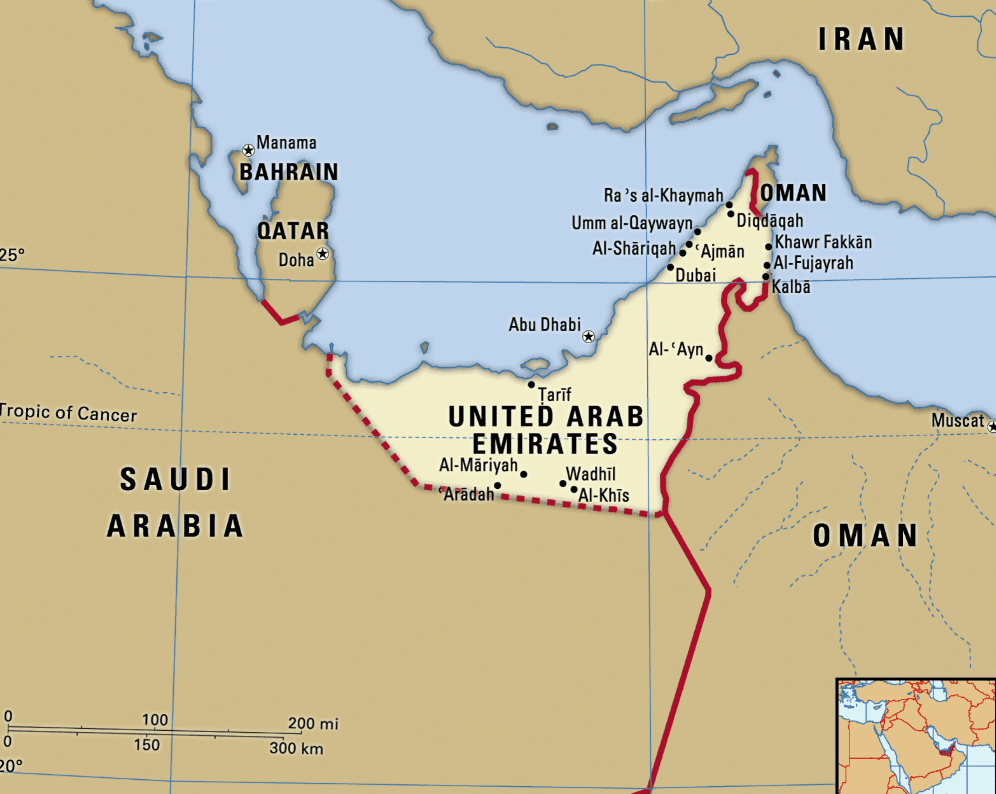
UAE: seven-emirate federation on Persian Gulf & Gulf of Oman abutting strategic Strait of Hormuz.

Quick Facts for MCQs

Legal & Policy

  • Regulation mandates licensing, audited reserves, consumer safeguards for payment tokens.
  • USDU first foreign payment-token issuer registered with UAE Central Bank.
  • Measure bolsters UAE ambition to be rule-compliant digital-asset hub.

Tech & Schemes

  • Blockchain settlement offers near-instant, low-fee, transparent transfers versus correspondent banking.
  • Token integrable with fintech apps, DeFi, point-of-sale systems.
  • Reserves kept in segregated accounts; on-chain supply mirrors off-chain dollars.

Geographical Setting

  • UAE borders Strait of Hormuz, conduit for ~20 % global seaborne oil.
  • Landscape: arid desert, Rub’ al Khali dunes west, Hajar Mountains NE ~2 000 m.
  • No perennial rivers; seasonal wadis dominate drainage.

Economic Angle

  • Diversification push into fintech, AI, blockchain reduces oil dependency.
  • Stablecoin bridges traditional finance with digital economy, luring global capital.
  • Faster, cheaper remittances aid ~80 % expatriate workforce.

Key Data Points

FeatureData-Point
Stablecoin nameUSDU
Peg ratio1 USDU = 1 USD
Reserve backing100 % U.S. dollar holdings
Issuer firmUniversal Digital
Issuer regulatorAbu Dhabi Global Market
Approving authorityCentral Bank of UAE
Legal frameworkPayment Token Services Regulation
Primary usesCross-border pay, trade settlement, remittances
UAE capitalAbu Dhabi
Gulf of Oman emirateFujairah
GS-3Economy

5.New CPI Series 2023-24 (Inflation Measurement)

Indian Express
Illustration for New CPI Series 2023-24 (Inflation Measurement)

What & Where

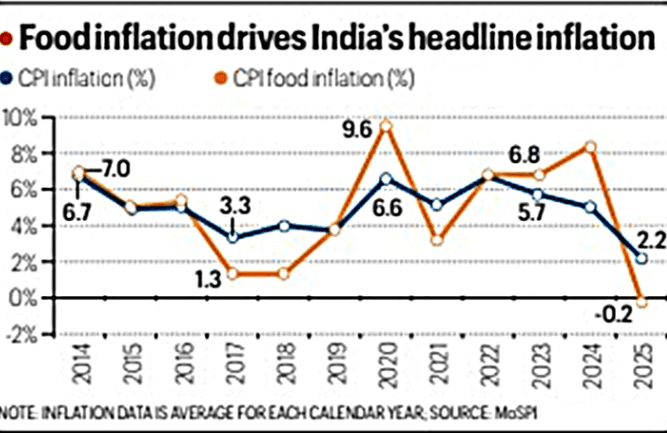
Definition: New CPI (Base 2023-24) measures all-India retail inflation, replacing 2011-12 series

Coverage: 1,465 rural + 1,395 urban markets across 434 towns, plus 12 e-commerce portals

Role: Serves as headline inflation anchor for RBI’s inflation-targeting regime

Quick Facts for MCQs

Methodology Changes

  • Sampling: Inclusion of e-commerce prices for airfares, OTT, telecom
  • Rent index: Now covers rural; excludes employer-provided housing
  • Update cycle: Base-year revision aligns with global five-year norm

Weight Reallocation

  • Food: Drop reflects Engel’s Law and rising income levels
  • Services: Transport, health, education, communication gain greater share
  • Structural: Signals shift toward housing- and services-led consumption patterns

Policy Implications

  • Volatility: Lower food weight dampens weather-induced CPI swings
  • Monetary: Cleaner signal aids RBI rate-setting accuracy
  • Credibility: Modern basket enhances domestic and global confidence in inflation data

Key Data Points

FeatureData-Point
Launching ministryMoSPI
Core data sourceHCES 2023-24
New base year2023-24
Items in basket358 (up from 299)
Food & Beverages weight~36.5 % (earlier ~46 %)
Housing weight17.66 % (earlier 10 %)
Rural markets covered1,465
Urban markets covered1,395
Online markets added12 large-city portals
CPI segmentsRural, Urban, Combined

Related UPSC Prelims PYQs

GS1 2020PYQ 1

Consider the following statements:

GS1 2000PYQ 2

The new Gross Domestic Product (GDP) series released by the Central Statistical Organisation (CSO) in February 1999 is with reference to base price of

GS-3Economy

6.India Energy Week 2026 Highlights (Energy Transition)

PIB

What & Where

India Energy Week (IEW): annual flagship global energy platform, started 2023; 2026 edition hosted in Goa.

Patronage: Ministry of Petroleum & Natural Gas; forum links governments, industry, innovators for secure, affordable, sustainable energy future.

Focus: twin strategy of conventional supply security plus accelerated clean transitions under concept of “energy addition” not replacement.

Quick Facts for MCQs

Energy Transition

  • Paradigm: “Energy addition” demands continued investment in oil, gas, LNG, biofuels, green hydrogen simultaneously.
  • Drivers: emerging markets, digitalisation, integrated energy systems place India at centre of future global demand growth.
  • Price-shielding: OMC interventions averted pass-through; India retains among world’s lowest retail fuel and LPG prices.

International Partnership

  • UAE: reaffirmed reliable crude, LPG supplier; cautioned that underinvestment is biggest global energy system risk.
  • Target: bilateral India-UAE trade to double from USD 100 bn FY25 to USD 200 bn by 2032.
  • Rankings: UAE 4th oil source, 3rd trading partner, 2nd export destination for India.

Legal & Policy

  • Upstream: Oilfield Amendment Act 2025, P&NG Rules 2025, HELP & OALP liberalise basins, simplify regulation.
  • Downstream: Unified Pipeline Tariff under One Nation One Gas Grid curbs regional gas price disparities.
  • Renewables: PM-Surya Ghar, PM-KUSUM, Green Hydrogen Mission, Biofuel Policy achieved 20% ethanol blending by 2025.

Key Data Points

FeatureData-Point
IEW 2026 VenueGoa
IEW First Edition2023
India solar capacity rank (2025)3rd
India wind capacity rank (2025)4th
Electricity capacity from non-fossil50% reached, five years early
UAE rank in India’s oil imports4th
India-UAE trade FY25USD 100.06 bn
Trade target Year 2032USD 200 bn
Ethanol blending achieved20% in 2025
Goa 100% RE target year2050

Related UPSC Prelims PYQs

ESE_GS, GEO_GS 2026PYQ 1

India's installed solar capacity in 2025 is close to

ESE_GS, GEO_GS 2026PYQ 2

What is the name of the initiative launched by India and Denmark in November 2025 to enhance bilateral ties?

GS-1HistoryQuick Bite

7.Mahatma Gandhi Death Anniversary (Freedom Movement Leader)

PIB

What & Where

Martyrs' Day (Shaheed Diwas/Gandhi Punyatithi) commemorates Mahatma Gandhi’s assassination on 30 Jan 1948.

Central homage: Raj Ghat cremation memorial; leaders also gather at Gandhi Smriti (Birla House), New Delhi.

Day is likewise called Sarvodaya Day, echoing Gandhi’s ideal of “upliftment of all”.

Quick Facts for MCQs

Historical Events

  • 30 Jan 1948: Gandhi shot during evening prayer at Birla House.
  • Nathuram Godse hanged 15 Nov 1949, Ambala Central Jail.
  • 2026 marks Gandhi’s 78th martyrdom year.

Commemorative Practices

  • Two-minute nationwide silence and all-religion prayers on 30 Jan.
  • Prime Minister customarily lays wreaths at Gandhi Smriti and Raj Ghat.
  • Sarvodaya Day programmes promote constructive work, village uplift.

International Recognition

  • UNGA Resolution 61/271 (2007) institutionalised 2 Oct as International Day of Non-Violence.
  • Global peace marches, lectures honour Gandhian satyagraha principles.
  • Date aligns with Gandhi’s 1869 birth in Porbandar, Gujarat.

Key Data Points

FeatureData-Point
Assassination date30 Jan 1948
Site of assassinationBirla House (now Gandhi Smriti), New Delhi
AssassinNathuram Godse
Godse execution15 Nov 1949, Ambala Jail
Death anniversary 202678th
National observance nameMartyrs' Day / Gandhi Punyatithi
Main tribute spotRaj Ghat, Delhi
Gandhi birth date2 Oct 1869
UN move (2007)2 Oct declared International Day of Non-Violence

Related UPSC Prelims PYQs

GS1 1998PYQ 1

Which one of the following events was characterised by Montague as ‘Preventive Murder’?

GS-3S&T

8.Stealth Coronal Mass Ejections (Space Weather)

DD News
Illustration for Stealth Coronal Mass Ejections (Space Weather)

What & Where

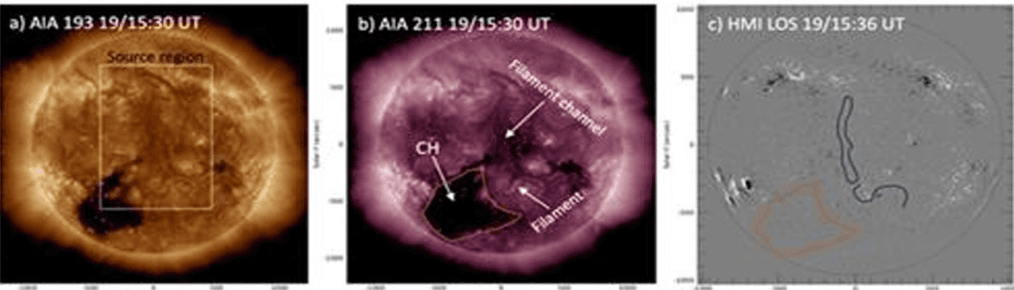
Stealth Coronal Mass Ejection: optically faint solar eruption lacking standard flare/X-ray/radio precursors.

Forms in Sun’s corona near weak active regions or coronal holes; travels through interplanetary space toward Earth.

March 2023 intense geomagnetic storm traced to a stealth CME—highlighting hidden space-weather threats.

Quick Facts for MCQs

Formation Process

  • Flux-rope buildup without explosive flare; gradual magnetic restructuring.
  • Weak magnetic reconnection slowly releases plasma, minimal electromagnetic footprint.
  • CME gains speed along open field lines adjoining coronal holes.

Geoeffectiveness Factors

  • Travels behind/within high-speed streams, boosting impact energy.
  • Cloud expansion en route amplifies magnetic field size.
  • Southward B-field orientation maximises magnetospheric reconnection.

Forecasting & Observation

  • Existing early-warning models rely on flare/radio cues—ineffective for stealth CMEs.
  • Multi-point, coronagraph-plus-heliospheric imagery essential for timely detection.
  • Study showcased coordinated data from four NASA/ESA spacecraft.

Infrastructure Risk

  • Potential outages: satellite control, GNSS precision, HF/VHF radio links.
  • Induces geomagnetically-induced currents threatening long-distance power grids.
  • Flight path rerouting needed during severe polar communication blackouts.

Strategic Significance

  • India’s growing navigation, remote-sensing, telecom constellations heighten vulnerability.
  • Accurate space-weather services vital for Digital India, power sector resilience.
  • Encourages domestic investment in multi-point heliophysics missions.

Key Data Points

FeatureData-Point
Low-coronal signaturesAbsent; no flare, X-ray burst, strong radio spike
Magnetic structureSlow-built twisted flux rope
Typical origin zoneWeak active regions / edges of coronal holes
Key acceleratorHigh-speed solar wind from nearby coronal hole
Geo-effectiveness driverSouthward-oriented magnetic field enabling reconnection with Earth
March 2023 eventSevere geomagnetic storm linked to stealth CME
Main detection toolsSDO, Solar Orbiter, STEREO-A, WIND (multi-spacecraft)
Forecasting gapStandard flare-based alerts ineffective
Critical infrastructure at riskSatellites, GPS, power grids, aviation routes

Related UPSC Prelims PYQs

GS1 2022PYQ 1

If a major solar storm (solar flare) reaches the Earth, which of the following are the possible effects on the Earth ?

GS-3S&T

9.Patent Law Challenges in Space (Space IPR)

The Hindu

What & Where

Outer-space patents: national laws applied to registered spacecraft/​modules under Article VIII OST, 1967

Core clash: territorial IP rights vs sovereignty-free mandate covering Moon, Mars, asteroids

Geography: International Space Station (LEO) now; future integrated lunar bases, Martian habitats

Quick Facts for MCQs

Legal & Policy

  • Patent exclusivity on life-support risks violating Article I “benefit for all humankind”
  • Flags-of-convenience possible by registering craft under weak IP enforcement states
  • OST keeps states liable/responsible even for private actors (Arts VI, VII)

ISS Model Limits

  • Segmented modules enable clear national jurisdiction
  • Multinational lunar base likely integrated, blurring invention location
  • Static ISS precedent inadequate for dynamic surface operations

Coordination Challenges

  • Artemis Accords coordinate traffic, not ownership/enforcement
  • Most countries remain rule-takers; no global IP mechanism yet
  • Uneven adoption hampers shared tech-development for survival systems

IP Loopholes

  • Unclear if “temporary presence” shields space hardware in transit from infringement suits
  • Essential tech patents could create de facto exclusion zones
  • Enforcement void incentivises strategic non-registration

Key Data Points

FeatureData-Point
Outer Space Treaty (OST) adoption1966; in force 1967
OST Articles banning sovereigntyArticle II non-appropriation
OST “benefit of mankind” clauseArticle I
National law trigger in spaceRegistration of space object (Art VIII OST)
ISS legal tool1998 Intergovernmental Agreement; module-by-module jurisdiction
Paris Convention clause queried“Temporary presence” doctrine, 1883
Artemis Accords natureNon-binding coordination; no jurisdiction powers
India & OSTSigned 1967; ratified 1982
States parties to OST115+
GS-2Environment

10.US Withdraws from International Solar Alliance (International Solar Alliance)

The Hindu

What & Where

Alliance: International Solar Alliance (ISA), first treaty-based inter-governmental body focused on solar, conceived at COP-21, Paris 2015.

HQ: Gurugram, Haryana; Assembly = apex decision organ with one vote per member.

Geography: Initially Tropic-zone states; 2020 amendment opened membership to all UN countries.

Quick Facts for MCQs

Institutional Structure

  • Apex: Assembly, assisted by Secretariat & regional centres for capacity-building.
  • Financing: Voluntary country contributions; India supplies bulk core budget.
  • Legal-change: 2020 amendment removed Tropic restriction, enabling universal membership.

Economic Angle

  • Investment-goal: Mobilise USD 1 trillion for solar in Global South by 2030.
  • Risk-mitigation: ISA pushing blended finance, guarantee instruments post-US exit.
  • Market-chance: Void aids Indian EPC firms to win projects in Africa, SIDS.

Tech & Schemes

  • Initiative: SUNRISE Network promotes solar waste recycling, circular economy.
  • Platform: Global Capability Centre + ISA Academy offers AI-based e-learning on PV skills.
  • Grid-focus: OSOWOG targets Asia–Middle East–Europe–Africa interconnections.

International Dynamics

  • Signal: US pullout seen as waning commitment to multilateral climate action.
  • Response: ISA courting EU, Japan, ADB, AIIB to plug finance & tech gaps.
  • Diplomacy: India positioning ISA as neutral, inclusive hub averting climate governance bifurcation.

Key Data Points

FeatureData-Point
Founding partnersIndia & France
Legal formFramework Agreement under UN treaty law
Launch date30 Nov 2015 (COP-21)
US membership period2021 – Jan 2026
Current signatories100+; 90+ ratified
Core strategy‘Towards 1000’ (USD 1 tn, 1 bn people, 1 000 GW, 1 Gt CO₂ cut by 2030)
Key initiativeOSOWOG – global solar power grid
Small-island toolSIDS Solar Procurement Platform with World Bank
Capacity India modules~144 GW; cells ~25 GW
China’s global cell share≈70 %

Related UPSC Prelims PYQs

GS1 2016PYQ 1

Consider the following statements:

GS-2Security

11.New START Nuclear Treaty Overview (Arms Control Treaty)

DD News
Illustration for New START Nuclear Treaty Overview (Arms Control Treaty)

What & Where

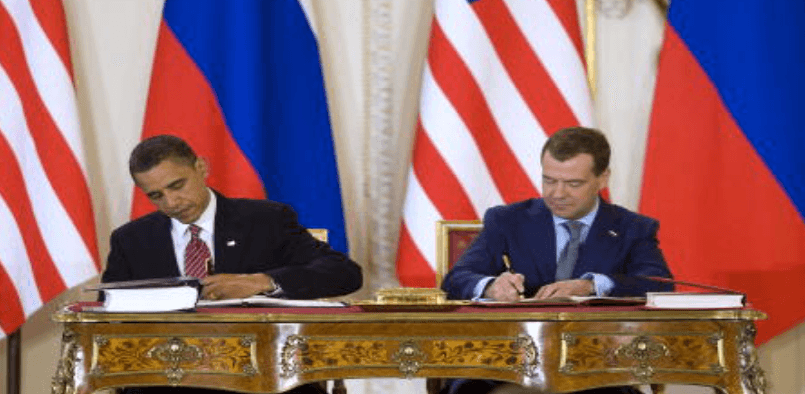
Treaty: Bilateral New START arms-control pact between United States and Russia

Scope: Limits global deployment of strategic ICBMs, SLBMs, heavy bombers and their nuclear warheads

Geography: Governs arsenals of the world’s two largest nuclear powers, signed in Prague

Quick Facts for MCQs

Treaty Caps

  • Warheads: ceiling of 1,550 deployed strategic warheads per country
  • Deployed launchers: maximum 700 ICBMs, SLBMs, heavy bombers
  • Total launchers: 800 including non-deployed reserve systems

Verification & Transparency

  • On-site inspections allow physical confirmation of declared arsenals
  • Mandatory data exchanges provide twice-yearly inventories and movement notices
  • Notification regime builds day-to-day predictability, lowering accidental escalation risk

Status & Strategic Impact

  • Single extension used in 2021; treaty terminates 5 Feb 2026 without successor
  • Russia suspended treaty duties Feb 2023; core numerical limits still informally respected
  • Expiry would erase last US-Russia nuclear limit, spurring possible arms race

Key Data Points

FeatureData-Point
Signed (month / year)April 2010
Entered into forceFebruary 2011
SignatoriesUSA & Russia
Duration clause10 yrs + one 5-yr extension
Current expiry5 February 2026
Warhead ceiling1,550 deployed strategic
Deployed launcher cap700 ICBM + SLBM + bombers
Total launcher cap800 deployed & non-deployed
Verification toolsOn-site inspections, data exchanges, notifications
Russian statusParticipation suspended February 2023

Related UPSC Prelims PYQs

GS1 2011PYQ 1

The “New START” treaty was in the news. What is this treaty?

GS-3SecurityQuick Bite

12.Made-in-India C-295 Rollout (Transport Aircraft Indigenisation)

Indian Express
Illustration for Made-in-India C-295 Rollout (Transport Aircraft Indigenisation)

What & Where

C-295 twin-engine turboprop tactical transport aircraft; medium-range platform for Indian Air Force fleet renewal

Airbus-Tata Final Assembly Line located at Vadodara, Gujarat; first India-built unit slated before September 2026

Part of Rs 21,935 crore 2021 India-Spain contract for 56 aircraft—16 fly-away from Spain, 40 built in India

Quick Facts for MCQs

Security Dimension

  • Fleet-upgrade: 56 C-295s will phase out ageing Avro-748 transporters
  • Capability: Medium-range tactical lift enhances IAF logistics to forward areas

Economic Angle

  • Trade: Goods exchange touched USD 9.32 bn in 2024 led by fuels, chemicals, machinery
  • Investment: Spain holds USD 4.29 bn cumulative FDI, ranking 16th in India
  • Contract: Rs 21,935 cr deal strengthens domestic defence manufacturing ecosystem

Bilateral Relations

  • Partnership: Nations agreed to elevate ties to Strategic Partnership level in 2026
  • Indo-Pacific: Spain joined India-led IPOI, boosting maritime collaboration
  • Soft-power: 2026 marked as Dual Year of Culture, Tourism, Artificial Intelligence celebrating 70 yrs diplomacy

Tech & Industry

  • FAL: Airbus-Tata line in Vadodara creates first private military aircraft assembly in India
  • Manufacturing mix: 40 aircraft indigenously built, 16 delivered ready-to-fly from Spain

Key Data Points

FeatureData-Point
Contract year2021
Deal valueRs 21,935 crore
Total aircraft56
Fly-away units from Spain16
To be manufactured in India40
Indian assembly siteVadodara, Gujarat
Indian partner firmTata Advanced Systems Ltd
First India-built rollout target≤ Sep 2026
Aircraft to be replacedAvro-748 (UK origin)
Aircraft categoryTwin-engine turboprop tactical transport
Partner countrySpain
Spain’s rank in EU trade with India6th
Bilateral trade (2024)USD 9.32 billion
Spain’s FDI rank in India16th
Cumulative Spain FDI in IndiaUSD 4.29 billion
Spain in IPOIJoined
Planned tie status (2026)Strategic Partnership
2026 celebration themeDual Year of Culture, Tourism & AI
GS-3SecurityQuick Bite

13.US 'Discombobulator' Non-Lethal Weapon System (Non-Lethal Weapons)

Indian Express

What & Where

Discombobulator: classified US suite of non-lethal & electronic-warfare tools fielded under Operation Absolute Resolve.

Combines anti-personnel (ADS heat-ray, LRAD sonic cannon, laser dazzler, vortex ring) with anti-infrastructure (EW jammers, CHAMP HPM, graphite bombs) plus Suter cyber package.

First reported theatre: Venezuelan air-defence suppression, 2026.

Quick Facts for MCQs

Anti-Personnel Technology

  • ADS millimetre-wave beam heats outer 2 mm skin to ~55 °C, causing instant pain & flight.
  • LRAD directs 150 dB, 2.5 kHz beam; induces nausea, vertigo, confusion while doubling as hailer.
  • Laser dazzlers (green, Class IIIb/IV) overwhelm retina, give seconds-long blindness without lasting damage.

Anti-Infrastructure Tools

  • EW pods jam radar, comms, sensor links, blinding integrated air defences.
  • CHAMP cruise-missile pulses microwave; fries electronics yet spares buildings & lives.
  • Graphite bombs disperse conductive fibres, short-circuit transformers, triggering wide-area blackouts.

Cyber Warfare

  • Suter loaded on EC-130, F-15, UAVs; penetrates networks from the air.
  • Enables real-time radar spoofing, sensor takeover, SAM mis-targeting.
  • Creates kinetic-cyber synergy: jam, hack, microwave in coordinated wave.

Security Dimension

  • Provides non-lethal option for politically sensitive interventions, reducing collateral casualties.
  • Effects largely reversible, easing post-conflict recovery & legal scrutiny.
  • Blurs escalation ladder, complicating adversary retaliation and international attribution.

Key Data Points

FeatureData-Point
Operation codenameAbsolute Resolve
Deployment theatreVenezuela
System nicknameDiscombobulator
Weapon natureMulti non-lethal & EW suite
Core anti-personnel techADS, LRAD, laser dazzler, vortex ring
Core anti-infrastructure techEW jamming, CHAMP HPM, graphite munitions
CHAMP full formCounter-electronics High Power Microwave Advanced Missile Project
Cyber moduleSuter 1–3
Suter 1 taskMonitor enemy radar
Suter 2 taskSeize enemy sensors
Suter 3 taskHack SAM launcher links
GS-2Scheme

14.NPS Swasthya Pension Scheme (PFRDA Pilot Scheme)

Times of India

What & Where

Scheme; pilot NPS Swasthya Pension Scheme integrates medical-expense cover with pension savings.

Process; operates inside PFRDA Regulatory Sandbox as Proof-of-Concept, limited subscribers.

Geography; open to all Indian citizens, except govt-sector for transfer facility.

Quick Facts for MCQs

Tech & Schemes

  • Multiple Scheme Framework ensures regulated asset allocation, mirrors existing NPS investment norms.
  • Digital consent, online claim workflow enable paperless processing.
  • Health-linked pension a first in NPS ecosystem, may spawn similar hybrid products.

Economic Angle

  • Objective reduce out-of-pocket medical spend, curb asset liquidation during health shocks.
  • Encourages long-term savings by coupling retirement and health security.
  • Pilot data will inform scalability, pricing and fiscal implications for wider roll-out.

Legal & Policy

  • Sandbox approval allows controlled experimentation without full regulatory amendments.
  • Compliance with Digital Personal Data Protection Act 2023 mandated for all data handling.
  • Mandatory disclosures on benefits, fees, exits strengthen consumer protection standards.

Social Concerns

  • Addresses medical impoverishment risk among ageing population lacking employer health cover.
  • Voluntary entry widens coverage beyond organised workforce.
  • Unlimited withdrawal count offers flexibility for chronic disease management.

Key Data Points

FeatureData-Point
RegulatorPension Fund Regulatory & Development Authority (PFRDA)
FrameworkRegulatory Sandbox, Proof of Concept
NatureVoluntary, contributory, sector-specific under NPS
Minimum corpus for first withdrawal₹50,000
OPD/IPD withdrawal limitUp to 25 % of own contributions
Number of withdrawalsUnlimited
Critical illness triggerSingle IPD >70 % corpus → 100 % exit allowed
Transfer from Common A/cUp to 30 % contributions; age >40; non-government
Claims paymentDirect to HBA/TPA/hospital; surplus back to NPS a/c
GovernanceDigital consent per DPDP Act 2023; disclosures & grievance redressal

Related UPSC Prelims PYQs

ESE_GS 2022PYQ 1

Which one of the following statements is NOT correct regarding the Pension Fund Regulatory and Development Authority (PFRDA)?

GS-1Editorial

15.India’s Low Public Health Spending (Health Expenditure)

The Hindu

What & Where

Public health spending = Union + State budget outlays on healthcare services, infrastructure, preventive programmes.

National Health Policy 2017 sets quantitative targets for universal, affordable care across India.

Fiscal locus: Centre finances ~30 %, States ~70 %; transfers via Centrally Sponsored Schemes span all States/UTs.

Quick Facts for MCQs

Fiscal Trends

  • Union-spend dips: 0.37 % GDP (2020-21) to 0.29 % (2025-26).
  • State-spend climbs: 0.67 % → 1.1 % GDP; still below NHP ask.
  • Transfer shrinkage undermines state capacity; CSS share fell 33 percentage points in a decade.

Policy Targets

  • Spending: 2.5 % GDP overall; states ≥8 % budgets by 2025.
  • Health outcomes: MMR 100 (2020); U5MR 23, NCD mortality −25 % (2025).
  • Disease control: TB elimination 2025; sustain kala-azar, leprosy elimination.

Challenges

  • Incentive bias toward visible infrastructure over long-term health systems.
  • Financing architecture fragmented; no ring-fenced, multi-year health pool.
  • Private-sector dominance dilutes public pressure for budget hike.

Reform Proposals

  • Fiscal: widen tax base, health-specific cess, fast-track 15th FC health grants.
  • Efficiency: outcome budgeting, DBT, transparent audits to curb leakages.
  • Legal: enact Right to Health, shift public health to Concurrent List for enforceable norms.

Key Data Points

FeatureData-Point
NHP 2017 public-spend goal2.5 % of GDP by 2025
Target Union share1 % of GDP (≈40 % total)
Actual Union spend 2025-260.29 % of GDP
Peak Union spend Covid year0.37 % of GDP (2020-21)
State spend rise0.67 % → 1.1 % GDP (2017-18 to 2025-26)
Centre share in CSS health funds75.9 % (2014-15) → 43 % (2024-25)
Health & Education Cess to health~25 % of collection in 2023-24
India vs Bhutan per-capita spendBhutan 2.5 × India (2021)
India vs BRICS per-capita spendBRICS average 14-15 × India

Related UPSC Prelims PYQs

CDS_GK, GS1 2021PYQ 1

Which one of the following statements in the context of social sector spending in India during 2014–19 (both States and the Union Government together) is true?

CDS_GK, GS1 2023PYQ 2

Consider the following statements:

Ready to practice?

Test your knowledge with our UPSC test series.

Start Free Trial