UPSC Current Affairs

14 topicsGS-1: 3GS-2: 3GS-3: 8
0/14 done
GS-2Polity

1.SHANTI Nuclear Energy Regulation Act 2025 (Nuclear Energy Regulation)

News on Air
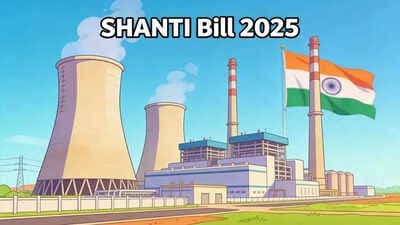
Illustration for SHANTI Nuclear Energy Regulation Act 2025 (Nuclear Energy Regulation)

What & Where

Legislation: SHANTI Act 2025 replaces Atomic Energy Act 1962 + Civil Liability Act 2010, creating unified civil-nuclear law.

Scope: Governs licensing, safety, fuel cycle, liability and decommissioning for all Indian nuclear installations.

Geography: Applies pan-India; compensation jurisdiction extends to foreign states affected by Indian nuclear incidents.

Quick Facts for MCQs

Legal & Policy

  • Unification: Single statute consolidates regulation, safety and liability accelerating clearances.
  • Alignment: Supplier liability removal harmonises with global nuclear conventions.
  • Override: Act prevails over conflicting laws via express supremacy clause.

Liability Provisions

  • Tiering: Variable caps ensure proportionate financial responsibility per reactor capacity.
  • Government: Sovereign assumes claims beyond operator limit, boosting investor confidence.
  • Exclusions: Natural-disaster and war damage exemptions retained from 2010 framework.

Institutional Setup

  • AERB: Chairperson, 1 whole-time, ≤7 part-time experts; tenure 3 yrs extendable to 6.
  • Advisory Council: Chaired by Atomic Energy Commission head; includes BARC, AERB, CEA chiefs.
  • Appeals: Further challenge lies with Appellate Tribunal for Electricity ensuring sectoral consistency.

Market Participation

  • Licensing: Indian private firms may build, own, operate and decommission reactors under AERB oversight.
  • Supply Chain: Non-government entities allowed in fuel fabrication, transport, trade, storage.
  • Investment: Liability reform + JV pathway expected to speed up clean-energy nuclear capacity expansion.

Key Data Points

FeatureData-Point
Replaces ActsAtomic Energy 1962; Civil Liability 2010
Private entries allowedIndian companies & Govt-private JVs; foreign firms barred
Mandatory safety nodAtomic Energy Regulatory Board (AERB)
Liability principleNo-fault operator; compulsory insurance
Cap range₹100 cr – ₹3,000 cr tiered by reactor size
Excess liability bearerCentral Government
Supplier recourseOnly if contractual or deliberate act
Territorial reachCompensation covers damage in foreign states
AERB statusStatutory regulator under Act
Appellate bodyAtomic Energy Redressal Advisory Council
GS-2Polity

2.Prevention of Money Laundering Act Overview (Money Laundering Law)

Indian Express

What & Where

Prevention of Money Laundering Act 2002: central law to stop laundering and seize crime proceeds

Applies to persons, companies, institutions handling illicit gains; enforced by Directorate of Enforcement (ED)

ED HQ New Delhi; network of 10 zonal + 11 sub-zonal offices across India

Quick Facts for MCQs

Legal & Policy

  • Scheduled offences trigger PMLA application
  • Section 19 allows ED arrest on recorded “reason to believe”
  • Punishment includes rigorous imprisonment and fine

Judicial Oversight

  • 2022 verdict upheld constitutionality, denied right to ECIR copy
  • 2024 verdict demanded admissible material for arrest, higher threshold
  • Special PMLA courts take cognisance only after ED complaint accepted

Enforcement Mechanism

  • ED conducts search, seizure, attachment, prosecution under PMLA
  • Banks, intermediaries must maintain records, file suspicious transaction reports
  • ED also implements FEMA 1999 and FEOA 2018

Statistics & Trends

  • ~5,000 PMLA investigations opened 2014-24 indicating aggressive enforcement
  • FY 24-25 attachment orders up 44 % in number, 141 % in value
  • Attached asset value reached ₹15.46 lakh crore by 2025

Key Data Points

FeatureData-Point
Enacted year2002
Came into force1 July 2005
Enforcement agencyDirectorate of Enforcement
ED establishment1956
ED headquartersNew Delhi
Offence natureCognisable & non-bailable
Minimum proceeds for police to inform ED> ₹1 crore
FY 24-25 provisional attachment₹30,036 crore
Assets under attachment 2025₹15.46 lakh crore
New PMLA probes 2014-24~5,000
SC case upholding ActVijay Madanlal Choudhary 2022
SC case raising arrest thresholdArvind Kejriwal 2024
Equivalent property abroad coveredYes
Banks report STRs toFIU-IND

Related UPSC Prelims PYQs

CDS_GK 2021PYQ 1

Which one of the following is not correct in respect of Directorate of Enforcement?

GS-3Economy

3.IMF Rapid Financing Instrument (IMF Emergency Lending)

TI

What & Where

Instrument: IMF Rapid Financing Instrument offering swift, low-access funding for urgent Balance-of-Payments gaps

Availability: Open to all IMF members; activated quickly without a full programme

Windows: Regular BoP-stress window; Large Natural Disaster window when damage ≥ 20 % of GDP

Quick Facts for MCQs

Economic Angle

  • Objective: Provide immediate liquidity to avert reserve depletion, exchange-rate volatility and payment arrears
  • Suitability: Chosen when comprehensive adjustment programme is unnecessary or infeasible
  • Impact: Helps preserve short-term macroeconomic stability and investor confidence

Lending Terms

  • Access: Generally one-off; repeat only in exceptional circumstances
  • Repayment: Semi-annual principal payments start 3¼ years after disbursement, end by 5 years
  • Interest: IMF basic rate; surcharges apply at high credit exposure

Conditionality & Monitoring

  • Oversight: No formal programme reviews; light post-financing surveillance focused on macro stability
  • Expectation: Borrower implements policies addressing root BoP problem
  • Prior actions: Limited, case-specific steps to safeguard IMF resources

Key Data Points

FeatureData-Point
ProviderInternational Monetary Fund
Disbursement styleSingle, rapid tranche
Regular window limit50 % of quota per year; 100 % cumulative
Natural Disaster limit80 % of quota per year; 133.33 % cumulative
Repayment tenure3¼ – 5 years
Interest rateSame as IMF FCL/PLL/SBA
ConditionalityNo ex-post conditionality; limited prior actions
Latest useUSD 206 mn to Sri Lanka after Cyclone Ditwah

Related UPSC Prelims PYQs

GS1 2022PYQ 1

“Rapid Financing Instrument” and “Rapid Credit Facility” are related to the provisions of lending by which one of the following?

GS-3Economy

4.Fertiliser Subsidy Reform Proposal (Fertiliser Subsidy)

Indian Express
Illustration for Fertiliser Subsidy Reform Proposal (Fertiliser Subsidy)

What & Where

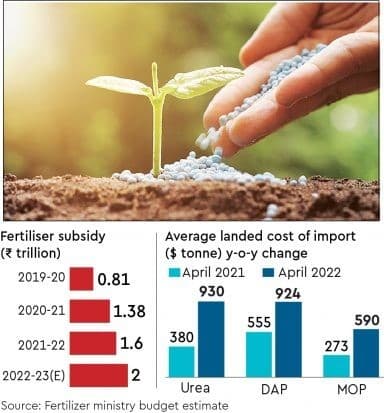
Fertiliser subsidy: Union govt pays makers the gap between production/import cost and capped retail, keeping farm prices low.

Dual regime: urea under price control (₹242/45 kg); P & K under Nutrient-Based Subsidy (NBS).

India: imports ≈ 78 % natural gas, 90 % phosphatics, 100 % potash—high external vulnerability.

Quick Facts for MCQs

Economic Angle

  • Subsidy bill now exceeds Ministry of Agriculture budget; spikes with global gas price surges.
  • Cheapest-globally urea distorts crop choice, depresses demand for costlier P & K.
  • Shift to direct cash support projected to cut outlay by ~₹40k cr without hurting farmers.

Environmental Impact

  • Low NUE causes nitrogen volatilisation, leaching, groundwater nitrate contamination.
  • Skewed N dominance depletes soil carbon and stalls yield growth.
  • Declining fertiliser–grain response signals diminishing marginal productivity.

Tech & Schemes

  • Agri Stack: land records + PM-KISAN + satellite data for plot-wise fertiliser caps.
  • PoS devices & e-RUPI vouchers restrict purchase to authorised dealers, curb diversion.
  • Promotion of complex fertilisers, fertigation and micronutrients to boost NUE.

Policy Prescriptions

  • Bring urea under NBS; rebalance subsidies toward P & K for nutrient harmony.
  • Gradual price decontrol paired with income transfers shields 85 % smallholders.
  • Digital tracking, quantity ceilings and geo-tagging deter industrial misuse & smuggling.

Key Data Points

FeatureData-Point
Budget rank2nd-largest subsidy after food
FY26 projection~₹2 lakh crore
Urea share in subsidy≈ 66 %
Fixed urea MRP₹242 per 45-kg bag
Current N:P:K use ratio10.9 : 4.4 : 1
Recommended N:P:K ratio4 : 2 : 1
Nitrogen Use Efficiency35–40 %
Fertiliser–grain response 1970s1 : 10
Fertiliser–grain response 2015~1 : 2.7
Reported urea diversion20–25 % of supply
Potential annual saving via reform~₹40,000 crore

Related UPSC Prelims PYQs

CDS_GK, NDA_GAT 2020PYQ 1

As per the Budget Estimates of expenditure on major subsidies during 2019–20, the maximum expenditure was likely to be on

CDS_GK, NDA_GAT 2022PYQ 2

Which one of the following statements about fertilizers is not correct?

GS-3EconomyQuick Bite

5.Risk-Based Deposit Insurance Framework (Deposit Insurance)

The Hindu

What & Where

RBI okays Risk-Based Premium framework for deposit insurance across Indian banks

Replaces flat-rate model run by DICGC since 1962

Applies nationwide from FY 2026-27, linking cost to each bank’s risk profile

Quick Facts for MCQs

Legal & Policy

  • Policy shift introduces soundness-linked, not uniform, insurance premium
  • Framework approved December 2025, notified for next fiscal
  • Differential premium anchored to individual bank risk metrics

Economic Angle

  • RBP aligns insurance cost with risk promoting stronger capital adequacy
  • Removes cross-subsidy where safer banks financed riskier ones
  • Strengthens financial stability and market discipline in sector

Banking Governance

  • Model incentivises prudent risk management and governance reforms
  • Higher risk now directly increases recurring insurance expense
  • Discourages excessive risk-taking without reducing depositor cover

Key Data Points

FeatureData-Point
Implementing authorityReserve Bank of India
Administering entityDeposit Insurance & Credit Guarantee Corporation
Old premium rate12 paise per ₹100 assessable deposits
Policy start yearFY 2026-27
Earlier regime in force since1962

Related UPSC Prelims PYQs

ESE_GS, GEO_GS 2024PYQ 1

To increase transparency and consumer awareness and handle customer complaints, a 'Centralised Receipt and Processing Centre' and an 'Integrated Ombudsman Scheme' have been set up. These two schemes are related to which one of the following institutions?

ESE_GS, GEO_GS 2026PYQ 2

A bank generated savings credit of ₹1,600 crore in the first round from a savings deposit of ₹2,000 crore. What is the Cash Reserve Ratio fixed by the Central Bank?

GS-1History

6.National Maritime Heritage Complex Lothal (Maritime Heritage)

Indian Express

What & Where

National Maritime Heritage Complex (NMHC) — India’s first dedicated maritime‐heritage institution, showcasing 4,500-yr sea legacy.

Sited at Lothal, Harappan port-town near Ahmedabad, Gujarat; hosts world’s earliest man-made dockyard.

Led by Ministry of Ports, Shipping & Waterways; MoU signed with Netherlands for design & conservation support.

Quick Facts for MCQs

International Collaboration

  • Partnership; Dutch expertise in museology, conservation, interactive curation.
  • Aims global maritime fairs, exhibitions, cultural exchanges at NMHC.
  • Supports India’s Sagarmala vision of port‐led development.

Harappan Heritage

  • Lothal dockyard linked Sindh, Saurashtra, Mesopotamia, Egypt via ancient sea lanes.
  • Evidence: advanced town planning, tidal regulation, bead & metallurgy workshops.
  • Continuity; 5,000-yr Indian maritime tradition highlighted in NMHC narrative.

Tech & Schemes

  • Immersive displays; AR/VR, holograms narrate shipbuilding, navigation, naval battles.
  • Inclusive access; subsidised tickets for students, local & marginal groups.
  • Aligns with ‘Digital India’ & tourism promotion schemes.

Key Data Points

FeatureData-Point
ProjectNational Maritime Heritage Complex
Site locationLothal, 78 km SW of Ahmedabad
Civilization eraIndus Valley, ~2400 BCE
Excavated byArchaeological Survey of India
Excavation year1957
Iconic structureEarliest tidal dockyard
Nodal ministryPorts, Shipping & Waterways
MoU partner (2023)Netherlands, National Maritime Museum–Amsterdam
Core componentWorld-class maritime museum with themed galleries
Added facilityMaritime research & training centre

Related UPSC Prelims PYQs

GEO_GS, NDA_GAT 2025PYQ 1

The National Maritime Heritage Complex (NMHC) is proposed to be developed at which one of the following places?

GEO_GS, NDA_GAT 2021PYQ 2

Which one of the following Harappan sites was a specialised centre for making shell objects?

GS-1Mapping

7.Bhima River Mapping Dispute (Indian Rivers)

Times of India
Illustration for Bhima River Mapping Dispute (Indian Rivers)

What & Where

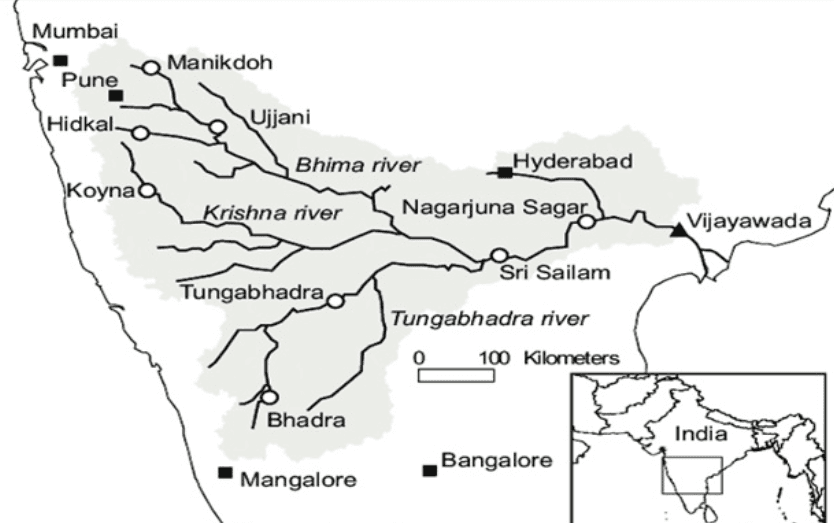
Major perennial Krishna tributary; called Chandrabhaga near Pandharpur

Originates Bhimashankar hills, Pune; flows 861 km SE across Maharashtra, Karnataka, Telangana

Meets Krishna 24 km north of Raichur; longer than Krishna at confluence

Quick Facts for MCQs

Inter-State Issue

  • Karnataka alleges Maharashtra exceeding agreed Bhima water allocation, terming use unauthorised
  • State seeks Union Jal Shakti ministry / CWC intervention for measurement and compliance

Hydrology & Agriculture

  • Hydrology monsoon dependent; flood prone in rains, near stagnant summer months
  • Irrigation supports sugarcane; rainfed areas cultivate jowar, bajra, oilseeds across basin

Cultural Significance

  • Bhimashankar Jyotirlinga near source a major pilgrimage centre
  • Pandharpur Vitthal Temple on Chandrabhaga hosts massive annual wari procession

Key Data Points

FeatureData-Point
Main riverKrishna
Alternate nameChandrabhaga
OriginBhimashankar hills, Pune
Total length861 km
Basin area~70,614 sq km
States traversedMH, KA, TG
Left-bank tributariesSina, Nira, Ghod, Vel
Right-bank tributariesIndrayani, Mula–Mutha, Pavana, Man, Bhogavati
Key KA tributaryKagna
Confluence site24 km N of Raichur

Related UPSC Prelims PYQs

GS1, NDA_GAT 2024PYQ 1

Which of the following tributaries is/are correctly matched with the Deccan Rivers?

GS1, NDA_GAT 2019PYQ 2

Consider the following pairs:

GS-3Environment

8.IUCN Species Survival Commission Chair Election (IUCN SSC)

MB

What & Where

SSC: largest IUCN expert network, founded 1949 to curb global species loss

Composition: scientists, governments, NGOs, research bodies working via IUCN Secretariat

Locale: worldwide reach; 2025-29 chair from India, first Asian to lead Commission

Quick Facts for MCQs

Leadership Milestone

  • Election: Vivek Menon chosen SSC Chair for 2025-29
  • First: Ends 75-year absence of Asian leadership in Commission
  • Representation: Boosts Global South voice in biodiversity governance

Organisational Structure

  • Commission: One of six IUCN expert bodies
  • Collaboration: Partners with Secretariat, national governments, NGOs, research institutions
  • Network: Largest, most influential scientific species forum under IUCN

Core Functions

  • Red List: Publishes global extinction risk categories—CR, EN, VU, etc.
  • Planning: Crafts recovery plans, reintroductions, habitat management using Species Conservation Cycle
  • Policy: Issues standards guiding CBD, CITES, national wildlife laws

Key Data Points

FeatureData-Point
Parent bodyInternational Union for Conservation of Nature (IUCN)
Expert commissions in IUCNSix
SSC establishment year1949
SSC new Chair term2025–2029
New Chair nameVivek Menon
Chair’s distinctionFirst Asian, first Global South leader
Flagship productIUCN Red List of Threatened Species
Species Conservation CycleAssessment → Planning → Action
Core aimsPrevent extinctions; recover threatened species; ensure equitable, sustainable biodiversity use

Related UPSC Prelims PYQs

CDS_GK, GEO_GS 2024PYQ 1

Which organisation publishes worldwide list of endangered species?

CDS_GK, GEO_GS 2025PYQ 2

The Species Survival Commission of the International Union for Conservation of Nature (IUCN) conferred the 'Harry Messel Award (2024)' upon

GS-3Environment

9.Southern Ocean Carbon Sink Anomaly (Ocean Carbon Cycle)

The Hindu
Illustration for Southern Ocean Carbon Sink Anomaly (Ocean Carbon Cycle)

What & Where

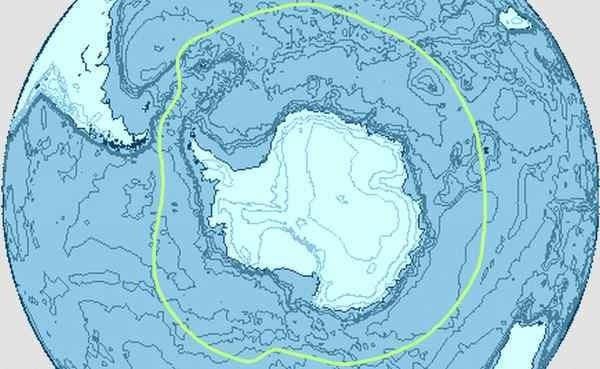
Definition: Southern Ocean carbon anomaly = unexpected strengthening of Southern Ocean carbon sink since early 2000s, contrary to model forecasts.

Core process: Freshwater-driven surface stratification blocks CO₂-rich deep water from venting, maintaining net absorption.

Geography: Southern Ocean encircling Antarctica, influenced by intensified Southern Hemisphere westerlies and Antarctic meltwater.

Quick Facts for MCQs

Physical Drivers

  • Freshening: Meltwater lowers surface salinity, increases buoyancy, forms stable “lid”.
  • Upwelling: Stronger westerlies pull carbon-rich Circumpolar Deep Water upward yet below surface.
  • Eddy action: Mesoscale eddies and ice-shelf cavity dynamics reinforce stratification; poorly resolved in coarse models.

Model Limitations

  • Resolution: Coarse grids miss small-scale eddies and shelf processes critical for vertical mixing.
  • Chemistry: Underrepresentation of freshwater flux effects on carbonate chemistry and gas exchange.
  • Validation: Sparse, seasonal observations hinder calibration of Southern Ocean modules.

Climate Implications

  • Buffer: Extra uptake temporarily slows atmospheric CO₂ growth, buying limited mitigation time.
  • Reversal risk: Thinning stratification could abruptly release stored carbon, flipping sink to source.
  • Urgency: Reinforces need for rapid emission cuts; natural sinks cannot be banked on.

Policy & Monitoring

  • Observation: Year-round polar ocean monitoring essential to track stratification and CO₂ flux changes.
  • Model upgrade: Integrate fine-scale physics, freshwater inputs, biogeochemistry into next-gen climate models.
  • Mitigation priority: Policymakers advised against over-relying on oceanic carbon sinks for NDC calculations.

Key Data Points

FeatureData-Point
First detectionEarly 2000s observation datasets
Predicted model outcomeShift from sink to CO₂ source under warming
Actual outcomeContinued & strengthened carbon uptake
Key wind systemIntensified Southern Hemisphere westerlies
Stratification driverFreshwater from Antarctic ice-melt & higher rainfall
Depth of trapped deep water~100–200 m below surface
GS-3Environment

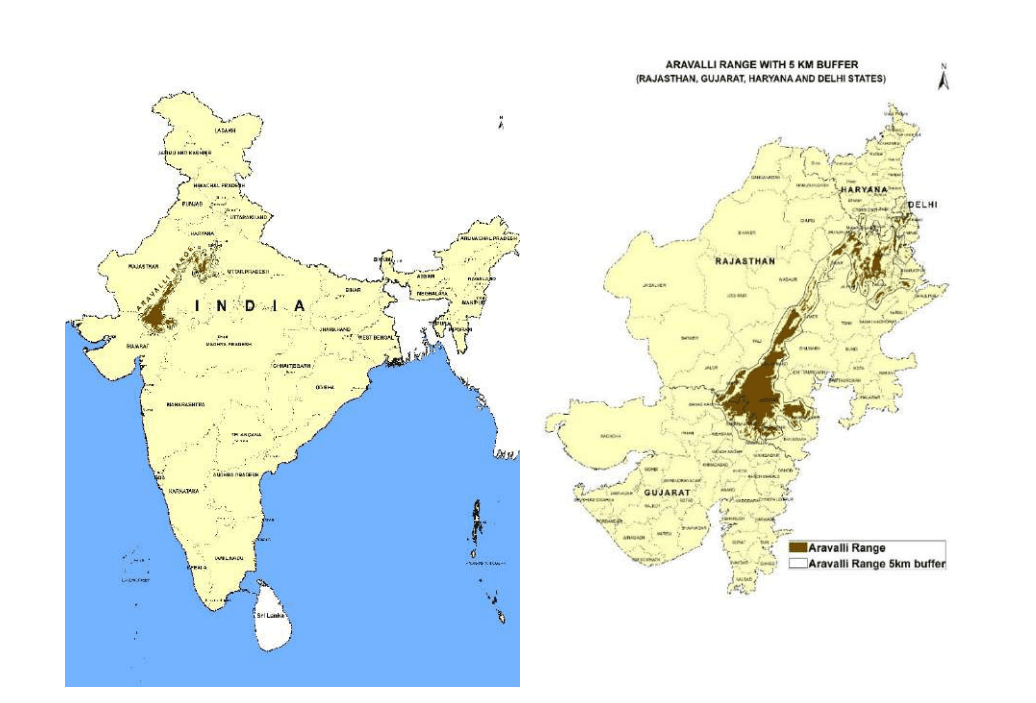
10.Supreme Court Aravalli Hills Definition (Aravalli Conservation)

The Hindu
Illustration for Supreme Court Aravalli Hills Definition (Aravalli Conservation)

What & Where

Aravalli: Precambrian range, ~800 km Gujarat–Delhi via Rajasthan & Haryana; highest point Guru Shikhar 1,722 m.

SupremeCourt: 2025 definition—hill ≥ 100 m above local terrain; range = ≥ 2 such hills within 500 m.

Ecology: natural barrier to Thar, major watershed for semi-arid northwest India.

Quick Facts for MCQs

Legal & Policy

  • SupremeCourt: freezes new leases, seeks Sustainable Mining Plan before resumption.
  • Protection: absolute ban on mining in protected areas, ESZ, tiger reserves, wetlands.
  • Oversight: advocates drones & satellite surveillance to curb illegal extraction.

Criticisms & Risks

  • FSI: ≥90 % landscape omitted under 100 m rule, creating regulatory void.
  • Groundwater: slope loss threatens recharge, risking NCR–Rajasthan aquifers.
  • Desertification: weakened barrier may hasten Thar advance, intensifying dust storms.

Restoration Schemes

  • AravalliGreenWall: 1,400 km belt aiming ecological resilience & dust reduction.
  • Afforestation: native Calligonum, Acacia planted to stabilise dunes, cut wind erosion.
  • CommunityWater: revival of taankas, jhalaras, talab-bandis boosts watershed health.

Economic Angle

  • Minerals: >70 commercial ores including zinc, lead, marble, granite.
  • RajasthanShare: ~80 % of Aravalli mining concentrated in state.
  • UrbanHubs: Gurugram, Jaipur, Alwar exploit proximity, escalating ecological pressure.

Key Data Points

FeatureData-Point
Geological age~2 billion years
Highest peakGuru Shikhar 1,722 m
SC order month-yearNov 2025
Hill height threshold≥100 m local relief
Range clustering distance≤500 m between hills
New lease statusFrozen pending Management Plan
Plan preparing agencyICFRE
Green Wall size1,400 km × 5 km
Restoration target1.1 million ha by 2027
Wildlife sanctuaries22 in landscape

Related UPSC Prelims PYQs

GS1 1995PYQ 1

Which one of the following mountain ranges is spread over only one State in India?

GS1 2001PYQ 2

The approximate age of the Aravalli’s range is

GS-3Species

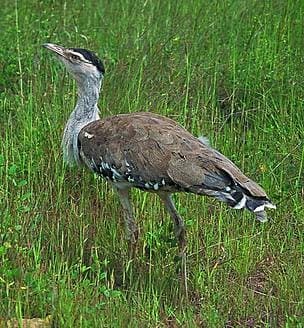
11.Great Indian Bustard Protection (Critically Endangered Bird)

Down to Earth
Illustration for Great Indian Bustard Protection (Critically Endangered Bird)

What & Where

Great Indian Bustard (Ardeotis nigriceps): heaviest flying bird, flagship grassland species, state bird of Rajasthan

Core range now: Thar Desert landscapes of Rajasthan & Kutch, Gujarat; remnant pockets in MH, KA, AP

Green Energy Corridor: national grid project channeling solar-wind power, routes pass through Rajasthan–Gujarat deserts

Quick Facts for MCQs

Legal & Policy

  • Supreme Court ordered realignment/undergrounding of GEC lines to protect bustards
  • Schedule I status mandates highest penalties for offences
  • Rajasthan designates species as state bird, enabling focused state funding

Habitat & Ecology

  • Prefers open, flat grass-scrub mosaics with minimal disturbance
  • Ground-nester; relies on monsoon greening for insect-rich foraging
  • Acts as umbrella species for arid-zone biodiversity

Threats

  • Power-line strikes cause majority of recent adult mortalities
  • Habitat fragmentation from agriculture, roads, wind-solar farms
  • Predation on eggs/chicks by free-ranging dogs and foxes

Tech & Schemes

  • Green Energy Corridor Phase-II targets 20 GW renewable evacuation by 2025
  • Rajasthan & Gujarat sections prioritized for underground cables in bustard zones
  • Funding mix: KfW loan, PowerGrid, state utilities (40:40:20 ratio)

Key Data Points

FeatureData-Point
IUCN statusCritically Endangered
WLPA, 1972 listingSchedule I
CITES listingAppendix I
CMS (Bonn)Listed Migratory Species
Global population≈ 200 individuals
Average height~1 m
Wingspan210–250 cm
Adult weight15–18 kg
Clutch sizeSingle egg during monsoon
Key threatCollision with overhead power lines

Related UPSC Prelims PYQs

GS1 2010PYQ 1

Consider the following pairs:

GS1 2012PYQ 2

Which one of the following groups of animals belongs to the category of endangered species?

GS-3SecurityQuick Bite

12.Bureau of Port Security Formation (Maritime Port Security)

PIB

What & Where

Bureau of Port Security (BoPS) – new statutory regulator for risk-based security of all Indian ports & vessels.

Created under Section 13, Merchant Shipping Act 2025; housed in Ministry of Ports, Shipping & Waterways.

Nationwide mandate covering major/minor ports, terminals and linked shipping facilities.

Quick Facts for MCQs

Legal & Policy

  • Statutory creation ensures parliamentary oversight and rule-making powers for port security.
  • Section 13 amendment anchors BoPS functions, powers, funding.
  • Regulatory safeguards restrict port security work to duly licensed Private Security Agencies.

Institutional Setup

  • Single-point DG heads BoPS; ensures unified command over security audits & compliance.
  • CISF remains on-ground RSO conducting assessments and drawing port security plans.
  • BCAS-style template enables quick adoption of proven SOPs and training curricula.

Cyber & Tech

  • New Cyber Security Division protects OT/IT infrastructure of ports against malware, ransomware, spoofing.
  • Emphasis on vulnerability mapping, real-time monitoring, incident response drills.

Security Dimension

  • Risk-based methodology aligns with ISPS Code for ships & port facilities.
  • CISF-led PSA training standardises guard quality, access control, screening procedures.
  • Lessons intended for transfer to aviation sector, fostering integrated internal security architecture.

Key Data Points

FeatureData-Point
Enabling lawMerchant Shipping Act 2025, Sec 13
Parent ministryMoPSW
Body statusStatutory, regulatory & oversight
Head rankDirector General, IPS, Pay Level-15
Transition arrangementDG Shipping doubles as DG-BoPS for 1 year
Institutional modelBureau of Civil Aviation Security (BCAS)
Dedicated wingMaritime Cyber Security Division
Recognised Security Org.CISF for ports
PSA certificationTraining & licensing by CISF
Cross-sector aimMaritime best-practices to aid aviation security

Related UPSC Prelims PYQs

GS1 2008PYQ 1

Department of Border Management is a Department of which one of the following Union Ministries?

GS-2Scheme

13.Viksit Bharat Rural Employment Act 2025 (Rural Employment Guarantee)

DD News

What & Where

Nationwide Act (2025) replacing MGNREGA; statutory rural employment-cum-livelihood framework under Viksit Bharat @ 2047.

Guarantees ≥ 125 days unskilled manual work per rural household; unemployment allowance if job demand unmet in 15 days.

Centrally Sponsored Scheme; differentiated Centre–State cost-sharing; keeps Gram Sabha–Panchayat as core planners.

Quick Facts for MCQs

Legal & Policy

  • Maintains justiciable right to work; excess spending beyond normative allocation borne by states without diluting right.
  • National & State Steering Committees added for oversight, convergence, dispute redressal.
  • States still liable for unemployment allowance and delay compensation.

Funding Pattern

  • Normative annual state-wise allocations notified by Centre using population, poverty and climate vulnerability indices.
  • Expenditure beyond allocation non-reimbursable by Centre, incentivising efficient planning.

Planning & Convergence

  • Works originate in Viksit Gram Panchayat Plans; integrated upward into district, state and PM Gati Shakti master plans.
  • Asset geo-tagging feeds National Rural Infrastructure Stack to avoid duplication and enable convergence with other CSS.

Tech & Accountability

  • Biometric attendance, GIS geo-tagged assets, real-time dashboards, weekly online disclosure mandated.
  • Social audits by Gram Sabhas strengthened; findings to be acted upon within 30 days by implementing agency.

Key Data Points

FeatureData-Point
Year of enactment2025
ReplacesMahatma Gandhi NREGA 2005
Statutory work guarantee≥ 125 days/household/year
Job provision deadline15 days of demand
Scheme categoryCentrally Sponsored Scheme
Centre:State share (most states)60:40
Centre:State share (NE & Himalayan)90:10
Centre funding for UTs w/o legislature100 %
Max agricultural pause60 days/year
Thematic work areas4 (water, core infra, livelihood infra, climate resilience)

Related UPSC Prelims PYQs

CDS_GK 2022PYQ 1

Which one of the following statements with regard to the National Rural Employment Guarantee Act, 2005 is correct?

CDS_GK 2024PYQ 2

Which one among the following statements about the objectives of Vibrant Village Programme is correct?

GS-1Polity

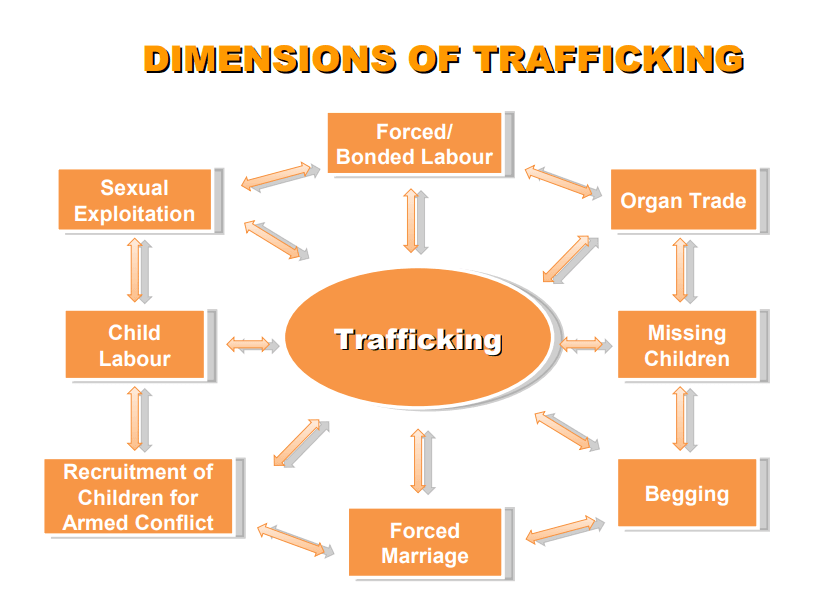
14.Supreme Court Child Trafficking Guidelines (Child Trafficking)

The Hindu
Illustration for Supreme Court Child Trafficking Guidelines (Child Trafficking)

What & Where

Definition: recruitment-to-receipt of any child through coercion/deception for exploitation—sexual, labour, slavery, organ removal.

Process: multilayered, often cross-border; India–Nepal porous corridor a favoured transit chain.

Hotspots: source villages, railway/bus hubs, urban dark stores & quick-commerce warehouses.

Quick Facts for MCQs

Judicial Guidelines

  • Testimony: sole, credible child account can convict; minor inconsistencies ignored.
  • Sensitivity: courts weigh socio-economic vulnerability; avoid “no-protest” bias.
  • Protection: mandate trauma-minimising, child-friendly courtroom processes.

Legal & Policy

  • BNS 2023 allows life term for trafficking; beggary listed as exploitation.
  • POCSO 2012 & JJ Act 2015 ensure child-friendly investigation, rehabilitation funding.
  • Treaties: UNCTOC Trafficking Protocol & SAARC 2002 convention ratified by India.

Implementation Gaps

  • Data: delayed NCRB updates, fragmented missing-child registers weaken alerts.
  • Tech: social-media grooming, fake talent hunts bypass traditional policing.
  • Jurisdiction: multi-state, border-skipping rings outpace single-state probes.

Prevention Strategy

  • Village mapping: VCPCs list dropout/migrant households; welfare convergence counters push factors.
  • Transit vigilance: GRP/RPF, porters, vendors trained; helpline posters in local languages.
  • Destination checks: periodic inspections of placement agencies, brick kilns, dark stores; zero tolerance for child labour.

Key Data Points

FeatureData-Point
Constitutional bar on traffickingArticle 23
New penal code sectionsBharatiya Nyaya Sanhita 2023 §§143-144
Core anti-CSE statuteImmoral Traffic (Prevention) Act 1956
National child helpline1098 (emergency 112)
SC witness status for trafficked child“Injured witness” with sole testimony sufficient

Related UPSC Prelims PYQs

GS1 2017PYQ 1

Which of the following are envisaged by the Right against Exploitation in the Constitution of India?

Ready to practice?

Test your knowledge with our UPSC test series.

Start Free Trial