UPSC Current Affairs

12 topicsGS-1: 2GS-2: 3GS-3: 7
0/12 done
GS-2Polity

1.Indian Ports Act 2025 Provisions (Port Legislation)

PIB
Illustration for Indian Ports Act 2025 Provisions (Port Legislation)

What & Where

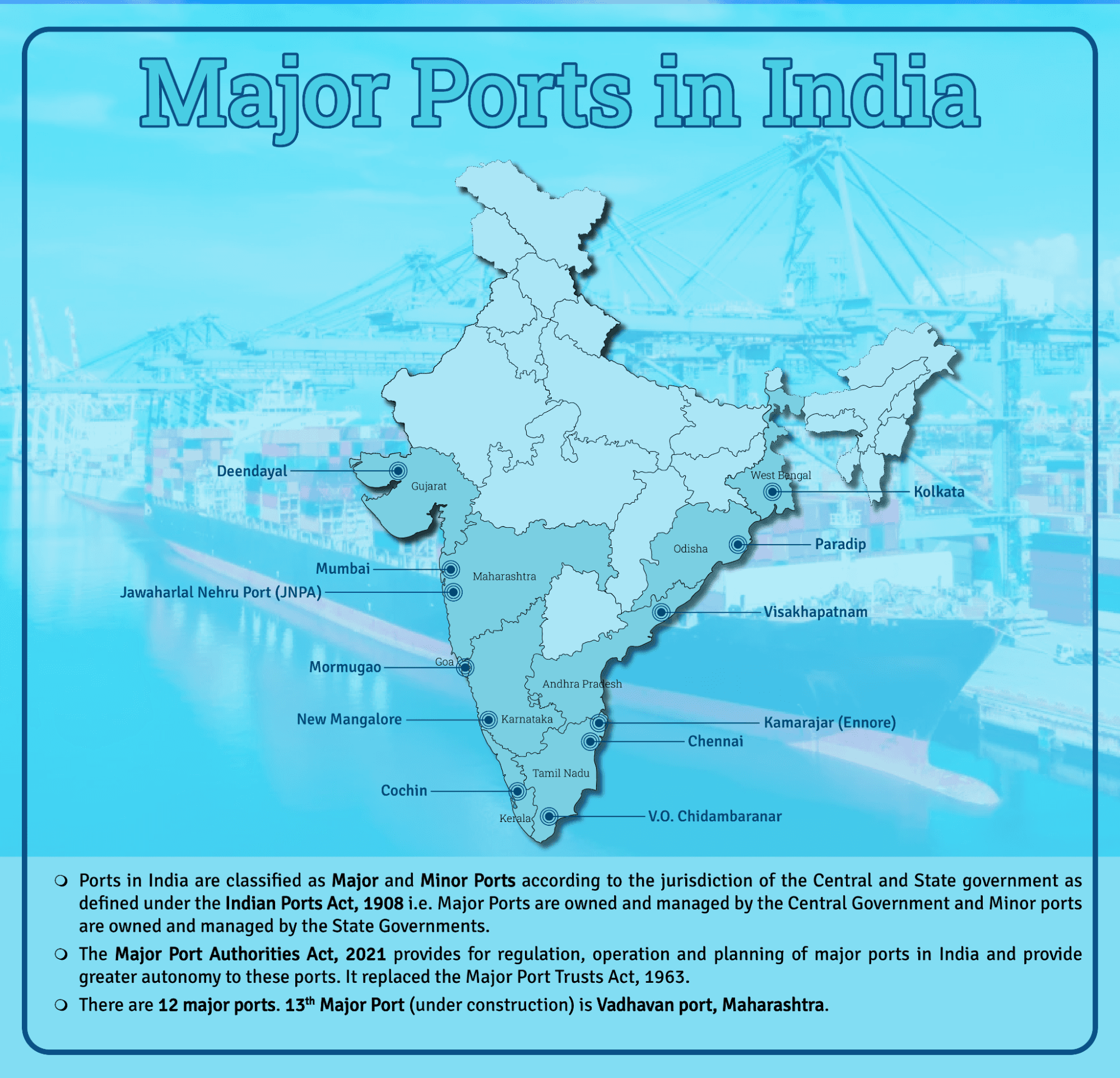
Indian Ports Act 2025; replaces 1908 law; enables integrated, competitive port governance

Coverage: 12 major and 200+ non-major ports; distinct governance, tariff, dispute mechanisms

Geography: applies to all coastal states; 13th major port proposed at Vadhavan, Maharashtra

Quick Facts for MCQs

Legal & Policy

  • Replacement: supersedes 1908 Act; aligns with cooperative federalism, Maritime India Vision
  • Statutory: gives legal status to Maritime State Development Council for national planning

Governance Structure

  • Conservator: government appointee controls vessel movement, fees, health checks, penalties
  • StateBoards: manage non-major ports—planning, licensing, tariffs, safety

Tariff & Dispute

  • Tariffs: major ports rates by Port Authority Board; non-major by State Board/concessionaire; online disclosure
  • Disputes: dedicated DRCs; appeals to High Courts; arbitration option

Safety & Sustainability

  • Compliance: harsher penalties; mandatory audits; disaster readiness
  • Conventions: enforces MARPOL, Ballast Water norms against pollution

Digital & Efficiency

  • Tech: Maritime Single Window cuts paperwork, improves clearances
  • Traffic: advanced VTS reduces congestion, boosts safety

Key Data Points

FeatureData-Point
Replaced Act1908
PassageAug 2025
EXIM volume share~95%
EXIM value share~70%
Existing major ports12
Upcoming major portVadhavan, Maharashtra
Non-major ports200+
New statutory bodiesState Maritime Boards; MSDC
Major port tariff setterPort Authority Board
Key conventionsMARPOL; Ballast Water

Related UPSC Prelims PYQs

ESE_GS, GS1 2026PYQ 1

What is the name of the national digital framework launched at India Maritime Week 2025 to make Indian ports data-driven and AI-enabled?

ESE_GS, GS1 2023PYQ 2

Consider the following pairs:
GS-3Editorial

2.Landscape-Driven Green Economy Model (Green Economy)

The Hindu
Illustration for Landscape-Driven Green Economy Model (Green Economy)

What & Where

Concept: Green economy enables low-carbon, resource-efficient, inclusive growth across India’s rural-urban landscapes

Scope: Landscape approach links land, water, biodiversity, energy, local markets via village-to-macro participatory planning

Geography: Maharashtra, Karnataka, Gujarat, Telangana lead bioeconomy; north-eastern and tribal states contribute under 6 %

Quick Facts for MCQs

Economic Angle

  • Investment: Bioeconomy expanded 16 × to USD 165.7 bn
  • Jobs: Green transition estimated 35 mn jobs by 2030
  • Competitiveness: Green exports buffer against carbon border taxes

Social Concerns

  • Disparity: Urban areas capture majority green investment, rural adoption remains slow
  • Gender: Women occupy 11 % rooftop solar jobs, only 1–3 % technical roles
  • Tribal: Resource-rich northeast contributes under 6 % to national bioeconomy

Tech & Schemes

  • Policy: BioE3, National Bio-Energy Mission, NAPCC anchor transition efforts
  • Digital: AI, IoT, 5G/6G labs targeted for smart grids and carbon markets
  • Incentives: Green budgeting, fiscal sops, public procurement boost clean innovation

Challenges

  • Cost: Green tech in steel, cement priced over 4 × conventional methods
  • Subsidy paradox: 40 % fossil support weakens renewable gains
  • Resource risk: Solar pumps may accelerate groundwater over-extraction

Key Data Points

FeatureData-Point
Bioeconomy size 2024USD 165.7 bn
Decadal growth16 × (2014–24)
GDP share4.25 %
Ethanol blending target met20 %
Renewable capacity rise250 % (2015–21)
Projected green jobs35 mn by 2030
Women in rooftop solar11 %
Hard-to-abate GHG share23 % of emissions
Fossil-fuel subsidy shareUp to 40 %
Urban solid waste share75 % of total
Rural households in agriculture58 %

Related UPSC Prelims PYQs

CDS_GK 2024PYQ 1

‘ग्रीन क्रेडिट इनिशिएटिव’ के संदर्भ में, निम्नलिखित में से कौन-सा/कौन-से कथन सही है/हैं?

CDS_GK 2023PYQ 2

भारत के "ब्लू ग्रोथ" से क्या अभिप्राय है ?

GS-1History

3.Bhagat Singh 118th Birth Anniversary (Freedom Fighter)

Times of India

What & Where

Revolutionary; Bhagat Singh led socialist wing of Indian National Movement during late-1920s British India.

Born 28 Sep 1907, Banga, Punjab (now Pakistan); activities centered Lahore–Delhi belt.

Core platforms: Hindustan Socialist Republican Association & Naujawan Bharat Sabha; rallying slogan Inquilab Zindabad.

Quick Facts for MCQs

Family & Formative Events

  • Lineage: family steeped in freedom struggle; uncle Ajit Singh later in San Francisco Ghadar circle.
  • Trigger: Jallianwala Bagh brutality cemented anti-colonial resolve.
  • Education: National College imbued him with Swadeshi and revolutionary literature.

Organizational Work

  • Membership: joined HRA, helped morph into HSRA stressing socialist programme.
  • Mobilisation: launched Naujawan Bharat Sabha to radicalise youth across Punjab.
  • Strategy: promoted mass propaganda through Kirti, Pratap, Veer Arjun newspapers.

Major Actions & Trials

  • Protest: Assembly bombs deliberately low-intensity, aimed at ‘sound not kill’.
  • Retaliation: Saunders assassination avenged Lala Lajpat Rai’s lathi-charge death.
  • Verdict: death sentence alongside Rajguru & Sukhdev after 116-day jail hunger-strike heroics.

Ideology & Writings

  • Influence: read Marx, Lenin, Trotsky, Bakunin; rejected religious orthodoxy.
  • Essay: “Why I Am an Atheist” defends rationalism, questions divine intervention.
  • Journalism: advocated peasant-worker unity through Kirti Kisan Party journal.

Legacy & Commemoration

  • Title: revered as Shaheed-e-Azam in public memory.
  • Slogan: Inquilab Zindabad became pan-Indian revolutionary greeting.
  • Memorials: 23 Mar nationwide tributes; museums at Hussainiwala, Punjab and Delhi’s Cellular Jail galleries.

Key Data Points

FeatureData-Point
Birth anniversary marked28 Sep 2025 (118th)
ParentsKishan Singh & Vidyavati
Influential massacre seenJallianwala Bagh, age 12
College joinedNational College, Lahore
First revolutionary groupHindustan Republican Association, 1924
Youth front foundedNaujawan Bharat Sabha, 1926
Assembly-bomb date8 Apr 1929 with B.K. Dutt
Bills protestedPublic Safety & Trade Dispute Bills
Police officer shotJ.P. Saunders, 17 Dec 1928
Trial nameLahore Conspiracy Case
Execution23 Mar 1931, Lahore Central Jail
Ideological leaningsAtheism, Marxist-Socialism
Key essay“Why I Am an Atheist”
Pseudonyms usedBalwant, Ranjit, Vidhrohi
Martyrs’ Day observed23 Mar (Shaheed Diwas)

Related UPSC Prelims PYQs

GEO_GS, GS1 2003PYQ 1

With reference to Indian freedom struggle, which one of the following statements is correct?

GEO_GS, GS1 2023PYQ 2

Who among the following revolutionaries founded the Hindustan Socialist Republican Army?

GS-1Mapping

4.Musi River, Krishna Tributary (Indian Rivers)

New Indian Express
Illustration for Musi River, Krishna Tributary (Indian Rivers)

What & Where

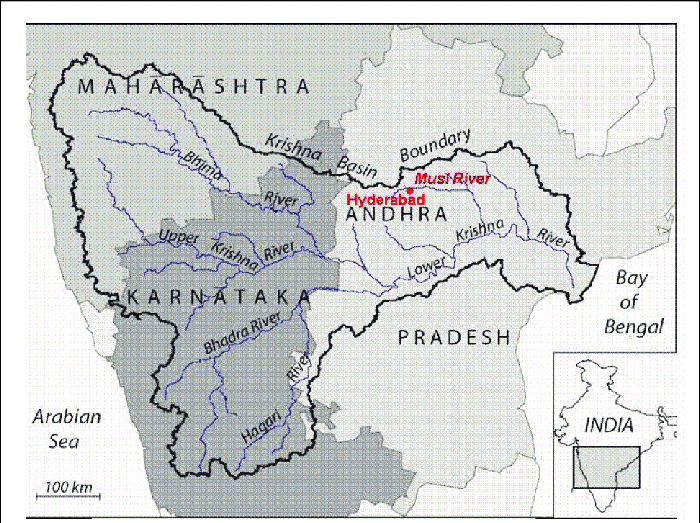
Tributary; Musi River (aka Muchukunda/Musunuru) rises in Ananthagiri Hills, Telangana

Flows east, then south, meets Krishna River at Vadapally near Miryalaguda

Cuts through Hyderabad, separating Old City from newer quarters

Quick Facts for MCQs

Urban Planning

  • Alignment shaped Hyderabad’s historical expansion, fortifications, bridge network
  • Lakes Osman Sagar & Himayat Sagar created (1920s) for potable water and flood moderation
  • River corridor now heavily encroached, reducing carrying capacity

Flood Hazard

  • Sudden gate openings at Osman & Himayat Sagar amplify downstream discharge
  • Low-lying colonies, bus depots routinely submerged during monsoon cloudbursts
  • Impervious urban surfaces heighten runoff, quickening peak flow arrival

Water Supply

  • Both reservoirs still supply drinking water to Hyderabad-Secunderabad twin cities
  • Catchment degradation lowering storage quality, increasing treatment costs
  • Dependence on Krishna lift schemes growing as Musi yield declines

Key Data Points

FeatureData-Point
StateTelangana
River systemKrishna Basin
Alternate namesMuchukunda, Musunuru
SourceAnanthagiri Hills, Vikarabad district
Flow directionEastward, turning south at Chittaloor
Confluence pointVadapally, Nalgonda district
Key reservoirsOsman Sagar, Himayat Sagar
Urban centres on banksHyderabad, Secunderabad
Flood vulnerabilityHigh during heavy rain & reservoir releases

Related UPSC Prelims PYQs

GEO_GS 2020PYQ 1

The state of Telangana is drained by two major rivers. What are they?

GEO_GS 2023PYQ 2

Which one of the following is a tributary of Krishna River?

GS-3Environment

5.New Ramsar Wetlands in Bihar (Ramsar Wetlands)

PIB
Illustration for New Ramsar Wetlands in Bihar (Ramsar Wetlands)

What & Where

Ramsar Sites: wetlands tagged for international conservation under the 1971 Ramsar Convention

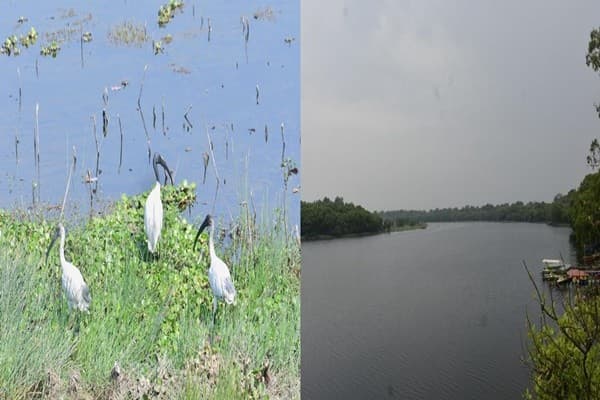
New Additions: Gokul Jalashay & Udaipur Jheel, both oxbow lakes in Bihar floodplain of the Ganga

India now hosts 93 Ramsar wetlands, the highest count in Asia

Quick Facts for MCQs

Site Profiles

  • Gokul Jalashay: southern Ganga edge; flood buffer; supports fishing, farming, irrigation
  • Udaipur Jheel: surrounds a village; hosts endemic herb Alysicarpus roxburghianus; vital winter refuge for Common Pochard
  • Both lakes formed by abandoned river meanders characteristic of oxbow morphology

Biodiversity

  • Vegetation richness: Udaipur lists 280 + plant species including endemics
  • Avifauna diversity: combined lakes exceed 85 bird species across resident and migratory categories
  • Vulnerability flag: Common Pochard classified Vulnerable by IUCN present at Udaipur

Community & Use

  • Livelihoods: fishing, irrigation water, small-scale agriculture around both wetlands
  • Cultural practice: Gokul villagers conduct annual community-led cleaning rituals
  • Ecosystem service: natural flood buffering safeguards adjacent settlements

Growth Trend

  • India trajectory: 26 sites in 2012 to 93 in 2025 indicating 257 % rise
  • Policy push: 51 designations achieved within last five years reflects expedited nomination process
  • Area coverage: Indian Ramsar wetlands span ~13.6 lakh hectares

Key Data Points

FeatureData-Point
Convention signedRamsar, Iran, 1971
Convention in force1975 under UNESCO
India Ramsar tally (Sep 2025)93 sites
Sites added by India since 202051
India global rank by count3rd (after UK, Mexico)
Bihar Ramsar sites after update5
Gokul Jalashay area448 ha
Udaipur Jheel area319 ha
Gokul resident bird species50 +
Udaipur wintering migratory birds~35 species

Related UPSC Prelims PYQs

CDS_GK 2022PYQ 1

Which of the following about Khijadiya Bird Sanctuary is/are correct?

CDS_GK 2022PYQ 2

With reference to Bhindawas Wildlife Sanctuary, Sultanpur National Park, Thol Lake Wildlife Sanctuary and Wadhwana Wetland, which of the following statements is/are correct?

GS-3Environment

6.Cold Desert Biosphere Reserve, Himachal (UNESCO Biosphere)

The Hindu
Illustration for Cold Desert Biosphere Reserve, Himachal (UNESCO Biosphere)

What & Where

Cold Desert Biosphere Reserve (CDBR): India’s 16th BR (2009); first high-altitude cold desert site, now in UNESCO-WNBR (2025).

Geography: Entire Spiti Wildlife Division + adjoining Lahaul areas (Baralacha Pass-Sarchu); altitude 3,300–6,600 m; Himachal Pradesh.

Components: Pin Valley NP, Kibber WLS, Chandratal Wetland—windswept plateaus, glacial valleys, alpine lakes, driest Trans-Himalayan ecosystem.

Quick Facts for MCQs

Biodiversity

  • Flora: Willow-leaved sea-buckthorn, Himalayan birch, Persian juniper provide medicinal & ecological value.
  • Fauna: Supports Himalayan griffon, ibex, bearded vulture, red fox, Tibetan gazelle—critical for trophic balance.

WNBR & MAB

  • Objective: Promote North–South & South–South cooperation, knowledge exchange, best-practice replication for sustainable landscapes.
  • Governance: Operates under UNESCO’s Man and the Biosphere (MAB) Programme.

Indian Scheme

  • Launch: National BR scheme, 1986; India signatory to MAB landscape approach.
  • Management: State drafts Action Plan; vetted by Central MAB Committee; periodic monitoring mandated.

Key Data Points

FeatureData-Point
Year declared BR2009
UNESCO WNBR entrySep 2025
Altitude range3,300–6,600 m
Key flora numbers14 endemic, 68 native, 62 threatened spp.
Iconic faunaSnow leopard, Himalayan wolf, Tibetan antelope
Global WNBR size785 sites in 142 countries
New area under WNBR (since 2018)≈1 million km² (≈Bolivia)
India: total BR / in WNBR18 / 13
Central aid ratio (NE & 3 Himalayan)90:10 Centre:State
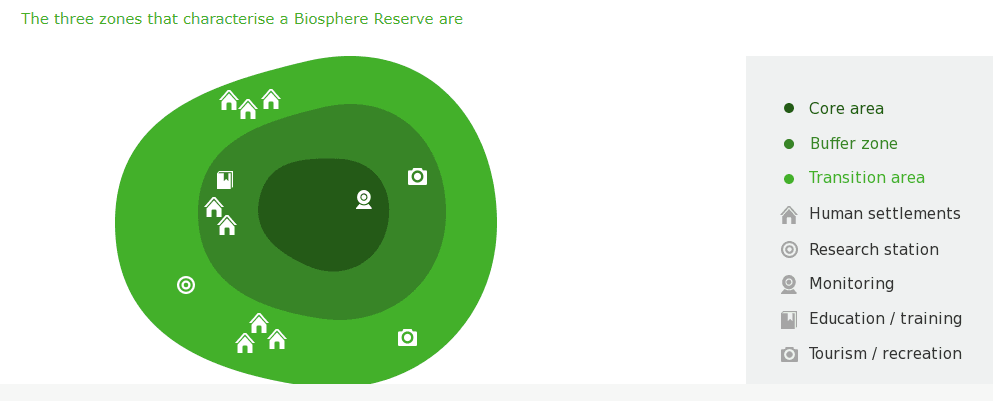
ZonationCore, Buffer, Transition

Related UPSC Prelims PYQs

CDS_GK, GEO_GS 2024PYQ 1

Biosphere Reserve Programme was initiated by:

CDS_GK, GEO_GS 2021PYQ 2

In the year 2020 which one of the following tiger reserves of India was declared by UNESCO as a Biosphere Reserve?

GS-3Environment

7.Environmental Accounting on Forests 2025 (Forest Accounting)

PIB

What & Where

Environmental Accounting on Forest 2025 – MoSPI’s 1st forest-account report aligned to UN-SEEA statistical framework.

Gives national & state/UT asset, extent, condition, service accounts for 2010-11/13-14 to 2021-22/23.

India formally adopted SEEA in 2018; report covers 7.15 lakh km² forest (21.76 % of area).

Quick Facts for MCQs

Forest Asset Trends

  • Physical asset account shows largest absolute cover jump since 2010-11.
  • Extent gains mainly via reclassification, boundary fixes, not fresh afforestation.

Ecosystem Services

  • Provisioning services limited share of GDP; timber & NTFP dominate.
  • Regulating services (carbon retention) valued 16× higher than provisioning.

State Standouts

  • Southern trio drove cover gain; central states boosted biomass stock.
  • Himalayan & NE states dominate carbon-retention valuation despite smaller economies.

Key Data Points

FeatureData-Point
VolumesI-methodology & national; II-state/UT
Forest cover gain 2010-22+17,444.61 km² (22.50 %)
Current forest cover7.15 lakh km²; 21.76 % GA
Top cover-gain statesKerala, Karnataka, Tamil Nadu
Forest extent change 2013-23+3,356 km²
RFA gain leadersUttarakhand, Odisha, Jharkhand
Growing stock rise+305.53 million m³ (7.32 %)
GS gain leadersMadhya Pradesh, Chhattisgarh, Telangana
Provisioning value 2021-220.16 % of GDP
Provisioning top statesMaharashtra, Gujarat, Kerala
Regulating value 2021-222.63 % of GDP
Regulating top statesArunachal Pradesh, Uttarakhand, Assam
SEEA genesisUN-EC-FAO, 2012

Related UPSC Prelims PYQs

CDS_GK, ESE_GS 2026PYQ 1

According to Environmental Accounting on forest 2025 report, which state showed the highest rise in Recorded Forest Area (RFA) share?

CDS_GK, ESE_GS 2023PYQ 2

There is an increase in forest cover area of India between 2011 and 2021. However, there is a decrease in forest cover area of India during the same period in

GS-3S&T

8.BSNL Indigenous 4G Telecom Stack (Indigenous Telecom)

LiveMint

What & Where

BSNL’s Swadeshi 4G Stack: India’s first end-to-end indigenous, cloud-native, 5G-ready telecom solution.

Built by C-DOT (core), Tejas Networks (RAN), TCS (integration); implemented nationwide by BSNL.

~98,000 towers commissioned across India, targeting remote, border and tribal areas.

Quick Facts for MCQs

Tech & Schemes

  • Cloud-native design enables seamless software upgrades and horizontal scaling.
  • Stack supports digital payments, telemedicine, e-governance, online education, precision farming.
  • 4G hardware future-proofed for 6G research and trials.

Strategic Significance

  • Autonomy: Reduces reliance on foreign vendors, enhances telecom security.
  • Sovereignty: Builds domestic control over critical information infrastructure.
  • Alignment: Advances National Security Council’s call for trusted telecom products.

Economic Angle

  • Jobs: Stimulates employment across manufacturing, R&D, deployment and maintenance.
  • Supply Chains: Encourages localisation of components, boosting Make-in-India electronics.
  • Cost Saving: Indigenous equipment curbs forex outflow on telecom imports.

Digital Inclusion

  • Connectivity: Extends mobile broadband to unserved habitations in far-flung zones.
  • Services Uptake: Enables government schemes, DBT and digital literacy in underserved areas.

Key Data Points

FeatureData-Point
Mission tagAatmanirbhar Bharat
Implementing PSUBharat Sanchar Nigam Ltd (BSNL)
Core network developerC-DOT
Radio Access NetworkTejas Networks
System integratorTata Consultancy Services
Towers commissioned≈98,000
Upgrade pathDirect 4G → 5G without major hardware change
Architecture typeCloud-native, end-to-end Indian
Global rank5th nation with own telecom stack
Villages targeted29,000–30,000 (Digital Bharat Nidhi)

Related UPSC Prelims PYQs

CDS_GK, ESE_GS 2026PYQ 1

The Samriddh Gram Phygital Services Pilot Project was recently launched by which organization?

CDS_GK, ESE_GS 2024PYQ 2

Which one of the following is an ‘end-to-end secure mobile ecosystem’ developed recently by the Indian Army?

GS-3S&T

9.AstroSat Multiwavelength Space Observatory (AstroSat Observatory)

The Hindu

What & Where

AstroSat – India’s first dedicated multi-wavelength space observatory in low-Earth orbit

Simultaneous UV, visible, soft-X & hard-X observations of celestial objects

Launched by PSLV-C30 from Satish Dhawan Space Centre, Sriharikota (28 Sept 2015)

Quick Facts for MCQs

Tech & Schemes

  • UVIT delivers 1.8″ spatial resolution, among world’s sharpest UV imagers
  • CZTI enables X-ray polarimetry above 100 keV, rare capability worldwide
  • SSM scans entire sky every 6 hours, issuing transient alerts to astronomers

Scientific Findings

  • Detected far-UV photons from galaxies 9 billion light-years distant, mapping early star formation
  • Measured fastest spinning stellar-mass black holes via LAXPC timing precision
  • Resolved extended lobes of Butterfly Nebula, clarifying mass-loss mechanisms in dying stars

Capacity Building

  • Over 50 % Principal Investigators are Indian students or early-career researchers
  • Generated >600 refereed papers, placing India on global high-energy astrophysics map
  • Training programmes run at IUCAA, IIA, TIFR leveraging AstroSat archival data

Key Data Points

FeatureData-Point
Mission typeMulti-wavelength astronomy satellite
Launch date28 September 2015
Launch vehiclePSLV-C30 (XL)
OrbitLow-Earth, 650 km (circular)
Payload count5 instruments
InstrumentsUVIT, LAXPC, CZTI, SXT, SSM
Observation bandsUV, visible, soft-X, hard-X
Lead agencyISRO with Indian institutes
Foreign partnersCanada, United Kingdom
Open data policyAccessible to global scientists after lock-in
Time in orbit10 years completed (2025)

Related UPSC Prelims PYQs

ESE_GS, GS1 2016PYQ 1

With reference to ‘Astrosat’, the astronomical observatory launched by India, which of the following statements is/are correct?

ESE_GS, GS1 2024PYQ 2

AstroSat space telescope has crossed a major milestone by detecting 600th Gamma-Ray Burst launched by which one of the following countries?

GS-3S&TQuick Bite

10.Nightmare Bacteria and NDM-1 Gene (Antimicrobial Resistance)

Times of India

What & Where

Definition: Carbapenem-resistant Enterobacteriaceae (CRE) dubbed “nightmare bacteria”

Key types: Klebsiella pneumoniae and Escherichia coli carrying NDM-1 enzyme

Geography: Fivefold US surge 2019-23; gene first reported South Asia now global

Quick Facts for MCQs

Health Impact

  • Mortality: Severe often fatal infections due to limited effective drugs
  • Clinical focus: Bloodstream sepsis, pneumonia, complicated UTIs
  • Treatment gap: Resistance undermines multiple powerful antibiotic classes

Global Spread

  • Regional hub: South Asia major reservoir of NDM producers
  • Vectors: International travel and trade facilitate cross-border transmission
  • Public health: AMR recognised as worldwide threat beyond US borders

Science & Mechanism

  • Gene action: NDM-1 encodes metallo-β-lactamase hydrolysing carbapenems
  • Mobility: Plasmid-borne gene enables rapid horizontal transfer between bacteria
  • Result: Broad multidrug resistance hampers standard therapeutic protocols

Key Data Points

FeatureData-Point
Surge in US NDM-1 cases~5× rise between 2019-2023
Full form of NDM-1New Delhi Metallo-β-lactamase-1
Drug class neutralisedCarbapenem last-resort antibiotics
Typical infection sitesBloodstream, lungs, urinary tract
AMR agents involvedBacteria, viruses, fungi, parasites
GS-2Misc

11.Men's Cricket Asia Cup 2025 Overview (Asia Cup)

NDTV

What & Where

Continental men’s cricket championship held biennially under Asian Cricket Council to crown Asia’s top national side

Matches given official ODI or T20I status by ICC; since 2016 format alternates each edition

17th edition (2025) staged in UAE, played as T20 Internationals

Quick Facts for MCQs

Historical Context

  • Inaugurated 1984; remains only continental cricket tournament in world
  • Format alternates ODI and T20I since 2016 for World Cup prep
  • Boycotts recorded when bilateral relations between members sour

India’s Performance

  • Dominant side with highest 9 trophies, including back-to-back titles 2023 & 2025
  • Unbeaten versus Pakistan throughout 2025 campaign, final chase anchored by Varma
  • Seven ODI and two T20I crowns highlight versatility across formats

Organisational Aspects

  • Asian Cricket Council oversees event to foster regional goodwill through sport
  • Neutral UAE chosen repeatedly to circumvent security and diplomatic hurdles
  • Official mascot “Sheru” projects strength, courage and pan-Asian unity

Key Data Points

FeatureData-Point
Edition17th (2025)
Host venueUnited Arab Emirates
Reason for venueIndia-Pakistan political tensions
Format 2025T20 International
Teams8 (all ACC full members)
ChampionIndia
Runner-upPakistan
Winning margin5 wickets
India total titles9 (7 ODI, 2 T20I)
Sri Lanka titles6
Pakistan titles2
Man of the Match (final)Tilak Varma 69* (53)
Man of the SeriesAbhishek Sharma
Mascot 2025“Sheru” the lion
ACC founded1983

Related UPSC Prelims PYQs

CDS_GK, GEO_GS 2024PYQ 1

आई सी सी अंडर-19 पुरुष क्रिकेट विश्व कप, 2024 के संदर्भ में, निम्नलिखित में से कौन-सा/कौन-से कथन सही है/हैं?

CDS_GK, GEO_GS 2025PYQ 2

The host country of the inaugural Kho Kho World Cup, 2025 is

GS-2Scheme

12.Guidelines for Public EV Charging Stations (EV Charging)

Times of India

What & Where

National guidelines by Ministry of Heavy Industries for rapid public EV-charging rollout across India

Executed under ₹10,900 cr PM E-DRIVE scheme; BHEL named Project Implementation Agency

Goal: 72,300 subsidised chargers covering cities > 1 mn, state capitals & major transport corridors

Quick Facts for MCQs

Tech & Schemes

  • PM E-DRIVE umbrella now spans vehicles, components & public chargers for holistic EV ecosystem
  • Mix of AC slow, DC fast and battery-swap units allowed under common technical standards
  • BHEL to oversee procurement norms, quality audits, backend software integration

Subsidy Structure

  • 100 % subsidy limited to government buildings, schools, hospitals, residential colonies with open public access
  • 80 % infra /70 % equipment for high-traffic hubs: airports, metro stations, toll plazas, oil PSUs
  • Flat 80 % subsidy extended to shopping malls, highway eateries, independent battery-swapping stations

Implementation Mechanism

  • State/UT nodal agencies upload aggregated site proposals to a dedicated MHI portal
  • Disbursals split between installation completion & subsequent performance verification
  • Focus corridors include railway stations, bus depots, fuel pumps, national highways for range-anxiety reduction

Key Data Points

FeatureData-Point
Scheme segmentPM E-DRIVE – Charging Infra
Central support earmarked₹2,000 crore
Target public stations72,300 units
Implementing agencyBHEL (PIA)
Max subsidy — govt premises100 % capex
Subsidy — airports/metros/tolls80 % infra + 70 % chargers
Subsidy — malls/highway outlets80 % capex
Priority citiesPopulation > 1 million & smart cities
Subsidy releaseTwo-phase, performance-linked
Nodal responsibilityStates aggregate demand, pick sites

Ready to practice?

Test your knowledge with our UPSC test series.

Start Free Trial