UPSC Current Affairs

11 topicsGS-1: 1GS-2: 3GS-3: 7
0/11 done
GS-2PolityQuick Bite

1.India Proposes Nuclear Liability Fund (Nuclear Liability)

Business Standard

What & Where

Nuclear Liability Fund: proposed statutory corpus to cover post-accident compensation beyond operator cap in Indian civil reactors.

Embedded in forthcoming Atomic Energy Bill amending Atomic Energy Act 1962 & CLNDA 2010.

Applicable nationwide; designed to draw private and foreign players into India’s nuclear expansion.

Quick Facts for MCQs

Legal & Policy

  • Bill revises liability architecture, inserting fund under Atomic Energy Act 1962, CLNDA 2010.
  • Mirrors CSC 1997 supplementary compensation structure, enhancing treaty compliance.
  • Nuclear Damage Claims Commission retains adjudicatory role for victims.

Economic Angle

  • Statutory fund caps supplier exposure, encouraging foreign OEMs and domestic private equity.
  • Replaces ad-hoc payouts; complements 2015 insurance pool by adding legal certainty.
  • Expected to spur investments in reactors and ancillary uranium mining.

Energy Transition

  • Nuclear expansion integral to baseload decarbonisation for 2070 net-zero.
  • Fund removes financial bottleneck, supporting rapid scale-up from current <3 % share.
  • Provides cleaner, reliable power to meet rising demand without fossil surge.

Key Data Points

FeatureData-Point
Present nuclear share in electricity< 3 %
Planned capacity growth12-fold by 2047
Operator liability ceiling (CLNDA)₹1,500 crore
Govt supplementary liability300 million SDRs (rupee equivalent)
Fund payout triggerClaims exceeding ₹1,500 crore
CSC 1997 ratification by India2016
Nuclear insurance pool creation2015
Net-zero target year2070
GS-3Economy

2.India Combats Counterfeit Seeds in GI Crops (Seed Traceability)

LiveMint

What & Where

Counterfeit seeds: uncertified, mislabelled or substandard seed packets causing crop failure and export-quality risks.

SATHI system: Seed Authentication, Traceability & Holistic Inventory; QR-based end-to-end monitoring, Phase I 2023 → Phase II 2025.

Focus geography: GI crops like Basmati (Indo-Gangetic belt); fraud hotspots—Telangana, Rajasthan, Gujarat, West Bengal.

Quick Facts for MCQs

Legal & Policy

  • Amendment: Makes certification & traceability compulsory; fixes liability on dealers, firms; stricter penal provisions.
  • Loophole: “Truthfully labelled” clause allows uncertified sales, weakening farmer protection.
  • Enforcement: Raids, FIRs filed, yet persistent counterfeit trade highlights regulatory gaps.

Tech & Schemes

  • SATHI Phase I covers production/processing in 23 States; Phase II extends to dealers, farmers via QR scanning.
  • Infrastructure: 178 STLs; 10 NABL, 2 ISTA labs ensure global-grade testing.
  • Innovation: Blockchain-enabled traceability proposed through public-private R&D tie-ups.

Economic Angle

  • Basmati exports: Major foreign-exchange earner, premium global branding for India.
  • Industry growth: Expected 10 % CAGR, reaching US $20 bn by 2040.
  • Market structure: Corporates dominate cotton (98 %) and ~70 % field/vegetable seeds.

Challenges

  • Awareness gap: Smallholders often ignorant of certification, easy targets for cheap fake seeds.
  • Logistics: Rural connectivity, IT adoption critical for nationwide digital traceability.
  • Equity issue: Compliance costs may edge out small seed firms, fostering oligopoly risks.

Key Data Points

FeatureData-Point
Basmati share in India’s rice export value≈60 %
Seed samples tested 2024-252.53 lakh
Substandard samples found 2024-2532,525
Seed Testing Labs (STLs) in India178
NABL-accredited seed labs10
ISTA-accredited seed labs2
Indian seed market 2023US $6.3 bn
Projected market 2028US $12.7 bn
Private share in cotton seed segment98 %
Seeds Act status (1966)Certification currently optional (“truthfully labelled”)

Related UPSC Prelims PYQs

GS1 2018PYQ 1

भारत में विकसित आनुवंशिकतः संशोधित सरसों (जेनेटिकली मॉडिफाइड सरसों / GM सरसों) के सन्दर्भ में, निम्नलिखित कथनों पर विचार कीजिए:

GS1 2014PYQ 2

In the context of food and nutritional security of India, enhancing the ‘Seed Replacement Rates’ of various crops helps in achieving the food production targets of the future. But what is/are the constraint/constraints in its wider/greater implementation?

GS-3EconomyQuick Bite

3.Qatar Adopts India’s UPI Payments (UPI Global Expansion)

The Hindu

What & Where

Unified Payments Interface (UPI): NPCI-built, real-time, low-cost digital payment rail.

Rolled out in Qatar via NPCI–Qatar National Bank partnership, 2025.

Qatar becomes 8th overseas market after Bhutan, France, Mauritius, Nepal, Singapore, Sri Lanka, UAE.

Quick Facts for MCQs

International Footprint

  • Expansion: Bhutan, France, Mauritius, Nepal, Singapore, Sri Lanka, UAE, now Qatar.
  • Trend: Aligns with India’s “UPI for the world” diplomacy.
  • Benefit: Cross-border interoperability minus currency conversion.

Tech Stack

  • Architecture: Built atop IMPS; leverages Aadhaar-Enabled Payment System for authentication.
  • Capability: Real-time settlement, 24×7, low merchant discount rate.
  • Benchmark: Surpasses Visa in daily volume.

Economic & Tourism Angle

  • Convenience: Eliminates forex cash hassles for 800k+ Indian visitors annually.
  • Merchant side: Lower transaction fees boost retail uptake in Qatar.
  • Macroeffect: Enhances rupee-linked digital corridors, supporting India-Qatar trade ties.

Key Data Points

FeatureData-Point
Implementing bodiesNPCI & Qatar National Bank
Adoption order8th foreign country for UPI
Daily UPI transactions640 million+
Visa daily transactions639 million
Share in India’s digital payments≈ 85 %
Share in global real-time payments≈ 50 %
Key base platformIMPS; integrates AePS
Indian tourists in Qatar2nd-largest foreign cohort

Related UPSC Prelims PYQs

GS1 2017PYQ 1

Which of the following is a most likely consequence of implementing the ‘Unified Payments Interface (UPI)’?

GS1 2025PYQ 2

Consider the following countries :

GS-1History

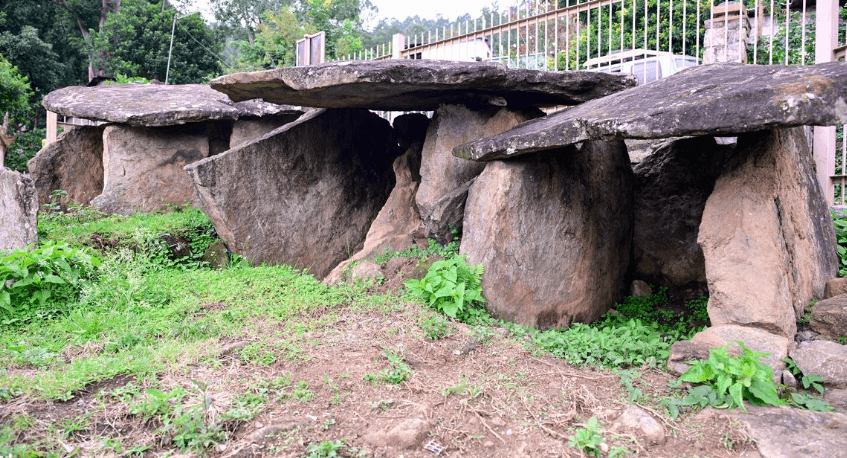
4.Kodaikanal Megalithic Dolmens Disappear (Megalithic Dolmens)

The Hindu
Illustration for Kodaikanal Megalithic Dolmens Disappear (Megalithic Dolmens)

What & Where

Megalithic dolmens: box-like stone chambers topped by a capstone on three pillars, chiefly for burial/ritual.

Clustered on Palani Hills ridges around Kodaikanal, Tamil Nadu, 4 000–5 000 ft elevation.

Dated 1 500–2 000 BCE, Pre-Iron Age South India.

Quick Facts for MCQs

Chronology & Culture

  • Pre-Iron-Age origin; among oldest Palani structures.
  • Cultural continuity; Paliyans claim ancestral links.
  • Trade-route clues via high-altitude spice zones.

Structural Features

  • Uncut granite slabs; simple box with capstone.
  • Capstone slope directs rainwater away.
  • Positioned on ridges for stability, torch-signal visibility.

Conservation Concerns

  • Survival <50 %; accelerated by roadwork, land use.
  • Absence of formal protection; megaliths outside ASI notified areas.
  • Loss erasing tangible link to tribal heritage.

Research & Findings

  • 1920s Jesuit survey documented first destruction signs.
  • Thandikudi, Pethuparai digs yielded black-red ware, beads.
  • ASI Memoirs 1928 remain core reference.

Key Data Points

FeatureData-Point
Age bracket1500–2000 BCE
Location altitude4000–5000 ft
Primary materialUncut local stone slabs
First systematic recordRev. A. Anglade & Rev. L.V. Newton
ASI publication year1928 Memoirs
Remaining structures< 50 % of 1900s count
Linked tribesPaliyans, Kurumbas
Noted artefactsBlack-and-red ware, carnelian beads
Typical useBurial, memorial, ritual
Roof designSloped capstone for drainage

Related UPSC Prelims PYQs

CDS_GK 2023PYQ 1

दक्षिण भारत के निम्नलिखित किस राजवंश ने अपने दस्तावेज पहले प्राकृत में और बाद में संस्कृत में जारी किए ?

GS-3Editorial

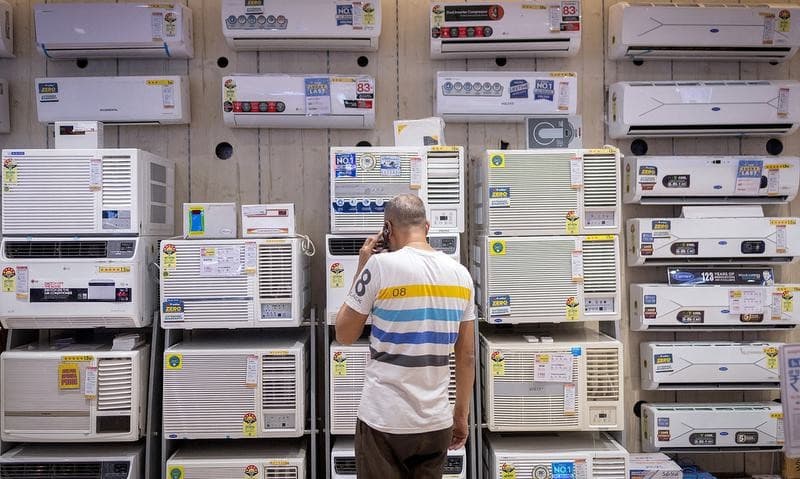
5.Universal Cooling Rights for Climate Adaptation (Thermal Comfort Access)

The Hindu
Illustration for Universal Cooling Rights for Climate Adaptation (Thermal Comfort Access)

What & Where

Cooling : reduction of ambient heat load for thermal comfort, health safety and equipment preservation

Roles : Protective, Enabling, Supportive functions turning cooling into essential climate-adaptation not mere luxury

Geography : India and broader Global South facing escalating heatwaves and uneven cooling access

Quick Facts for MCQs

Health & Labour

  • Mortality : Ahmedabad 2022 heatwave plus nationwide events push heat-related deaths beyond 20,000
  • Workforce : 80 % labour in agriculture or construction faces outdoor heat stress and rising heatstroke cases
  • Healthcare : 12 % South Asian clinics lack electricity; cooling critical for neonatal care and vaccine storage

Policy Tools

  • ICAP 2019 : targets 20–25 % demand cut, promotes green refrigerants, passive design, cold-chain expansion
  • Heat Action Plans : started Ahmedabad 2013, now 23 states yet hindered by low funding and rural gaps
  • BEE rule : mandatory default 24 °C setting and star labelling drive appliance efficiency

Energy & Emissions

  • Temperature band policy could save 20 billion units electricity and 16 Mt CO₂ annually
  • Contrast : India per-capita power 1,327 kWh versus US 12,000 kWh highlighting energy poverty risk
  • Kigali path : HFC phasedown and renewable integration vital to prevent emission spike from rising AC demand

Key Data Points

FeatureData-Point
Global heat deaths 2000-194.9 lakh (WHO)
India heat deaths recorded>20,000
AC ownership India 20215 % overall; 13 % urban; 1 % rural
GoI 2025 AC norm20–28 °C band; default 24 °C
Estimated annual saving20 billion kWh; ₹10,000 crore; 16 Mt CO₂
ICAP reduction target20–25 % cooling demand cut by 2037-38
HFC phasedown pledge85 % cut by 2047 (Kigali)
US & Japan AC access~90 % households

Related UPSC Prelims PYQs

CDS_GK 2023PYQ 1

भारत के सन्दर्भ में जलवायु परिवर्तन पर राष्ट्रीय कार्य योजना (NAPCC) के बारे में निम्नलिखित में से कौन-सा/कौन-से कथन सही है/हैं ?

GS-3Species

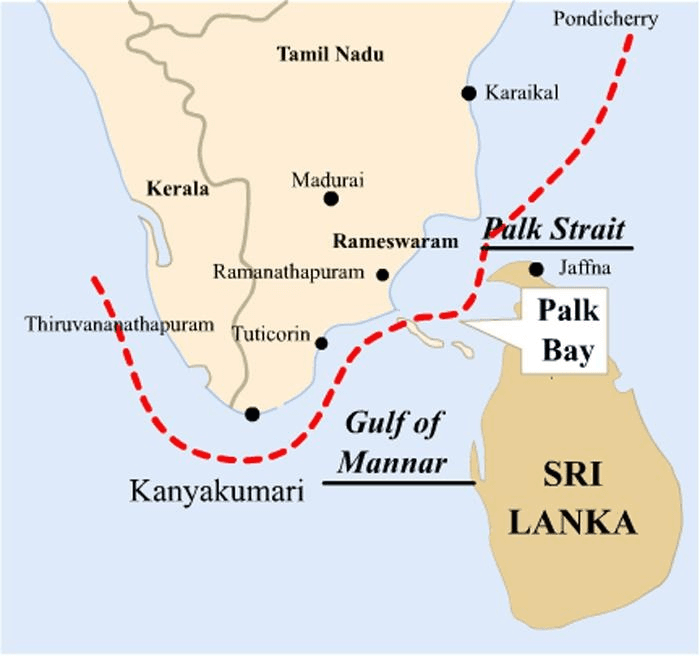
6.IUCN Lists Dugong Conservation Reserve (Marine Protected Area)

DH
Illustration for IUCN Lists Dugong Conservation Reserve (Marine Protected Area)

What & Where

India’s first Dugong Conservation Reserve; marine protected area under Wildlife (Protection) Act, 1972.

Spans 448.34 sq km in northern Palk Bay, Tamil Nadu (Thanjavur & Pudukkottai).

Hosts 12,250 ha seagrass meadows sustaining Vulnerable Dugong dugon populations.

Quick Facts for MCQs

Legal & Policy

  • Recognition elevates reserve as global model for community-led marine conservation.
  • Wildlife Act provides legal basis for regulation of fishing, tourism, vessel traffic.
  • IUCN resolution may unlock international funding and technical support.

Biodiversity Value

  • Seagrass beds offer nursery habitat for fish, crabs, shrimps; enhance coastal productivity.
  • Dugongs require 30–40 kg seagrass daily; indicator of meadow health.
  • Low dugong reproductive rate makes habitat protection critical.

Livelihood & Community

  • Traditional fishers benefit from increased fish biomass in protected seagrass zones.
  • Community involvement in patrolling and seagrass restoration reduces enforcement costs.
  • Eco-label possibilities for sustainable seafood add income diversification.

Key Data Points

FeatureData-Point
Notification yearSeptember 2022
Governing lawWildlife (Protection) Act 1972
IUCN endorsementWorld Conservation Congress 2025, Abu Dhabi
Protected area448.34 sq km
Seagrass extent12,250 hectares
DistrictsThanjavur, Pudukkottai
Flagship speciesDugong dugon (sea cow)
Dugong Red ListVulnerable

Related UPSC Prelims PYQs

GS1 2015PYQ 1

With reference to ‘dugong’, a mammal found in India, which of the following statements is/are correct?

GS-3S&T

7.India Exports Second-Generation Ethanol (Second-generation Biofuel)

Down to Earth

What & Where

Definition: 2G ethanol = advanced bio-ethanol from lignocellulosic waste, not edible crops

Core process: Pretreatment ➔ enzymatic hydrolysis ➔ microbial fermentation ➔ distillation

Geography: India now permits export under licence, aligning with fast-tracked E20 blending target

Quick Facts for MCQs

Tech & Schemes

  • Feedstock: rice/wheat straw, bagasse, corn stover, woody biomass, algae, municipal solid waste
  • Process: mechanical/chemical pretreatment then enzymatic hydrolysis, fermentation, distillation
  • Policy: National Biofuel Policy 2018 classifies 2G as advanced biofuel with fiscal incentives

Environmental Impact

  • Emissions: life-cycle GHG cut by up to 108 % relative to petrol
  • Stubble issue: residue valorisation curbs open-field crop burning in north India
  • Waste load: can convert 62 MMT urban solid waste annually into fuel

Legal & Policy

  • Export: DGFT notification requires licence and feedstock certificate for every shipment
  • Food security: 2G route sidesteps food-vs-fuel conflict, gaining regulatory favour
  • Taxation: Advanced biofuels enjoy lower excise duty compared to fossil petrol

Key Data Points

FeatureData-Point
Biofuel generationSecond-generation (2G)
Feedstock typeAgri & forestry residues, MSW, algae
GHG reduction85–108 % vs gasoline
Key process stepsPretreat → Hydrolyse → Ferment → Distil
Indian MSW potential62 million tonnes year⁻¹ utilisable
Export rule 2023Mandatory licence + feedstock certificate
Blending targetE20 by 2025 (advanced from 2030)
Food crop diversionNil; non-food biomass only
Aviation scopeCandidate for sustainable aviation fuel
Import dependence cutBlended petrol lowers crude oil demand

Related UPSC Prelims PYQs

ESE_GS, GS1 2024PYQ 1

Consider the following statements about ethanol:

ESE_GS, GS1 2013PYQ 2

With reference to the usefulness of the by-products of the sugar industry, which of the following statements is/are correct?

GS-3S&T

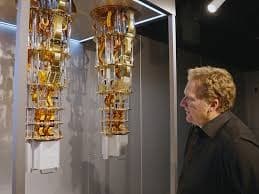
8.Quantum Algorithmic Trading Trial by HSBC–IBM (Quantum Finance Tech)

HSBC
Illustration for Quantum Algorithmic Trading Trial by HSBC–IBM (Quantum Finance Tech)

What & Where

Quantum-enabled algorithmic bond-trading trial; first empirical hybrid quantum-classical application to live markets.

Partners HSBC & IBM, leveraging IBM Heron quantum processor.

Operated on production-scale European corporate bond data.

Quick Facts for MCQs

Technology & Process

  • Hybrid; classical cores handle bulk optimisation, quantum qubits refine search for optimal bond orders.
  • Augmentation; quantum step integrated into existing trading workflow, not standalone system.
  • Data; real, not simulated, ensuring market microstructure realism.

Algorithmic Trading Advantages

  • Speed; millisecond execution exploits transient price inefficiencies.
  • Emotionless; eliminates human fear-greed, delivering rule-based consistency.
  • Scalability; single system oversees diverse assets and multiple strategies.

Regulatory Angle

  • SEBI; every algo strategy must gain exchange approval and carry unique ID tag.
  • Broker; obligated to maintain pre-trade risk checks, audit trails, client consent.
  • Discouragement; unauthorised third-party black-box algos deemed non-compliant.

Key Data Points

FeatureData-Point
Trial statusWorld’s first quantum-enabled algorithmic bond trading
CollaboratorsHSBC and IBM
Quantum hardwareIBM Heron processor
Computing modelHybrid quantum-classical augmentation
Market testedEuropean corporate bond segment
Algo trade speedMilliseconds per order
SEBI algo recognition2008 (India)
Co-location launch (NSE)2011
GS-2Polity

9.Central American Integration System Overview (Central American Bloc)

Economic Times

What & Where

Bloc: Central American Integration System, institutional mechanism guiding political-economic integration in Central America

Geography: Encompasses eight states from Guatemala and Belize to Panama and Dominican Republic

Secretariat: Permanent headquarters in San Salvador, El Salvador since operationalization in 1993

Quick Facts for MCQs

Legal & Policy

  • Treaty: Tegucigalpa Protocol modernised 1960 ODECA Charter, legally constituted SICA
  • Recognition: UN General Assembly granted international legal personality in 1993 resolution A/48 L
  • Objectives: Peace, democracy, human rights, rule of law across member states

Institutional Structure

  • Summits: Heads of State meet biannually; presidency rotates every six months alphabetically
  • Coordination: Sectoral councils align policies on trade, customs union, climate, energy, food security
  • CustomsUnion: Long-term goal of transitioning from FTA to full customs union with unified external tariff

India Angle

  • Status: India holds extra-regional observer and designated partner status within SICA
  • Cooperation: Focus areas include agriculture, renewable energy, pharma supplies, IT services, digital payments like UPI
  • SouthSouth: Jaishankar highlights platform for joint action on poverty, climate change, sustainable development

Key Data Points

FeatureData-Point
Full nameCentral American Integration System (SICA)
Creation instrumentTegucigalpa Protocol, 13 Dec 1991
Operational date1 Feb 1993
Secretariat citySan Salvador, El Salvador
Founding members6 – CR, ES, GT, HN, NI, PA
Later members2 – Belize, Dominican Republic
UN recognitionUNGA Resolution A/48 L, 1993
Presidency rotationEvery six months
Summit frequencyBiannual
India’s statusExtra-regional observer & designated partner
GS-2Misc

10.India Hosts 2025 World Para Athletics (Para Athletics Event)

FP
Illustration for India Hosts 2025 World Para Athletics (Para Athletics Event)

What & Where

Flagship biennial track-and-field championship for para-athletes governed by World Para Athletics under International Paralympic Committee

2025 edition scheduled in New Delhi, India, at Jawaharlal Nehru Stadium with new world-class Mondo track

First time India hosts the global meet; geography anchors event in National Capital Region

Quick Facts for MCQs

Historical Milestones

  • Origin: Para athletics debuted at Stoke Mandeville Games 1952 for war-injured athletes
  • Paralympics: Athletics entered inaugural Rome 1960 Paralympic Games expanding global reach
  • Championships: Stand-alone World Para Athletics Championships launched Berlin 1994

Branding & Symbols

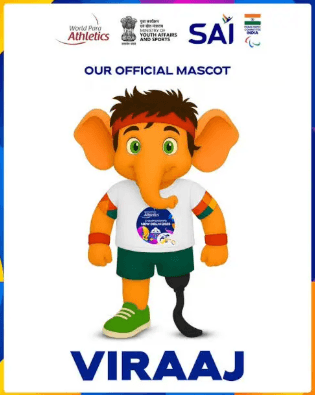
  • Mascot: Viraaj embodies strength, optimism, resilience; elephant resonates with Indian culture
  • Logo: Incorporates Indian motifs, vibrant hues, conveying heritage and sporting excellence
  • Message: Branding aligns with India’s inclusive ambition and global sporting stature

Inclusivity Features

  • Categories: High-support needs athletes guaranteed competitive classification, widening participation
  • Events: Introduction of mixed-gender relay promotes gender equity and strategic novelty
  • Accessibility: Commitment to universal design ensures barrier-free athlete and spectator experience

Infrastructure & Ambition

  • Stadium: Jawaharlal Nehru complex upgraded with international-standard track, field, assistive technology
  • Investment: Hosting signals rising Indian capability to stage mega disability-sports events pre-Paralympics
  • Legacy: Enhanced facilities aim to nurture domestic para-athlete pipeline beyond 2025

Key Data Points

FeatureData-Point
2025 host cityNew Delhi, India
StadiumJawaharlal Nehru Stadium
Track surfaceMondo world-class synthetic track
Mascot nameViraaj, young elephant with blade prosthesis
Organising bodyWorld Para Athletics (IPC)
Event frequencyBiennial
Championship first held1994, Berlin (Germany)
Precursor gamesStoke Mandeville Games 1952
Paralympic inclusion yearRome 1960
New 2025 eventMixed-gender relay

Related UPSC Prelims PYQs

GEO_GS, GS1 2025PYQ 1

Consider the following statements in respect of the first Kho Kho World Cup:

GEO_GS, GS1 2025PYQ 2

The host country of the inaugural Kho Kho World Cup, 2025 is

GS-3Security

11.IAF Retires Last MiG-21 Squadrons (MiG-21 Fighter Jet)

NDTV
Illustration for IAF Retires Last MiG-21 Squadrons (MiG-21 Fighter Jet)

What & Where

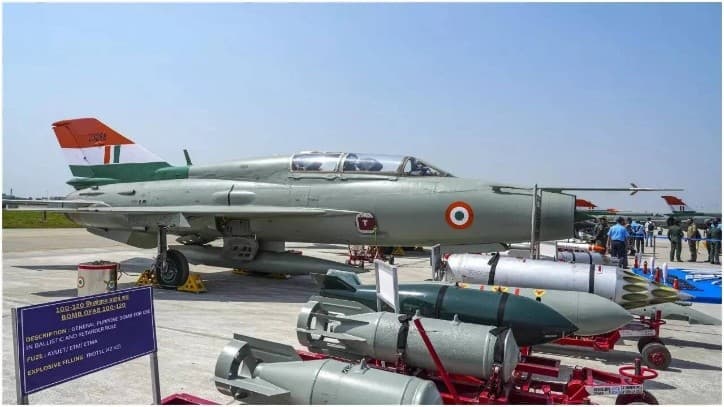
MiG-21: Soviet-designed, single-engine supersonic fighter-interceptor with delta wing

Entered Indian Air Force fleet in 1963; over 700 aircraft inducted across variants

Last two IAF squadrons—No. 23 Panthers & No. 3 Cobras—formally retired in 2023

Quick Facts for MCQs

Technology & Upgrades

  • Bison upgrade: Israeli radar, glass cockpit, Derby & indigenous Astra BVR missiles
  • Delta wing yields fast climb; limits sustained turning performance
  • Emergency-thrust mode offers brief power spike for take-off or dogfight

Combat Service

  • 1971 war: MiG-21s downed Pakistani F-104s, securing air superiority over East Pakistan
  • Kargil 1999: Flew ground-attack and air-defence sorties in Himalayan high-altitude theatre
  • Training platform for successive IAF fighter cohorts, shaping tactics and doctrine

Safety Record

  • High accident count earned media label “Flying Coffin”
  • Over 500 crashes since induction triggered accelerated phase-out decisions
  • Ageing airframes, limited avionics & ejection-seat failures cited as prime causes

Key Data Points

FeatureData-Point
DesignerMikoyan-Gurevich Bureau, USSR
First prototype flight1955 (Ye-4)
NATO codenameFishbed
Indian nicknamesBalalaika; Silver Swallow
IAF induction year1963
Total Indian fleet700 + aircraft
Last upgradeMiG-21 Bison, 2006
Top speed≈ Mach 2
Wing typeDelta wing
Emergency thrust T/WNearly 1:1 for short bursts
Major wars flown1965, 1971, Kargil 1999
Crashes recorded500 + incidents
Pilot fatalities170 + deaths

Related UPSC Prelims PYQs

GS1 2024PYQ 1

Consider the following aircraft:

Ready to practice?

Test your knowledge with our UPSC test series.

Start Free Trial