UPSC Current Affairs

9 topicsGS-1: 5GS-3: 4
0/9 done
GS-3Economy

1.India Aluminium Industry Stress (Aluminium Industry)

New Indian Express
Illustration for India Aluminium Industry Stress (Aluminium Industry)

What & Where

Metal; lightweight, corrosion-resistant; core uses windows, doors, cookware, vehicles, solar frames

Process; refined from bauxite into alumina, then smelted via electricity-intensive Hall–Héroult method

Geography; richest Indian bauxite belts Odisha Koraput–Sundergarh, Jharkhand Lohardaga, Gujarat Kutch

Quick Facts for MCQs

Economic Angle

  • Utilisation only 40 % of 3 mtpa capacity, straining profitability
  • Demand merely 4 kg per capita versus 11 kg global average
  • Potential growth drivers include electric vehicles and solar infrastructure

Trade Dynamics

  • ASEAN FTA and varied HSN codes enable duty-free, cheaper inflows
  • Imports >1.5 mt already exceed domestic extrusion output 1.2 mt
  • Trade gap risks plant shutdowns, job losses, current-account strain

Environmental Impact

  • UPVC, oil-derived, raises lifecycle emissions conflicting with Paris targets
  • Aluminium infinitely recyclable; substitution weakens circular-economy gains
  • Plastic waste adds landfill burden and microplastic pollution

Key Data Points

FeatureData-Point
Installed extrusion capacity3 million tonnes per annum
Current utilisation1.2 million tonnes
Annual aluminium imports>1.5 million tonnes
Per capita use India~4 kg
World average use11 kg
China per capita25 kg
USA per capita18 kg
Largest bauxite stateOdisha
Main substituteUPVC plastic

Related UPSC Prelims PYQs

GS1 2002PYQ 1

HINDALCO, an aluminium factory located at Renukoot owes its site basically to

GS1 2007PYQ 2

Match List-I with List-II and select the correct answer using the code given below the Lists :
GS-3Economy

2.Atmanirbharta Roadmap for Indian Millets (Millet Self-Reliance)

NITI Aayog

What & Where

Definition : Nutri-cereals like jowar, bajra, ragi; thrive in arid, rain-fed soils.

Geography : Rajasthan, Maharashtra, Karnataka, Uttar Pradesh & Madhya Pradesh ≈ 80 % of national output.

Global spot : India tops with 41 % of world millet production (~16 MT/yr).

Quick Facts for MCQs

Production & Trade

  • Output-boost: Cluster approach, rice-fallow expansion, bio-fortified hybrids recommended.
  • Trade-push: GI-tagged brands, buyer–seller meets, APEDA support for Middle-East/EU.
  • Regional skew: Western & peninsular belts dominate; east holds expansion potential.

Nutrition & Climate

  • Micronutrients: Rich iron, calcium, fibre — combats anaemia & malnutrition.
  • Resilience: Survives drought, poor soils; low input cuts fertiliser & irrigation dependence.
  • SDG link: Climate-smart millet farming aligns with adaptation & sustainable diets goals.

Policy & Schemes

  • NFSM-Millets: Seed minikits, area expansion, productivity demos since 2018-19.
  • Shree Anna Mission: 6-year drive for R&D, processing, branding, market integration.
  • Scheme integration: Mid-Day Meal, ICDS, PDS urged to ensure assured domestic demand.

Challenges

  • Price-bias: Rice/wheat MSP + irrigation subsidies discourage millet acreage.
  • Value chain gaps: Thin FPO coverage, weak procurement, limited processing tech.
  • Productivity lag: Sparse R&D, hybrid seeds → yields below cereals benchmark.

Key Data Points

FeatureData-Point
India’s global share41 % of millet output
Domestic production≈ 16 million tonnes annually
Major producing statesRJ, MH, KA, UP, MP (≥ 80 %)
Export volume 2022-23~1.8 MT
Top export marketsUAE, Nepal, Saudi Arabia
Consumption fall32 kg/capita (1960s) → ~4 kg now
Water saving vs riceNeeds ≈ 70 % less water
Average yield~1.2 t/ha
Budget 2023-24 tagRenamed as “Shree Anna”
UN recognition2023 declared International Year of Millets

Related UPSC Prelims PYQs

CAPF_GAI, ESE_GS 2023PYQ 1

श्रीअन्न (Millets) के बारे में निम्नलिखित कथनों पर विचार कीजिए :

CAPF_GAI, ESE_GS 2023PYQ 2

Government of India has moved a resolution in UN General Assembly to declare the year 2023 as the International Year of Millets for which of the following reasons?

GS-1Mapping

3.Lipulekh Himalayan Pass (High Mountain Pass)

The Hindu

What & Where

High-altitude Himalayan pass at 5,334 m, traditional trade–pilgrimage route linking India and Tibet (China).

Sited in Pithoragarh district, Uttarakhand; lies just west of India-Nepal-China trijunction.

Forms gateway for Kailash Mansarovar Yatra; India’s first border-trade post with China (1992).

Quick Facts for MCQs

Geopolitical Significance

  • Trijunction: critical for surveillance, logistics, and force projection in central Himalayas.
  • Trade-route: facilitates limited India-Tibet commerce despite overall border closure.
  • Terrain: narrow ridge, rugged approaches; natural chokepoint for movement.

India–Nepal Boundary Dispute

  • India: treats Lipulekh–Kalapani–Limpiyadhura as longstanding admin part of Uttarakhand.
  • Nepal: 2020 constitutional map extended western boundary to Mahakali River’s headwaters, covering pass.
  • Negotiations: no agreed boundary settlement; Nepal raised issue again at SCO 2025.

China’s Stance

  • Non-interference: terms area an India-Nepal bilateral matter, avoids formal alignment.
  • Trade priority: continues Lipulekh barter route with India, signaling status-quo preference.
  • Diplomatic leverage: pass offers China indirect influence in India-Nepal relations.

Key Data Points

FeatureData-Point
Altitude≈5,334 m (17,500 ft)
Indian districtPithoragarh, Uttarakhand
Nearby trijunctionIndia-Nepal-China
First India-China trade post year1992
Key pilgrimageKailash Mansarovar Yatra
Subsequent trade postsShipki La 1994; Nathu La 2006
Nepal’s new map year2020
SCO Summit mentionTianjin, 2025

Related UPSC Prelims PYQs

CDS_GK, GS1 2023PYQ 1

Which one of the following passes is not located in Indian Himalayan region?

CDS_GK, GS1 2007PYQ 2

Which one of the following Himalayan passes was reopened in the middle of the year 2006 to facilitate trade between India and China?

GS-1Mapping

4.Beas and Sutlej River Profiles (Punjab Rivers)

Indian Express
Illustration for Beas and Sutlej River Profiles (Punjab Rivers)

What & Where

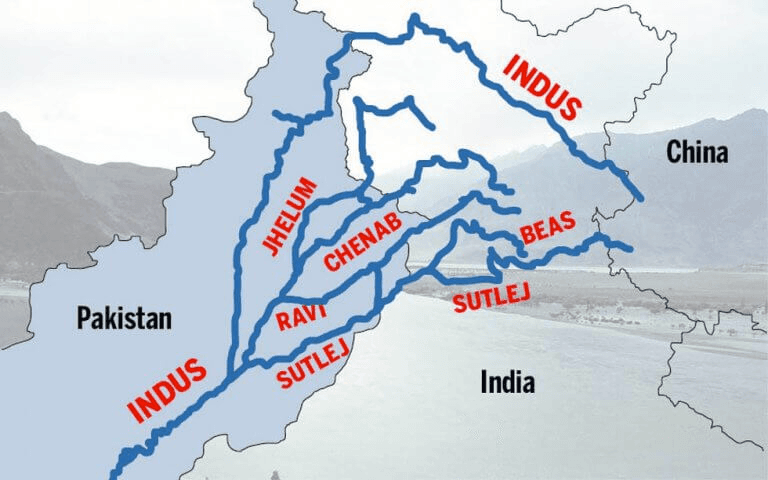
Beas & Sutlej: north-west Himalayan rivers meeting at Harike wetland, Punjab, before Sutlej enters Pakistan.

Beas rises near Rohtang Pass (4,062 m); Sutlej from Mansarovar–Rakastal, Tibet (4,570 m).

Marar village, Tarn Taran, lies on vulnerable Beas–Sutlej stretch facing bank erosion.

Quick Facts for MCQs

Physical Geography

  • Sutlej cuts deep gorges across Great & Lesser Himalayas before Rupnagar plains.
  • Beas fans into braided channels in lower reaches, later reunites before Harike.
  • Both rivers flow over alluvial Punjab plains prone to lateral erosion.

Infrastructure & Utility

  • Bhakra Dam enables hydropower, irrigation to north-western India.
  • Beas & Sutlej supply drinking water and canal networks to Punjab, Haryana, Rajasthan.

Environmental Concern

  • Recent spate increased erosion risk at Marar village despite embankment reinforcement.
  • Rising discharge threatens farmland, houses along unstable riverbanks.

Border Significance

  • Sutlej defines ~120 km segment of international boundary; strategic for water-sharing under Indus Treaty.

Key Data Points

FeatureData-Point
Beas total length~460–470 km (100 % in India)
Beas basin area≈20,300 km²
Beas ancient namesVipasa (Vedic); Hyphasis (Greek)
Beas state traverseHimachal Pradesh → Punjab
Sutlej total length≈1,450 km (1,050 km in India)
Sutlej catchment≈56,860 km² (India ≈20,000 km²)
Sutlej Tibetan nameLangqen Zagbo
Major confluenceBeas joins Sutlej at Harike, Punjab
Key dam on SutlejBhakra Dam (Naina Devi Dhar)
India–Pakistan river boundary~120 km formed by Sutlej in Punjab
Sutlej mountain pass entryShipki La (Tibet–Himachal border)
Sutlej final mergerIndus near Mithankot, Pakistan

Related UPSC Prelims PYQs

GS1, NDA_GAT 2021PYQ 1

River Beas, flowing from Himachal and Punjab, joins the river

GS1, NDA_GAT 2009PYQ 2

Which one of the following rivers does not originate in India ?

GS-3Environment

5.Independent Environment Auditors Framework (Environmental Compliance)

The Hindu

What & Where

Definition: Certified professionals/agencies empowered to audit projects for environmental law compliance.

Process: Operate under Environment Audit Rules, 2025; supplement State/Central Pollution Control Boards.

Geography: Applicable pan-India, notified by MoEFCC on 29 Aug 2025.

Quick Facts for MCQs

Legal & Policy

  • Provision: Rules enable accreditation, suspension, and penal action against erring auditors.
  • Oversight: SPCBs/ CPCB may randomly cross-verify 10 % of audits annually.
  • Alignment: Complements Environment (Protection) Act, 1986 enforcement mechanisms.

Functional Scope

  • Audit: Stack emissions, effluents, hazardous waste handling, biodiversity offsets.
  • Reporting: Digital submission to PARIVESH portal within 15 days of site visit.
  • ESG link: Outputs feed corporate sustainability and climate-action disclosures.

Governance Impact

  • Efficiency: Reduces routine inspection load on ~170 stranded SPCB posts.
  • Transparency: Third-party data expected to curb regulatory capture allegations.
  • Accountability: Mandatory public disclosure of audit summaries enhances citizen oversight.

Key Data Points

FeatureData-Point
Legal anchorEnvironment Audit Rules, 2025
Notifying bodyMinistry of Environment, Forest & Climate Change
Notification date29 August 2025
Core mandateInspect, verify, audit industrial & infrastructure projects
StatusIndependent, certified “environment auditors” class
Key rolesEmission sampling, waste analysis, compliance reporting
Additional dutiesVerifier under Green Credit, E-Waste, Plastic Waste Rules
Compliance toolCalculates environmental compensation for violators
Governance gap addressedManpower, infrastructure shortages in SPCBs

Related UPSC Prelims PYQs

GS1 2022PYQ 1

निम्नलिखित में से कौन-सा एक, पर्यावरण (संरक्षण) अधिनियम, 1986 के अन्तर्गत गठित किया गया है?

GS-3S&T

6.Introduction to 2D Materials (2D Materials)

Business Standard
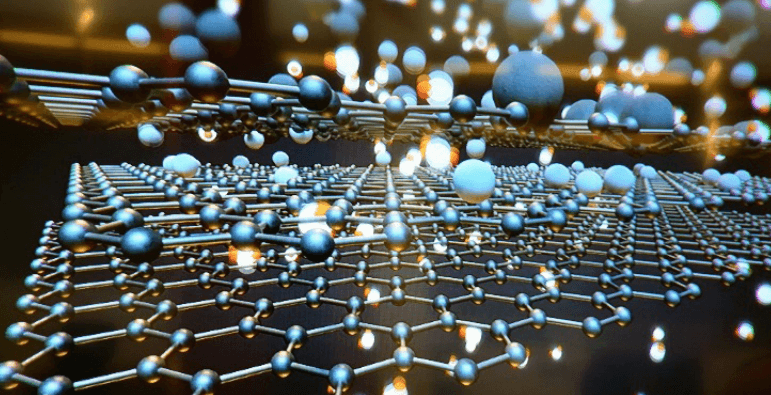
Illustration for Introduction to 2D Materials (2D Materials)

What & Where

Definition; atom-thin (≈1 layer) solids like graphene showing unique electrical, mechanical, quantum behaviour

Key types; graphene, TMDCs (MoS₂, WS₂), hexagonal boron nitride, emerging Xenes such as silicene

Geography; 4th Future Front Insight by NITI Aayog Frontier Tech Hub & IISc Bengaluru urges Indian prioritisation

Quick Facts for MCQs

Material Properties

  • Conductivity; graphene enables cooler, faster charge flow in circuits
  • Thermal; monolayers act as excellent heat spreaders for dense chips
  • Tunability; stacking/doping adjusts band gaps for custom optoelectronics

Applications

  • Semiconductors; MoS₂ transistors target post-silicon angstrom era continuation of Moore’s Law
  • Sensors; monolayer sensitivity detects chemicals, strain, biomolecules at trace levels
  • Energy; graphene composites boost batteries, supercapacitors, membranes, lightweight aerospace parts

Quantum Potential

  • Spin–valley coupling enables qubits, positioning 2D sheets for quantum computing hardware
  • Neuromorphic; atom-thin memristors imitate synapses for low-power AI accelerators

Tech & Schemes

  • Frontier Tech Hub; NITI Aayog–IISc report classifies 2D materials as strategic frontier technology
  • Recommendation; accelerate R&D, fabrication ecosystem to secure electronics, energy, defence competitiveness

Key Data Points

FeatureData-Point
First isolation year2004 (graphene via Scotch-tape)
Nobel PrizePhysics 2010 for graphene discovery
Relative thicknessSingle atomic layer ~0.34 nm
Mechanical strength≈200 × stronger than steel
Elastic stretch~20 % without rupture
ConductivityElectron & heat transport surpass copper

Related UPSC Prelims PYQs

CDS_GK, GS1 2012PYQ 1

Graphene is frequently in news recently. What is its importance?

CDS_GK, GS1 2025PYQ 2

Which one of the following is not a property of 'graphene'?

GS-1Editorial

7.Health Burden of India's Elderly (Elderly Healthcare)

The Hindu

What & Where

Report: India Ageing Report 2023 analyses healthcare costs, coverage and needs of Indians aged 60 years +.

Double burden: Multiple non-communicable diseases combine with falling income and weak social security.

Geography: Sharp urban-rural & gender gaps; rural elderly women are least insured and most dependent.

Quick Facts for MCQs

Demographic Trend

  • Projection: Elderly headcount to more than double between 2022 and 2050.
  • Gender gap: Women live longer yet possess lower insurance and financial support.
  • Rural tilt: Majority of seniors reside in villages, heightening dependency on household savings.

Health Challenges

  • Morbidity: Diabetes, hypertension, heart disease, arthritis, stroke dominate outpatient visits and admissions.
  • Critical care: Comorbidities drive expensive ICU stays, ventilatory support, longer recoveries.
  • Post-care costs: Physiotherapy, rehabilitation, home oxygen typically uncovered, fuelling debt.

Insurance Landscape

  • Coverage deficit: Only one-fifth elderly insured; urban men far ahead of rural women.
  • Barriers: High premium escalation, complex enrolment, low awareness (47 % uninformed).
  • Exclusions: Palliative, rehabilitative and home-based services largely outside benefit packages.

Policy Measures

  • PM-JAY expansion: Income-neutral health cover for all seniors 70+, integration with state schemes like CMCHIS.
  • NPHCE network: Geriatric clinics and regional centres established for specialised elder care.
  • State models: Kerala & Tamil Nadu strengthen public geriatric wings, demonstrating reduced OOPE.

Key Data Points

FeatureData-Point
Elderly (60+) in 2022~149 million
Elderly projected 2050347 million (20.8% of population)
Out-of-pocket share48 % of total health spend (NHA 2021-22)
Insured elderly20 %
Insurance awareness52.9 % know of any scheme
Trained geriatricians~6,000 nationwide
PM-JAY 2024 tweakUniversal cover for all citizens ≥70 yrs
GS-1Polity

8.PVTG Separate Census Enumeration (PVTG Enumeration)

Indian Express

What & Where

Definition: PVTGs are the most deprived sub-set of Scheduled Tribes, officially numbering 75 endogamous groups.

Classification: Listed first 52 (5th Five-Year Plan 1974-79), +23 in 2006, based on Dhebar Commission criteria.

Geography: Dispersed across 18 states and Andaman & Nicobar Islands, largely in remote forests, hills, islands.

Quick Facts for MCQs

Historical Roots

  • Commission: Dhebar (1960-61) highlighted extreme tribal backwardness, urged focused intervention.
  • Planning: 5th Plan formally notified 52 PVTG communities for special support.
  • Expansion: 2006 review added 23 more, fixing present tally at 75.

Socio-Economic Traits

  • Demography: Populations often declining; high infant mortality, malnutrition prevalent.
  • Livelihood: Depend on hunting, gathering, shifting cultivation; minimal market integration.
  • Culture: Unique languages, customs; geographic isolation limits service outreach.

Policy & Schemes

  • Enumeration: MoTA requests distinct Census code to capture accurate demographic, socio-economic metrics.
  • Targeting: Fresh data will refine health, education, livelihood interventions, reveal habitation gaps.
  • Funding: PM JANMAN earmarks ₹24,104 cr for roads, telecom, housing in PVTG areas.

Key Data Points

FeatureData-Point
Total PVTG groups75
States covered18 + A&N Islands
Initial listing52 groups, 5th FYP 1974-79
Added later23 groups, year 2006
Origin recommendationDhebar Commission 1960-61
Latest policy moveSeparate Census enumeration sought by MoTA
Flagship schemePM JANMAN, ₹24,104 cr, launched 2023

Related UPSC Prelims PYQs

CAPF_GAI, GS1 2019PYQ 1

Consider the following statements about Particularly Vulnerable Tribal Groups (PVTGs) in India:

CAPF_GAI, GS1 2022PYQ 2

Which one of the following statements is not true with regard to tribal welfare?

GS-1Scheme

9.India Rankings 2025 under NIRF (NIRF Rankings)

PIB
Illustration for India Rankings 2025 under NIRF (NIRF Rankings)

What & Where

India Rankings: annual national assessment of Higher Education Institutions via National Institutional Ranking Framework (NIRF).

Publisher: Ministry of Education, GoI; bibliometric support from Scopus, Web of Science, Derwent Innovation.

Scope: 9 institution categories + 8 subject domains across India, 2025 edition introduced SDG-based ranking.

Quick Facts for MCQs

Ranking Parameters

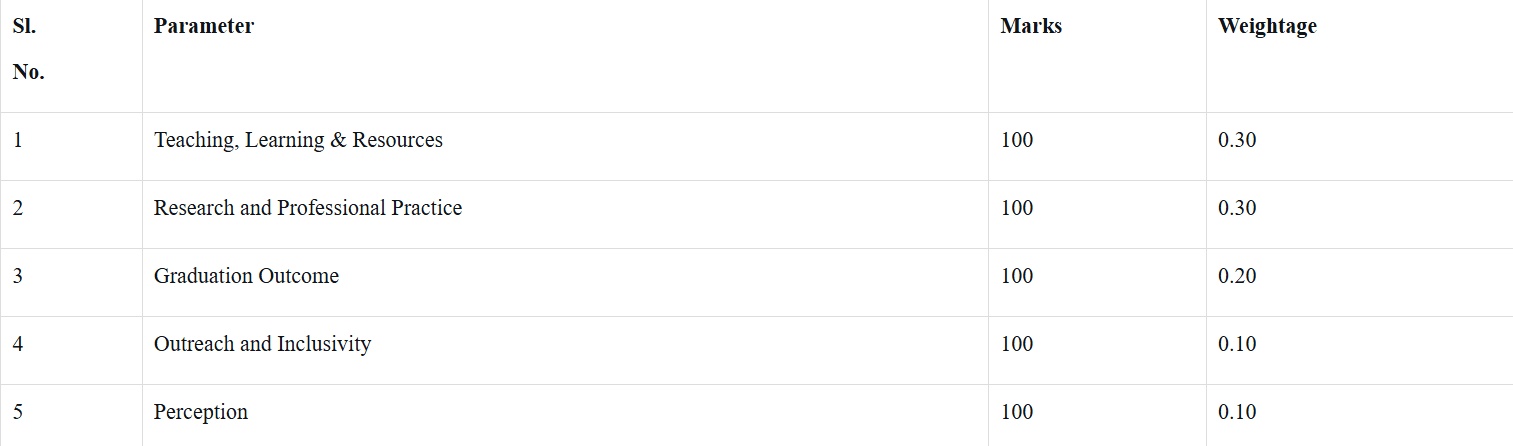
  • Teaching Learning Resources 30 %; Research & Professional Practice 30 %.
  • Graduation Outcomes 20 %; Outreach & Inclusivity 10 %; Perception 10 %.

Category Leaders 2025

  • Architecture leader IIT Roorkee tenth straight year.
  • Pharmacy leader Jamia Hamdard, Agriculture leader IARI Delhi, Skill-University leader Symbiosis.
  • Hindu College tops Colleges; six of top ten colleges from Delhi.

Participation Trend

  • Applications 14,163 versus 3,565 in 2016 reflecting multifold interest.
  • Unique institutions touched 7,692 widening disciplinary diversity.
  • Non-IIT or IIM institutions increasingly visible in domain toppers.

Policy Linkage

  • Framework aligns with NEP 2020 emphasis on quality, accountability, international comparability.
  • Rankings feed Aspirational Vision 2047 of knowledge superpower.
  • Data transparency aids students, parents, regulators in evidence-based choices.

Key Data Points

FeatureData-Point
Launch year2015
Framework acronymNIRF
Publishing ministryEducation
Core aimQuality benchmarking & transparency
Parameter count5
Highest weight parameterTeaching, Learning & Resources 30 %
Top Overall 2025IIT Madras
Top UniversityIISc Bengaluru
Top EngineeringIIT Madras
Top ManagementIIM Ahmedabad
Top MedicalAIIMS Delhi
Top LawNLSIU Bengaluru
New list 2025SDG impact ranking
SDG rank leaderIIT Madras
Institutions applied 20257,692
Submission growth since 2016297 %

Related UPSC Prelims PYQs

ESE_GS 2021PYQ 1

According to the National Institutional Ranking Framework 2020, which institute was on the top in overall ranking ?

ESE_GS 2021PYQ 2

Which one of the following statements is NOT correct regarding the National Education Policy 2020 in India ?

Ready to practice?

Test your knowledge with our UPSC test series.

Start Free Trial