UPSC Current Affairs

14 topicsGS-1: 2GS-2: 7GS-3: 5
0/14 done
GS-2Polity

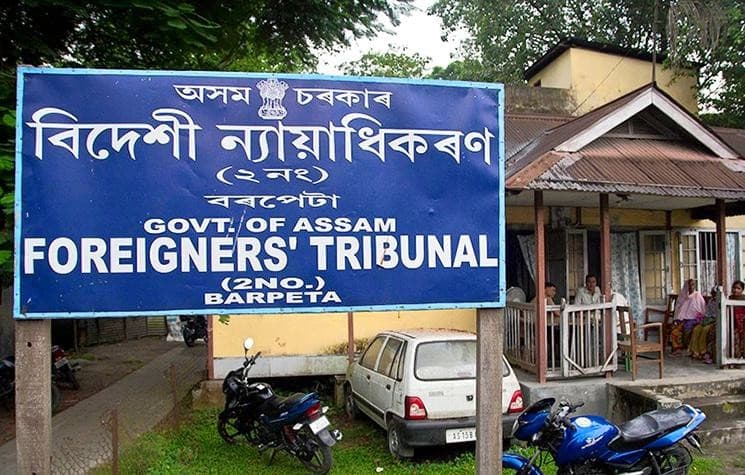
1.Foreigners Tribunals Powers Upgrade (Quasi-Judicial Body)

Hindustan Times
Illustration for Foreigners Tribunals Powers Upgrade (Quasi-Judicial Body)

What & Where

Foreigners Tribunals: quasi-judicial bodies deciding citizenship status under Immigration & Foreigners Act, 2025.

Operate mainly in Assam; new order empowers creation/operation elsewhere if required.

Now enjoy authority equal to a first-class judicial magistrate/civil court.

Quick Facts for MCQs

Legal & Policy

  • Repeal: 2025 Act abolishes 1964 order, integrates immigration & foreigners provisions.
  • Empowerment: Order extends FT powers beyond Assam, ensuring uniform illegal-migrant adjudication.
  • Equivalence: Powers mirror Code of Criminal Procedure sections for magistrates.

Procedural Powers

  • Summon: Can compel attendance, examine on oath, demand documents.
  • Commission: May appoint officers to record remote witness statements.
  • Warrant: Non-compliance triggers arrest, immediate production before FT.

Detention & Deportation

  • Detention: Declared foreigners sent to dedicated centres pending deportation.
  • Transit: Provision for transit camps while awaiting travel papers.
  • Deporting agency: State police coordinate with Bureau of Immigration/foreign missions.

Key Data Points

FeatureData-Point
First set-up year1964 (Foreigners Tribunal Order)
Original parent lawForeigners Act, 1946
Current governing lawImmigration & Foreigners Act, 2025
Issuing authority for 2025 orderUnion Home Ministry
Tribunal statusQuasi-judicial
Jurisdiction typeCivil court + First-class magistrate
Notice period to alleged foreigner10 days to prove citizenship
Case disposal limit60 days from reference
New coercive powerArrest warrant for non-appearance
Post-declaration actionTransfer to detention/transit camp
Nationwide uniquenessOnly Assam had FTs earlier
Appeal routeHigher courts under writ jurisdiction
GS-2Polity

2.Supreme Court Gender Imbalance (Judiciary Diversity)

The Hindu

What & Where

Definition; Gender imbalance denotes serious under-representation of women judges in Supreme Court despite equality articles 14-16

Process; Collegium appointment system missing codified diversity criteria, causing late or scarce elevation of women

Geography; Supreme Court of India, Tilak Marg New Delhi, sanctioned strength 34 including Chief Justice

Quick Facts for MCQs

Causes

  • Structural; Collegium lacks written diversity policy; gender rarely prioritised during recommendations
  • Societal; Stereotypes in legal profession restrict women’s networking, mentoring, courtroom visibility
  • Pipeline; Few women Senior Advocates or HC Chief Justices considered for direct elevation

Challenges

  • Opaqueness; Collegium reasons seldom disclosed, limiting accountability on gender goals
  • Tenure; Late elevations curtail influence, bar path to woman CJI, exclude from Collegium
  • Culture; Male-dominated Bar and Bench resist women’s leadership, slowing High Court appointments

Implications

  • Legitimacy; Gender-skewed bench weakens public trust in representative justice
  • Jurisprudence; Lacks lived experiences vital for robust rulings on gender justice, workplace equality
  • Aspirations; Scarce role models deter young women lawyers, shrinking talent pipeline

Way Forward

  • Policy; Frame written gender-diversity mandate, disclose selection reasons, embed constitutional morality
  • Pipeline; Boost women High Court elevations, mentorship schemes, gender quota in lower judiciary
  • Comparative; Adapt Canada & UK models with statutory diversity consideration during apex appointments

Key Data Points

FeatureData-Point
Current women judges1 of 34 (Justice B.V. Nagarathna)
Total women ever appointed11 of 287 since 1950 (≈3.8 %)
First woman SC judgeJustice Fathima Beevi, 1989
Direct Bar-to-Bench womanJustice Indu Malhotra (only case)
Equality articles citedArticles 14, 15, 16
Post-Aug 2025 statusOnly one woman after Justice Dhulia retires

Related UPSC Prelims PYQs

GS1 2005PYQ 1

300 persons are participating in a meeting, out of which 120 are foreigners and the rest are Indians. Out of the Indians there are 110 men who are not judges; 160 are men judges, and 35 are women judges. There are no foreign judges. How many Indian women attended the meeting?

GS-2Polity

3.Minority Schools RTE Exemption Debate (Right to Education)

Indian Express

What & Where

Right to Education Act 2009; enforces free, compulsory schooling for 6–14-year-olds across India.

Pramati Educational Trust v Union (2014); 5-judge Constitution Bench exempted minority aided/unaided schools from RTE obligations.

2025 Supreme Court 2-judge Bench led by Justice Dipankar Datta questioned exemption; referred issue to CJI for larger bench review.

Quick Facts for MCQs

Legal & Policy

  • Conflict; Art 21A child right versus Art 30(1) minority autonomy.
  • Pramati 2014 struck RTE quota, teacher, infrastructure norms for minority schools.
  • 2025 Bench favours case-by-case scrutiny, says autonomy ≠ absolute immunity.

Social Concerns

  • Misuse; private schools claim minority tag to bypass RTE compliance.
  • Exemption curbs classroom diversity, weakening democratic socialisation.
  • Disadvantaged children denied entry to elite minority institutions.

Governance Challenges

  • Weak RTE enforcement even where applicable; monitoring quotas, infrastructure lax.
  • Regulatory loophole complicates authenticating minority-status claims.
  • Elite parent lobbies resist socio-economic mixing, stressing policymakers.

Way Forward

  • Harmonise; larger bench expected to balance minority autonomy with minimum child-centric norms.
  • Policy tweak; enforce teacher qualification, infrastructure standards on every school, adapt quotas if needed.
  • Strengthen public schooling per NEP 2020 to lessen reliance on private/minority sectors.

Key Data Points

FeatureData-Point
RTE enactment year2009
Age group covered6–14 yrs
Mandatory quota in private unaided25 % entry-level seats
Relevant section12(1)(c)
Minority rights articleArt 30(1)
Fundamental education rightArt 21A
Pramati judgment year2014
Pramati bench strength5 judges
2025 reviewing bench strength2 judges
Lead judge 2025 reviewJustice Dipankar Datta

Related UPSC Prelims PYQs

CDS_GK, NDA_GAT 2024PYQ 1

good quality elementary education conforming P

CDS_GK, NDA_GAT 2022PYQ 2

Which one of the following statements is correct?

GS-2Polity

4.Bail Conditions under BNSS (Criminal Procedure)

Indian Express

What & Where

Bail = conditional pre-trial release; presumption of innocence, ensures appearance & non-tampering

Key Indian modes: Bond (cash deposit), Bail Bond (third-party surety), Personal Recognisance (PR) bond

Statutory anchor: Chapter 35, Bhartiya Nagarik Suraksha Sanhita (BNSS) 2023, pan-India

Quick Facts for MCQs

Legal & Policy

  • Provision “bail, not jail” reaffirmed by SC in Antil 2022, seeks timely applications
  • Excessive pre-trial detention flagged as Article 21 breach; equality concerns under Article 14
  • BNSS retains CrPC structure but codifies digital records & non-custodial options

Social Concerns

  • Financial-based bail disproportionately jails poor, Dalits, migrants lacking cash or surety
  • Law Commission calls monetary conditions discriminatory, urges wider PR bonds
  • 70 % prison occupancy by undertrials extends beyond likely sentence term

Administrative Reforms

  • Recommendation: strict timelines for bail orders, digital verification of bonds, solvency auto-check
  • Para-legal volunteers + legal-aid lawyers mandated to file prompt bail pleas
  • Centralised e-registry proposed for sureties, release orders, undertrial status

International Examples

  • USA: several states adopt cashless bail; 2025 Trump order threatens funding cuts, reigniting Indian debate

Key Data Points

FeatureData-Point
Governing lawBNSS 2023, Chapter 35
Law Commission critique268th Report
Undertrial share in prisons≈ 70 %
Landmark bail rulingSatender Kumar Antil v. CBI 2022
Constitutional anchorsArticles 14 & 21
Poor-prisoner aid schemeSupport to Poor Prisoners 2023
SC on legal aidMadhav H. Hoskot v. State 1978
US trigger event2025 Trump order against cashless bail

Related UPSC Prelims PYQs

GS1 2021PYQ 1

भारत के संदर्भ में, निम्नलिखित कथनों पर विचार कीजिए :

GS-2PolityQuick Bite

5.Indian Judicial Collegium System (Judicial Appointments)

The Hindu

What & Where

Collegium System: judge-run process appointing/transferring Supreme Court & High Court judges across India.

Key units: SC Collegium = CJI + 4 senior judges; HC Collegium = HC CJ + 2 seniors.

Binding rule: Government may object once; reiterated Collegium names must be appointed by President.

Quick Facts for MCQs

Evolution Timeline

  • 1981: consultation interpreted literally; executive dominant.
  • 1993: concurrence doctrine; judiciary gains appointment primacy.
  • 1998: Collegium enlarged, adding two more senior judges.

Constitutional Provisions

  • Article124/217: President appoints SC/HC judges after mandated consultations.
  • Articles126-128: acting CJI, ad-hoc SC judges, use of retired judges.
  • Chain: Collegium recommendation → Law Minister → PM → President notification.

Debate & Critique

  • Independence: collegium shields judiciary from executive, upholding Article50 separation.
  • Transparency gap: secret procedure encourages nepotism, “uncle-judge syndrome.”
  • Diversity concern: 79 % upper-caste HC judges (2018-22); minimal female presence.

Key Data Points

FeatureData-Point
SC sanctioned strength34 judges
First Judges Case1981, executive primacy
Second Judges Case1993, Collegium created
Third Judges Case1998, 5-member SC Collegium
Core Articles124, 217, 126-128
Women in Supreme Court~4 % till 2024
HC vacancies (2024)331 posts
NJAC Amendment99th, 2014; struck down 2015

Related UPSC Prelims PYQs

GS1 2012PYQ 1

What is the provision to safeguard the autonomy of the Supreme Court of India?

GS1 2019PYQ 2

निम्नलिखित कथनों पर विचार कीजिए :

GS-3Economy

6.India's Green Energy Paradox (Renewable Energy PPAs)

Down to Earth
Illustration for India's Green Energy Paradox (Renewable Energy PPAs)

What & Where

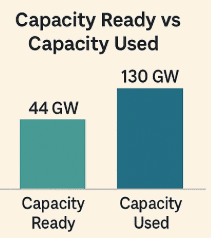
Definition: Green Energy Paradox = available renewable capacity stranded by PPAs, grid, demand, finances.

Location: India’s national power sector; affects solar-wind projects across multiple states.

Type: Supply-demand mismatch within energy transition, not a resource deficit.

Quick Facts for MCQs

Supply-Side Readiness

  • Capacity: 44 GW solar-wind ready yet undispatched.
  • Costs: Module price fall offset by duties, GST, high interest.
  • Incentives: PLI and VGF schemes lower domestic module & storage costs.

Demand-Side Weaknesses

  • Discoms: Prefer cheap, predictable coal PPAs over variable RE.
  • Grid: Scarce smart meters, weak demand-response hinder flexibility.
  • Consumption: Slow EV, electric cooking, industrial electrification keeps RE demand muted.

Economic Constraints

  • Capital: Taxes and borrowing inflate Indian RE tariffs above global averages.
  • Storage: Battery or pumped hydro unviable without heavy subsidy.
  • Integration: Variable RE raises balancing and transmission expenditure.

Policy & Schemes

  • National Solar Mission & Wind-Solar Hybrid Policy expand diversified capacity.
  • Green Open Access Rules 2022 enable industry to bypass discoms for RE.
  • National Green Hydrogen Mission and battery PLI nurture long-term storage ecosystem.

Reform Agenda

  • Grid: Roll out smart meters, market-based dispatch for flexibility.
  • Discoms: Restructure debt, adopt cost-reflective tariffs, curb political pricing.
  • RPOs: Set state-specific trajectories aligning resource endowment and grid strength.

Key Data Points

FeatureData-Point
Coal + lignite share (FY23)≈79 % of power generation
Non-hydro RE share3.8 % of mix
Idle RE capacity44 GW without PPAs
Oil import dependence>85 % of consumption
Gas import dependence~50 % of consumption
SAIDI India~600 min / year
SAIDI Thailand / Malaysia35 min / 46 min
Storage-backed RE tariff₹6.6–₹9 per kWh

Related UPSC Prelims PYQs

GEO_GS, GS1 2026PYQ 1

India's installed solar capacity in 2025 is close to

GEO_GS, GS1 2023PYQ 2

निम्नलिखित कथनों पर विचार कीजिए :

GS-1Environment

7.Land Subsidence in Chamoli (Land Subsidence)

New Indian Express
Illustration for Land Subsidence in Chamoli (Land Subsidence)

What & Where

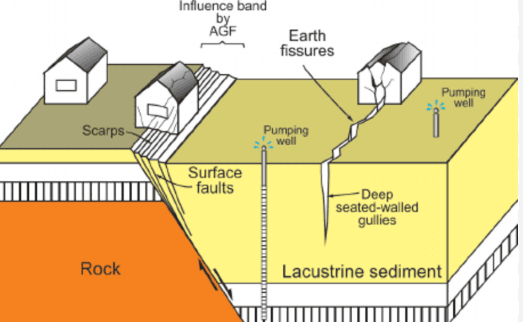
Land subsidence = gradual or sudden sinking of surface owing to underground material movement, both natural and anthropogenic.

Driven by Himalayan plate convergence, groundwater drawdown, sediment compaction, heavy‐water loading on fragile slopes.

Current hotspot Nanda Nagar (Chamoli, Uttarakhand); other Indian sites Joshimath, Delhi NCR; global sites Chesapeake Bay, Louisiana, China, Indonesia, Iran.

Quick Facts for MCQs

Geological Factors

  • Convergence: Indian Plate thrusting under Eurasian fractures bedrock, creating weak settlement zones.
  • Lithology: Clay-rich, loessic or alluvial layers compact sharply once pore water lost.
  • Hydrology: Water-table fall lowers pore pressure, soil grains compress, land sinks.

Anthropogenic Impact

  • Over-extraction: Intensive pumping for domestic/agricultural use accelerates compaction.
  • Engineering: Mining, tunnelling, hydropower projects disturb load balance, hasten downward movement.
  • Construction: Dense, unregulated buildings add surcharge on already unstable slopes.

Human & Economic Impacts

  • Displacement: Evacuations ongoing after 7 collapses, 16 structures endangered in Nanda Nagar.
  • Infrastructure: Cracks in roads, pipelines, power lines raise repair bills.
  • Finances: Tourism loss plus rehabilitation outlays strain Uttarakhand disaster funds.

Key Data Points

FeatureData-Point
Current hotspotNanda Nagar, Chamoli, Uttarakhand
Destroyed buildings7
Buildings at immediate risk16
Key natural driverIndian–Eurasian plate convergence
Key anthropogenic driverExcessive groundwater extraction
Prone lithologyClay-rich, fine-grained, unconsolidated sediments
Other Indian hotspotsJoshimath, Himachal Pradesh hills, Delhi NCR
Prominent global examplesChesapeake Bay, Louisiana, parts of China/Indonesia/Iran

Related UPSC Prelims PYQs

NDA_GAT 2020PYQ 1

Which one of the following is NOT a cause of depletion in groundwater?

GS-1Mapping

8.Seychelles Island Nation Mapping (Indian Ocean Islands)

Economic Times

What & Where

Island-nation Seychelles; archipelagic state of 115 islands in Southwest Indian Ocean

Location ~1,500 km east of mainland Africa, northeast of Madagascar

Capital Victoria on Mahé; Port Victoria key naval stop

Quick Facts for MCQs

Geography & Society

  • Multicultural blend French, British, Indian, African, Chinese reflected in Creole language, cuisine, festivals
  • HDI highest in Africa region
  • Terrain granitic inner islands plus low-lying coral outer islands

Security Dimension

  • Strategic location near key sea lanes enables freedom of navigation, anti-piracy patrols
  • Indian Navy First Training Squadron (INS Tir, INS Shardul, ICGS Sarathi) docked Port Victoria for long-range training
  • Seychelles Coast Guard receives Indian surveillance aircraft, patrol vessels support

India Partnership

  • Cooperation includes capacity-building, naval training, equipment grants under SAGAR doctrine
  • Projects include Coastal Surveillance Radar System, joint EEZ monitoring
  • Engagement regular high-level visits, Dornier aircraft deployment deepen security ties

Key Data Points

FeatureData-Point
CapitalVictoria (Mahé Island)
Island count115 total
Oceanic regionSouthwest Indian Ocean
Distance from Africa~1,500 km east of mainland
Nearby island statesMaldives, Mauritius, Comoros, Madagascar, Réunion, Mayotte

Related UPSC Prelims PYQs

GS1 2002PYQ 1

In the map given below, four islands of Indian Ocean region, i.e. A) Seychelles, B) Chagos, C) Mauritius and D) Socatra are marked as 1, 2, 3 and 4. Match them and select the correct answer from the codes given below.

GS1 2006PYQ 2

Which one of the following pairs is not correctly matched?

GS-3Environment

9.Funding India's Sector Decarbonisation (Sectoral Decarbonisation)

Indian Express

What & Where

Decarbonisation: systematic CO₂-cut to reach net-zero; study covers India’s power, steel, cement, road-transport sectors.

Geography: sectors together emit >50 % of India’s CO₂; funding horizon 2024-30.

Key processes: Carbon Capture & Storage, green hydrogen shift, renewable expansion, EV rollout, clinker substitution.

Quick Facts for MCQs

Funding Needs

  • Steel dominates cost, >53 % of USD 467 bn envelope.
  • Combined cement+steel funding = 84 % of requirement.
  • Road transport minor share, yet critical for EV ecosystem.

Sectoral Measures

  • Steel: CCS, electric arc furnaces powered by green hydrogen.
  • Cement: clinker substitution, alternative fuels, CCS retrofits.
  • Power: solar–wind build-out, grid modernisation, storage integration.

Progress Milestones

  • Non-fossil 500 GW target met 5 yrs early at 242.78 GW midway (capacity, not generation).
  • 36 % emissions-intensity cut already vs 45 % 2030 pledge.
  • Carbon-sink creation 92 % complete nine years ahead.

International Commitments

  • COP26 Glasgow: Panchamrit five-point pledge anchors targets.
  • Net-zero 2070 aligns with long-term global stocktake.
  • Study backs IMF-CSEP collaboration, signalling multilateral finance need.

Key Data Points

FeatureData-Point
Total decarbonisation need (4 sectors, 2024-30)USD 467 bn
Highest-cost sectorSteel – USD 251 bn
Second-highestCement – USD 141 bn
Power sector needUSD 47 bn
Road transport needUSD 18 bn
Potential CO₂ cut (steel+cement+power by 2030)6.9 bn t
Share of national CO₂ from 4 sectors>50 %
Panchamrit RE capacity target500 GW non-fossil by 2030
Panchamrit emissions-intensity cut45 % by 2030
Net-zero year pledged2070
Non-fossil capacity achieved 2024242.78 GW (≈50 % of 484.82 GW)
Carbon sink created till 20212.29 bn t (goal 2.5-3 bn t by 2030)
Emissions-intensity cut achieved 202036 %

Related UPSC Prelims PYQs

CAPF_GAI, GEO_GS 2025PYQ 1

India’s key climate targets include

CAPF_GAI, GEO_GS 2020PYQ 2

India has committed to reduce emission intensity of its GDP from 2005 levels by 33-35 per cent by the year:

GS-3Environment

10.Coral Microatolls Sea-Level Record (Sea Level Rise)

The Hindu

What & Where

Coral micro-atoll: disk-shaped Porites colony, upward growth cut by lowest tide, archives millimetre-scale sea-level history

Location focus: Mahutigalaa reef, Huvadhoo Atoll, Maldives; proxy for central Indian Ocean trends

Finding: Acceleration began late-1950s, total rise ≈0.3 m (1930-2019)

Quick Facts for MCQs

Environmental Impact

  • Flooding risk: 30–40 cm rise amplifies erosion, infrastructure threat for Maldives, Lakshadweep, Chagos
  • Ecosystem loss: Coral bleaching, mangrove retreat weaken natural coastal buffers
  • Water security: Saltwater intrusion degrades aquifers, heightens food and drinking-water stress

Physical Drivers

  • Ice melt: Greenland loss ×7, Antarctica ×4 (1992-2016) injects freshwater
  • Thermal expansion: Heat uptake enlarges ocean volume
  • Land-water shift: Groundwater depletion and surface storage changes add to seas

Climate Forcings on Coral Record

  • ENSO & positive IOD suppress coral extension, imprint annual bands
  • 18.6-yr lunar cycle adjusts low-tide limit, syncing micro-atoll upper surface
  • Combined signals allow sub-decadal sea-level reconstruction within ±5 mm accuracy

Key Data Points

FeatureData-Point
Study period1930-2019
Total central Indian Ocean rise~30 cm
Rise rate 1930-591–1.84 mm yr⁻¹
Rise rate 1960-922.76–4.12 mm yr⁻¹
Rise rate 1990-193.91–4.87 mm yr⁻¹
18.6-yr lunar nodeModulates tide ceiling
Indian Ocean avg SLR3.3 mm yr⁻¹
Global avg SLR3.2 mm yr⁻¹
Last 50 yr rise Maldives–Lakshadweep–Chagos30–40 cm
Global rise since 188021–24 cm
GS-3S&T

11.Vikram 32-Bit Indigenous Processor (Semiconductor Mission)

DH

What & Where

VIKRAM 3201 – 32-bit indigenously designed processor unveiled at Semicon India 2025

Developed at ISRO Semiconductor Laboratory (SCL), Mohali, under India Semiconductor Mission (2021)

Target use in space launch vehicles, defence systems, automotive and industrial electronics

Quick Facts for MCQs

Tech & Schemes

  • Fabrication aided by SCL modernisation funds allocated in Union Budget FY 24
  • Design focus includes mRNA tech support, immersive tech, digital security compatibility
  • Roadmap aligns with Make in India electronics and Production Linked Incentive scheme

Strategic Dimension

  • Sovereignty boost amid global chip supply chain disruptions and export controls
  • Reduces import dependence for critical defence and aerospace electronics
  • Supports Atmanirbhar Bharat vision in high-end technology

Economic Angle

  • Semicon hub ambition to attract fabs, OSAT units, design houses across states
  • Large domestic chip ecosystem expected to cut forex outflow on electronics imports
  • High-skill job creation projected in semiconductor design, testing, packaging

Application Sectors

  • Launch-vehicle avionics requiring radiation-tolerant processors
  • Mission-critical defence communication and guidance modules
  • Smart automotive ECUs and industrial control systems needing high reliability

Key Data Points

FeatureData-Point
Architecture32-bit RISC-based design
DeveloperISRO’s Semiconductor Laboratory, Punjab
Mission umbrellaIndia Semiconductor Mission (2021)
Unveiled byPrime Minister at Semicon India 2025
Official chip nameVIKRAM 3201
Core applicationsSpace, defence, automotive, high-reliability energy
Environmental resilienceQualified for harsh launch-vehicle conditions
Investment cleared₹1.6 lakh crore semiconductor projects nationwide
GS-3S&TQuick Bite

12.CEREBO Hand-Held Brain Scanner (Medical Diagnostics)

The Hindu

What & Where

CEREBO indigenous handheld device detects traumatic brain injuries using near-infrared spectroscopy with machine learning

Developed by Indian Council of Medical Research; intended for nationwide use, especially rural and emergency settings

Provides non-invasive, radiation-free point-of-care screening for intracranial bleeding and edema

Quick Facts for MCQs

Tech & Schemes

  • Near-infrared light gauges hemodynamic shifts; algorithm classifies bleed versus normal tissue
  • Machine-learning models trained on clinical datasets enable rapid on-device inference
  • Complements CT scans by flagging cases needing deep tissue imaging

Health Impact

  • Early TBI detection within Golden Hour reduces morbidity and mortality
  • Radiation-free method permits frequent monitoring during recovery phases
  • Suitable for all age groups, including neonates and pregnant women

Deployment & Accessibility

  • Pocket-sized design fits first-responder kits and field hospitals
  • Affordable production targets districts lacking CT or MRI infrastructure
  • One-button operation allows use by paramedics and primary health workers

Key Data Points

FeatureData-Point
Device nameCEREBO
DeveloperICMR, India
Core technologyNear-infrared spectroscopy + machine learning
Target conditionIntracranial bleeding & edema in TBI
Result time< 1 minute
SafetyNon-invasive, radiation-free; safe for infants & pregnancy
OutputColor-coded, user-friendly display
Typical settingsAmbulances, trauma centers, rural clinics, disaster units
GS-2Misc

13.Global Peace Index 2025 Rankings (Global Indices)

Financial Express
Illustration for Global Peace Index 2025 Rankings (Global Indices)

What & Where

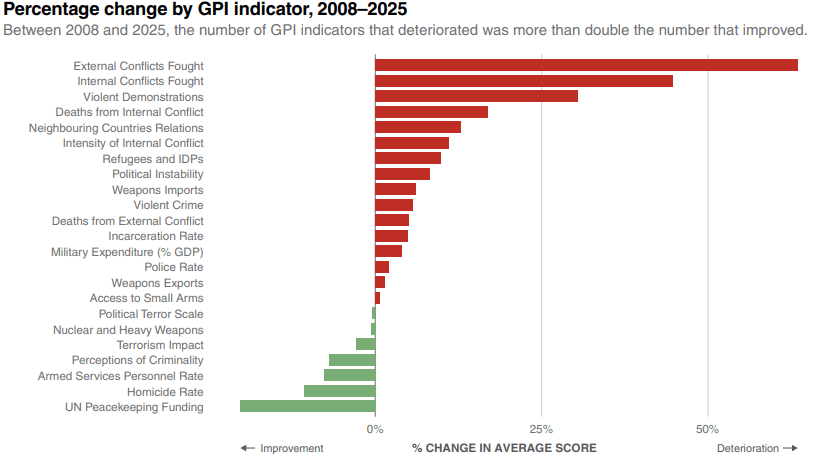
Annual Global Peace Index ranks 163 states on peacefulness, covering 99.7 % of world population

Assessment via 23 indicators across Societal Safety & Security, Ongoing Conflict, Militarisation

Compiled by Institute for Economics and Peace, Sydney; 2025 list led by Iceland

Quick Facts for MCQs

Methodology

  • Indicators span crime rates, political stability, refugee impact, war deaths, terrorism, military expenditure
  • Lower numerical score denotes higher peace, composite weighted across domains
  • Data sourced from UN, World Bank, SIPRI, EIU intelligence unit

Ranking Highlights

  • Top 10 dominated by Europe; Ireland, New Zealand, Finland next to Iceland
  • Singapore only Asian entrant in top 10, at 7th position
  • Global average peacefulness declined further, driven by militarisation and internal conflicts

India Snapshot

  • Improvement credited to declining domestic violence, marginally better societal stability
  • Challenges persist: high militarisation, cross-border tensions, sporadic internal unrest
  • Rank still below South Asia peers Bhutan (22) and Nepal (76)

Regional Patterns

  • South America gains: Argentina, Peru climbed several spots
  • Sub-Saharan Africa and Middle East remain most conflict-prone regions
  • Europe retains status as world’s most peaceful continent despite Ukraine war spillovers

Key Data Points

FeatureData-Point
PublisherInstitute for Economics and Peace (Australia)
Edition yearGPI 2025
Countries covered163
Indicators count23
Broad domains3
Global No. 1Iceland
India rank115
India score2.229
India score change−0.58 % (better)
Least peaceful clusterRussia, Ukraine, Sudan, DR Congo, Yemen

Related UPSC Prelims PYQs

ESE_GS, GEO_GS 2024PYQ 1

Consider the following statements regarding the Global Peace Index 2023:

ESE_GS, GEO_GS 2020PYQ 2

According to the Global Climate Risk Index 2020, published by environmental think tank Germanwatch, in the year 2018 India’s rank in the list of top most climate affected nations is:

GS-2Scheme

14.BHARATI Agri-Food Startup Initiative (Agri Export Promotion)

TW

What & Where

BHARATI = Bharat’s Hub for Agritech, Resilience, Advancement & Incubation; national export-acceleration platform for agri-food startups.

Implemented by APEDA, Ministry of Commerce & Industry; supported by Ministry of Food Processing Industries.

Operates pan-India, targeting $50 billion agri-food exports by 2030.

Quick Facts for MCQs

Programme Design

  • Selection via APEDA portal from Sept 2025, nationwide awareness drive.
  • Cohort training covers product development, export compliance, market access, packaging, logistics.
  • Problem-solving component tackles perishability, wastage, quality assurance.

Tech & Schemes

  • Adoption of AI-based quality checks for export standards adherence.
  • Blockchain traceability ensures supply-chain transparency from farm to foreign buyer.
  • Alignment with Startup India, Atmanirbhar Bharat initiatives for funding and policy support.

Economic Angle

  • Export push aims to position India as global agri-food hub, unlocking new markets.
  • Job creation expected across processing, cold chains, logistics, packaging value chains.
  • Innovation infusion envisioned to raise farm incomes and sector competitiveness.

Key Data Points

FeatureData-Point
Launch bodyAPEDA
Parent ministryCommerce & Industry
Support ministryFood Processing Industries
Startup cohort size100
Programme length3 months acceleration
Export targetUSD 50 billion by 2030
Tech toolsAI, blockchain, IoT, agri-fintech
Focus productsGI items, organic, superfoods, livestock, AYUSH

Related UPSC Prelims PYQs

ESE_GS, NDA_GAT 2021PYQ 1

Which one of the following is the latest in series being organized as the largest virtual gathering to create dialogues, and accelerate innovation in agriculture ?

ESE_GS, NDA_GAT 2025PYQ 2

Under which one of the following initiatives does the NITI Aayog support interested States to establish a State Institution for Transformation (SIT)?

Ready to practice?

Test your knowledge with our UPSC test series.

Start Free Trial