UPSC Current Affairs

12 topicsGS-1: 1GS-2: 1GS-3: 10
0/12 done
GS-2PolityQuick Bite

1.Maritime Accident Liability Framework (IMO Conventions)

The Hindu

What & Where

IMO conventions shape global shipping safety, pollution control and liability regimes.

Kerala-coast merchant-vessel fires/sinkings expose India’s compensation and enforcement gaps.

Shipowners use Flags of Convenience for lenient registration yet remain under IMO oversight.

Quick Facts for MCQs

Legal & Policy

  • Ratification gap limits India’s ability to claim HNS or ballast-water compensation.
  • Signed Nairobi Convention makes shipowner liable for wreck removal and salvage costs.
  • Flags of Convenience enable regulatory arbitrage yet must follow IMO liability norms.

Environmental Impact

  • Ballast-water discharge spreads invasive species; 2004 convention mandates on-board treatment.
  • HNS Convention establishes fund for chemical-spill cleanup and restoration.

Insurance & Compensation

  • P&I Clubs pool risks, cover cargo, crew, pollution and wreck-removal claims.
  • Cargo loss payouts limited by package weight or SDR ceilings in conventions.
  • Oil/pollutant damage claims unlimited under MARPOL, enforcing strict polluter-pays principle.

Key Data Points

FeatureData-Point
Regulating bodyInternational Maritime Organization (IMO)
Recent accident zoneArabian Sea off Kerala
Unratified by IndiaBallast Water Convention 2004
Unratified by India (2)Hazardous & Noxious Substances Convention 2010
Ratified by IndiaNairobi Wreck Removal 2007
Cargo loss liabilityCapped under international conventions
Environmental damage liabilityUncapped; polluter-pays; MARPOL
Insurance mechanismProtection & Indemnity (P&I) Clubs
FOC registry examplesLiberia, Marshall Islands
GS-3Economy

2.Relaxed SEZ Rules 2006 (SEZ Land Norms)

The Hindu

What & Where

Special Economic Zones: notified enclaves with differential trade, tax and customs regime under SEZ Act 2005, across Indian states

New focus: semiconductor & electronic component SEZs; land norm cut to 10 ha, domestic sales now permitted

Administered by Ministry of Commerce & Industry; clearance via Board of Approval under single-window mechanism

Quick Facts for MCQs

Legal & Policy

  • Amendment notified under Rule 5 of SEZ Rules easing land and encumbrance stipulations
  • Relaxation targets Design-Linked Incentive and India Semiconductor Mission alignment
  • SEZs keep separate customs territory status despite domestic sale allowance

Economic Angle

  • Goal: attract fab, assembly, testing investments amid global supply-chain diversification
  • Lower land requirement expected to unlock urban brownfield parcels, lowering entry cost
  • Domestic sales option boosts capacity utilisation, reduces inventory risk for chip makers

Tech & Schemes

  • Semiconductor SEZs synergise with PLI for Large Scale Electronics and Semiconductor Fabs
  • Units can leverage GST zero-rating on exports plus PLI cash incentives
  • Policy complements 2023 India Semiconductor Policy aiming for first commercial fab by 2026

Key Data Points

FeatureData-Point
Governing ActSEZ Act 2005
Implementing RulesSEZ Rules 2006
Nodal MinistryCommerce & Industry
Original land norm (general SEZ)50 ha contiguous
Relaxed land norm (semicon/electronics)10 ha
Encumbrance-free clauseNow waived; charges allowed
Export obligationNet foreign exchange positive
Domestic sale permissionAllowed with duties for semicon/electronics units
Customs statusDeemed foreign territory
Key approval bodyBoard of Approval (single window)

Related UPSC Prelims PYQs

ESE_GS, GS1 2010PYQ 1

The SEZ Act, 2005 which came into effect in February 2006 has certain objectives. In this context, consider the following :

ESE_GS, GS1 2021PYQ 2

From the following, which facilities are provided for units in the export processing zone?

GS-1Mapping

3.Cyprus Geographical Overview (Mediterranean Island)

Financial Express
Illustration for Cyprus Geographical Overview (Mediterranean Island)

What & Where

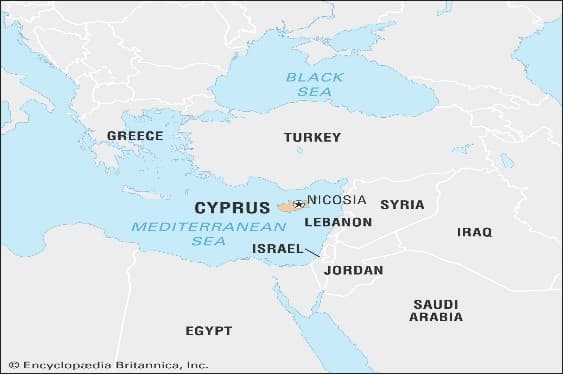
Cyprus – eastern Mediterranean island, 65 km south of Turkey, third-largest in the sea

Politically split: EU-member Republic of Cyprus (south) vs Turkish-controlled Northern Cyprus since 1974 invasion

Capital Nicosia sits on Mesaoria plain between Kyrenia and Troodos mountain ranges

Quick Facts for MCQs

Physical Geography

  • Relief dual mountain chains flank central Mesaoria plain
  • Soil moisture depends on winter rains; irrigation vital for crops
  • Coastline offers natural harbours enhancing Mediterranean shipping routes

Diplomatic Value for India

  • Support consistent backing for India at UNSC and Nuclear Suppliers Group
  • Counterbalance offers leverage against Turkey’s pro-Pakistan activism
  • EU-Presidency 2026 can amplify India-EU trade and security negotiations

Connectivity & Corridors

  • IMEC node location enables maritime-rail linkage from India to Europe
  • Proximity Turkey Syria Lebanon Israel facilitates multi-destination shipping
  • Potential trans-shipment hubs strengthen India’s Mediterranean outreach

Key Data Points

FeatureData-Point
CapitalNicosia (Lefkosia/Lefkoşa)
Highest peakMount Olympus 1,951 m
Main rangesKyrenia (north), Troodos (south)
Central plainMesaoria
Climate typeMediterranean hot-dry summers, wet winters
Distance from Turkey~65 km south
Distance from Syria~100 km west
Political division year1974 Turkish invasion
TRNC recognitionOnly by Turkey
EU membershipRepublic of Cyprus since 2004
Next EU Council PresidencyCyprus in 2026
UNSC stanceSupports India permanent seat
Corridor relevanceNode on India-Middle East-Europe Corridor
GS-3Environment

4.Nice Ocean Action Plan (UNOC3 Declaration)

UN

What & Where

UN Ocean Conference 3 (UNOC3): third global meet to propel SDG-14, co-hosted by France & Costa Rica.

Venue & timing: Nice, France, 8–13 June 2025; follows New York 2017 and Lisbon 2022 editions.

Output: Nice Ocean Action Plan with political declaration “Our Ocean, Our Future: United for Urgent Action”.

Quick Facts for MCQs

Legal & Policy

  • Declaration urges swift BBNJ treaty entry-into-force, deep-sea mining moratorium support.
  • Commitment aligns with Kunming-Montreal Biodiversity Framework 30×30 target.
  • Calls for science-based national ocean strategies before 2030 review.

Finance & Funding

  • EU pledges €1 billion toward marine protected areas and sustainable fisheries.
  • Indonesia–World Bank Coral Bond mobilises private capital for reef restoration.
  • Emphasis on equitable finance access for SIDS and coastal LDCs.

Conservation Targets

  • 30 % global ocean coverage in MPAs by 2030 restated as collective objective.
  • French Polynesia announces world’s largest single MPA covering entire EEZ.
  • Pledges to curb underwater noise, plastic litter, and destructive gear impacts.

Coalitions & Initiatives

  • High Ambition Coalition for a Quiet Ocean launched to cut anthropogenic noise.
  • 800+ voluntary commitments registered on UN Ocean Registry.
  • Action Plan urges wider membership in Global Ocean Observing System.

Key Data Points

FeatureData-Point
EditionThird UN Ocean Conference
Co-hostsFrance and Costa Rica
Participants15,000+ delegates, 60+ heads of state
Side events≈450
Core SDGSDG-14: Life Below Water
30×30 goal30 % oceans protected by 2030 reaffirmed
BBNJ ratifications50 countries (High Seas Treaty)
EU ocean fund€1 billion for protection & fisheries
Largest announced MPAFrench Polynesia EEZ; ~5 million km²
New coalitionHigh Ambition Coalition for a Quiet Ocean
GS-3Environment

5.AC Temperature Restriction Norms (Energy Efficiency)

The Hindu

What & Where

Restricting AC Temperature: draft Ministry of Power rule fixing factory-set range at 20-28 °C in all new units.

Coverage: residential, hotel and vehicular air-conditioners sold across India; mandates hardware, not user advisory.

Goal: cut rising cooling-led power demand and avert health risks of excessively cold indoor environments.

Quick Facts for MCQs

Legal & Policy

  • Mandate: Bureau of Energy Efficiency to embed range during manufacturing, ensuring hard compliance.
  • Alignment: supports India Cooling Action Plan target 25-30 % demand cut by 2038.
  • Climate: aids Paris & SDG 13 commitments.

Energy & Grid

  • Peak-shaving: curbs summer grid stress, limits blackout risk and costly spot power.
  • Tariff relief: moderates need for extra fossil-fuel generation, keeping consumer prices stable.
  • Emission: lower kWh consumption directly trims CO₂ trajectory toward net-zero.

Health Impact

  • Cardiovascular: cold-induced vasoconstriction boosts hypertension likelihood.
  • Respiratory: ≤16 °C linked to reduced lung capacity in children.
  • Sleep & Mental: over-cooling disrupts circadian rhythm, elevates anxiety and depression markers.

International Examples

  • Japan Cool-Biz: 28 °C office norm since 2005 for energy restraint.
  • Global trend: many OECD nations recommend 26 °C+ in public buildings.

Key Data Points

FeatureData-Point
Default temperature band20 °C – 28 °C
Previous advisory (2018)24 °C default, voluntary
Cooling demand projection 2030200 GW
Present AC load50 GW ≈ 20 % of peak
Household AC penetration~6 %
Power saved per +1 °C set-point≈ 6 %
Annual energy saving potential≈ 20 billion units
Health risk threshold<18 °C raises BP 6–8 mm Hg
Elderly/infant concernweaker thermoregulation, higher morbidity
Global parallelJapan’s 28 °C default rule
GS-3Environment

6.GFW 2024 Indian Forest Loss (Forest Degradation)

Business Standard

What & Where

Platform Global Forest Watch; open-source forest-loss tracker by World Resources Institute

Scope India; tree, natural and humid primary forest trends for 2001-2024

Hotspots Northeast shifting cultivation, Central India mining belt, Western Ghats roads-tourism-plantations

Quick Facts for MCQs

Drivers

  • Shifting-cultivation, logging, linear infrastructure dominate Northeast losses
  • Mining expansion erodes Central Indian forests, notably coal belts
  • Roads, tourism, monoculture plantations pressure Western Ghats biodiversity zone

Emission Impact

  • Forest loss 2001-24 emitted more than 1 GT CO₂, undermining NDC absorption goals
  • Single-year 2024 emissions 68 Mt CO₂ roughly equal to Bhutan’s decade output
  • Humid primary forest removal critical; highest carbon density ecosystem segment

Global Ranking

  • India second only to Brazil in annual deforestation 2015-20 per FAO
  • Yet ranks fourth in tree-cover gains 2000-20, after Russia, Canada, USA
  • Mixed profile underscores simultaneous restoration drives and rapid land-use change

Key Data Points

FeatureData-Point
Tree cover loss 2001-242.31 million ha
Decline vs 20007.1 %
CO₂ from loss 2001-241.29 gigatonnes
Natural forest loss 2024150,000 ha
CO₂ from 2024 loss68 million t
Primary forest loss 202317,700 ha
Primary forest loss 202418,200 ha
Humid primary loss 2002-24348,000 ha (5.4 %)
Share of humid loss15 % of total loss
Fire-linked loss 2001-2436,200 ha
Peak fire loss year2008 – 2,770 ha
Tree cover gain 2000-201.78 million ha
India share in global gains1.4 %
Top gainers worldRussia, Canada, USA
Deforestation rank 2015-202nd globally (668,000 ha/yr, FAO)

Related UPSC Prelims PYQs

CDS_GK, NDA_GAT 2023PYQ 1

There is an increase in forest cover area of India between 2011 and 2021. However, there is a decrease in forest cover area of India during the same period in

CDS_GK, NDA_GAT 2022PYQ 2

The forests of Uttarakhand, Kullu Valley in Himachal Pradesh and Dzukuo Valley in Nagaland and Manipur were in the news on account of which one of the following reasons?

GS-3Species

7.Spartaeus karigiri Discovery (Jumping Spider)

The Hindu
Illustration for Spartaeus karigiri Discovery (Jumping Spider)

What & Where

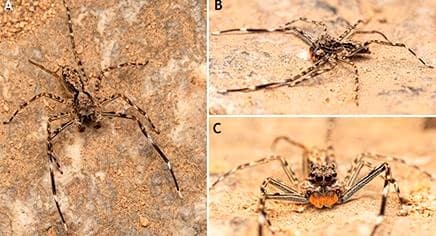
Species: Spartaeus karigiri, a new Salticidae (jumping spider) under subfamily Spartaeinae

First Indian record of genera Spartaeus & Sonoita, earlier known only from SE Asia-Africa belt

Found on rocky outcrops of Karigiri Hill, Devarayanadurga, Karnataka; also Villupuram district, Tamil Nadu

Quick Facts for MCQs

Biodiversity Angle

  • Discovery enlarges known Salticidae diversity, signalling micro-habitat specific endemism in peninsular rocky terrains
  • Adds two previously extralimital genera to Indian arachnid checklist
  • Spurs need for systematic surveys beyond forested biomes

Behaviour & Adaptations

  • Mimicry allows stealthy infiltration into other spiders’ webs for predation
  • Female egg-guarding suggests parental investment uncommon in many arachnids
  • High visual acuity supports complex hunting, mate recognition

Biogeographical Puzzle

  • Presence of African Sonoita raises questions of ancient dispersal versus recent anthropogenic introduction
  • Could indicate historical land connections or unnoticed migratory corridors
  • Future phylogenetic studies essential to map lineage movements

Key Data Points

FeatureData-Point
Scientific nameSpartaeus karigiri
Family / SubfamilySalticidae / Spartaeinae
Genera newly recorded in IndiaSpartaeus, Sonoita
Confirmed African species in IndiaSonoita cf. lightfooti
Primary habitatRocky outcrops & crevices
Male micro-habitatExposed rocks
Female behaviourGuards egg clutch in situ
Hunting strategyIntelligent mimicry & web invasion
Vision traitKeen, eight-eyed binocular sight
Core discovery siteKarigiri (Elephant Hill), Devarayanadurga, Karnataka
Secondary siteVillupuram district, Tamil Nadu
Biodiversity implicationHighlights rich, under-studied rocky landscapes of S. India
GS-3SpeciesQuick Bite

8.Eurasian Otter Kashmir Sighting (Eurasian Otter)

Indian Express

What & Where

Eurasian Otter (Lutra lutra); semi-aquatic carnivore; keystone indicator of unpolluted freshwater ecosystems

Rediscovered in Kashmir after 25-30 yr; past sites Dachigam NP, Dal Lake tributaries, Rambiara stream, Lidder river

Indian range spans Himalayas, Northeast and Western Ghats; also uses some coastal stretches

Quick Facts for MCQs

Taxonomy

  • Genus Lutra; single Indian representative Lutra lutra; allies include smooth-coated (Lutrogale) and small-clawed (Aonyx)
  • Order Carnivora; subfamily Lutrinae under family Mustelidae

Habitat & Behaviour

  • Habitat preference clean rivers, lakes, streams, wetlands; tolerates some coastal zones
  • Behaviour mostly nocturnal; solitary except mother-cubs; constructs holts near water banks
  • Diet mainly fish; supplements with crustaceans, amphibians, reptiles, birds, insects, worms

Conservation Status

  • Threats pollution, habitat fragmentation, sand mining, prey depletion, illegal hunting for fur
  • Protected under WPA Schedule II; trade banned internationally through CITES Appendix I
  • IUCN Near Threatened; population declining but locally stable where water quality high

Key Data Points

FeatureData-Point
Common nameEurasian Otter / Common Otter
Local Kashmiri nameVuder
Taxonomic orderCarnivora
Family / subfamilyMustelidae / Lutrinae
Genus–speciesLutra lutra
IUCN categoryNear Threatened
WPA 1972Schedule II
CITES listingAppendix I
Ecological roleKeystone; clean-water indicator
Activity patternPredominantly nocturnal
Den typeHolts near water
Main dietFish; plus crustaceans, amphibians
Other Indian ottersSmooth-coated, Small-clawed
GS-3S&T

9.SPArc Proton Arc Therapy (Proton Therapy)

The Hindu
Illustration for SPArc Proton Arc Therapy (Proton Therapy)

What & Where

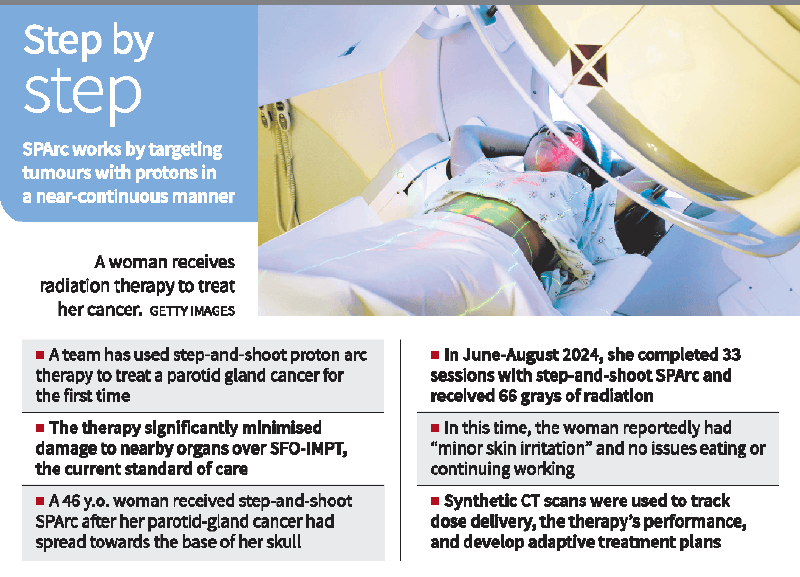
Step-and-Shoot Spot-Scanning Proton Arc Therapy (SPArc) = next-gen proton radiotherapy delivering arcs in discrete angles.

Built at Corewell Health William Beaumont Univ. Hospital, Michigan, USA; first used on skull-base parotid cancer.

Targets anatomically complex tumours while sparing brainstem, optic nerves, facial nerves.

Quick Facts for MCQs

Tech & Schemes

  • Delivery: Step-and-shoot angles plus continuous couch motion maximise target conformality.
  • Modulation: Energy layers sequentially paint slices, ensuring homogeneous dosing.
  • Imaging: Synthetic CT enables daily adaptive replanning without extra radiation.

Clinical Outcomes

  • Side-effects: Minimal skin reaction; no dietary or activity restrictions observed.
  • Organs-at-risk: Marked dose reduction to brainstem, skull base, optic apparatus.
  • Quality-of-life: Promises higher survival with fewer chronic morbidities.

India Outlook

  • Need: Rising head-and-neck cancer burden demands precision oncology solutions.
  • Challenge: Capital-intensive proton centres pose access and affordability issues.
  • Strategy: Deploy in select tertiary hubs with public-private partnerships for wider reach.

Key Data Points

FeatureData-Point
Full formStep-and-Shoot Spot-Scanning Proton Arc Therapy
Radiation typeProton beam
DeveloperCorewell Health William Beaumont Univ. Hospital, U.S.
First patient age46 years
Delivery arc180° programmed steps
Energy controlLayer-by-layer modulation (“painting”)
Imaging aidAI-generated synthetic CT from cone-beam CT
Reported acute toxicityOnly minor skin irritation
Prime indicationsHead-&-neck, large/complex, refractory tumours
Key advantageHigh tumour dose, reduced collateral damage
GS-3S&T

10.Ease of Doing Research Reforms (Research Procurement)

PIB
Illustration for Ease of Doing Research Reforms (Research Procurement)

What & Where

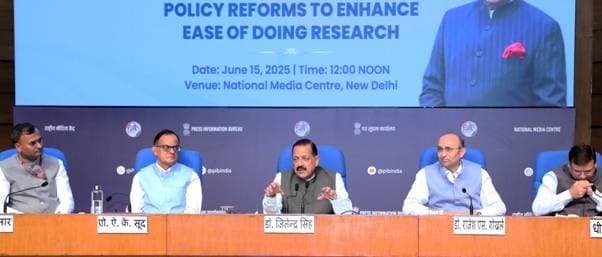
Concept: ‘Ease of Doing Research’ = cutting red tape for quicker, autonomous R&D operations

Geography: All Central/State universities, national labs & publicly funded research institutions across India

Announced by: Union Minister of Science & Technology, Government of India

Quick Facts for MCQs

Legal & Policy

  • Reform rooted in GFR 2017 relaxation, bypasses mandatory GeM for niche instruments
  • Empowers institutional heads, reducing dependence on ministry-level approvals

Economic Angle

  • Procurement speed accelerates lab setup, shortening time-to-innovation cycles
  • Higher financial limits expected to crowd-in private co-funding for public R&D

Tech & Schemes

  • Faster equipment access benefits deep-tech startups, PhD fellows and mission-mode projects
  • Policy mirrors earlier liberalisations in space & nuclear sectors to widen tech diffusion

Key Data Points

FeatureData-Point
Non-GeM procurementPermitted for specialised scientific equipment
GTE approval powerDirectors/VCs up to ₹200 crore
Direct purchase ceilingRaised from ₹1 lakh → ₹2 lakh
Dept. committee purchaseNow ₹2 lakh–₹25 lakh (earlier ₹1 lakh–₹10 lakh)
Limited/advertised tender capEnhanced to ₹1 crore
Governance modelTrust-based with accountability
Policy alignmentSupports NEP 2020 interdisciplinary R&D goals
Targeted science economyAspirational size: US $100 billion

Related UPSC Prelims PYQs

ESE_GS 2021PYQ 1

Which one of the following statements is NOT correct regarding the National Education Policy 2020 in India ?

GS-3S&T

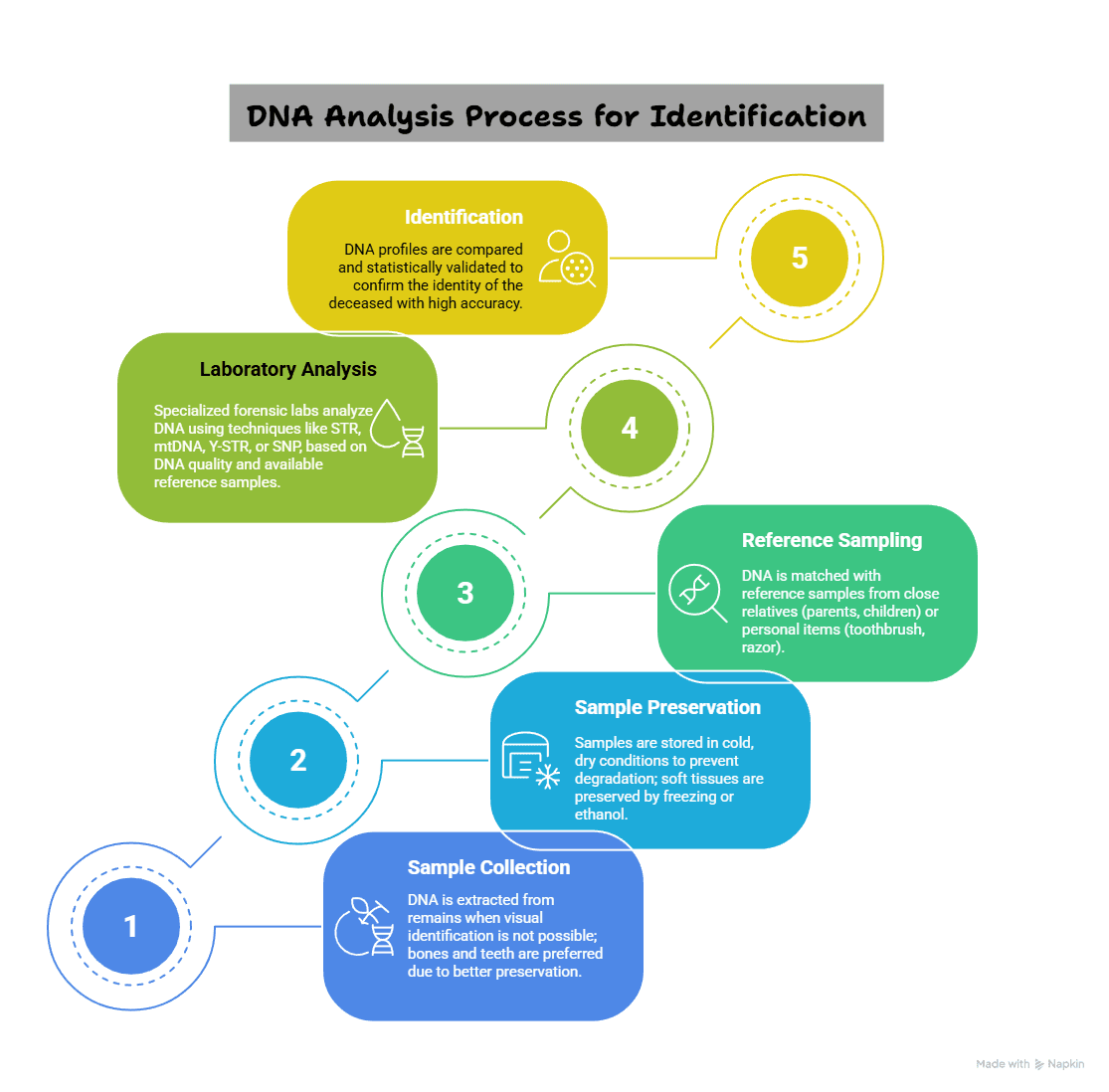
11.DNA Identification Techniques (DNA Profiling)

Indian Express
Illustration for DNA Identification Techniques (DNA Profiling)

What & Where

DNA analysis = lab examination of genetic material for individual identification, kinship, trait detection.

Gold-standard in Disaster Victim Identification; applied after 2025 Air India Dreamliner crash, Ahmedabad, India.

Core processes: Short Tandem Repeat (STR), mitochondrial DNA, Y-STR, Single-Nucleotide Polymorphism (SNP) profiling.

Quick Facts for MCQs

Forensic Techniques

  • STR; most common; examines nuclear repeats; fails if DNA highly degraded.
  • mtDNA; multiple copies; matches mother/maternal kin; endures heat/decay.
  • Y-STR; male-specific; compares paternal male relatives; aids when only distant kin available.

Genetic Characteristics

  • Variation 0.1 % forms individual DNA signature via STRs/SNPs.
  • mtDNA circular, extranuclear; Y chromosome only in males.
  • SNP = single base change; less discriminatory than STR yet works with fragments.

Operational Limits

  • Degraded nuclear DNA lowers STR success, prompting mtDNA/SNP use.
  • Each test needs reference sample (family, database, personal item).
  • SNP informative power limited; combines with other markers for confirmation.

Key Data Points

FeatureData-Point
Human DNA identical≈ 99.9 % across individuals
Unique regions usedShort Tandem Repeats (STRs)
STR loci analysed≥ 15 for high accuracy
mtDNA inheritanceStrictly maternal line
Y-STR inheritanceFather → sons (paternal line)
SNP utilityHighly degraded / scant DNA
Copies per cellmtDNA > nuclear DNA; better survivability
Identical-twin exceptionShare same nuclear & mtDNA profile

Related UPSC Prelims PYQs

GS1 1997PYQ 1

Which one of the following techniques can be used to establish the paternity of a child?

GS1 2000PYQ 2

Assertion (A): “DNA Finger-printing” has become a powerful tool to establish paternity and identity of criminals in rape and assault cases.

GS-3Security

12.Operation True Promise 3 (Iran-Israel Conflict)

Times of India
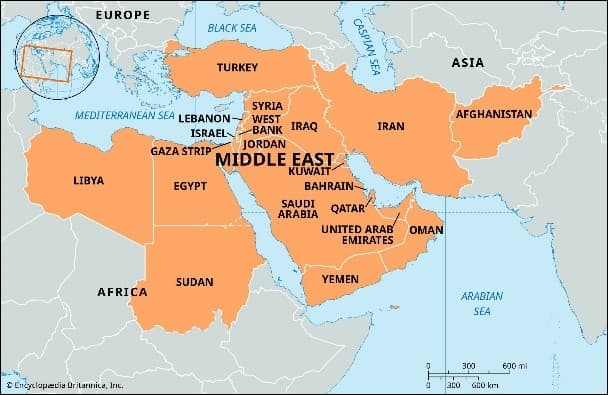
Illustration for Operation True Promise 3 (Iran-Israel Conflict)

What & Where

Operation True Promise 3 = Iran’s third-day retaliatory missile-drone campaign against Israel.

Employs “new method” multi-type salvos to saturate and confuse layered air-defence (Iron Dome, David’s Sling).

Battlespace spans Iranian launch sites to Israeli metros Tel Aviv, Haifa, Rehovot.

Quick Facts for MCQs

Security Dimension

  • Damage: critical energy nodes and scientific sites impaired, signalling vulnerability of Israeli urban core.
  • Civilian risk: multi-target penetration raised casualty, economic-disruption potential.

Technology & Tactics

  • Decoy-saturation: real + mimic projectiles create radar false positives, exhausting interceptors.
  • Internal-conflict coding: defence batteries mis-assign targets, occasionally intercept each other.
  • AI mid-course manoeuvres: unpredictable paths outpace pre-programmed interceptor algorithms.

Geopolitical Angle

  • Retaliatory chain: illustrates escalatory ladder after strikes on Iranian nuclear infrastructure.
  • Asymmetric message: tech leap narrows conventional power gap, heightens regional deterrence calculus.

Key Data Points

FeatureData-Point
OperatorIslamic Revolutionary Guard Corps (IRGC)
Immediate triggerIsraeli strikes on Natanz & Isfahan; death of senior IRGC generals
Campaign phaseThird consecutive day (True Promise 3)
Main targetsCities, power stations, refineries, scientific institutes
Key cities hitTel Aviv, Haifa, Rehovot
Strike mechanismDecoy-saturation, internal-conflict programming, AI trajectory shifts
Defence challengedIron Dome & other layered systems
Noted outcomeOverloaded radars; some missiles penetrated to dense civilian/economic zones

Ready to practice?

Test your knowledge with our UPSC test series.

Start Free Trial