UPSC Current Affairs

17 topicsGS-1: 5GS-2: 6GS-3: 6
0/17 done
GS-2Polity

1.FCRA NGO Compliance Rules (FCRA Amendments)

Hindustan Times

What & Where

Foreign Contribution (Regulation) Act, 1976 – central law regulating acceptance & use of overseas funds in India

Applies to individuals, associations, NGOs nationwide; administered by Ministry of Home Affairs

Objective: guard national interest, ensure transparency, prevent political or religious misuse of foreign money

Quick Facts for MCQs

Legal & Policy

  • Amendment 2010 strengthened reporting; Amendment 2020 tightened utilisation & oversight
  • MHA empowered to inspect, suspend, cancel registrations for contraventions
  • Warning Jan 2025 reiterates penalties for unlicensed foreign-fund usage

Compliance Requirements

  • Aadhaar-based verification ensures traceable governance of NGOs
  • Only one SBI-Delhi account to receive foreign inflows; other accounts limited to utilisation
  • Renewal filing six months early prevents automatic lapse of FCRA status

Funding Restrictions

  • Administrative-spend capped at 20 %; balance for stated charitable objectives
  • No onward transfer of foreign money to other NGOs or entities
  • Bar extends to candidates, journalists, media houses, judges, govt servants, political bodies

Security Dimension

  • Applicants must not engage in religious conversion, fictitious entities, seditious or communal activities
  • Act designed to curb foreign influence over domestic political or social processes

Key Data Points

FeatureData-Point
Enactment year1976 (Emergency period)
Latest major amendment2020
Admin ministryMHA, GoI
Registration validity5 years
Renewal deadlineApply ≥6 months before expiry
Max suspension period360 days
Admin-expense ceiling20 % of foreign funds (pre-2020: 50 %)
Sub-grantingCompletely prohibited post-2020
Mandatory IDAadhaar for all key functionaries
Designated accountSingle FCRA a/c at SBI, New Delhi
Public servants fundingAbsolutely barred
Typical penalty triggerUse of foreign funds without valid licence

Related UPSC Prelims PYQs

GS1 2003PYQ 1

Which one of the following statements is correct with reference to FEMA in India?
GS-2Polity

2.Loudspeaker Not Essential Practice (Essential Religious Practice)

Indian Express
Illustration for Loudspeaker Not Essential Practice (Essential Religious Practice)

What & Where

Essential Religious Practice (ERP) test: courts decide practices integral to faith, protected by Article 25 freedom of religion.

Bombay High Court, Maharashtra (Bedekar v State, 2016) held loudspeaker use non-ERP; enforced Noise Rules statewide.

Noise treated as “air pollutant” nationwide under Air (Prevention & Control of Pollution) Act, 1981.

Quick Facts for MCQs

Judicial Precedents

  • Bombay HC: loudspeaker non-essential; directs strict Noise Rules enforcement including silence zones.
  • Supreme Court: instant triple talaq unconstitutional, not ERP, violates gender equality.
  • Rajasthan HC ban on Santhara labelled non-ERP; SC interim stay permits ritual.

Fundamental Rights

  • Article 25 protects only essential, non-harmful religious practices.
  • Article 19(1)(a) speech subject to reasonable restrictions incl. public health.
  • ERP doctrine balances religious freedom with other fundamental rights.

Environmental Norms

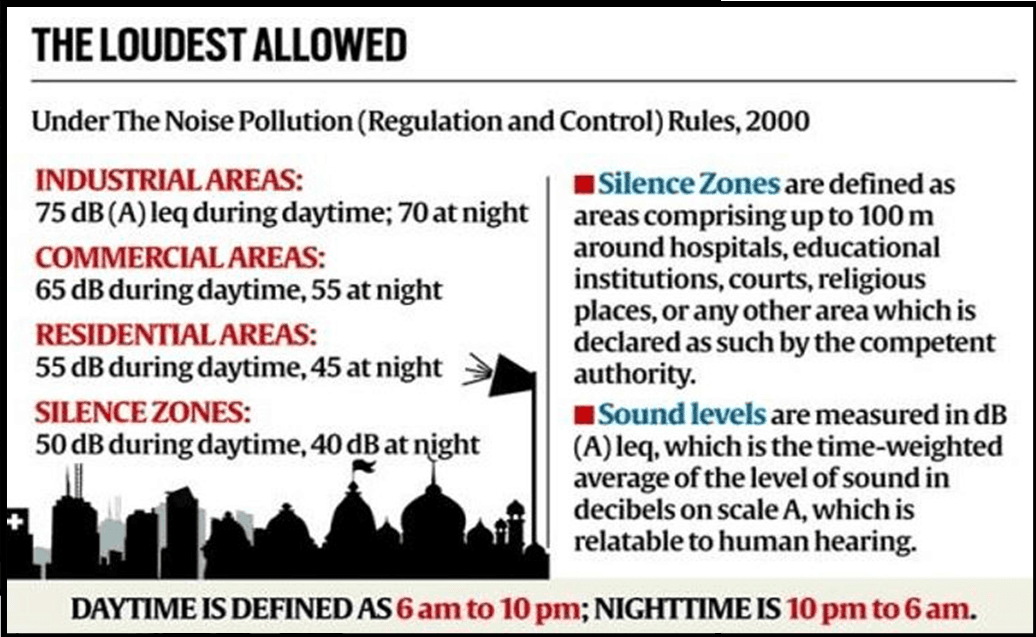
  • Noise Rules prescribe area-wise decibel ceilings; enforced via state pollution boards.
  • Silence zones: 100 m around hospitals, schools, courts; no loudspeakers barring exemptions.
  • Non-compliance invites penalties under Environment Protection Act, 1986.

Key Data Points

FeatureData-Point
Constitutional shields citedArticle 25 (religion), Article 19(1)(a) (speech)
Case title & yearDr Mahesh Vijay Bedekar v Maharashtra, 2016
Loudspeaker ban window10 pm – 6 am
Yearly festive exemption15 specified days
Residential limit (day/night)55 dB / 45 dB
Act defining noise as pollutantAir (Prevention & Control of Pollution) Act 1981
ERP struck down by SCInstant triple talaq (2017)
ERP under stayJain Santhara/Sallekhana (SC stay on 2015 HC ban)
GS-2PolityQuick Bite

3.Supreme Court Foundation Day Facts (Supreme Court Facts)

SCI

What & Where

Supreme Court of India – apex court under Article 124; seated in New Delhi.

Began in Old Parliament House (28 Jan 1950); shifted to Tilak Marg complex, inaugurated 1958.

Exercises nationwide constitutional, appellate and advisory jurisdiction.

Quick Facts for MCQs

Institutional Evolution

  • Strength raised through five constitutional amendments, reaching 34 judges by 2019.
  • 75th-year celebrations in 2024 introduced new flag and insignia.
  • Court’s seal unchanged since 1950, depicting Lion Capital and Dharma-chakra.

Eligibility & Tenure

  • Citizenship mandatory; appointment tenure till 65 without re-appointment.
  • Removal only by Presidential order after Parliament’s special majority address.
  • Salaries, allowances charged on Consolidated Fund of India ensuring independence.

Symbolic Updates

  • Lady Justice redesign shifts from Roman Justitia to Indianised, Constitution-centric iconography.
  • Open eyes denote conscious, equitable justice; absence of sword signals supremacy of law over force.
  • Flag shows Ashok Chakra, court edifice, Constitution, reinforcing constitutional supremacy.

Key Data Points

FeatureData-Point
Constitutional article124
Formal inauguration28 Jan 1950
Original sanctioned strengthCJI + 7 judges
Present sanctioned strength (2024)CJI + 33 judges
Retirement age65 years
Appointing authorityPresident of India
Eligibility option 15 yrs High Court judge
Eligibility option 210 yrs advocate in High Court
Eligibility option 3Distinguished jurist (President’s opinion)
Current building inauguration1958 by President Dr. Rajendra Prasad
New Lady Justice statue unveil2024
Statue highlightsSaree, open eyes, holds Constitution, no sword
New SC flag unveiled2024 (75th year)
Motto on insignia“Yato Dharmastato Jayah”

Related UPSC Prelims PYQs

GS1 2012PYQ 1

What is the provision to safeguard the autonomy of the Supreme Court of India?

GS1 2015PYQ 2

Who/Which of the following is the custodian of the Constitution of India?

GS-3Editorial

4.Reforming India's Taxation Framework (GST Reforms)

Indian Express

What & Where

Goods & Services Tax (GST): value-added, destination-based indirect tax created via 101st Constitution Amendment, 2016.

Dual levy: Centre charges CGST, States charge SGST; inter-state supplies attract IGST.

Governing body: Article 279A GST Council, headquartered New Delhi, decides rates by ¾ majority.

Quick Facts for MCQs

Legal & Policy

  • Retrospective‐tax amendments overturned SC Vodafone ruling, triggered ₹8,000 cr international penalty.
  • GST Council’s 55th meeting sought retrospective levy, seen as regressive for investor trust.
  • Multiple rates on same item (e.g., popcorn 5-18 %) spur demand for rationalisation.

Economic Angle

  • Complex taxes raise production cost, induce import reliance; China purchases rose USD 30 bn since 2018-19.
  • Inverted duty structure discourages domestic manufacturing, drags sector’s GDP share below 15 %.
  • Currency pressure: higher trade deficit risks twin deficits and rupee depreciation.

Administrative Issues

  • Input Tax Credit denials inflate consumer prices; Supreme Court now permits ITC on commercial realty builds.
  • Low direct-tax capture pushes government toward high indirect levies, cess proliferation.
  • Arbitrary notices, ambiguous circulars benefit tax professionals, impede ease of doing business.

Judicial Precedents

  • Safari Retreats 2024: SC affirmed ITC on leased commercial complexes, curbing departmental discretion.
  • Vodafone verdict nullification exemplar of investor-unfriendly retrospective action.

Key Data Points

FeatureData-Point
Constitutional amendment101st, 2016
GST Council vote shareCentre 1/3, States 2/3
Decision threshold75 % of weighted votes
Standard GST rate slabs0, 5, 12, 18, 28 %
MAT minimum rate18.5 %
ITC allowed to real estate (SC 2024)Safari Retreats case
Retrospective tax criticised as“Tax terrorism” (A. Jaitley, 2014)
Manufacturing share in GDP< 15 %
Chinese imports 2023-24USD 100 billion
Cesses examplesEducation, Swachh Bharat, Krishi Kalyan

Related UPSC Prelims PYQs

CDS_GK 2024PYQ 1

Which one of the following statements regarding GST is not correct?

CDS_GK 2021PYQ 2

Following the Constitution (One Hundred and First Amendment) Act, 2016, the Parliament of India enacted quite a few GST Acts in the year 2017. Which one of the following does not fall in this category?

GS-3Economy

5.Enhanced eCoO 2.0 Trade Platform (Export Certification)

PIB

What & Where

Enhanced Certificate of Origin (eCoO) 2.0: DGFT online system authenticating origin of Indian export consignments

Issues both Preferential & Non-Preferential CoOs through a single digital window

Pan-India rollout; Non-Preferential CoOs compulsory online from 1 Jan 2025

Quick Facts for MCQs

Tech & Schemes

  • Digitalisation: Cloud platform integrates e-sign, live tracking, paperless issuance
  • Amendment: In-Lieu CoO allows online corrections without resubmission
  • Access: Multi-user login boosts organisational flexibility

Trade Facilitation

  • Speed: Automated vetting cuts certificate turnaround for exporters
  • Transparency: Back-to-back CoO maps full origin chain for re-exports
  • Savings: Paperless flow trims courier and printing costs

Legal & Policy

  • Alignment: Conforms to CAROTAR-2020 rules on origin verification
  • Mandate: DGFT circular fixes 1 Jan 2025 as offline phase-out date
  • Oversight: Commerce Ministry dashboard monitors national issuance metrics

Key Data Points

FeatureData-Point
Nodal agencyDirectorate General of Foreign Trade
Admin ministryCommerce & Industry
CoveragePreferential & Non-Preferential CoOs
Mandatory online date (NP CoO)1 Jan 2025
User authenticationAadhaar e-Sign / Digital Token
Multi-user facilitySeveral users under one IEC
Back-to-back CoOEnabled for re-export, transshipment
Amendment toolIn-Lieu Certificate of Origin

Related UPSC Prelims PYQs

GS1 2022PYQ 1

भारत में कार्य कर रही विदेशी-स्वामित्व की e-व्यापारिक फर्मों के संदर्भ में, निम्नलिखित कथनों में कौन-सा/से सही हैं?

GS-1History

6.Lezim Folk Dance Maharashtra (Maharashtra Folk Dance)

Indian Express

What & Where

Definition: Maharashtra folk-dance using handheld wooden Lezim with metallic jingles, marked by vigorous, drill-like moves

Geography: Core in western Maharashtra & Konkan belt; common in Ganesh Chaturthi, marriages, school PT displays

Types/Process: Group formations of 2–4 dancers, circle or line patterns, pace rising with dhol/dhalgi beats

Quick Facts for MCQs

Historical Roots

  • Evolution: From gymnasium combat drills to celebratory folk performance
  • Maratha era: Shivaji institutionalised Lezim for soldier conditioning, embedding pride & unity

Performance Elements

  • Movements: Energetic stamp, knee bends, leaps executed rhythmically with jingling accents
  • Tempo: Gradual acceleration aligned to percussion, demanding stamina and synchrony

Cultural Significance

  • Identity: Symbol of Maharashtrian community spirit and martial heritage
  • Continuity: Featured in civic parades, cultural events, retaining physical fitness appeal

Key Data Points

FeatureData-Point
Main instrumentLezim (wood + iron jingles)
Drum supportDhol, Dhalgi
Likely originAkhadas / martial drill
Royal patronChhatrapati Shivaji Maharaj
Historic useMilitary fitness routine
Festivals seenGanesh Chaturthi, processions
Physical actionsStepping, squatting, jumping
Common formationCircles or synchronized rows
School roleMass PT exercise in Maharashtra
Coast spreadKonkan region popularity
GS-1History

7.Libia Lobo Sardesai Goa Liberation (Goa Liberation)

Indian Express
Illustration for Libia Lobo Sardesai Goa Liberation (Goa Liberation)

What & Where

Goa Liberation Movement; anti-Portuguese struggle in Goa culminating 19 Dec 1961

Core phase 1954-61 after India’s economic blockade of Portuguese enclaves

Geography: Goa province; jungle bases at Amboli & Castle Rock, Western Ghats

Quick Facts for MCQs

Historical Timeline

  • 1954 blockade severed road, rail, sea links; pressured Portuguese administration
  • 1955 satyagraha met with firing; deaths intensified international attention
  • 1961 tri-service assault secured unconditional Portuguese surrender within 36 hours

Key Personalities

  • Lohia; initiated mass civil disobedience in Goa during June 1946 visit
  • Libia; clandestine broadcaster, aerial announcement of liberation on 19 Dec 1961
  • Nehru; authorised military option after diplomatic deadlock with Salazar regime

Communication Strategy

  • Underground transmitters hidden in Western Ghats forest; mobility evaded PIDE secret police
  • Broadcasts relayed news, patriotic songs, coded messages to resistance cells
  • Portuguese jamming attempted but limited by rugged terrain and frequency hopping

Security Dimension

  • Indian Navy blockaded Mormugao harbour; INS Delhi shelled Aguada batteries
  • Air Force Hunters neutralised Dabolim runway; Para Brigade secured Panaji bridges
  • Swift action avoided major civilian casualties; annexation internationally accepted within weeks

Key Data Points

FeatureData-Point
Colonial ruler duration~450 years (1510-1961)
Economic blockade imposed1954 by Government of India
Mass satyagraha date15 Aug 1955
Military code-nameOperation Vijay
Operation Vijay start17 Dec 1961
Goa Liberation Day19 Dec 1961
Operation commanderLt Gen J N Chaudhuri
Underground radio nameVoice of Freedom of Goa
Broadcast years1955-1961
Key broadcaster honouredLibia Lobo Sardesai, Padma Shri 2024
GS-1History

8.Lala Lajpat Rai Contributions (Indian Freedom Movement)

News on Air
Illustration for Lala Lajpat Rai Contributions (Indian Freedom Movement)

What & Where

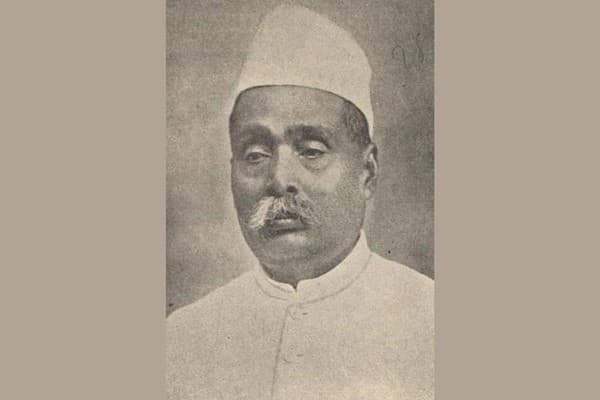
Freedom-fighter Lala Lajpat Rai, “Punjab Kesari,” led extremist nationalism within Indian National Congress.

Geographic focus Punjab region—born Dhudike, mobilised Lahore; campaigned abroad via Home Rule League of America.

Part of “Lal-Bal-Pal” trio that steered anti-British mass agitation pre-Gandhian era.

Quick Facts for MCQs

Political Role

  • Led Punjab INC agitation, opposed Rowlatt Act, condemned Jallianwala massacre.
  • Guided Non-Cooperation in North India despite earlier exile to Burma.
  • Simon Commission protest turned martyrdom energised revolutionary phase.

Institution Building

  • Co-founded PNB to nurture indigenous credit networks.
  • Servants of People Society trained cadre for socio-political work.
  • Hindu Relief Movement aided famine victims, countered proselytisation.

Social Reform

  • Arya Samaj activism promoted education, widow-remarriage, anti-caste outlook.
  • Championed Swadeshi and vernacular education for rural uplift.

Literary & Press

  • Writings dissected colonial economics, inspired diaspora support.
  • Arya Gazette platform disseminated nationalist ideology under strict censorship.

Key Data Points

FeatureData-Point
Birth date28 Jan 1865
Birth placeDhudike village, Ferozepur (now Moga), Punjab
ParentsMunshi Radha Krishna, Gulab Devi
EducationLaw, Government College Lahore
ProfessionLawyer turned full-time nationalist
SobriquetLion of Punjab / Punjab Kesari
Ideological wingExtremist faction of INC
Famous trioLal-Bal-Pal (Lajpat Rai, Tilak, B C Pal)
Key protestsAnti-Partition 1905, Non-Cooperation 1920, Simon Commission 1928
International stepFounded Home Rule League of America 1917
Major organisationsPunjab National Bank 1894; Hindu Relief Movement 1897; Servants of People Society 1921
Reform linkActive member of Arya Samaj
Important booksYoung India; England’s Debt to India; Evolution of Japan; India’s Will to Freedom
Newspaper editedArya Gazette
Death17 Nov 1928, Lahore; injuries from lathi-charge
Last words“Every blow on my body will be a nail in the coffin of British imperialism.”

Related UPSC Prelims PYQs

GS1 1995PYQ 1

100. Which one of the following pairs is not correctly matched?

GS1 1999PYQ 2

The Congress policy of pray and petition ultimately came to an end under the guidance of

GS-1History

9.Iron Age Antiquity Tamil Nadu (Iron Age India)

Indian Express
Illustration for Iron Age Antiquity Tamil Nadu (Iron Age India)

What & Where

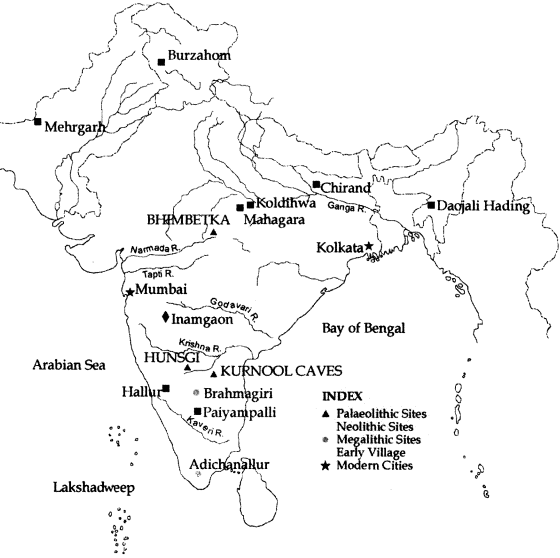
Iron Age: post-Bronze era featuring extensive iron tool-making and smelting.

Tamil Nadu radiometric dates push Indian iron use to early 4th millennium BCE (~3700 BCE).

Core chain: ore mining → pit/shaft furnaces → forging; major hubs in Ganga valley and South-Indian megalithic belt.

Quick Facts for MCQs

Chronology

  • Rigvedic hymns silent on iron; Early Historic texts record smiths.
  • Ahar culture shows iron presence 2500–1700 BCE.
  • New Tamil Nadu dates indicate earlier 4th-millennium metallurgy.

Archaeological Sites

  • Raja Nal Ka Tila: tools, slag in pre-NBPW layers (1400-800 BCE).
  • Malhar (UP): furnaces and slag confirm metallurgical centre.
  • Paiyampalli (TN): huge slag heaps signal local smelting.

Pottery Cultures

  • BRW: black inside, red outside; spans Harappan, pre-PGW, South Megalithic.
  • PGW: grey painted geometric ware; iron finds across Ganga basin.
  • NBPW: lustrous black ware; aligns with second urbanization, 700–100 BCE.

Urbanization Impact

  • Iron ploughs cleared Gangetic forests, raised crop yields.
  • Surplus fostered Mahajanapadas and varna-based hierarchy.
  • Freed labour enabled crafts, trade and emergent cities.

Key Data Points

FeatureData-Point
Earliest Indian iron evidenceTamil Nadu, ~3700 BCE
Conventional Iron Age onset2000–1500 BCE
Second urbanization timingc 6th cent BCE, mid-Ganga
Naikund, VidarbhaExcavated iron-smelting furnace
Megalithic tool diversity33 iron implement types
BRW pottery hallmarkBlack interior, red exterior

Related UPSC Prelims PYQs

GS1 1998PYQ 1

What is the correct chronological order in which the following appeared in India?

GS-1Environment

10.Storm Eowyn Bomb Cyclone Impact (Bomb Cyclone)

Down to Earth
Illustration for Storm Eowyn Bomb Cyclone Impact (Bomb Cyclone)

What & Where

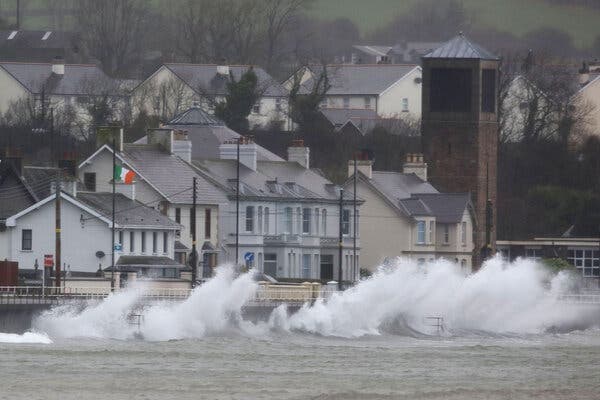
Bomb cyclone: mid-latitude low whose core pressure falls ≥ 24 mb in 24 h, triggering gale-force winds

Storm Éowyn: bomb cyclone born 22 Jan 2025 off US East Coast; crossed 2,000 mi Atlantic; landfall W Scotland 24 Jan

Core impact zone: Ireland & Scotland; peak gust 114 mph at Mace Head, Galway

Quick Facts for MCQs

Climatology Drivers

  • Jet-stream energy: polar front streak >200 mph accelerated cyclogenesis
  • Thermal contrast: sharp Arctic-Atlantic gradient supplied instability and latent heat
  • Ocean heat flux: warm SSTs fed towering cumulonimbus, deepened low rapidly

Preparedness & Response

  • Red alerts: timely Met offices warnings curtailed casualties and enabled port/road closures
  • Forecast accuracy: high-resolution models captured 50 mb drop, validating ensemble prediction use

Climate Change Angle

  • Intensification trend: warmer oceans expected to raise bomb cyclone frequency & magnitude in N Atlantic
  • Infrastructure stress: record winds highlight adaptation need for coastal grids & transport

Environmental Impact

  • Wind damage: uprooted forests, disrupted power to thousands in rural Highlands & west Ireland
  • Extreme rainfall: swollen rivers risked flash floods, soil erosion across peatlands and farmlands

Key Data Points

FeatureData-Point
Central pressure drop50 mb in 24 h
Explosive cyclogenesis threshold24 mb in 24 h
Formation date22 Jan 2025
Landfall date24 Jan 2025
Ocean traverse distance~2,000 miles
Peak recorded gust114 mph (Mace Head, Ireland)
Jet-stream speed aiding growth> 200 mph
Primary air-mass clashCold Arctic vs warm oceanic
Alerts issuedRed (Ireland & Scotland)
Region scaleBritish Isles, strongest over west coasts
GS-3Environment

11.Lake Victoria Algal Blooms (African Great Lakes)

Down to Earth
Illustration for Lake Victoria Algal Blooms (African Great Lakes)

What & Where

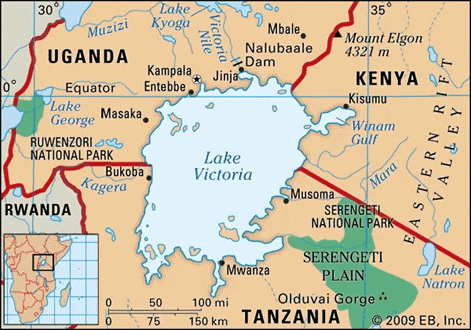
Location: East African lake shared by Tanzania, Uganda, Kenya, world’s second-largest freshwater body

Hydrology: Receives Kagera and other rivers, discharges via White Nile at Jinja, integral to Nile basin

Significance: Hosts world’s biggest freshwater fishery, now threatened by cyanobacteria harmful algal blooms

Quick Facts for MCQs

Environmental Impact

  • Toxic blooms reduce dissolved oxygen, endanger aquatic fauna and biodiversity
  • Water quality deterioration spreads across transboundary lake surface

Human Health

  • Communities risk liver and neuro toxins when drinking or bathing in bloom water
  • Conventional boiling fails, necessitating advanced filtration for safe consumption

Economic Angle

  • Fish mortality and market rejection slash incomes of tens of thousands of fishers
  • Utilities and governments incur higher costs for treating potable water

Key Data Points

FeatureData-Point
Global size rank2nd largest freshwater lake
Riparian countriesTanzania, Uganda, Kenya
Main inflow riverKagera
Main outflowWhite Nile (Victoria Nile)
Annual fish yield>1 million tonnes
Dominant fish speciesNile Perch, Tilapia
Bloom organismCyanobacteria blue-green algae
Bloom typecyanoHABs (harmful algal blooms)
Toxin removal by boilingIneffective
Key economic stakeLargest freshwater fishery livelihood
Water treatment impactRising purification costs

Related UPSC Prelims PYQs

GS1 2000PYQ 1

Which one of the following lakes forms an international boundary between Tanzania and Uganda?

GS-3Environment

12.Wetland City Accreditation Initiative (Ramsar Convention)

Times of India
Illustration for Wetland City Accreditation Initiative (Ramsar Convention)

What & Where

Wetland City Accreditation: voluntary Ramsar tag rewarding urban wetland conservation & wise use.

Introduced at Ramsar COP-12, Punta del Este, Uruguay, 2015; valid 6 yrs, renewable.

2024: Indore (Madhya Pradesh) & Udaipur (Rajasthan) become India’s first accredited cities.

Quick Facts for MCQs

Objectives

  • Promote conservation & wise use of urban/peri-urban wetlands.
  • Ensure ecological balance alongside socio-economic gains for locals.
  • Foster positive city–wetland relationships near Ramsar sites.

Eligibility Criteria

  • Adopt wetland-centric policies, ecosystem-service promotion, sustainable socio-economic practices.
  • Engage local communities; curb degradation drivers.
  • Protect both natural and constructed wetlands within jurisdiction.

Indian Examples

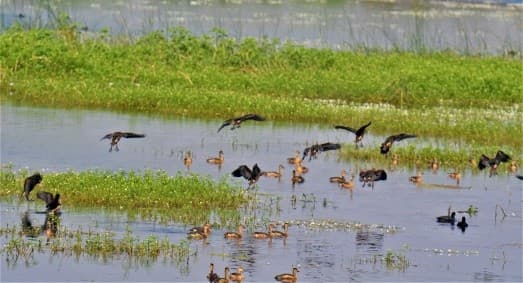
  • Indore restored Sirpur Lake, major water-bird congregation zone.
  • Udaipur manages interconnected lakes enhancing biodiversity & eco-tourism.

Governance & Validity

  • Accreditation conferred by Ramsar Secretariat; cities apply voluntarily.
  • Review every six years; non-compliance risks delisting.
  • Recognition boosts funding, policy focus, global visibility.

Key Data Points

FeatureData-Point
Accrediting treatyRamsar Convention on Wetlands
Launch event/yearCOP-12 / 2015
Accreditation cycle6 years, renewable
Mandatory criteria6 international benchmarks
India’s debut citiesIndore & Udaipur
Indore wetland citedSirpur Lake – Ramsar site, bird sanctuary
Udaipur wetland networkPichola, Fateh Sagar, Rang Sagar, Swaroop Sagar, Doodh Talai
MoEF&CC linkageSupports Amrit Dharohar initiative
ScopeNatural & human-made urban/peri-urban wetlands
Core benefitInternational recognition for sustainable urban planning

Related UPSC Prelims PYQs

CAPF_GAI, NDA_GAT 2024PYQ 1

Recently the Ministry of Environment, Forest and Climate Change has submitted three nominations from India for Wetland City Accreditation (WCA) under the Ramsar Convention on Wetlands. Which one among the following cities is not one among them?

CAPF_GAI, NDA_GAT 2025PYQ 2

The Ramsar Convention is an intergovernmental treaty which provides the framework for national action and international cooperation for the conservation of

GS-3S&T

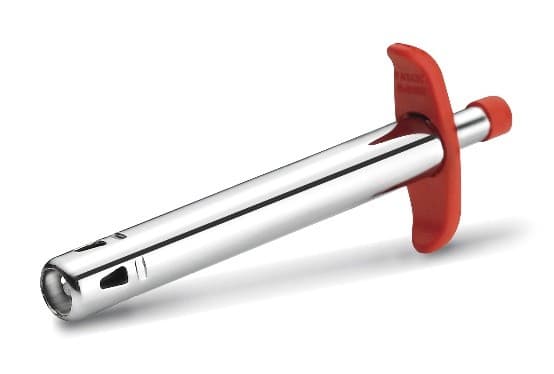
13.Piezoelectric Stove Lighter Mechanism (Piezoelectric Ignition)

The Hindu
Illustration for Piezoelectric Stove Lighter Mechanism (Piezoelectric Ignition)

What & Where

Kitchen igniter; produces small electric/flame spark to start LPG/PNG gas stoves worldwide

Three variants; manual piezoelectric, battery-powered electronic, butane flame-based

Core action; mechanical click or circuit makes high-voltage discharge that lights fuel emerging from burner

Quick Facts for MCQs

Technology Basics

  • Piezoelectric; hammer strike compresses crystal, separates charges, emits kilovolt spark across 2–4 mm air gap
  • Electronic; battery current stepped up by transformer, repeated sparks on each button press
  • Flame type; valve releases butane while piezo spark or flint wheel ignites visible flame tip

Safety & Efficiency

  • Reusability minimises matchstick waste and accidental burns
  • Instant spark shortens unburnt gas release, reducing explosion risk
  • Metal nose and insulated handle isolate user from high voltage

Component Materials

  • Common crystals; quartz, lead-zirconate-titanate for reliable charge build-up
  • Conductive electrodes at crystal ends direct accumulated charge towards spark gap
  • Spring-loaded stainless hammer ensures quick, high-pressure impact on crystal

Key Data Points

FeatureData-Point
Main mechanismsPiezoelectric crystal, electronic coil, butane flame
Manual lighter power sourceNone; thumb pressure only
Electronic lighter power sourceAA/AAA button cell or Li-ion battery
Fuel in flame typeLiquid butane stored in mini-tank
Key safety gainReusable device keeps hand away from open flame
GS-3S&TQuick Bite

14.Exoplanet WASP-127b High Winds (Exoplanet Discovery)

The Hindu
Illustration for Exoplanet WASP-127b High Winds (Exoplanet Discovery)

What & Where

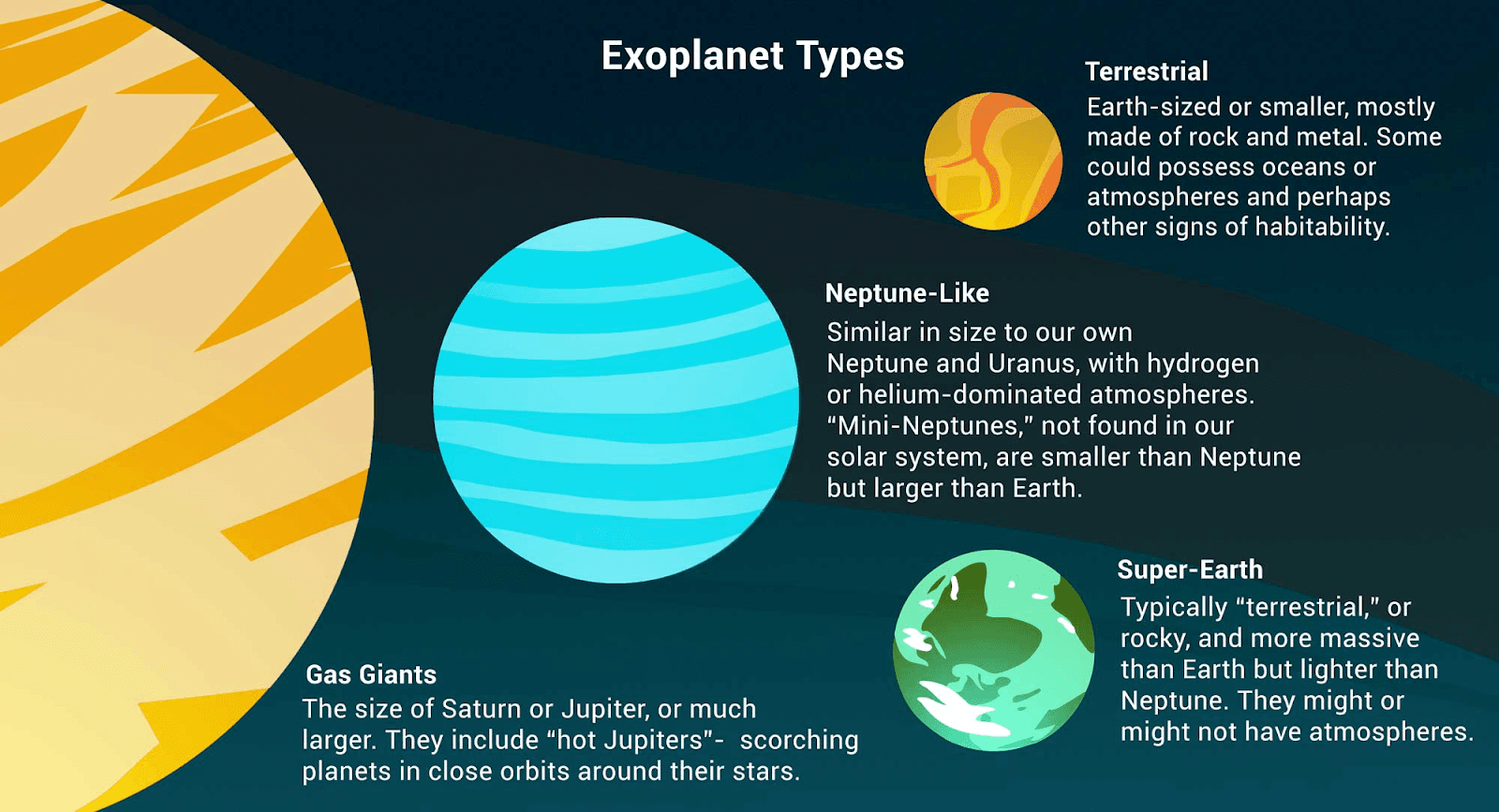
Exoplanet WASP-127b, a hot Jupiter, orbits a star outside the Solar System

Lies about 520 light-years from Earth; among the puffiest, lowest-density gas giants known

Recent study measured record winds of 33,000 km/h, six times its rotation speed

Quick Facts for MCQs

Physical Characteristics

  • Size 30 % bigger than Jupiter yet only 16 % its mass creating ultra-low density
  • Puffy structure assists atmospheric transmission observations by telescopes
  • Day-side temperature around 1,127 °C with night side still heated by stellar radiation

Atmospheric Dynamics

  • Winds reach 33,000 km/h, the fastest measured on any planet
  • Speed equals six times planetary rotation indicating strong eastward jet stream
  • Composition hydrogen helium plus traces carbon monoxide and water vapor

Orbital Features

  • Orbital period 4 Earth days due to very close star distance
  • Tidal locking causes permanent day and night hemispheres driving thermal gradient
  • Category hot Jupiter common target for studying star-planet interactions

Key Data Points

FeatureData-Point
Planet classificationHot Jupiter
Distance from Earth~520 light years
Relative radius1.3 × Jupiter
Relative mass0.16 × Jupiter
Orbital period4 Earth days
Wind speed measured33,000 km/h
Wind vs rotation rate6 × faster
Day-side temperature1,127 °C
Atmospheric constituentsH₂, He, traces CO & H₂O
GS-2Editorial

15.Trump Gaza Relocation Proposal (Israel-Palestine Conflict)

DC
Illustration for Trump Gaza Relocation Proposal (Israel-Palestine Conflict)

What & Where

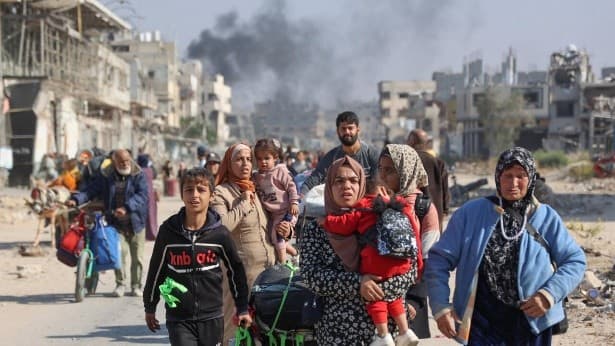
Proposal: Trump call to relocate Gaza’s ≈1.5 million Palestinians into neighbouring Egypt and Jordan

Geography: Gaza Strip—Mediterranean enclave bordering Israel, Sinai; resettlement sites envisaged in Egyptian, Jordanian territory

Aim: Remove conflict actors, brand move “temporary/long-term” to create perceived regional stability

Quick Facts for MCQs

Neighbouring Responses

  • Jordan: rejects relocation; warns demographic imbalance; reiterates two-state framework
  • Egypt: says plan would “eliminate Palestinian cause”; fears Sinai militant spillover; cites treaty risk

Legal & Humanitarian Concerns

  • International-law: Forced transfer breaches Geneva Conventions and UN Charter norms
  • Right-of-return: UN-194 guarantees Palestinians return/compensation, contradicting mass resettlement
  • Identity: Permanent shift threatens Palestinian statehood claim and cultural continuity

Security Dimension

  • Israel: expects diminished rocket/militant threat if Gaza depopulated
  • Egypt: anticipates Sinai becoming staging ground for future attacks
  • Jordan: foresees domestic unrest, economic strain from extra refugees

Historical Context

  • Parallel: Palestinians equate scheme to 1948 Nakba mass expulsion
  • Precedent: Lebanon’s refugee influx tied to 1975-90 civil war instability
  • Two-state: Widely endorsed peace formula remains alternative to displacement plans

Key Data Points

FeatureData-Point
Proposed Palestinians to be moved≈1.5 million
Palestinian refugees already in Jordan≈2.3 million
UN resolution on right of returnResolution 194 (1948)
Egypt–Israel peace treaty year1979
Historical displacement cited (Nakba)1948
GS-2Editorial

16.India Indonesia Comprehensive Partnership (India-Indonesia Relations)

Indian Express
Illustration for India Indonesia Comprehensive Partnership (India-Indonesia Relations)

What & Where

Partnership: India-Indonesia Comprehensive Strategic Partnership, celebrating 75 yrs of diplomatic ties in 2025.

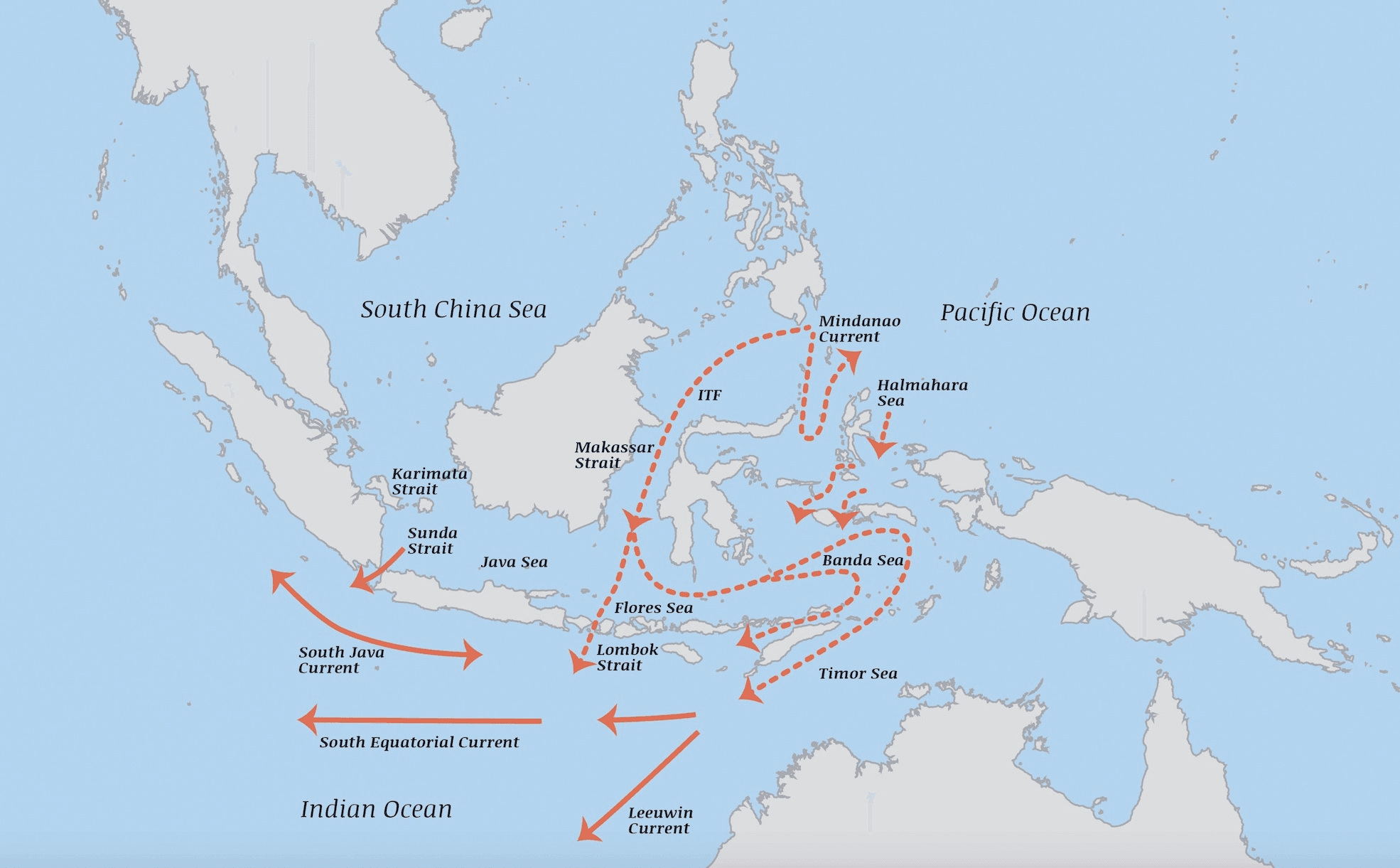
Geography: Indonesia guards Malacca, Sunda & Lombok Straits; India’s Andaman proximity underpins shared Indo-Pacific security.

Scope: Defence, trade, energy, health, digital public infrastructure, culture, multilateral coordination.

Quick Facts for MCQs

Defence & Security

  • Mechanisms: Coordinated Patrols, planned Maritime & Cyber Security Dialogues deepen naval-cyber cooperation.
  • Procurement: Jakarta negotiating BrahMos battery; agreement on price around USD 450 million.
  • Objective: Jointly secure sea lanes, counter terrorism and emerging cyber threats.

Economic Angle

  • Trade: Goal to surpass USD 38.8 billion; barriers tackled via accelerated AITIGA review.
  • Finance: Local Currency Settlement cuts forex costs, eases MSME participation.
  • Resources: Collaboration on biofuels, nickel, bauxite ensures critical-mineral and energy diversification.

Historical Evolution

  • Solidarity: India backed Indonesian independence; Treaty of Friendship signed 1951.
  • Strain: 1960s ties dipped as Indonesia sided with Pakistan; thaw after 1977 maritime pact, Suharto’s 1980 visit.
  • Revival: ‘Look East’ 1991 and ‘Act East’ 2014 policies repositioned Indonesia as a prime regional partner.

Key Data Points

FeatureData-Point
2025 R-Day Chief GuestIndonesian President
Diplomatic ties age75 years (1950-2025)
Partnership levelComprehensive Strategic Partnership – 2018
Bilateral trade 2022-23USD 38.8 billion
Indonesia’s ASEAN trade rank for India2nd after Singapore
Local Currency Settlement MoUAllows INR–IDR invoicing
Key defence exercisesGaruda Shakti (Army); Samudra Shakti (Navy)
Proposed BrahMos sale~USD 450 million

Related UPSC Prelims PYQs

CDS_GK, ESE_GS 2026PYQ 1

What is the name of the initiative launched by India and Denmark in November 2025 to enhance bilateral ties?

CDS_GK, ESE_GS 2023PYQ 2

The eighth edition of the Exercise Garuda Shakti, a bilateral military-to-military exercise, was conducted recently between the special forces of India and

GS-2Scheme

17.PM YASASVI Scholarship Scheme (Education Scholarships)

PIB
Illustration for PM YASASVI Scholarship Scheme (Education Scholarships)

What & Where

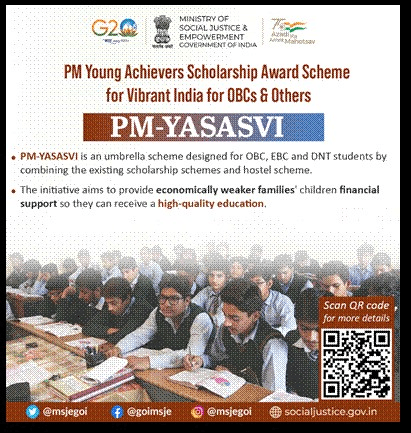
Central sector PM-YASASVI: scholarship umbrella under Ministry of Social Justice & Empowerment, operational pan-India.

Targets marginalized school-to-college learners via pre-matric, post-matric, top-class education and hostel sub-schemes.

Focus on OBC, Economically Backward Classes and De-Notified, Nomadic & Semi-Nomadic Tribes (DNT/SNT).

Quick Facts for MCQs

Eligibility Criteria

  • Category: OBC, EBC, DNT/SNT only
  • Income: combined parental income not exceeding Rs 2.5 lakh annually
  • Level: school (Class IX onward) to postgraduate professional courses

Scholarship Components

  • Pre-matric: Rs 4,000 yearly academic allowance credited to student account
  • Post-matric: variable Rs 5,000–20,000 based on course category and duration
  • Top-class education: covers tuition, boarding, books, devices and incidental charges

Ancillary Support

  • Hostel: new/expanded facilities constructed near government institutions to cut commute barriers
  • Convergence: aligns with National Scholarships for Disabled, INSPIRE, Maulana Azad Fellowship for seamless higher-study pipeline
  • Monitoring: ministry interacts with student cohorts; Republic Day 2025 address showcased progress

Key Data Points

FeatureData-Point
Admin ministrySocial Justice & Empowerment
Beneficiary groupsOBC, EBC, DNT/SNT students
Annual family income cap≤ Rs 2.5 lakh
Pre-matric allowanceFlat Rs 4,000 per annum
Post-matric allowanceRs 5,000 – 20,000 per annum
Top-class college aidFull tuition, living, materials
Hostel provisionAccommodation near govt schools/colleges

Ready to practice?

Test your knowledge with our UPSC test series.

Start Free Trial